Skip to content

Posts by FeyGirl

On the Wings…

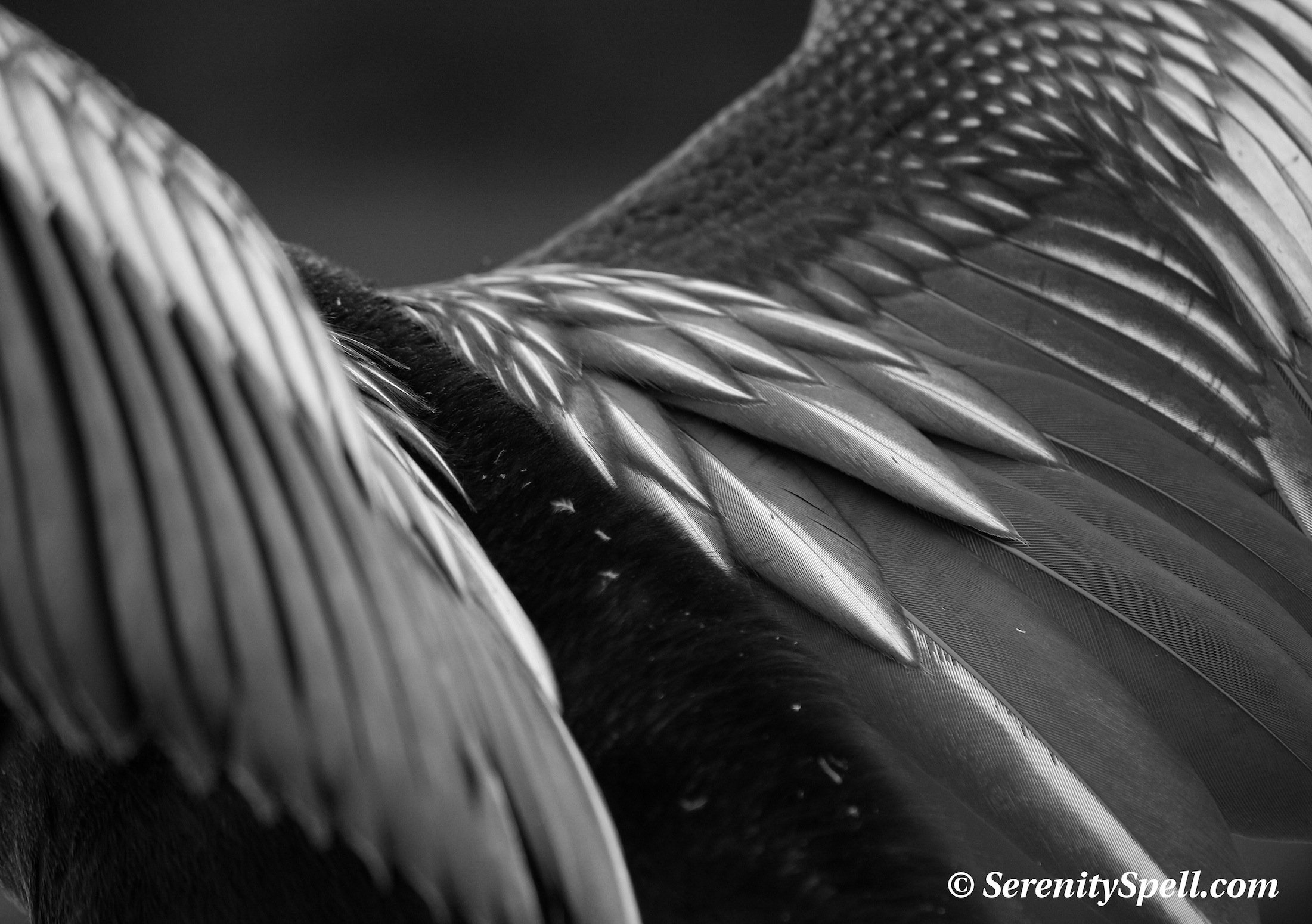
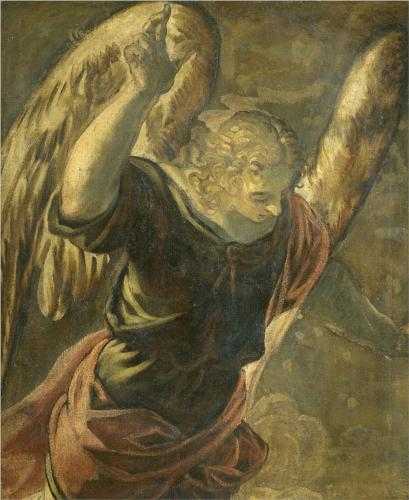
It’s easy to see why the wings of birds were appropriated for heavenly messengers in early religious art. Their combination of delicacy and strength — of grace and sinewy power — is mesmerizing. There were no wings donned by angels in the earliest Christian art, however. Beginning in the 4th Century, halos were replaced with wings to represent heavenly figures, and any creature of the divine. But it was during the Renaissance and Baroque periods when the winged angelic messenger really took root in the artistic and cultural mindset.

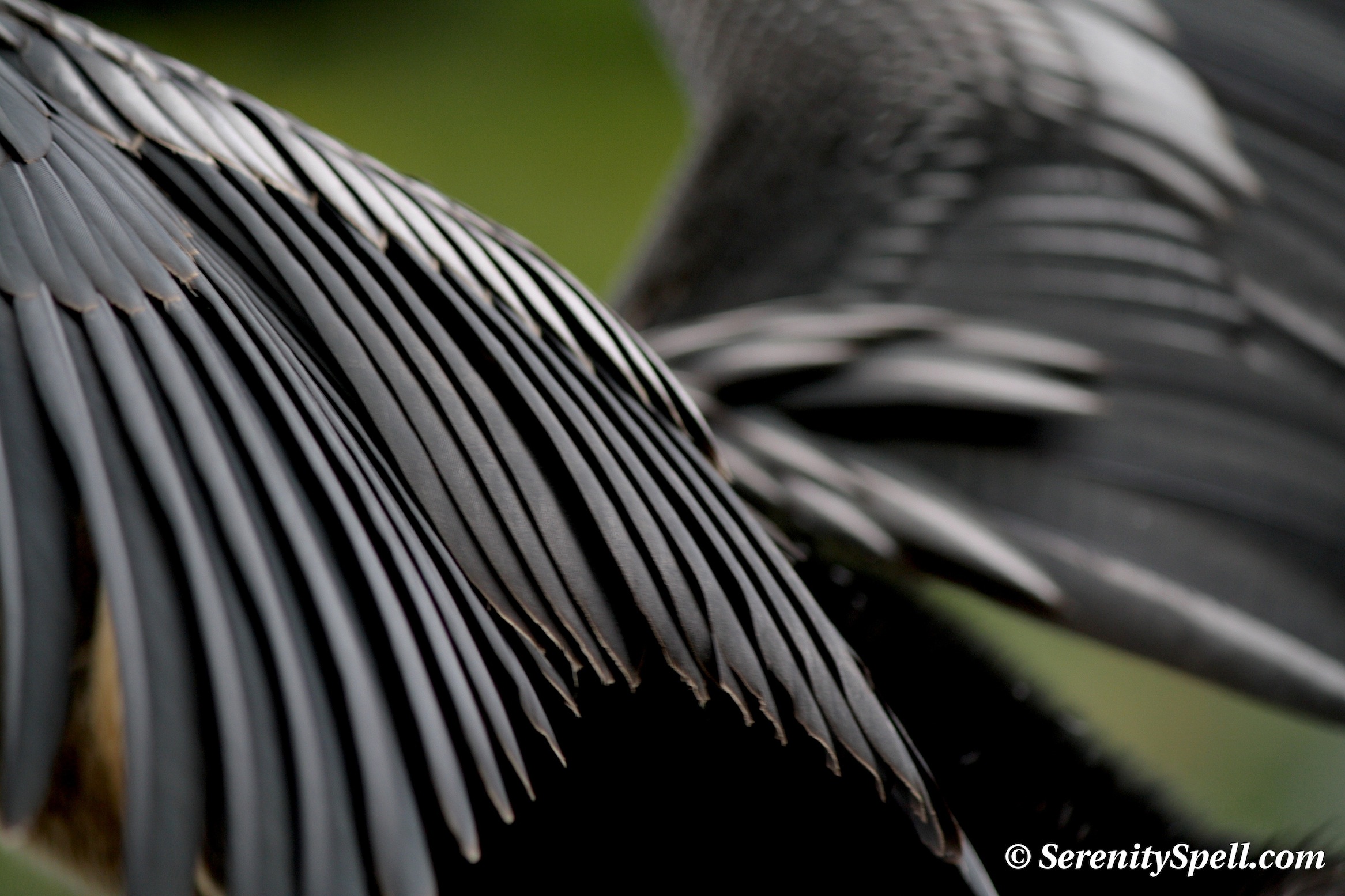
Here, two separate cormorants stretch their wings to dry after fishing in the South Florida wetlands bordering the Everglades. Similar to the cormorant-like anhingas, their feathers don’t possess the waterproofing oil of other seabirds, and they must dry their feathers after each fishing trip.

Cormorant Wings, Florida Wetlands

Cormorant Wings, Florida Wetlands

Tintoretto’s Annunciation Angel

A most amazing story (one I’ve been following for some time), of a volunteer wildlife rehabilitator, battling cancer, and his relationship with a truly remarkable eagle. Read more of the beginnings of Freedom — from injured eaglet to powerful rehabilitator in his own right — and faith, the power of love, and the kinship of all life, in Jeff Guidry’s book “An Eagle Named Freedom: My True Story of a Remarkable Friendship.”

Whitebird & Speaks With Wings's avatarSoul Writings

I wanted to share this wonderful story with you all ♥ Please feel free to share ♥

Photo: I wanted to share this wonderful story with you all <3 Please feel free to share <3</p><p>Freedom and Jeff<br />Freedom and  I have been together 11 years this summer.<br />She came  in as a baby in 1998 with two broken wings.<br />Her left  wing doesn't open all the way even after surgery,<br />it  was broken in 4 places.<br />She's my baby.</p><p>When Freedom  came in she could not stand<br />and both wings were  broken. She was<br />emaciated and covered in lice. We  made the<br />decision to give her a chance at life, so I  took<br />her to the vet's office. From then<br />on, I  was always around her. We had her in a<br />huge dog  carrier with the top off, and it<br />was loaded up with  shredded newspaper for her to<br />lay in. I used to sit  and talk to her,<br />urging her to live, to fight; and  she would lay<br />there looking at me with those big  brown eyes.<br />We also had to tube feed her for  weeks.</p><p>This went on  for 4-6 weeks, and by then she still<br />couldn't stand.  It got to the point where the<br />decision was made to  euthanize her<br />if she couldn't stand in a week. You  know you don't<br />want to cross that line between  torture and<br />rehab, and it looked like death was<br />winning. She was going to be put<br />down that  Friday, and I was supposed to come in<br />on that  Thursday afternoon. I didn't want to go<br />to the  center that Thursday, because I couldn't<br />bear the  thought of her being euthanized;<br />but I went anyway,  and when I walked in everyone<br />was grinning from ear  to ear. I went<br />immediately back to her cage; and  there she was,<br />standing on her own, a big beautiful<br />eagle. She was ready to live. I was<br />just about  in tears by then. That<br />was a very good day. </p><p>We knew she  could never fly, so the director<br />asked me to glove  train her.<br />I got her used to the glove,<br />and then  to jesses, and we started<br />doing education programs  for schools<br />in western Washington .<br />We wound up  in the newspapers,<br />radio (believe it or not) and  some<br />TV. Miracle Pets even did a show<br />about  us.</p><p>In the  spring of 2000, I was diagnosed with<br />non-Hodgkin's  lymphoma. I had stage 3,<br />which is not good (one  major organ plus<br />everywhere), so I wound up doing 8  months of<br />chemo. Lost the hair - the whole<br />bit.  I missed a lot of work. When I<br />felt good enough, I  would go to Sarvey<br />and take Freedom out for walks.  Freedom would<br />also come to me in my dreams and help  me fight<br />the cancer. This happened time and time  again.</p><p>Fast forward  to November 2000</p><p>the day after Thanksgiving,<br />I  went in for my last checkup.<br />I was told that if the  cancer was not<br />all gone after 8 rounds of chemo,  then my last<br />option was a stem cell transplant.  Anyway, they<br />did the tests; and I had to come back  Monday for<br />the results. I went in Monday, and I was<br />told that all the cancer was gone.</p><p>So the first  thing I did was get up to Sarvey and<br />take the big  girl out for a walk. It was misty<br />and cold. I went to  her flight and jessed her<br />up, and we went out front  to the top of the<br />hill. I hadn't said a word to<br />Freedom, but somehow she knew. She looked at me<br />and wrapped both<br />her wings around me to where I<br />could feel them pressing in on my back<br />(I was  engulfed in eagle wings), and she<br />touched my nose  with her beak and stared into my<br />eyes, and we just  stood there like that<br />for I don't know how long .  That was a<br />magic moment We have been soul mates  ever<br />since she came in. This is a very special  bird.</p><p>On a side  note: I have had people who<br />were sick come up to us  when we are out, and<br />Freedom has some kind of hold  on<br />them. I once had a guy who was<br />terminal come  up to us and<br />I let him hold her.<br />His knees just  about buckled and he<br />swore he could feel her power  course through his<br />body. I have so many stories like  that..</p><p>I never  forget the honor I have of being so close<br />to such a  magnificent spirit as Freedom.<br />~Jeff</p><p>If you enjoyed this, please share <3

Freedom and Jeff
Freedom and I have been together 11 years this summer.
She came in as a baby in 1998 with two broken wings.
Her left wing doesn’t open all the way even after surgery,
it was broken in 4 places.
She’s my baby.When Freedom came in she could not stand
and both wings were broken. She was
emaciated and covered in lice. We made the
decision to give her a chance at life, so I took
her to the vet’s office. From then
on, I was always around her. We had her in a
huge dog carrier with the top off, and it
was loaded up with shredded newspaper for her to
lay in. I used to sit and talk to her,
urging her to live, to fight; and she would…

View original post 604 more words

A Sweet and Radiant Jay

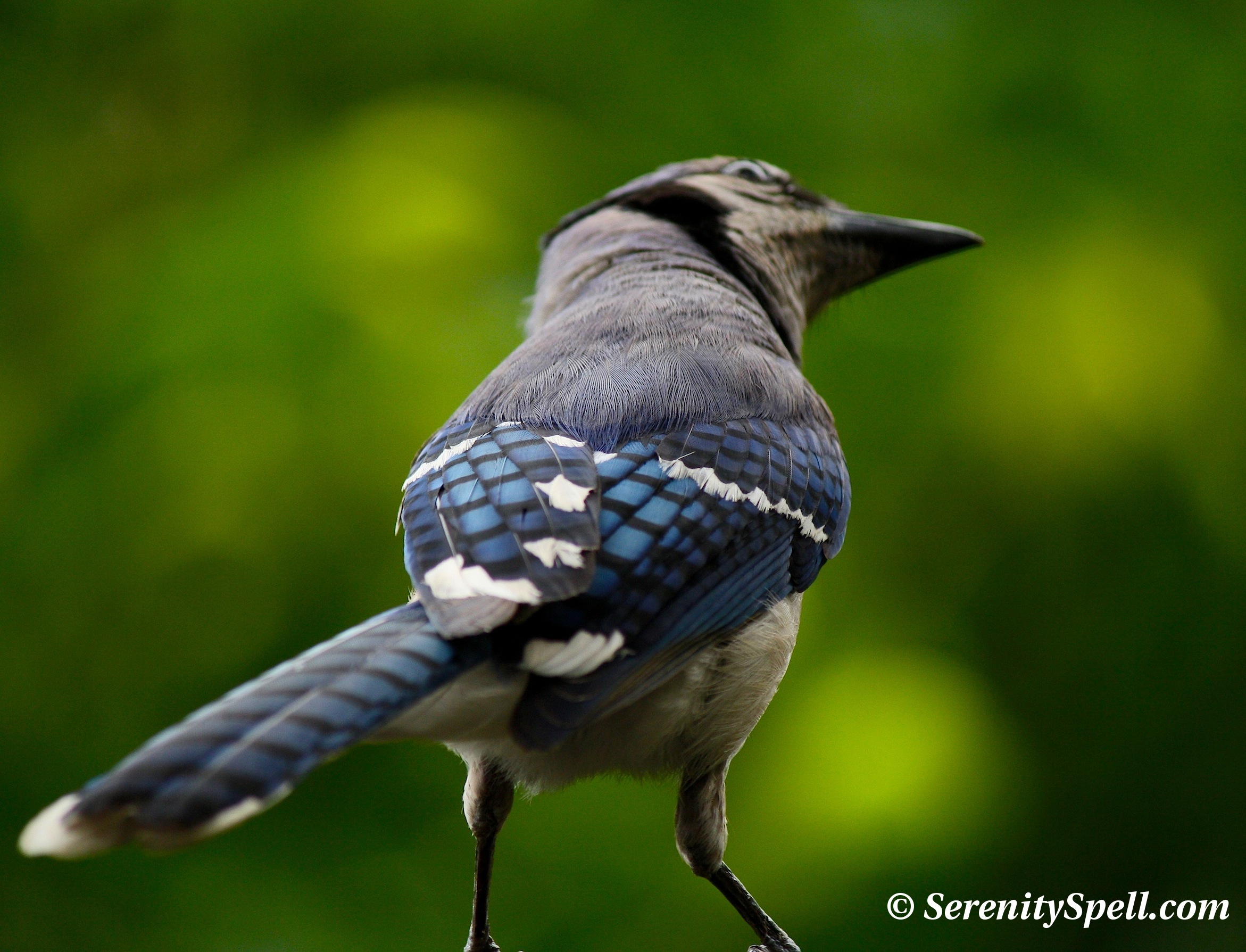
Following the loss of my lovely little feline, my guy and I quickly began spying my beloved grandparents’ (long passed) cardinals everywhere…. Not a completely rare phenomenon in our region, but definitely not common — and not to the degree that we were witnessing. In the orchid tree outside our window, on the hike we took the following day, on the way to the car — literally everywhere. Immediately after the cardinals, the blue jays appeared. When one came to peacefully rest beside me in the wetlands, I had to honor these bright beauties. For those who believe in the concept of animal totems and symbolism, internationally recognized teacher and author Ted Andrews is a wonderful resource. His 1996 book Animal-Speak: The Spiritual & Magical Powers of Creatures Great & Small, and his later works Animal-Wise: The Spirit Language and Signs of Nature and Nature-Speak: Signs, Omens and Messages in Nature are always nearby on my shelf. Andrews worked in wildlife rescue and rehabilitation, and participated in animal education and storytelling programs in school classrooms. He was specially invited to speak to the UNSRC at the United Nations in New York for his writings and work with animals.

Yes, Blue Jays are common…. They’re noisy members of the crow family Corvidae. But as such, they’re intelligent birds with complex social systems. Besides having countless whistles and calls of their own, they can imitate the sounds of many birds — particularly enjoying those of hawks and owls. They seem to derive much pleasure in their cacophony of noisy calls and songs.

These North American jays are known for their aggressive behaviors and mischievous activities (especially at feeding stations) — as well as for occasionally destroying the nests and eggs of other birds — but our Florida Blue Jays are far from aggressive. They’re actually the bullied and shy birds at the birdfeeder — chased by the grackles, and even by the doves…. And chased from nest to nest. Their curiously shy behavior has been observed by many in the area. Why are South Florida Blue Jays so seemingly timid?

Blue Jays search for any suitable tree or large bush to build a nest, in which 4-5 eggs are laid and incubated by the female over 16-18 days. Both the male and the female build the nest and rear the young. Blue Jays are monogamous, maintaining the bond until one dies.

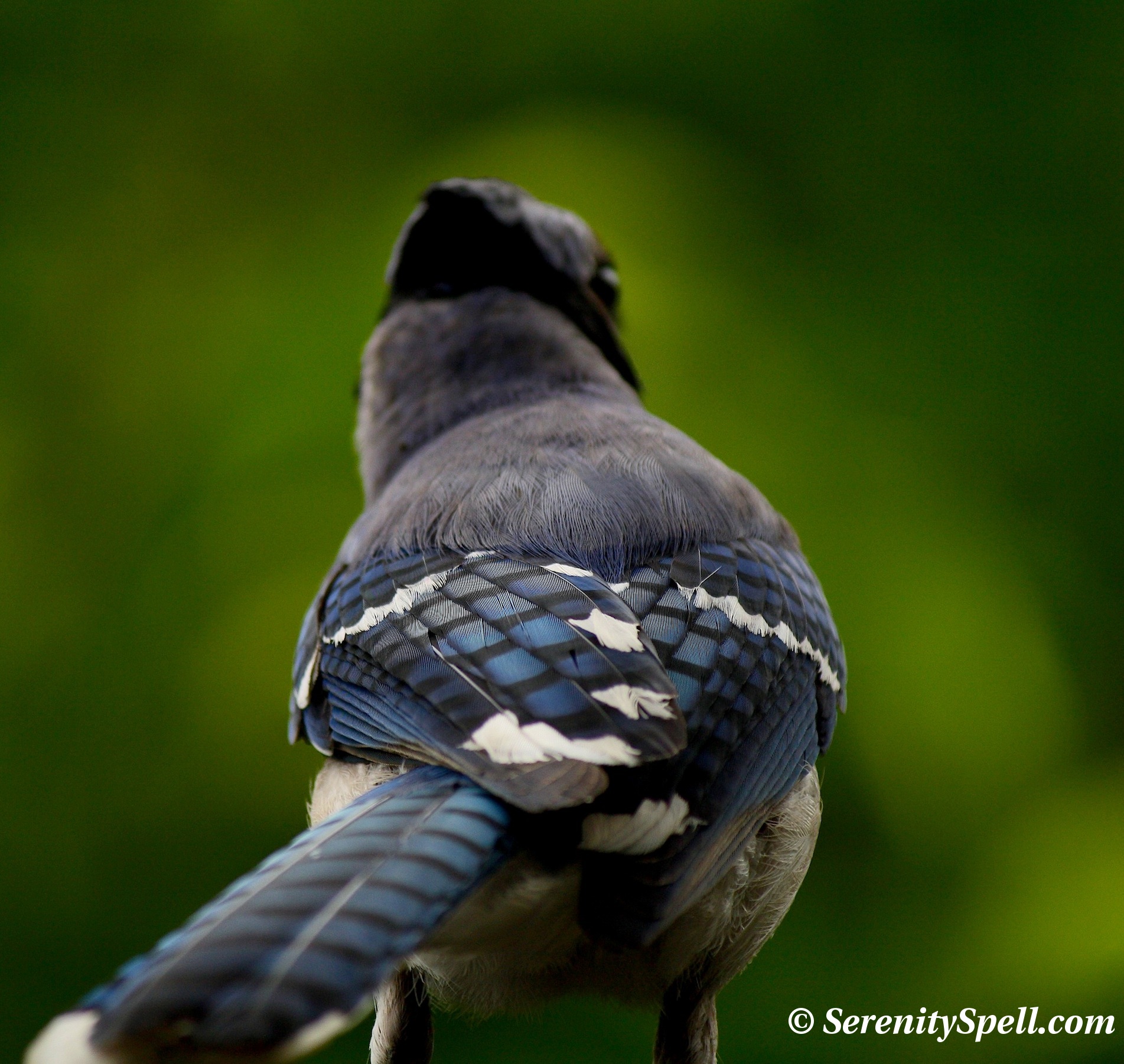
Another interesting note: As with other blue-hued birds, the Blue Jay’s coloration isn’t derived by pigments — it’s instead the result of light refraction due to the internal structure of the feathers, also known as structural coloration. If you crush a Blue Jay feather, the blue will disappear.

They’re particularly fond of peanuts and sunflower seeds. However, a note from Avianweb on feeding peanuts: Peanuts are a valuable source of protein – however, peanuts are often contaminated with aflatoxin, a fungal toxin. Aflatoxin is carcinogenic and causes liver damage in birds and other animals. Roasting reduces aflatoxin but does not eliminate it entirely. North American peanut producers are currently working on eliminating contaminated peanuts from their products. Caution is advised when feeding peanuts.
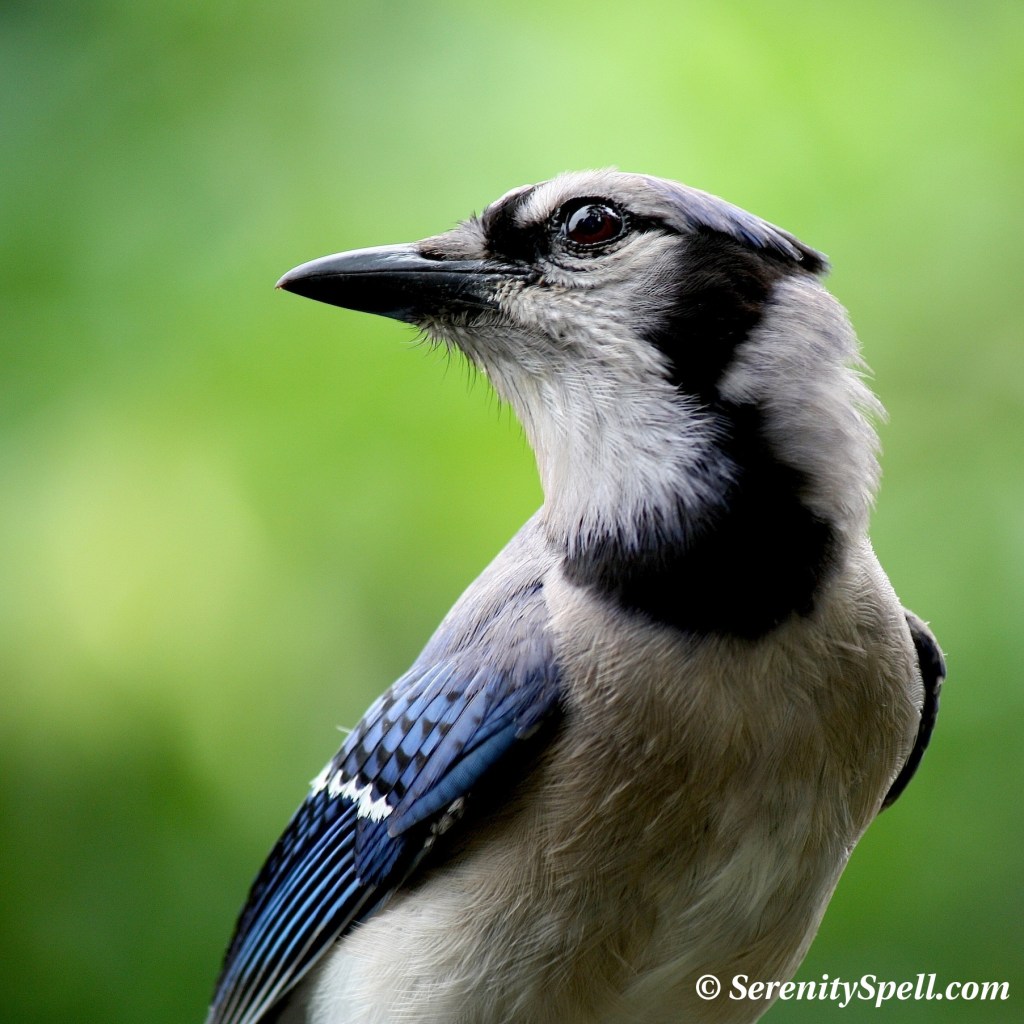
Saying Hello: Blue Jay in the Florida Wetlands

Safe to Say Hello? Blue Jay in the Florida Wetlands

Lovely Feathers: Blue Jay in the Florida Wetlands
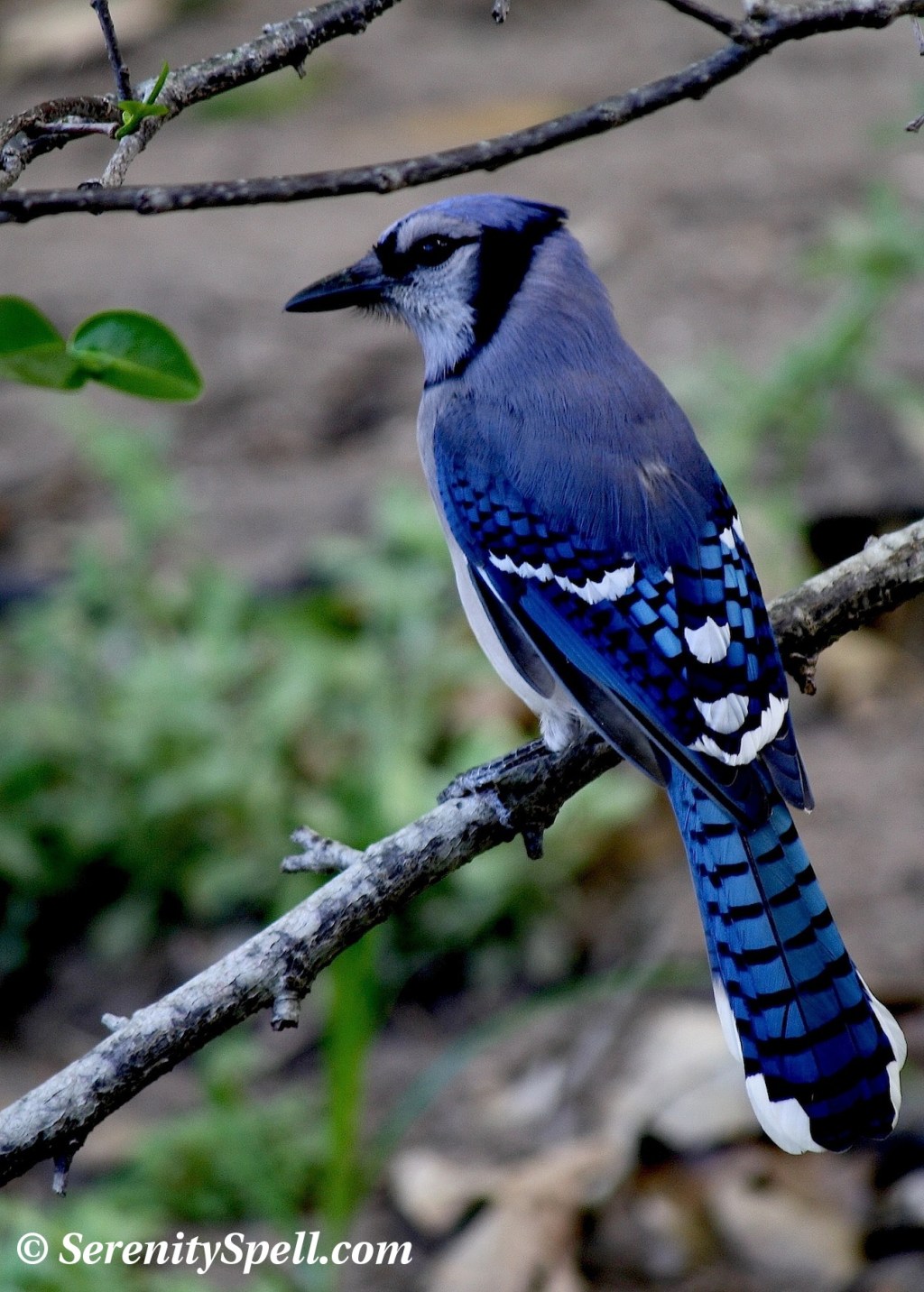
Bright Blue in the Swamp: Blue Jay in the Florida Wetlands

A Saintly Lizard

“It’s a Jesus Lizard.”

“Eh? Come again?”

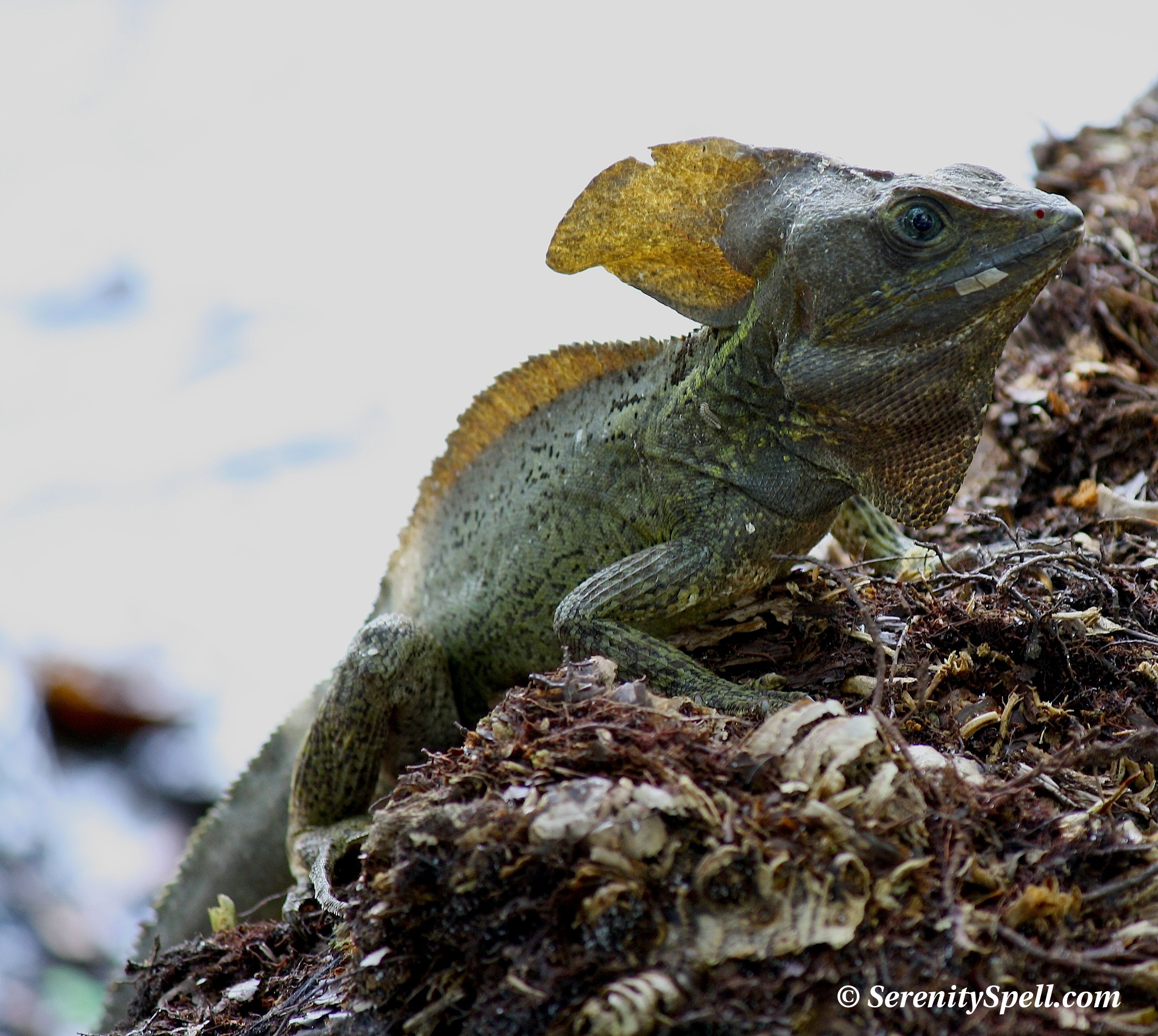
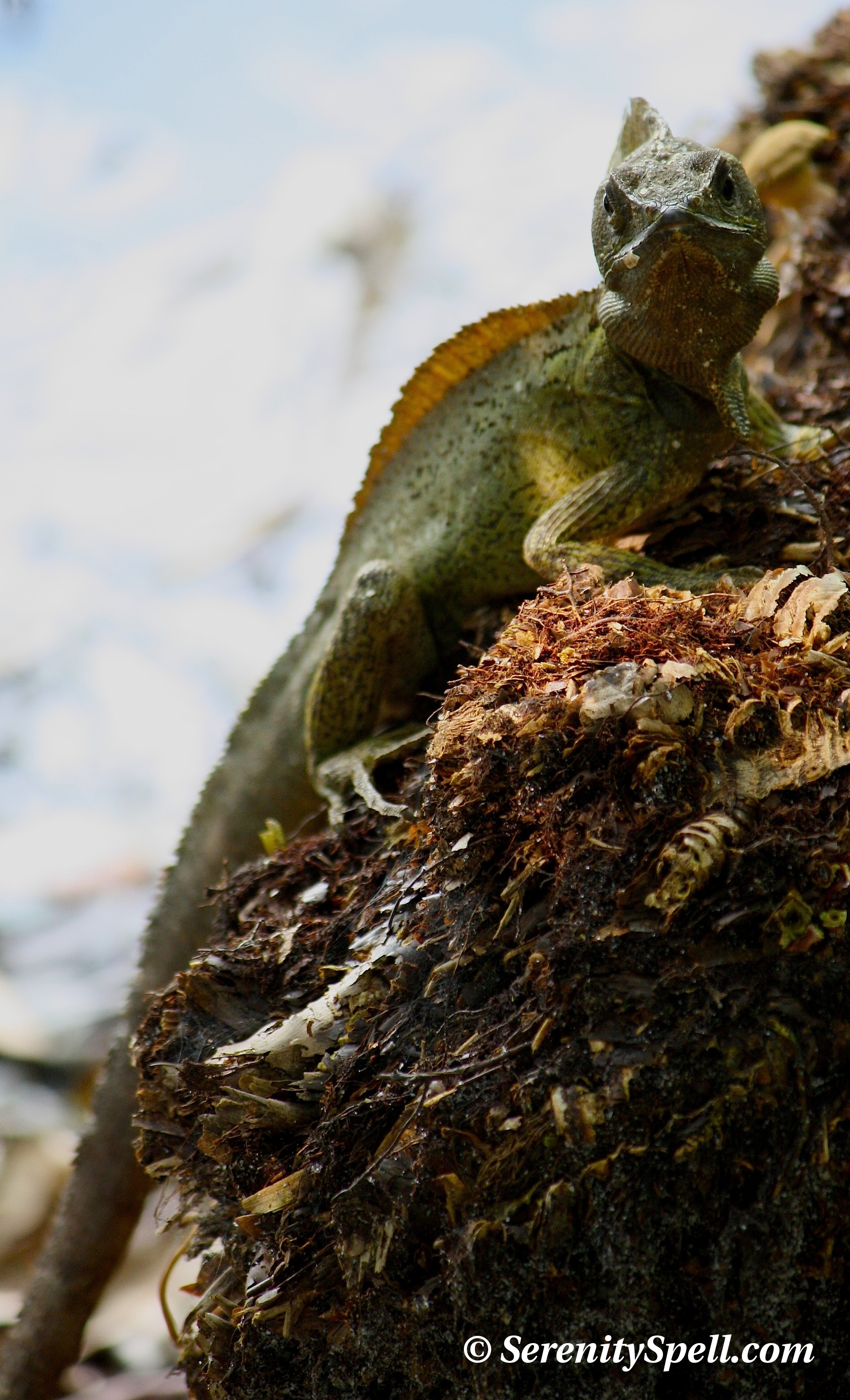
That was many years ago, when I saw my first lizard walking on water. It’s the common name for the basilisk lizard genus, known for its unique ability to walk and run, as a biped, across water. Basilisks are native to the tropical rain forests of southern Mexico, Central America, and northern South America, meaning they’re non-indigenous to Florida. To date, the furthest north they’ve been spotted is Ft. Pierce. Part of the iguana family, basilisks can reach 2 feet in length, including their long tail. The high crests on the males’ heads and backs are used to impress females.

On water, basilisks can run on their hind limbs at about 5 feet per second for approximately 15 feet, before sinking to all fours and swimming. I’ve often seen them running across solid surfaces as well however, and this National Geographic article describes the complicated mechanics of the basilisk lizard’s movements. During times of danger, basilisks will swim at fast speeds, using their crests as rudders. They also burrow in the sand — a ring of muscles around both nostrils prevents grains of sand from entering the nose. Since being introduced to Florida, and a slightly cooler environment, they’ve taken to burrowing in the leafy undergrowth (something I commonly witness).

Although they’re not huge — big enough to notice, for sure — they definitely have a prehistoric air to them. I call them Little Godzillas whenever I see them on our hikes. And their name helps this primeval aura…. BASILISK. I hope they can stay safe in their selected home; they’ve chosen an area which is now home to no less than three alligator nests — slightly larger reptiles.

Basilisk Lizard (Jesus Lizard) in the Florida Wetlands

Basilisk Lizard (Jesus Lizard) in the Florida Wetlands

Basilisk Lizard (Jesus Lizard) in the Florida Wetlands: Hello, FACE!

Courtship Colors

The next time you look into an animal’s eyes look deep and long. You will see their inner beauty and feel their living soul. —A.D. Williams

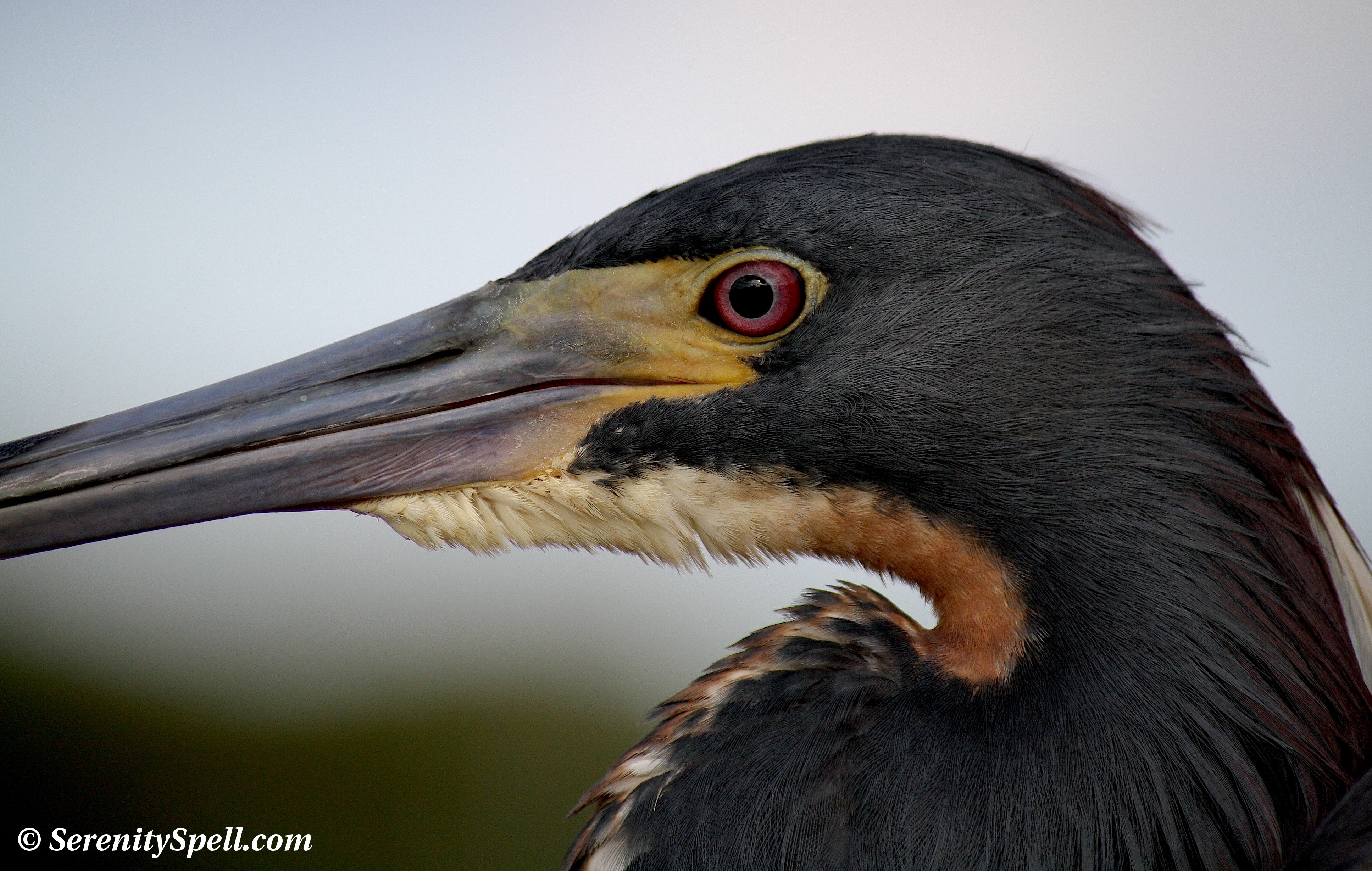
The Tricolored Juveniles and the Tricolored Adults of our Florida wetlands have been highlighted; and now…. A most lovely Egretta tricolor displays his brilliant breeding colors. During courtship, these already beautifully colored herons become even more vibrant: the eyes turn a striking scarlet, and the otherwise long, pointed yellow bill turns blue. Breeding plumage involves filamentous plumes on the head and neck, and buff plumes on the back.

The juxtaposition of the deep scarlet eye against slate blue feathers is perfect; Nature needs no retouching.

Tricolored Heron in Breeding Colors, Florida Wetlands