Skip to content

Posts by FeyGirl

The Butterfly of Doom

Or so it was named by the late 19th-century Russians — leave it to them to label a butterfly as such. It’s definitely the first time I’ve ever heard Butterfly and Doom used in the same phrase; there has to be heavy-metal band with this name out there somewhere.

Red Admiral Butterfly (Vanessa atalanta), Florida Everglades

A Red Admiral Butterfly (Vanessa atalanta) rests in the Florida Everglades

Zebra Longwing Butterfly (Heliconius charitonius)

Florida’s abundant all-year blooms provide enough butterfly chasing, even for me. The most common encounter is the Zebra Longwing (Heliconius charitonius), found throughout the hardwood hammocks, swamps, and Everglades — and designated the official state butterfly of Florida.

Found in North America, Asia, and Europe, territorial male Red Admirals (Vanessa atalanta) can be found in the same location day-to-day — and as a testament, the images below were shot on separate days, in the same clump of foliage. Red Admirals are dark brown, with brick-red bars and white markings on the tips of the forewings. Although known to be quick fliers, they’re considered a perfect companion for gardens, being very people-friendly, and known to perch on humans.
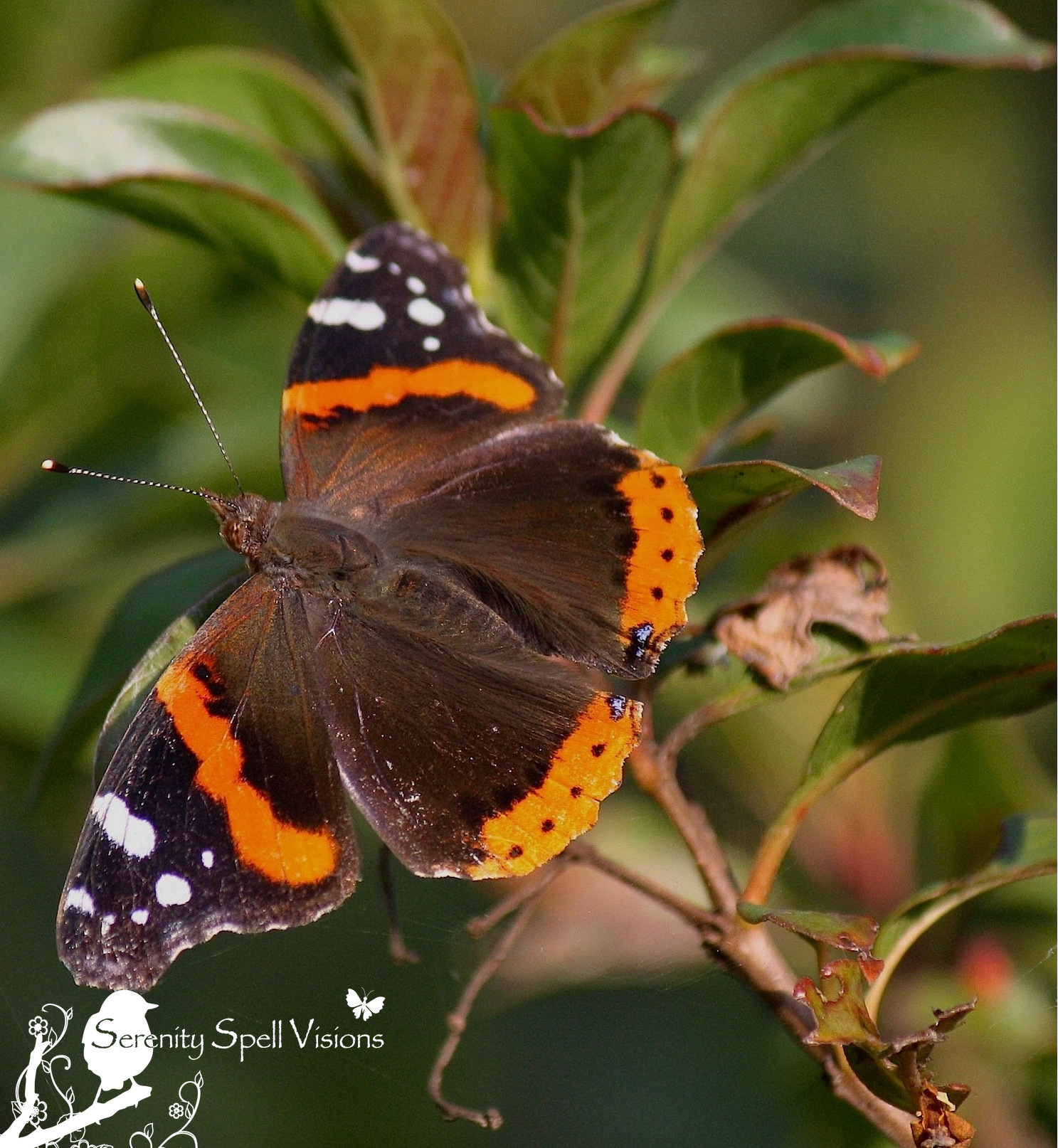
Red Admiral Butterfly (Vanessa atalanta), Florida Wetlands

The Butterfly of Doom terrifies all

The Red Admiral is considered the favorite butterfly of author and amateur lepidopterist Vladimir Nabokov (1899 – 1977); it’s mentioned throughout his writings, taking a prominent role in the 1962 novel Pale Fire. When scholar Alfred Appel, Jr. asked why he was so fond of Vanessa atalanta, Nabokov replied: “Its coloring is quite splendid and I liked it very much in my youth. Great numbers of them migrated from Africa to Northern Russia, where it was called ‘The Butterfly of Doom’ because it first appeared in 1881, the year Tsar Alexander II was assassinated, and the markings on the underside of its two hind wings seem to read ‘1881’. There is something interesting in the Red Admirable’s ability to travel so far” (Strong Opinions, p. 170).

According to Pale Fire‘s character — poet John Shade — the original Old English name for the butterfly was actually Red Admirable, which was later degraded to The Red Admiral. In the novel, Vanessa atalanta appears as Shade’s heraldic butterfly, as seen in the verses:

Come and be worshiped, come and be caressed,
My dark Vanessa, crimson-barred, my blest
My Admirable butterfly… (lines 269–271, p. 42–43)

Red Admiral Butterfly (Vanessa atalanta), Florida Wetlands

Nabokov’s favorite in the Florida wetlands
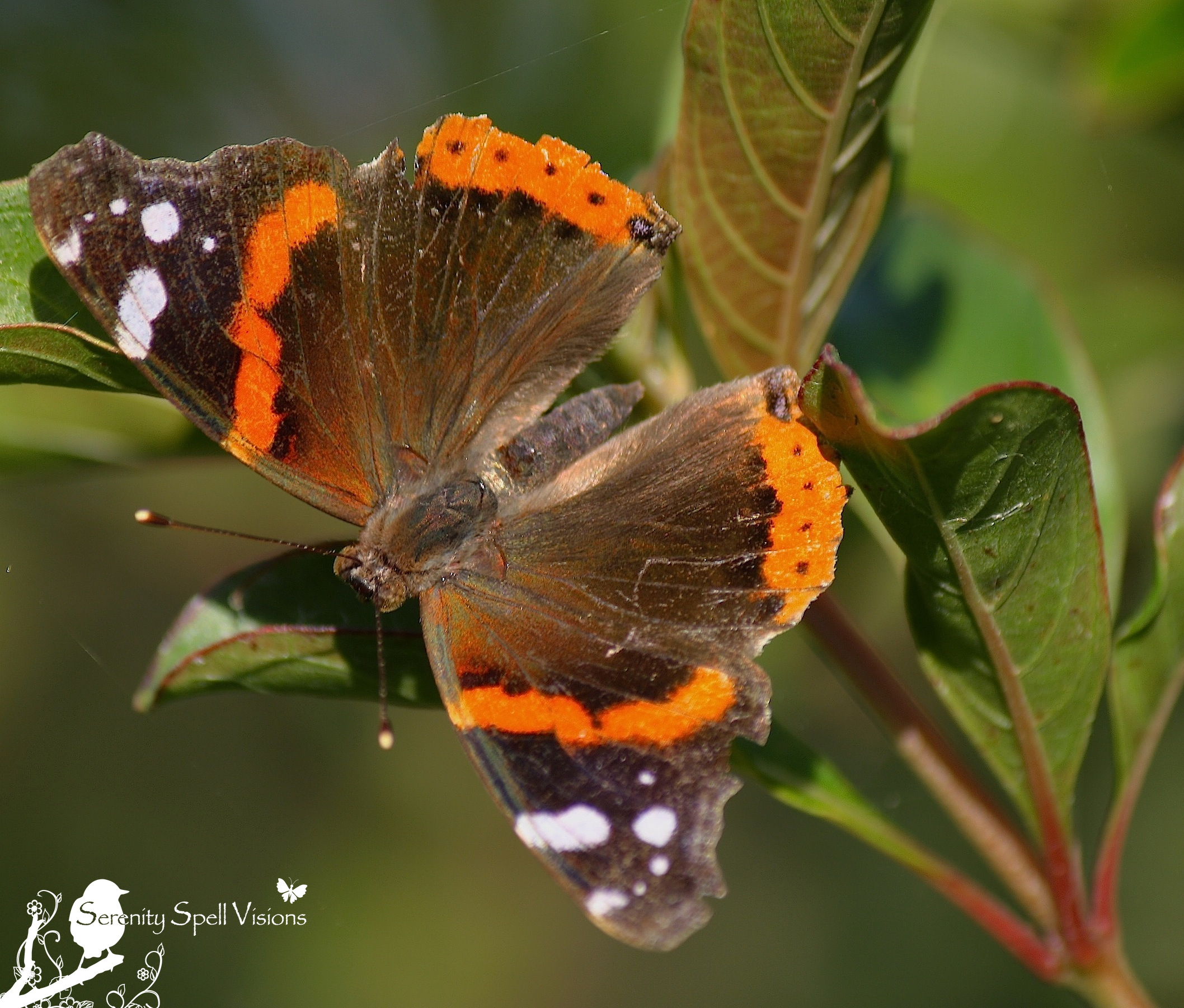
Red Admiral Butterfly (Vanessa atalanta), Florida Wetlands

A Red Admirable kindly displaying for the butterfly-chaser
For More Information:

Helping the Monarchs, and Florida’s Monarch Mimics

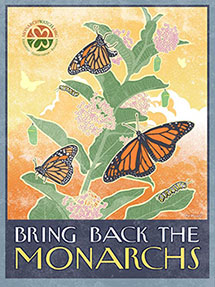
 Monarch Watch Conservation Campaign Poster

Monarch Watch Conservation Campaign Poster, courtesy of Monarch Watch

In mid-March, news of the severe decline in Monarch colonies was released — a record low. Their population has dropped 59% this year alone. That’s outstandingly sad. Although insect populations fluctuate, experts are concerned about the monarchs’ consistent downward trend. Their wintering colonies in Mexico, which once spanned 44 acres, now encompasses less than THREE mind-boggling acres. It was the topic of an NPR piece recently as well: Majestic Monarch Butterflies Under Threat.

Scientists suspect many factors contribute to the decline, including fluctuations in weather, habitat loss, pesticides on milkweed, and Round-up resistant crops — genetically engineered crops. Basically, the fault lies with us.

Monarchs NEED milkweed. During their long and arduous migration spanning several generations, the female lays her eggs on milkweed plants. When the eggs hatch, the larvae in turn feed on the plant. Without this basic necessity, the beautiful monarchs will continue to disappear. This year’s numbers are beyond troubling — but hopefully another eye-opening alert for the GMO industry using the herbicides.

Plant milkweed — it’s pretty! So are the butterflies that will visit…. I’ve planted lots of native butterfly plants, but I’ll be doing more for sure, especially since I don’t see many Monarchs down here in Southern Florida.

Monarch Fall and Spring Migrations Map, Monarch Watch

Monarch Fall and Spring Migrations Map, Courtesy of Monarch Watch

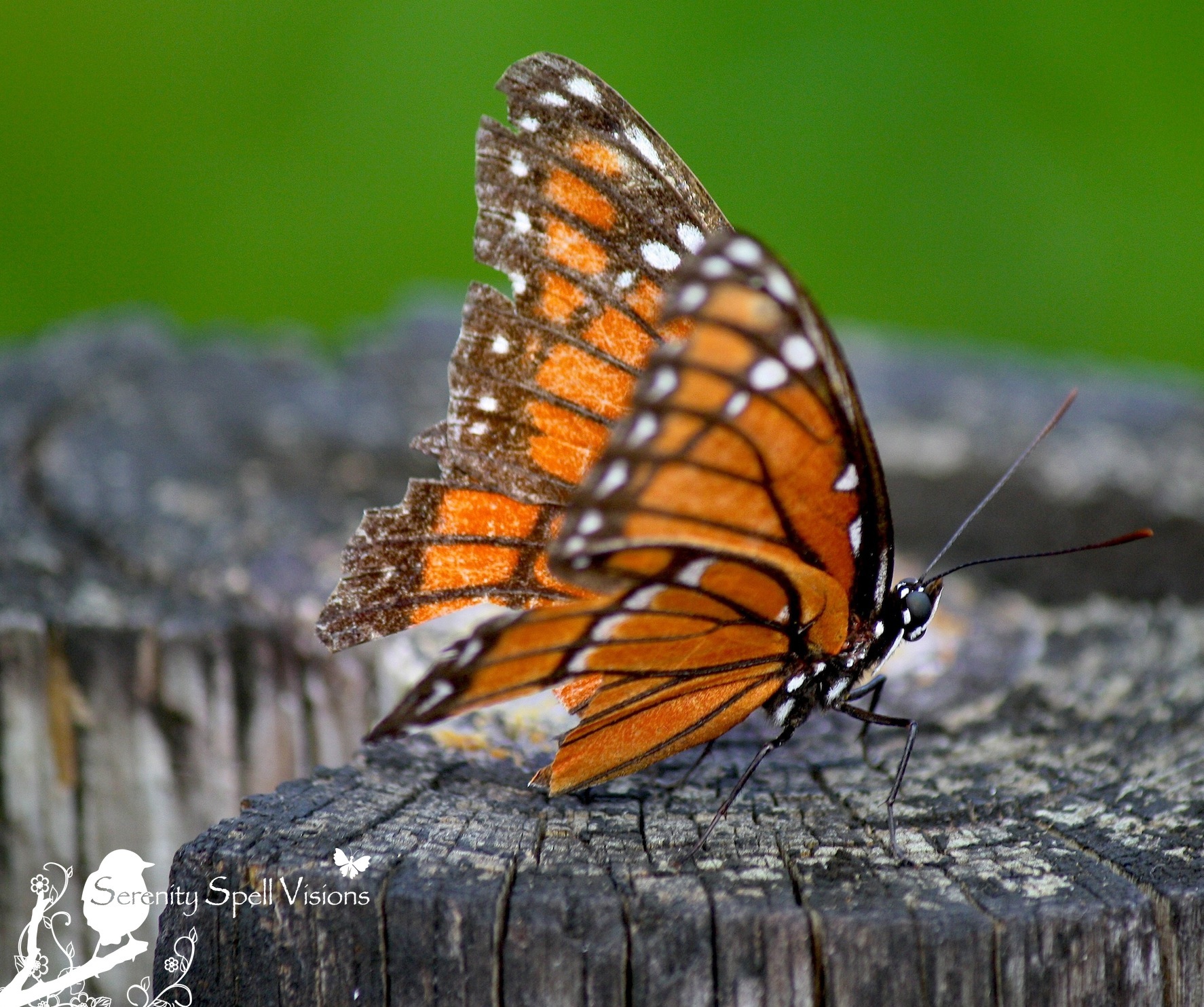
But below are some mimics of the Monarch — the Viceroy and Queen butterflies. The Viceroy, a black-and-orange poisonous butterfly very similar in appearance, doesn’t feed on milkweed like the Monarch, but remains safe because of its similarity to the more noxious-tasting Monarch. Interestingly, the Viceroy has evolved from a tasty butterfly to predators — one that survived on mimicry alone — to one that has adapted further by eating toxic vegetation as well (including willows and poplars).

Viceroy Butterfly (Limenitis archippus), Arthur R. Marshall

Viceroy Butterfly (Limenitis archippus), Arthur R. Marshall Loxahatchee National Wildlife Refuge

Viceroy Butterfly (Limenitis archippus), Arthur R. Marshall

Viceroy Butterfly (Limenitis archippus), Arthur R. Marshall Loxahatchee National Wildlife Refuge

The Queen butterflies also eat milkweed, and the toxins from the plants make them distasteful to predators. Scientists have noted that a bird eating a Monarch will learn and remember that the bright orange coloration and pattern is a signal of unpleasantness — and so a Queen butterfly, with its similar appearance, will be safe. Mimicry! Fascinating stuff.

Queen Butterfly (Danaus gilippus)

Queen Butterfly (Danaus gilippus), Hyplouxo Scrub Natural Area

Queen Butterfly (Danaus gilippus)

Queen Butterfly (Danaus gilippus), Riverbend Park

Be sure to also check out:

Monarch Watch Shop — Learn how to create a habitat for monarchs

Monarch Watch — LOTS of resources

Flight of the Butterflies in 3D — And how to plant a butterfly garden

Click here to look at the maps and other population graphs of the monarchs, and learn how you can help in their plight

Denise Dahn, artist/writer: An amazing nature artist and writer, here highlighting the history of milkweed and its importance to the Monarch

A Cormorant’s Dream

And now here is my secret, a very simple secret; it is only with the heart that one can see rightly, what is essential is invisible to the eye. —Antoine de Saint-Exupery

Our cormorants are some of the most personable birds of the wetlands. As common as they may be in this area, they’re fascinating and sweet creatures.

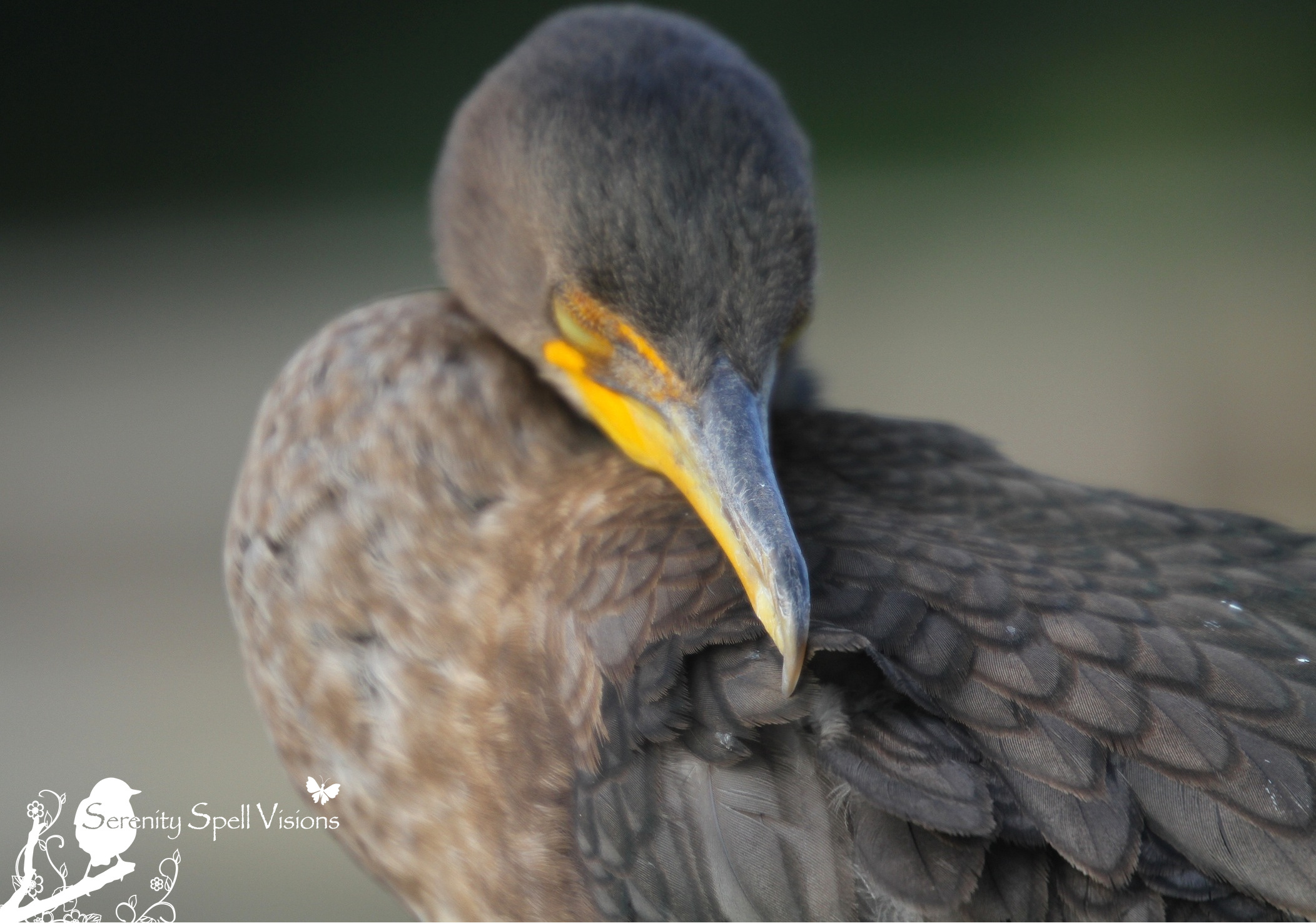
Sleeping Cormorant, Florida Wetlands

Hello, sweet one

I caught this serene cormorant — or “shag” (referring to the bird’s crest, which is lacking in the British forms of the Great Cormorant) — as he was preparing for the evening in the local wetlands.

These medium-to-large coastal (rather than oceanic) seabirds are plentiful in southeastern Florida, and can often be seen diving for fish and other aquatic grub. After fishing, the cormorants dry their wings ashore in the sun and in the trees (similar to the cormorant-like anhingas), as their feathers don’t possess the waterproofing oil of other seabirds.

Preening Cormorant, Florida Wetlands

Preening time

Cormorant, Florida Wetlands

One last look to the setting sun

Sleeping Cormorant, Florida Wetlands

Nodding off

Sleeping Cormorant, Florida Wetlands

Snooze

Check out their beautiful and distinctive turquoise eyes that fade quickly after the breeding / nesting season.

Humans have long used trained cormorants to fish the waters of China, Japan, and Macedonia. Trained by fishermen, a snare is tied near the base of the bird’s throat, allowing the bird to swallow only small fish. When the bird captures and tries to swallow larger fish, the snare doesn’t allow the fish to be swallowed, and it becomes stuck in the bird’s throat. The cormorant is forced to return to the fisherman’s boat, where he helps the bird regurgitate the fish, removing it from its throat. Traditional cormorant fishing isn’t as common a method today — with the development of more efficient fishing methods — but it remains a tourist draw. However, the method is still practiced in some Japanese regions, and has continued uninterrupted for 1300 years in Gifu City, in Gifu Prefecture.

Happy Trails, Peon

All good things are wild and free. ―Henry David Thoreau

At the beginning of what would be a 10-12 mile hike through the SWA system, along the Owahee Trail (near Grassy Waters Preserve) in northern Palm Beach County, this curious and bold fellow — majestic and magnificent, always — offered a steady and seemingly condescending gaze.

May your weekends be as wild and free as this beautiful creature!!

Red-shouldered Hawk, SWA Trail System, Florida

Sorry Mr. Red-shouldered Hawk — we simply cannot compete with that poise

Happy Birthday, Mr. Audubon!

A true conservationist is a man who knows that the world is not given by his fathers, but borrowed from his children.

As I grew up I was fervently desirous of becoming acquainted with Nature.

But hopes are Shy Birds flying at a great distance seldom reached by the best of Guns. —John James Audubon

Happy birthday to one of the most intriguing figures of history, the French-American ornithologist, conservationist, naturalist, and painter. John James Audubon — a man whose influence is keenly felt to this day — documented countless American birds in his gorgeous and brilliant drawings. His masterpiece — the enormous (-sized) color-plate book, The Birds of America (1827–1839), is widely considered to be the finest ornithological and artistic works ever created.

Thank you, sir, and happy birthday!

Audubon, Great Egret, 1821

Audubon, Great Egret, 1821

Great Egret in Breeding Plumage, Florida Wetlands

Great Egret in Breeding Plumage, Florida Wetlands

Audubon, Louisiana Heron (Tricolored Heron)

Audubon, Louisiana Heron (Tricolored Heron)

Tricolored (Louisiana) Heron, Florida Wetlands

Tricolored (Louisiana) Heron, Florida Wetlands

Visit Florida Rambler to learn about his beautiful Key West home, where he stayed in 1832… Discovering 18 new species (well, to the Western world at least).

National Audubon Society Logo — The Great Egret in Flight (Courtesy of The National Audubon Society)

National Audubon Society Logo — The Great Egret in Flight (Courtesy of The National Audubon Society)