Skip to content

Posts from the ‘Florida Birds’ Category

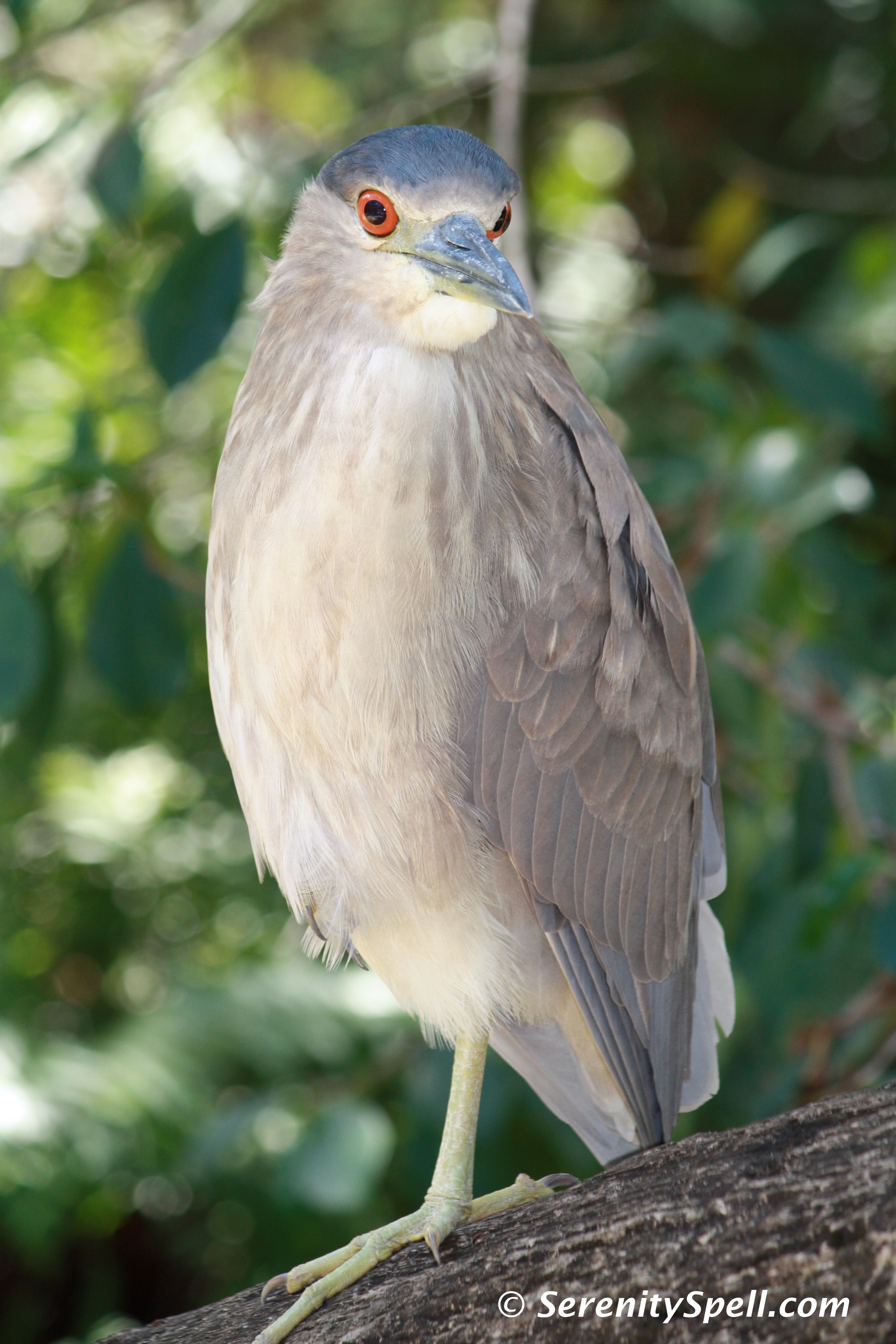
Night Herons for Eddie

I’ve harped on the frustration I occasionally feel during our snowbird season — besides the increased trash in our protected and endangered wetlands and Everglades, it seems as though (*SOME*) visitors treat the natural spaces like a trip to Disney, screaming and seemingly doing their best to frighten the native wildlife. Additionally, with more than 140 species of birds identified at the site, and the fact that it’s part of the South section of the Great Florida Birding Trail, Wakodahatchee is most definitely a birdwatcher’s paradise. This can be a mixed blessing, depending on the birdwatcher’s/photographer’s temperament.

But more often than not (perhaps because I have a great knack for ignoring the obnoxious), I’ve met the kindest people on the boardwalks. During my most recent visit to Wakodahatchee, to admire the wetlands’ newest residents (it’s nesting and baby season at Green Cay and Wakodahatchee), I had such an encounter…someone who operated at my quiet and subdued speed — not at the loud and frantic pace that can be curiously spied at these locations. He regaled me with stories of old Puerto Rico and a young Raúl Juliá (one of my all-time favorite actors), and their safaris to the beaches with their paso finos. It was like storytelling hour for me, so I want to thank him. One of his favorite birds is the patient and often shy Black-crowned night heron, so this is for you Eddie!

For More Information:
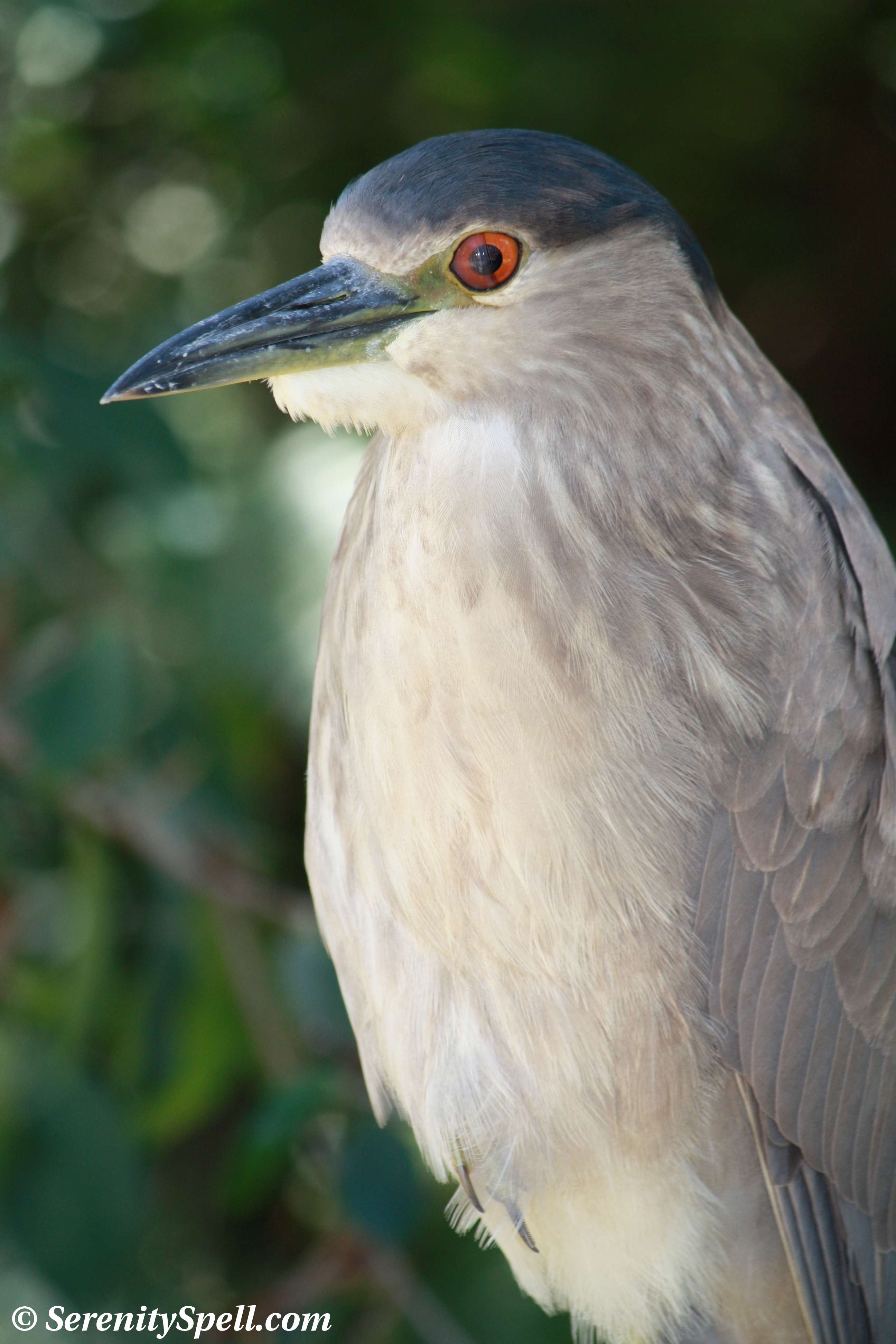
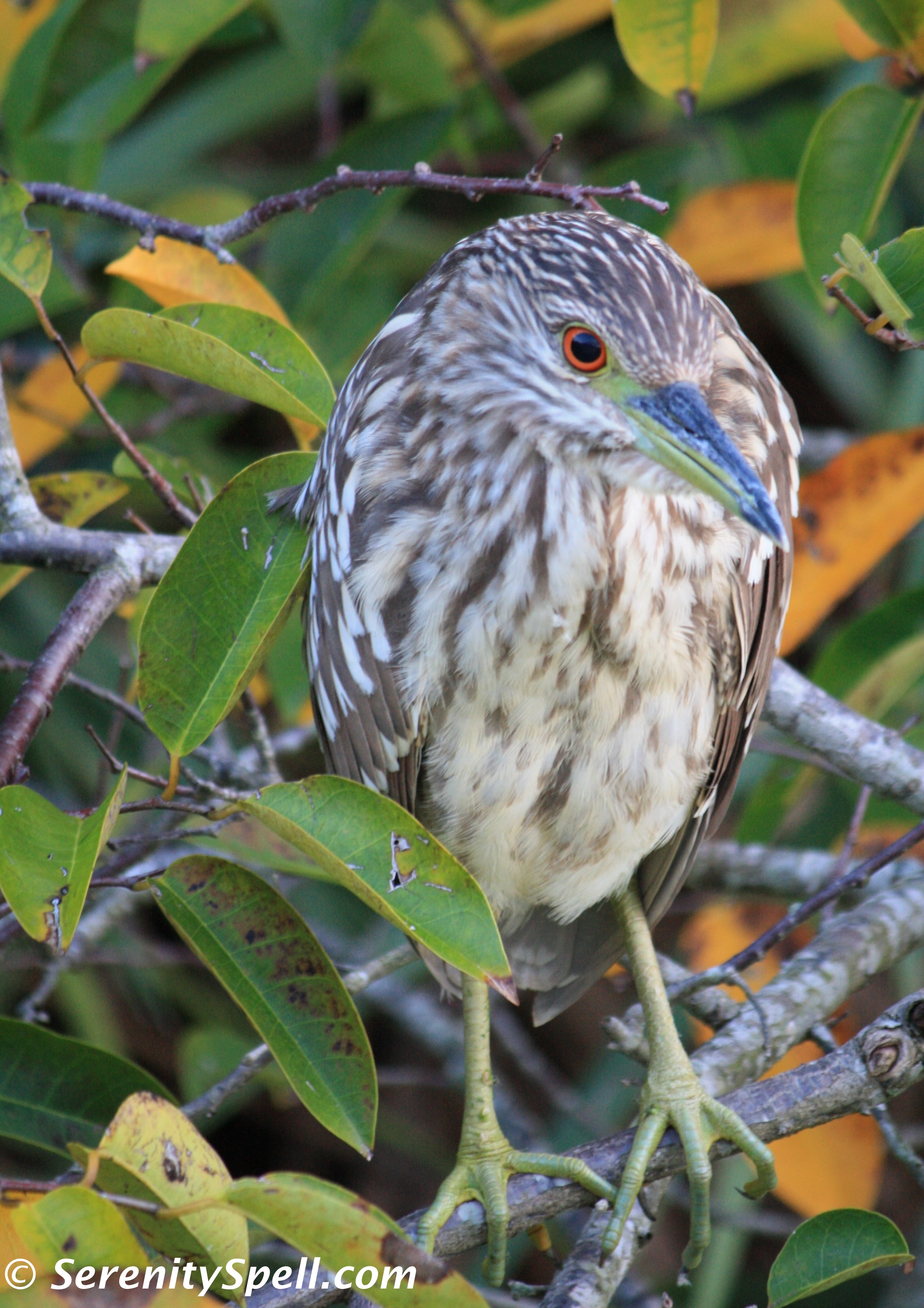
And a juvenile:
Nesting Season at Wakodahatchee

For the last two months, it’s been nesting and baby season at the Green Cay and Wakodahatchee Wetlands — oases of green in South Florida’s suburbia, nestled on the edge of the Everglades. In the Seminole Indian language, Wakodahatchee translates as “created waters” — and that’s exactly what’s been done at these wetlands. Wakodahatchee’s present-day 50 acres of wetlands were, in their previous incarnation, unused utility land. But the space has been transformed into an Everglades wildlife ecosystem, with marsh habitat, intermittent tree islands, and cypress hammocks. Each day, the Palm Beach County’s Southern Region Water Reclamation Facility pumps nearly two million gallons of highly treated water daily into Wakodahatchee; the wetlands themselves further naturally cleanse, recharge, and filter the remaining nutrients and maintain earth’s water cycle. Dozens of different species of trees, shrubs, and aquatic vegetation were also incorporated to help manage this feat.

Wakodahatchee is a birdwatcher’s paradise — the site is part of the South section of the Great Florida Birding Trail, and common sightings include egrets, herons, ducks, grebes, bitterns, ibis, moorhens, warblers, blackbirds, cardinals, owls, hawks…and the list goes on, with more than 140 species identified. Many turtles make their home at the wetlands, and marsh rabbit can also be seen in the grassy and low-lying areas. As always, alligator sightings are common at Wakodahatchee, and non-poisonous snakes and frogs live on the fringes of the boardwalk. But I’ve even had the most fortunate sightings of shy otters and bobcat. Right now however, it’s the babies that are catching everyone’s eyes….

For More Information:

A most entertaining trio of young anhingas:

Big Like You: The crowded rookery, with great blues, anhingas, tri-colors, and ibises (the egrets have their very own space):

Yummy mealtime for the young anhingas (those mommas work hard)…

And some of the rookery’s newer fuzzy anhinga residents…

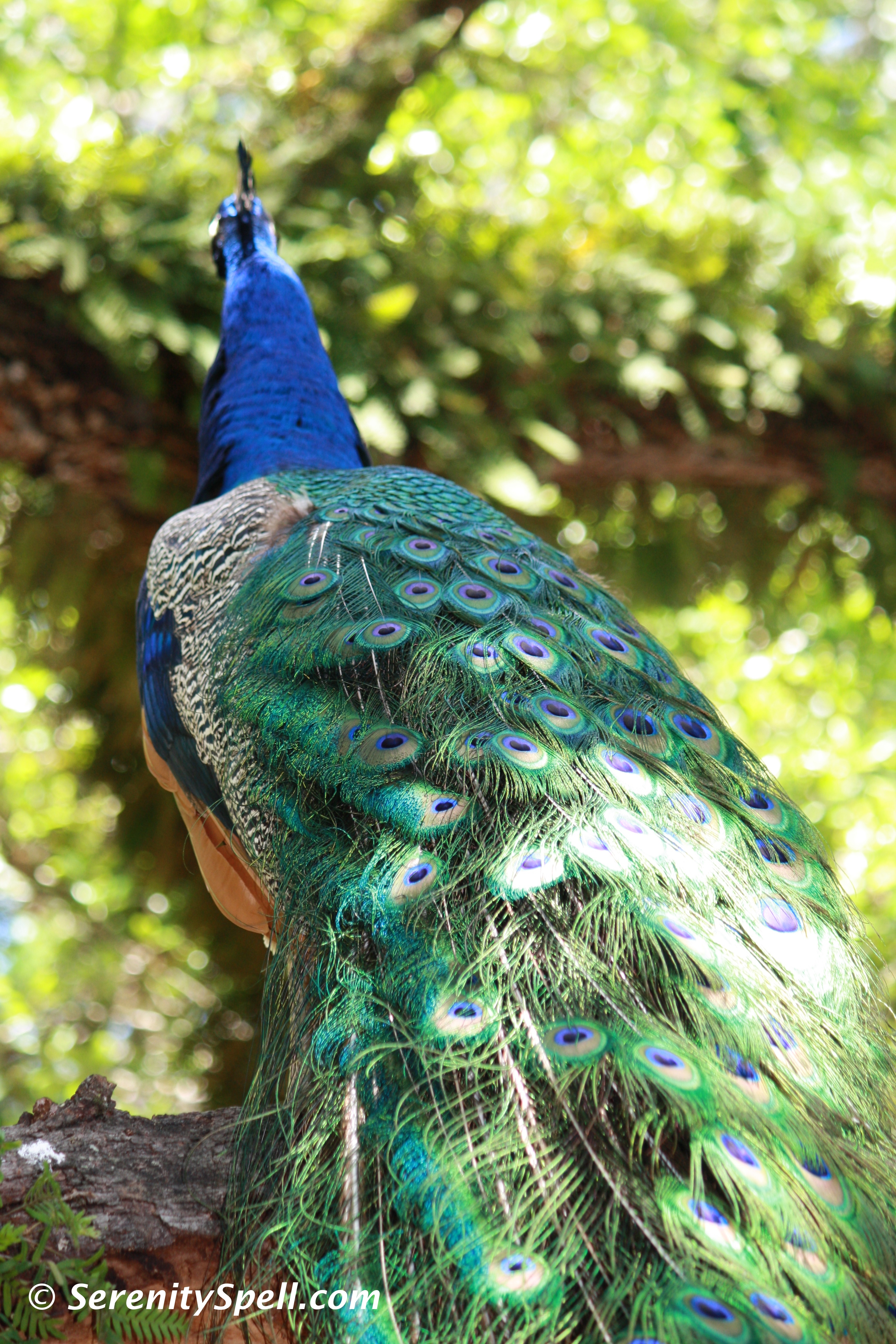
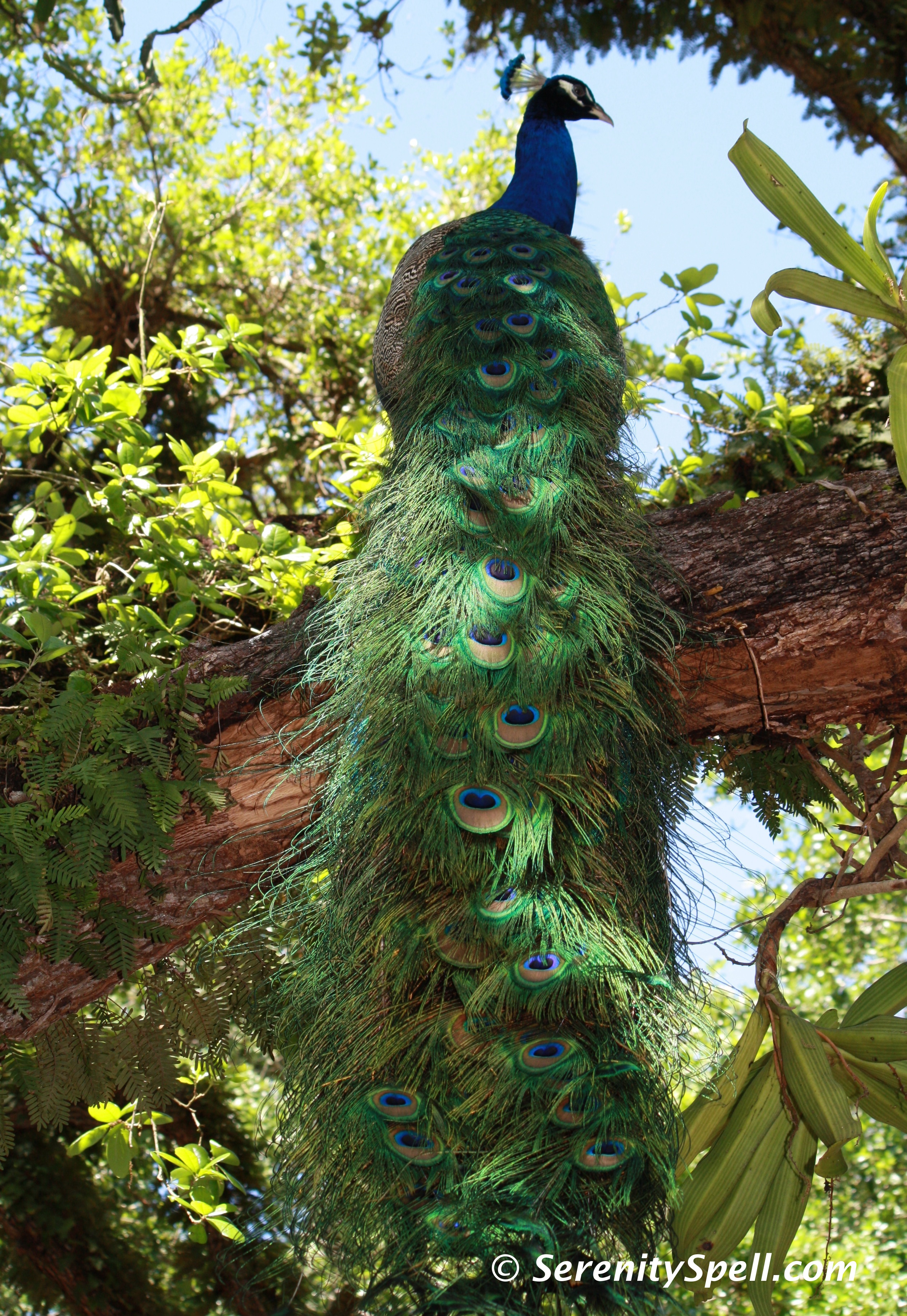
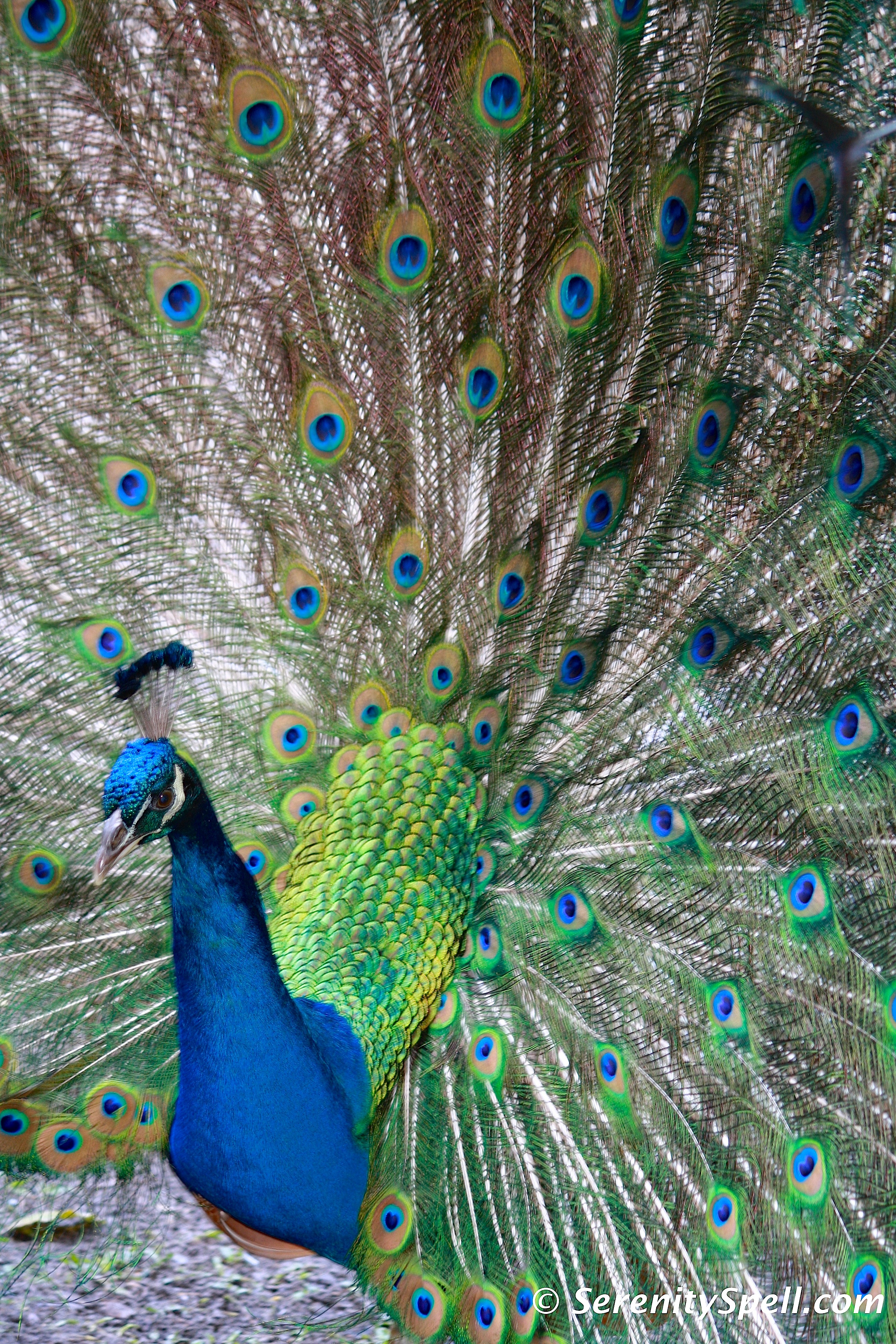
Preening Peacocks

One of the oldest botanical gardens in South Florida, Flamingo Gardens today is a not-for-profit facility with more than 3000 tropical and sub-tropical species of plants and trees. The lush Wray Botanical Collection features 21 of the largest trees of their species in Florida (and in many cases, the United States) — “Champion Trees” — as well as a unique hammock of 200-year-old live oak trees, and several specialized gardens. Within Flamingo Gardens’ 60 acres also resides an Everglades Wildlife Sanctuary, aviary,  and Bird of Prey Center, which are home to the largest collection of Florida native wildlife in the state — offering permanently injured and non-releasable animals special care and a home. (Be sure to read their stories!)

Free-roaming peacocks and iguanas also stroll the grounds (as do TNR’d kitties — yay!), although we missed the iguanas on our initial visit. But to see the peacocks in all their glory, roosting in the centuries-old live oaks… Beyond lovely. The colors of the birds, joined with the ornate oaks and tropical foliage, was ethereal.  A fairy world. Another thanks to the Wrays, and to all those who continue to protect and preserve the land and creatures of the Everglades….

For more on Flamingo Gardens and its mission to “depict and preserve the natural and cultural heritage of South Florida and the Everglades,” visit their website!

Contact Information:

3750 S. Flamingo Rd.
Davie, FL 33330
Phone: 954-473-2955

For More Information:

Preening Peacock, Flamingo Gardens, Davie, Florida

Grace + Power: Learning from the Natural Kingdom

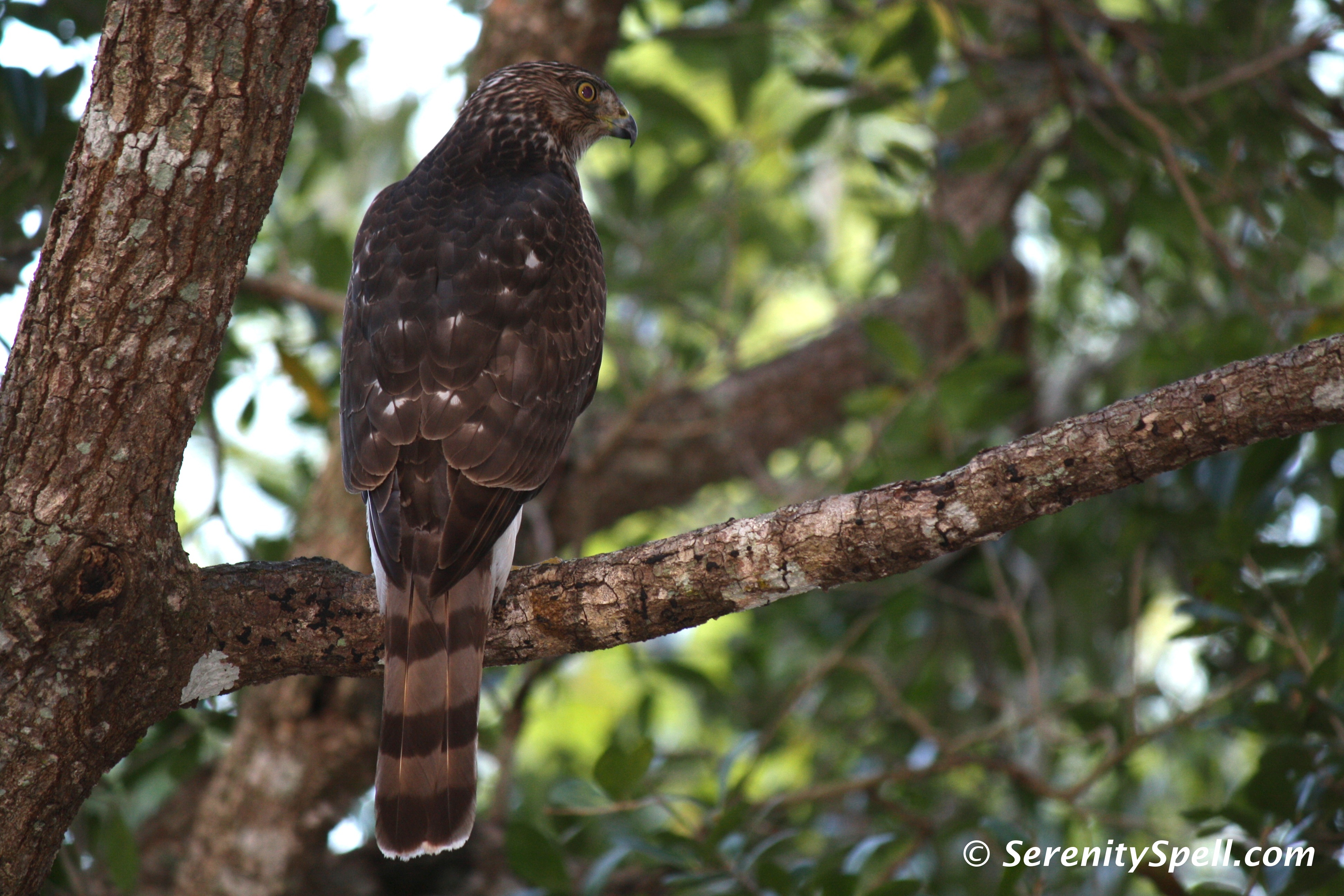
I had been brooding on the need to quietly observe nature, and the unfortunate situations in which that’s not always possible — especially when our visiting seasonal hordes treat the sanctuaries like amusement parks. But rather than wallow in the circumstance, I tried to focus on those gentle souls who lovingly respect and appreciate the natural areas as much as we do. We recently stumbled upon a spectacular raptor, an adult Cooper’s Hawk, hunting with the approaching dusk (stalking songbirds, most likely). Such grace and power seems to exist so easily in the natural (WILD) kingdom, but rarely in the human world. There have been plenty of difficult times previous to ours, with misrepresentation and squandering of power; ours is simply a new iteration of a very old story. In quietly observing the power and grace of the natural kingdom, one can strive for such a beautiful balance, regardless of anything else. For our human selves, it’s a lesson in being brave and graceful; kind and strong — and showing empathy without yielding to displays of weakness.

Cooper’s Hawk Waiting for Dinner

Bedtime at Green Cay

The ibis roost in the island trees, the anhingas dry their wings in the remaining sun, the herons take baths for what seem like hours, and — if you’re lucky — you can catch a glimpse of an owl or two….

For More Information:

This slideshow requires JavaScript.