Skip to content

Posts from the ‘The Animal Kingdom’ Category

It’s NATIONAL WILDLIFE WEEK, and: Returning the Florida Panther to the Everglades

In honor of National Wildlife Week, March 18-24, here’s a special and rare event from last week:

A Florida panther was recently released into the Picayune Strand State Foresta rare event, in a bid to help save the species. The tagged female will hopefully become a safe and successful mommy!

She and her brother were raised from the age of five months at the White Oak Conservation Center in Yulee, rescued after their mother was found dead.
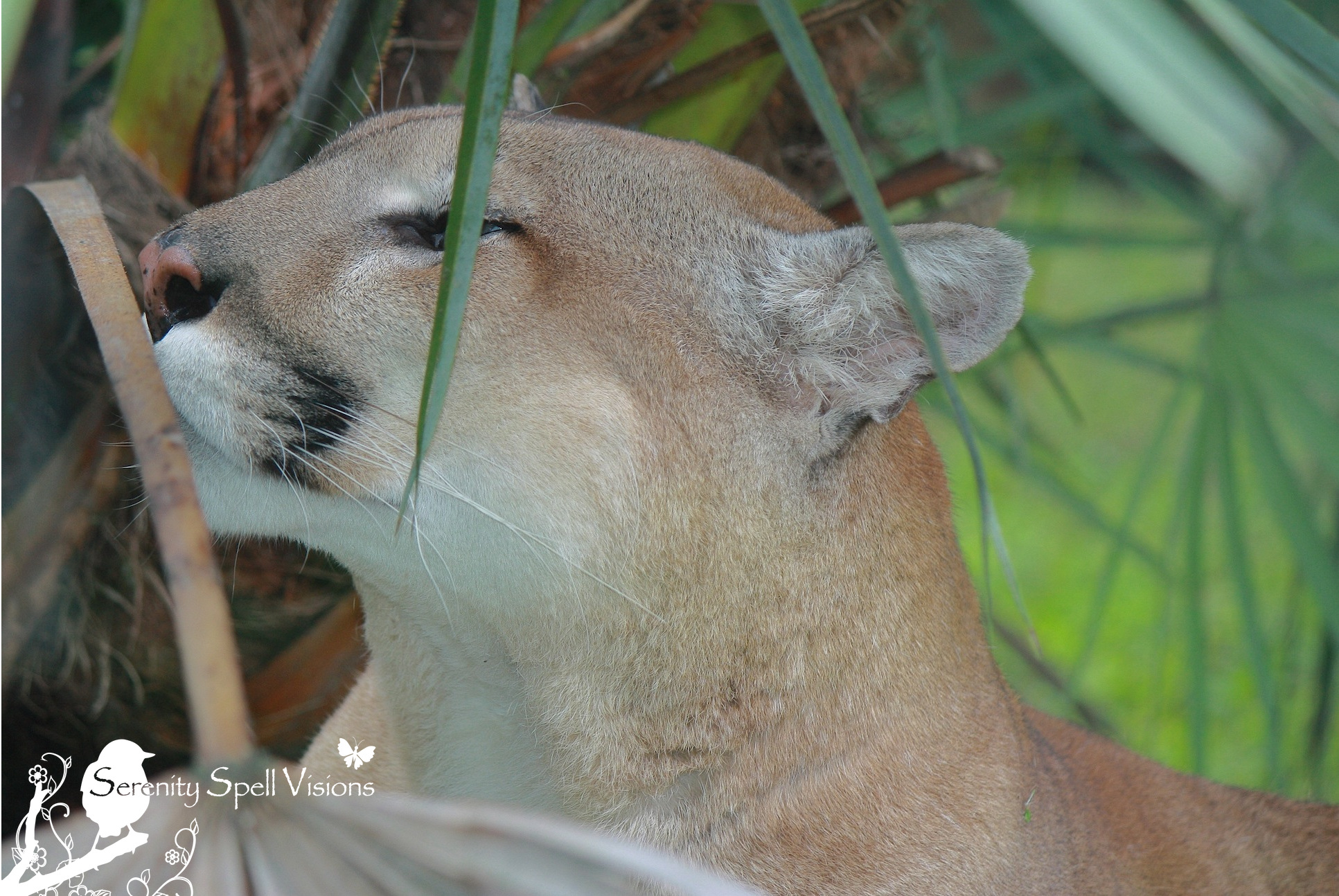
Rescued Florida Panther at Flamingo Gardens, Florida

Rescued Florida Panther at Flamingo Gardens: Sadly, this guy can’t be returned to the wild, because he underwent a painful de-clawing procedure at the hands of humans

From the article:

Florida panthers were among the first to go on the Endangered Species List back in 1973 when there were as few as 20 remaining individuals. Today they are still in great peril with as few as 100-160 in the wild, but biologists with the Florida Fish and Wildlife Conservation Commission (FWC) successfully released one female Florida panther into the Picayune Strand State Forest recently with the hope that she will become a successful mom.

Read more….

So much luck to this girl (and to her soon-to-be-released brother!) – AND so many thanks for the continued rescue and conservation efforts the world over!

Rescued Florida Panther at Flamingo Gardens, Florida

Another panther rescue: De-clawing exotic cats is still permitted, unbelievably. It causes extreme pain and lameness, and requires constant pain regulation. Horrific “legal” state minimum enclosure requirements for bears, big cats, and other wild animals (envision a tiny jail cell) are also allowed

Animal Bridges and Wildlife Crossings

I recently read a statistic — nearly 70% of Florida panthers were killed by vehicles in 2012. That’s stupendous; visit Wildlife Extra to learn more. So while overall their populations are faring well, our state could definitely use some more of these most amazing animal bridges in key wildlife areas….

twistedsifter's avatarTwistedSifter


Animals bridges, which may also be known as ecoducts or wildlife crossings, are structures that allow animals to safely cross human-made barriers like highways. A wildlife crossing is the broadest term and can include: underpass tunnels, viaducts, overpasses and bridges, amphibian tunnels, fish ladders, culvets and green roofs. [Source]

Wildlife crossings are a practice in habitat conservation, allowing connections or reconnections between habitats and combating habitat fragmentation. They also assist in avoiding collisions between vehicles and animals, which in addition to killing or injuring wildlife may cause injury to humans and property damage. It has been reported that vehicle-animals collisions costs the United States a staggering $8 Billion a year.

The first wildlife crossings were constructed in France during the 1950s. European countries including the Netherlands, Switzerland, Germany, and France have been using various crossing structures to reduce the conflict between wildlife and roads for…

View original post 425 more words

Great Dragons: The Alligator Totem

In honor of the New Year, and of the most wonderful and beautiful alligators, here’s a bit of history and symbolism associated with these critters.

In Ancient Egypt, alligators were identified with fury and ferocity. In medieval Europe and earlier, they were the symbol of the dragon; sometimes this association was positive, sometimes negative. The dragon could be the fierce guardian of treasure, or the keeper of great wisdom. But to encounter an alligator signified an opportunity to develop new wisdom — wisdom that must be used carefully.

[Below is a glimpse of the inhabitant alligators encountered on a hike in the Grassy Waters Preserve — specifically the SWA Trails within the Preserve, the Rookery Loop, and the outer Owahee Trail.]

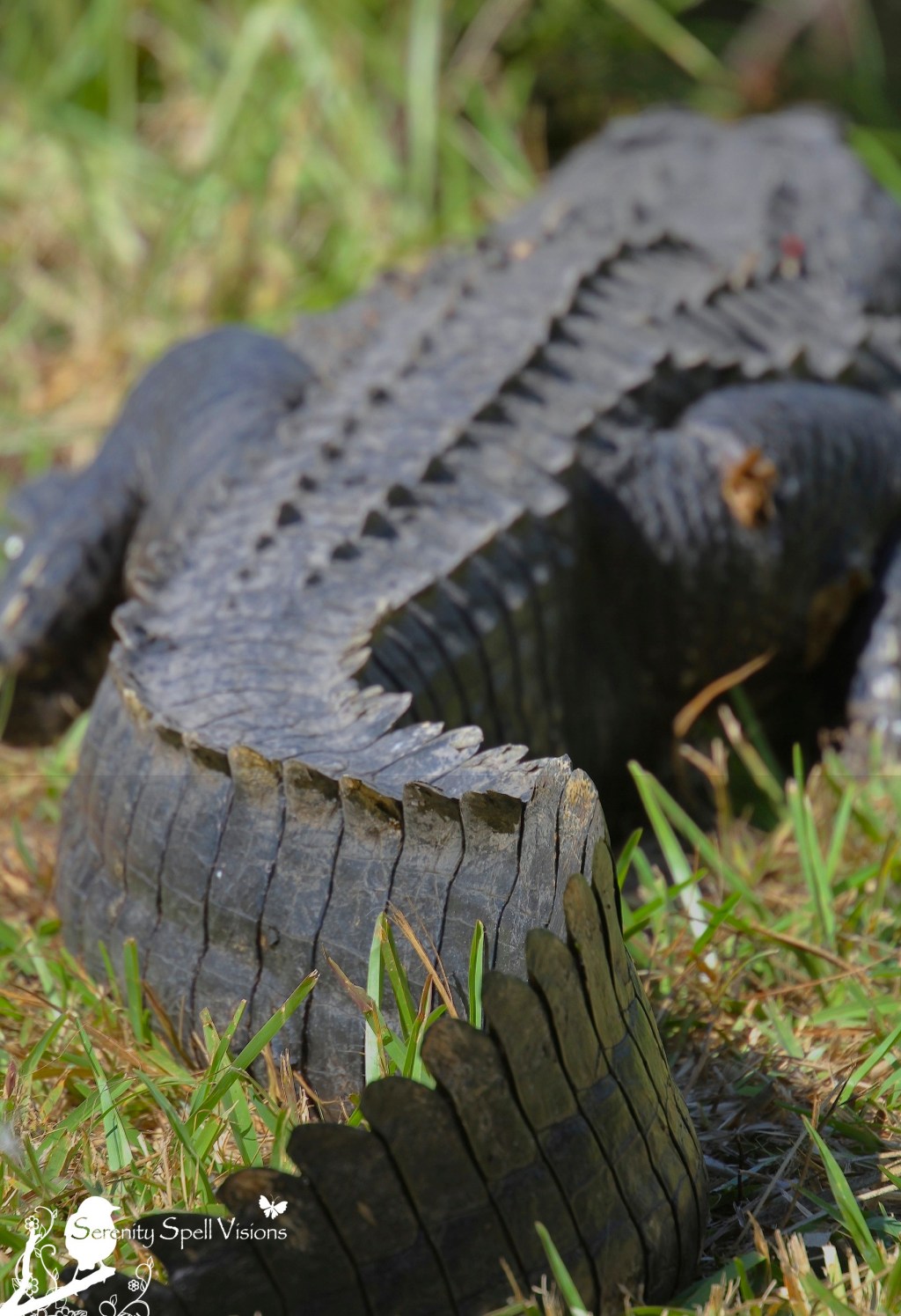
Alligator in the Everglades, Florida

Dragon Tails/Tales: Smaug is present

As I like to constantly observe in my wanderings, alligators are excellent mothers. They will fiercely defend their nests, and when the young are ready to hatch, squeaking from inside their eggs — the mother answers, helping them hatch. She then gently carries them in her mouth to the water.

Alligators’ mothering energy and symbolism is potent:

Mother Alligator and Hatchling in the Florida Wetlands

Gentle and protective momma

Finally, alligators have a rapid growth rate — much more so than crocodiles, for example. They can grow as much as a foot each year, until reaching their final length of up to 16 feet, at 1,200 pounds. For those with an alligator totem, seek an opportunity for initiation and using new knowledge — but be careful to do so in a balanced manner. An alligator digests its food very slowly, and similarly you should digest this knowledge before moving on to the new.

If these wonderful creatures appear, look for opportunities to get in touch with primal energies, and take advantage of birthing and/or initiations that will spawn new knowledge and wisdom. And while some of you may not see these great dragons in your northern climes, may 2013 bring greater wisdom, new ventures, and opportunities galore via these lovely faces… and for those of us in the swamps, may the new year bring more lovely ALLIGATORS!

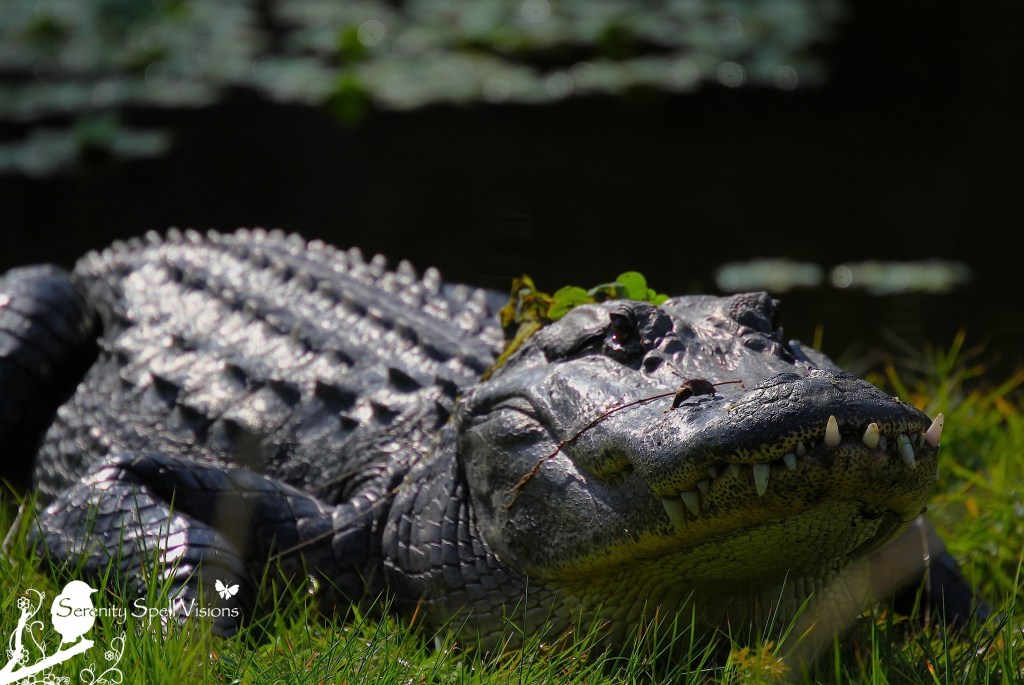
Sunning Alligator in the Everglades, Florida

Sunning with a crooked smile

For more information on alligator symbolism and totems, visit the iconic Animal Speak: The Spiritual & Magical Powers of Creatures Great & Small, by Ted Andrews.

Part of:

Weekly Photo Challenge: Delicate

Well, this was my initial DELICATE post — a precious periwinkle dragonfly resting along the Apoxee Trail in the Grassy Waters Preserve.  It was my companion for the better part of a half-mile; this gossamer creation following me as I hiked — perhaps because I was head-to-toe in periwinkle!

Blue Dragonfly, Grassy Waters Preserve, Florida

That is, until Sunday evening, when a starving black kitten crossed my path. I’ve been TNRing (Trap-Neuter-Release) many kitties, in my wee attempt to help control the populations. (Our county has a severe feline overpopulation issue.) Apparently a lovely woman nearby is doing the same (THANK YOU, stranger!). Sometimes, it’s not cheap: If the kitties are sick, pregnant, need medications, or if assistance is needed with trapping (they can be wily)…it quickly adds up. But these guys need help. Many have been abandoned, the sad products of foreclosed homes and other circumstances. I’ve seen pets left behind for a simple move / long vacation, shockingly.

New Feline Rescue

Maya (??) caught in the flash

My guys are rescues…. And it’s easy to see which ones can survive out there, and which ones cannot. This girl falls into the latter category. She tried desperately to find a home for as long as she was alive, apparently. Maya (?!? still playing with her name) crossed my path in another section of the neighborhood, and, according to one of the tenants, she has no litter mates, and was unable to reach the food provided by the woman caring for the other strays (being so tiny and timid). She had been trying to sneak into the homes of many residents — to no avail. An absolute sweetheart, one of the friendliest felines I’ve ever seen, she wants nothing more than love, safety, and shelter. But every bone in her body is razor-sharp: each vertebrae, her hips…. She was starving. At 6 months old, she has the body of a 4-month-old. I’ll never understand how a starving animal could be repeatedly turned away by so many, nor do I want to understand.

New Feline Rescue

Enjoying the view from inside

Right now, while her body’s very delicate, she’s a survivor — like so many souls on the streets, she’s a combination of delicacy and strength. And despite what she’s seen, despite her physical hardships and emaciation, despite her continued unsuccessful attempts at finding a home (until now), she remains the sweetest little soul.

Audubon of Florida

A growing number of people are demonstrating respect, love, and passion for conservation and the environment in general, something I firmly believe this most beautiful blue sphere of ours, and its lovely inhabitants, needs en masse. And there are organizations that pull together these wonderful passions, using them for the greater good. Audubon is “Florida’s oldest conservation organization, protecting birds and wildlife for more than a century”. Through Audubon of Florida and their Conservation Network — a powerful and knowledgeable grassroots network of citizen advocates — you can access up-to-date information on the state’s conservation issues, and receive calls-to-action during critical decision-making times. There’s an incredible amount of information and resources: free and timely e-newsletters and fact sheets (including the Everglades Conservation Network’s Restore, the Florida Conservation Network’s Advocate, the Climate Action Network’s Climate Solutions, the Center for Birds of Prey’s Raptor News and the Coastal Strand). Regular reports of Florida conservation issues are provided, as are ways to help.

Great Egret in Breeding Plumage, Florida Wetlands

Great Egret in Breeding Plumage in the Protected Wetlands

Continue to love, enjoy, and work to preserve this most amazing environment, ensuring that the devastatingly high habitat loss in the Everglades and in other endangered ecosystems throughout Florida is reversed. Not all have the planet’s protection in their best interests — money still rules, and development and sprawl are devastating. But with Audubon’s tools and resources, you can help conserve Florida’s environmental future: its water resources, land, and birds and other wildlife.

National Audubon Society Logo — The Great Egret in Flight (Courtesy of The National Audubon Society)

Visit Audubon of Florida, their news blog, and the organization’s plethora of information and educational resources. It doesn’t take much to be an advocate and supporter of this state’s incredible and unique ecosystems. Or, just run to one of Florida’s more than 2,000 natural spaces and national parks (two THOUSAND) — there are so many amazing places to love and support, and by simply visiting, enjoying their beauty, you’re helping to protect them.

And for the Facebook followers: Audubon Florida on Facebook

Protect my land…!

Baby Alligator in the Florida Wetlands

Baby Alligator in the Protected Wetlands

Or…where would you be able to see my beautiful mug?

Sunning Alligator in the Florida Everglades

Sunning Alligator in the Florida Everglades