Skip to content

Birthday Brother!

As much as I know he’ll be over-the-moon thrilled (YAYAY!), Happy, Happy, HAPPY Birthday to the kindest, sweetest, most wonderful brother a girl could ever hope for in this life.

CCI00002 copy

I still wear boots nearly every day, just not quite as hip as these…. Me and baldy.

CCI00001 copy

Old-school Hipstamatic in Florida? California?: There seem to be a high number of images in which I’m smothering my little brother….

CCF04052011_00002 copy

Two island kids (“Kwaj Kids”) visiting the Blue Ridge Mountains — EXCITEMENT!

IMG_3450 copy

Dragging brother out to the boardwalk — about as NATURE as he gets! And, more smothering.

Eyes of the Everglades

“Never lose an opportunity of seeing anything beautiful, for beauty is God’s handwriting.” —Ralph Waldo Emerson

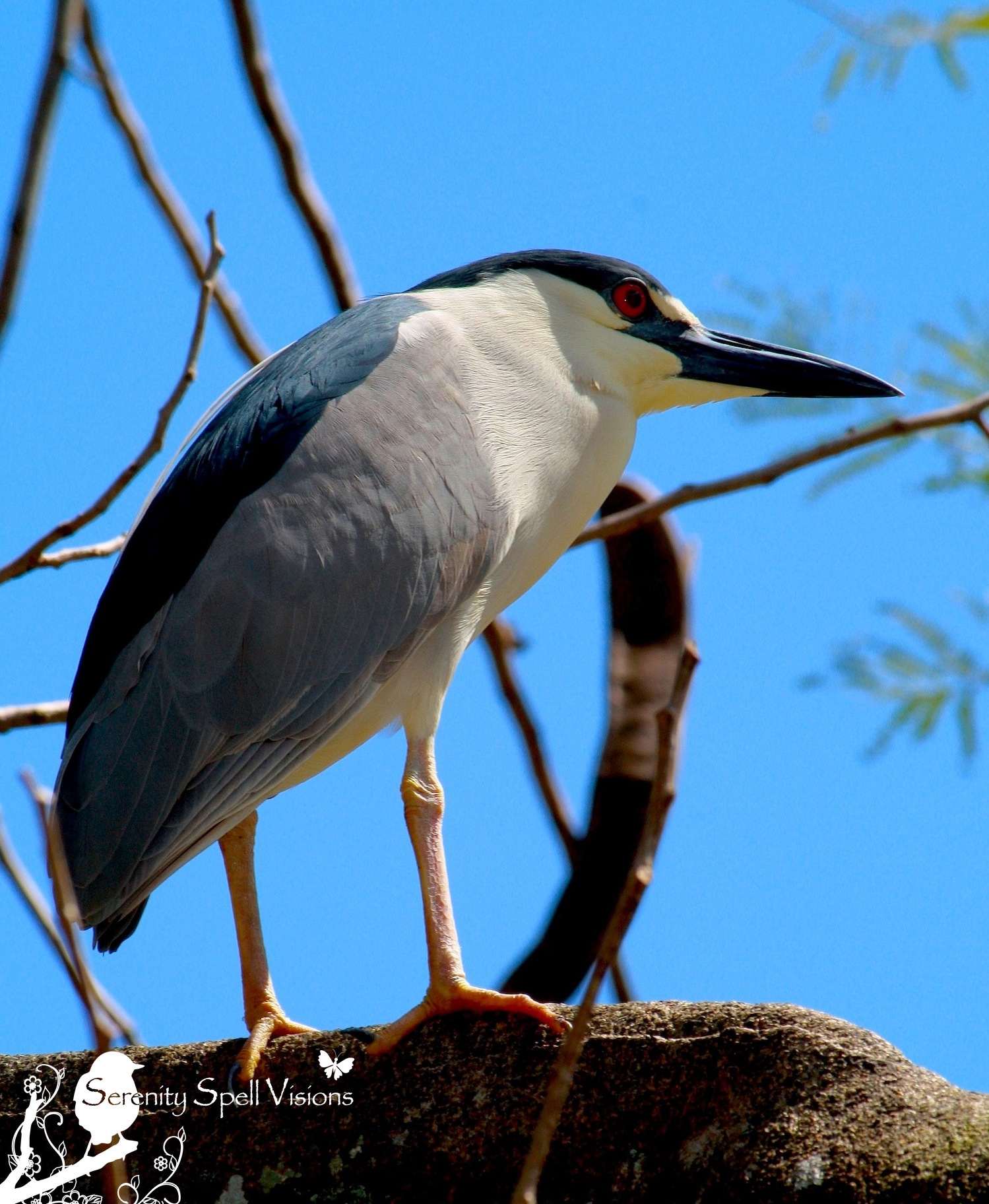
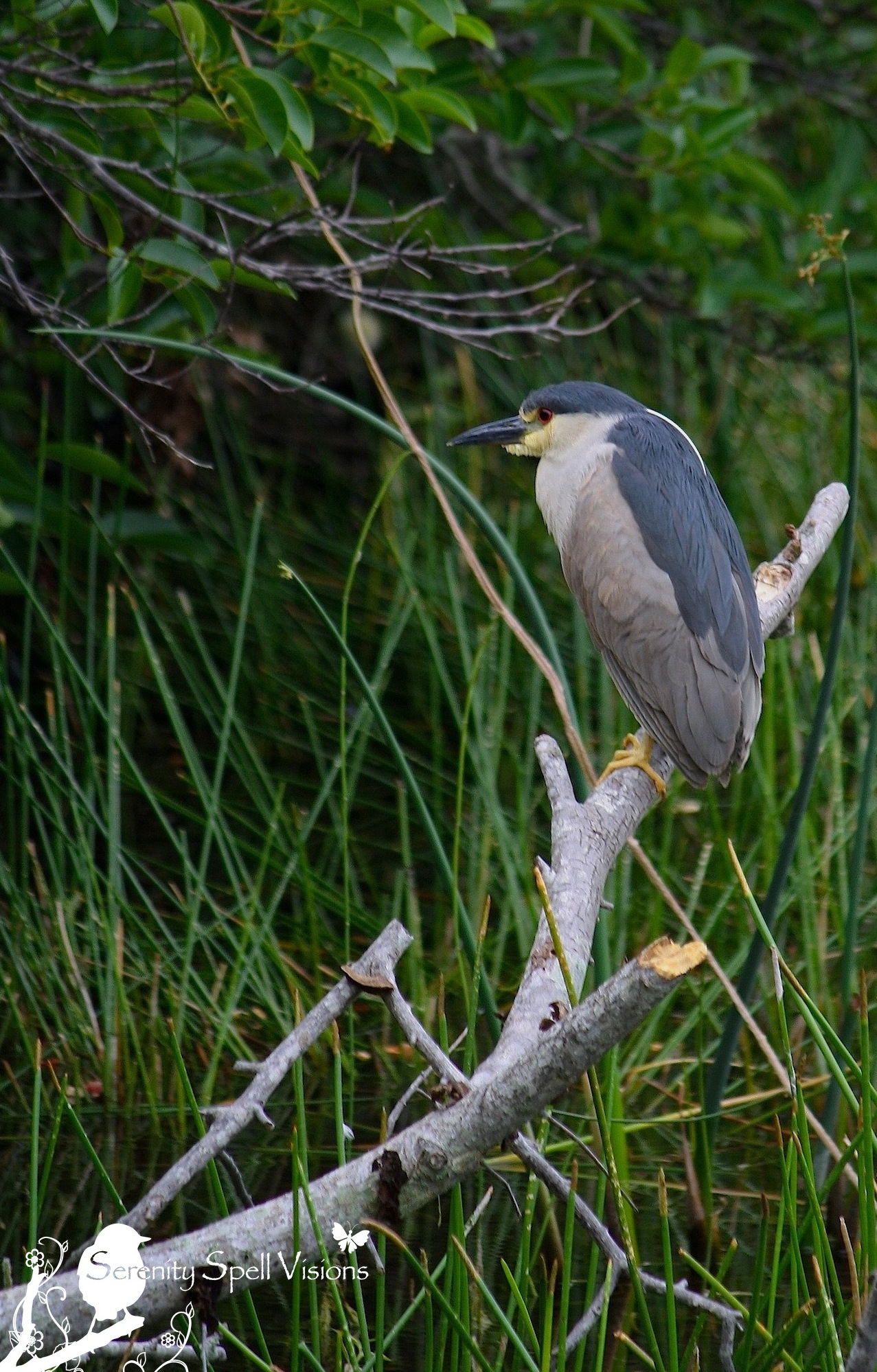
A Black-crowned Night Heron surveys his magnificent Everglades empire against an azure sky, from high in the cypress…. May your weekends be as simultaneously brilliant and serene!

Adult Black-crowned Night Heron

Support a Federal Wildlife Conservation Stamp

Juvenile Cattle Egrets in Protected Florida Wetlands

No worries, those humans will help!
Juvenile Cattle Egrets in Protected Florida Wetlands

The Federal Duck Stamp has a long history in the U.S., a program devoted to conserving this country’s pristine lands. The stamps themselves are beautiful pieces of art, and remain highly collectible. There are efforts to re-issue the stamp, now called the Wildlife Conservation Stamp, to help the currently severely underfunded wildlife refuges… See below for more information of this wonderful endeavor!

From the website:

It is now more important than ever to draw on the diverse group of refuge advocates around the country to safeguard America’s wildlife heritage. National wildlife refuges have been underfunded since President Theodore Roosevelt created the first refuge in 1903 and Congress refused to appropriate money to manage it. Without adequate funding, habitats are not restored, invasive species are left unchecked, poaching and other illegal activities occur and our nation’s wildlife suffers.

Already underfunded and understaffed, National Wildlife Refuges are now facing even more budget cuts. And some members of Congress want to cut funding dramatically.

With already over $3 billion worth of incomplete projects, deeper funding cuts to National Wildlife Refuges could have catastrophic results. Further reductions could:

  • End popular wildlife education programs for school children
  • Close visitor centers
  • Lead to layoffs for law enforcement officers, biologists and maintenance staff who keep visitors and wildlife safe
  • Close entire Refuges, restricting public access

Learn more about this clever and wonderful initiative to protect our country’s land and wildlife — and sign the petition aimed to the White House — at http://wildlifeconservationstamp.org/

Weekly Photo Challenge: Reflections

One of the birds I most enjoy watching in our wetlands and swamps is the Great Egret. It’s hard not to be captivated by these creatures — the epitome of ethereal beauty, grace and strength, they wade, stalk and fly in our waters with balletic poise. They’re the largest egret in the Old World — thus the great of their title. In the New World however, Great Blue Herons win the size competition.

To see their brilliant all-white plumage reflected on the water’s surface is always a stunning sight. These beautiful birds were hunted mercilessly towards the end of the 19th century for their gorgeous feathers — nearly to the point of extinction, their numbers decimated by 95 percent. Their breeding plumage was especially prized, and the treasured feathers were used in hats across the globe. During the breeding season, the Great Egret displays long, elegant plumes on its back, which are used in courtship displays. But with conservation measures enacted, their numbers grew throughout the 20th century. While wetland habitat loss is once again threatening their existence, these birds have a high adaptability to human habitation. Of course, the loss of wetland ecosystems remains another issue altogether for other wildlife and flora….

These egrets feed by stalking, wading in the shallow water, patiently waiting for fish — then grabbing or stabbing their hapless meal with sharp bills. I’ve also seen them dine on amphibians, reptiles, and small mammals; sometimes their eyes are larger than their stomachs.

Great Egret Wading, Florida Wetlands

Wading and hunting in South Florida’s protected wetlands

Great Egret Stalking Meal, Florida Wetlands

Patiently stalking a meal among the purple stalks of the aquatic plant, pickerelweed

Great Egret with Fish, Florida Wetlands

Snagging a meal in the wetlands

Weekly Photo Challenge: Reflections

They Mostly Come Out at Night… Mostly: The Black-crowned Night Herons

For my fellow sci-fi aficionados, it’s a lot prettier than the critter Newt refers to in the Aliens franchise….

Black-crowned Night Herons (Nycticorax nycticorax) are the most widespread herons in the world, and can be found on all continents except Australia and Antarctica. As their name suggests, they’re most active during the dusk and night hours, resting during the day.
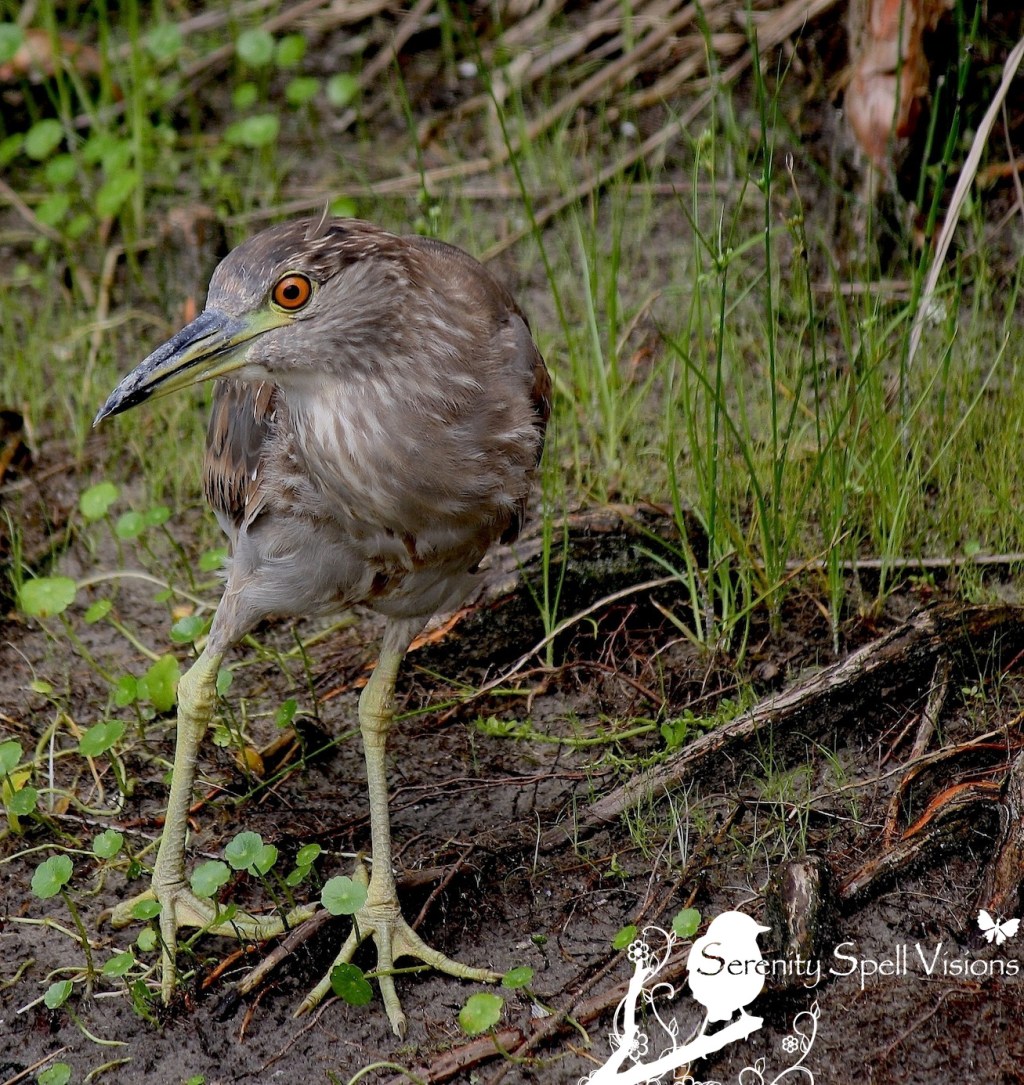
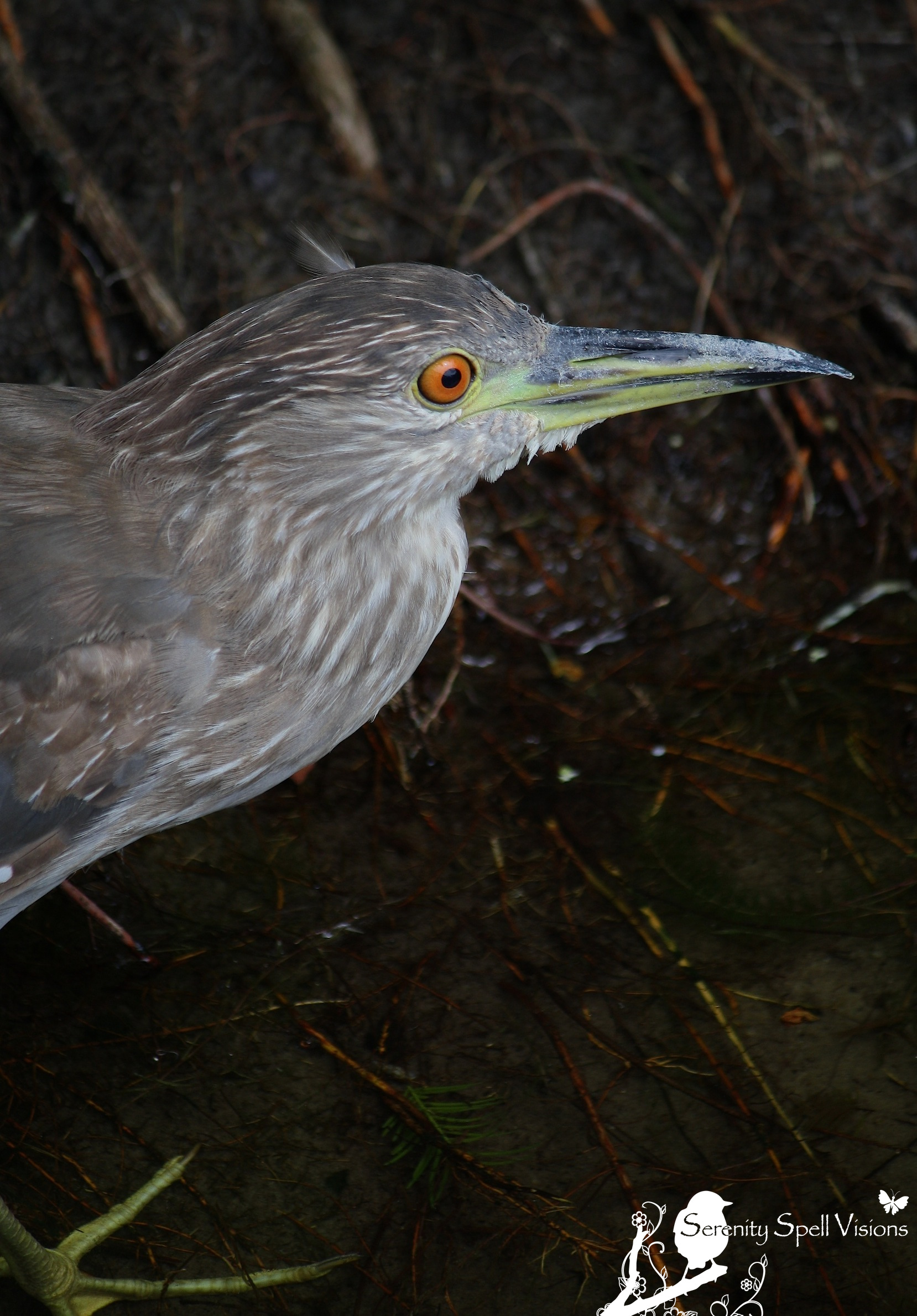
Juvenile Black-crowned Night Heron in the Wetlands: Learning to Hunt

Description

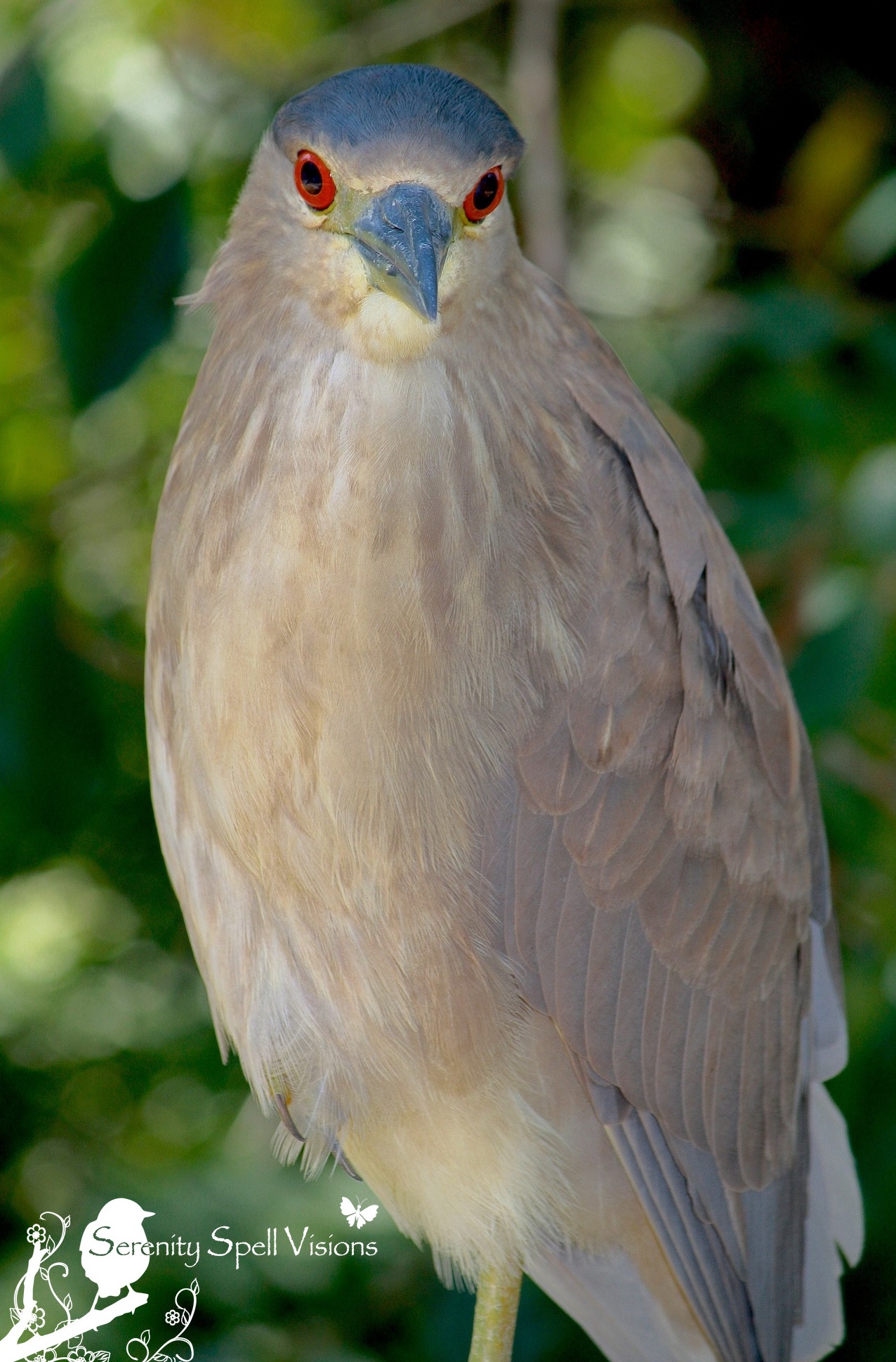
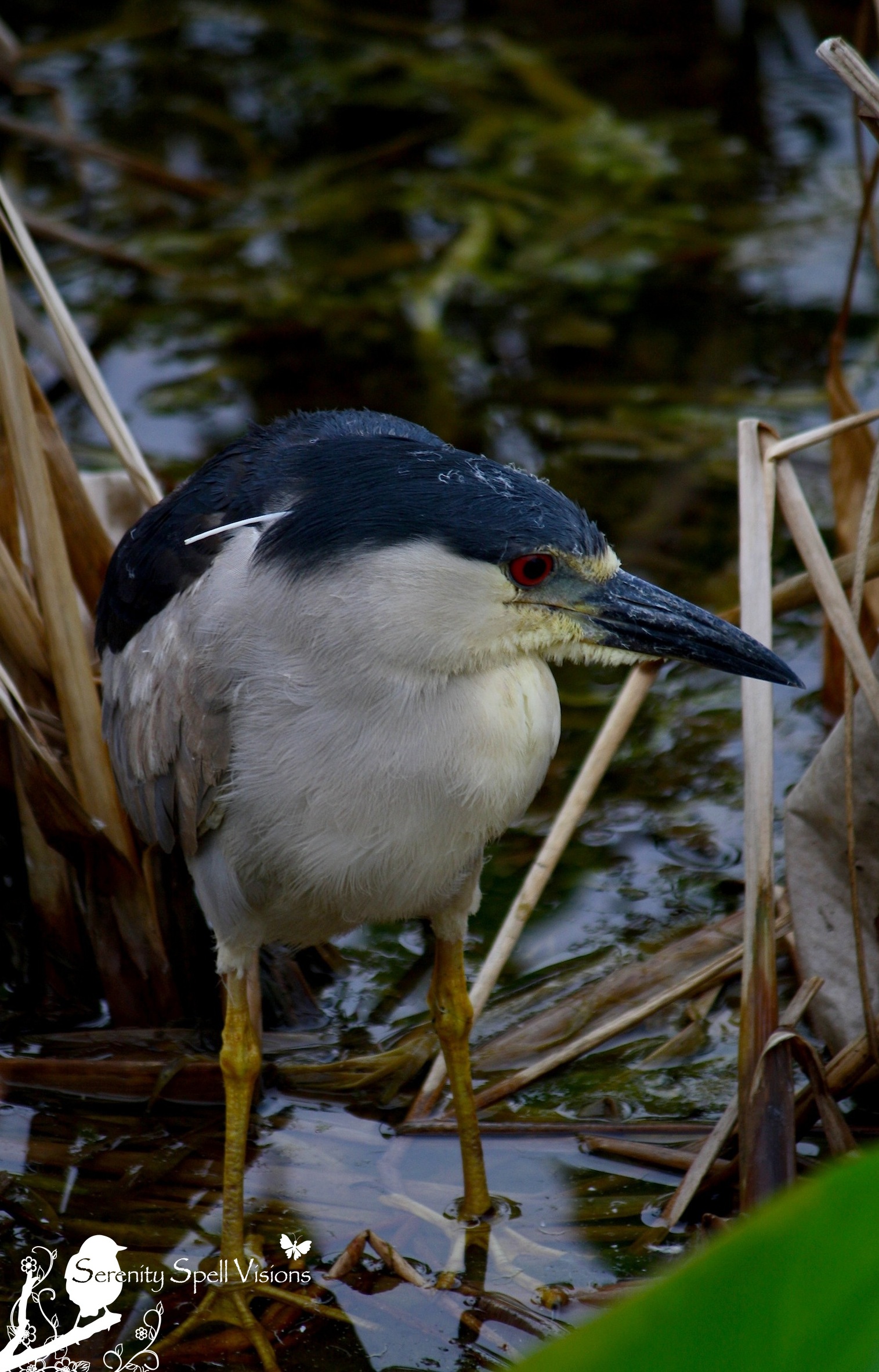
Compared to other herons, these guys are small, stocky, short-necked, and short-legged — averaging 23-28″ in length and 25″ in height. The adults sport their descriptive black crown and back, accompanied by light blue-grey wings and tail, and whitish underparts. Their legs and feet are yellowish-green, changing to a pinkish-red during the breeding season. During the breeding times, they’ll also grow two or three long white plumes on their heads, that will stand up during greeting and courtship displays. Males and females look alike, but the females are a bit smaller in size. The Black-crowned juveniles display a dark grey-brown plumage, with white streaks and spots. Adult plumage is reached by 3-years-old — which is also breeding time.

But my favorite part of these herons are their eyes: a brilliant bright red. And the youngsters? They have an equally gorgeous yellow stare.
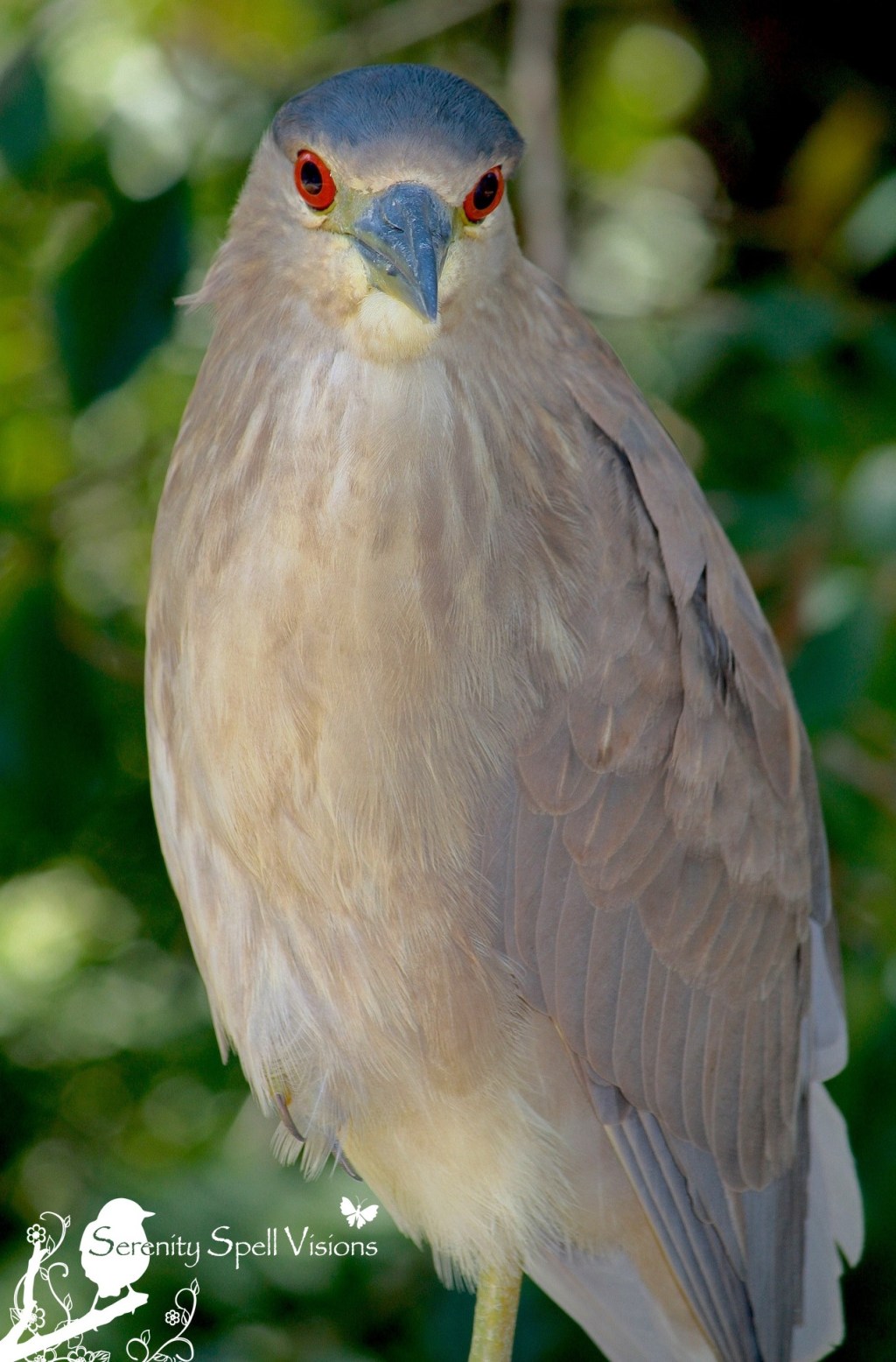
Adult Black-crowned Night Heron: Look into my eyessss….

Habitat, Diet & Hunting

Black-crowned Night Herons prefer the fresh- and salt-water wetland habitats, including marine islands, swamps, rivers, canals, marshes, mangroves, and the more overgrown edges of lakes and ponds. They remain close to the water and near their favored trees, including pond apple trees, in our area — where they roost and breed.

Their diet consists primarily of fish, but Black-crowned Night Herons will also partake in frogs, insects, crayfish, mussels, squid, reptiles, rodents, and aquatic plants. They’ll also loot the eggs and nestlings of waterbirds, such as terns, herons and ibises, and hunt small birds. Feeding takes place in the shallow waters, where they grasp their prey (instead of stabbing it). It’s a common sight to witness these herons standing stock-still at the water’s edge for long periods of time, waiting for their prey to come into range. They shake their prey until it’s been stunned or killed, at which point the heron swallows it head-first. Yummy!
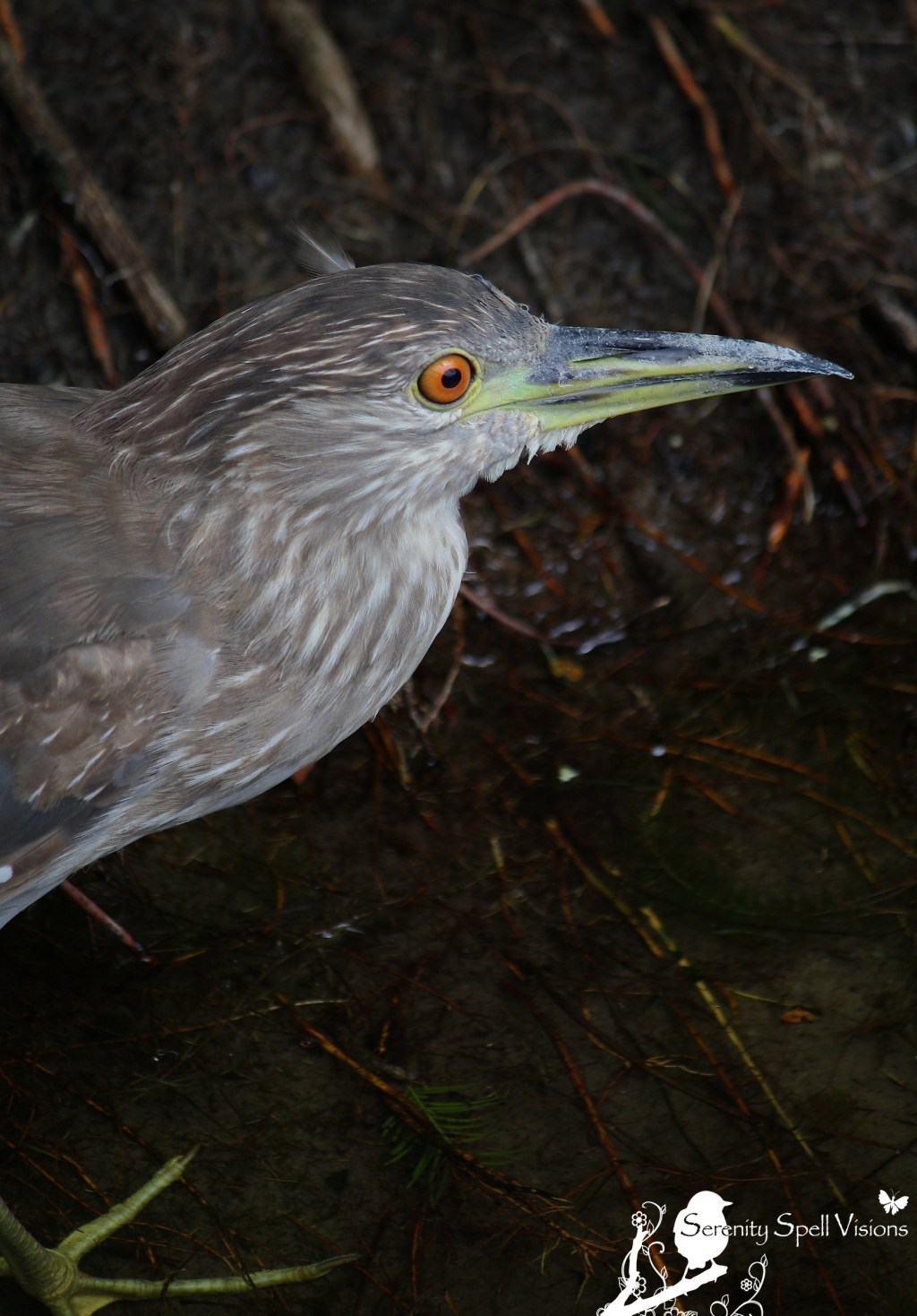
Juvenile Black-crowned Night Heron

Black-crowned Night Herons are solitary hunters, and feed in the early morning and at dusk. Theories of their nocturnal habits range from wishing to minimize competition for food with other waders, to avoiding harassment from other birds that are aware of the night herons’ habits of feeding on their eggs and young, and have, therefore, learned to attack night herons on sight.

Threats

In the 1960s, Black-crowned Night Herons’ populations suffered a decline that was attributed to the use of DDT. They’re also hunted for food — particularly the juveniles. Additionally these herons are killed at fish farms, where they’re seen as a nuisance. Fortunately, alternate methods for managing many of the associated “issues” with these birds have been implemented, eradicating the need to slaughter these lovely herons.
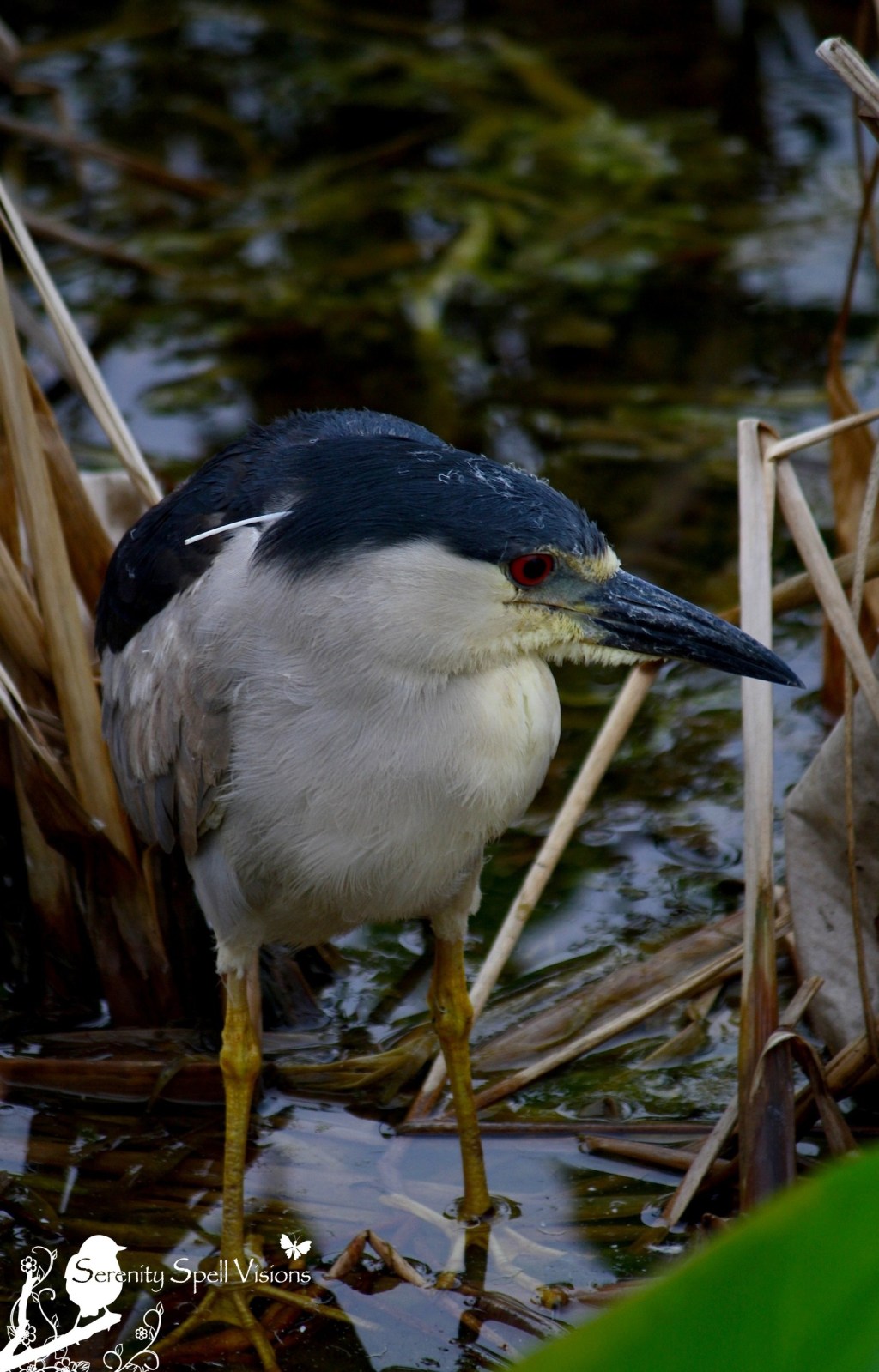
Adult Black-crowned Night Heron, Hunting in the Wetlands

As with other wading birds, habitat loss and destruction (in addition to water pollution) of their wetland habitats in more recent history have had detrimental impacts in their decreased populations.
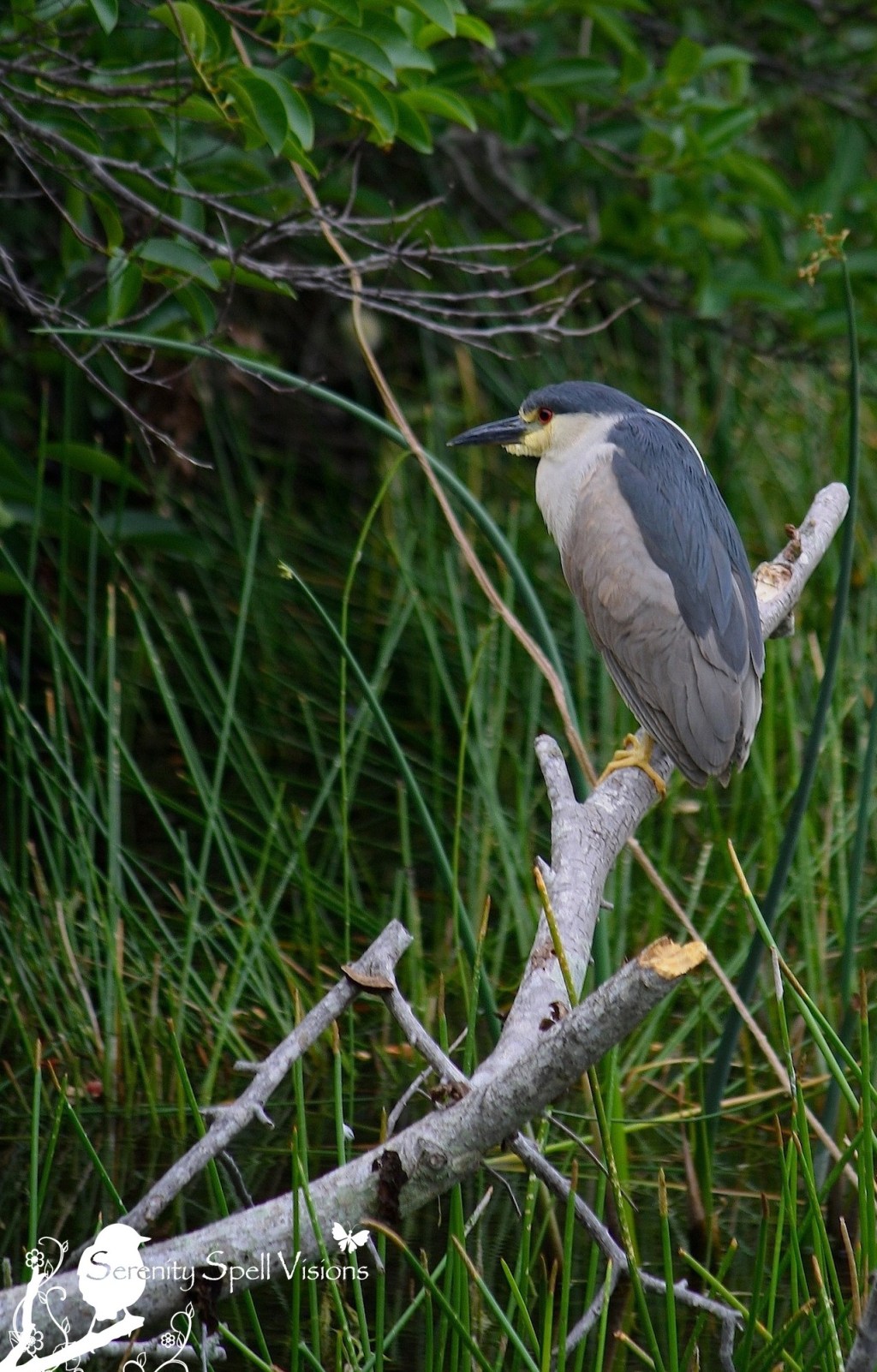
Adult Black-crowned Night Heron, Near the Roost

SAVE THE WETLANDS and their most lovely and amazing inhabitants!

Fun Facts:

  • If you want to hear a Black-crowned Night heron, listen for a loud and somewhat harsh ‘Qua,’ ‘Quak,’ ‘Quark’, ‘kwark’ or ‘kwok.’
  • In many parts of the world, this heron is named for its calls. In the Falkland Islands, it’s referred to as quark; kwak in Dutch and Frisian; and similarly in Czech, Ukrainian, Russian, Vietnamese, Indonesian, and other languages.
  • Black-crowned Night Herons can live up to 30 years in captivity, and 20 years in the wild.
  • While hunting, these herons use a technique called “bill vibrating.” They open and close their bill rapidly in the water, which creates a disturbance that lures prey.

Part of: