
A Sweet and Radiant Jay
Following the loss of my lovely little feline, my guy and I quickly began spying my beloved grandparents’ (long passed) cardinals everywhere…. Not a completely rare phenomenon in our region, but definitely not common — and not to the degree that we were witnessing. In the orchid tree outside our window, on the hike we took the following day, on the way to the car — literally everywhere. Immediately after the cardinals, the blue jays appeared. When one came to peacefully rest beside me in the wetlands, I had to honor these bright beauties. For those who believe in the concept of animal totems and symbolism, internationally recognized teacher and author Ted Andrews is a wonderful resource. His 1996 book Animal-Speak: The Spiritual & Magical Powers of Creatures Great & Small, and his later works Animal-Wise: The Spirit Language and Signs of Nature and Nature-Speak: Signs, Omens and Messages in Nature are always nearby on my shelf. Andrews worked in wildlife rescue and rehabilitation, and participated in animal education and storytelling programs in school classrooms. He was specially invited to speak to the UNSRC at the United Nations in New York for his writings and work with animals.
Yes, Blue Jays are common…. They’re noisy members of the crow family Corvidae. But as such, they’re intelligent birds with complex social systems. Besides having countless whistles and calls of their own, they can imitate the sounds of many birds — particularly enjoying those of hawks and owls. They seem to derive much pleasure in their cacophony of noisy calls and songs.
These North American jays are known for their aggressive behaviors and mischievous activities (especially at feeding stations) — as well as for occasionally destroying the nests and eggs of other birds — but our Florida Blue Jays are far from aggressive. They’re actually the bullied and shy birds at the birdfeeder — chased by the grackles, and even by the doves…. And chased from nest to nest. Their curiously shy behavior has been observed by many in the area. Why are South Florida Blue Jays so seemingly timid?
Blue Jays search for any suitable tree or large bush to build a nest, in which 4-5 eggs are laid and incubated by the female over 16-18 days. Both the male and the female build the nest and rear the young. Blue Jays are monogamous, maintaining the bond until one dies.
Another interesting note: As with other blue-hued birds, the Blue Jay’s coloration isn’t derived by pigments — it’s instead the result of light refraction due to the internal structure of the feathers, also known as structural coloration. If you crush a Blue Jay feather, the blue will disappear.
They’re particularly fond of peanuts and sunflower seeds. However, a note from Avianweb on feeding peanuts: Peanuts are a valuable source of protein – however, peanuts are often contaminated with aflatoxin, a fungal toxin. Aflatoxin is carcinogenic and causes liver damage in birds and other animals. Roasting reduces aflatoxin but does not eliminate it entirely. North American peanut producers are currently working on eliminating contaminated peanuts from their products. Caution is advised when feeding peanuts.

Saying Hello: Blue Jay in the Florida Wetlands
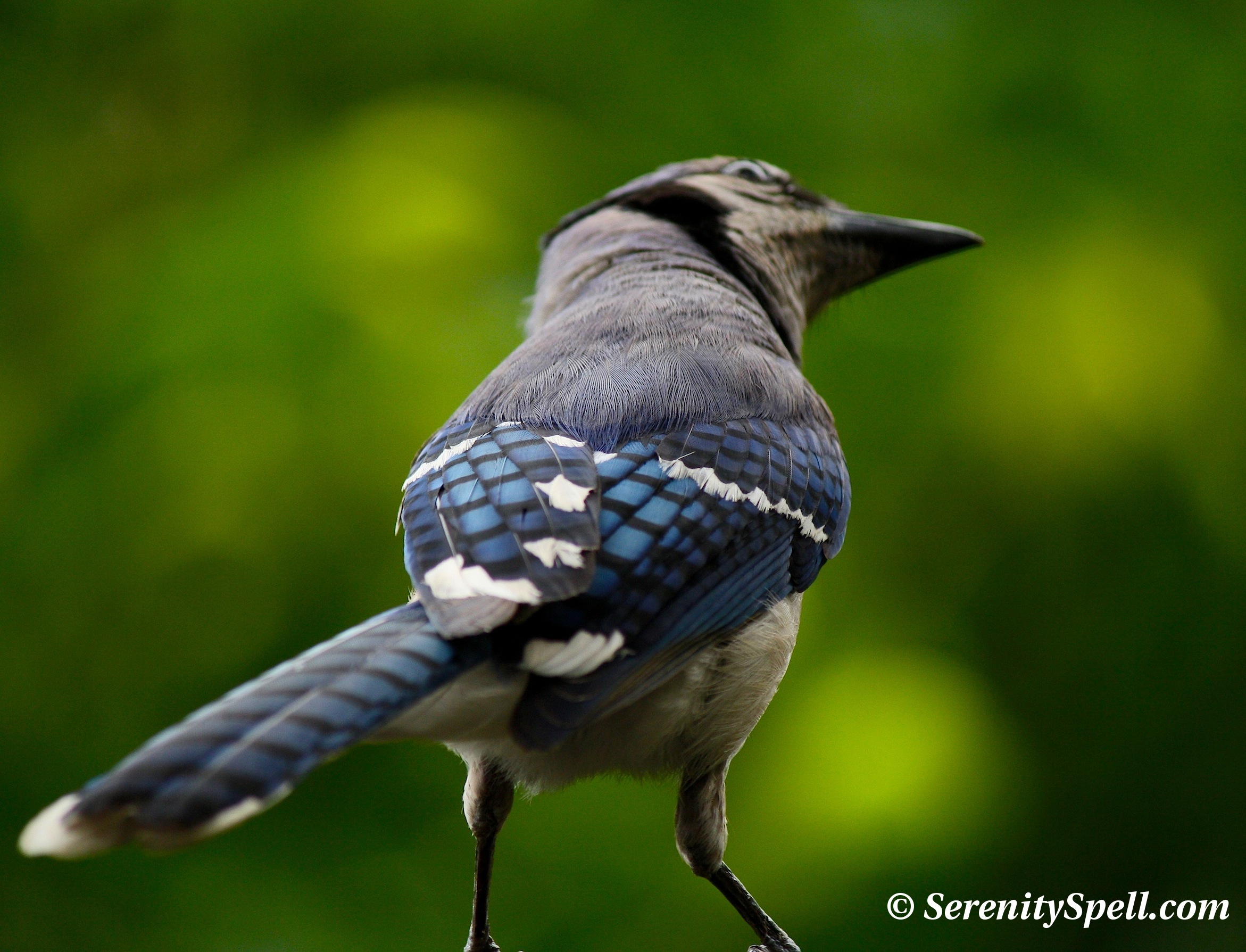
Safe to Say Hello? Blue Jay in the Florida Wetlands
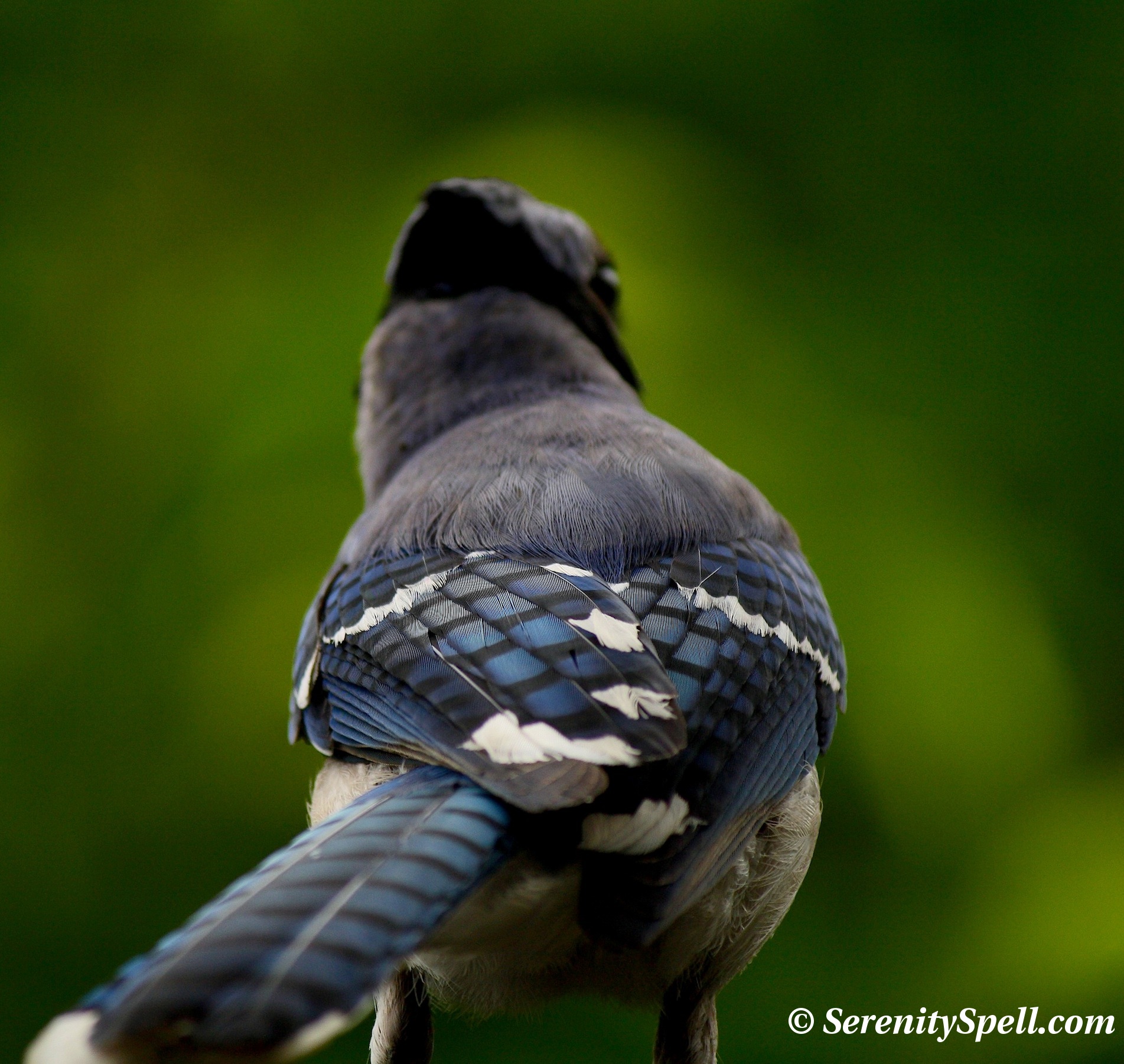
Lovely Feathers: Blue Jay in the Florida Wetlands

Bright Blue in the Swamp: Blue Jay in the Florida Wetlands

 FeyGirl
 Serenity Spell