Skip to content

Posts tagged ‘animals’

Red-winged Blackbirds… And Their Babies!

Another nearby nest, with hatchlings! Since Red-winged Blackbirds nest in loose colonies, there’s no dearth of nesting activity, if one’s looking closely enough in our dense marshes. This clutch consisted of three eggs — typical for the species. The eggs were incubated by the female alone, and hatched within 11 to 12 days. Red-winged Blackbirds are born blind and naked, but will be ready to leave the nest 11 to 14 days after hatching. Every time the wind rustled the leaves of this nest, the hatchlings were up and chirping for food….

Female Red-winged Blackbird Feeds the Hatchlings at Her Nest

Red-winged Blackbird Hatchlings Wait for Their Meal

Red-winged Blackbird Hatchlings Wait for Their Meal

For More Information:

Red-winged Blackbirds… And Their Nests

Red-winged Blackbirds are found in most of North and much of Central America, and are familiar sights in our wetlands. There have been claims that it is the most abundant, and most well studied bird in North America. The males, glossy black with scarlet-and-yellow shoulder patches, puff up or hide depending on their level of confidence. In our marshes, they’re quite brave (or protective, in defense-mode), doing as much as they can to get noticed, and belting out their conk-la-ree songs.
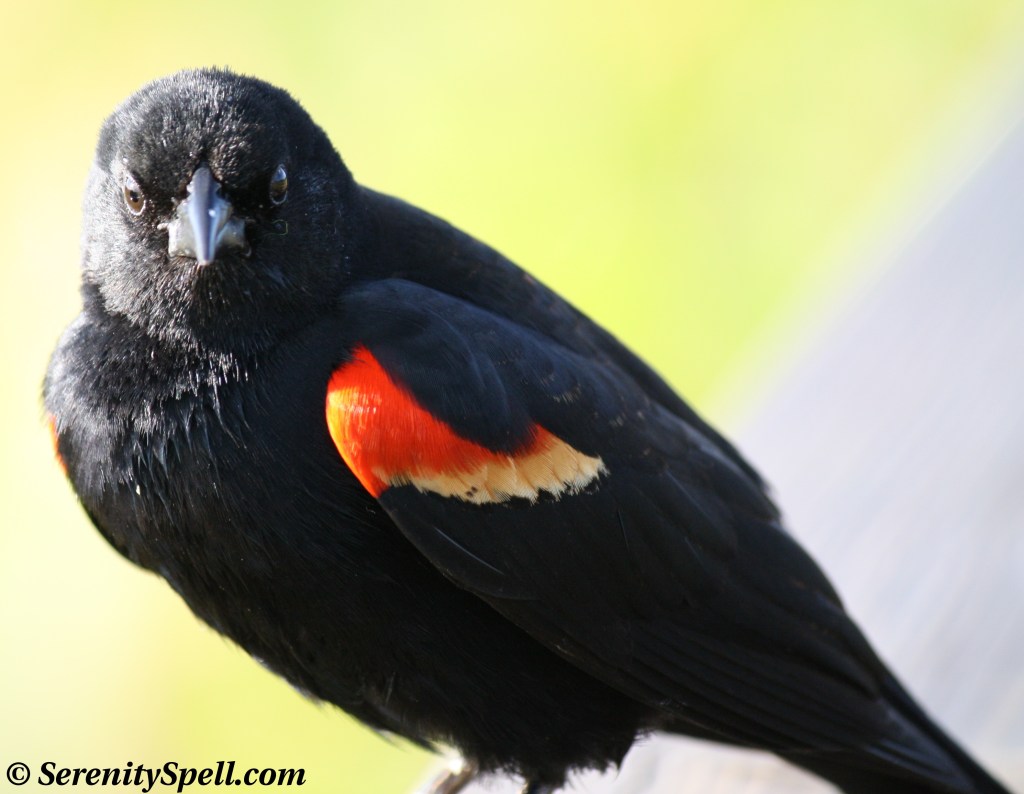
Male Red-winged Blackbird

Male Red-winged Blackbird Sings

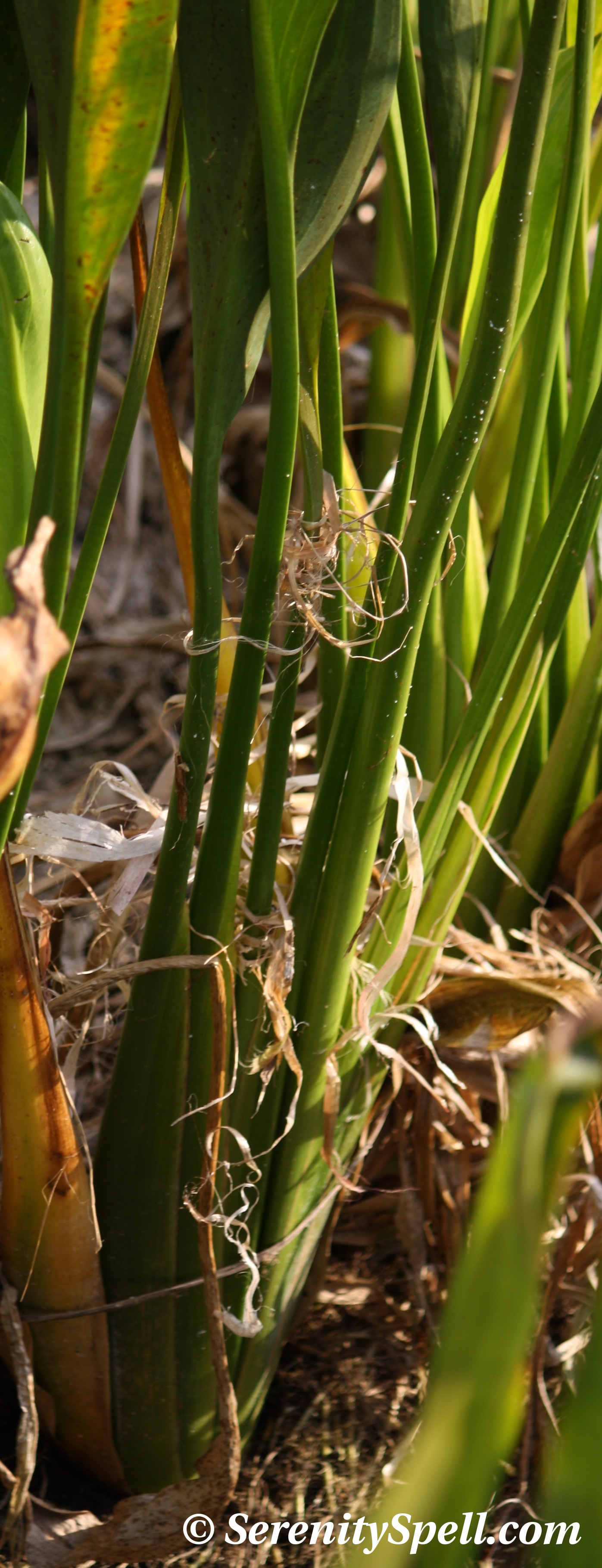
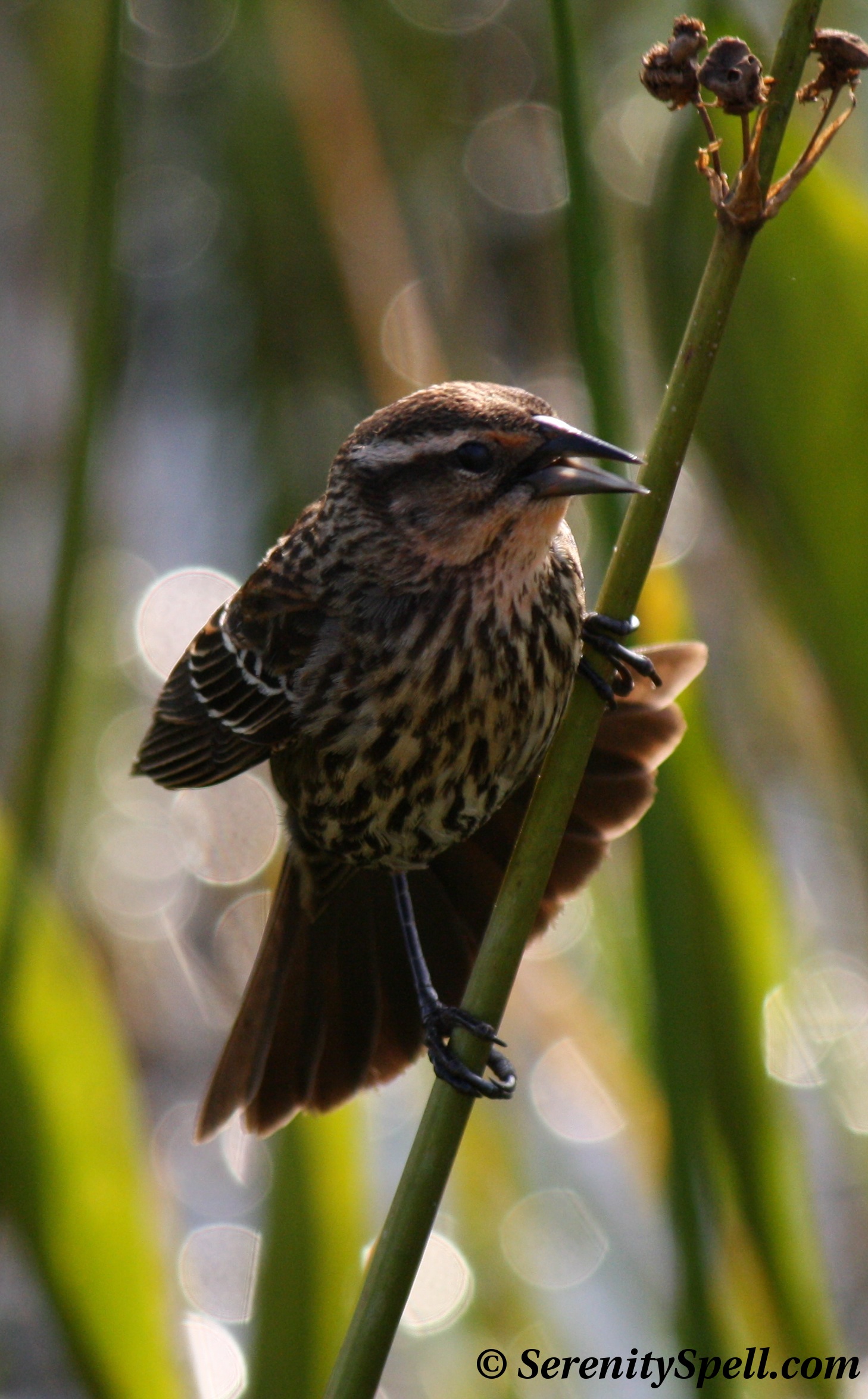
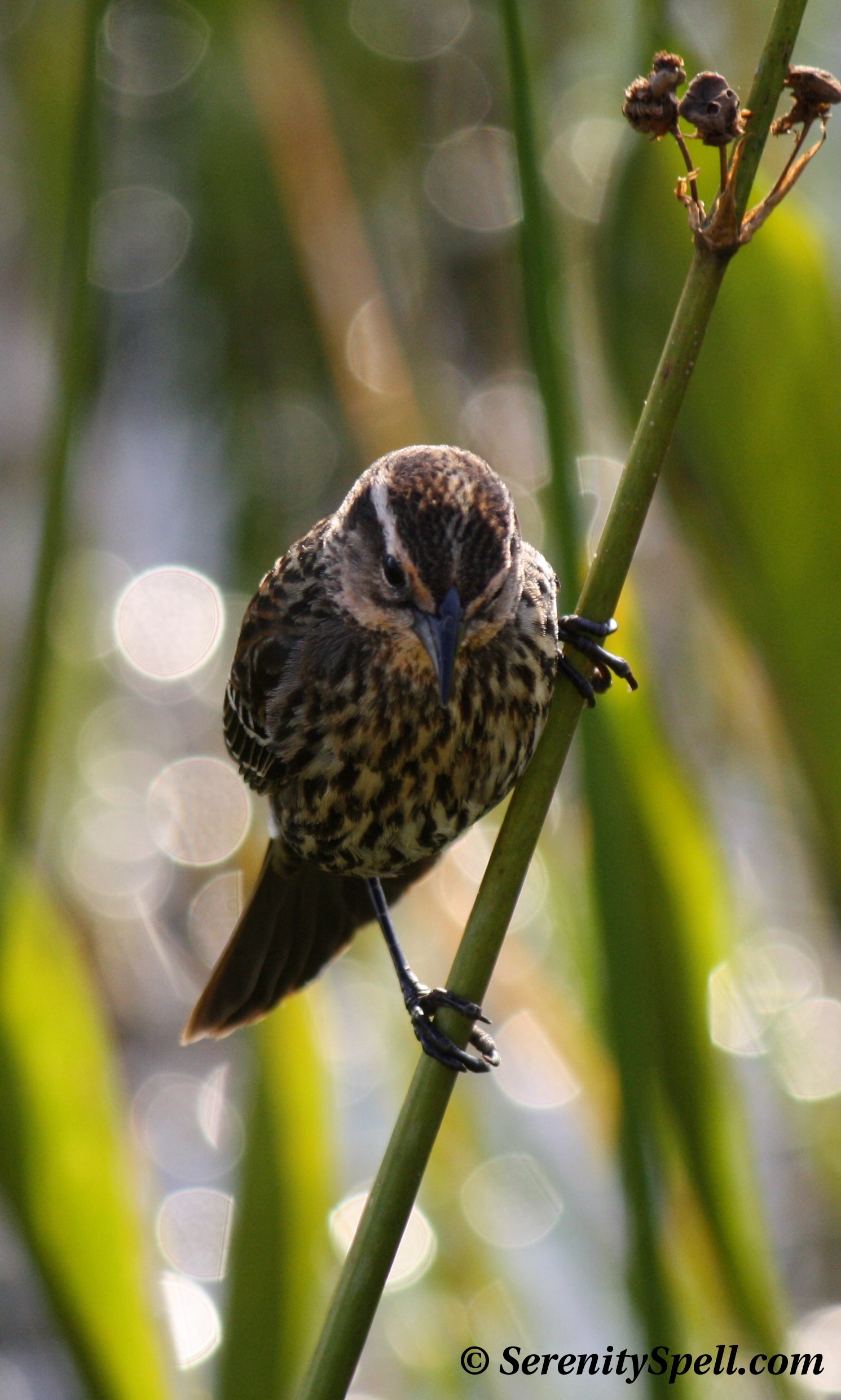
The female is a subdued brown, with streaks of lighter colorations — and much shyer than her male counterpart. Her brownish coloring serves to camouflage her and the nest, while she’s incubating. Females stay low in the vegetation, searching for food (eating primarily seeds and insects), and weaving their amazing nests. Constructed entirely over the course of three to six days — with no help from the males — the nests are located in cattails, rushes, grasses, or in alder or willow bushes. Located near the water’s surface, the nest is a basket constructed of grasses, sedge, and mosses, lined with mud and bound to surrounding grasses or branches. I’ve watched for nearly an hour in awe, as a female patiently gathered her grasses — and even longer as another intricately wove her basket-nest. It’s beautifully mesmerizing (and believe me, I’m no birdwatching crackerjack!). Red-winged Blackbirds nest in loose colonies, and their predators include snakes, raccoons, and other birds, even the small marsh wrens — and in our area, iguanas. Males serve as sentinels to guard the nest, using various calls to denote the type and severity of danger.

Female Red-winged Blackbird Builds Her Nest
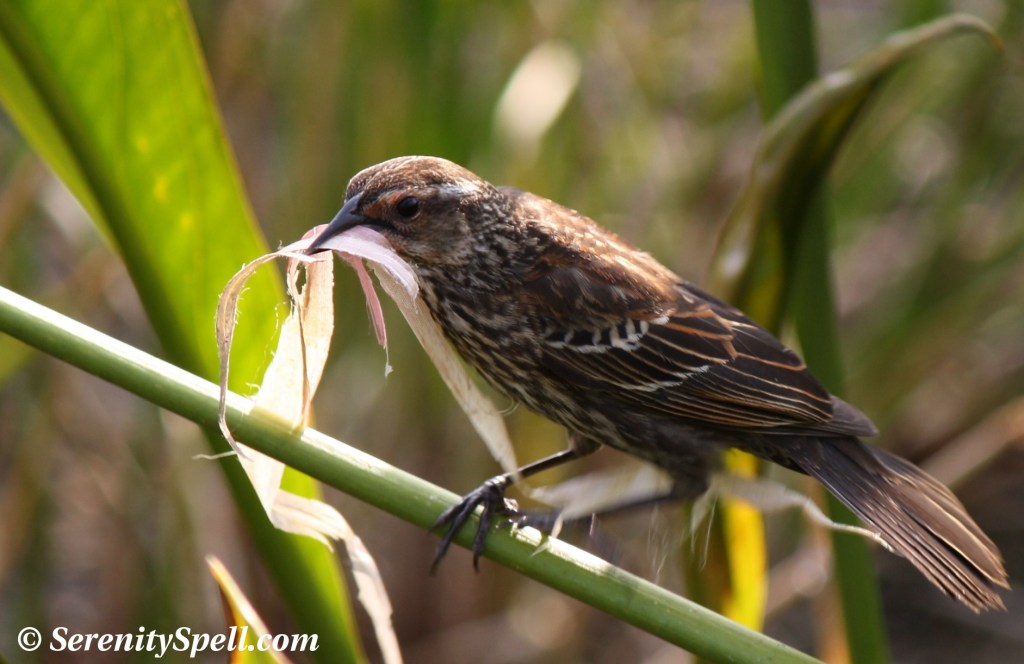
Female Red-winged Blackbird Builds Her Nest

Female Red-winged Blackbird in the Marsh Grasses

Red-winged Blackbird Nest Under Construction, Green Cay Wetlands, Florida

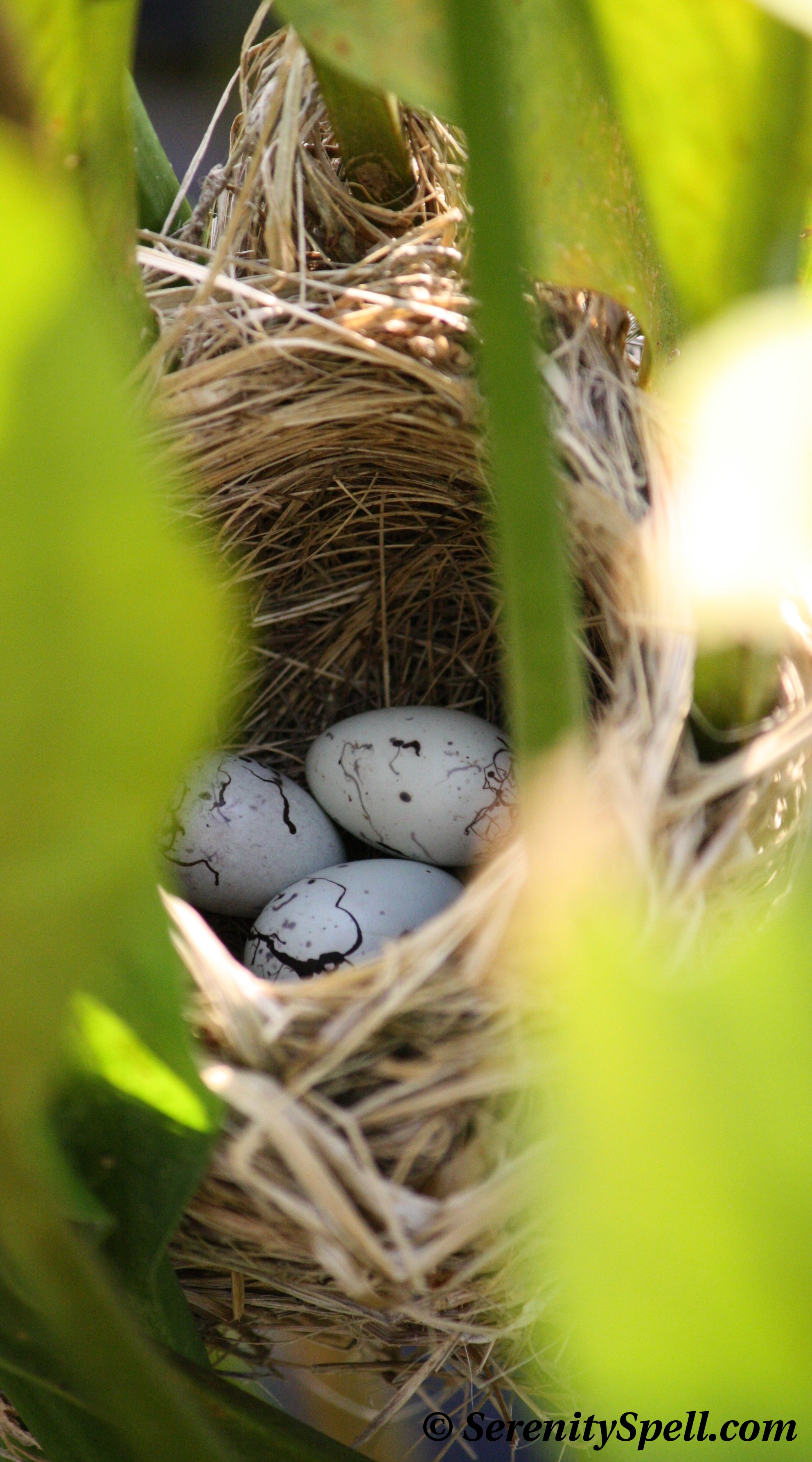
This clutch consists of three eggs — typical for the species (2 to 4). They’re oval and smooth, of a pale bluish coloring, and marked with brown and/or black markings. The eggs are incubated by the female alone, and will hatch within 11 to 12 days. Red-winged Blackbirds are born blind and naked, but are ready to leave the nest 11 to 14 days after hatching.
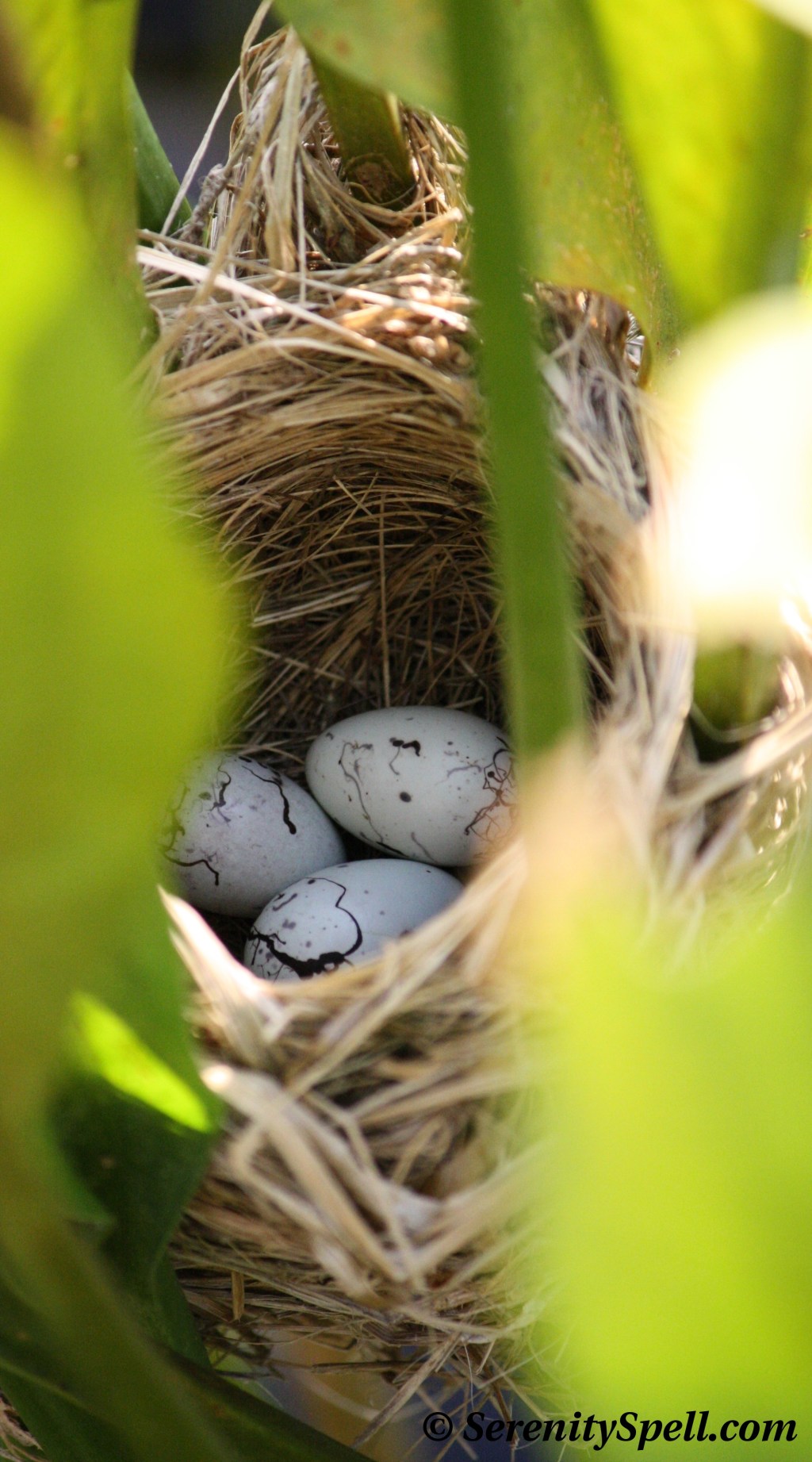
Red-winged Blackbird Nest with Eggs

More pictures of the most amazing and lovely Blackbirds:

Female Red-winged Blackbird in the Marsh Grasses

Female Red-winged Blackbird in the Marsh Grasses

For More Information:

A Waggin’ Warbler

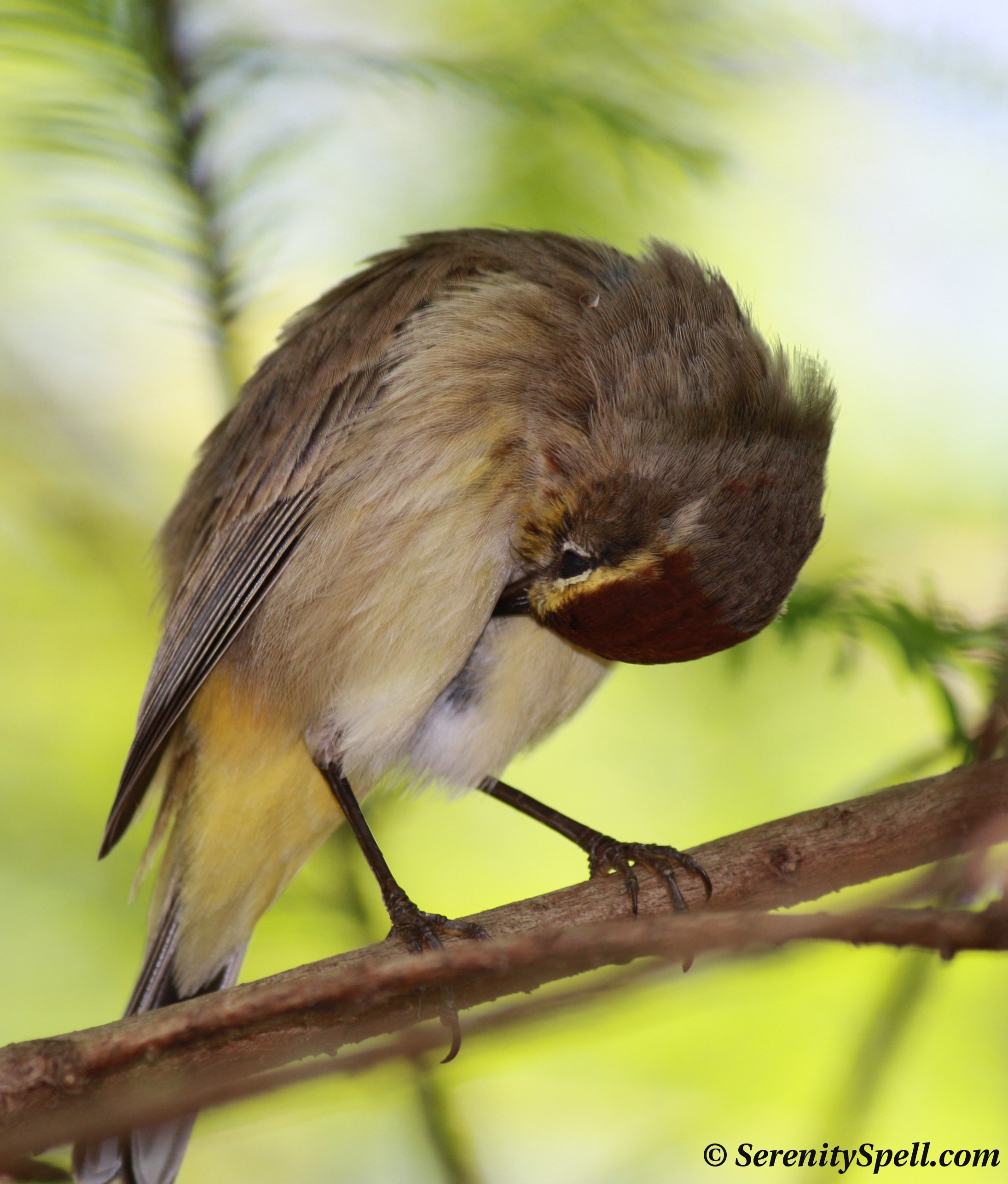
In honor of a family member who adores the small and colorful songbirds — and who’s been feeling under the weather, contending with hospitals and doctors and procedures, oh my — today’s post is brought to you by the *Yellow* Palm Warbler. We caught this little guy hiding amidst a strand of young cypress trees, in some protected wetlands. Many people are in such a rush — they’re on the phone, or otherwise scaring the wildlife — when they visit our natural spaces (WHY?), and they miss the tiny bright gems right in front of them.

Palm Warblers are common winter residents in our marshy natural areas, migrating in the late fall to the southeastern U.S. and the Caribbean. The species is comprised of two distinct sub-species, the Yellow Palm Warbler and the Western Palm Warbler. Those breeding in the eastern range are entirely yellow underneath, while those inhabiting the western part of the range are duller in color, with whitish bellies. Palm Warblers primarily breed in bogs — east of the Continental Divide, across Canada and the northeastern United States. A distinctive feature of Palm Warblers is tail wagging, or “pumping.” More than other warblers, this bird forages on the ground for insects and berries.

I’ll miss these guys, these adorable little shocks of yellow in our cypress and marsh.

For More Information:

Green Heron Fabulousness

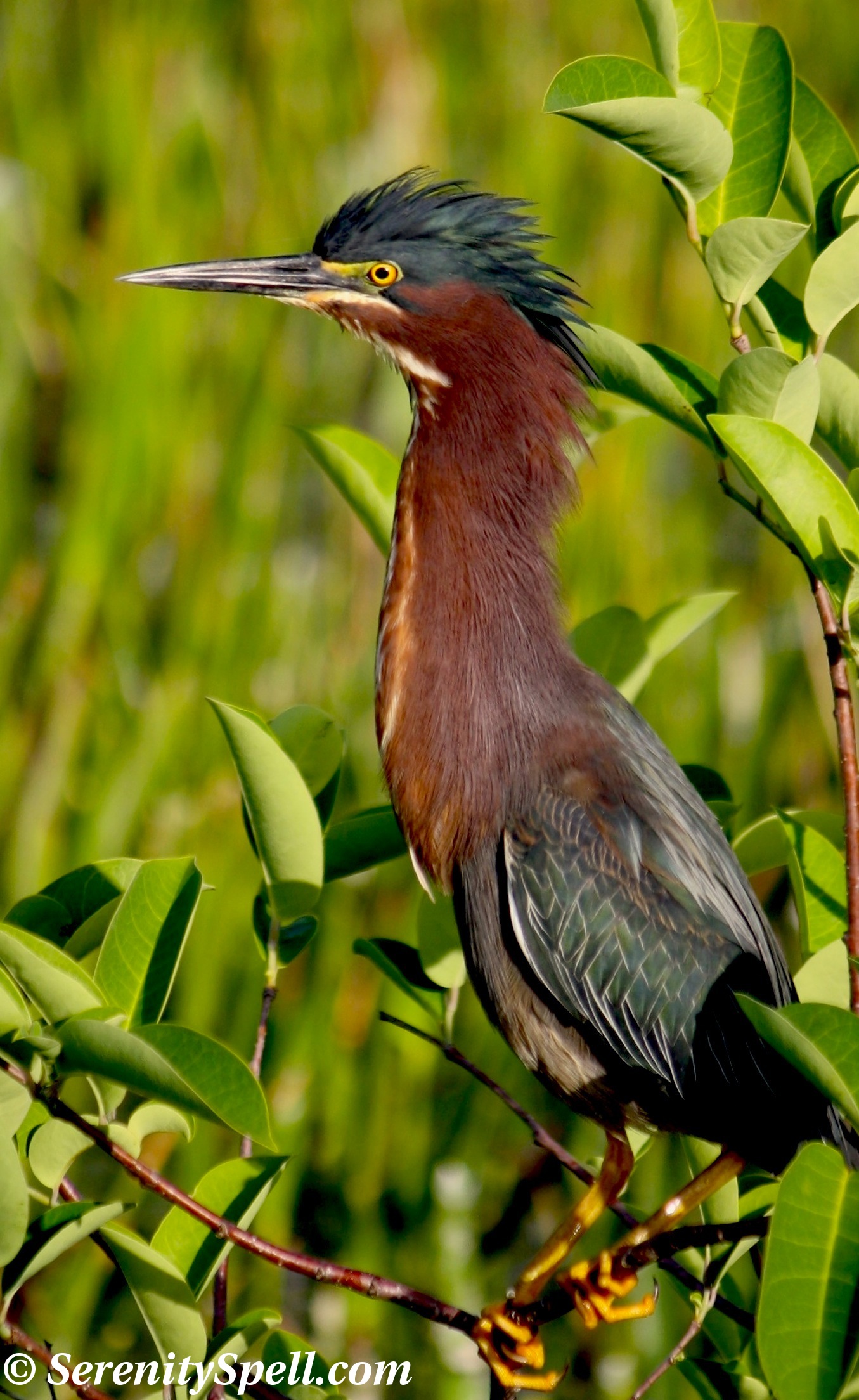
It’s always great to see some of the shyer residents of our wetlands, and the Green Heron is one such critter. Small and stocky, they’re similar to other herons in that they remain motionless as they hunt for their meals in swampy and coastal areas. Interestingly, the Green Heron is one of the few tool-using birds: it will drop various baits and lures — in the form of bread crusts, insects, twigs, or feathers — onto the water’s surface to attract small fish.

This male adult green heron was most likely guarding his chosen nesting site (nesting and baby season is in full swing), in the hopes of attracting a mate with his brilliant displays. Although they’re not the best shots — he was really hiding in the dense marsh, and not overly fond of the little attention he was receiving — I couldn’t resist including them; his magnificent ‘do makes me smile.

For More Information:
Riots of Yellow & Gold in a Florida Forest

Hiking in Florida affords an onslaught of lush landscape, but in the dry winter months, all shades of  brown rule. As spring dawns, the greens return and the colors alight. During our recent venture to Broward County’s Fern Forest, a magnificent 247-acre conservation site and wildlife refuge characterized as “the last remaining stronghold of ferns in southeastern Florida,” we witnessed a barrage of yellows and oranges (the colors of the day, as my mind flashed to an episode of Sesame Street). This beautiful and diverse natural area represents the last remnant of the historical Cypress Creek floodway — which today, remains a significant refuge for wildlife in a highly urbanized region, encompassing ten plant communities, including tropical hardwood hammock, open prairie, and cypress-maple swamp.

After leaving the shaded canopy of the Prairie Overlook Trail — the shade of which was already much appreciated with our rapidly rising temperatures — a riot of bright yellow Prickly-pear cactus blooms greeted us in the open prairie. And upon our departure from the Cypress Creek Trail (a wonderful boardwalk), we spied a rare yellow anole (aka yellow-phased green anole); unfortunately, anoles with this unique color mutation don’t usually live long in the wild, as the green coloring offers them valuable camouflage for hunting prey and hiding from predators.

A Ruddy Daggerwing butterfly (Marpesia petreus), a common sight in Florida, alights near the hardwood hammock…

For More Information: