Skip to content

Posts tagged ‘animals’

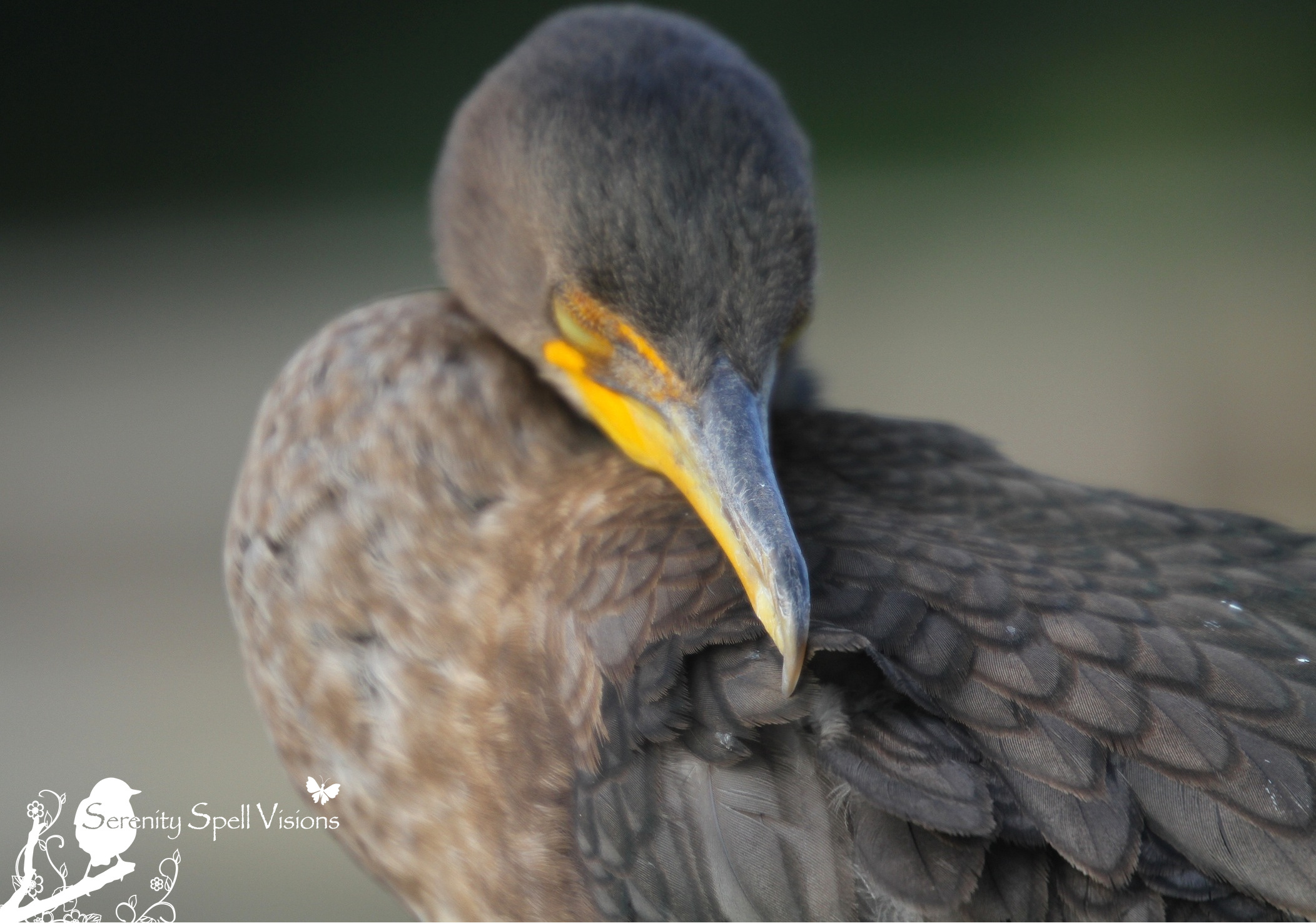
A Cormorant’s Dream

And now here is my secret, a very simple secret; it is only with the heart that one can see rightly, what is essential is invisible to the eye. —Antoine de Saint-Exupery

Our cormorants are some of the most personable birds of the wetlands. As common as they may be in this area, they’re fascinating and sweet creatures.

Sleeping Cormorant, Florida Wetlands

Hello, sweet one

I caught this serene cormorant — or “shag” (referring to the bird’s crest, which is lacking in the British forms of the Great Cormorant) — as he was preparing for the evening in the local wetlands.

These medium-to-large coastal (rather than oceanic) seabirds are plentiful in southeastern Florida, and can often be seen diving for fish and other aquatic grub. After fishing, the cormorants dry their wings ashore in the sun and in the trees (similar to the cormorant-like anhingas), as their feathers don’t possess the waterproofing oil of other seabirds.

Preening Cormorant, Florida Wetlands

Preening time

Cormorant, Florida Wetlands

One last look to the setting sun

Sleeping Cormorant, Florida Wetlands

Nodding off

Sleeping Cormorant, Florida Wetlands

Snooze

Check out their beautiful and distinctive turquoise eyes that fade quickly after the breeding / nesting season.

Humans have long used trained cormorants to fish the waters of China, Japan, and Macedonia. Trained by fishermen, a snare is tied near the base of the bird’s throat, allowing the bird to swallow only small fish. When the bird captures and tries to swallow larger fish, the snare doesn’t allow the fish to be swallowed, and it becomes stuck in the bird’s throat. The cormorant is forced to return to the fisherman’s boat, where he helps the bird regurgitate the fish, removing it from its throat. Traditional cormorant fishing isn’t as common a method today — with the development of more efficient fishing methods — but it remains a tourist draw. However, the method is still practiced in some Japanese regions, and has continued uninterrupted for 1300 years in Gifu City, in Gifu Prefecture.

Happy Birthday, Mr. Audubon!

A true conservationist is a man who knows that the world is not given by his fathers, but borrowed from his children.

As I grew up I was fervently desirous of becoming acquainted with Nature.

But hopes are Shy Birds flying at a great distance seldom reached by the best of Guns. —John James Audubon

Happy birthday to one of the most intriguing figures of history, the French-American ornithologist, conservationist, naturalist, and painter. John James Audubon — a man whose influence is keenly felt to this day — documented countless American birds in his gorgeous and brilliant drawings. His masterpiece — the enormous (-sized) color-plate book, The Birds of America (1827–1839), is widely considered to be the finest ornithological and artistic works ever created.

Thank you, sir, and happy birthday!

Audubon, Great Egret, 1821

Audubon, Great Egret, 1821

Great Egret in Breeding Plumage, Florida Wetlands

Great Egret in Breeding Plumage, Florida Wetlands

Audubon, Louisiana Heron (Tricolored Heron)

Audubon, Louisiana Heron (Tricolored Heron)

Tricolored (Louisiana) Heron, Florida Wetlands

Tricolored (Louisiana) Heron, Florida Wetlands

Visit Florida Rambler to learn about his beautiful Key West home, where he stayed in 1832… Discovering 18 new species (well, to the Western world at least).

National Audubon Society Logo — The Great Egret in Flight (Courtesy of The National Audubon Society)

National Audubon Society Logo — The Great Egret in Flight (Courtesy of The National Audubon Society)

Hippity-Hoppity…

In honor of the upcoming Easter holiday, an Everglades bunny for you!

True to its name, the marsh rabbit is found in the marshes and swamps of the Eastern and Southern United States. Our marsh rabbits — not to be confused with the larger swamp rabbits of Alabama through Texas — are delicate little things. Those on the Florida peninsula, and in South Florida in particular, weigh only 2-3 pounds, reaching a total length of 17 inches. “Mainland” (non-Florida) marsh rabbits run noticeably larger.

Florida’s marsh rabbits have shorter ears, and smaller legs than the swamp rabbits and cottontails — and instead of a bushy, cottonball-tail, the tail forms a tuft. They’re also darker in coloration than eastern cottontails.

Marsh Rabbit, Florida Wetlands

Marsh rabbit on alert in the Florida wetlands

What’s so interesting about our marsh rabbits, as their name signifies, is their proclivity to water — swimming often and well, sometimes for long distances. It’s common to see them in the shallow waters of our wetlands scrounging for food (note the wet legs of the guy above). Another interesting feature of marsh rabbits is that they walk on all fours, like a cat — ensuring easy and swift negotiation of the dense marshes and the surrounding vegetation. Their preferred habitats are the brackish and freshwater marshes, mangrove swamps, and sandy islands. These rabbits must have access to water, remaining on high ground and in the thick vegetation for protection from predators including alligators, snakes, bobcats, foxes, coyotes, and birds of prey. They’re most active at dusk and at night, eating the abundant wetland and aquatic plants.

Marsh Rabbit, Florida Wetlands

There honestly couldn’t be anything more adorable than a Marsh rabbit baby. Just try.

They’re truly adorable little things…. And the baby marsh rabbits? Cuteness factor through the roof. I like to call them *all* swamp bunnies though, much to the chagrin of uptight naturalists who may be listening in on my insanity. But it’s hard not to envision fae around these critters, helping us occasionally close-minded humans love and appreciate their, and Nature’s beauty, all the more.

Marsh Rabbit, Florida Wetlands

Poor Marsh rabbit burr-face

Monday Morning Hair

A Tricolored (or Louisiana) Heron in breeding plumage shakes it all off, with the start of a new week, in undisguised fabulousness in our protected wetlands. While I say “Monday Morning Hair,” this is definitely a daily occurrence for me.

Tricolored (Louisian) Heron in Breeding Plumage, Florida Wetlands

Always fabulous

Tricolored (Louisian) Heron in Breeding Plumage, Florida Wetlands

Cat-scratch

It’s NATIONAL WILDLIFE WEEK, and: Returning the Florida Panther to the Everglades

In honor of National Wildlife Week, March 18-24, here’s a special and rare event from last week:

A Florida panther was recently released into the Picayune Strand State Foresta rare event, in a bid to help save the species. The tagged female will hopefully become a safe and successful mommy!

She and her brother were raised from the age of five months at the White Oak Conservation Center in Yulee, rescued after their mother was found dead.

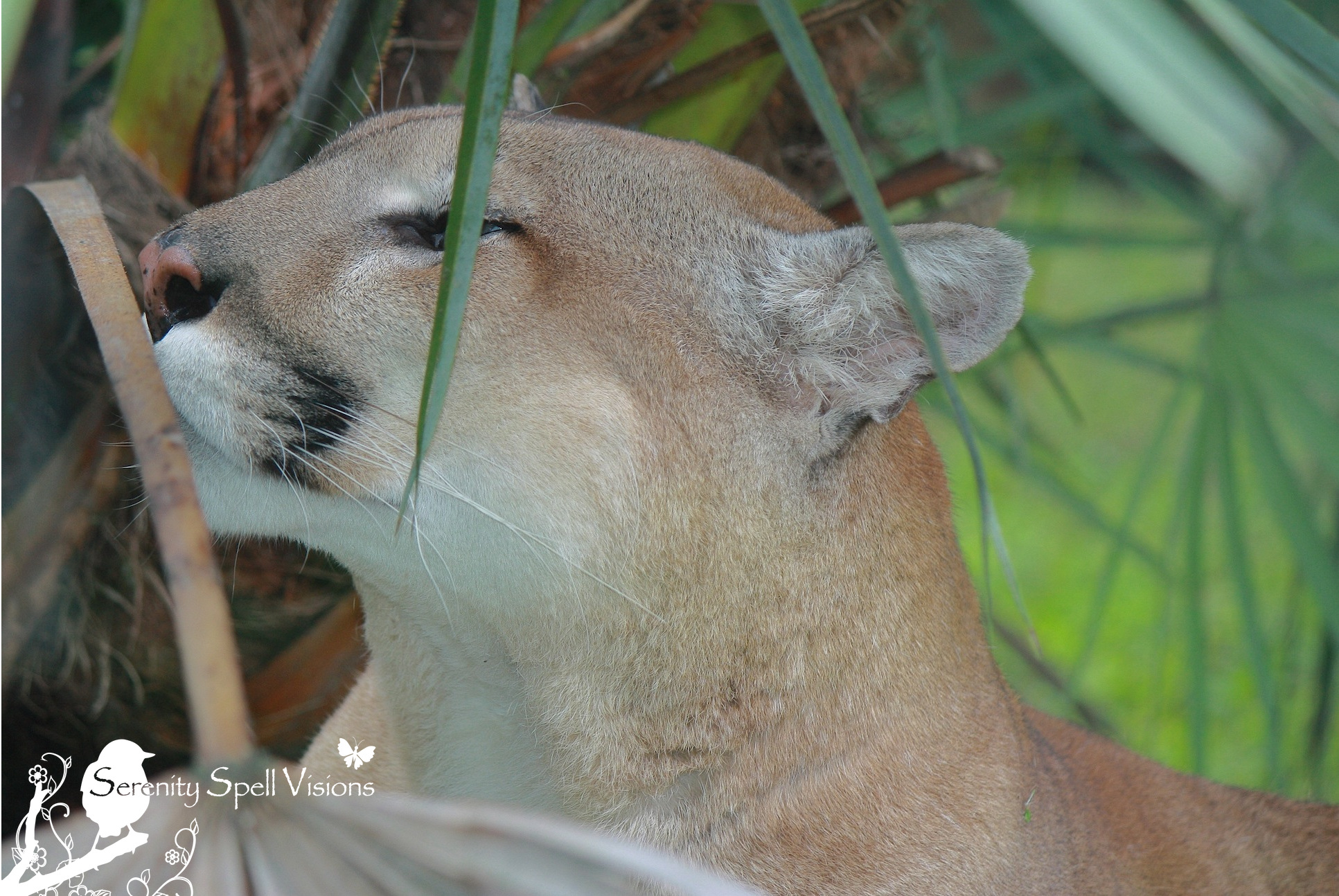
Rescued Florida Panther at Flamingo Gardens, Florida

Rescued Florida Panther at Flamingo Gardens: Sadly, this guy can’t be returned to the wild, because he underwent a painful de-clawing procedure at the hands of humans

From the article:

Florida panthers were among the first to go on the Endangered Species List back in 1973 when there were as few as 20 remaining individuals. Today they are still in great peril with as few as 100-160 in the wild, but biologists with the Florida Fish and Wildlife Conservation Commission (FWC) successfully released one female Florida panther into the Picayune Strand State Forest recently with the hope that she will become a successful mom.

Read more….

So much luck to this girl (and to her soon-to-be-released brother!) – AND so many thanks for the continued rescue and conservation efforts the world over!

Rescued Florida Panther at Flamingo Gardens, Florida

Another panther rescue: De-clawing exotic cats is still permitted, unbelievably. It causes extreme pain and lameness, and requires constant pain regulation. Horrific “legal” state minimum enclosure requirements for bears, big cats, and other wild animals (envision a tiny jail cell) are also allowed