Skip to content

Posts tagged ‘birds’

Tricolored Herons: The Grown-Ups

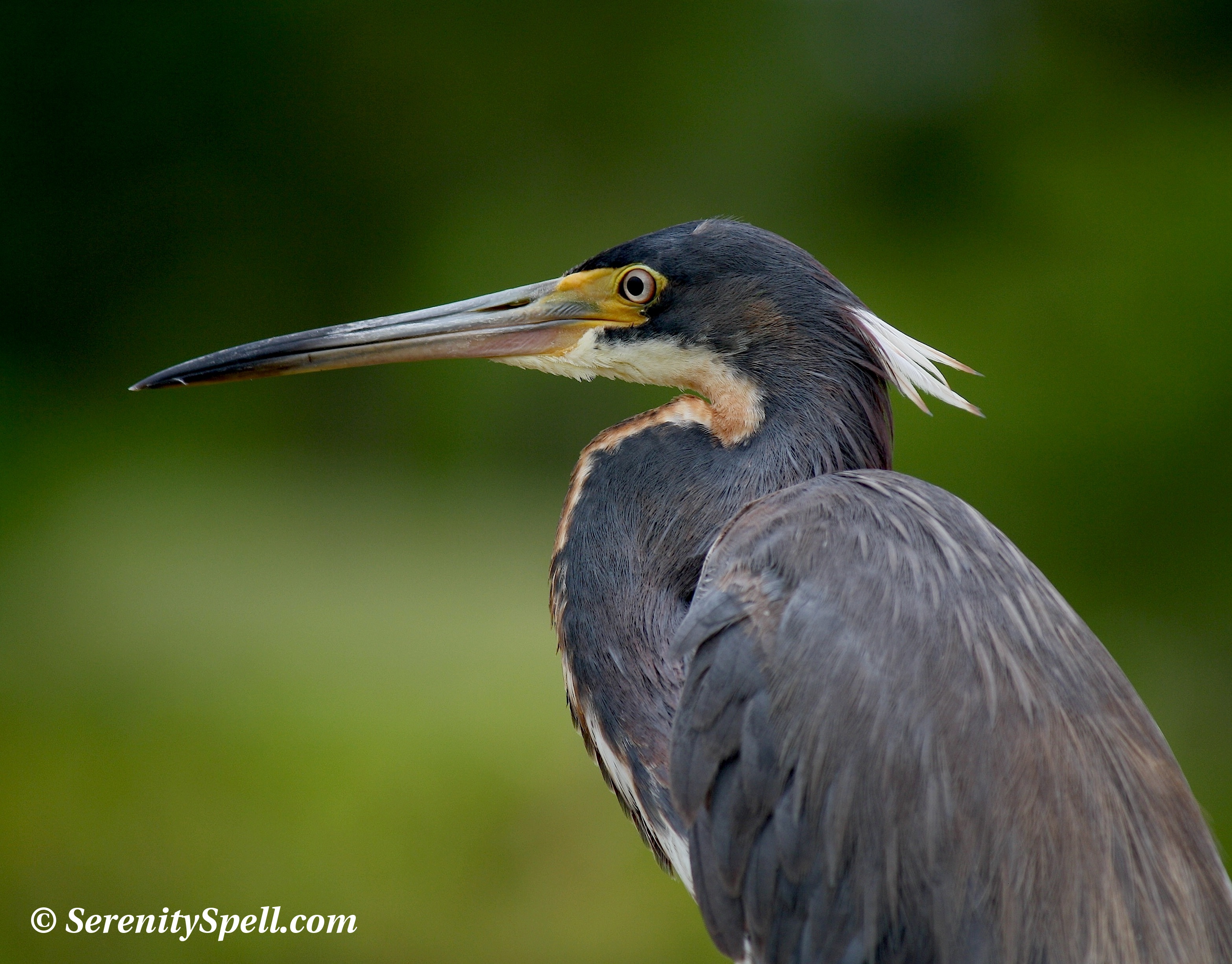
Tricolored Heron (Juvenile) in the Florida Wetlands

As recently mentioned — in Tricolored Herons: The Young Ones — there are a few physical differences between the juveniles and adults of the species Egretta tricolor.

Beautiful blue feathers cover most of this heron’s body, save a white-striped chest and belly, and a rust-colored neck. The juveniles eventually lose much of the rust coloring, with only a bit of the hue peeping through the slate blue feathers as they age. The eyes of the juveniles are a yellowish-white, turning brown with pink inner margins into adulthood. Males and females of the species look alike.

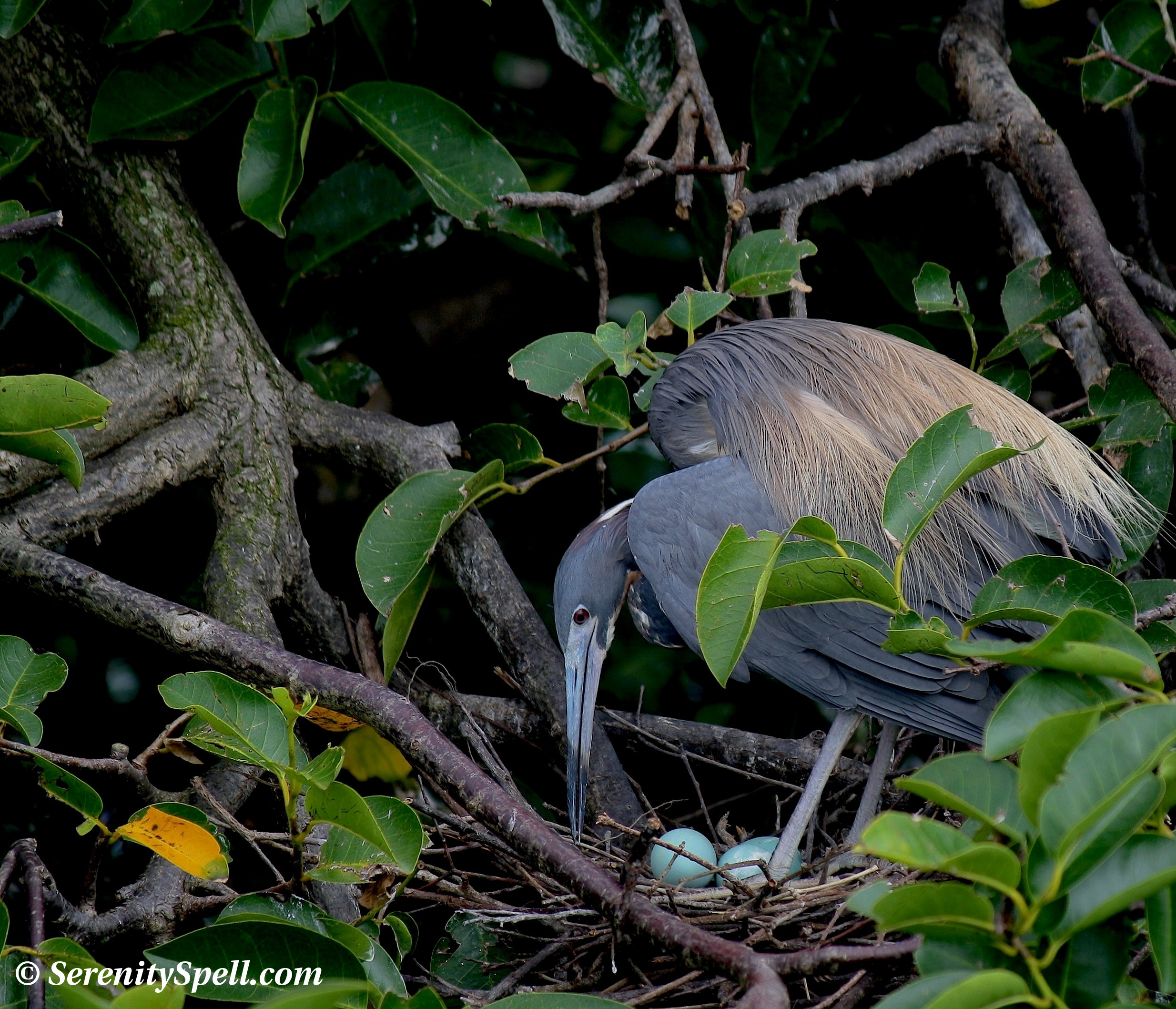
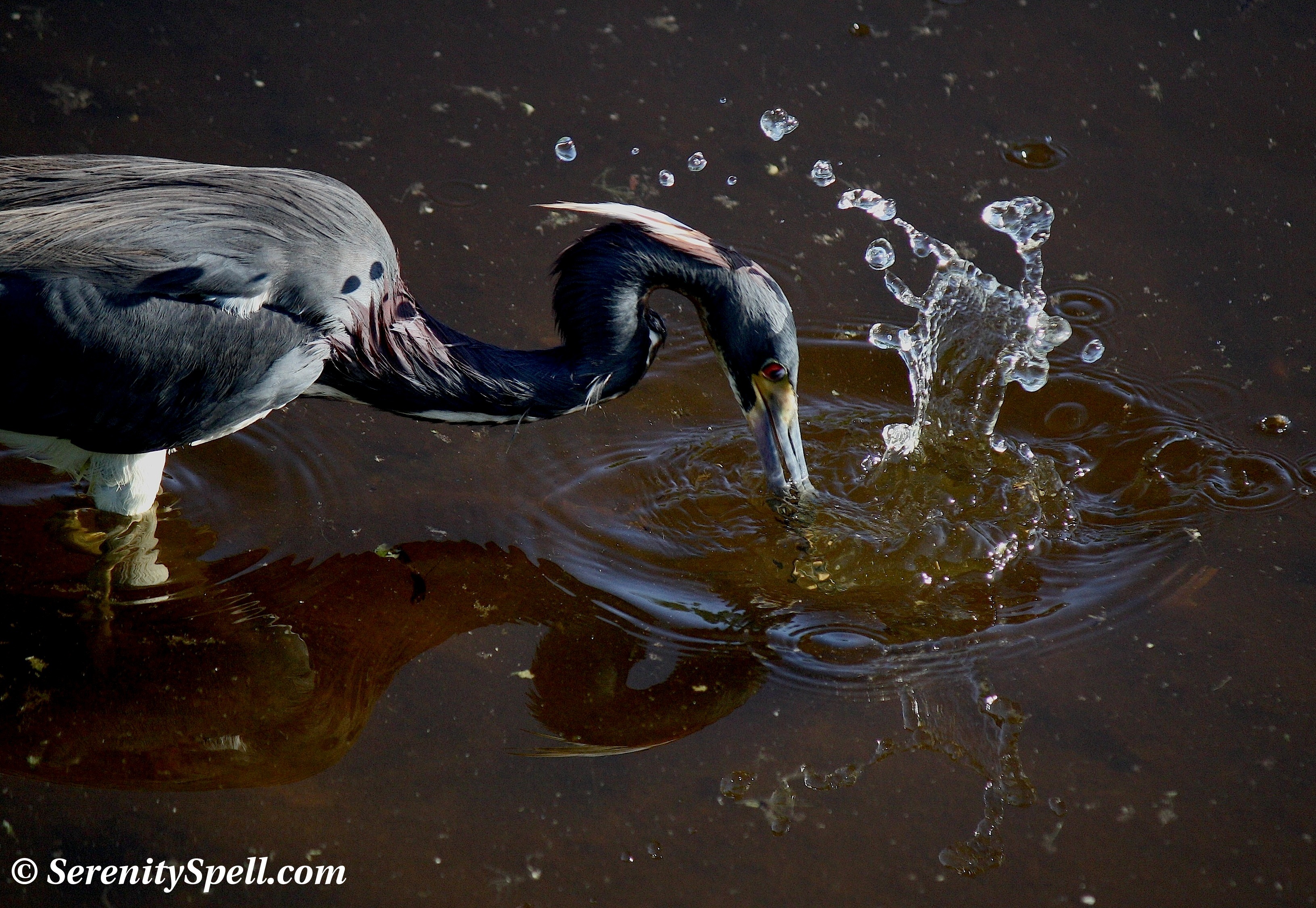
Below, an adult female carefully watches over her nest, recently built with her mate and filled with a precious cargo. Another fishes in the brown-tinted waters of the wetlands (hued as such by the mangroves and other tree roots) — most likely a parent, as both Tricolored Heron males and females hunt for their young.

We’re fortunate to have secure and protective habitats for these most lovely creatures; without continued preservation efforts however, many amazing and unique ecosystems — the Everglades, Longleaf Pine, Scrub, Mangrove, and more — will remain in decline. As they disappear, so do the plant species and wildlife that depend upon them for survival. According to the study Endangered Ecosystems: A Status Report on America’s Vanishing Habitat and Wildlife, Florida contains ecosystems at the most risk. There are no other Everglades; it behooves us to not only protect what’s left, but to return what we’ve so rudely taken.

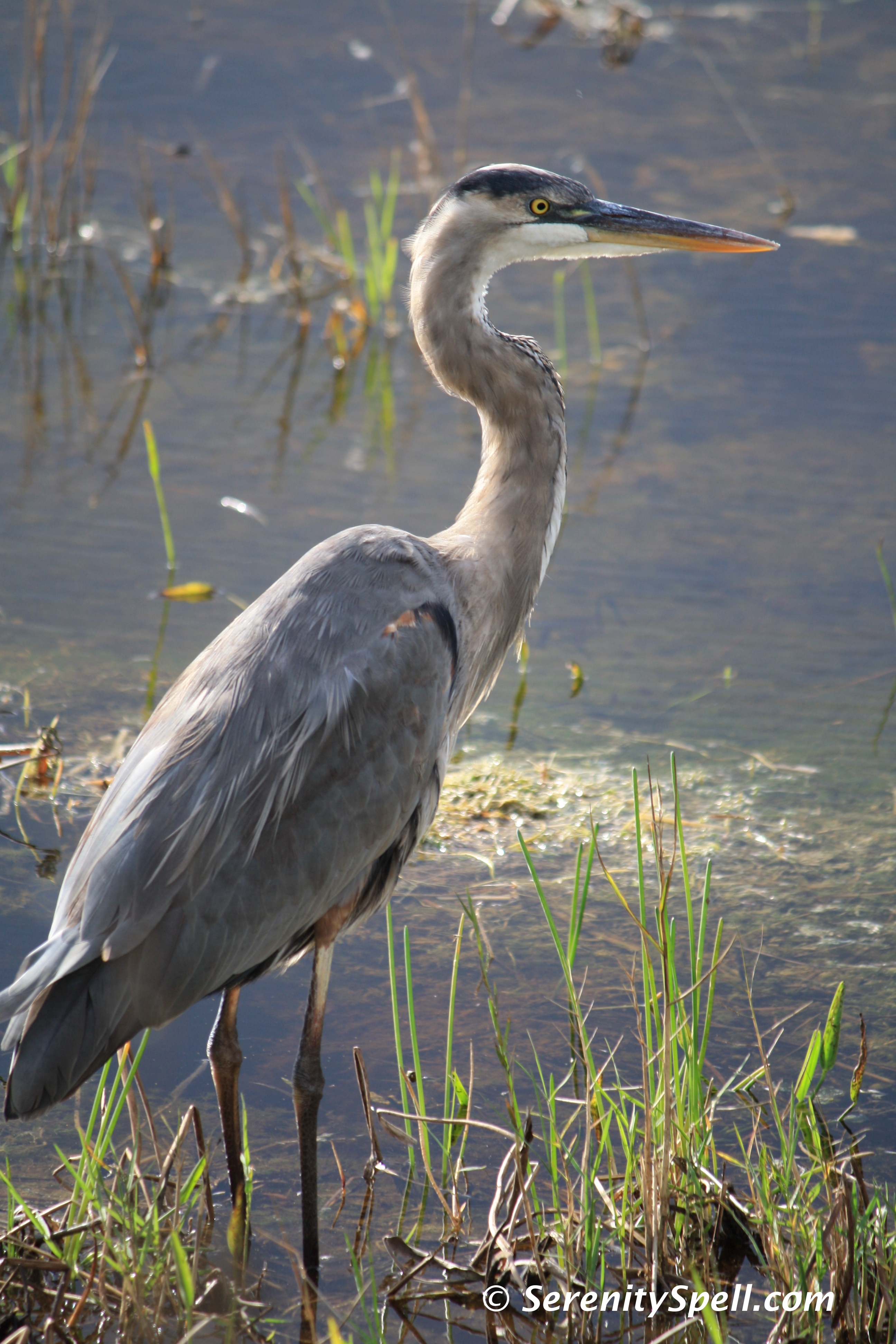
Tricolored Heron (Adult) in the Florida Wetlands

Tricolored Heron (Adult), Nesting in the Florida Wetlands

Tricolored Heron (Adult), Fishing in the Florida Wetlands

Tricolored Herons: The Young Ones

This guy actually brings to mind Rick from the oh-so-excellent The Young Ones….

The Tricolored Heron (Egretta tricolor) was formerly known as the Louisiana Heron, as it was one of the most abundant herons found in the Deep South. It’s a medium-sized and slender heron that lives in the southeastern United States (but as far north as coastal New Jersey), Central America, and the Caribbean. Standing approximately 22 inches tall on long yellow legs, this heron’s wingspan reaches 3 feet. Beautiful slate blue feathers cover most of its body, save a white-striped chest and belly, and a rust-colored neck. The eyes of the juveniles are a yellowish-white, turning brown with pink inner margins as they age. Males and females of the species look alike. During courtship, these already beautifully colored herons become even more vibrant: the eyes turn a lovely and striking scarlet, and their otherwise long, pointed yellow bill turns blue. Breeding plumage involves filamentous plumes on the head and neck, and buff plumes on the back.

This seemingly peeved Tricolored (such a face, sweetheart!) — despite my distance with a telephoto — is a juvenile, as is the second heron.

Their natural habitats are swamps, marshes, bayous, lagoons, and coastal ponds. It’s a common sight in our wetlands to see them nesting in colonies, in the trees and shrubs, with other herons. The male selects the nesting location, and builds the nest with the female. As with other herons, both parents care for the chicks, feeding them regurgitated food. Tricoloreds stalk their prey in the shallow waters, looking for fish, crustaceans, reptiles, and insects. They’ve been known to delve into the deeper waters however, with only their bodies visible.

These herons are the favorites of many in our area, and are a great joy to watch…. But like so many other species, despite their non-threatened status, they’re losing their natural habitats. It’s truly our duty to protect and preserve these complex ecosystems not just for the flora and fauna they are home to, but for ourselves.

Each species is a masterpiece, a creation assembled with extreme care and genius. —Edward O. Wilson (Biologist, researcher, theorist, naturalist, and author)

Tricolored, or Louisiana Heron (Juvenile) in the Florida Wetlands

Tricolored, or Louisiana Heron (Juvenile) in the Florida Wetlands

World Ocean’s Day 2012

Today is World’s Oceans Day: Natureview photography reminds us of the importance of the world’s oceans, and threats to this ecosystem under attack. He highlights an albatross in a beautiful image — a most amazing creature. I’ll never forget my first view of an albatross in the middle of the South Pacific, thousands of miles from any major land mass; I couldn’t believe what I was seeing.

Arjen Drost's avatarNatureview photography

Today is World’s Oceans Day, a day to remind us of the richness of the world’s oceans. But also a day to remind us how we use that richness, or better, misuse it…. Mankind has thought for a long time that there was so much fish in the ocean that we couldn’t possibly have a lasting impact on these populations. Now it’s starting to get obvious this is not the case. It is hard to get proper estimates of world populations of fish (how do you count those?), but it’s getting clearer and clearer that most populations are declining. This will also have an effect on the seabirds feeding on this fish. Now already are 81 of the 131 species within the order Procellariiformes (tubenoses) categorized as being threatened in any way by the IUCN (red list categories between near threatened and extinct. All 22 members of the family Diomedeidae (albatrosses) are…

View original post 83 more words

A Portrait in Patience

A Great Egret patiently stalks its meal among South Florida’s protected wetlands, with the purple stalks of the aquatic plant, pickerelweed, reflecting on the water’s surface. Both egret parents feed the chicks during the nesting period, which remains in high swing. Fortunately, they don’t have to travel far to forage for food, as there’s an abundant supply in this wonderful preserve; and within a few miles of these wetlands lies the Everglades. Observing the egret’s focus, intent, and diligence is a true lesson in patience — but a few humans have had poetic insights into this state of steadfastness:

Adopt the pace of nature: her secret is patience. -(Ralph Waldo Emerson)
Have patience. All things are difficult before they become easy. -(Saadi)
Patience is the greatest of all virtues. -(Cato the Elder)
Patience is the companion of wisdom.
-(Saint Augustine)

Endurance is patience concentrated. -(Thomas Carlyle)
He that can have patience can have what he will.
-(Benjamin Franklin)
Our patience will achieve more than our force.
-(Edmund Burke)
Patience and Diligence, like faith, remove mountains.
-(William Penn)
Patience and tenacity are worth more than twice their weight of cleverness.
-(Thomas Huxley
)
Why is patience so important? Because it makes us pay attention. (Paulo Coelho)


A Great Egret Patiently Stalks Its Meal in the Florida Wetland

The Great Blues, and Another Baby

Great Blue Heron at Dusk, Arthur R. Marshall Loxahatchee Wildlife Refuge

Nesting season continues at our protected wetlands, and the ever-graceful and regal Great Blue Herons consistently fuel the attentions of nature lovers and photographers. Now that Florida’s “Season” has ended however, the more timid (*me*) can enjoy these creatures. I haven’t written much on them, so here’s a bit of general info on the species.

Description & Habitat

Great Blues — also known Blue Cranes, California or Florida Herons, Espiritu Santo Herons, San Lucas Herons, and Treganza’s Herons — can be found in North and Central America, as well as in the West Indies and the Galápagos. They’re the largest of the herons in North America, and globally their size is surpassed only by the Goliath Heron and the White-bellied Heron. At 4 feet tall, and with a wingspan of 7 feet, they’re a stunning sight in our swamps and wetlands, as they stalk the shallow waters with long and deliberate steps, and fly overhead with slow and strong wing beats. In flight, they tuck in their necks, and their long legs trail behind. Save for migratory and nesting periods, Great Blues hunt and travel alone. They’re typically found near the shores of open water and in wetland environments, in both saltwater and freshwater habitats — including marshes, rivers, lakes, bays, lagoons, coasts, shores, and ponds. Like many other wading birds, Great Blues are primarily active at dawn or dusk, when fishing’s at its best. To observe them standing stock still, scanning and stalking the waters and surrounding vegetation for prey, is mesmerizing. Once they spot a fish, they strike with lightning-fast precision to grab or stab it — but they’ll also eat frogs, shrimp, crabs, insects, reptiles, rodents, and small birds.

Nesting & Breeding
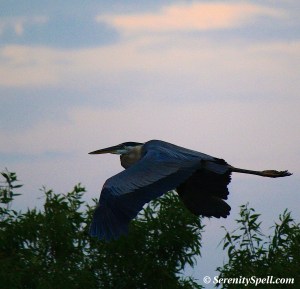
Great Blue Heron in Flight

Great Blues are monogamous, and will remain with their mate for the breeding season. Usually only one brood a year is produced; however, a Great Blue may raise another, if the original clutch is destroyed or abandoned. They breed in groups, or colonies, alongside other herons (and egrets). These breeding colonies, or rookeries, are located in all types of trees that can support their nests — in our area, tree islands are the preferred structure for the Great Blues’ rookeries. Tall tree branches or shrubs may also suffice — as long as the nest sits near water or wetlands. They build their nests out of sticks and twigs, and line them with a softer material, such as plants, feathers, or down.

Great Blue Heron Pair at Their Nest

Great Blues will try to nest in the same spot each year, using the old nest. Ours definitely do, and defend their nests aggressively against each other as well as against predators. Females lay 2-7 pale blue eggs, which are incubated for about 25-30 days. The young hatch over several days, and the Great Blue parents share the responsibility of feeding the young at the nest, by hunting on a full-time schedule and regurgitating the food. The battle for food is brutal among the chicks; the first to hatch is more experienced in food handling, and consequently grows more quickly than the younger hatchlings. Such aggression in the interaction with the sibling chicks (as well as the discrepancy in size) can be seen at the wetland rookeries, where it’s hard not to root for the younger, weaker chicks that are consistently beaten after fierce battles for food. The young Great Blues leave the nest at 2-3 months (60-90 days).

Great Blue Heron Pair at Their Nest

See The Nesting Great Blues for images of earlier nests and the growing young….

Threats

The average lifespan for a Great Blue in the wild is 15 years — although a maximum lifespan of 24.5 years has been recorded. Sadly, nearly 70% of Great Blues die before reaching the age of one year; contributing factors include repeated human disturbance to their nesting sites, resulting in abandonment of eggs or chicks. Other factors of premature death include accidents, harsh weather conditions, illegal hunting, and predation of eggs, nestlings and adults.

But as mentioned, we’re fortunate that Palm Beach County has created and preserved a marsh and wetland ecosystem for these and so many more animals in Wakodahatchee(Seminole for “created waters”) and Green Cay — so on to the new baby!

Oddly, there was only one hatchling at this Great Blue’s nest. I missed this event, but there were several hours of the mother Great Blue fiercely defending her newborn from a Turkey Vulture.

Great Blue Heron Mother and Her Baby at the Nest

…And the same growing baby, one week later!
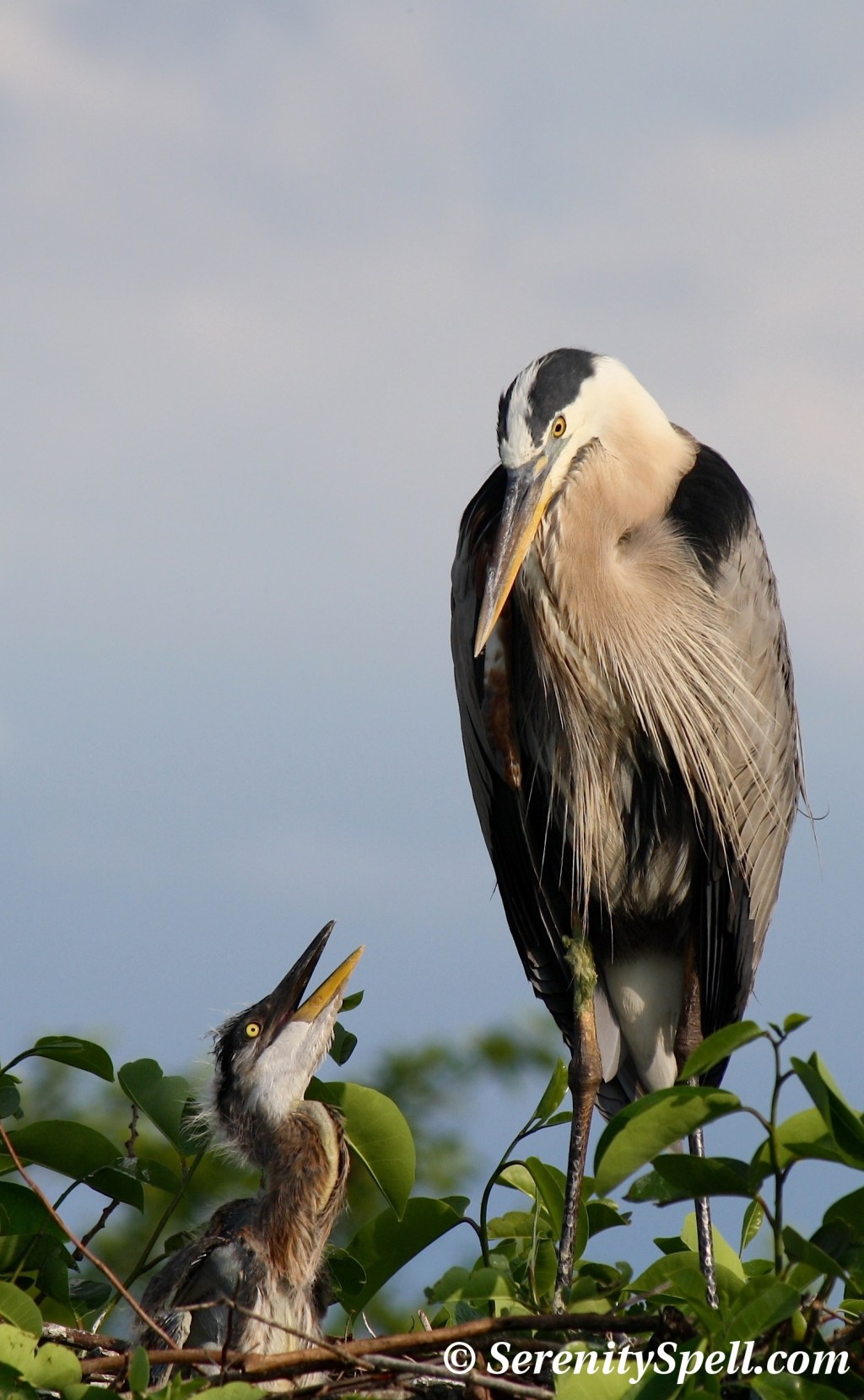
Great Blue Heron Mother and Her Growing Baby at the Nest

They grow quickly — but fortunately, the above little one won’t have to fight for food like these nearby juveniles, waiting patiently at their nest for the next meal…

Great Blue Heron Juveniles Waiting Patiently at the Nest