
Clyde Butcher, Visionary of the ‘Glades
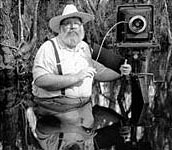
Clyde Butcher, from Clyde Butcher's Online Gallery and Website
Originally trained as an architect, landscape photographer Clyde Butcher has been exploring and capturing the far reaches of nature for more than 40 years. With his Deardorff, Wisner, and self-designed “Clyde-O-Wide,” Butcher hauls his unwieldy camera equipment (weighing 100-125 pounds) deep into the swamps of the Everglades, where he wades into the waters (and sits — for hours on end, with alligators and other critters) to catch eye-level, pure black-and-white images of such grace and beauty, that words cannot do them justice.
Butcher’s love and passion for nature — and specifically, for the chaotic beauty of the Everglades — gleams through every photograph of his swamps, rivers, bays, and oceansides. He embraces his spiritual connection to nature, and translates it through the photographic medium. Understandably, Butcher is a fierce conservationist; he yearns to protect and preserve wild Florida and its incredibly unique wetlands in the midst of ever-encroaching humanity, and in the face of voracious developers. “My goal,” he says, “is to let people see Florida and make up their own minds whether they want to keep it or not.”
“Wilderness to me, is a spiritual necessity. When my son was killed by a drunken driver, it was to the wilderness that I fled…and being close to nature helped restore my soul. My experience reinforced my sense of dedication to use my art form, photography, to let people know our land is a special place, and to inspire others to work together to save nature’s places of spiritual sanctuary for future generations.” —Clyde Butcher
I’ve been lucky to visit the Big Cypress Gallery, and stand in amazement in front of my favorite photographer’s enormous works. For years now, I’ve said that when my millions arrive … one of these pieces shall be my first purchase. C’mon, millions. Butcher will always be one of my heros — environmentally, spiritually, and artistically.

"Fisheating Creek 14," from Clyde Butcher's Online Gallery and Website
“Like the work of Ansel Adams, Clyde Butcher’s remarkable photographs gives us an access to nature we rarely see or experience. They not only reveal the intimate and majestic beauty of the Everglades — and the need to save the fragile environment — they also remind us of the abiding kinship we mortals share when we work together to preserve these magnificent places. Butcher’s art is a national treasure.” —Ken Burns, Emmy-winning filmmaker
For More Information on Clyde Butcher:
- Clyde Butcher (Official Website)
- Extreme Exposure: Everglades — Clyde Butcher’s Wilderness Intuition
- Florida in Black and White in the Tradition of Ansel Adams, Photographer Clyde Butcher Creates Compelling Images of a Wild World That Is Rapidly Fading from View
- Wikipedia Entry
For More Information on Big Cypress National Preserve:













 FeyGirl
 Serenity Spell