Skip to content

Posts tagged ‘endangered’

Vestige of the Everglades: Grassy Waters Preserve

The clearest way into the Universe is through a forest wilderness. —John Muir

Grassy Waters Preserve in West Palm Beach presents the natural history of Florida in its pristine and wild 23.5 square miles. Today, the Preserve serves as the freshwater supply for the city and its associated municipalities — but historically the area was the headwaters of the Loxahatchee River (Seminole for River of Turtles). It was also a key component of the Everglades watershed, which began north of Orlando and flowed through rivers that emptied into the vast Lake Okeechobee, where the lake’s waters flooded into the Everglades Basin and slowly flowed into the Florida Bay. Humans have since severely altered this historic water flow — although efforts have begun in earnest to resolve years of detrimental impact. The Grassy Waters Preserve (GWP) represents a remnant of the once-magnificent Everglades ecosystem.

Numerous hiking and biking trails wind throughout GWP, including the Apoxee Trail — “beyond tomorrow” in the Miccosukee language (pronounced A-po-hee). We weren’t prepared for a flooded-trail hike, so we drove north to the Hog Hammock Trail, where we were delighted to be completely alone for our 5-mile venture, save the critters. What’s wonderful about GWP is the variety of trails offered — long, short, easy, advanced — you have your pick.

Wildlife sightings include alligator, deer, armadillo, wild turkey, feral hog, bobcat, otter, osprey, great-horned owl, hawk, assorted wading birds, and snail kite. The survival of snail kite — the logo for the Preserve — is dependent on the preservation of pristine wetlands like those at Grassy Waters. Sadly, like so many other species, it’s estimated that this amazing bird of prey will most likely face extinction within the next 30 years due to habitat loss and other factors. But at Grassy Waters, snail kite sightings are common — proving that this iconic Everglades resident is allowed the quality habitat it needs for a fighting chance at survival.

These images were taken during our Hog Hammock hike, which we did in its entirety, including the mile-long dead-end trip…. As we were leaving the trail, I was yapping about something terribly important and startled a magnificent great-horned owl, which alighted immediately in front of us. Argh for the failed photo op!
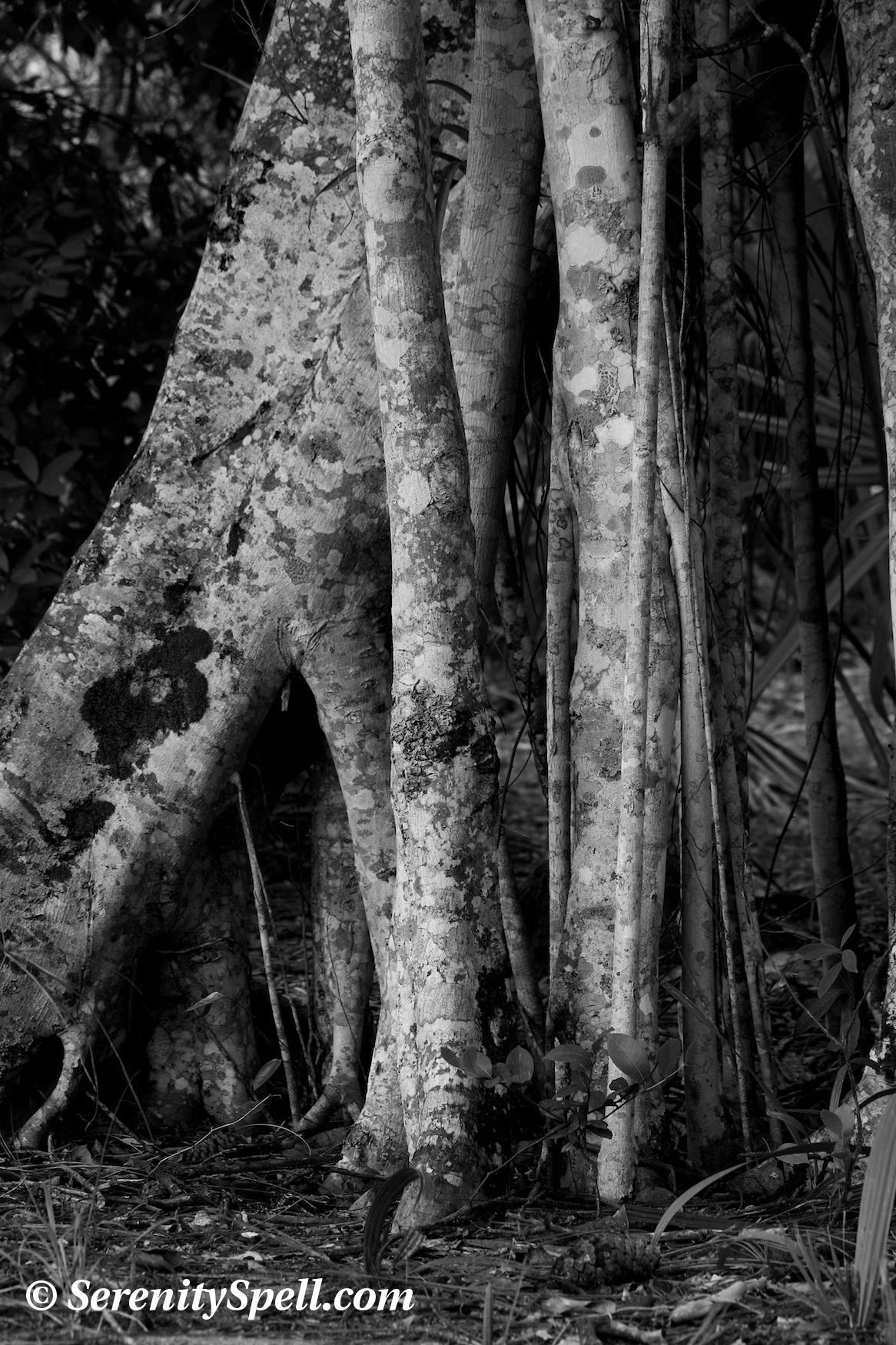
Cypress Tree
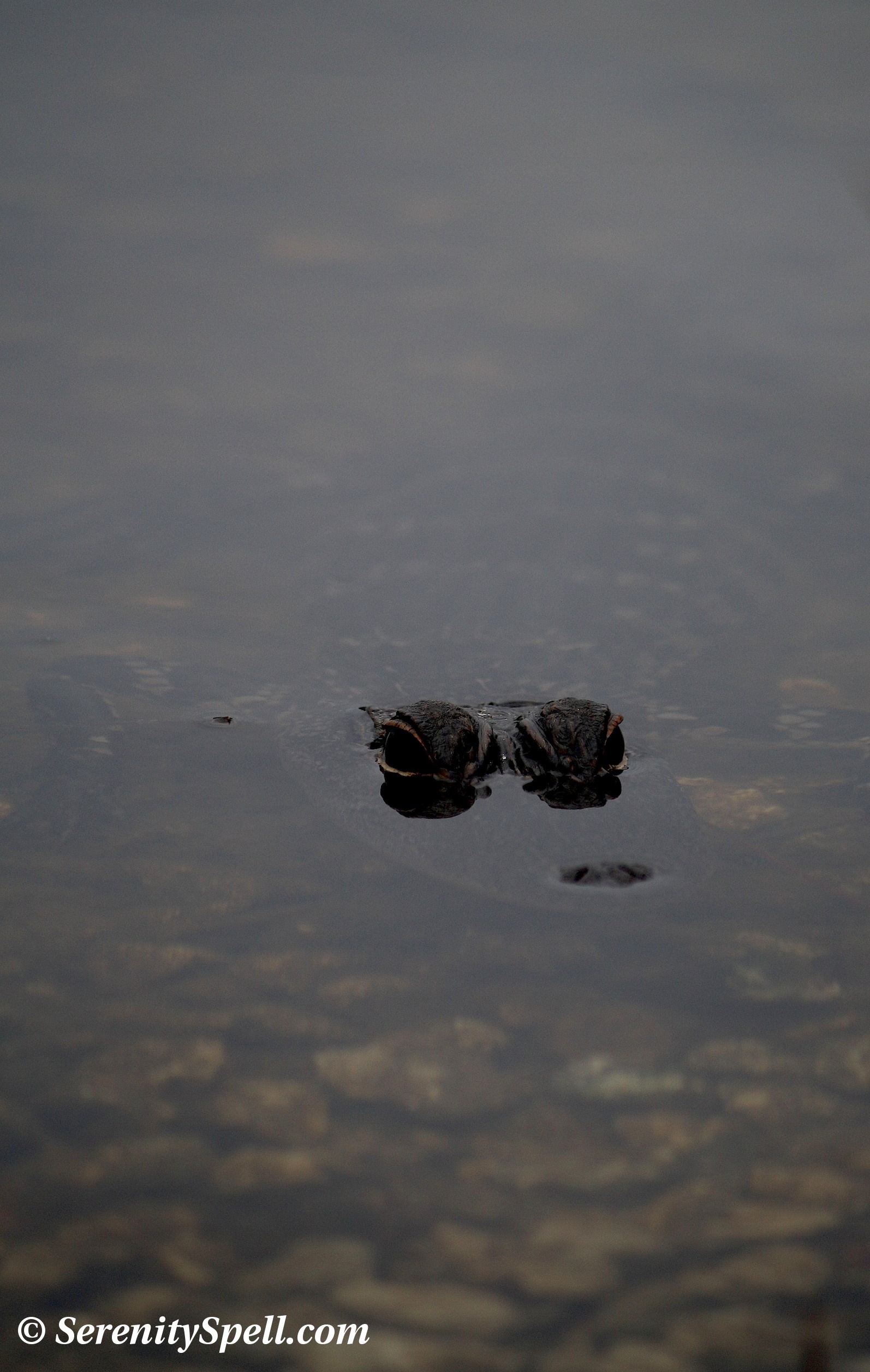
Here There be Gators: Adorable but Flighty Juvies!

Outside of the trail…
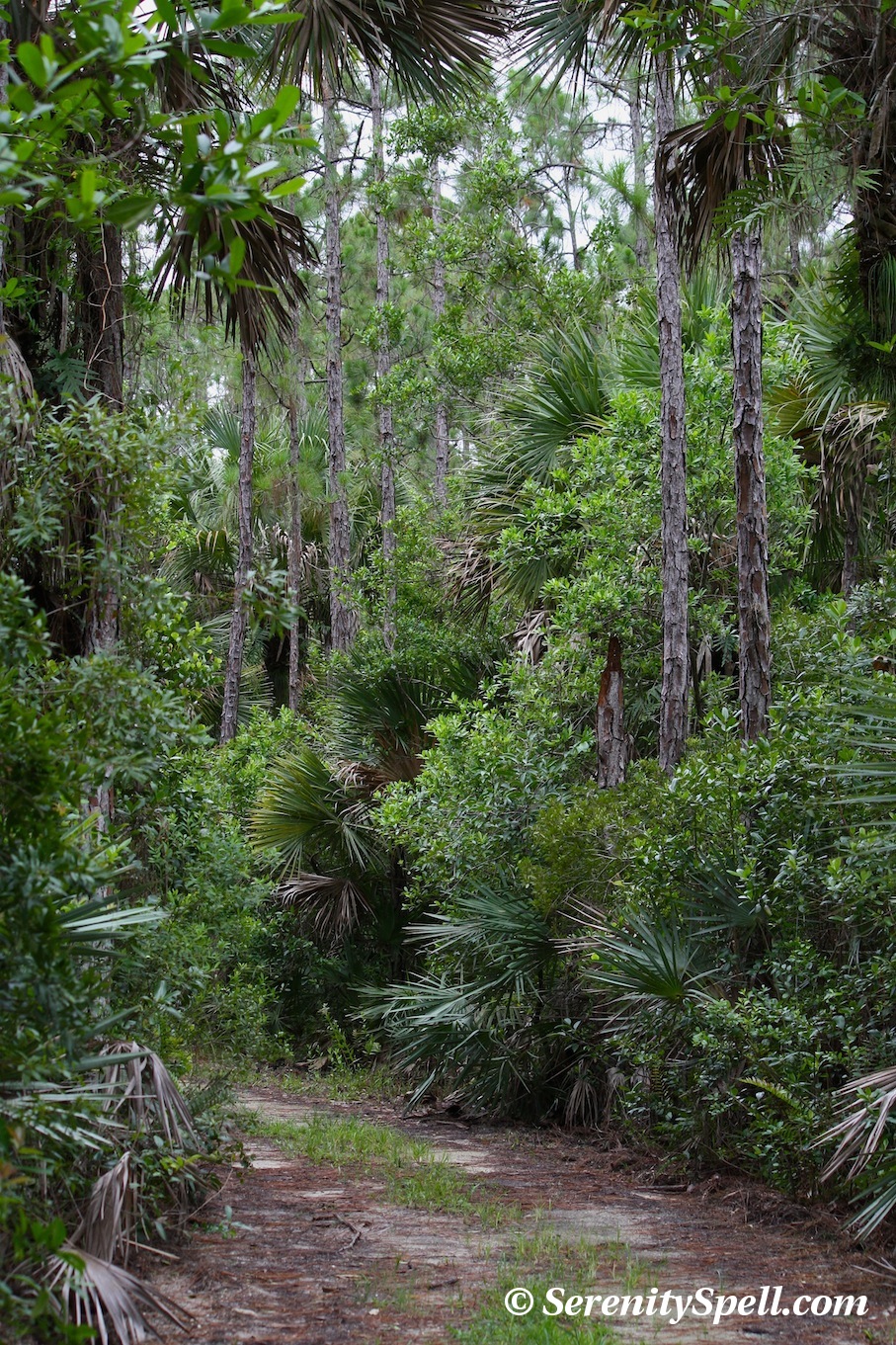
Entering the trail…
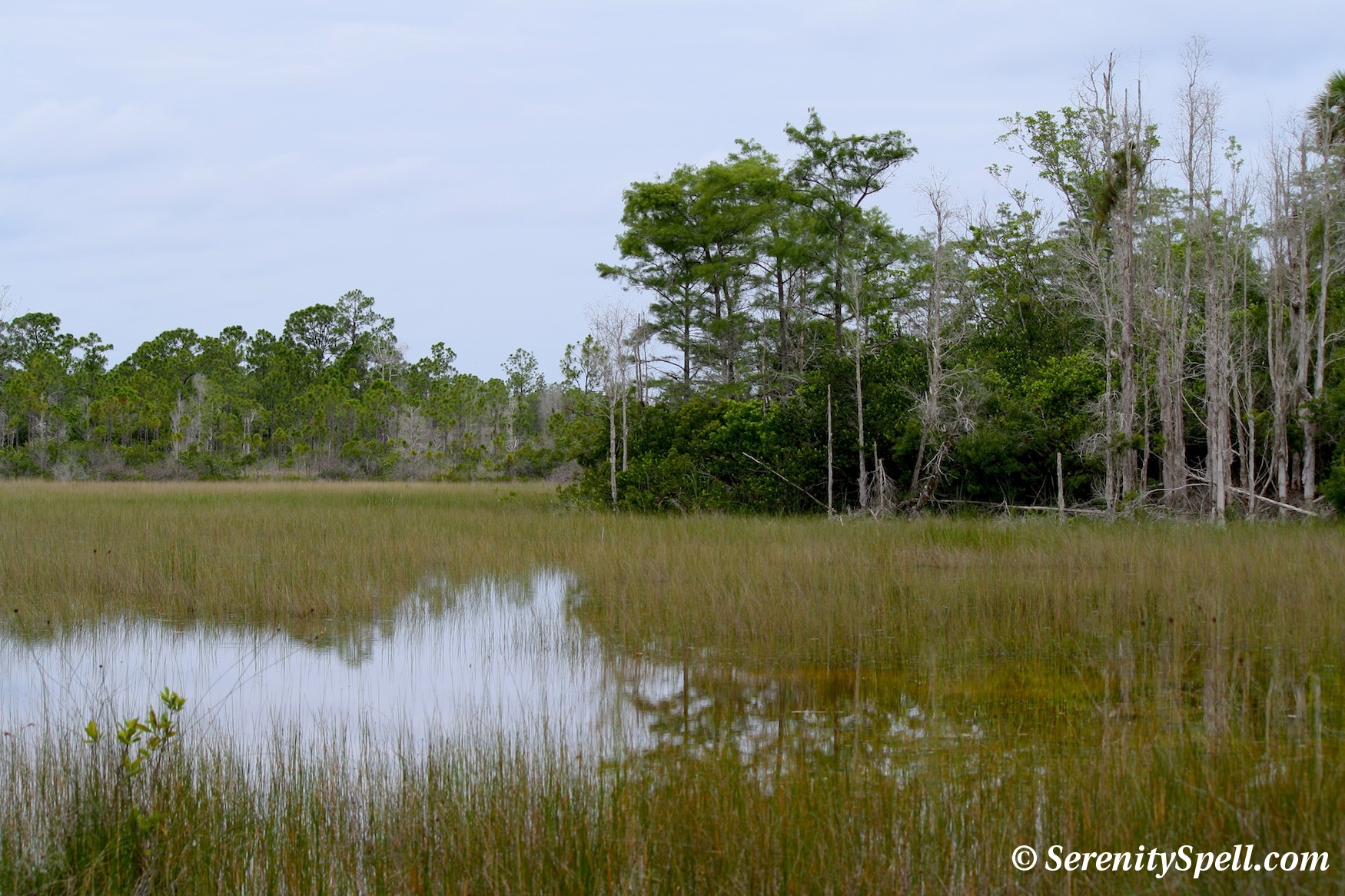
Everglades Vista

Everglades Vista

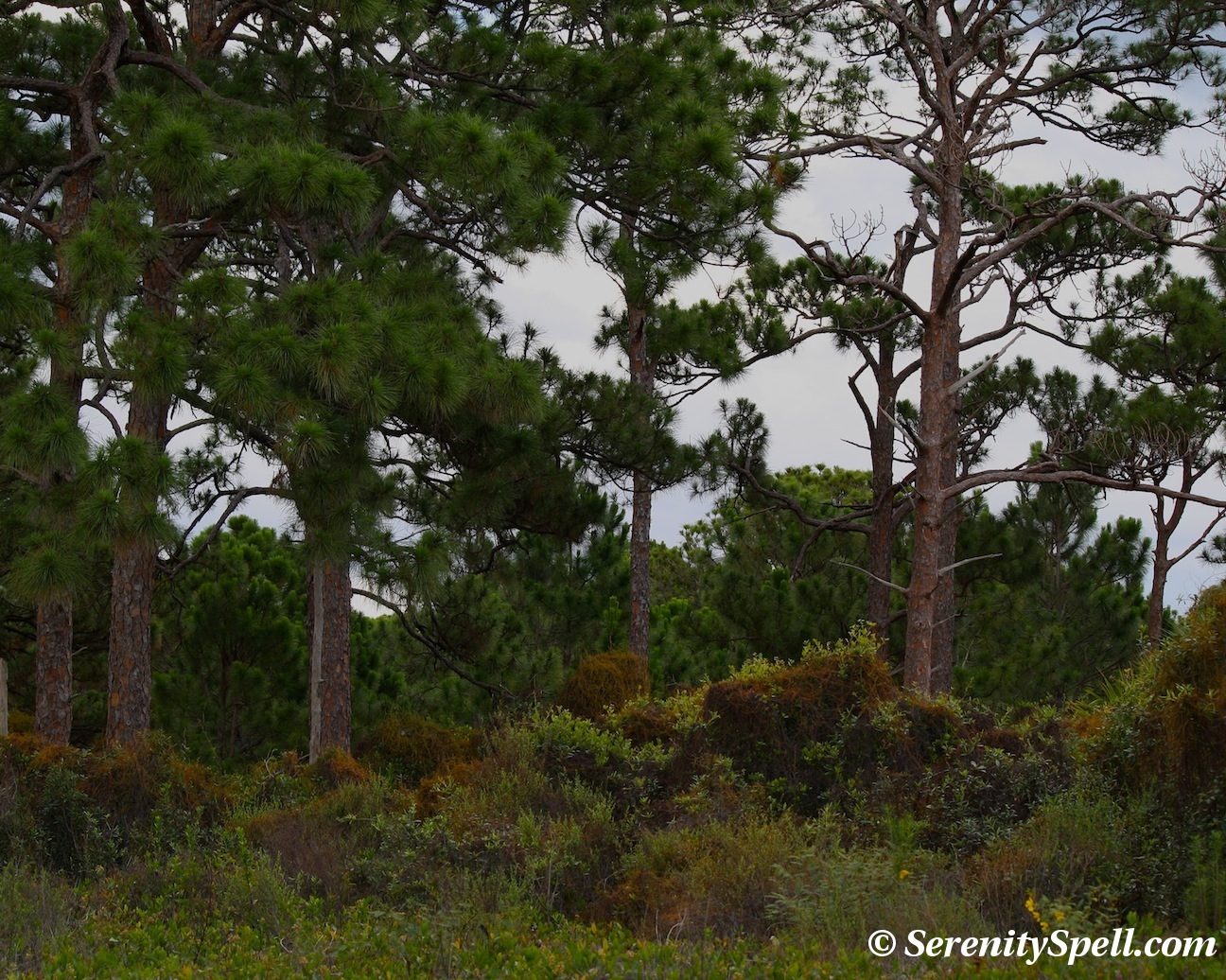
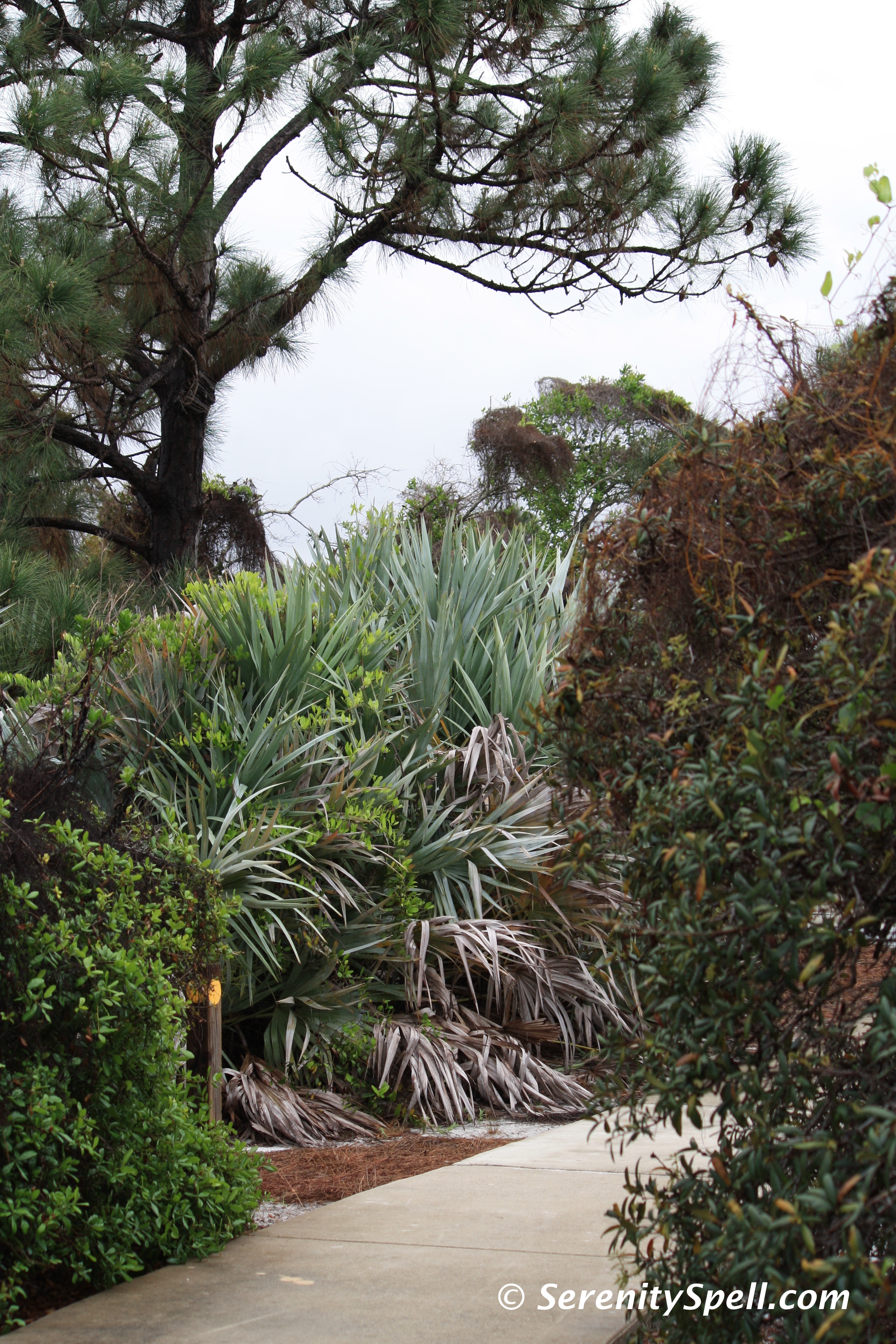
Nature’s design: Slash Pines

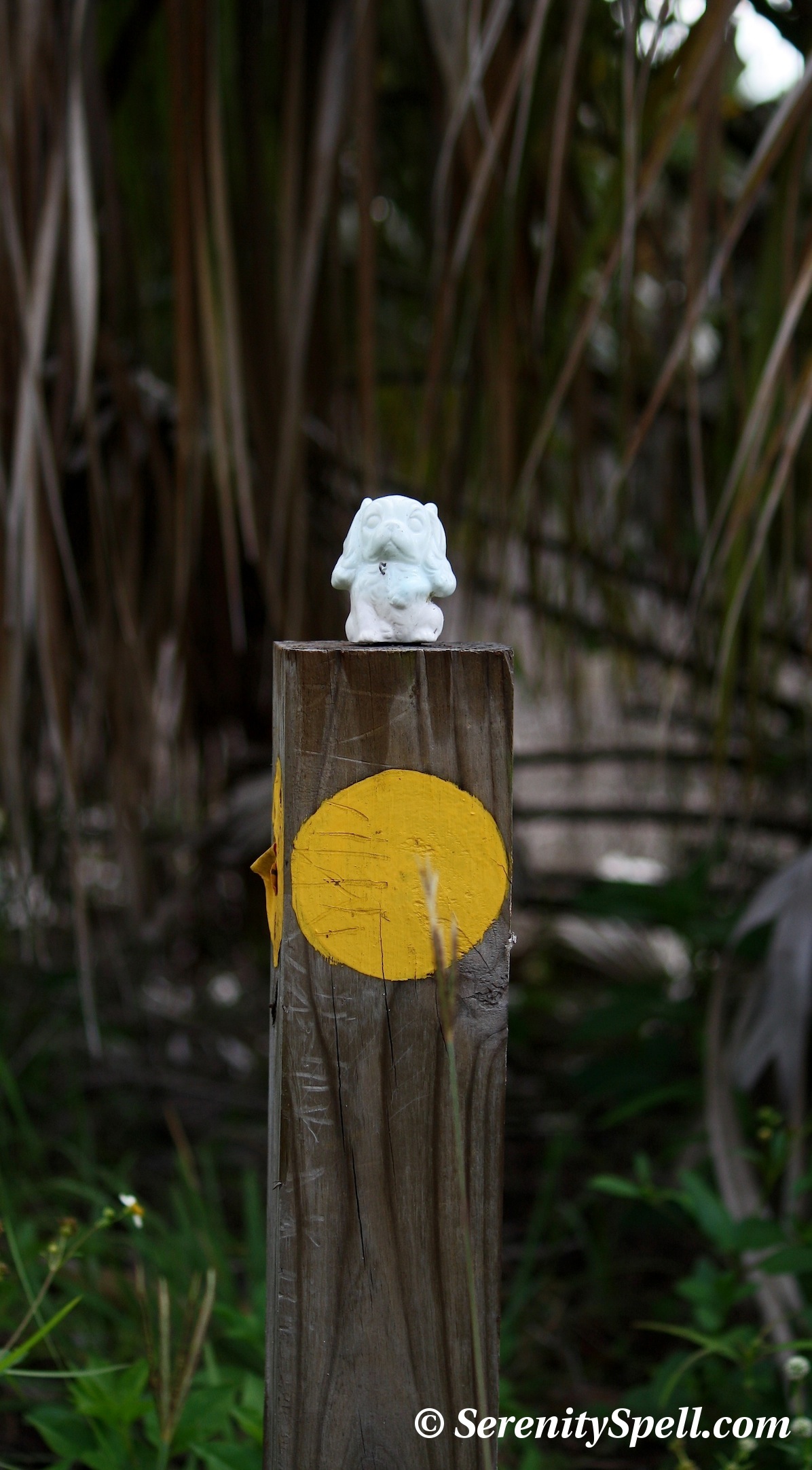
NENA Signage
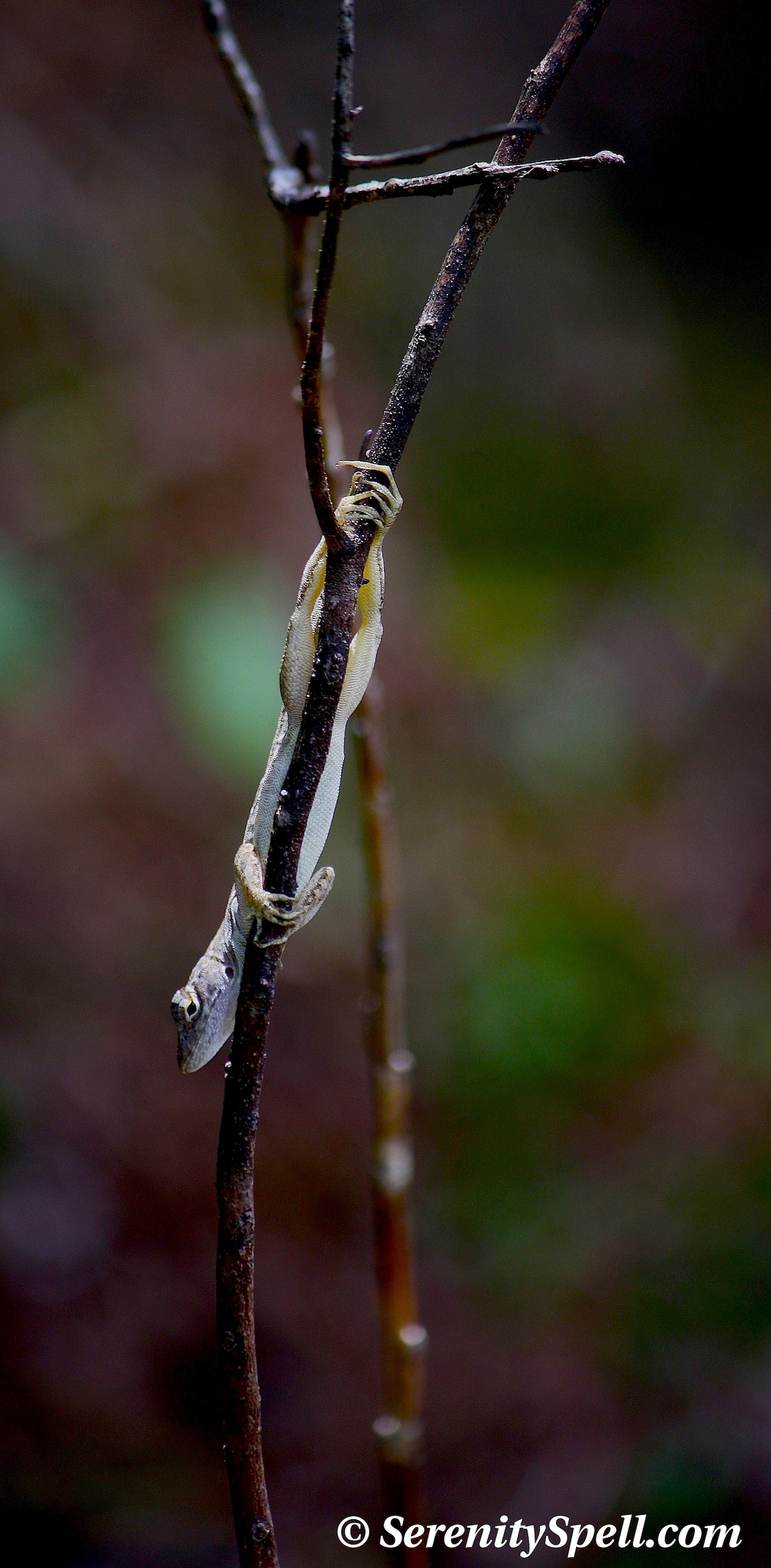
Hang On

“All you need to do is hold on tight…and believe.” —Stephen King

We made our second visit to a wonderful 24-mile-large Everglades preserve this weekend (more images forthcoming, it’s beautiful land) — an area new to us, so each trail is an adventure. What’s so wonderful is that we’ve been completely alone each visit, save the rustling of the critters, a magnificent great-horned owl (sadly, no picture, as we startled each other within a matter of feet), and the awe-inspiring trees, wetlands, and swamps. Entering one trail, there was a ruckus among a saw palmetto plant, and a tiny lizard popped out of its depths — it doesn’t take much to create a cacophony in their noisy fronds. He simply sat on a nearby twig, seemingly perturbed at the brief interruption. Cutie.

Brave Lizard Along the Trail at Grassy Waters Preserve

Trailhead at Grassy Waters Preserve

Everglades Vista of the Grassy Waters Preserve

A Walk Through an Endangered Scrub Community

We recently visited one of  Palm Beach County’s many preserved swaths of pristine Florida land, the Hypoluxo Scrub Natural Area. Thanks to Tropical Storm Debby and other interesting recent weather patterns, we’ve been afforded some great hiking weather — CLOUDY! TS Debby brought us massive rains and winds (and she snapped my lovely, towering Japanese Sunflower plant — GR!), but we’ve been able to accomplish longer hikes than we normally would have at this time of the year.

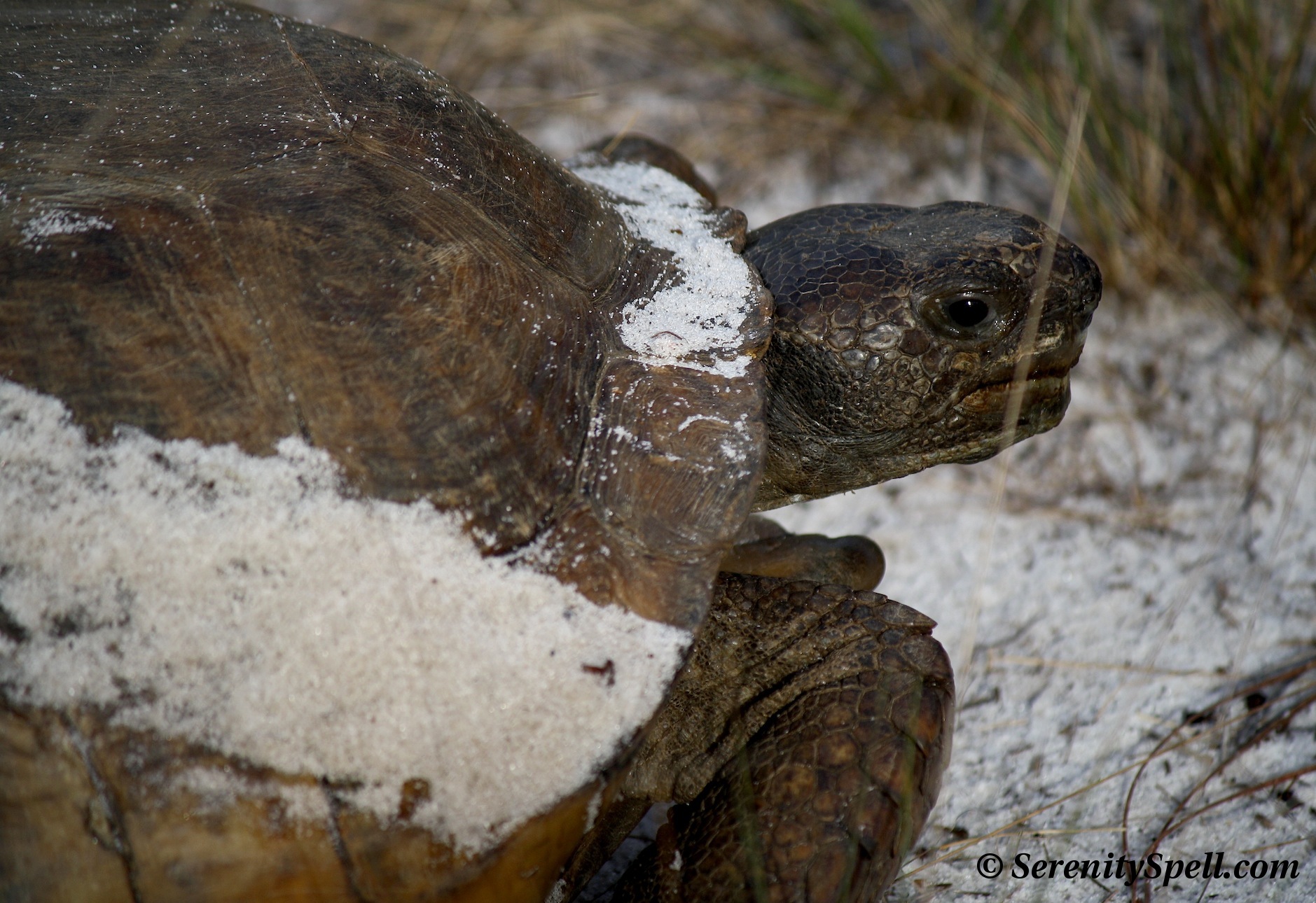
This particular area was never developed, and saw minimal agricultural use throughout the years. Purchased in 1999 in a growing effort to protect and maintain threatened and endangered biological communities in the county, we’re thankful to be afforded this glimpse of natural Florida. Located on a sand ridge that was once an ancient shoreline, 97 acres of Florida scrub and scrubby flatwoods communities have been incorporated and are now protected at the Hypoluxo Scrub Natural Area — as are the threatened Florida scrub-jay and gopher tortoise, both victims of years of over-development and lack of protection.

Scrub and scrubby flatwoods habitats are two of the rarest natural communities in Florida, with less than 2 percent remaining in Palm Beach County. Truly phenomenal, when you wrap your head around it.

The area has quite an interesting history (for more info, visit another post of mine on this natural area — Endangered Native Florida Ecosystems at the Hypoluxo Scrub Natural Area). During this dusk outing, we were alone (the sky was sputtering), and we encountered many gopher tortoises returning to their burrows, hunting hawks, and thousands of dragonflies. Altogether a wonderful early evening in a most unique and beautiful land.

Scrub and Scrubby Flatwoods

Gopher Tortoise Returning to Its Burrow

Slash Pine Profile

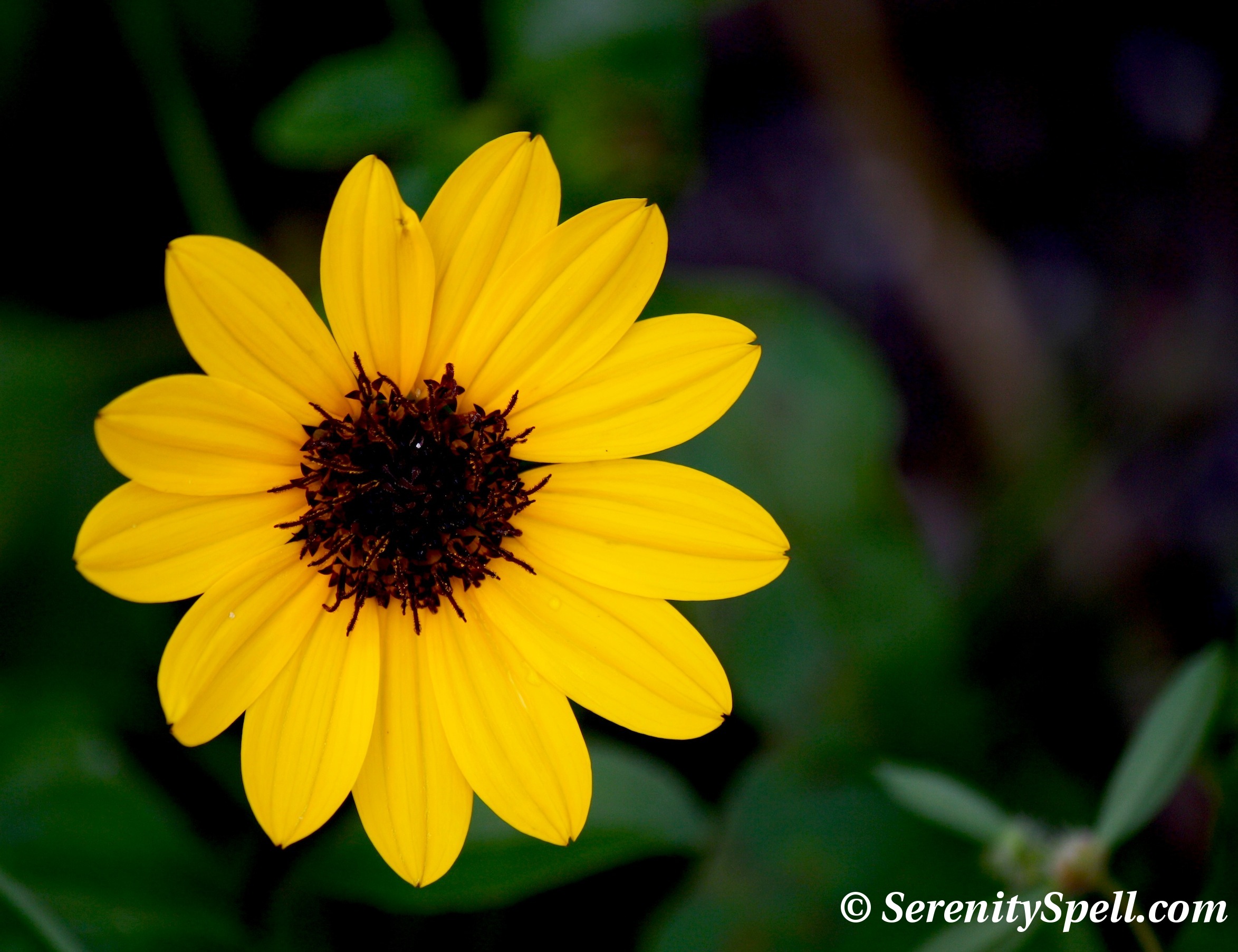
Ground Cover Blossoms

Scrub and Scrubby Flatwoods

Queen Butterfly (Danaus gilippus)

A Trail Offering

A Lovely Old Slash Pine

Someone’s Meal, So Perfectly Arranged

Rainbows in an Endangered Finch

In all things of nature there is something of the marvelous. —Aristotle

I captured this brave little fellow at Butterfly World’s Jewels of the Sky Aviary, the largest free-flight hummingbird aviary in the United States. It’s a most amazing, beautiful, and fairy-like place — a huge and lush flower-filled habitat of Hummingbirds, Honeycreepers, and Euphonias.

The Gouldian Finch (Erythrura gouldiae), also known as the Lady Gouldian Finch, Gould’s Finch, or the Rainbow Finch, was named for Elizabeth Gould, wife of British ornithological artist John Gould. This spectacularly-colored little bird is native to Australia, where their numbers have decreased dramatically throughout the 20th century due to habitat loss. They remain an endangered species in their natural habitat, with less than 2,500 remaining.

In 1992, the species was classified as endangered in the wild. That same year, Catwoman stuffed a poor Gouldian into her mouth in Batman Returns— some say, to raise awareness for their plight.

Catwoman eyes the Penguin’s Gouldian in “Batman Returns”

However, they’re popular birds in captivity and among breeders, which keeps their general populations higher. The delicate Gouldian Finches are difficult to breed outside of their native Australia — they demand a clean environment and excellent nutrition to survive and thrive, and aren’t suggested for novice breeders. (I personally have issues with caged birds, but wanted to include this tidbit.) While attempts at their reintroduction have proved unsuccessful, thankfully these lovely finches are the subject of a conservation program in Australia. There are currently plans to recover and conserve their natural habitats, with management guidelines discussed to educate landholders about land management, promoting the recovery program, and Gouldian Finch conservation.

Gouldian Finches gather in flocks in the wild, most likely to protect against predation. They’re highly sociable birds, but more often with other birds than with humans. Both sexes are brightly colored, with black, green, yellow, and red markings — but with selective breeding, there are now many color mutations. As usual, females tend to be less brightly colored (the males do the strutting). Gouldians bond and mate for life.

In honor of this beautiful, endangered, and brave little finch, may you have an equally bright weekend!

Gouldian Finch (Rainbow Finch)

Endangered Native Florida Ecosystems at the Hypoluxo Scrub Natural Area

Aerial View

Palm Beach County has managed to preserve several swaths of pristine Florida land, and the Hypoluxo Scrub Natural Area is one such example. This land was never developed, and saw minimal agricultural use throughout the years. Purchased in 1999 in a growing effort to protect and maintain threatened and endangered biological communities in the county, we’re thankful for their efforts, and to be afforded this glimpse of native Florida. Located on a sand ridge that was once an ancient shoreline, 97 acres of Florida scrub and scrubby flatwoods communities have been incorporated and are now protected at the Hypoluxo Scrub Natural Area, as are the threatened Florida scrub-jay and gopher tortoise, both victims of over-development and lack of protection. Scrub and scrubby flatwoods habitats are two of the rarest natural communities in Florida, with less than 2 percent remaining in Palm Beach County.

History

Entering the trail area from the parking lot are two observation towers; the vantage point overlooking the natural area from the towers allows visitors to view the land as it would have appeared pre-development. Educational plaques around the towers explain the region’s history (as well as that of the Town of Hypoluxo), beginning with the early settlers in 1873 to the 1960s. Standing guard in front of the observation tower is the looming Barefoot Mailman statue, in honor of the 19th-century men who delivered mail on treacherous routes — 3-days each way, and involving nearly 100 miles of unpaved roads and alligator- and shark-infested waters. As the plaques state, the land that is now the Hypoluxo Scrub Natural Area was once owned by Andrew Garnett, James Edward Hamilton, and James Porter; Garnett and Hamilton eventually won contracts to deliver mail from Jupiter to Miami. (Remnants of Porter’s homesite are still visible at the location.) The northernmost portion of the “Sand Road,” built in 1892, signaled the end of the barefoot mailmen and is located within the park (and is the only section of the road that’s actually still sand). An additional sweet smaller sculpture greets visitors to the natural area, one by Chrisanthy Vargo depicting a scrub jay, a fox, bromeliad, and a tortoise — life of the scrub.

Trails, Flora & Fauna

Paved Cottonweed Nature Trail

The .2-mile paved Cottonweed Nature Trail trail leads from the observation towers, and is lined with gopher tortoise burrows. While there are definitely areas within Hypoluxo Scrub that are shaded, much is exposed to the open sun — so an early morning or late afternoon/early evening hike are usually ideal, at least from our experiences. It’s a beautiful casual venture, and a great opportunity to explore this endangered ecosystem. Our preferred hike is the 1.5-mile natural Eastern Pondhawk Trail loop, which provides a lovely view of pine and scrubby flatwoods. Several other paths loop off the main trail as well, but be aware of crushing any fragile tortoise burrows and delicate and vital scrub plants.

Even on the sandy scrub trail, bright flowers spot the landscape: Cottonweed, Prickly pear, Netted pawpaw, Gopher apple, and Honeycombhead flash all shades of yellows, whites, and reds across the sand. The area is great for birdwatching, although during our last visit the impending rain seemed to quiet the wildlife. However, on a previous walk towards the back of the park, we saw a large flash of tan… Of deer? Or of leaping fox?

Hours & Location:

150 Hypoluxo Road, Lantana, FL (just west of Federal Highway)
Open sunrise to sunset, seven days a week
Admission: Free

For More Information:

Observation Tower from the scrub

Netted Pawpaw

On the trail

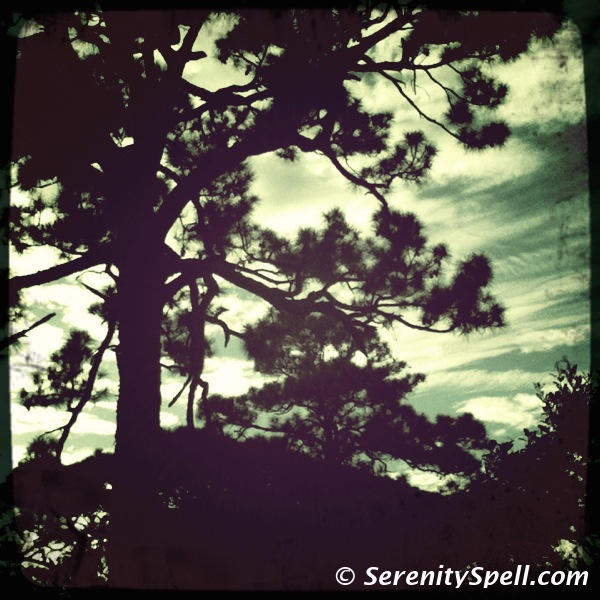
Slash pines against the sky

Scrub environment leading to flatwoods

Slash pines

Scrub environment

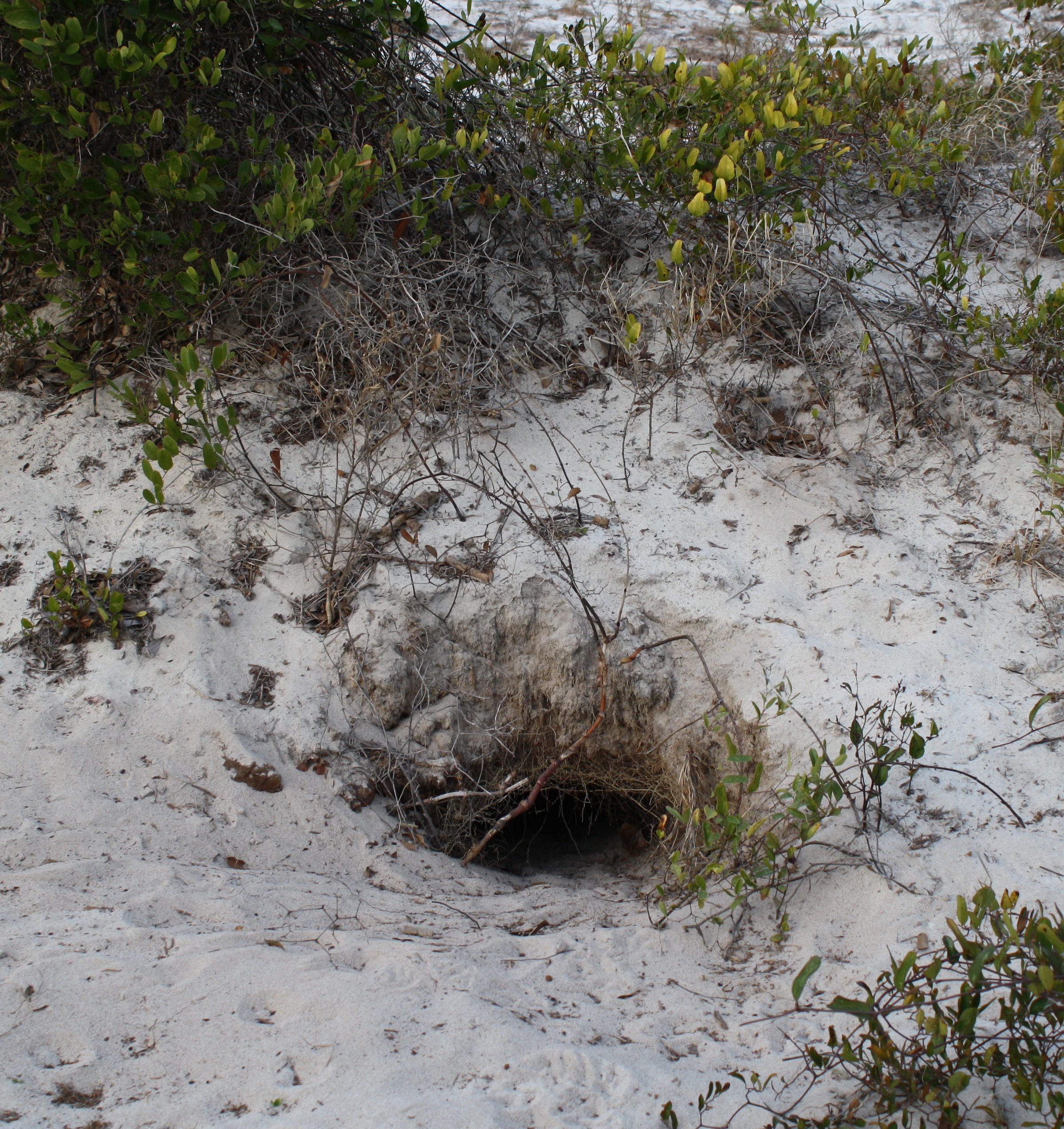
Gopher tortoise burrow