Skip to content

Posts tagged ‘environment’

Dusky Beauties, or: Please Don’t Talk Smack About Our Coots

Each species is a masterpiece, a creation assembled with extreme care and genius. —Edward O. Wilson

I’m easily distracted by critters — no matter how common they may be. It could be an Eastern Harvest Mouse that grabs my attention for a half-hour. On a recent stroll around our wetlands, I was entranced by the coloring of our very common American Coot, as a mating pair stood in the shallow waters at dusk. Their dark grey / black feathers, white bill, and red eyes against the darkening waters of the approaching night sky was lovely. It wasn’t a Great egret in full breeding plumage, no…. But just as striking.
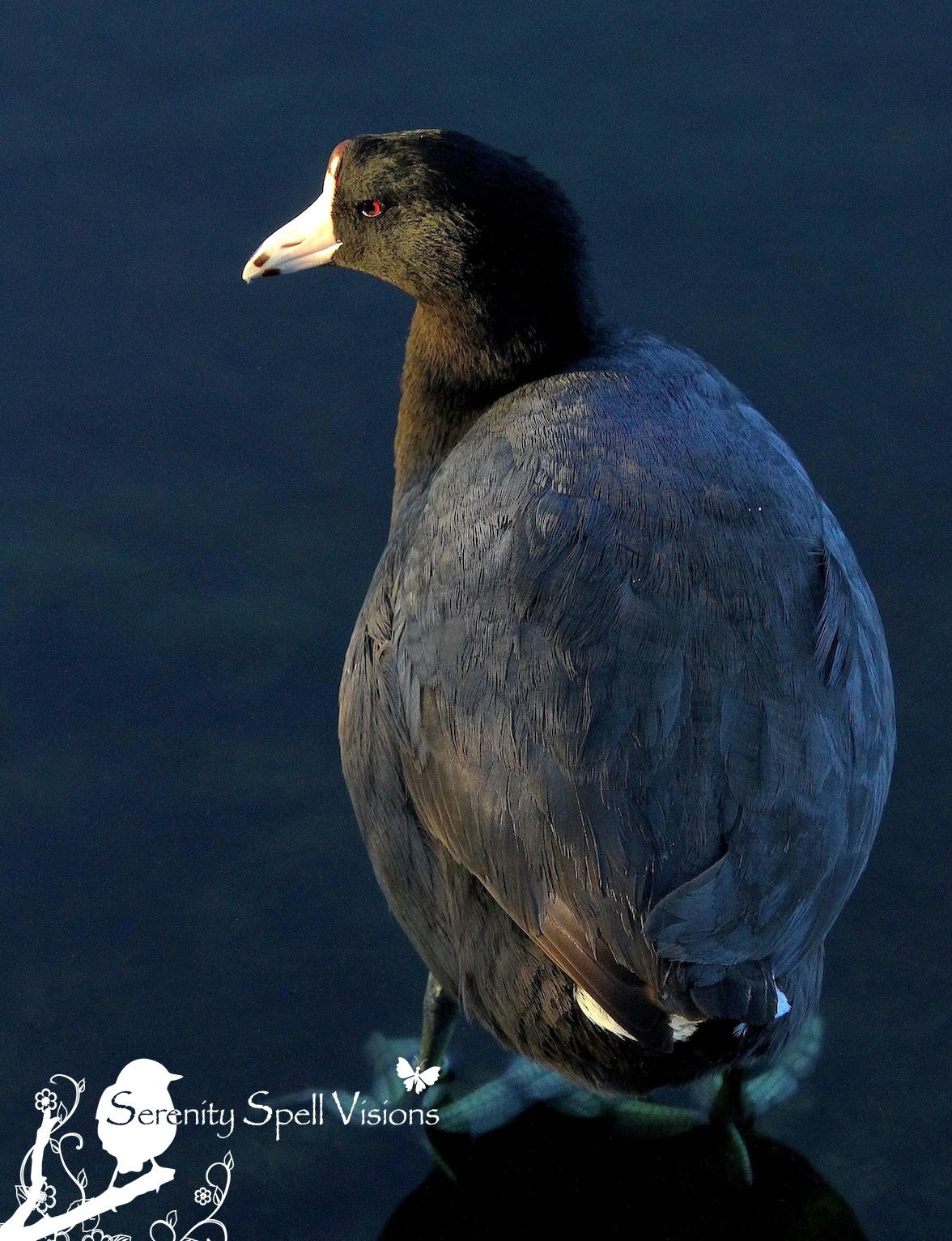
American Coot, Florida Wetlands

A seemingly perturbed, but lovely, Coot

There weren’t many other human visitors, but I managed to attract a doozy. Off-season, I’m alone in the wetlands; during the season, I’m accompanied by a bevy of snowbirds. A female leaned over to see what I was engaged with — it had to be an exceptional find, after all — and *snorted* before replying to her equally charming companion: UGH! UG-AH-LY! And BORING. WHAT’S THE POINT?!? I was ready to say the same about her outfit, but she stomped off to insult some other hapless bird in the nature preserve before I could reply.

American Coots may be common in certain areas — in Florida, for instance, they’re year-round residents — but ugly? Boring? Unnecessary? Honestly. Do I go to your home state and randomly insult the poor animals? No. And not to be trite, but ALL creatures deserve our respect. Just because they’re common doesn’t mean that they’re 1) not beautiful and 2) not imperative to the ecosystem.
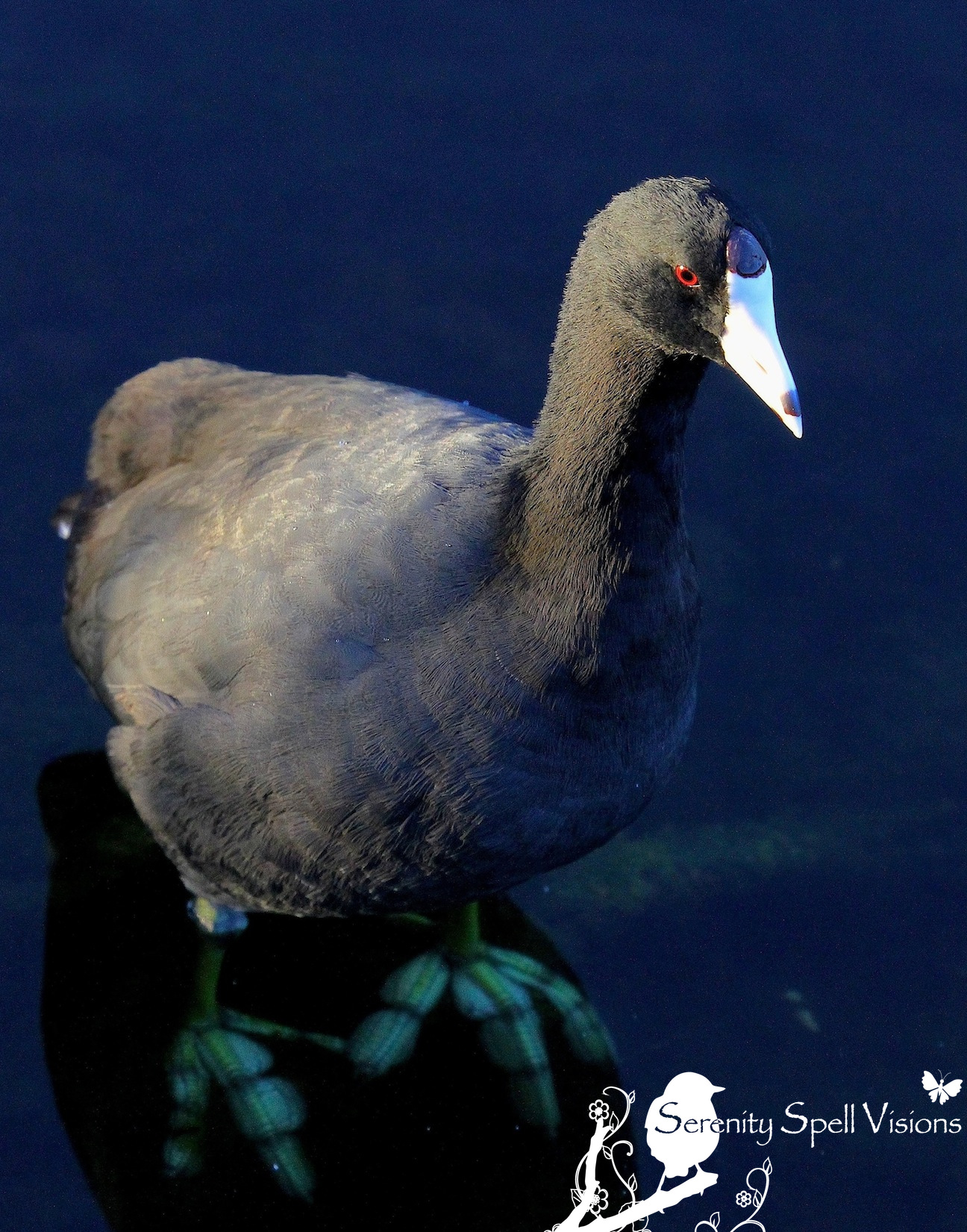
American Coot, Florida Wetlands

Listen to Stuart Smiley, Mr. Coot — you’re just lovely

As such, here are a few tidbits about these petite and lovely obsidian creatures, courtesy of Cornell, to dispense with those boring and unnecessary commentaries:

  • Coots have a profound ecological impact in the wetlands: One estimate from Back Bay, VA, suggests that the local coot population ate 216 tons (in dry weight) of vegetation per winter.
  • They’re long-living: The oldest known American Coot lived to be at least 22 years, 4 months old!
  • Looks like a duck, swims like a duck, but….: Coots don’t have webbed feet. Each one of the coot’s toes has broad lobes of skin that help it kick through the water; these broad lobes fold back each time the bird lifts its foot, so it doesn’t impede walking on dry land, though it helps to support the bird in the mucky wetlands.
  • Coots help science! Because coots are so common and widespread, scientists will monitor them as a way of tracking problems in the environment at large.
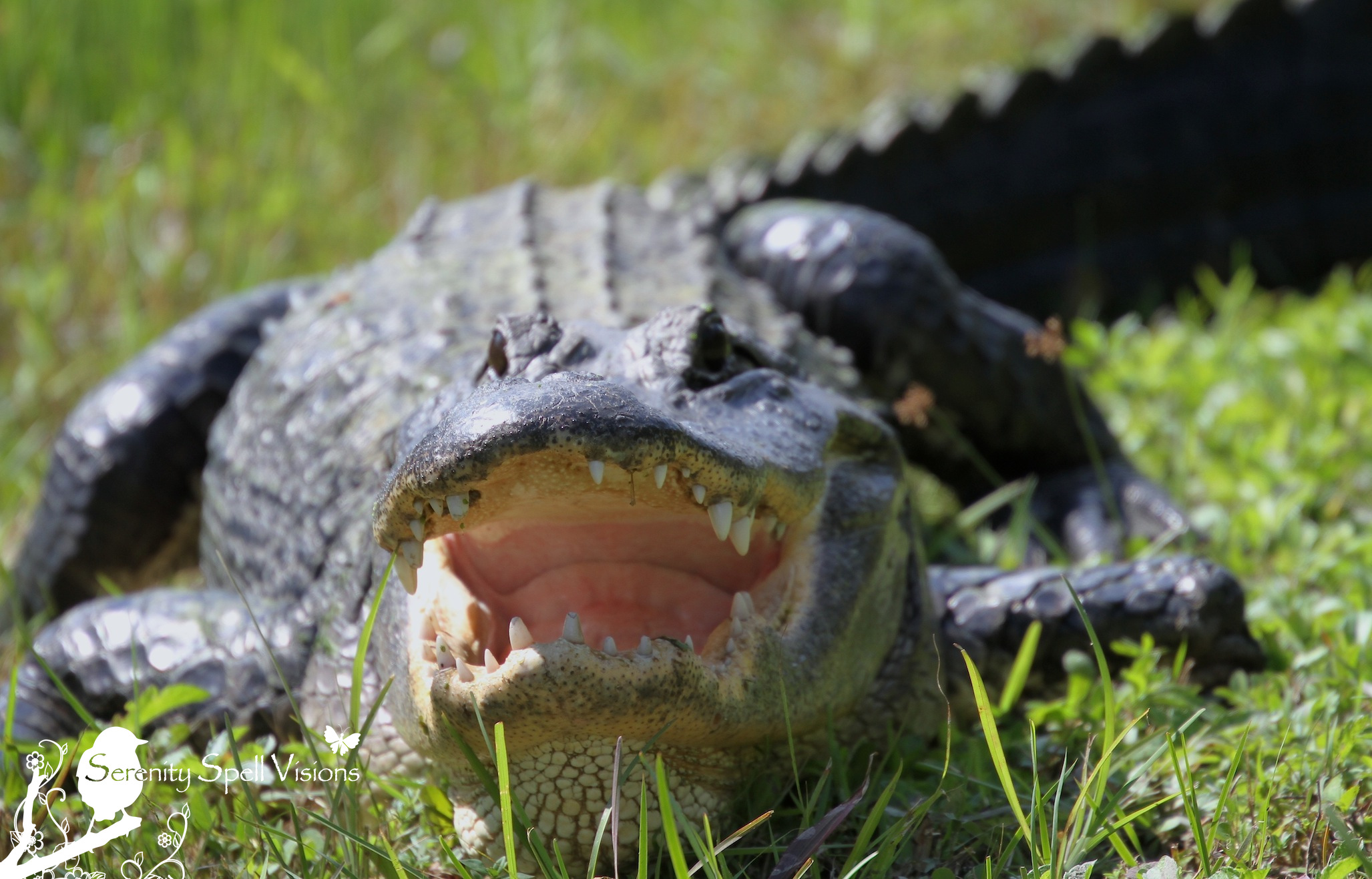
A Survivor

Have compassion for everyone you meet, even if they don’t want it. What appears bad manners, an ill temper or cynicism is always a sign of things no ears have heard, no eyes have seen. You do not know what wars are going on down there where the spirit meets the bone. —Miller Williams

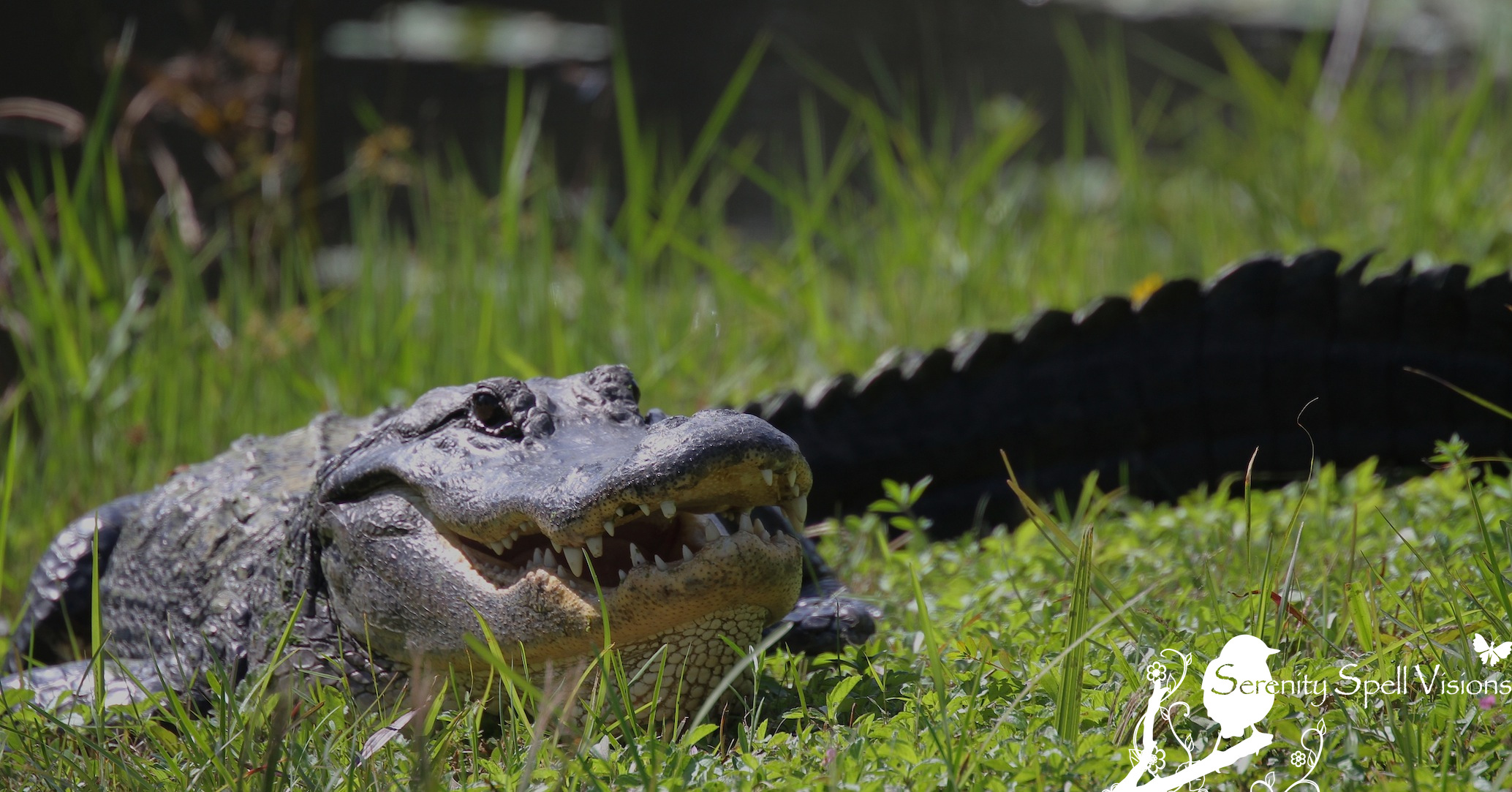
One special hike along the Rookery Trail (within the SWA Trail network of Grassy Waters Preserve) brought an unbelievable number of alligator sightings — I lost track at 30 in the space of 2-3 hours. By far the most of any hike! One of the guys we stumbled upon was this handsome fella.

Sunning Alligator in Grassy Waters Preserve, Florida

Sunning sweetheart

He’s not hissing, or being hostile — far from it, he was as mellow as could be. As with other cold-blooded reptiles, he was basking in the sun, regulating his body temperature. Occasionally alligators will keep their mouths open, akin to a dog panting…. It’s a cooling mechanism.

Sunning Alligator in Grassy Waters Preserve, Florida

Cooling down on a warm day

Out of 20-50 eggs that are laid by the mother alligator, only a few will survive to adulthood — usually less than five. Many predators prey upon the juvenile alligators, include snapping turtles, snakes, raccoons, bobcats, raptors, wading birds, and even larger alligators. This guy (or girl?) is a survivor, having encountered a mishap resulting in a missing foot as a hatchling or young adult — the injury appears long, and well-healed. And he/she was doing just fine, enjoying the beautiful land and wetlands of this magnificent preserved Everglades watershed.

Sunning Alligator in Grassy Waters Preserve, Florida

Relaxing in my wonderful Everglades

Night Flight of the Night Heron

To pay attention, this is our endless and proper work. —Mary Oliver

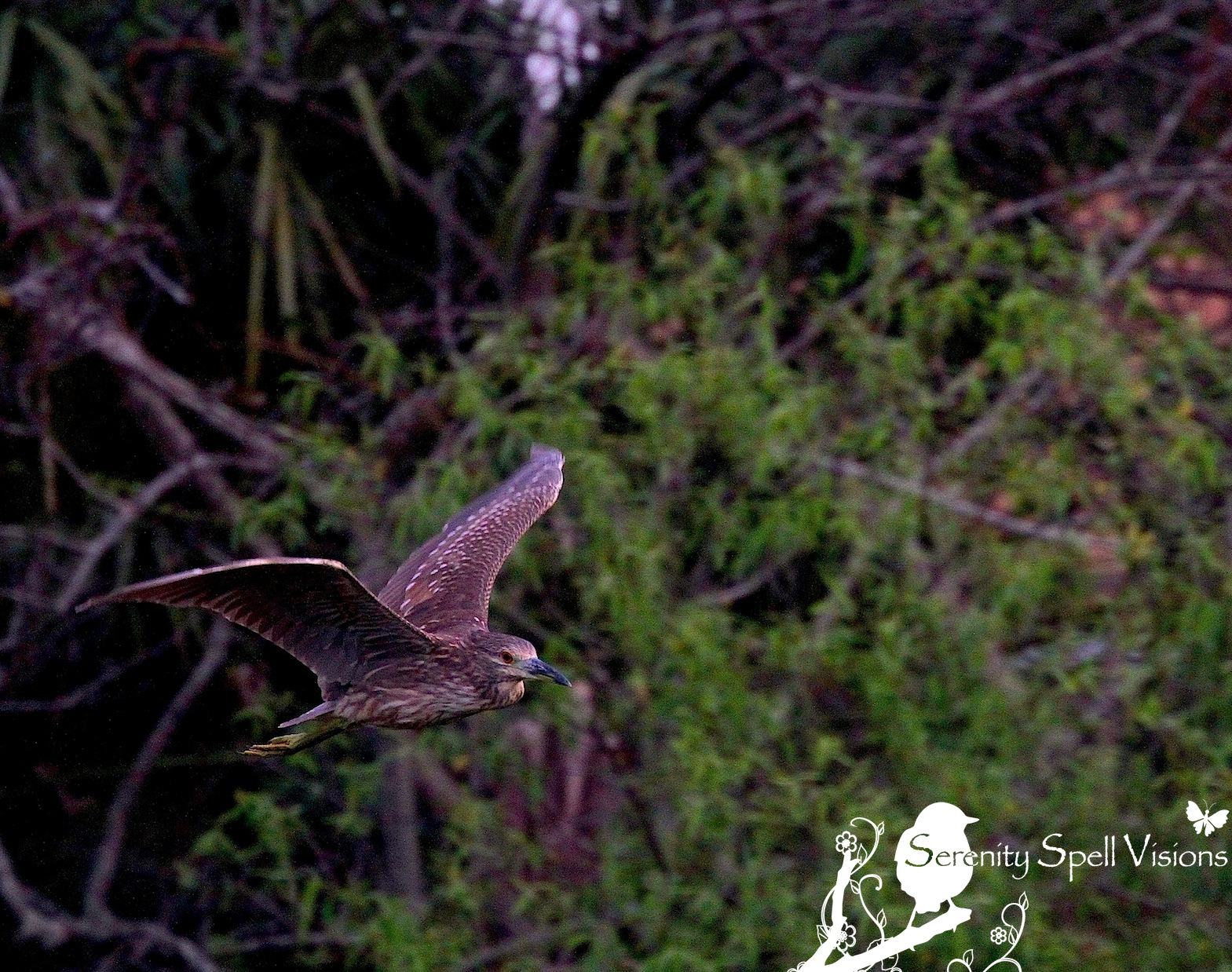
Always a welcoming sight in our wetlands, the Black-crowned Night Heron appears at dusk, ready for a night of marauding. I encountered this juvenile taking flight from deep within the wetland’s waters — I barely saw him, just his movement, since his camouflage was so perfect against the wetland’s vegetation in the setting sun. There’s so much that can be missed, if you’re not looking….

Black-crowned Night Heron (Juvenile) in Flight, Green Cay Wetlands

Perfect camouflage in the Florida Wetlands

The Show

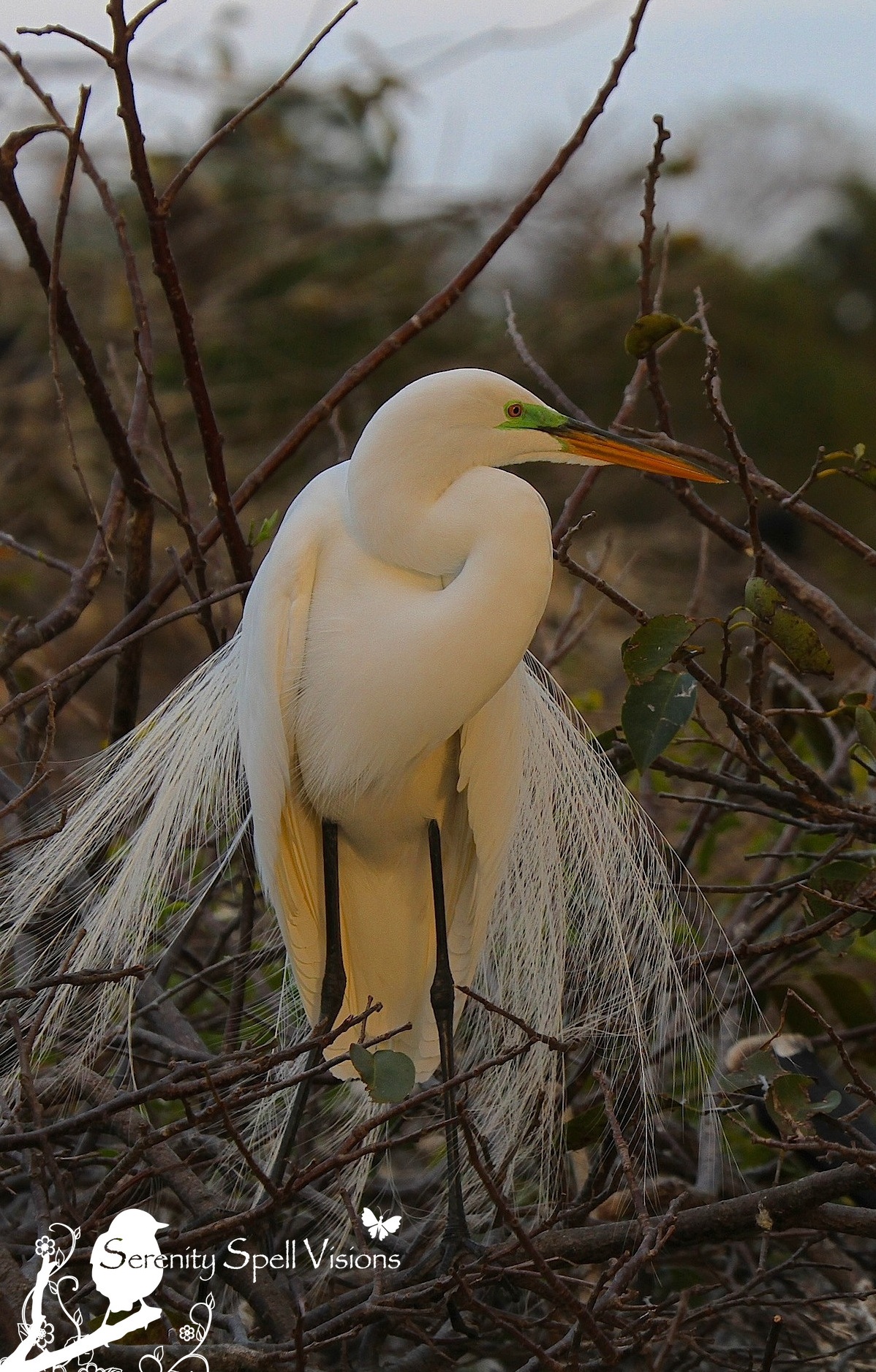
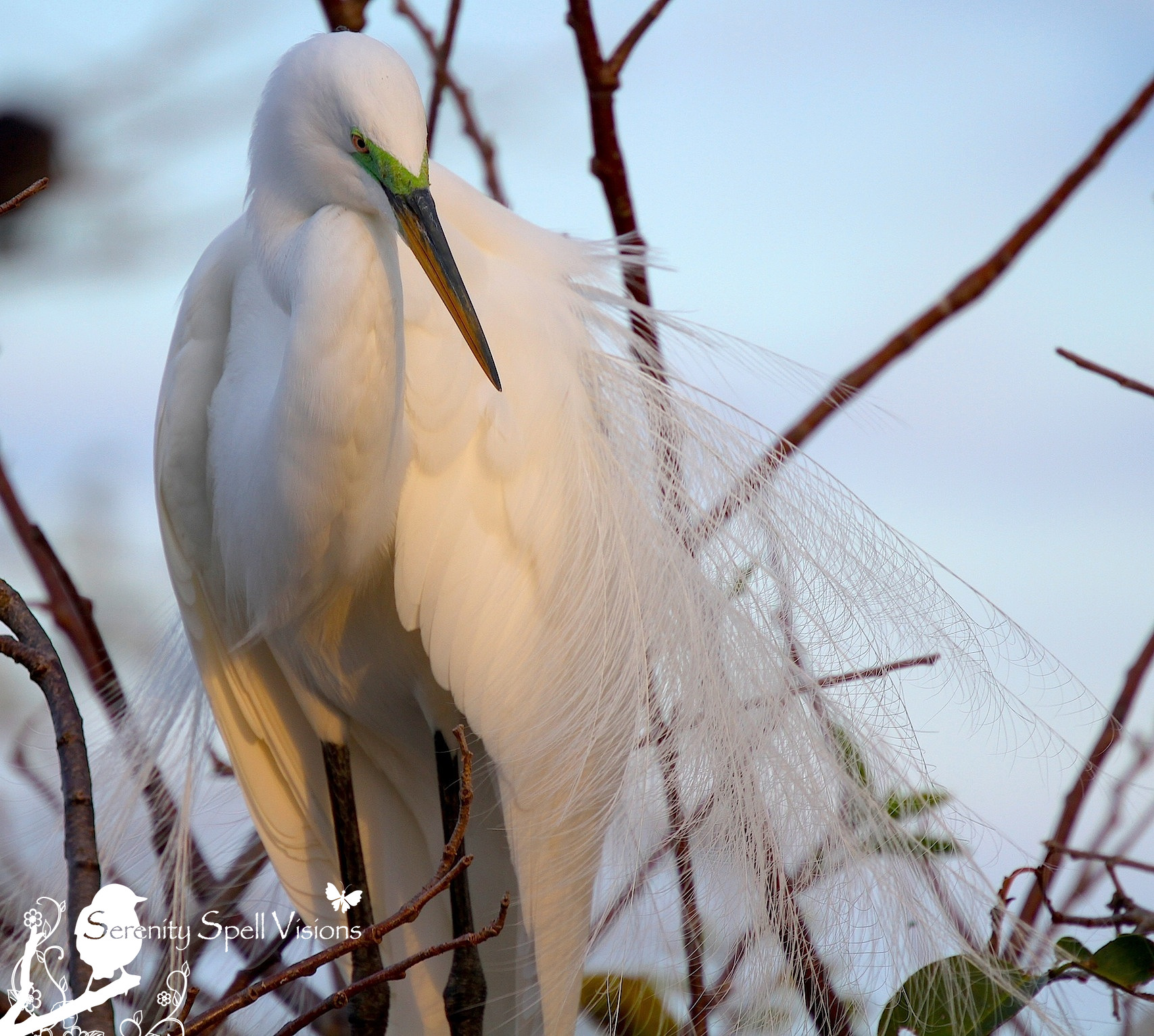
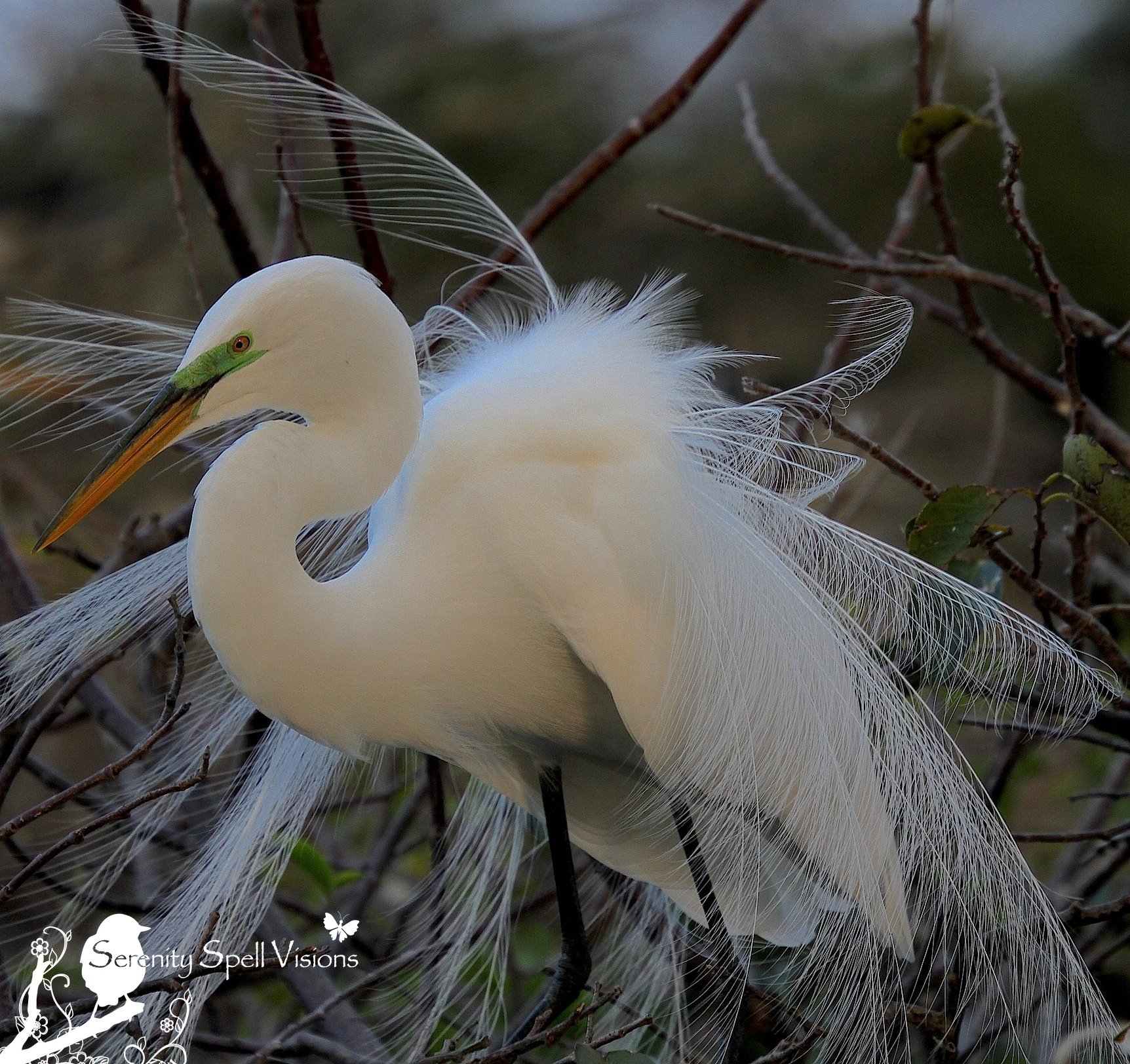
The Great egrets of South Florida’s wetlands have been putting on the most wondrous displays in the rookeries. Appropriate timing for Valentine’s Day…. It’s hard not to think that I should be trying a wee bit more, after observing such grand shows of attracting mates.

Breeding Great Egret, Florida Wetlands

Breeding Great Egret, Florida Wetlands: Check me out.

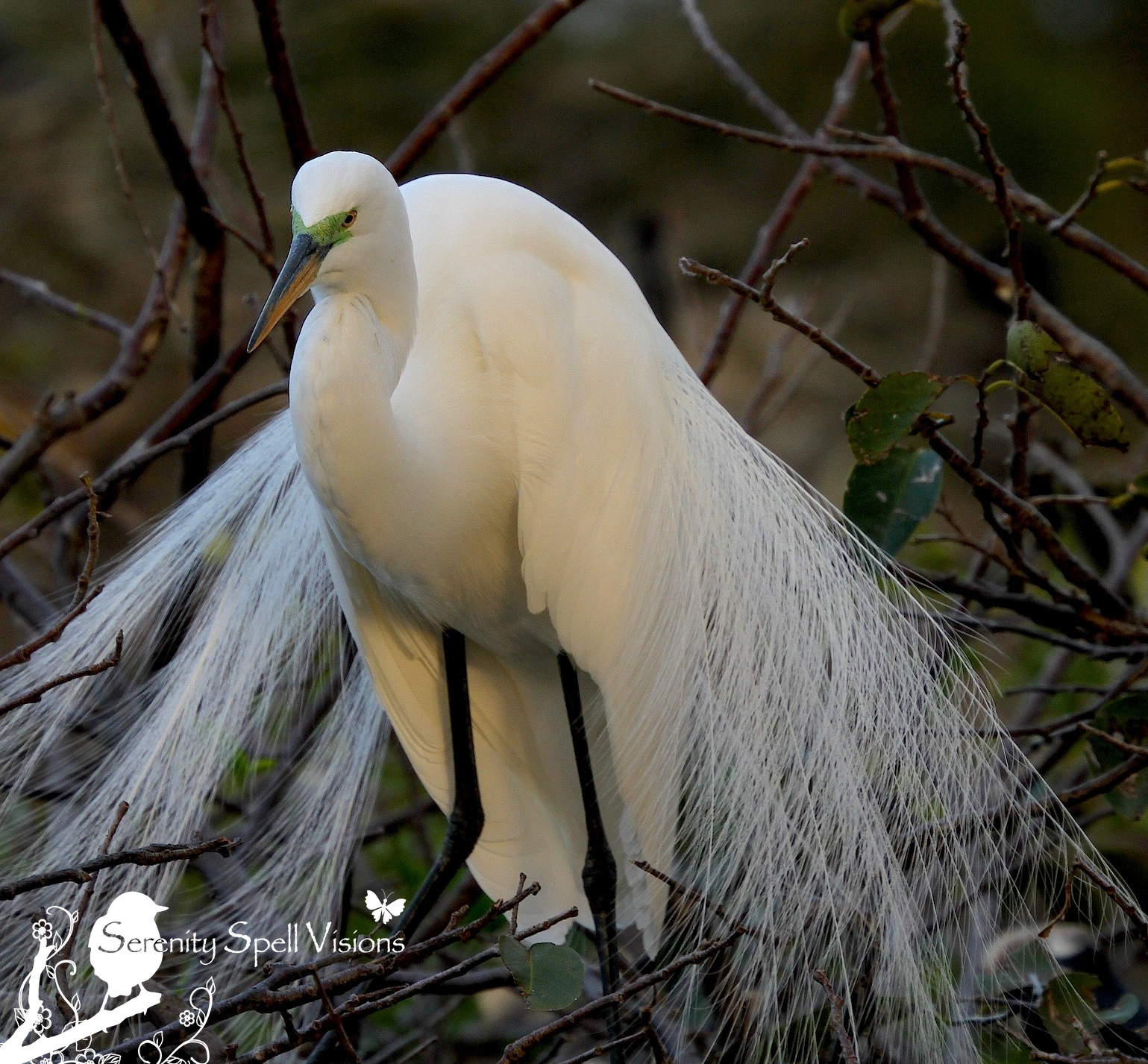
The feathers of the Great egret are stunning, almost unreal; sadly, these beautiful birds were hunted mercilessly — nearly to the point of extinction, their numbers decimated by 95 percent — towards the end of the 19th century. Their breeding plumage was especially prized, and their treasured feathers were used in hats across the globe.

Breeding Great Egret, Florida Wetlands

Taking a breather in the rookery

With conservation measures enacted, their numbers grew throughout the 20th century. While wetland habitat loss is once again threatening their existence, these birds have a high adaptability to human habitation. Of course, the loss of wetland ecosystems remains another issue altogether.

Breeding Great Egret, Florida Wetlands

The setting sun has nothing on me….

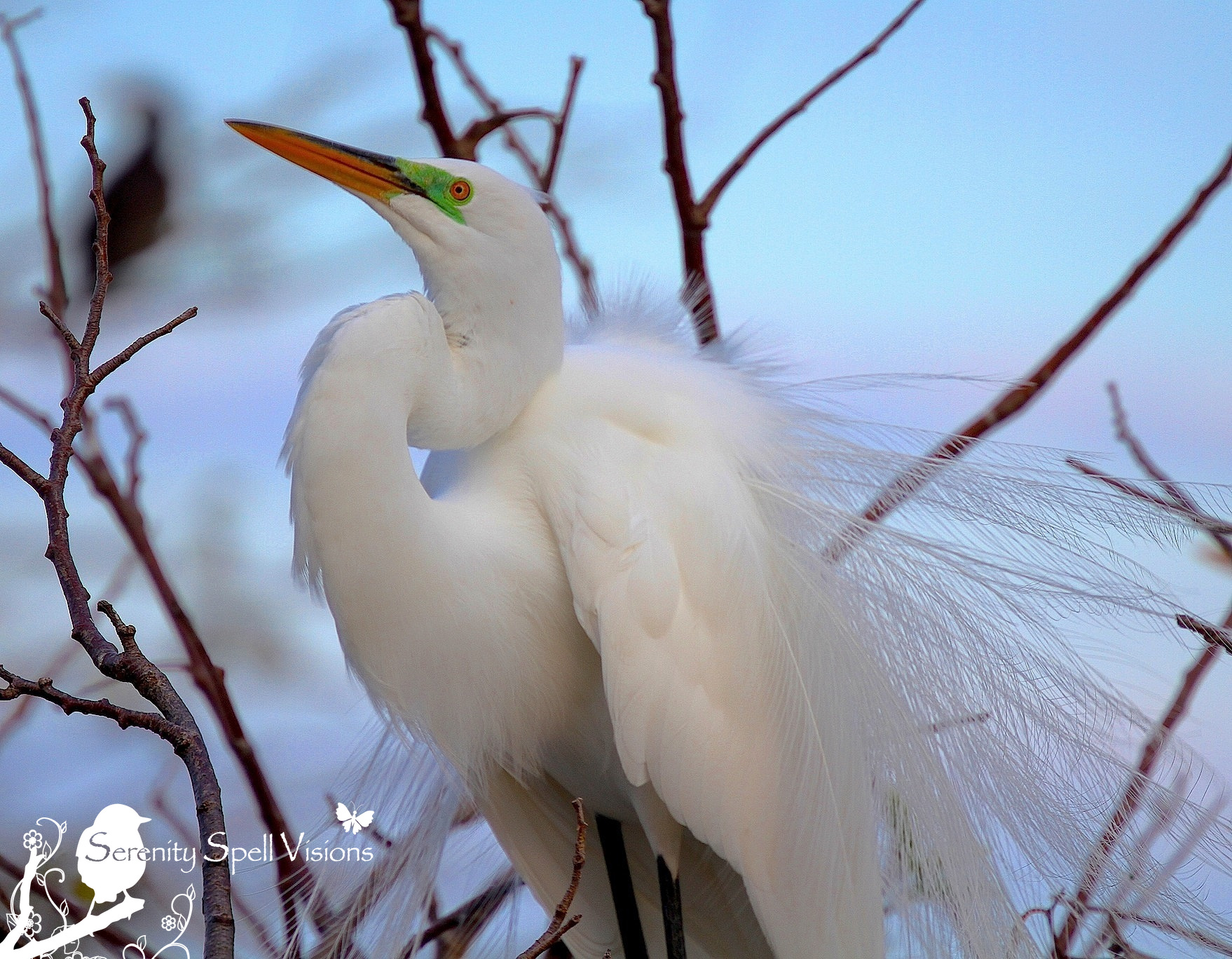
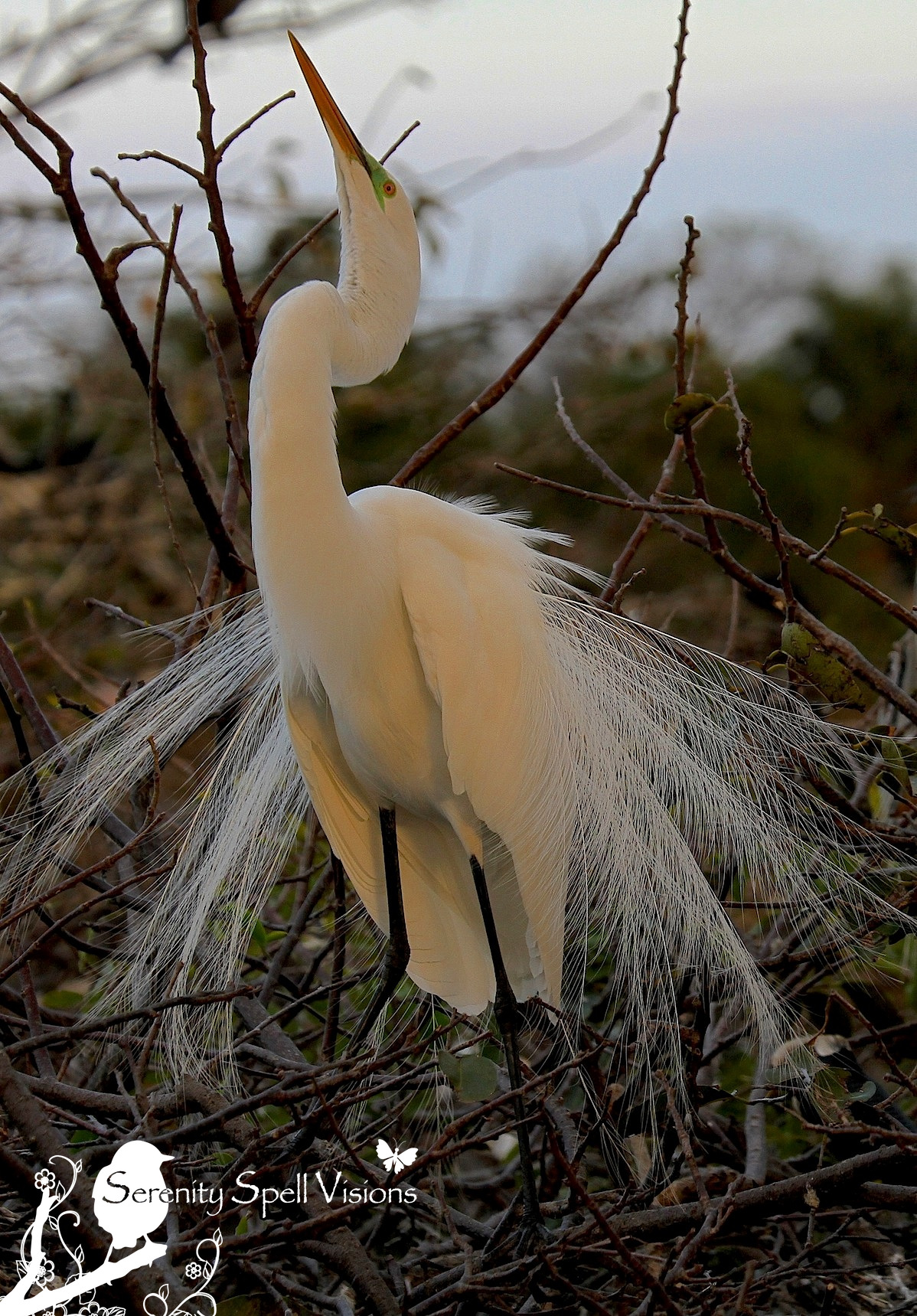
During the breeding season, the Great egret displays long, elegant plumes on its back, which are used in courtship displays. Like a peacock, these feathery plumes spread out like a fan. (Outside the breeding season, these long feathers disappear.) During this time, the lore (the area between the bill and the eyes) may turn vibrant green. Nature’s colors are brilliant….

Breeding Great Egret, Florida Wetlands

Breeding plumage

The male Great egrets will choose a specific display area, which will later become the nesting site. Nests are usually over water, far off the ground — high in the rookeries, as in our area. He (HE!) builds the nest with long sticks and twigs before pairing up with a female, at which point they both work to complete the nest — although it’s usually the male who finishes it.

Breeding Great Egret, Florida Wetlands

Focus. Focus. Focus.

Breeding Great Egret, Florida Wetlands

Green lore appears during breeding season

Breeding Great Egret, Florida Wetlands

Shake it. Shake it like a Polaroid picture.

Breeding Great Egret, Florida Wetlands

Breeding Great Egret, Florida Wetlands

Glow

Breeding Great Egret, Florida Wetlands

The Fan

Breeding Great Egret, Florida Wetlands

And the final stage of the display, the reach….

Tree Tuesday: Fairy’s Staircase

Walking the Malachite Trail in the SWA portion of the most wonderfully pristine Everglades watershed of the Grassy Waters Preserve, an old tree displayed new life with a whimsical fungi arrangement — a fairy staircase!

fairy tree

2013-01-13 14.51.23 copy