Skip to content

Posts tagged ‘florida’

Endangered Native Florida Ecosystems at the Hypoluxo Scrub Natural Area

Aerial View

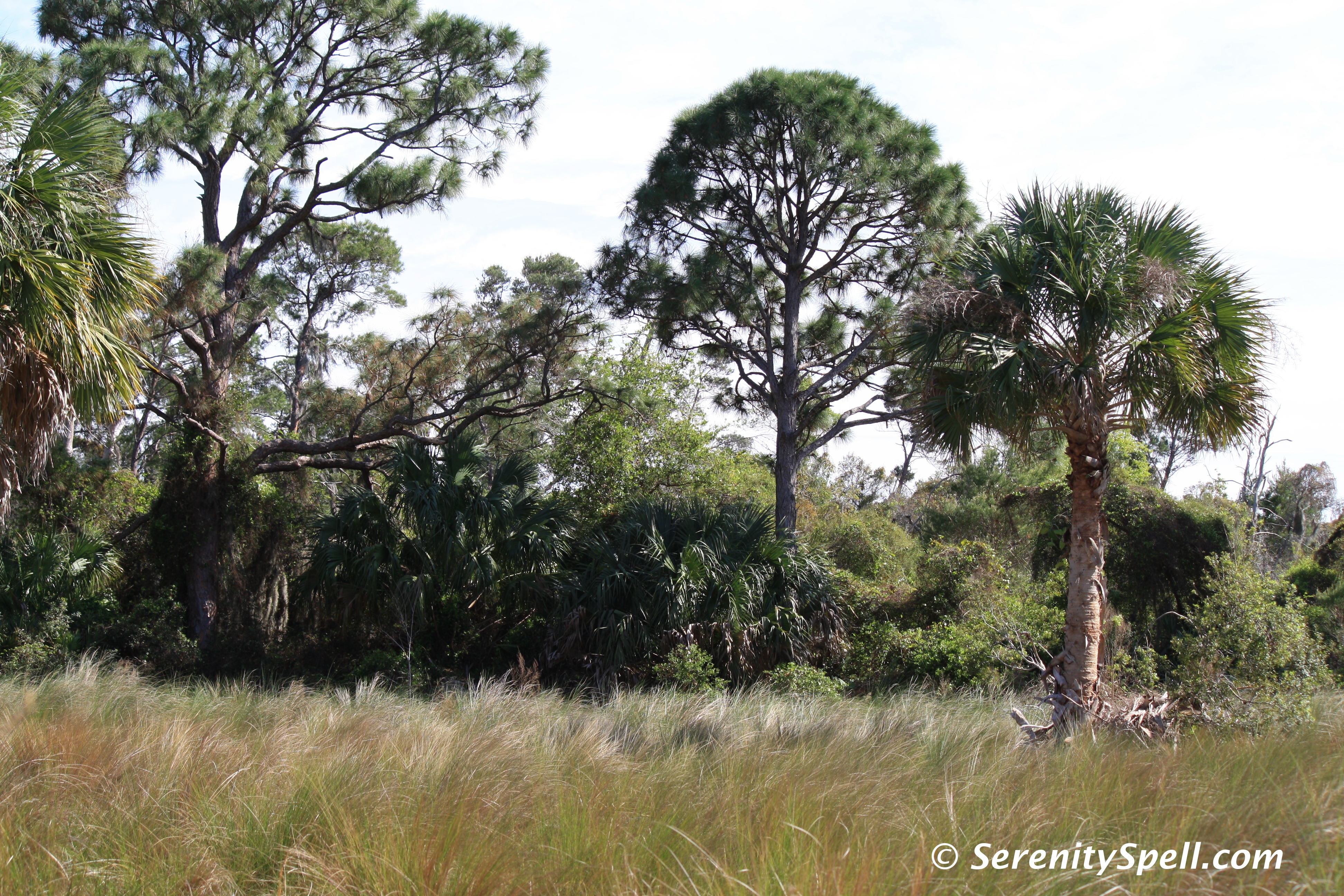
Palm Beach County has managed to preserve several swaths of pristine Florida land, and the Hypoluxo Scrub Natural Area is one such example. This land was never developed, and saw minimal agricultural use throughout the years. Purchased in 1999 in a growing effort to protect and maintain threatened and endangered biological communities in the county, we’re thankful for their efforts, and to be afforded this glimpse of native Florida. Located on a sand ridge that was once an ancient shoreline, 97 acres of Florida scrub and scrubby flatwoods communities have been incorporated and are now protected at the Hypoluxo Scrub Natural Area, as are the threatened Florida scrub-jay and gopher tortoise, both victims of over-development and lack of protection. Scrub and scrubby flatwoods habitats are two of the rarest natural communities in Florida, with less than 2 percent remaining in Palm Beach County.

History

Entering the trail area from the parking lot are two observation towers; the vantage point overlooking the natural area from the towers allows visitors to view the land as it would have appeared pre-development. Educational plaques around the towers explain the region’s history (as well as that of the Town of Hypoluxo), beginning with the early settlers in 1873 to the 1960s. Standing guard in front of the observation tower is the looming Barefoot Mailman statue, in honor of the 19th-century men who delivered mail on treacherous routes — 3-days each way, and involving nearly 100 miles of unpaved roads and alligator- and shark-infested waters. As the plaques state, the land that is now the Hypoluxo Scrub Natural Area was once owned by Andrew Garnett, James Edward Hamilton, and James Porter; Garnett and Hamilton eventually won contracts to deliver mail from Jupiter to Miami. (Remnants of Porter’s homesite are still visible at the location.) The northernmost portion of the “Sand Road,” built in 1892, signaled the end of the barefoot mailmen and is located within the park (and is the only section of the road that’s actually still sand). An additional sweet smaller sculpture greets visitors to the natural area, one by Chrisanthy Vargo depicting a scrub jay, a fox, bromeliad, and a tortoise — life of the scrub.

Trails, Flora & Fauna
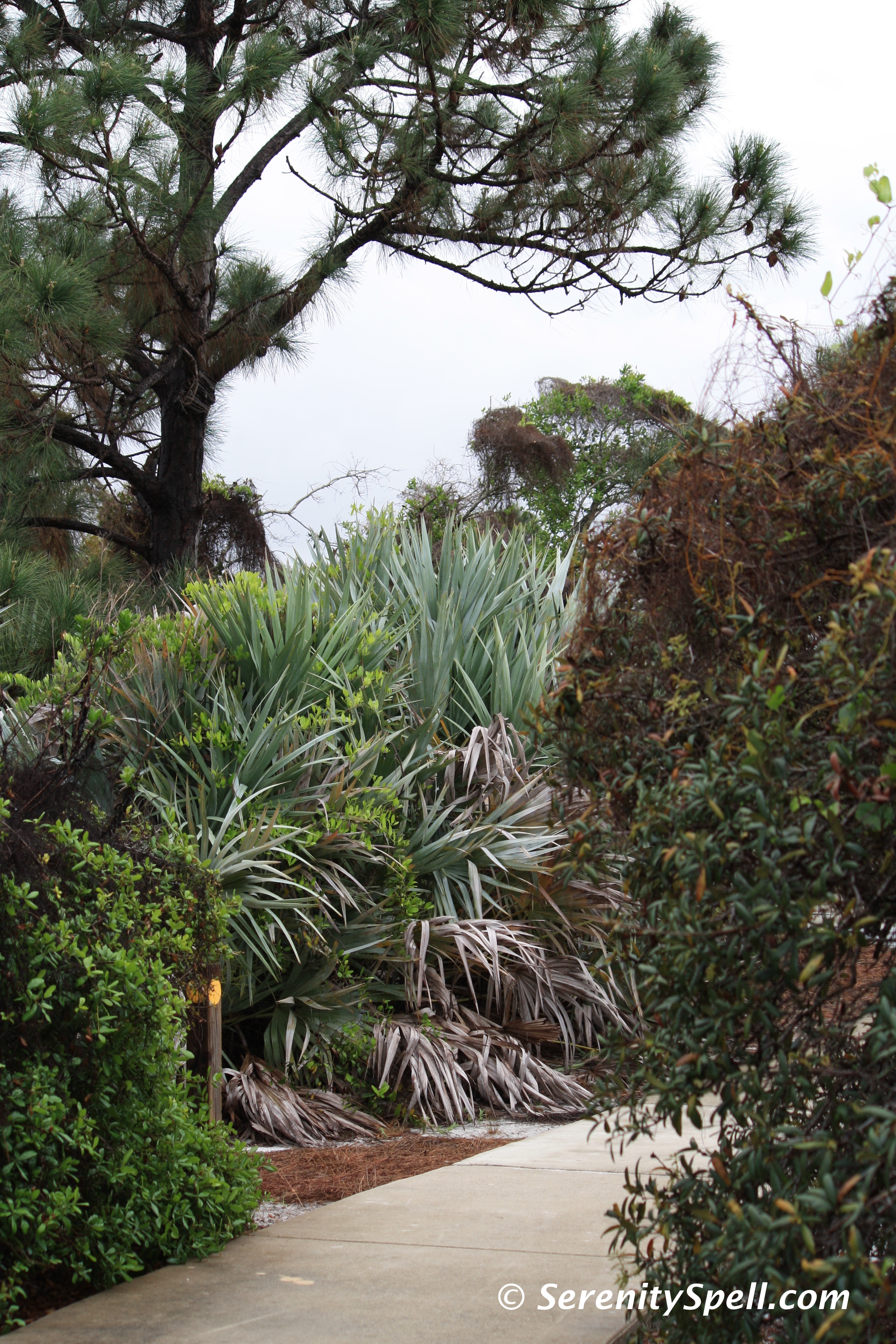
Paved Cottonweed Nature Trail

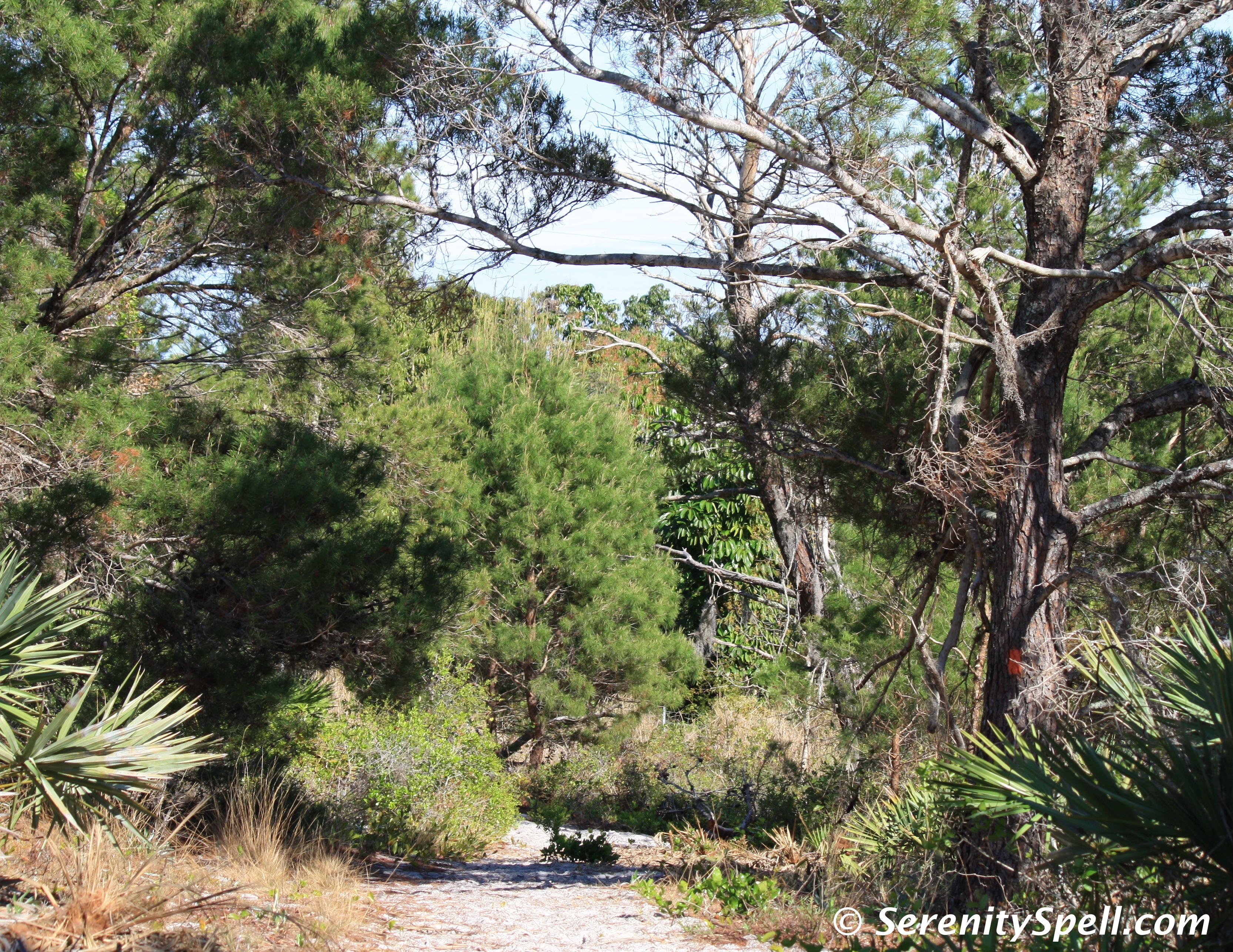
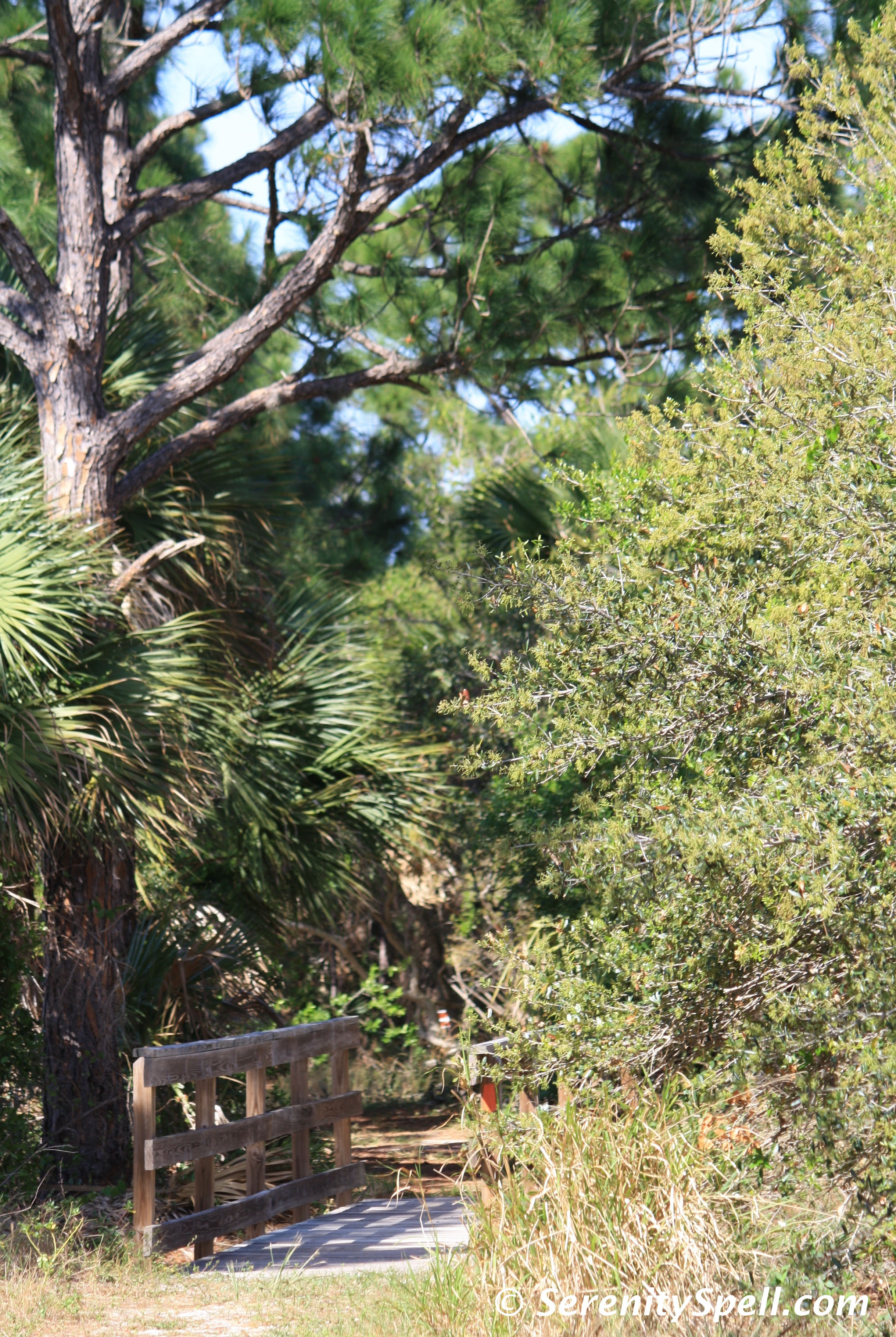
The .2-mile paved Cottonweed Nature Trail trail leads from the observation towers, and is lined with gopher tortoise burrows. While there are definitely areas within Hypoluxo Scrub that are shaded, much is exposed to the open sun — so an early morning or late afternoon/early evening hike are usually ideal, at least from our experiences. It’s a beautiful casual venture, and a great opportunity to explore this endangered ecosystem. Our preferred hike is the 1.5-mile natural Eastern Pondhawk Trail loop, which provides a lovely view of pine and scrubby flatwoods. Several other paths loop off the main trail as well, but be aware of crushing any fragile tortoise burrows and delicate and vital scrub plants.

Even on the sandy scrub trail, bright flowers spot the landscape: Cottonweed, Prickly pear, Netted pawpaw, Gopher apple, and Honeycombhead flash all shades of yellows, whites, and reds across the sand. The area is great for birdwatching, although during our last visit the impending rain seemed to quiet the wildlife. However, on a previous walk towards the back of the park, we saw a large flash of tan… Of deer? Or of leaping fox?

Hours & Location:

150 Hypoluxo Road, Lantana, FL (just west of Federal Highway)
Open sunrise to sunset, seven days a week
Admission: Free

For More Information:

Observation Tower from the scrub

Netted Pawpaw

On the trail
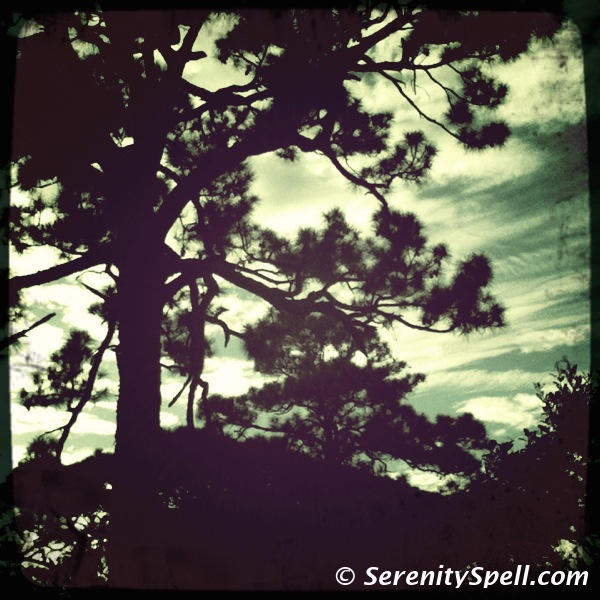
Slash pines against the sky

Scrub environment leading to flatwoods

Slash pines

Scrub environment
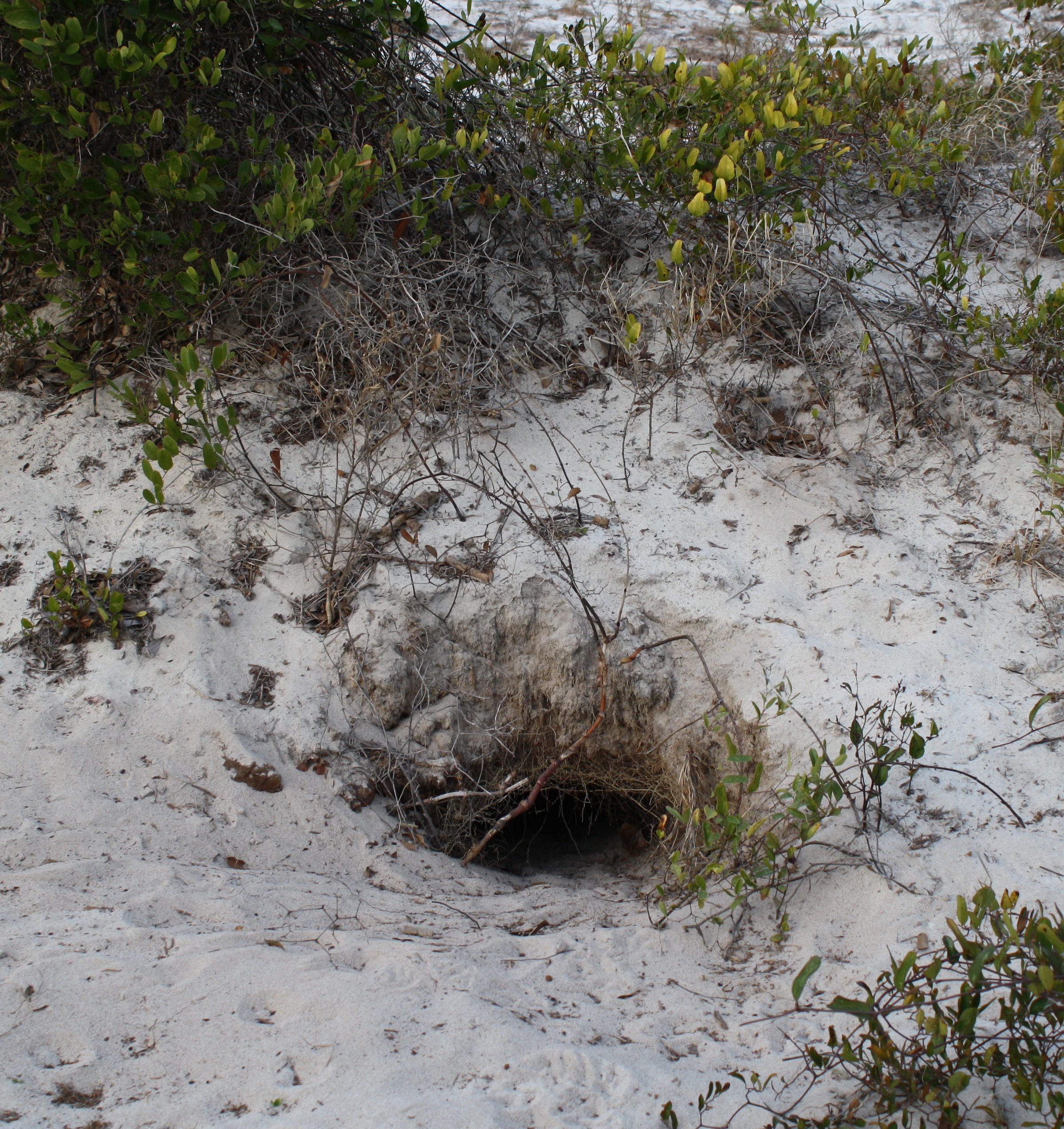
Gopher tortoise burrow

Savannas Preserve State Park: Southeast Florida’s Endangered Marshes

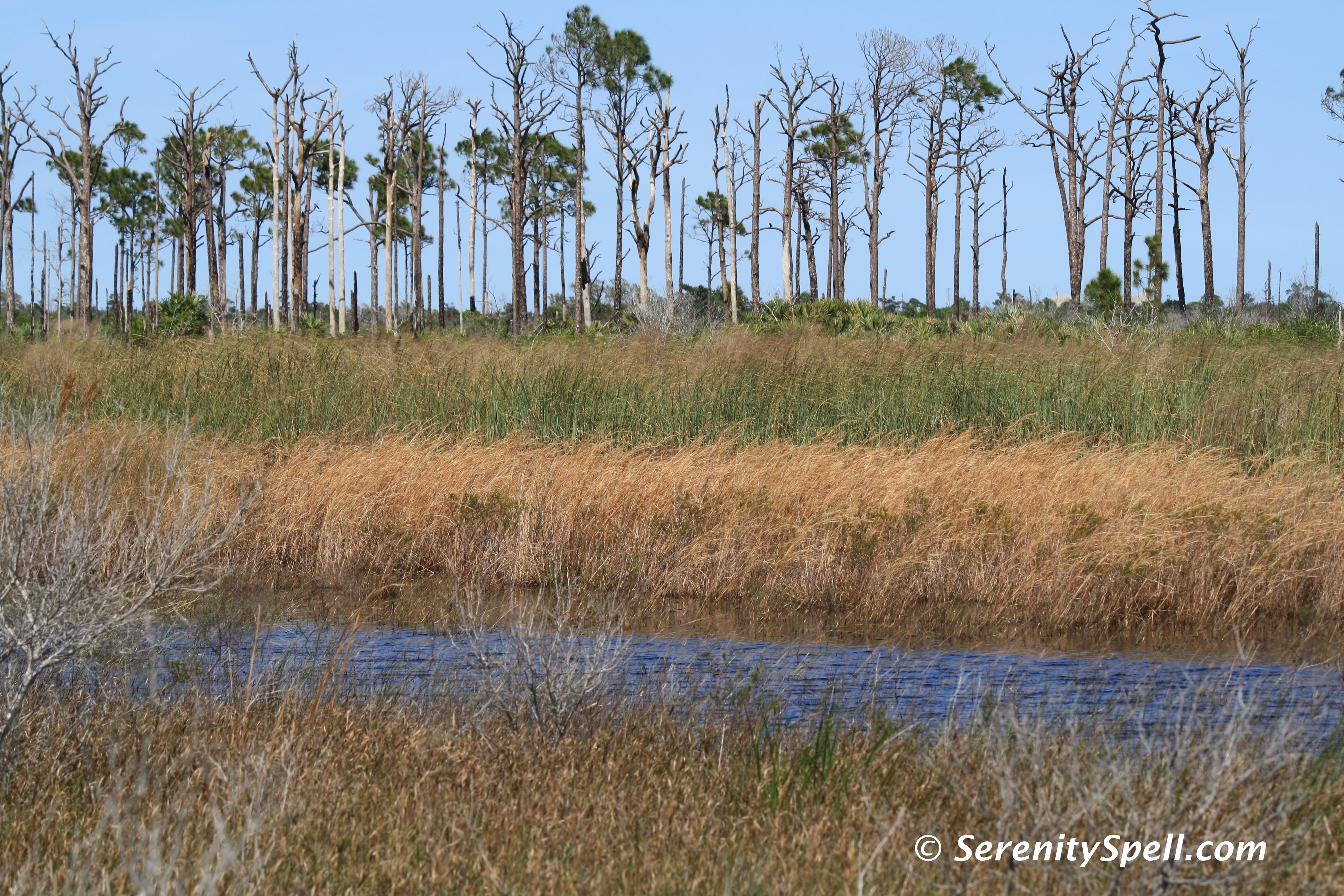
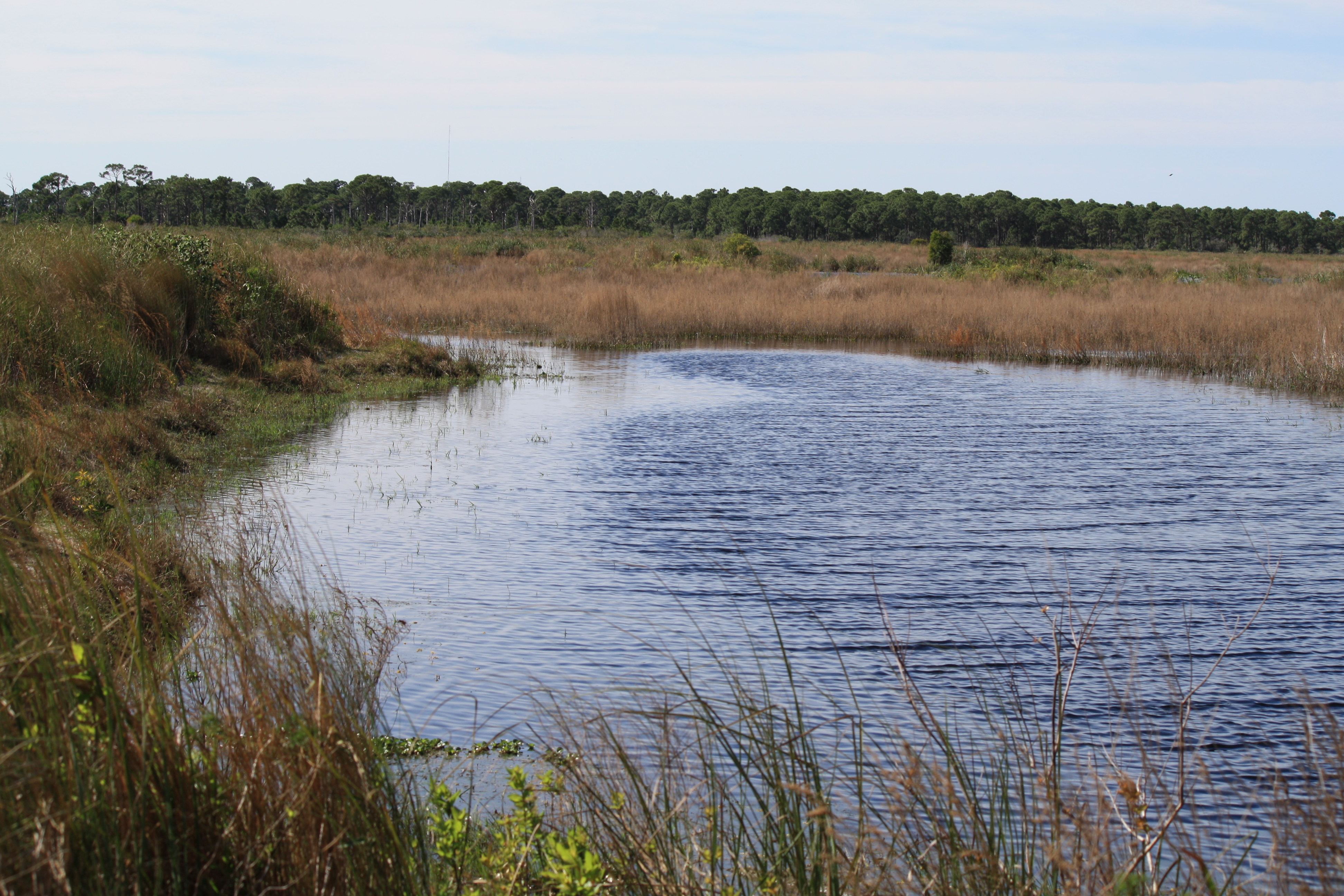
The Savannas Preserve State Park extends more than 10 miles in St. Lucie County, from Jensen Beach to Ft. Pierce. Managing nearly 6,000 acres, the preserve represents the largest and most ecologically intact swath of freshwater marshes, or “savannas,” that once extended along Florida’s entire southeast coast. Looking across their lovely vastness today, it’s downright depressing to picture the hotels that currently reside in their place. The open wetlands filter rainwater and runoff from the surrounding dunes and pine flatwoods, creating a unique biological community — and an endangered landscape — as they continue to preserve and feed vital waterways and ecosystems, including the Atlantic scrub ridge, freshwater marshes, and the estuaries of the St. Lucie Inlet. Slash pine trees in open grasslands mark the preserve, which is comprised of six natural communities: pine flatwoods, wet prairie, basin marsh, marsh lake, sand pine scrub, and scrubby flatwoods. While each community is home to its own fauna and flora populations, the sand pine scrub habitat represents an increasingly imperiled ecosystem, and shelters several of Florida’s most threatened and endangered animal and plant species.

Hawk’s Bluff Trail

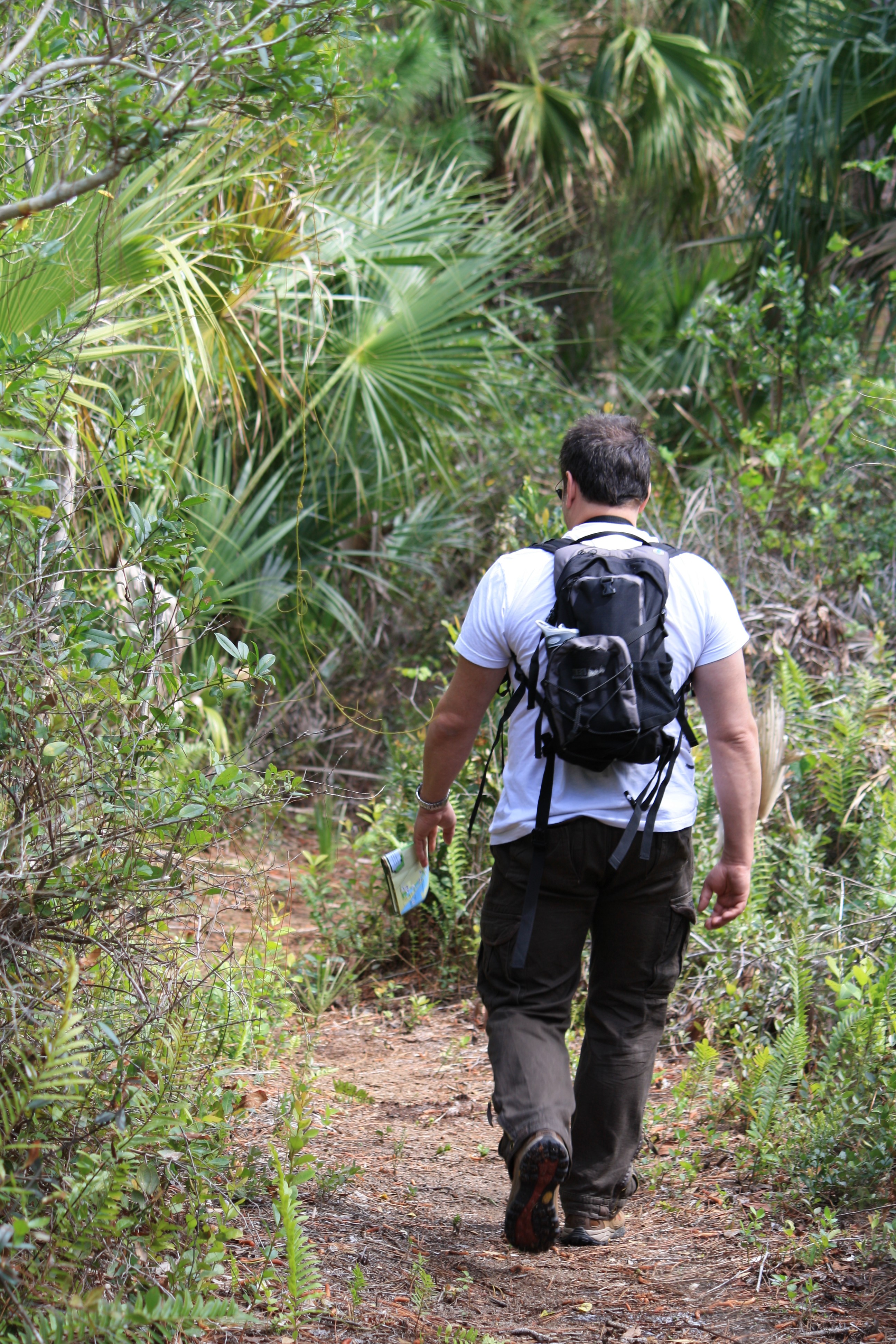
Despite our fanatical hiking throughout South Florida, we had never been to the park — and within the space of one week, “Have you ever been to the Savannas?” came up in conversation no less than three times (once from a fellow blogger). Obviously a sign! We were insanely lucky to visit on a cool, cloudy, and windy day after an unseasonably warm (read: HOT) spell. What’s good to know about the Savannas — for hikers, at least — is that there are multiple access/entry points for the park, to pick up trails. We investigated some of them at the Education Center, as well as further in the park. Afterwards, we drove east and south towards Jensen Beach (Blvd), then north on Savannah Road to check out Hawk’s Bluff, part of the park and an extension of the Florida Trail. Located along the eastern edge of the Savannas, Hawk’s Bluff is a beautiful 1-mile loop trail, with sand dunes and oak hammocks, leading to the water’s edge overlooking the Savannas. It was reminiscent of Northern California wilderness, and even a crater hike we did in Ocala. Just lovely. We can’t wait to return to investigate some of the other trails and access points…. If anyone has suggestions, please give a shout!
Flora & Fauna

The Savannas’ many wildlife species include the threatened Florida scrub jay, which is a year-round resident of the park, and gopher tortoises, alligators, deer, and sandhill cranes. American bald eagles have recently made their homes in the preserve, as well — the nests of several pairs are located in more isolated areas, and the birds have been seen by visitors as they hunt (not by us this time, sadly!). The park is also one of the few remaining natural habitats in the U.S. for the endangered (and inedible) prickly apple cactus (Harrisia fragrans), which grows along the Atlantic Ridge in the scrub regions.

Activities

Over 15 miles of multi-use trails are available for hiking, biking, and horseback riding. Canoeing, kayaking, and fishing in the wetlands are other popular activities. Picnic shelters are available throughout the preserve, with no reservation necessary.

History

Marshes and Pines of the Savannas

Archaeological evidence has dated native occupation to the area to 7,000 years ago. Native peoples lived along the Atlantic Ridge, and relied on the font of wildlife and plant life of the nearby Indian River for sustenance. The term ‘savannah’ was used to describe a series of ponds and marshes that was “discovered” here during the Second Seminole War (1835-1842) by Lt. Colonel Benjamin Pierce. Pineapples began to be planted in the area in 1879 by Captain Thomas Richards, grown from cuttings transported from Key West. Jensen Beach quickly became known as the ‘Pineapple Capital of the World’ from 1895 to 1920, due to the explosion of pineapple plantations along the Atlantic Ridge. The park joined the Florida Park Service in 1977, and now encompasses nearly 6,000 acres.

Environmental Education Center & More

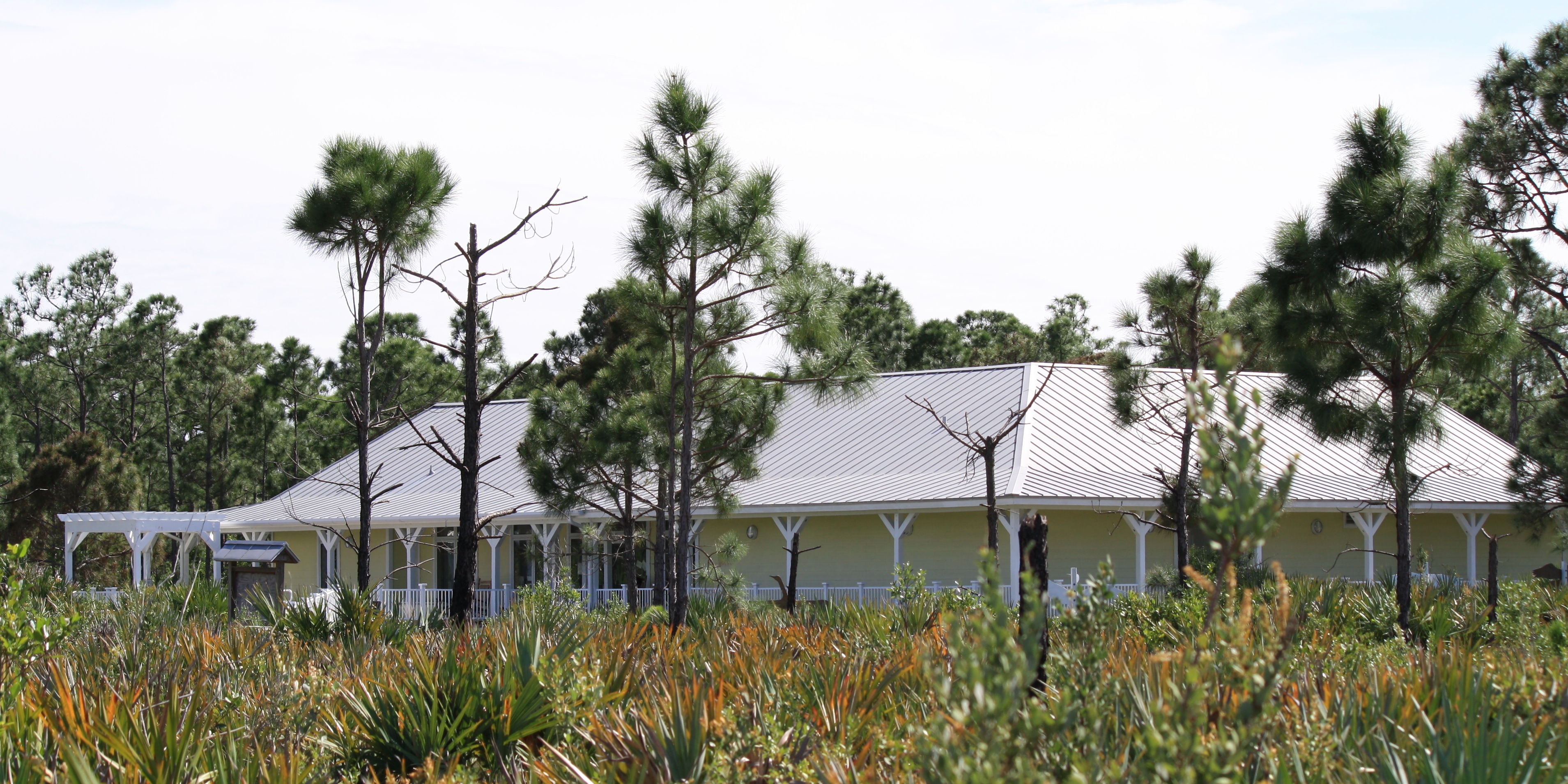
Environmental Education Center

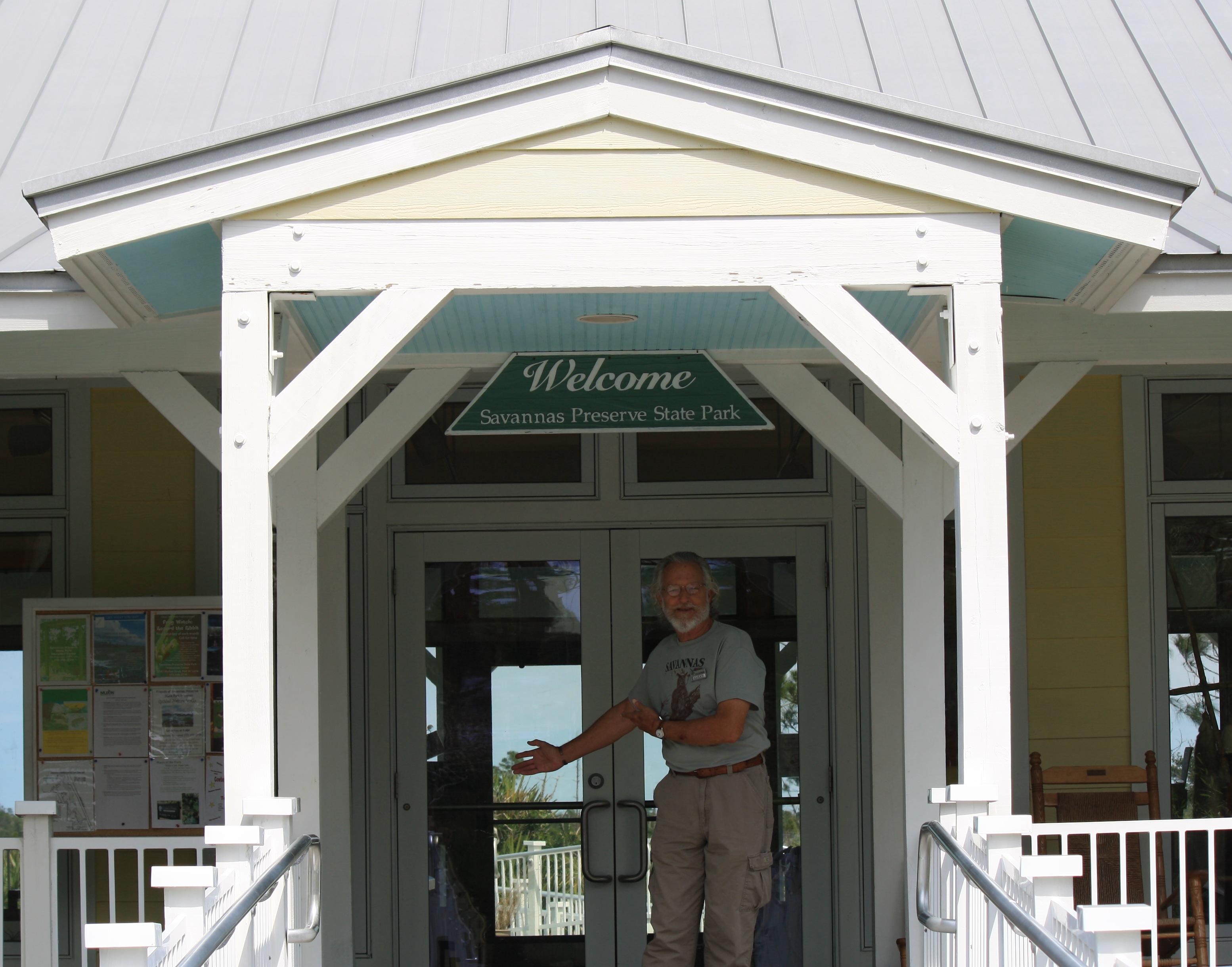
Lucky at the Environmental Education Center

At the Environmental Education Center, visitors can learn about the importance of this unique and endangered natural habitat. Live exhibits, a gift shop, and self-guided tour booklets are available at the Center, which is a veritable font of information for the newbie/learning Florida hiker (we seemed to be the sole native Floridians visiting that day) — they had great reference materials, and some wonderful people holding down the fort (thanks Lucky Straeffer!). Visit the website or pick up a calendar of events and the Echoes newsletter (also provided in the weblinks, below) for more info. The nonprofit support organization Friends of Savannas Preserve State Park also offers interpretive guided tours and canoe/kayak trips.

Hours & Pricing:

2541 Walton Road
Port St. Lucie, Florida 34952
(772) 398-2779

8 a.m. until sundown 365 days a year
Education Center: Thursday – Monday, 9-5

$3 / Vehicle

Short but Lovely Trail

Preparing for the Next Scout/Hike

Hawk’s Bluff Trail

Savannas at the Hawk’s Bluff Trail

Water’s Edge, Hawk’s Bluff Trail

Live Oak on the Hawk’s Bluff Trail

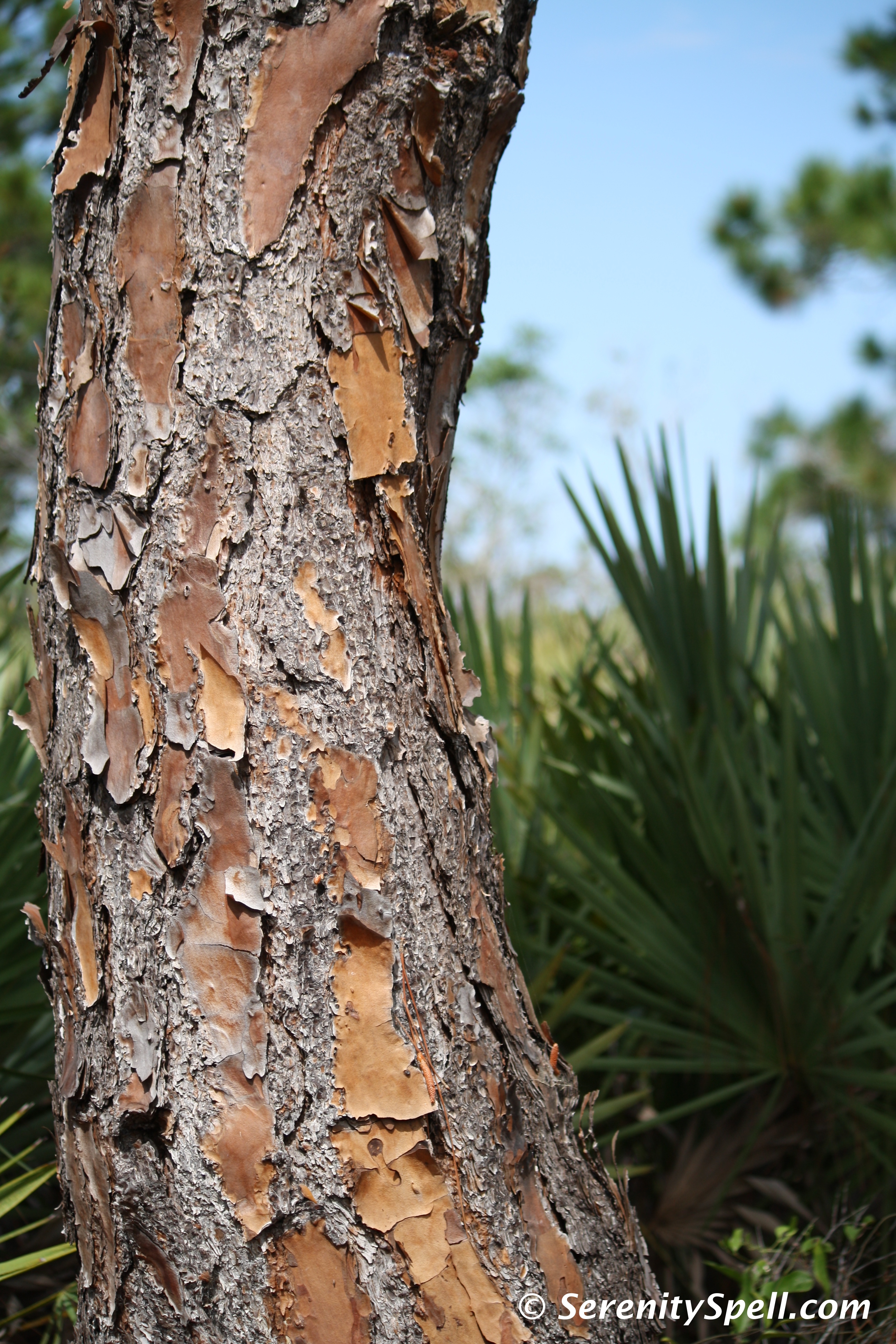
Slash Pine Bark

For More Information:

Lake Worth’s Street Painting Festival: Cloudy Skies & Brilliant Streets

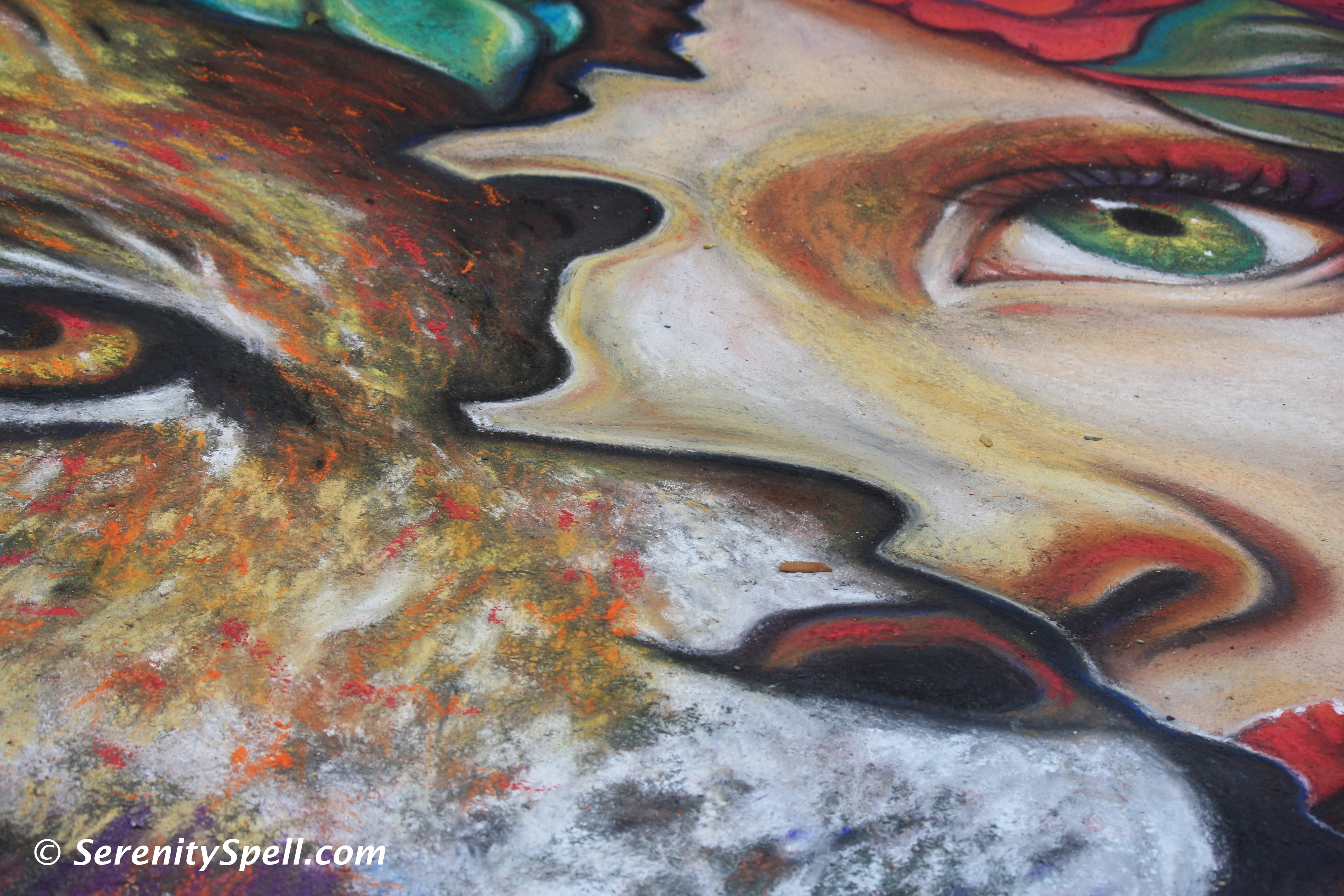
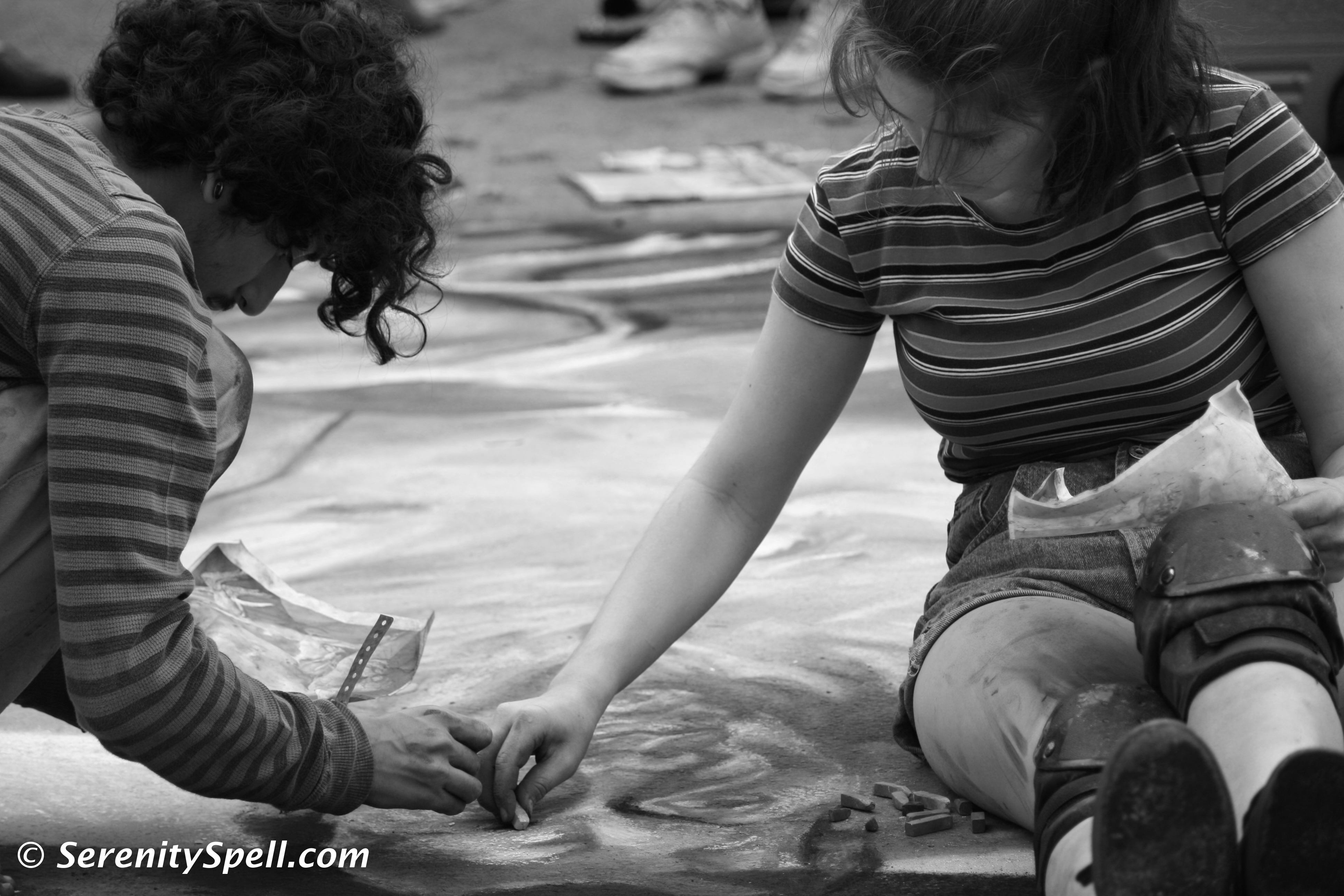
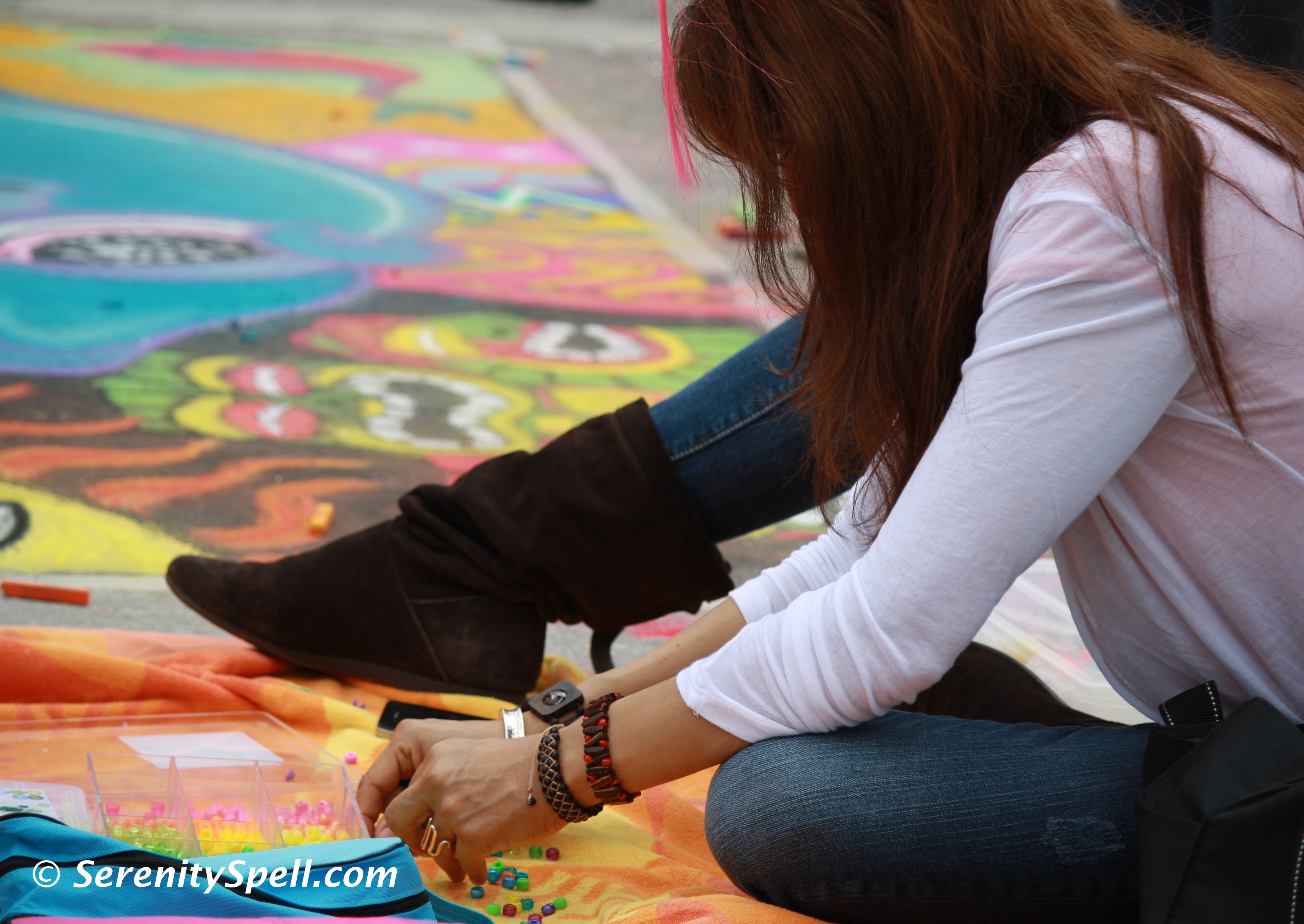
This year, the 18th annual Lake Worth Street Painting Festival was hosted on a cloudy weekend — but despite the constant threat of rain (and downpours to the north), Lake Worth’s vibrantly-colored streets were spared, save for a brief chilly rain on Saturday. Each February, over 400 artists from as far away as California and New York — even the United Kingdom — transform the streets into original art and masterpiece reproductions with just chalk and the pavement as their canvas. This year, more than 200 street paintings were created by 600 featured and amateur artists, covering more area than any other festival of its kind in the U.S.

As always, the crowds on Sunday were fierce, to view the fully emerged art and colorful concrete, as well as the street performers, musical entertainment, Food Courts, and Lake Worth’s shopping — fabulous consignment and antique shops line the streets. The artists are always lovely and open, despite the frantic schedule to complete their artwork during the two-day festival; there’s a friendly and communal atmosphere among them, as they participate and visibly enjoy the process and performance of street painting.

The Lake Worth festival began in 1994 by a small group of local residents, who wanted to revitalize their city — it is now touted as the country’s largest annual Street Painting Festival, attracting well over 100,000 visitors each year. Street painting however, can be traced to 16th-century Italy. Itinerant Renaissance artists, hoping to advertize their works and attract critical attention and crowds, used chalk and the streets as their makeshift canvas.

For More Information:

Feathers, Fur & St. Francis at the Ancient Spanish Monastery

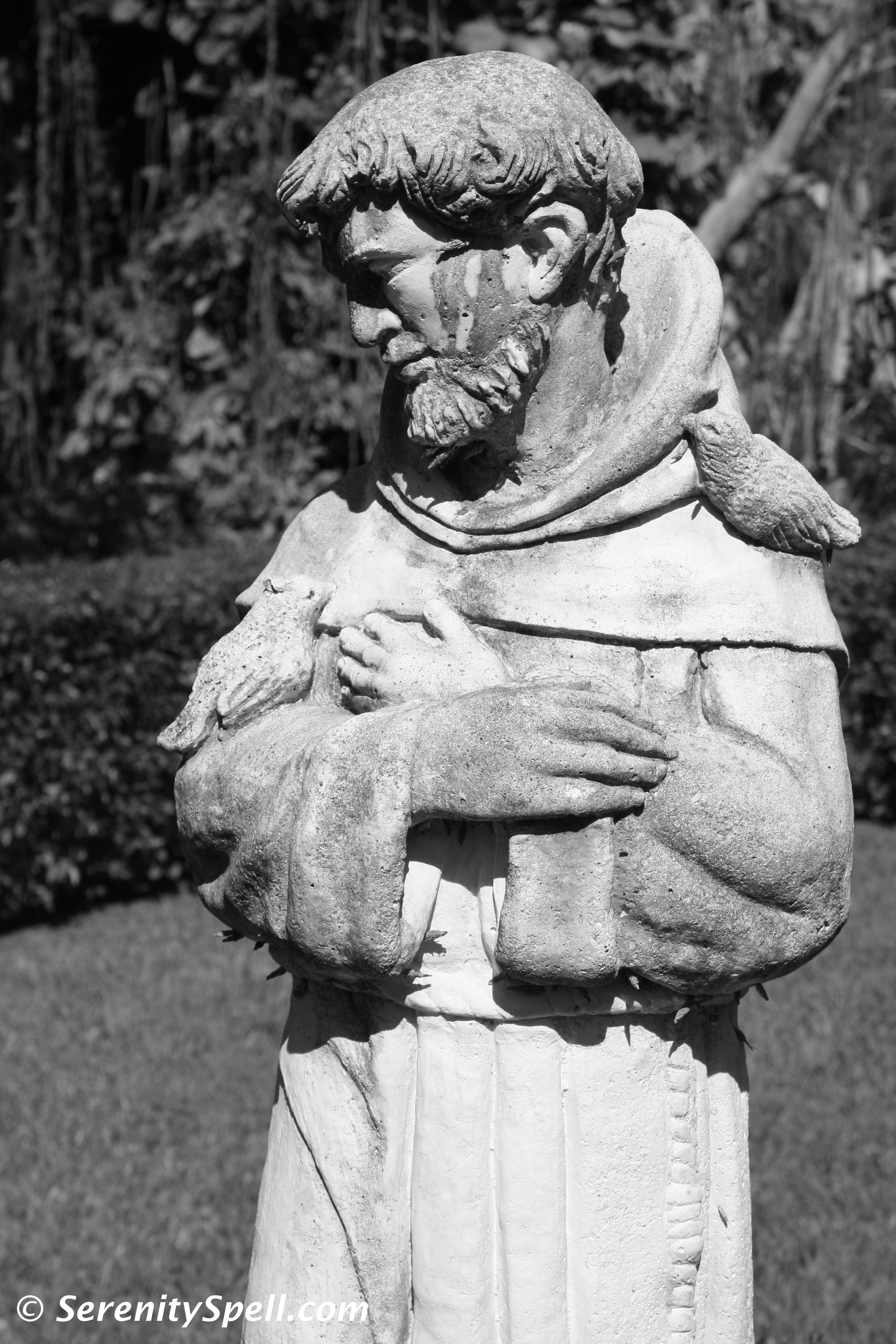
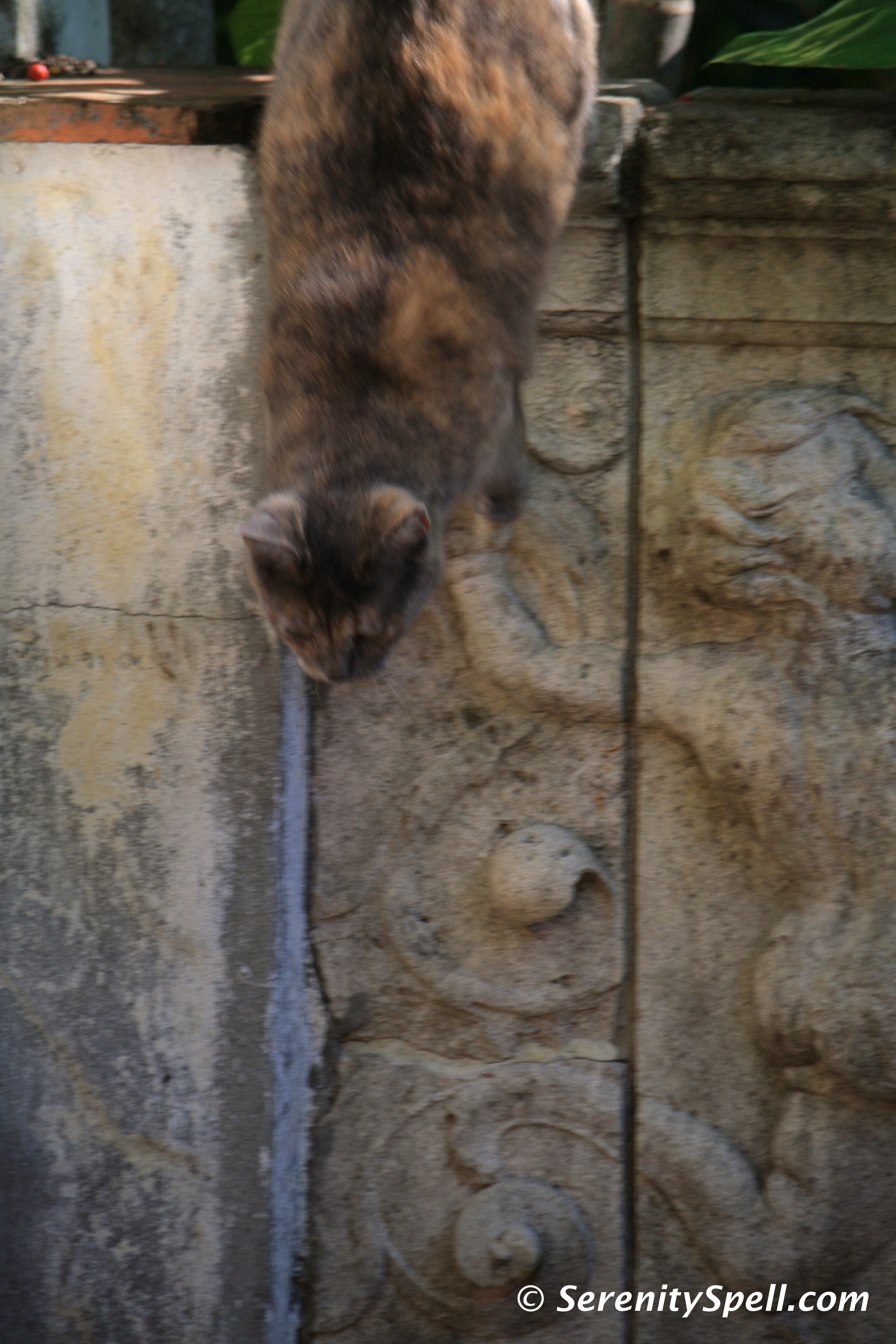
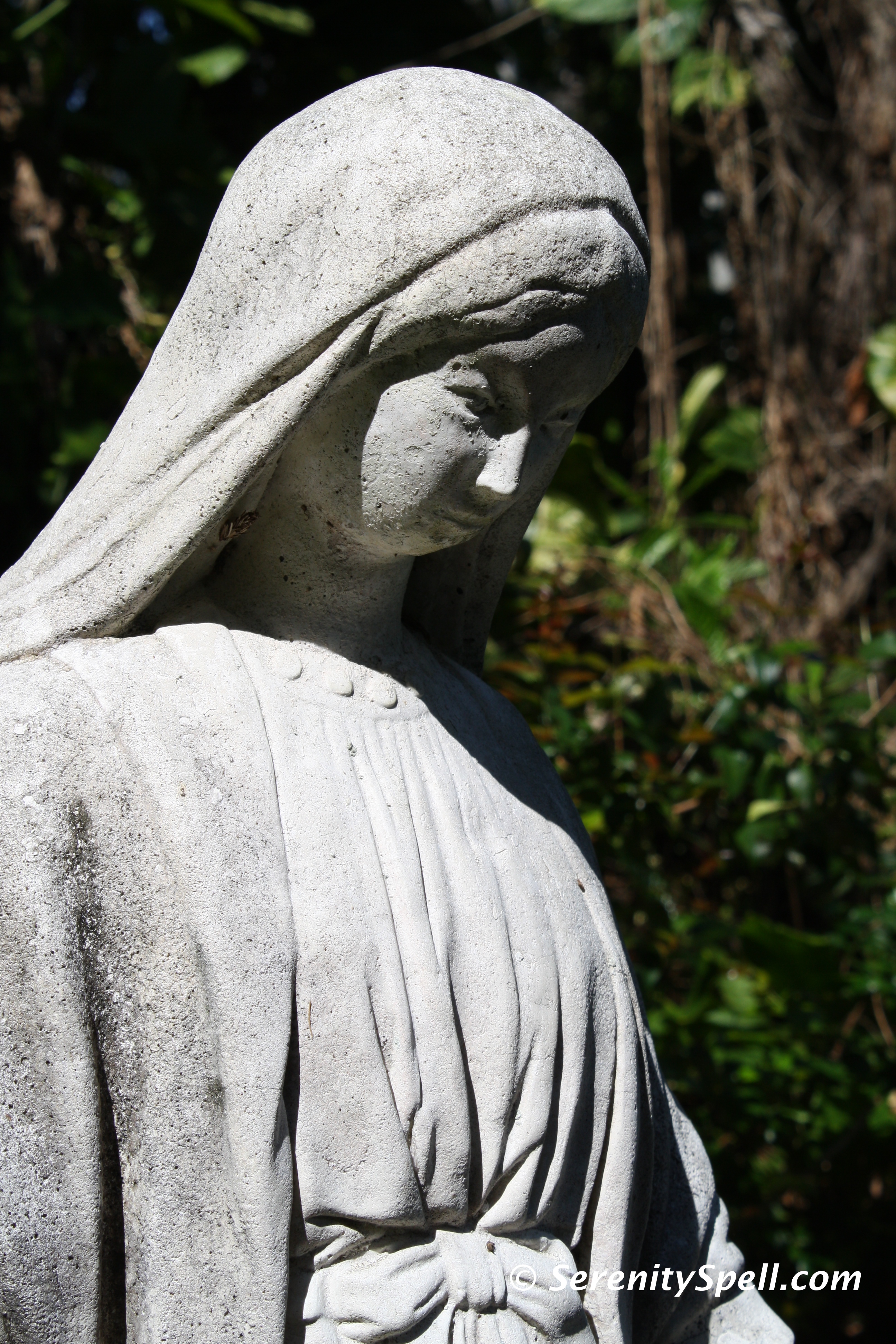
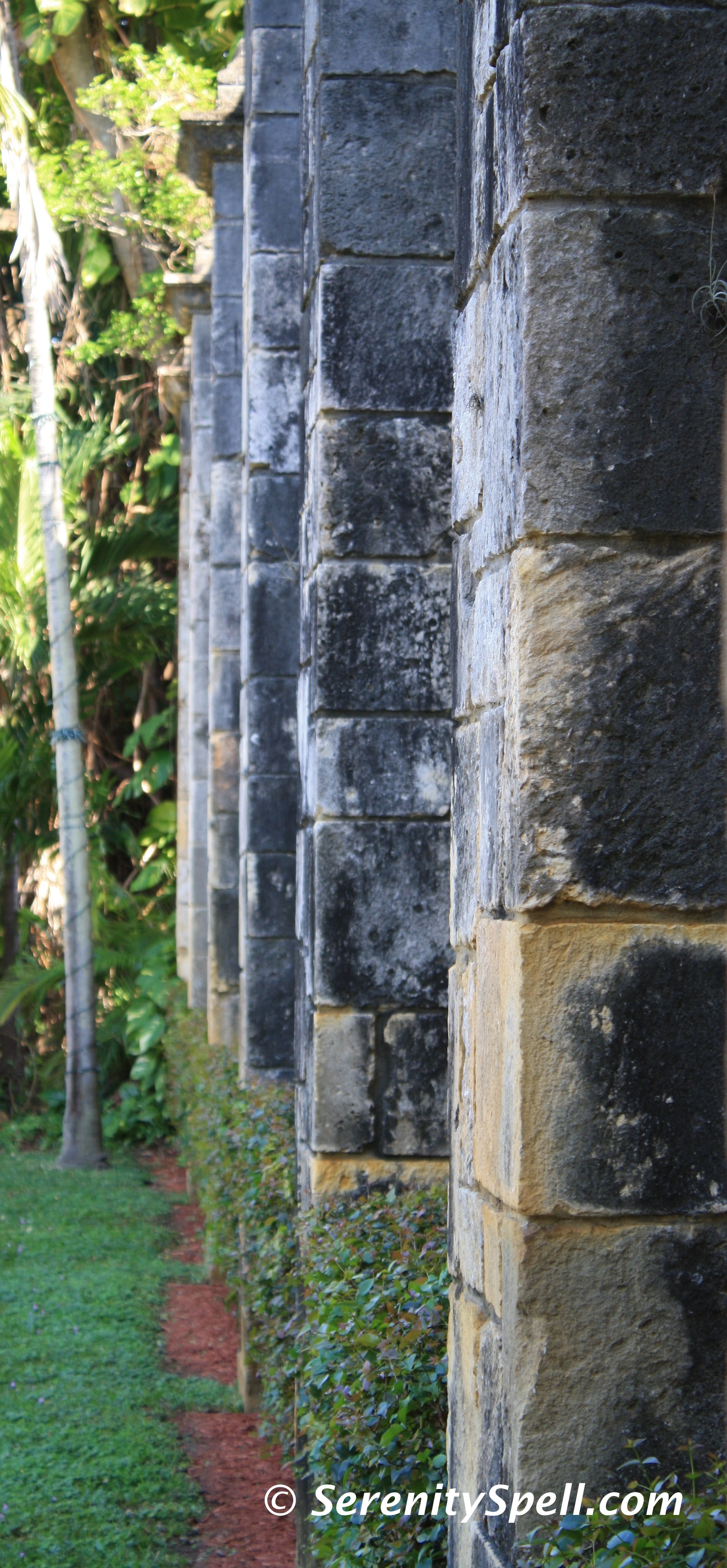
During our recent visit to the most sublime historic site, the Ancient Spanish Monastery — also known as the Monastery of St. Bernard de Clairvaux, or the Spanish Monastery — we encountered an unexpected amount of wildlife in this tiny sanctuary, tucked away in North Miami Beach’s expanse of concrete. A significant cultural and religious monument, the Ancient Spanish Monastery remains one of the most important monasteries in North America, and the oldest building in the Western Hemisphere. It’s more than a tourist attraction or a premier wedding venue; this historic site includes peaceful gardens, a setting to meditate and worship, and an opportunity to enjoy Romanesque architecture from the twelfth century — offering you the chance to feel the medieval stones beneath your hands, truly a unique experience in south Florida, let alone the United States. Amidst the 870-year-old architecture (1133-1144) and winding gardens, we startled a hawk at the fountain; being in the middle of our annual South Florida winter drought, animals vie for water wherever they may find it. And the kitties! It seems as though — at least, to a casual observer — that the monastery is doing a superb job with TNR (trap-neuter-release) to control feline overpopulation, especially in (but by no means limited to) city centers. Most everyone knows how useful a few kitties can be to control rodent populations…. So kudos! And another thanks to publishing tycoon William Randolph Hearst, who bought and shipped the abandoned Cloisters and monastery from Spain stone-by-stone (despite the fact that it was intended for his private California estate of San Simeon). Without the whims and extravagances of these fabulously wealthy magnates, we wouldn’t now have this serene and lovely spot to enjoy.

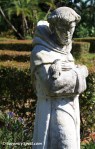
St. Francis watches over the critters in the gardens of the Ancient Spanish Monastery in Miami

A resident kitty relaxes and tries to hide in the gardens of the Ancient Spanish Monastery

A resident kitty in the gardens of the Ancient Spanish Monastery

For More Information:

Miami’s Own Ancient Spanish Monastery

An absolute must for anyone interested with sightseeing historic sites in North Miami Beach includes the Ancient Spanish Monastery, a significant cultural and religious monument we’ve had the fortune to visit a few times. At nearly 870 years old, the Monastery of St. Bernard de Clairvaux, or the Spanish Monastery, remains one of the most important monasteries in North America, and the oldest building in the Western Hemisphere. It’s more than a tourist attraction or a premier wedding venue; this historic site includes peaceful gardens, a setting to meditate and worship, and an opportunity to enjoy Romanesque architecture from the twelfth century, offering you the chance to feel the medieval stones beneath your hands — truly a unique experience in south Florida, let alone the United States.

History

Built in the province of Segovia, Spain, from 1133-1144, the monastery was originally dedicated in honor of the Blessed Mother and named the “Monastery of Our Lady, Queen of the Angels.” It was quickly renamed in honor of the famous Cisterian monk Bernard of Clairvaux upon its canonization. For nearly 700 years, Cisterian monks occupied the monastery, until the Cloisters were seized, sold, and converted into a granary and stable in the mid-1830s, to help feed troops fighting Spain’s revolution.

In 1925, publishing tycoon William Randolph Hearst purchased the Cloisters and the monastery’s out-buildings — he had been searching Europe for unique art and architecture to adorn San Simeon, his California estate. Upon finding the abandoned monastery, he dismantled it, and shipped the buildings stone-by-stone to America (nearly 36,000 stones in total), packed in protective hay in more than 11,000 numbered wooden crates. Ah, the whims of these exceptionally wealthy magnates — thank goodness for their crazy escapades, because they’re now being enjoyed by all, ironically. Unfortunately, hoof-and-mouth disease had spread in Segovia, and the U.S. Department of Agriculture, fearing contagion, quarantined the sprawling shipment upon its arrival to the U.S., and burned the protective hay. During the re-packing process, however, the stones were misplaced in the previously numbered crates, and Hearst’s financial problems compounded the situation. For the next 26 years, they sat untouched in a Brooklyn warehouse — until they were purchased in 1952 for $19,000 by W. Edgemon and R. Moss. It cost $80,000 to transport the stones to Florida, and another 19 months and $1.5 million to re-erect the monastery. Today, some unmatched stones remain in a back lot; others were used in the construction of the present Church’s Parish Hall.

Museum & Exhibits

Although there is no museum in the strict sense, the monastery hosts a permanent exhibit of objects celebrating the history of this important cultural and religious landmark, including:

  • Markings of the freemasons who built the monastery
  • Life-sized statue of Spanish King Alfonso VII
  • Stained-glass windows
  • Medieval French altar
  • 16th century Spanish hearse
  • Chapter house
  • Historic coat of arms of patron families

Contact Information:

St. Bernard de Clairvaux Church
16711 West Dixie Highway
North Miami Beach, FL 33160
(305) 945-1461

Hours & Pricing:

Monday – Saturday, 10 AM – 4 PM (closed due to special events)
Adults: $8 / Children: $4 (5 and under are free)

For More Information:

This slideshow requires JavaScript.