
Helping the Monarchs, and Florida’s Monarch Mimics
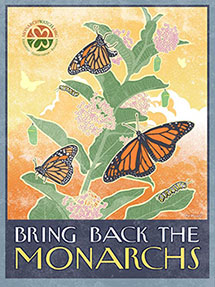
Monarch Watch Conservation Campaign Poster, courtesy of Monarch Watch
In mid-March, news of the severe decline in Monarch colonies was released — a record low. Their population has dropped 59% this year alone. That’s outstandingly sad. Although insect populations fluctuate, experts are concerned about the monarchs’ consistent downward trend. Their wintering colonies in Mexico, which once spanned 44 acres, now encompasses less than THREE mind-boggling acres. It was the topic of an NPR piece recently as well: Majestic Monarch Butterflies Under Threat.
Scientists suspect many factors contribute to the decline, including fluctuations in weather, habitat loss, pesticides on milkweed, and Round-up resistant crops — genetically engineered crops. Basically, the fault lies with us.
Monarchs NEED milkweed. During their long and arduous migration spanning several generations, the female lays her eggs on milkweed plants. When the eggs hatch, the larvae in turn feed on the plant. Without this basic necessity, the beautiful monarchs will continue to disappear. This year’s numbers are beyond troubling — but hopefully another eye-opening alert for the GMO industry using the herbicides.
Plant milkweed — it’s pretty! So are the butterflies that will visit…. I’ve planted lots of native butterfly plants, but I’ll be doing more for sure, especially since I don’t see many Monarchs down here in Southern Florida.

Monarch Fall and Spring Migrations Map, Courtesy of Monarch Watch
But below are some mimics of the Monarch — the Viceroy and Queen butterflies. The Viceroy, a black-and-orange poisonous butterfly very similar in appearance, doesn’t feed on milkweed like the Monarch, but remains safe because of its similarity to the more noxious-tasting Monarch. Interestingly, the Viceroy has evolved from a tasty butterfly to predators — one that survived on mimicry alone — to one that has adapted further by eating toxic vegetation as well (including willows and poplars).
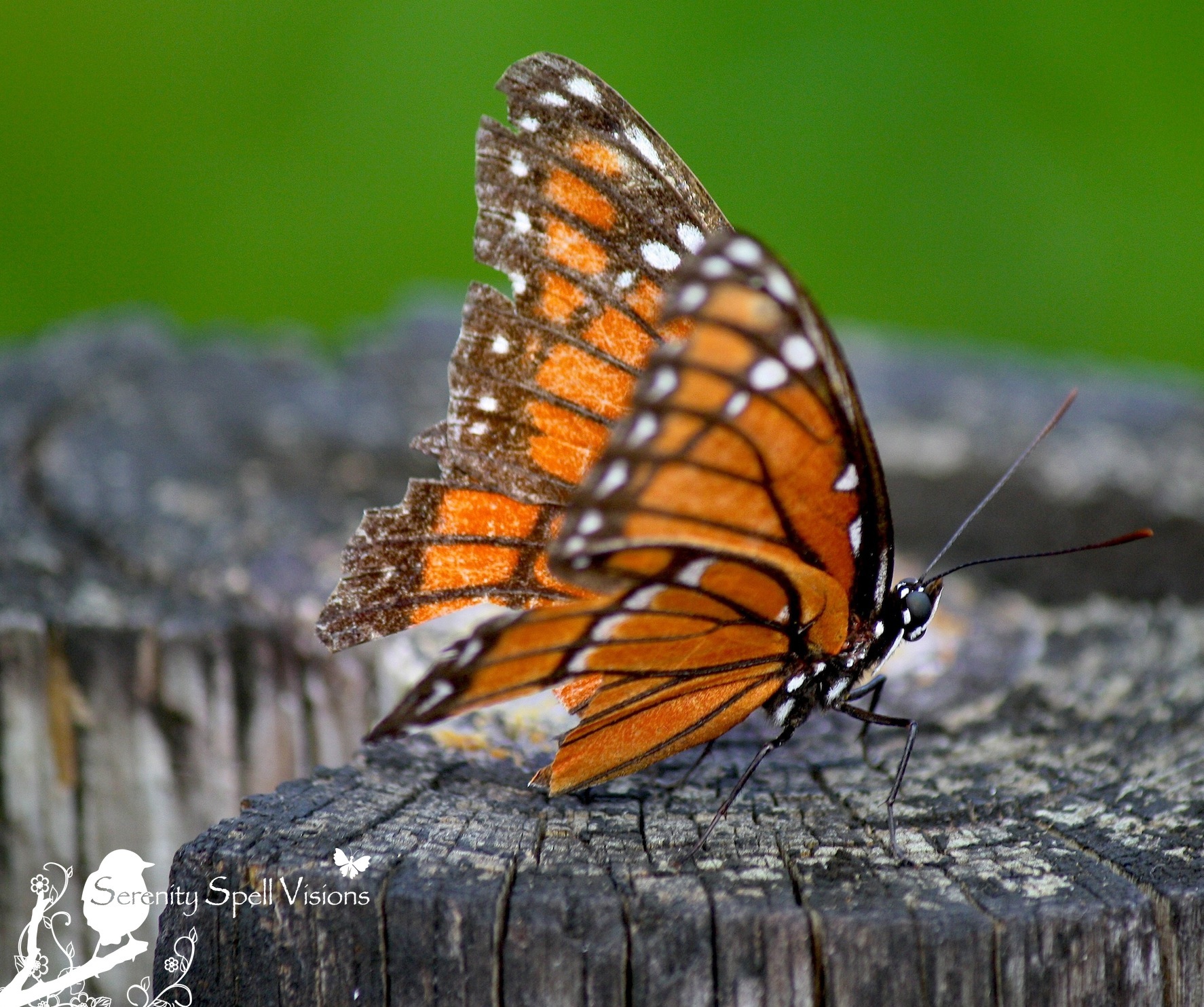
Viceroy Butterfly (Limenitis archippus), Arthur R. Marshall Loxahatchee National Wildlife Refuge

Viceroy Butterfly (Limenitis archippus), Arthur R. Marshall Loxahatchee National Wildlife Refuge
The Queen butterflies also eat milkweed, and the toxins from the plants make them distasteful to predators. Scientists have noted that a bird eating a Monarch will learn and remember that the bright orange coloration and pattern is a signal of unpleasantness — and so a Queen butterfly, with its similar appearance, will be safe. Mimicry! Fascinating stuff.

Queen Butterfly (Danaus gilippus), Hyplouxo Scrub Natural Area

Queen Butterfly (Danaus gilippus), Riverbend Park
Be sure to also check out:
Monarch Watch Shop — Learn how to create a habitat for monarchs
Monarch Watch — LOTS of resources
Flight of the Butterflies in 3D — And how to plant a butterfly garden

 FeyGirl
 Serenity Spell