Skip to content

Posts tagged ‘nature’

Gotcha, Pig Frog!

Pig Frogs (Rana grylio) — sometimes known as Lagoon Frogs or Southern Bullfrogs — are aquatic frogs that live in the Southeastern United States. Smooth-skinned and agile jumpers, they’re almost entirely aquatic, preferring lakes, wetlands, cypress swamps, and marshes that are heavy with vegetation. These innocuous little fellas are always heard, but not always seen. When I finally spied two of them — straining at odd angles into the wetland waters to nab shots, not always the safest endeavor — I was a happy camper.

A Pig Frog in the Florida Wetlands

What’s so interesting about this frog is its sound. The pig-like grunt is used by the males to attract females, and it sounds very similar to a grunting alligator (although not quite as deep) — and unbelievably, it’s just as loud, echoing through the waters. So when we’re walking in the Everglades, or in other areas thick with swamp or wetlands…and we hear a loud *GRUNT* with no visible noise-maker…we always pause. Even for those accustomed to alligators, this little frog’s resounding trickster guttural calls and lack of sight/access are daunting. Click here for their sound.

Another Pig Frog in the Florida Wetlands

Sorry Pig frog, but Kermit you are not:

Fun (??) Fact:

Many cultures prize frog legs as an epicurean treat (ick). While most frog species are edible, it’s the larger ones — such as bullfrogs and pig frogs — that are large enough to be profitable. They’ve long been staples of the frog-leg industry in Florida, and are hunted at night from boats using lights and miniature pitchforks known as “frog gigs.” Not anyone can take up frog gigging or selling these frogs, however — a commercial freshwater fish dealer’s license is required.

Flying Jewels

I captured this brave beauty at Butterfly World’s Jewels of the Sky Aviary, the largest free-flight hummingbird aviary in the United States. It’s a most amazing, beautiful, and fairy-like place — a huge and lush flower-filled habitat of Hummingbirds, Honeycreepers, and Euphonias.

Fun and Fascinating Facts About Hummingbirds:

    • Hummingbirds are the second largest family of birds, with more than 325 species
    • Early Spanish explorers called hummingbirds “Flying Jewels”
    • Hummingbirds are found only in North and South America
    • It’s the smallest bird — and the smallest of all animals — with a backbone
    • Despite their diminutive size, hummingbirds are aggressive and territorial, regularly attacking jays, crows and hawks
    • Hummingbirds have the largest brain of all birds — 4.2% of its total body weight
    • Many hummingbirds die during the first year but those that do survive have an average lifespan of 3-4 years. The longest-living hummingbird was a female Broad-tailed Hummingbird that was tagged and recaptured 12 years later
    • Hummingbirds have very weak feet — they cannot walk or hop, using them mainly for perching
    • Hummingbirds have great eyesight — able to see ultraviolet light, even — but have no sense of smell
    • The structure of hummingbirds’ lovely iridescent feathers amplifies certain wavelengths of light, reflecting them directly in front of the bird
    • Most of a hummingbird’s weight is in its pectoral muscles — 25-30% reside in their muscles responsible for flight
    • The average flight speed of a hummingbird is 20-30 miles per hour, though the birds can reach up to 60 mph in a courtship dive
    • They can beat their wings between 50-200 flaps per second, depending on flight patterns and wind conditions
    • The hummingbird can rotate its wings in a circle, making it the only bird that can fly forwards, backwards, up, down, sideways, and hover mid-air
    • Their heart beats at up to 1,260 beats per minute
    • A resting hummingbird takes an average of 250 breaths per minute
    • Hummingbirds must consume approximately half of their weight in sugar daily, feeding 5-8 times per hour. Much of the sugar they consume comes from flower nectar and tree sap, but they also eat insects and pollen to get their protein
    • A hummingbird uses its long, grooved tongue to lap up nectar from flowers and feeders
    •  To conserve energy — while sleeping or during food scarcity — hummingbirds can go into a hibernation-like state (torpor), where their metabolic rate is slowed to 1/15th of normal sleep. If they’re already weakened, they may not wake from this torpor
    • During their spring and fall migrations, the ruby-throated hummingbird makes a non-stop 500-mile-flight across the Gulf of Mexico
    • The longest migration of any hummingbird species is that of the rufous hummingbird — they travel more than 3,000 miles from their nesting grounds in Alaska and Canada to winter habitats in Mexico
    • Historically hummingbirds were killed for their feathers…. But today, habitat loss and destruction are the hummingbird’s main threats; changing temperatures are also affecting hummingbird migratory patterns, making it harder for them to find food
    • An increase in backyard gardens hummingbird feeders allows these birds to refuel during their long migratory journeys — YAY!

Sparkling violet ear hummingbird: I am so pretty, I am so pretty…

Sparkling violet ear hummingbird: Just adore me.

A Slightly Soggy Swamp Hike

I go to nature to be soothed and healed, and to have my senses put in order. —John Burroughs

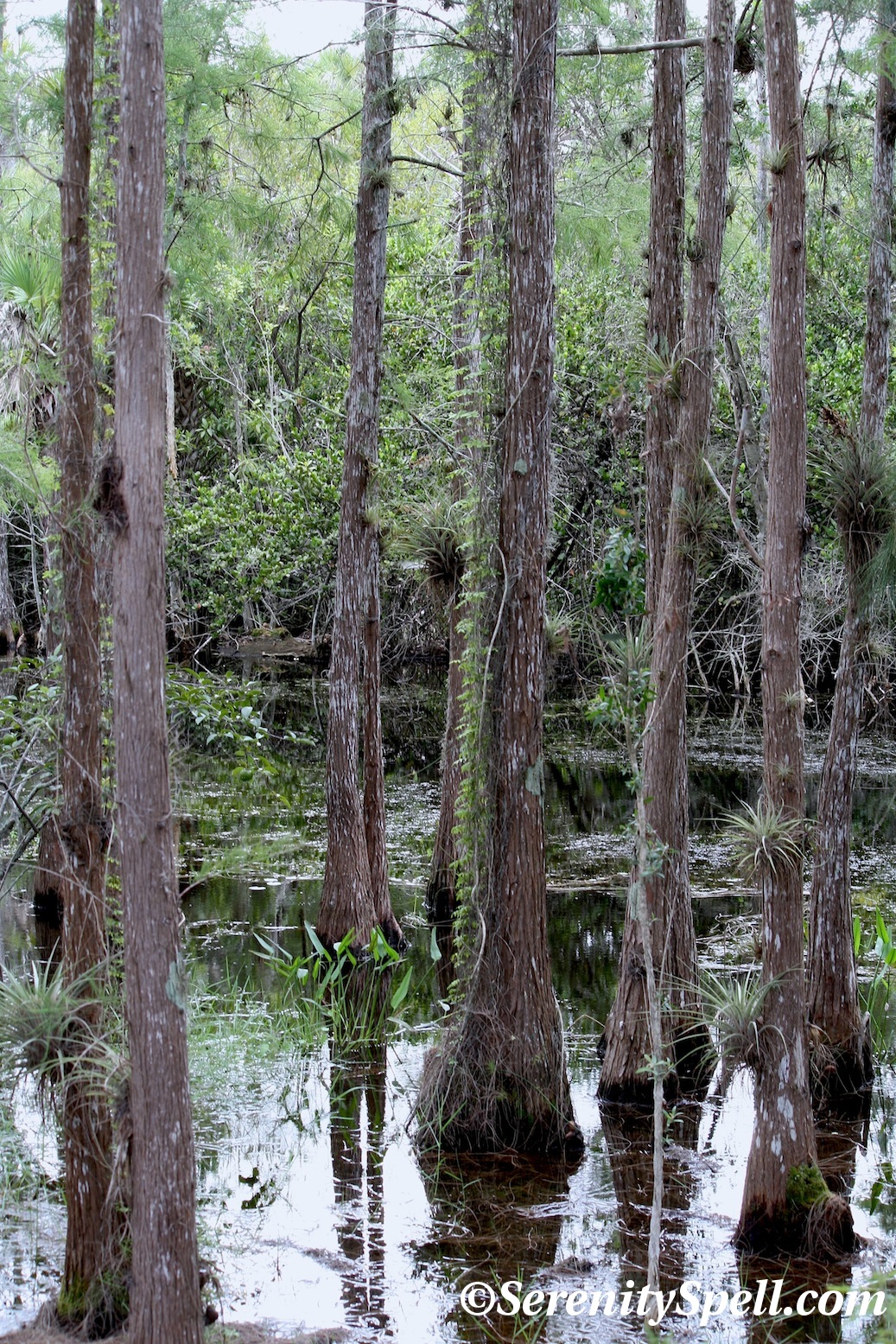
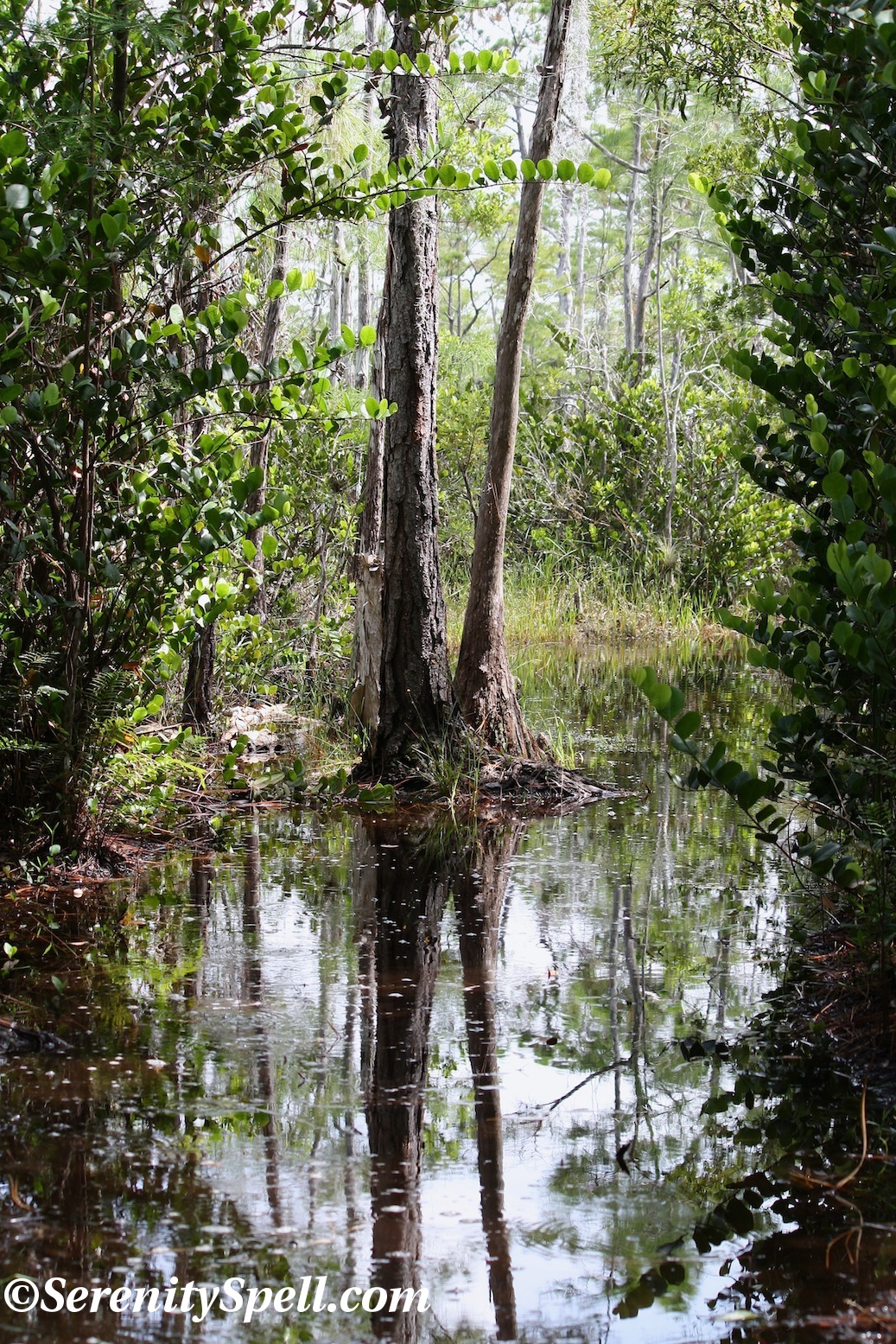
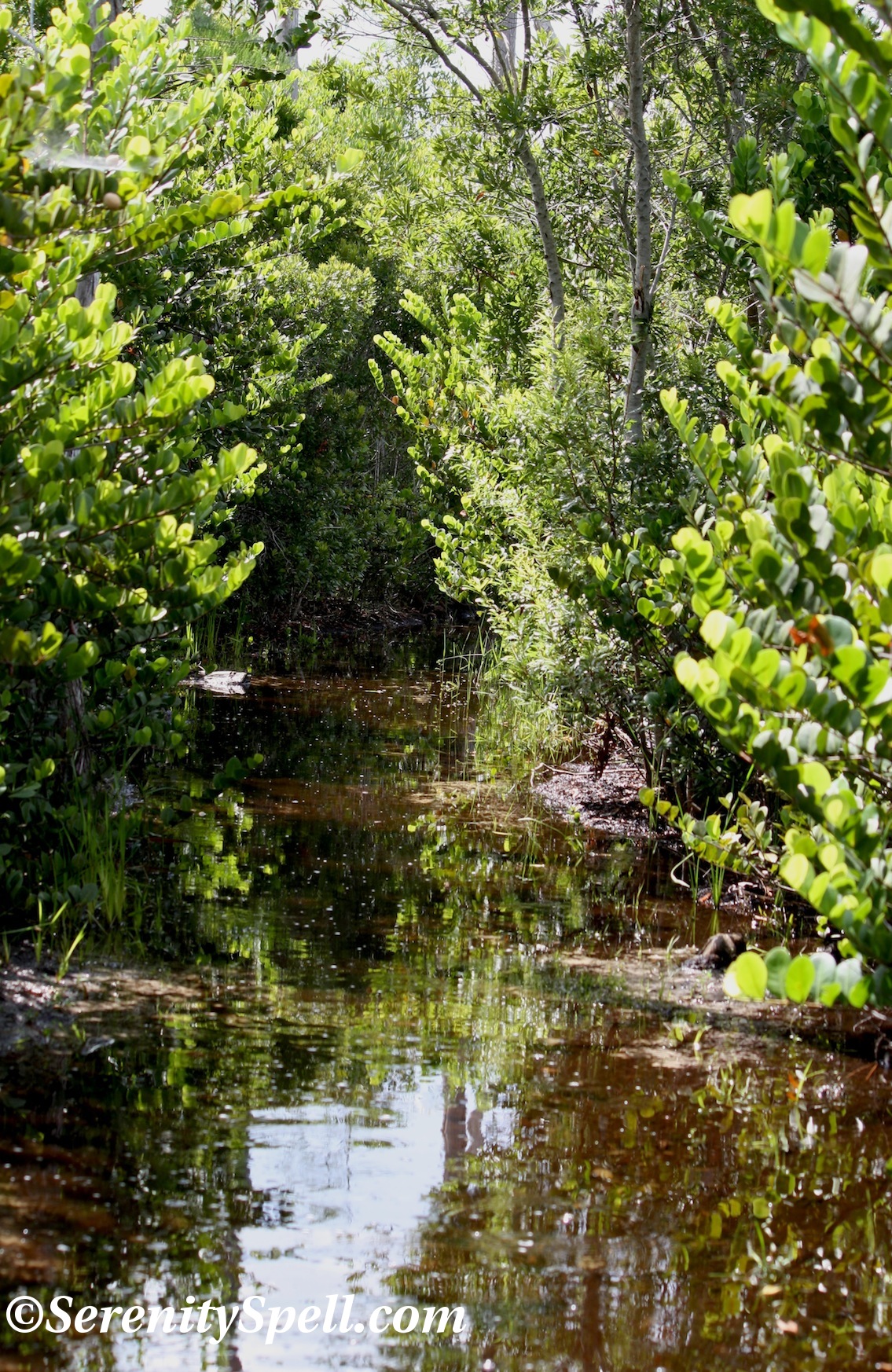
This was definitely one of those days — we needed to have our “senses put in order.” During the continued exploration of West Palm Beach’s Grassy Waters Preserve, we finally managed the entirety of the beautiful Apoxee Trail — “beyond tomorrow” in the Miccosukee language (pronounced A-po-hee). We also hiked part of the outer Owahee Trail, looping around to the Apoxee — where we spied the most amazing untouched cypress swamps and waterways. We previously weren’t (mentally) prepared for a flooded-trail hike, but on this day, we knew what to expect, so trusted our boots to do their stuff. Sadly, my sturdy pair lasted until the last half-mile…. Which, out of an entirety of 6 miles, was fairly frustrating. That’s when a startled OH! sounded from ahead on the trail, which one NEVER wants to hear while navigating waters that are the same height as the neighboring swamp / wetlands. Poisonous snakes swim down here. As do alligators. Ker-plunk goes my leg into the deepest section yet. No worries — there was so much beauty to be had, what’s a pair of soppy socks?

Not sure what the weather holds this weekend, but we’re sure to hit another of my favorite natural areas — one with a lovely, ancient history of habitation, magnificent old growth trees, and one where we spied fresh panther and bobcat prints — so needless to say, I’m excited. May your weekends hold equal anticipation and beauty!

Untouched cypress swamp, where we just missed an otter…

Everglades vista

Flooded Apoxee Trail: Take One

Pileated woodpecker

Apoxee Trail boardwalk — once or twice the swamp was covered!

Everglades vista

Flooded Apoxee Trail: Take Two… For some reason, the male didn’t appreciate the paparazzi at his back

Air plant along the trail: Common to our area, this one was enormous

Flooded Apoxee Trail: Take Three, the doozy

Waterway on the Owahee Trail

Troupes of Dragonflies

We are all visitors to this time, this place…. We are just passing through. Our purpose is to observe, to learn, to grow, to love, and then we return home. —Australian Aboriginal saying

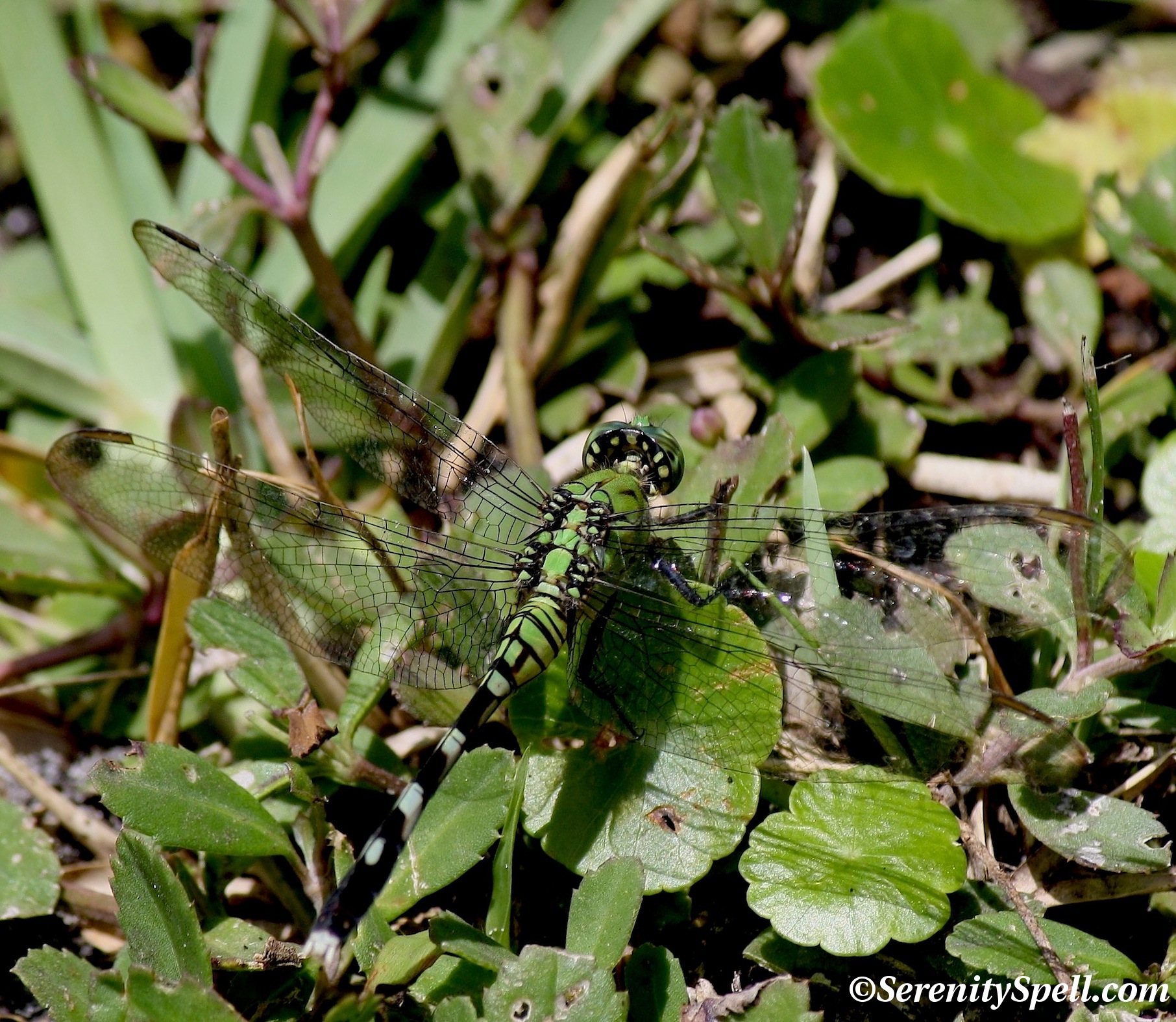
While exploring the trails of Grassy Waters Preserve, we were visited by troupes of the brightest and most lovely dragonflies…. One of them followed me for a solid 5 minutes — and in my true nature, I slowed down, watching every movement for fear of hurting my bright mascot. I’m convinced that he fell in love with our similar coloring; periwinkle ranks high on my favorite-colors list, and I was head-to-toe in it. Perhaps he thought I was a Grand Poobah / Dragonfly Queen?

Periwinkle follower

Green-on-green

Little Armored Ones

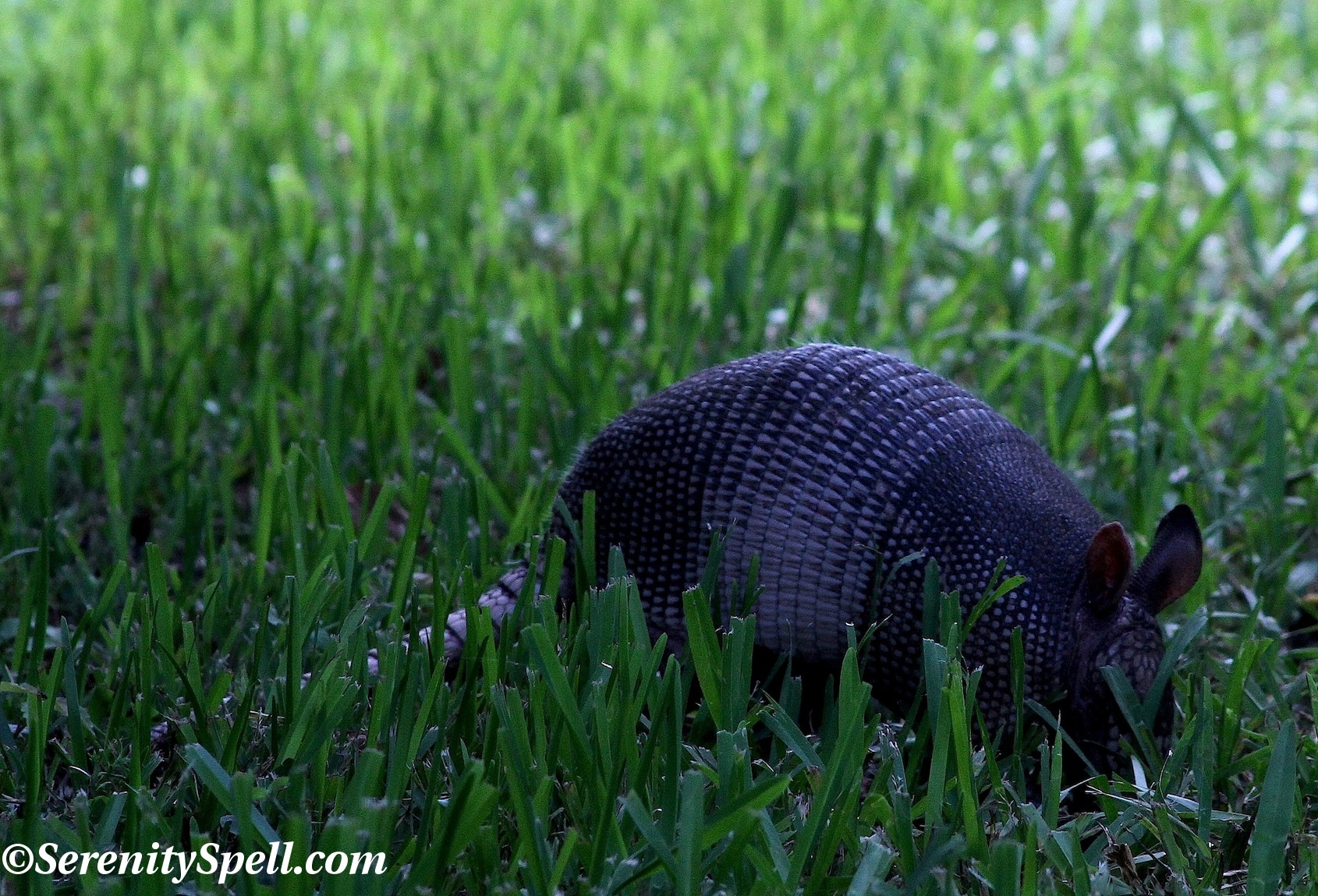
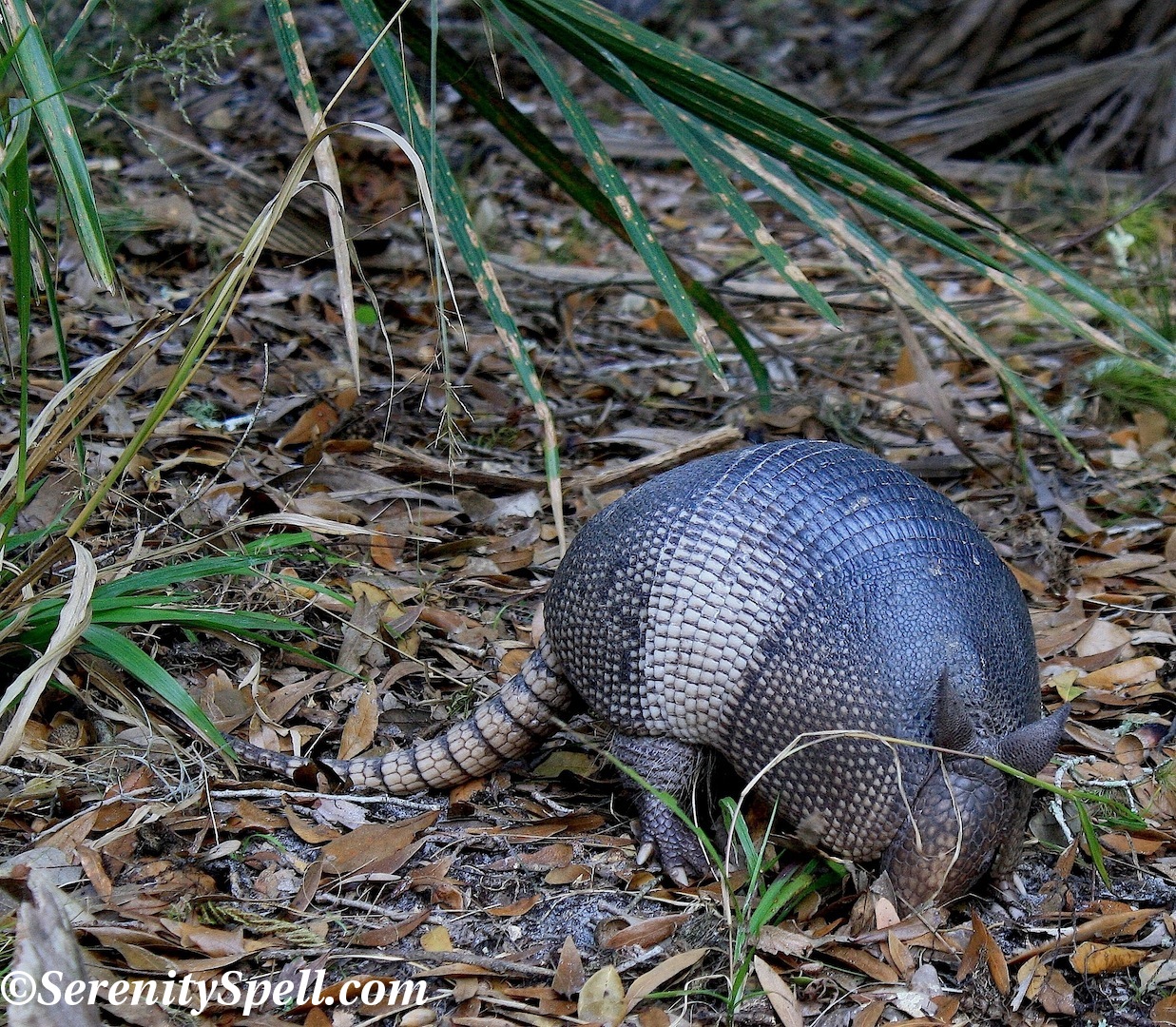
A critter we often encounter along our hikes is the Armadillo. While there are 20 species of Armadillos, it’s the Nine-banded Armadillo (Dasypus novemcinctus) that we see in Florida (it’s also common in many of the South-Central states). I love seeing these “little armored ones” along our hikes, as they burrow for grub and noisily stumble across our path….

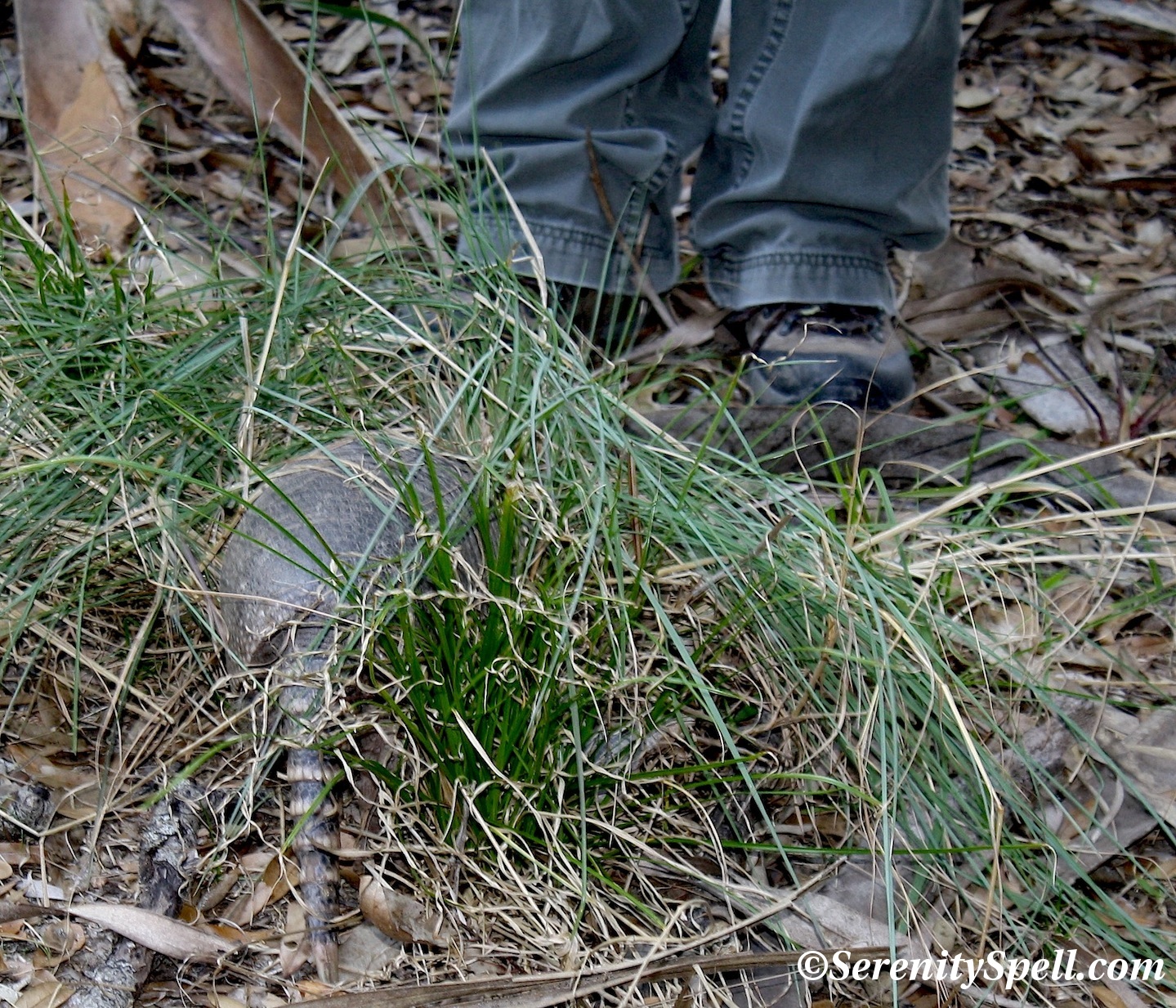
Armadillos are native to the New World. They’re solitary mammals with a leathery armor shell and very sharp claws, with which they dig their burrows and scrounge for food, including insects, grubs, and other invertebrates. Oftentimes, when we see lots of little holes in an area, we know an Armadillo is nearby, and will listen for rustling in the vegetation. The have very poor eyesight, and use their exceptional sense of smell to hunt. When I say poor eyesight, I mean it…. These little guys have nearly trundled across our boots when we’ve been especially quiet.

Sadly, Armadillos are often the victims of traffic, due to their habit of jumping when startled — right at a car’s fender height. Wildlife enthusiasts are using the Northward March of the Armadillo as an opportunity to educate people about these animals, which can be seen as a nuisance with their burrowing.

Armadillos are among the few known nonhuman animal species that can contract leprosy, to which they’re particularly susceptible due to an unusually low body temperature. Leprosy was unknown in the New World prior to the arrival of Europeans in the late 15th century — so at some point they acquired the disease from humans. Humans can only acquire leprosy from Armadillos by handling them or consuming their meat, which actually has a long and continued history. I recently commented on a very ill-conceived and poorly written CNN article citing the Armadillo-leprosy connection; the author hyped up leprosy, instilling fear in the readers with sheer lack of information — a failure to describe the animal and its behaviors. Why bother? More article hits without pesky science getting in the way! Armadillos are extremely docile and solitary animals. They’re also highly studied in science, not only for their immunity to leprosy, but for their unusual reproductive system, in which four genetically identical offspring are born, the result of one original egg. They’re not the rabid zombies of “Resident Evil” that will attack you in the wild. Misinformation, or lack of information — especially with regards to animals — is simply irresponsible and damaging.

Perhaps the funniest story with Armadillos was when the male had one saunter near him, and was suddenly overtaken with the desire to feel the little guy’s leathery tail. Being both Florida natives and avid hikers, I was curious why he needed to do this, but as soon as his hands were on his tail, the calm girl simply said — “Armadillos are one of the only animals that carry leprosy” (smirk included). I’m so glad I’m not a boy, with weird urges like feeling an Armadillo’s tail.

Fun Facts:

The Aztec called the Armadillo azotochtli, Nahuatl for “turtle-rabbit” — and in Spanish armadillo means “little armored one”

A Hawk’s Call Alerts an Armadillo in the Everglades

Burrowing Armadillo in the Everglades

Burrowing Armadillo in Myakka

Still Burrowing in Myakka

Blind-as-Bats Armadillo