Or so it was named by the late 19th-century Russians — leave it to them to label a butterfly as such. It’s definitely the first time I’ve ever heard Butterfly and Doom used in the same phrase….
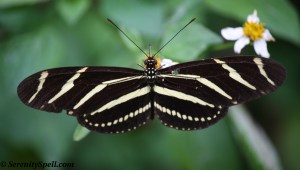
Zebra Longwing Butterfly (Heliconius charitonius)
On our hikes, we often stumble upon areas of flurried butterfly activity, due to Florida’s abundant all-year blooms. The most common encounter is the Zebra Longwing (Heliconius charitonius), found throughout the hardwood hammocks, swamps, and Everglades — and designated the official state butterfly of Florida in 1996. I rely on our natural environs for butterfly shots, and we’ve spied some lovelies — swallowtails, sulphurs, whites, milkweeds, and longwings — but more often than not, they don’t want to pose for the camera. I find myself plowing through beastly (but harmless) banana spider webs, or carefully winding through swamp, to chase butterflies.
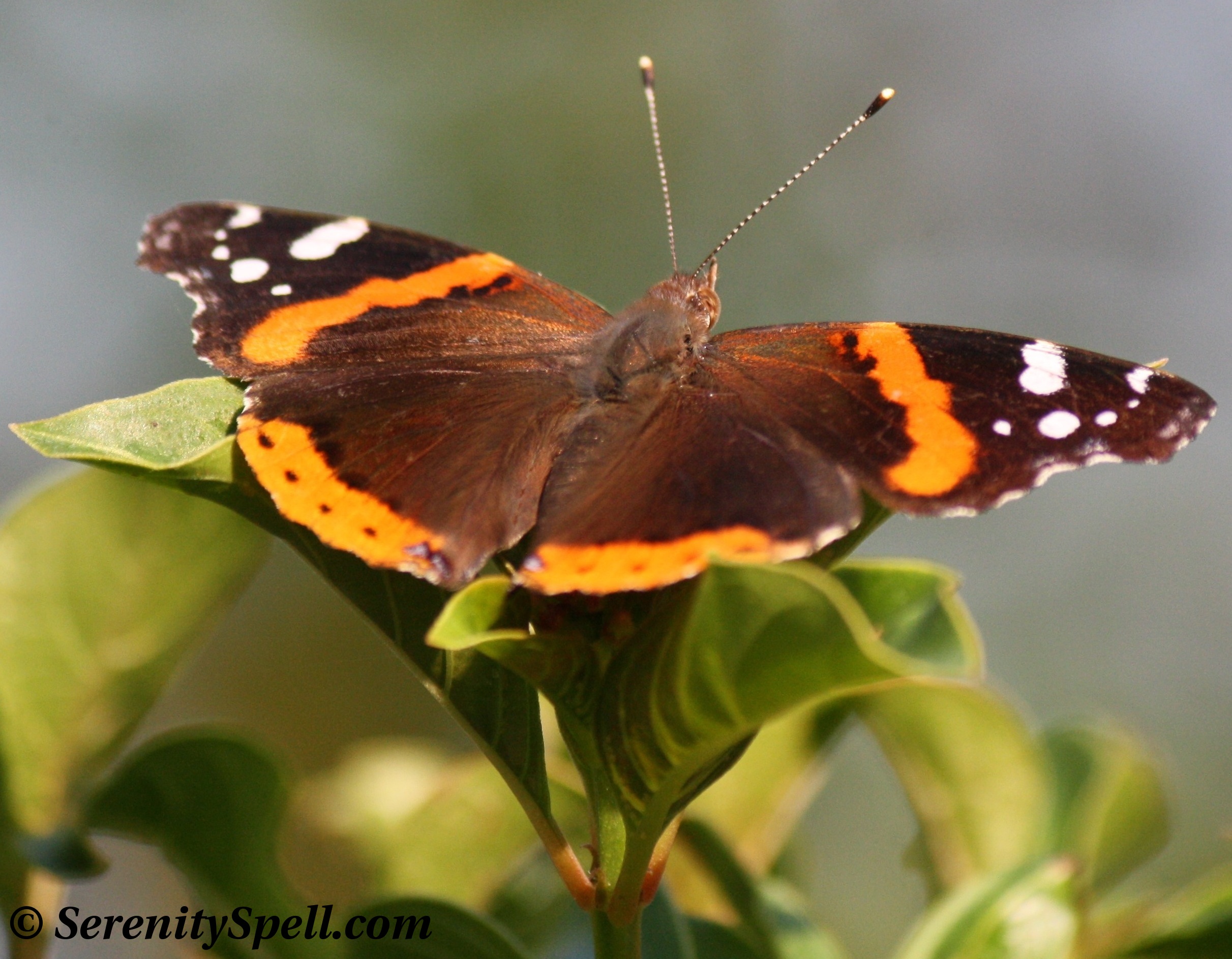
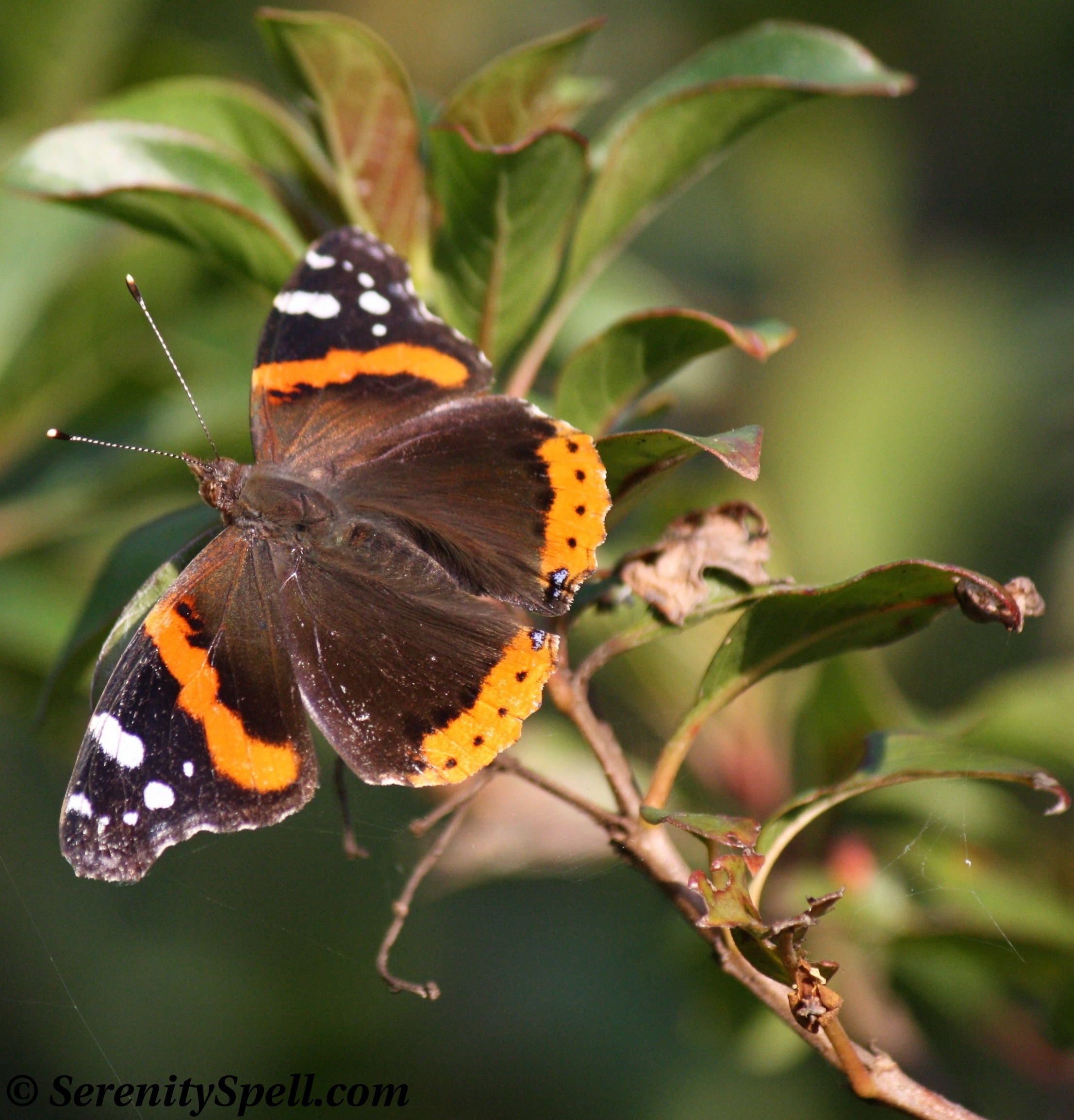
But I was lucky with this guy, so much so that I thought he was a moth — especially when I observed his antennae from afar. Obviously they’re long enough to be classified as a butterfly, because that’s what he is — specifically, a Red Admiral (Vanessa atalanta). Found in North America, Asia, and Europe, territorial males can be found in the same location day-to-day — and as a testament, the images below were shot on separate days, in the same clump of foliage. Red Admirals are dark brown, with brick-red bars and white markings on the tips of the forewings. Although known to be quick fliers, they’re also considered a docile butterfly — a perfect companion for gardens, being very people-friendly, and known to perch on humans. It would explain my ideal photographing opportunity (read: no spiderweb activity)….
The Red Admiral is considered the favorite butterfly of author and amateur lepidopterist Vladimir Nabokov (1899 – 1977); it’s mentioned throughout his writings, taking a prominent role in the 1962 novel Pale Fire. When scholar Alfred Appel, Jr., asked why he was so fond of Vanessa atalanta, Nabokov replied: “Its coloring is quite splendid and I liked it very much in my youth. Great numbers of them migrated from Africa to Northern Russia, where it was called ‘The Butterfly of Doom’ because it first appeared in 1881, the year Tsar Alexander II was assassinated, and the markings on the underside of its two hind wings seem to read ‘1881’. There is something interesting in the Red Admirable’s ability to travel so far” (Strong Opinions, p. 170).
According to Pale Fire‘s character — poet John Shade — the original Old English name for the butterfly was actually The Red Admirable, which was later degraded to The Red Admiral. In the novel, Vanessa atalanta appears as Shade’s heraldic butterfly, as seen in the verses:
Come and be worshiped, come and be caressed,
My dark Vanessa, crimson-barred, my blest
My Admirable butterfly… (lines 269–271, p. 42–43)
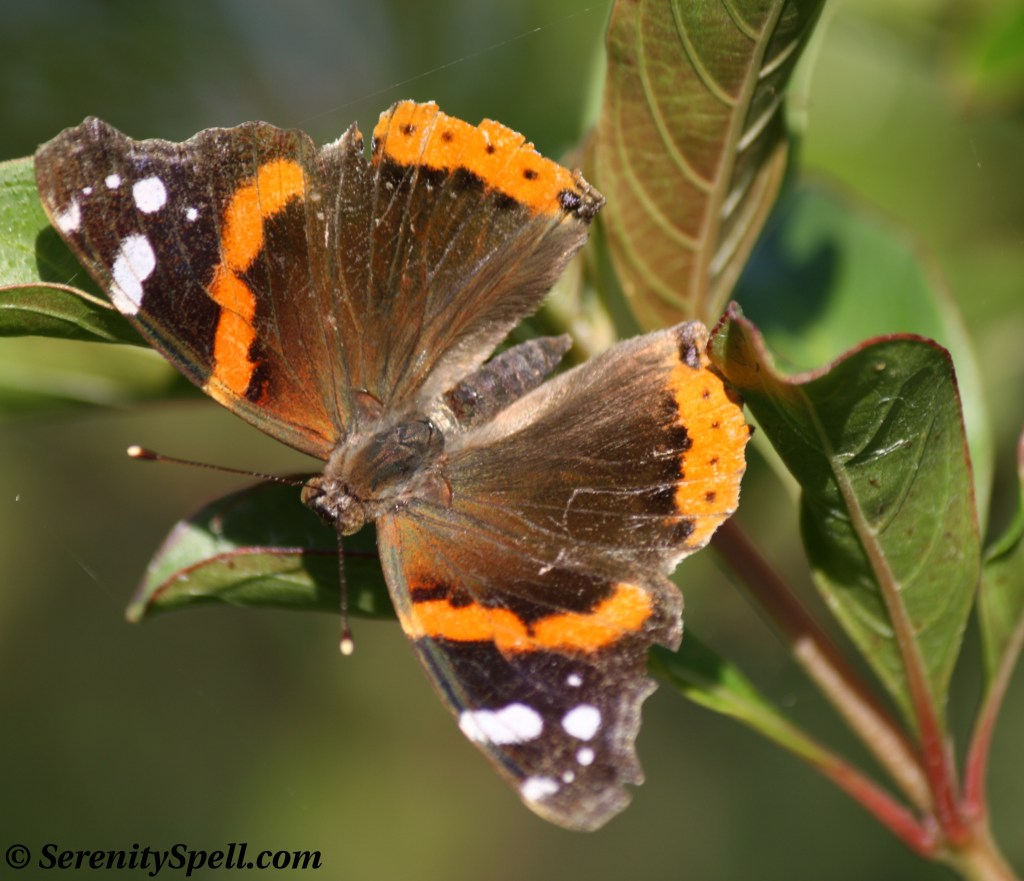
Red Admiral Butterfly (Vanessa atalanta), Posing in the Florida Wetlands — (DAY 1)
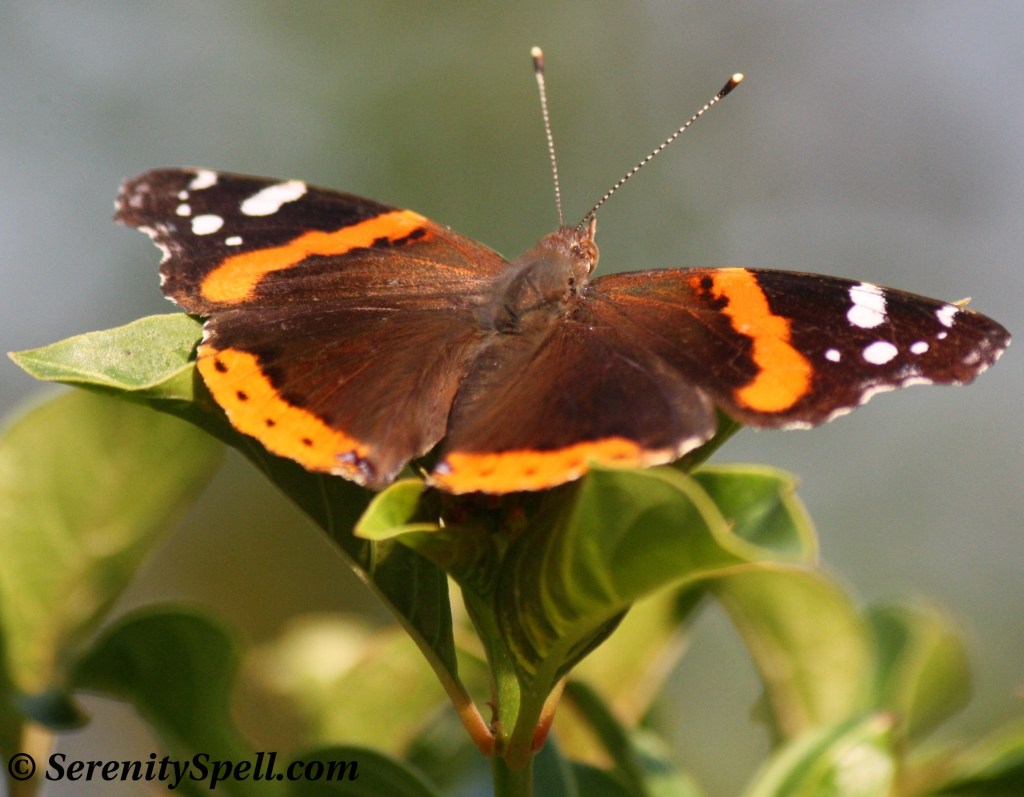
Red Admiral Butterfly (Vanessa atalanta), Posing in the Florida Wetlands — (DAY 2)
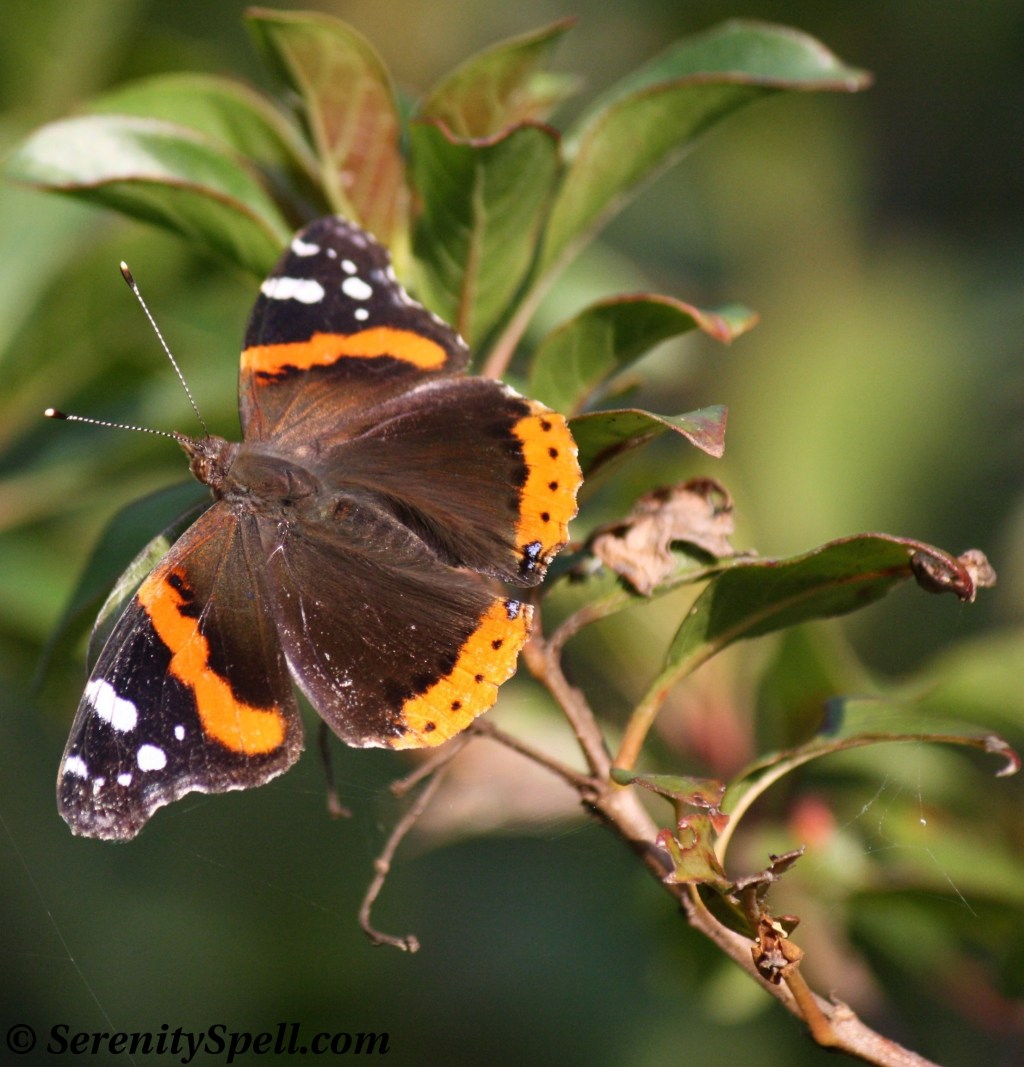
Red Admiral Butterfly (Vanessa atalanta), Posing in the Florida Wetlands — (DAY 3)
For More Information:







 FeyGirl
 Serenity Spell