Skip to content

Posts tagged ‘nature’

Nature’s Walking Meditations

Sometimes we are our own worst enemy.

We don’t need the pressure of others, or of media to spur our self-doubt — especially during times of change or shifting perspectives. The mind races, the body follows suit, and worry and fear blossom exponentially. “What did I do wrong?” “What if I missed X opportunity?” “What direction should I go?” “What can I do to do more?” Of course, thousands of years of spiritual practice reminds us to MEDITATE. As one who has been accustomed to such practices for the majority of her life, I’ve realized that this is at times, easy to do…and at others, simply not possible. During those more spastic times, I walk. Aimlessly. We’re lucky (thank you!!) to have nature preserves nearby, so when I’m in these moods I force myself outdoors, with my camera — even in the torrential heat of South Florida summers. If you have a park nearby, go to some trees; just sit near the natural elements. Nature, and by effect walking on the earth below, can be a magnificent grounding exercise when these wingy-dingy thoughts and moods take root in the psyche. And by meandering, observing the wildlife — by focusing on something other than worries, the mind *blanks* — something I would not achieve otherwise, sitting cross-legged calmly on a pillow. When the mind finally empties of the infuriating fear and self-doubt, the inner voice peeks through, and conservations flow unencumbered. Listen — these can be the best moments, akin to waking from a dream-state. By the end of the walk, I’m brimming with gratitude for the for the sheer relief of the shift of perspective. And if I’m lucky enough, I’ve come out of it with some interesting ideas. ☀

From oneindia living: The Tao Way of Journeying – Short Story

Tao means ‘the way’ A short Tao story reflects the truth.

A young man who wanted to take a look at the statue of Lao Tzu, the Tao master, set out one night on his embarkation. The statue was atop a hill, a hundred kilometers away and the path to it was rugged and risky to embark in the night. Hence after having gone a few kilometers he decided to wait until day break to pursue with his journey.

As the young man sat by the roadside, an old man came by and made enquiries. He then persuaded the young man to go along with him, to the hill, promising rest whenever he wanted to.

The young man agreed and the two set off on the journey. The path was beautiful and the old man readily agreed to rest whenever the young man wanted to. The two then reached the hilltop where the statue of Lao Tzu stood. A sense of utter fulfillment brimmed the young man’s heart on his mission being met.

The old man stoked, “Get up. What are you resting for? The journey is not over. It does not end with this. The path is beautiful. You will have to pursue it. There is nothing called the goal, but only the path!”

A short story that kindles the spirit of Tao in all spiritual seekers.

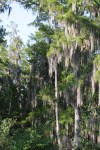
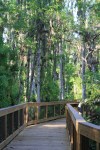
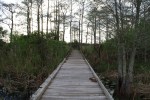
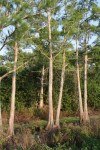
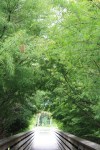
A most beautiful path in Riverbend (Jupiter, FL)
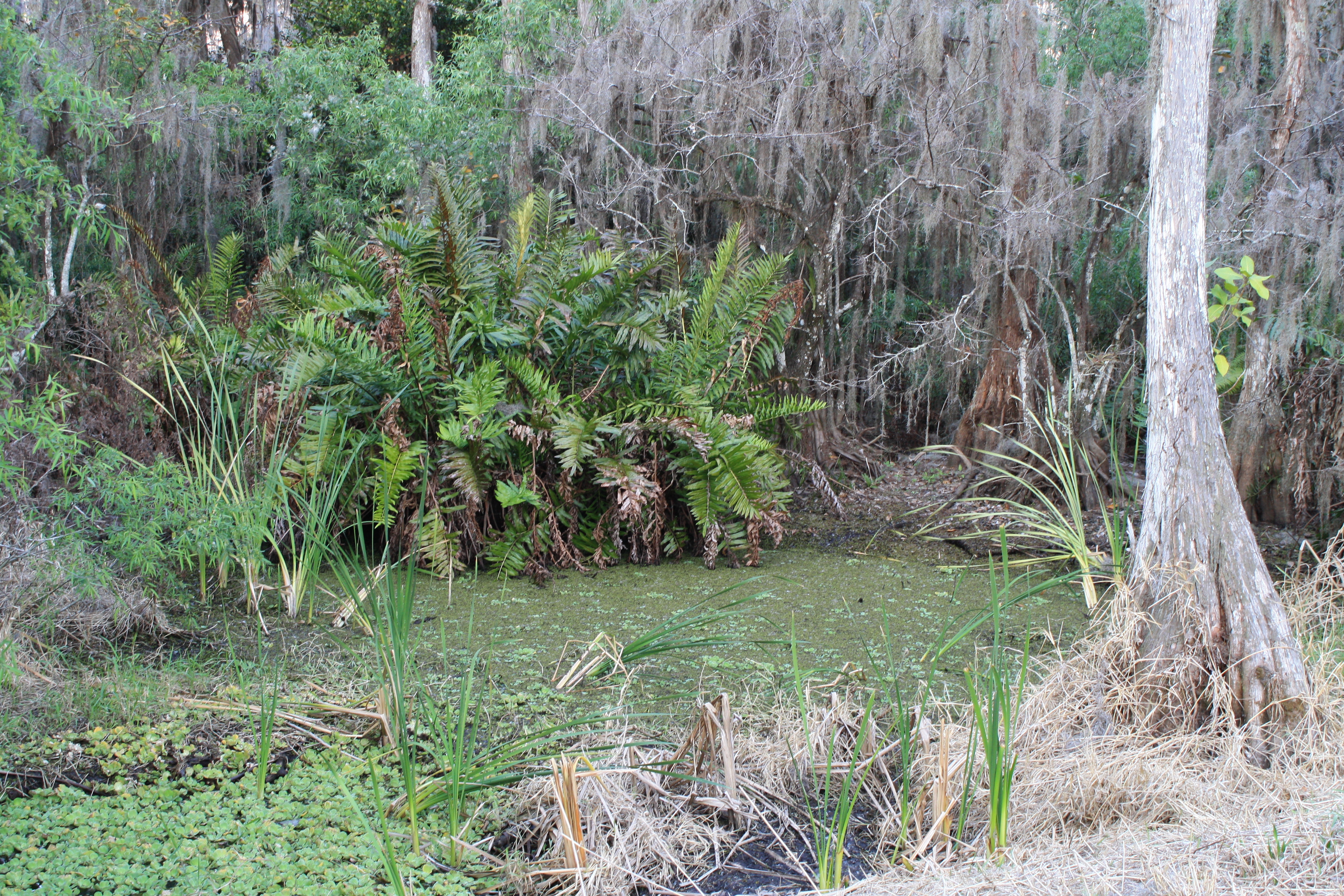
Arthur R. Marshall Loxahatchee National Wildlife Refuge

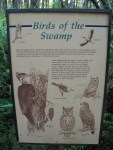
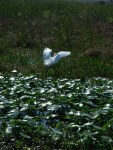
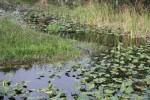
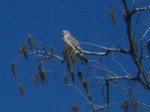
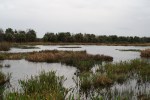
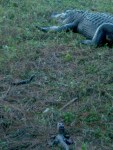
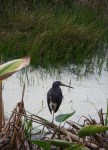
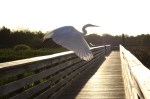
Another favorite excursion site we are fortunate to have nearby, is the Arthur R. Marshall Loxahatchee National Wildlife Refuge. The Refuge is the last northernmost portion of the Everglades, and contains more than 221 square miles of Everglades habitat. It provides sanctuary for the American alligator and the critically endangered Everglades snail kite, as well as migratory waterfowl, migratory passerines, wood storks, great blue herons, anhingas, white ibis, little blue herons, tricolored herons, black-crowned night herons, great egrets, cattle egrets, snowy egrets, and many other birds. Additionally, more than 250 species of birds use the Refuge’s wetland habitat. Myriad indigenous species of plant and insect life also make their homes in the Refuge. We’ve also had the great fortune of seeing great horned owls (a mating pair often visit the boardwalk and the Marsh Trail), screech owls, red-shouldered hawks, a very shy bobcat, and otters.

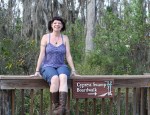
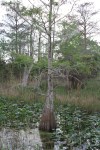
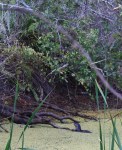
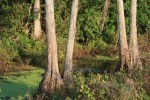
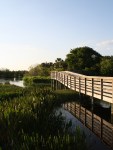
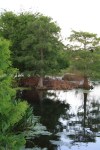
The swamplands within the Cypress Swamp Boardwalk represent one of the few remaining cypress habitats lining the Everglades. While the original trees were sadly lumbered in the ’20s and ’30s (like most cypress in South Florida), this second-growth remains protected and is truly a magnificent sight. Also included are 5.5 miles of canoe trails, providing an ideal vision of the Everglades.

For More Information:

This slideshow requires JavaScript.

Green Cay Wetlands

Without the sanctuary of Green Cay and Wakodahatchee, I may nearly have lost my mind this past year. No joke. Both boardwalks/wetlands are an oasis of green, here in suburban Delray Beach (land of wayward development and concrete). Located on Hagen Ranch Road between Woolbright Road and Atlantic Avenue, it’s open seven days a week, making it readily available to the public.The present-day wetlands are the progeny of Ted and Trudy Winsberg who, for more than 40 years, grew vegetables at their Green Cay Farm. Time passed and surrounding farms were razed for commercial development. But the Winsbergs’ love for the land prompted their most generous gift: 100 acres of protected land. In its pre-farmland existence, the land was open prairie with wetland areas. But it has now been transformed into an Everglades ecosystem, with marsh habitat, intermittent tree islands, and cypress hammocks. Along the 1.5-mile elevated boardwalk are helpful signage about the habitat, as well as traditional Seminole chickee huts. Designed to naturally filter several million gallons of highly treated water daily from Palm Beach County’s Southern Region Water Reclamation Facility, the wetlands also help to recharge groundwater resources and maintain earth’s water cycle. Green Cay incorporates 86 different species of trees, shrubs, and aquatic vegetation to manage this feat. Additionally, the 9,000-square-foot Green Cay Nature Center is one of the county’s newest nature centers, and features a host of interactive exhibits and programs, providing educational opportunities about South Florida’s unique wetland habitat. A pioneer in the fields of wastewater treatment and reclaimed water distribution, the Palm Beach County Water Utilities Department has proven its effective and innovative management philosophies in the Green Cay Wetlands.

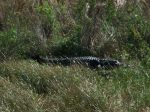
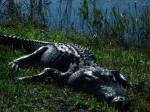
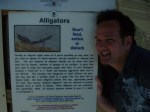
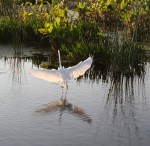
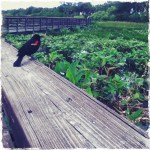
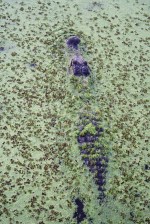
Besides affording a sublime stroll, Green Cay is a birdwatcher’s paradise — a camera and/or binoculars are always handy. Common bird sightings include egrets, herons, ducks, grebes, bitterns, ibis, moorhens, warblers, blackbirds, cardinals, owls, hawks…and the list goes on. Many turtles make their home at the wetlands, including the Florida Red-bellied Turtle and the Peninsular Cooter. Marsh rabbit can also be seen in the grassy and low-lying marsh areas. As always, alligator sightings are common at Green Cay, and non-poisonous snakes and frogs live on the fringes of the boardwalk. But I’ve even had the most fortunate sighting of a shy bobcat.

For More Information:

This slideshow requires JavaScript.