
Protecting Florida’s Gentle Gopher Tortoises & Restoring Their Habitat
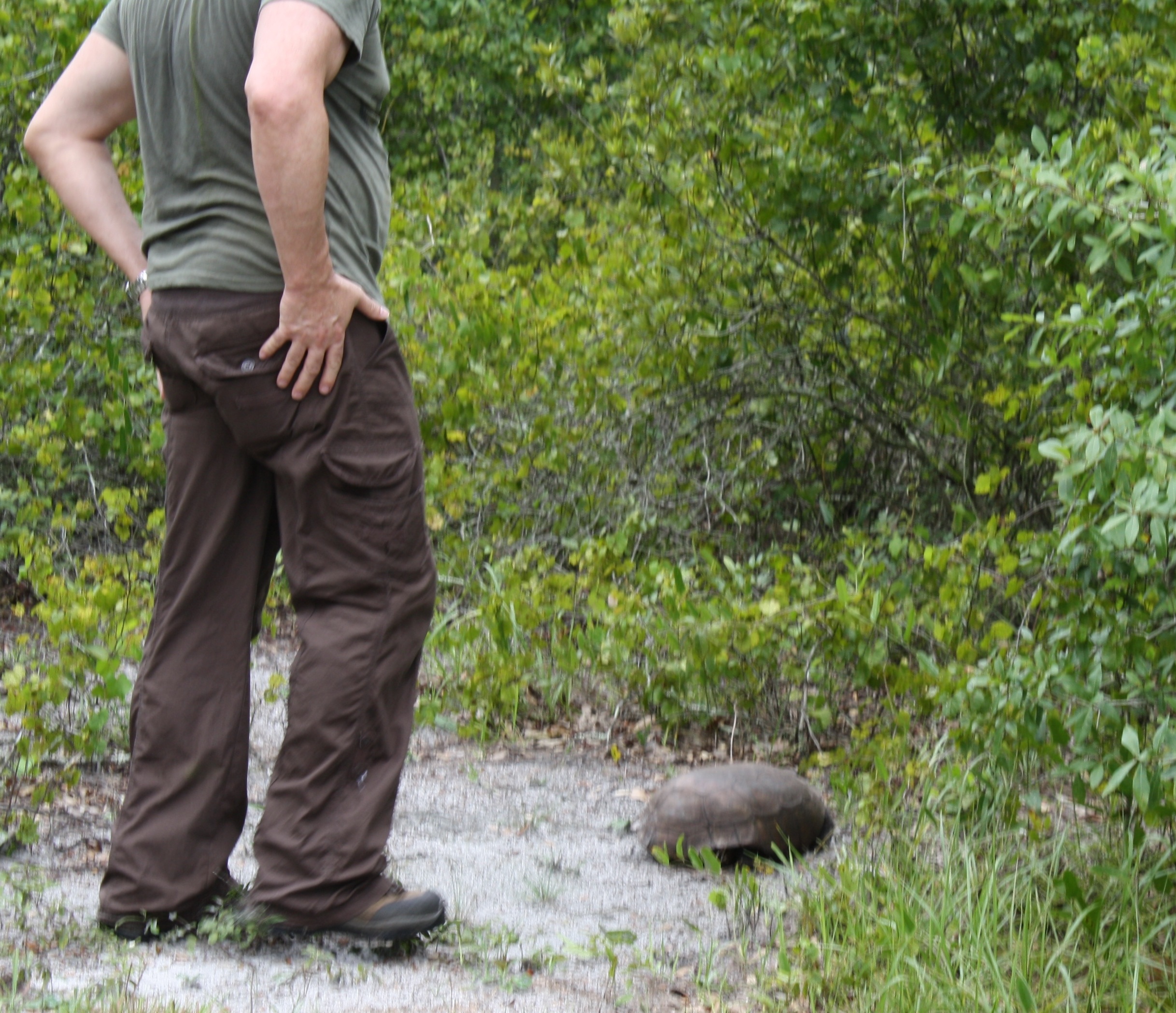 We often encounter gopher tortoises on our hikes in Florida’s natural spaces; not just in the far reaches — and there have been times when they’ve needed some help with humans’ encroachment into their land. This poor guy was trapped behind acres of personal enclosure, and had been trying to burrow in the mulch; there were dozens of failed holes to attest to his failed attempts. We stayed awhile, to see if he could manage an escape on his own (or if he was simply choosing that location), but then saw how the fence was buried, impeding his escape. Between the buried fencing, his constant dodging at the barrier, and the myriad failed burrows, it was easy to understand his dilemma. We quickly relocated him to a perfect burrow-able location nearby — literally five feet from his manic failed and impossible attempts behind the fencing, where his natural habitat awaited him. NOTE: With turtles and tortoises (of the water and land varieties), help them safely in the direction they’re heading. It would have been nice for the actual property owners to have accomplished this tiny feat, of course — it wasn’t difficult to witness the poor guy’s quandary (or his efforts); these aren’t small tortoises.
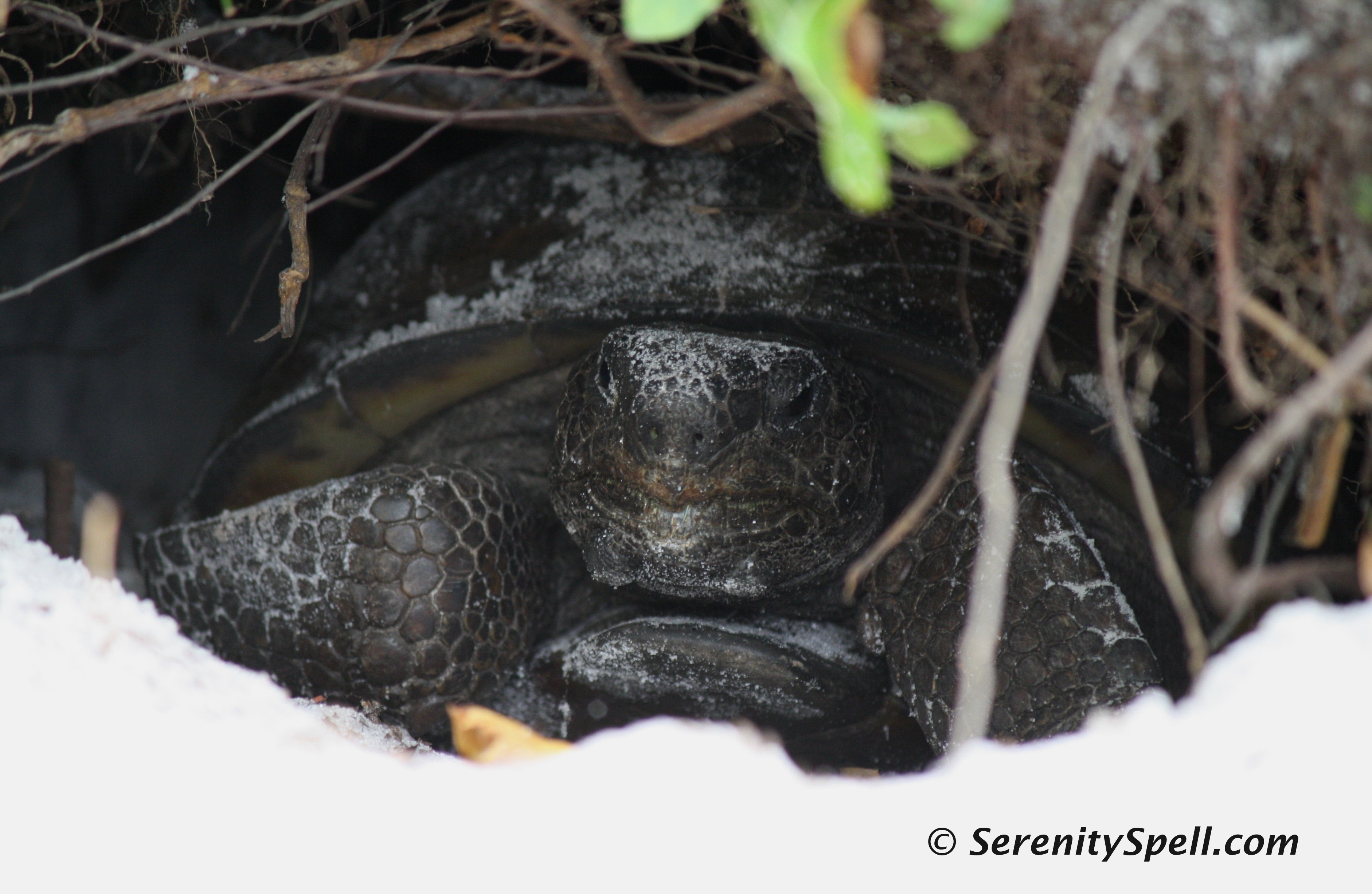 One of the oldest living species, the burrowing tortoise is found throughout Florida and southern Georgia, South Carolina, Mississippi, Alabama, and eastern Louisiana. They dig and live in long burrows in pine savannas, thus protected from summer heat, winter cold, fire, and predators. Gopher tortoises are essential to the local ecology — their burrows also provide homes for other animals, including indigo snakes, gopher frogs, mice, foxes, skunks, opossums, rabbits, quail, armadillos, burrowing owls, snakes, lizards, frogs, toads, and other invertebrates. Their burrows — abandoned or shared — may be the homes to more than 300 species of animals at one time or another. Pretty amazing; and it’s easy to see how destroying the habitat of the gopher tortoise greatly alters the already fragile ecosystem.
Federally protected as a threatened species (FINALLY in Florida, where the status was “under review” for years), the tortoise’s main threat remains: Habitat loss and destruction. For instance, it wasn’t until 2007 in Florida, that developers were forced *by law* to relocate burrowing tortoises — until then, development could shockingly occur with no thought to the safety of the animals and the destruction of their habitat. It was only then that the Gopher Tortoise Management Plan was implemented.
But the wonderful news is that with the 2007 Gopher Tortoise Management Plan, 36,000 acres of gopher tortoise habitat have been restored and managed, and the protected tortoise habitat continues to expand. More than 4,000 gopher tortoises have been humanely relocated from development sites, as well. A recent post on Southwest Florida Online elaborates on the plan:
Like a baseball player stretching muscles and practicing skills during spring training, the gopher tortoise is emerging from winter dormancy and moving slowly and steadily through the landscape in search of greenery to eat and a new place to dig its burrow.
Look for gopher tortoises’ distinctive domed brown shells and stumpy legs, as these land-dwellers make their way through Florida’s open canopy forests and sandy areas. The Florida Fish and Wildlife Conservation Commission asks people to remember that gopher tortoises are good neighbors, and can live from 40 to 60 years, so leave them and their burrows alone.
“The Florida Fish and Wildlife Conservation Commission works with, and is grateful to, the homeowners, landowners, businesses and public agencies willing to share their lands with gopher tortoises and their burrows,” said Deborah Burr, the FWC’s gopher tortoise plan coordinator…
For the rest of this blog post and more on the Gopher Tortoise Management Plan, visit Florida Restores 36,000 Acres For Tortoise Habitat.








 FeyGirl
 Serenity Spell