
Tuxedoed Stilts
Black-necked Stilts (Himantopus mexicanus) are abundant residents of coastline, estuarine, and wetland habitats. They’re found across the country, from California to Florida, and through to Peru, northern Brazil, and the Galapagos islands. The Northern populations migrate south in the winter months.
Adult Black-necked Stilts have long pink legs, a thin black bill, and are white with a black cap, neck, and back. They forage in the shallow waters of our wetlands, wading and probing for aquatic invertebrates and small fish. It’s a common sight to see them resting on the small “islands” of our wetlands, surrounded by water. The nests are constructed by both the male and the female, at ground-level and often close to the water’s edge, in semi-colonial formations (loose clusters), with peak nesting activity in June.
Here, I came upon a young stilt carefully guarded by its parent. I didn’t stay long, because my presence — despite my great distance on *dry land* — was disturbing the adult. I love seeing these guys in our wetlands: always in pairs, tuxedoed, debonair and elegant, but oh-so-shy.
Fun fact: Proportionate to their bodies, silts have the second-longest legs of any bird — exceeded only by flamingos.
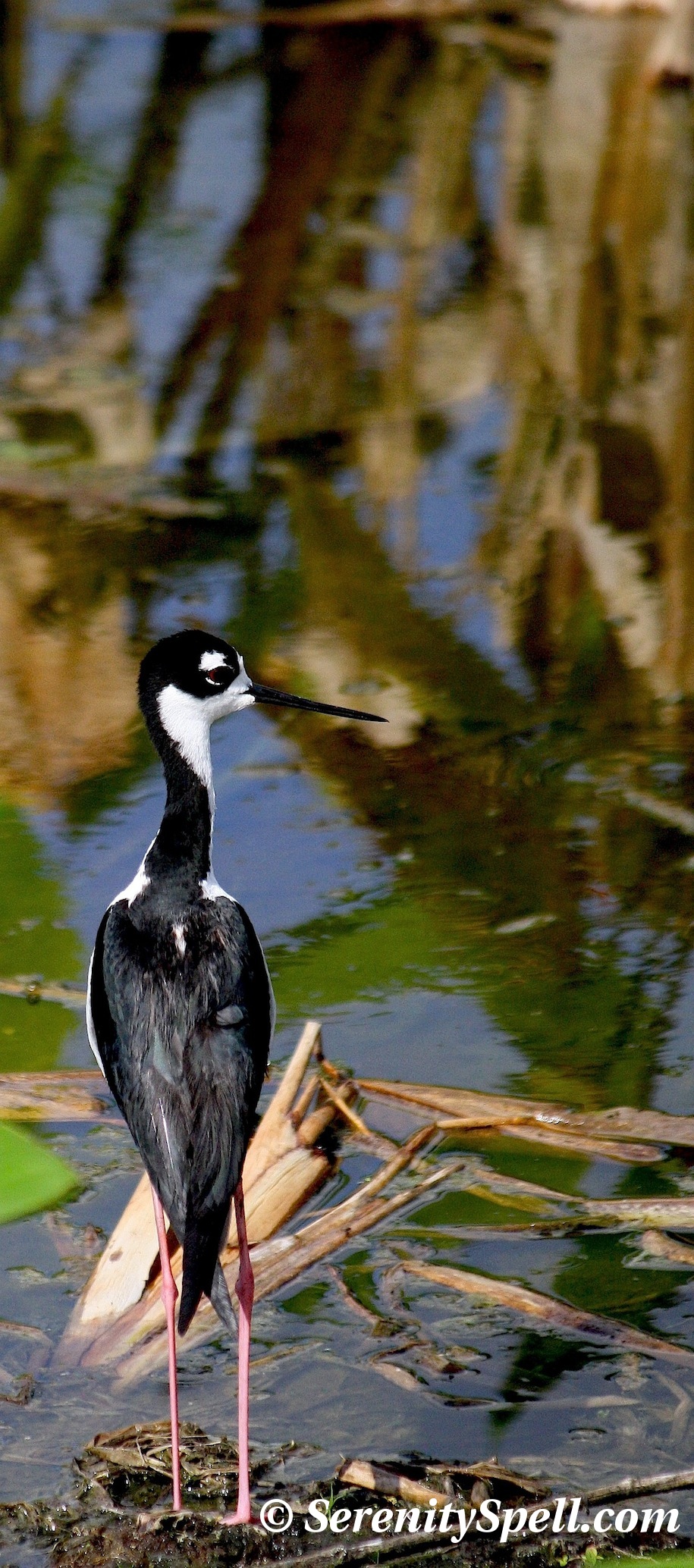
Black-necked Stilt (Adult) guarding its young
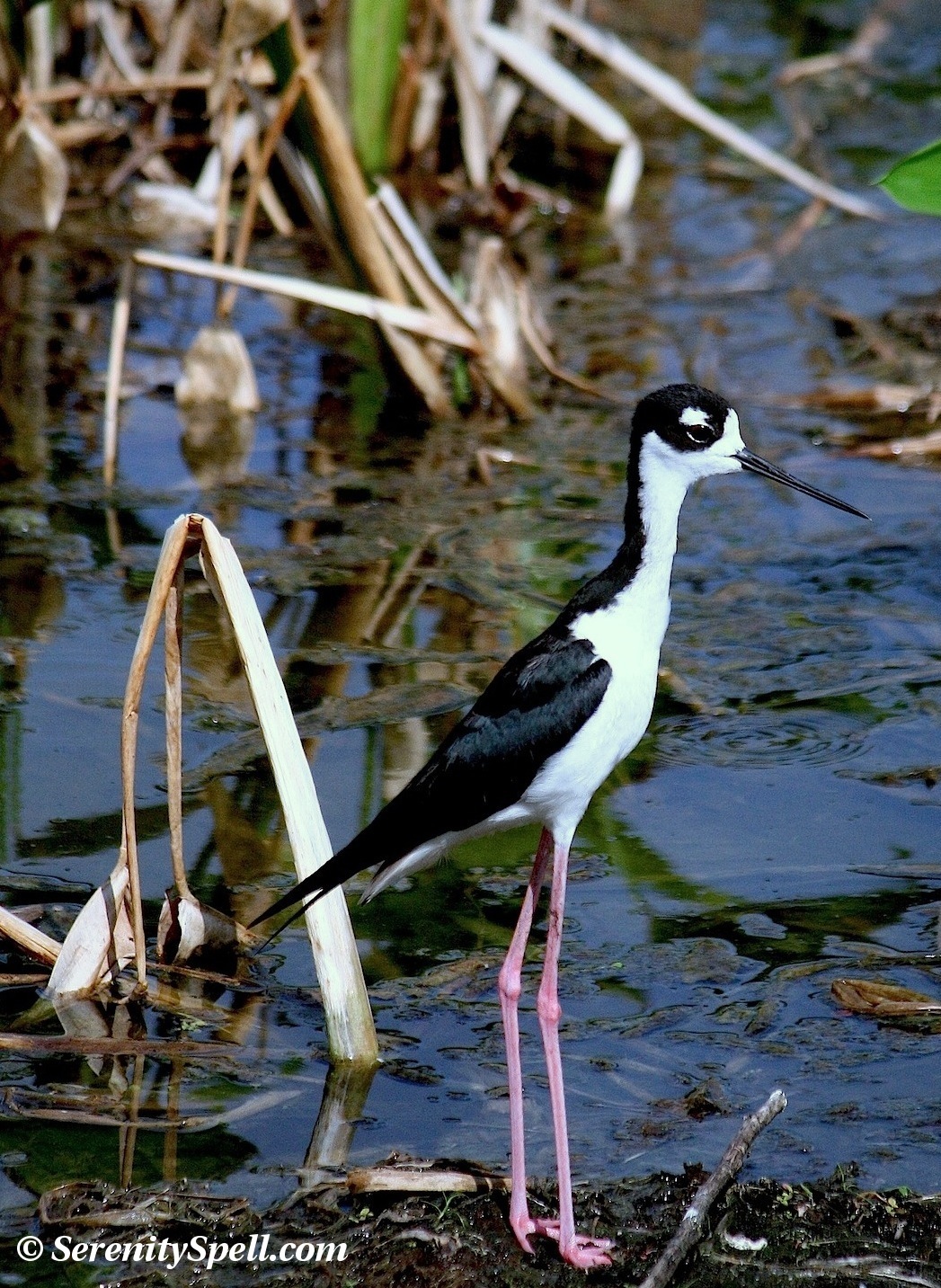
Black-necked Stilt (Adult) guarding its young
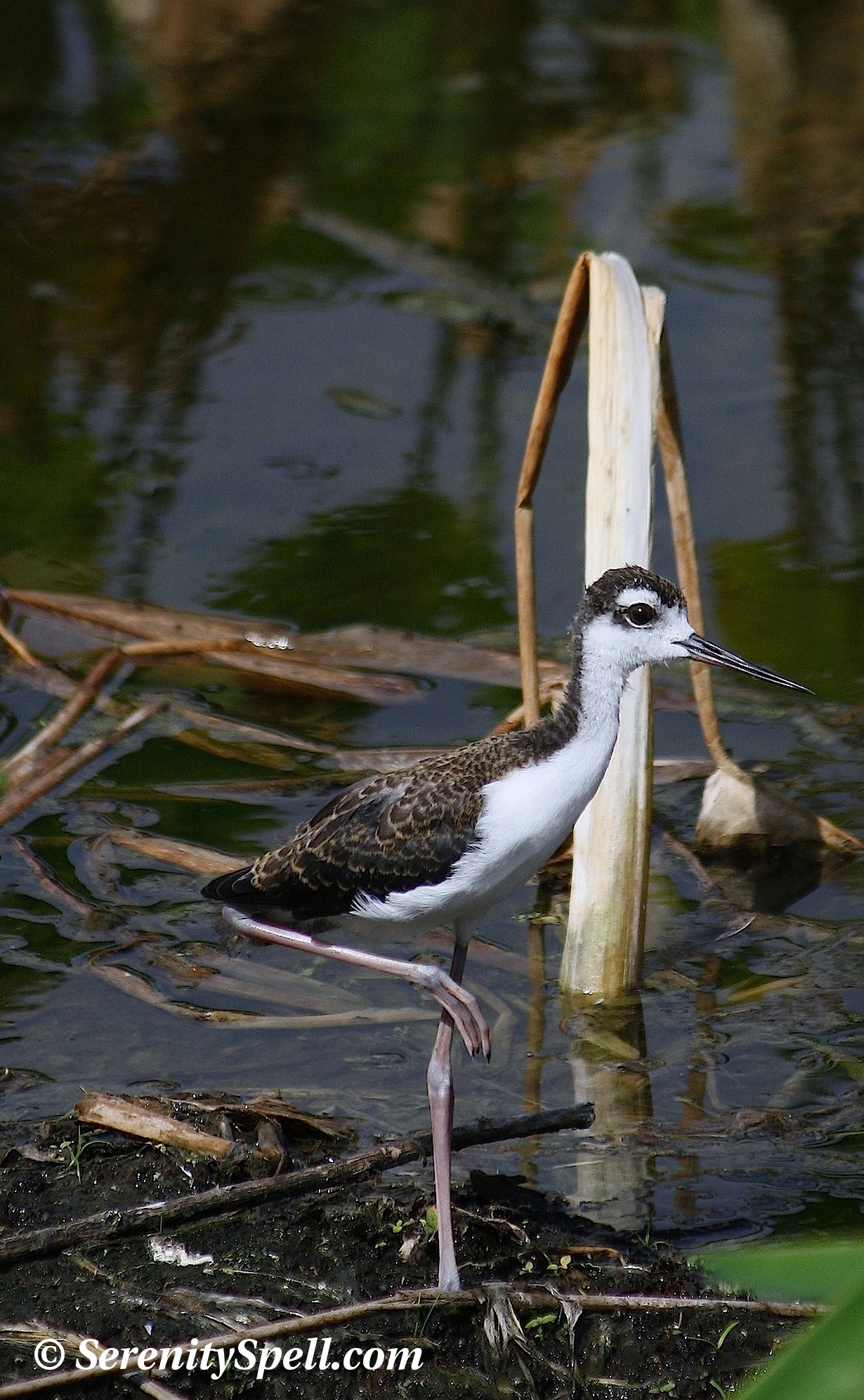
Black-necked Stilt (Juvenile)
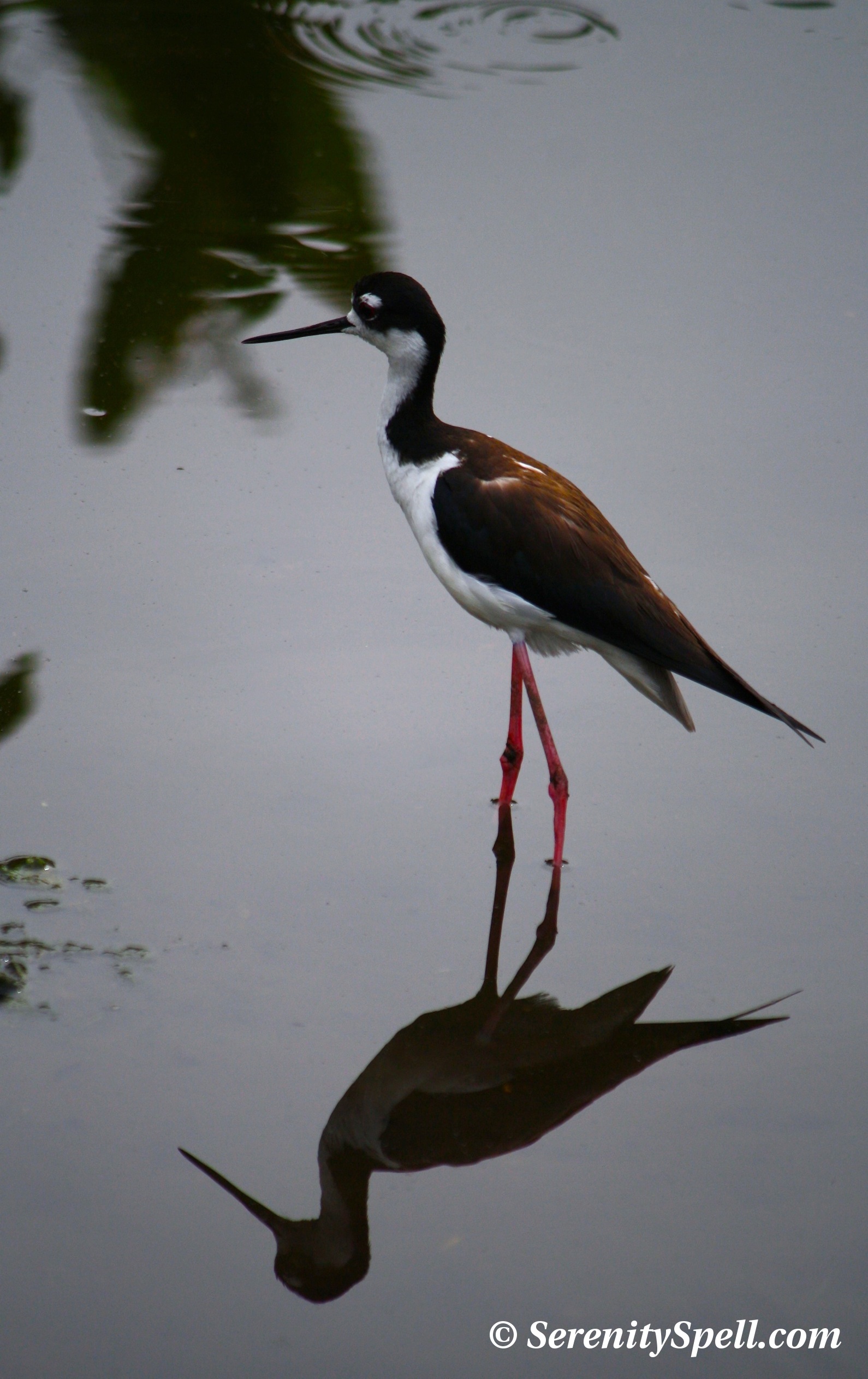
Black-necked Stilt at dusk in the wetlands

Black-necked Stilt foraging for grub in the wetlands

 FeyGirl
 Serenity Spell