Skip to content

Posts tagged ‘wildlife’

Brainy Bandits

Everyone knows raccoons — these little bandits are familiar to forests (their original habitats), marshes, prairies, neighborhoods, and even cities. In addition to the northern or North American raccoon, which is native to North America, there are six other species of raccoons, most of which live in the tropics.

A brave raccoon at the Barnacle Historic State Park in Miami, accustomed to the city folk…

Diet and Habitat

This highly adaptable and nocturnal mammal feasts on a variety of fare, but in their natural environment they mainly hunt near water. They use their paws and claws to grab frogs and other aquatic critters, while on land they eat mice, insects, and steal eggs. They also rely on fruit and plants, and of course…human leftovers! In the north, raccoons will gorge themselves in the spring and summer to store up body fat for the colder months ahead.

A raccoon’s most important sense is that of touch; most of the animal’s senses are in the tactile impulses of these “hyper sensitive” front paws.

…and the treats they leave behind! An opportunistic pasta feast for this raccoon family.

During the winter, they spend much time asleep in their dens — a tree hole, fallen log, or crawl/attic space. Raccoons rely on vertical structures to climb when they feel threatened, so it’s rare to see them in the open. In the early summer, females may have up to seven cubs, which spend their first two months in the den. However, it’s usual for only half of the young to survive a full first year. But if they survive, they begin exploring the world with their mother….

Behavior

While these animals were originally considered solitary creatures, there is increased evidence that raccoons engage in gender-specific social behavior. Related females will share a common area, while unrelated males live together in groups of up to four animals to protect against foreign males (and predators) during the mating season.

The increased presence of raccoons in populated areas has resulted in diverse reactions among humans — but the truth remains, serious attacks on humans or pets by non-rabid raccoons are extremely rare, and are almost always the result of the raccoon feeling threatened, or protecting its young.

Nom nom nom.

Mythology

The raccoon was a prominent figure in the mythology of the indigenous peoples of the Americas. The Tuscarora told stories of its skills at foraging; while in other tales, the raccoon was the trickster which outsmarted other animals — even coyotes and wolves. The Dakota Sioux believed the raccoon had spirit powers, since its mask resembled the black-and-white facial paintings used during their rituals to connect to spirit beings. The Aztecs linked the raccoon’s supernatural abilities especially to the females, whose commitment to their young was associated with the role of wise women in their society.

Petroglyphs depicting raccoons span across the continental United States: engraved raccoon tracks have been found in Lewis Canyon, Texas; at the Crow Hollow petroglyph site in Grayson County, Kentucky; and in river drainages near Tularosa, New Mexico and in San Francisco, California. A detailed quartz figurine — the Ohio Mound Builders’ Stone Pipe — was found near the Scioto River. The meaning of Raccoon Priests Gorget, featuring a stylized carving of a raccoon found at the Spiro Mounds in Oklahoma, remains unknown.

Fun Facts:

Raccoons are little smarties! Highly intelligent, studies from the ’60s to today show that they can remember the solutions to tasks — as well as differentiate between symbols — for up to three years. (Longer than me.) Raccoons have also been tested on opening complex locks with great success.

The word “raccoon” comes from the native Powhatan term. It was originally recorded in the Virginia Colony, on Captain John Smith’s list of Powhatan words as aroughcun, and in the records of William Strachey as arathkone. It also hails from the Proto-Algonquian root *ahrah-koon-em, meaning “[the] one who rubs, scrubs and scratches with its hands.”

Spanish colonists adopted the Spanish word mapache from the Aztecs — Nahuatl mapachitli, meaning “[the] one who takes everything in its hands.” In many languages, from German to Italian, the raccoon is named for its characteristic dousing behavior, in addition to that language’s term for bear.

Gotcha, Pig Frog!

Pig Frogs (Rana grylio) — sometimes known as Lagoon Frogs or Southern Bullfrogs — are aquatic frogs that live in the Southeastern United States. Smooth-skinned and agile jumpers, they’re almost entirely aquatic, preferring lakes, wetlands, cypress swamps, and marshes that are heavy with vegetation. These innocuous little fellas are always heard, but not always seen. When I finally spied two of them — straining at odd angles into the wetland waters to nab shots, not always the safest endeavor — I was a happy camper.

A Pig Frog in the Florida Wetlands

What’s so interesting about this frog is its sound. The pig-like grunt is used by the males to attract females, and it sounds very similar to a grunting alligator (although not quite as deep) — and unbelievably, it’s just as loud, echoing through the waters. So when we’re walking in the Everglades, or in other areas thick with swamp or wetlands…and we hear a loud *GRUNT* with no visible noise-maker…we always pause. Even for those accustomed to alligators, this little frog’s resounding trickster guttural calls and lack of sight/access are daunting. Click here for their sound.

Another Pig Frog in the Florida Wetlands

Sorry Pig frog, but Kermit you are not:

Fun (??) Fact:

Many cultures prize frog legs as an epicurean treat (ick). While most frog species are edible, it’s the larger ones — such as bullfrogs and pig frogs — that are large enough to be profitable. They’ve long been staples of the frog-leg industry in Florida, and are hunted at night from boats using lights and miniature pitchforks known as “frog gigs.” Not anyone can take up frog gigging or selling these frogs, however — a commercial freshwater fish dealer’s license is required.

Troupes of Dragonflies

We are all visitors to this time, this place…. We are just passing through. Our purpose is to observe, to learn, to grow, to love, and then we return home. —Australian Aboriginal saying

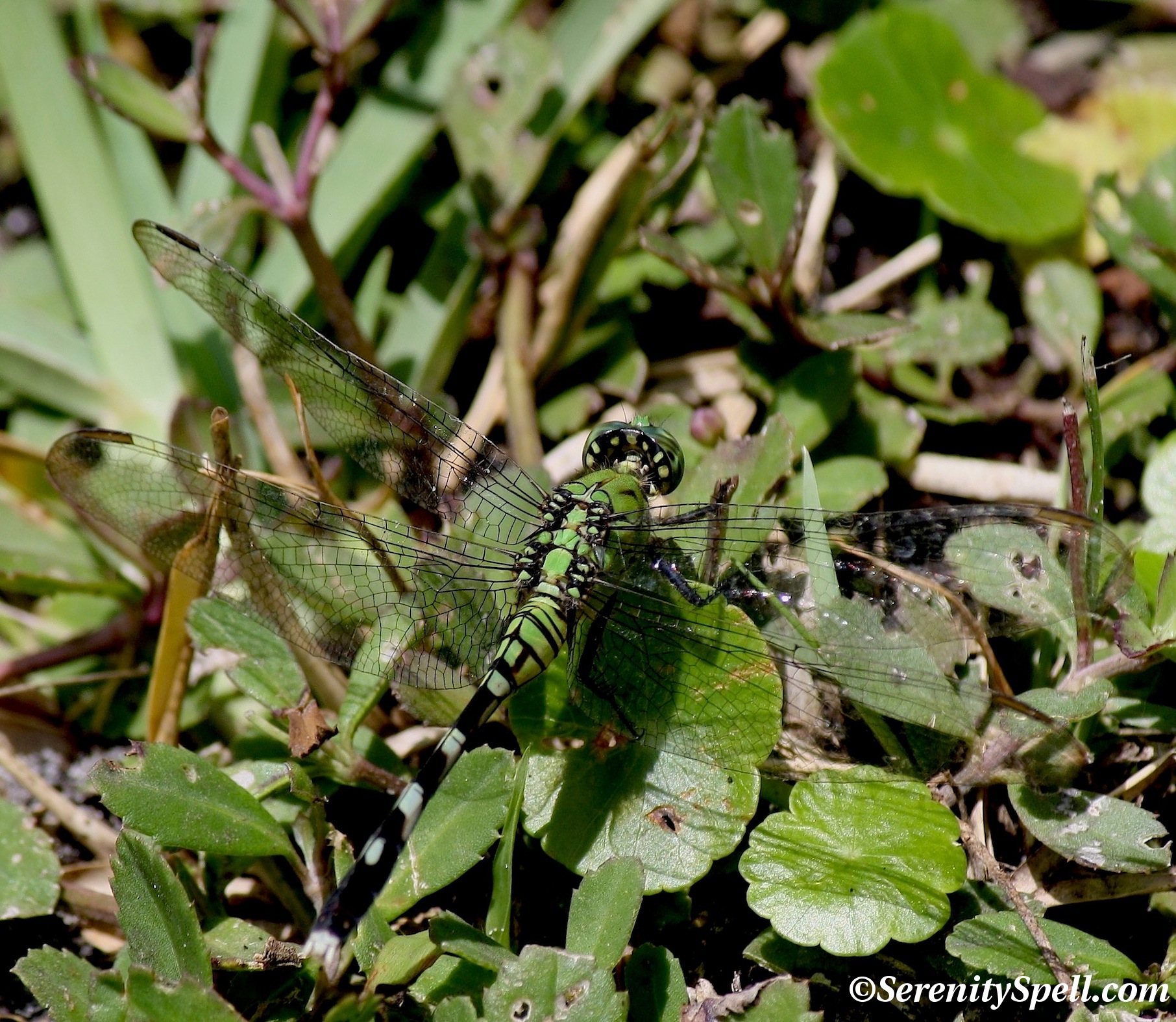
While exploring the trails of Grassy Waters Preserve, we were visited by troupes of the brightest and most lovely dragonflies…. One of them followed me for a solid 5 minutes — and in my true nature, I slowed down, watching every movement for fear of hurting my bright mascot. I’m convinced that he fell in love with our similar coloring; periwinkle ranks high on my favorite-colors list, and I was head-to-toe in it. Perhaps he thought I was a Grand Poobah / Dragonfly Queen?

Periwinkle follower

Green-on-green

Little Armored Ones

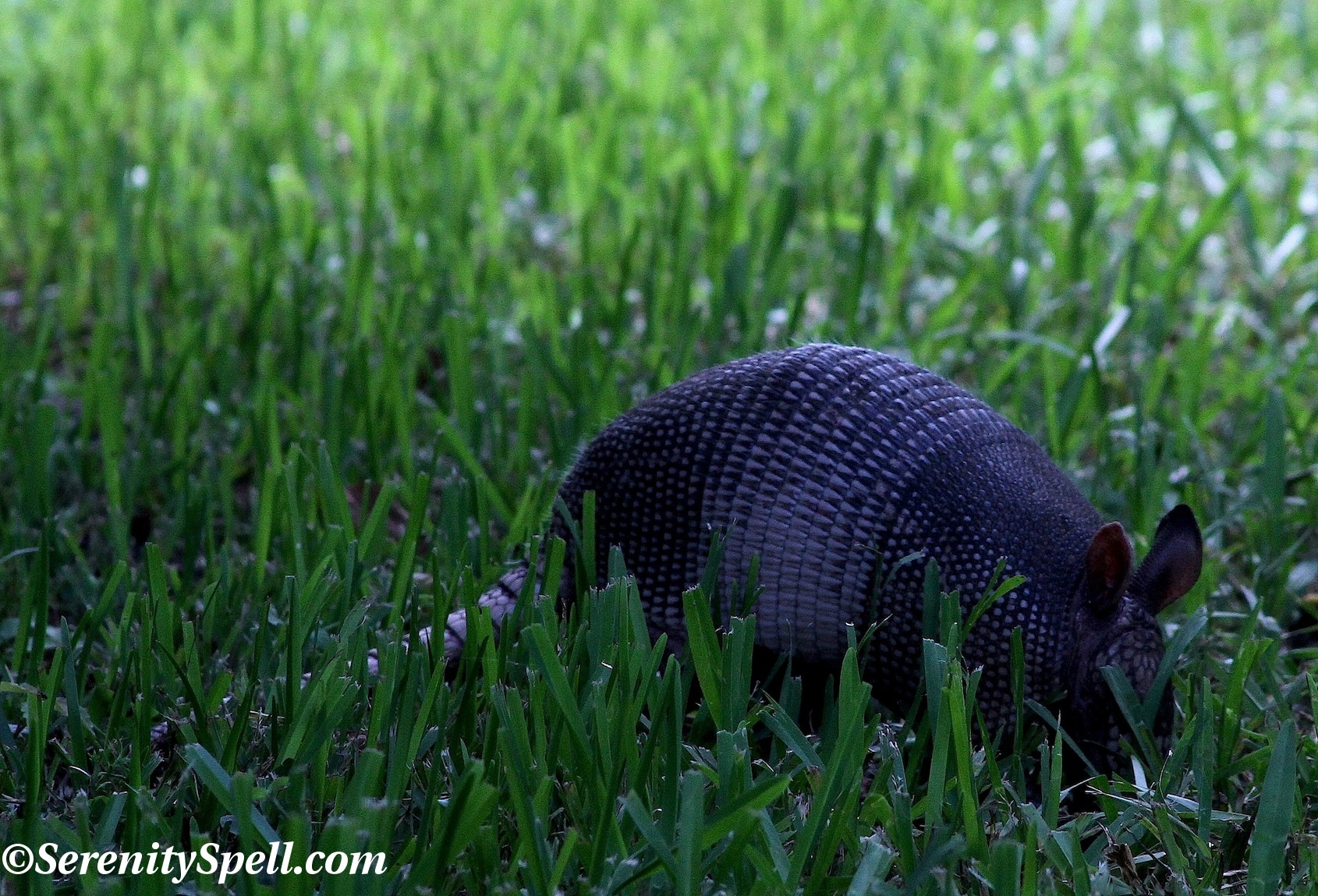
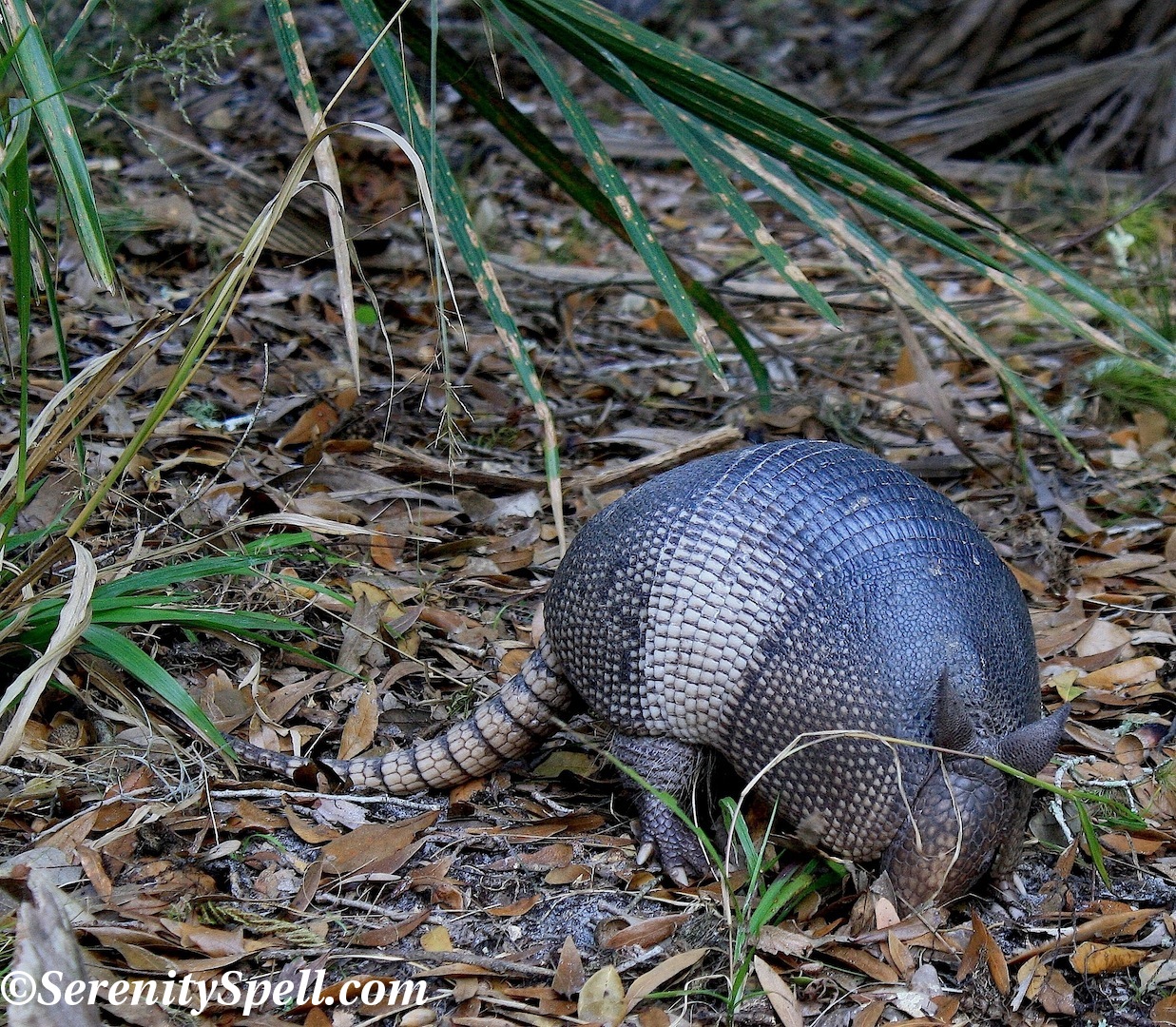
A critter we often encounter along our hikes is the Armadillo. While there are 20 species of Armadillos, it’s the Nine-banded Armadillo (Dasypus novemcinctus) that we see in Florida (it’s also common in many of the South-Central states). I love seeing these “little armored ones” along our hikes, as they burrow for grub and noisily stumble across our path….

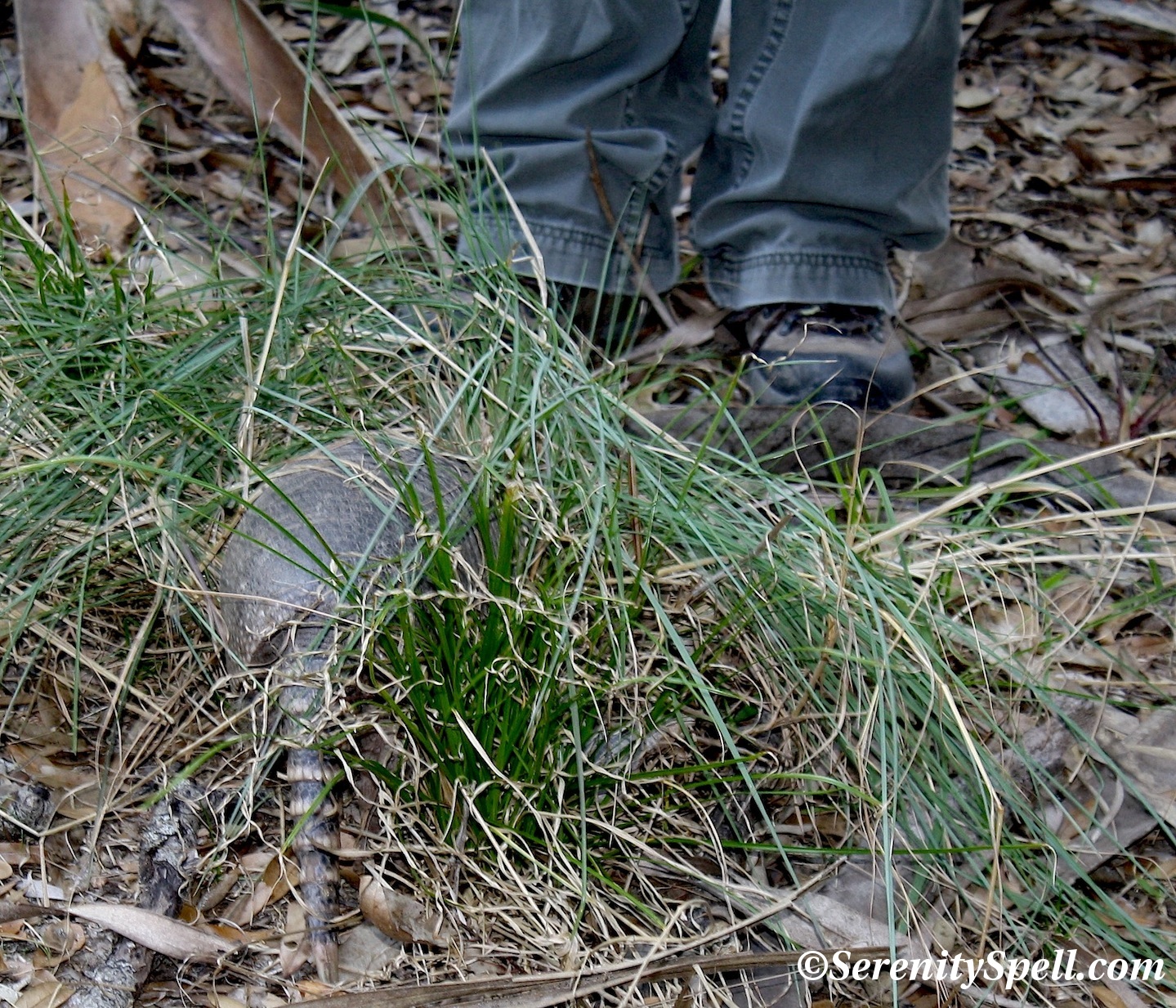
Armadillos are native to the New World. They’re solitary mammals with a leathery armor shell and very sharp claws, with which they dig their burrows and scrounge for food, including insects, grubs, and other invertebrates. Oftentimes, when we see lots of little holes in an area, we know an Armadillo is nearby, and will listen for rustling in the vegetation. The have very poor eyesight, and use their exceptional sense of smell to hunt. When I say poor eyesight, I mean it…. These little guys have nearly trundled across our boots when we’ve been especially quiet.

Sadly, Armadillos are often the victims of traffic, due to their habit of jumping when startled — right at a car’s fender height. Wildlife enthusiasts are using the Northward March of the Armadillo as an opportunity to educate people about these animals, which can be seen as a nuisance with their burrowing.

Armadillos are among the few known nonhuman animal species that can contract leprosy, to which they’re particularly susceptible due to an unusually low body temperature. Leprosy was unknown in the New World prior to the arrival of Europeans in the late 15th century — so at some point they acquired the disease from humans. Humans can only acquire leprosy from Armadillos by handling them or consuming their meat, which actually has a long and continued history. I recently commented on a very ill-conceived and poorly written CNN article citing the Armadillo-leprosy connection; the author hyped up leprosy, instilling fear in the readers with sheer lack of information — a failure to describe the animal and its behaviors. Why bother? More article hits without pesky science getting in the way! Armadillos are extremely docile and solitary animals. They’re also highly studied in science, not only for their immunity to leprosy, but for their unusual reproductive system, in which four genetically identical offspring are born, the result of one original egg. They’re not the rabid zombies of “Resident Evil” that will attack you in the wild. Misinformation, or lack of information — especially with regards to animals — is simply irresponsible and damaging.

Perhaps the funniest story with Armadillos was when the male had one saunter near him, and was suddenly overtaken with the desire to feel the little guy’s leathery tail. Being both Florida natives and avid hikers, I was curious why he needed to do this, but as soon as his hands were on his tail, the calm girl simply said — “Armadillos are one of the only animals that carry leprosy” (smirk included). I’m so glad I’m not a boy, with weird urges like feeling an Armadillo’s tail.

Fun Facts:

The Aztec called the Armadillo azotochtli, Nahuatl for “turtle-rabbit” — and in Spanish armadillo means “little armored one”

A Hawk’s Call Alerts an Armadillo in the Everglades

Burrowing Armadillo in the Everglades

Burrowing Armadillo in Myakka

Still Burrowing in Myakka

Blind-as-Bats Armadillo

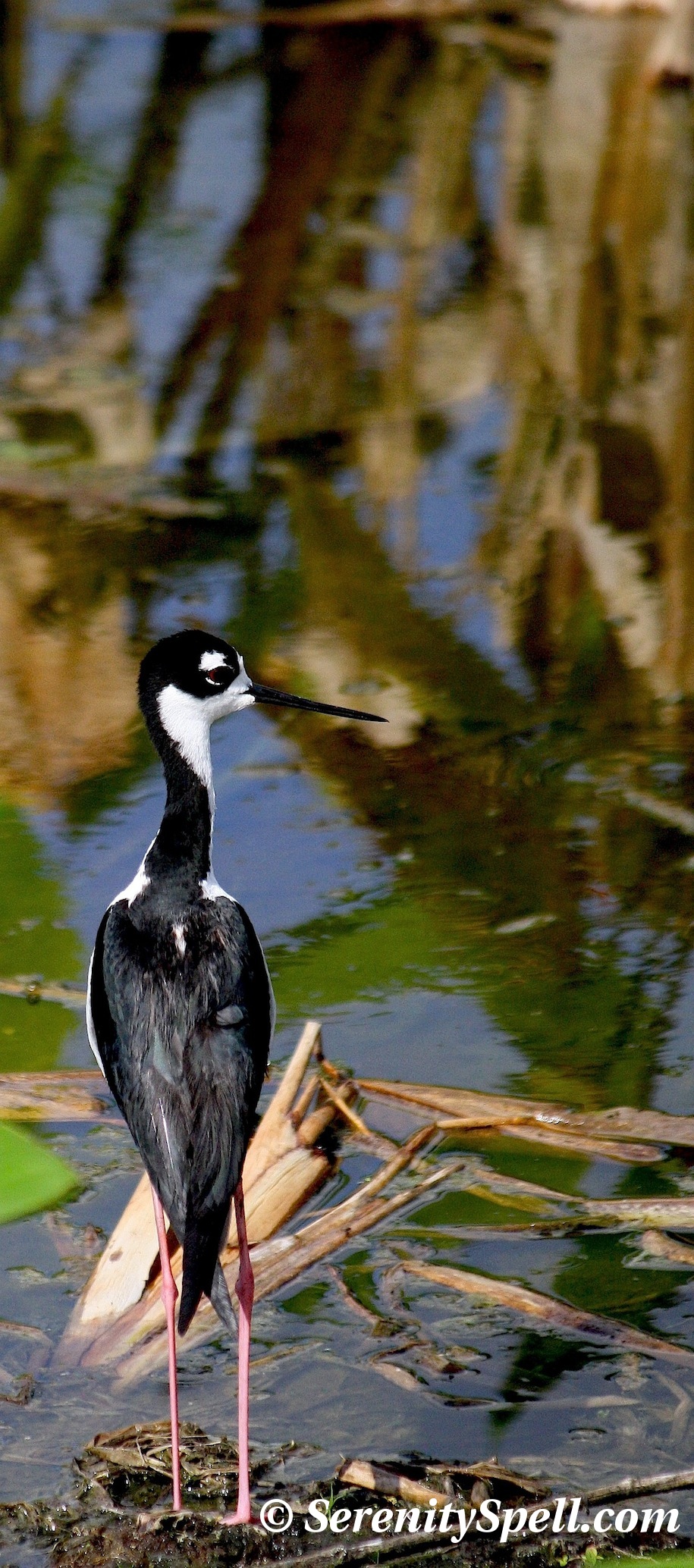
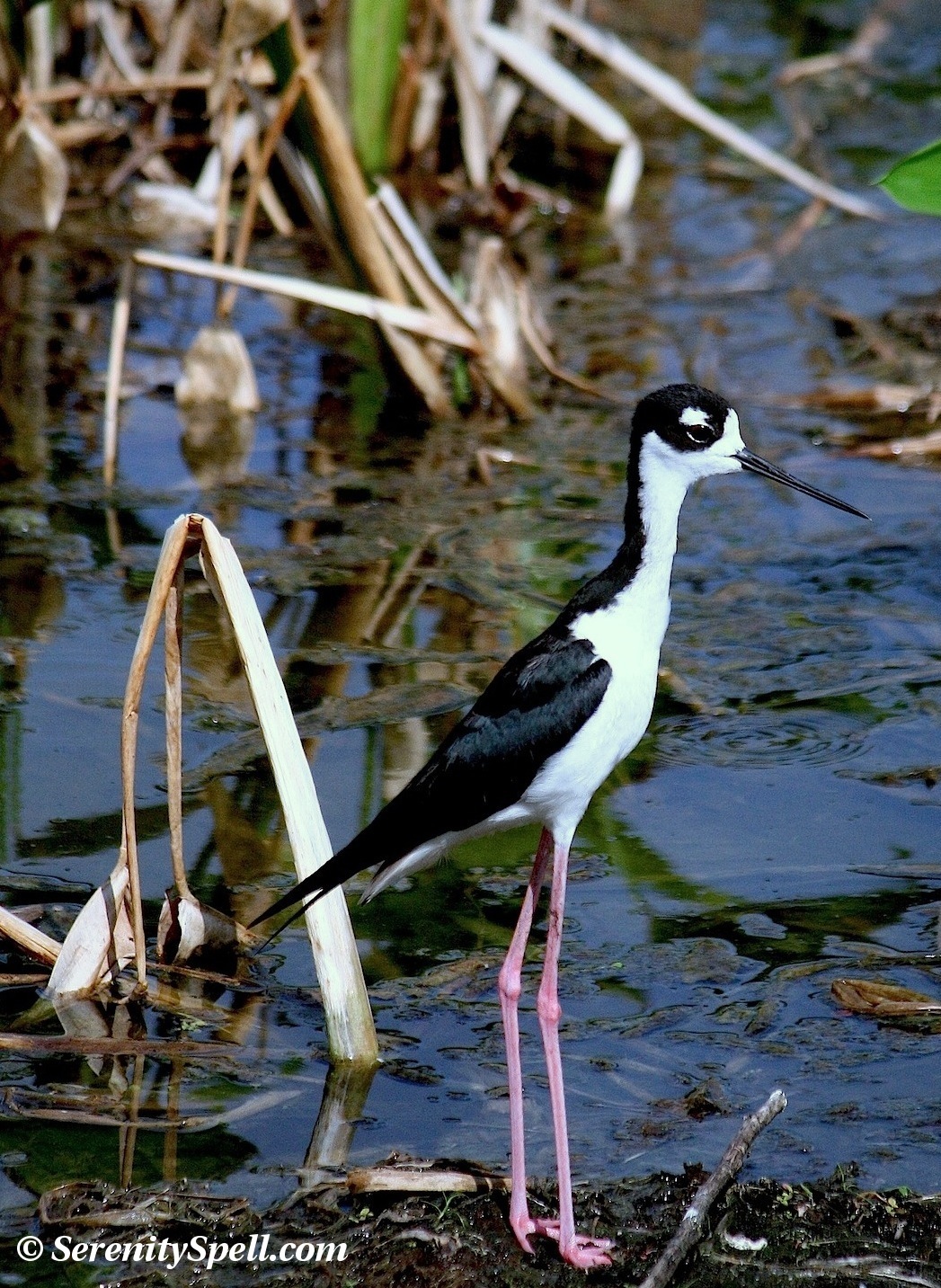
Tuxedoed Stilts

Black-necked Stilts (Himantopus mexicanus) are abundant residents of coastline, estuarine, and wetland habitats. They’re found across the country, from California to Florida, and through to Peru, northern Brazil, and the Galapagos islands. The Northern populations migrate south in the winter months.

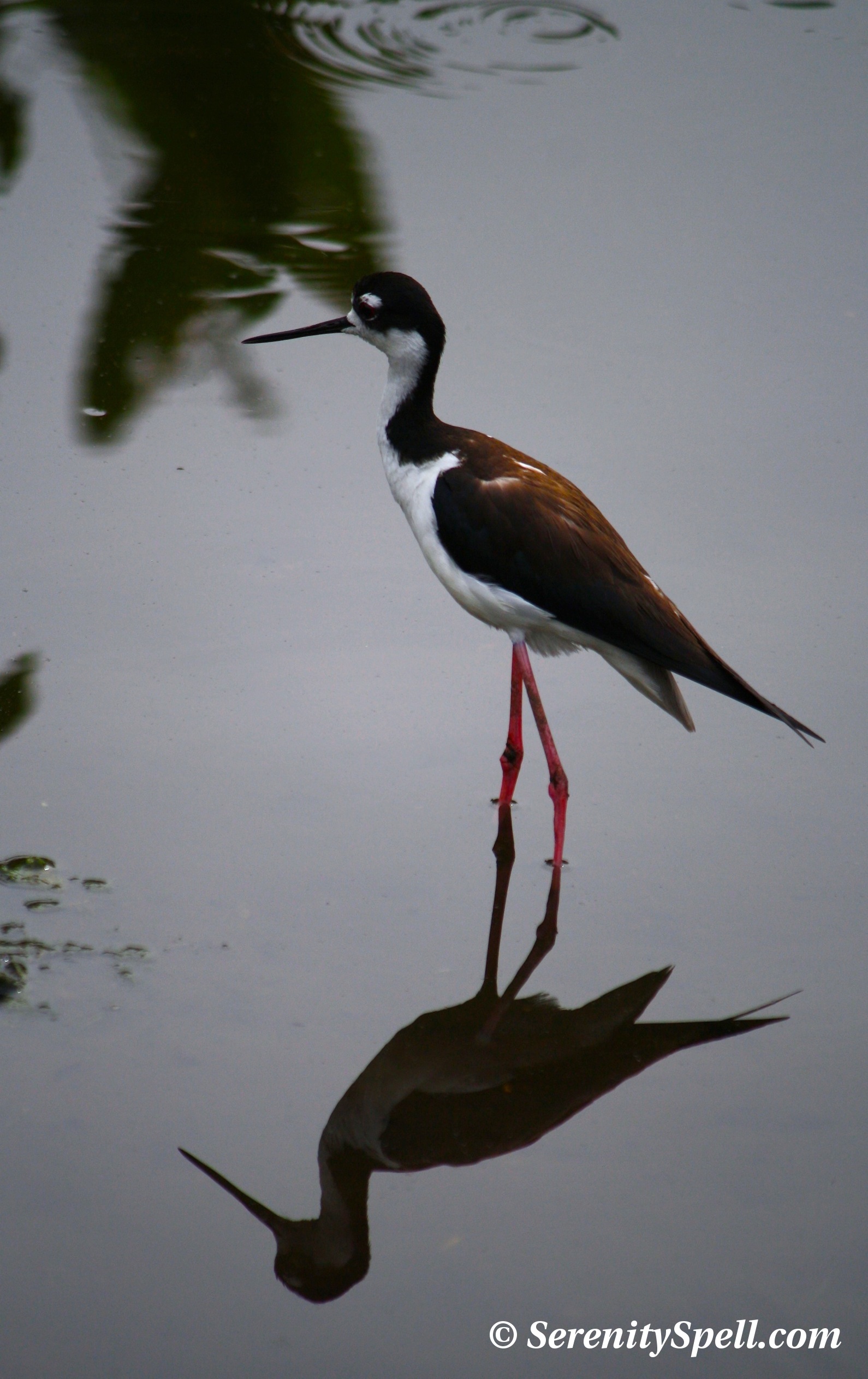
Adult Black-necked Stilts have long pink legs, a thin black bill, and are white with a black cap, neck, and back. They forage in the shallow waters of our wetlands, wading and probing for aquatic invertebrates and small fish. It’s a common sight to see them resting on the small “islands” of our wetlands, surrounded by water. The nests are constructed by both the male and the female, at ground-level and often close to the water’s edge, in semi-colonial formations (loose clusters), with peak nesting activity in June.

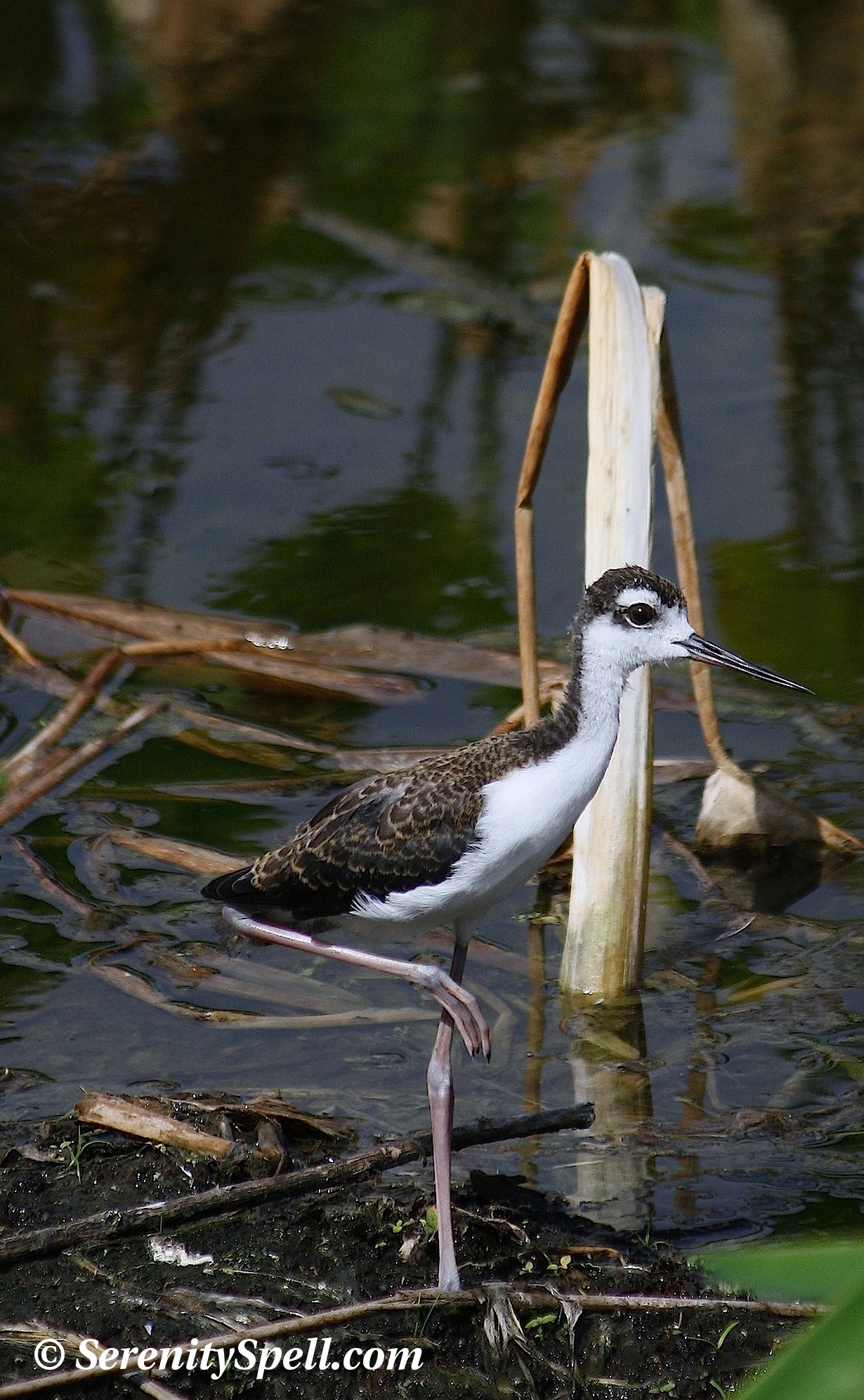
Here, I came upon a young stilt carefully guarded by its parent. I didn’t stay long, because my presence — despite my great distance on *dry land* — was disturbing the adult. I love seeing these guys in our wetlands: always in pairs, tuxedoed, debonair and elegant, but oh-so-shy.

Fun fact: Proportionate to their bodies, silts have the second-longest legs of any bird — exceeded only by flamingos.

Black-necked Stilt (Adult) guarding its young

Black-necked Stilt (Adult) guarding its young

Black-necked Stilt (Juvenile)

Black-necked Stilt at dusk in the wetlands

Black-necked Stilt foraging for grub in the wetlands