Skip to content

Posts tagged ‘wildlife’

Monday Morning Hair

A Tricolored (or Louisiana) Heron in breeding plumage shakes it all off, with the start of a new week, in undisguised fabulousness in our protected wetlands. While I say “Monday Morning Hair,” this is definitely a daily occurrence for me.

Tricolored (Louisian) Heron in Breeding Plumage, Florida Wetlands

Always fabulous

Tricolored (Louisian) Heron in Breeding Plumage, Florida Wetlands

Cat-scratch

It’s NATIONAL WILDLIFE WEEK, and: Returning the Florida Panther to the Everglades

In honor of National Wildlife Week, March 18-24, here’s a special and rare event from last week:

A Florida panther was recently released into the Picayune Strand State Foresta rare event, in a bid to help save the species. The tagged female will hopefully become a safe and successful mommy!

She and her brother were raised from the age of five months at the White Oak Conservation Center in Yulee, rescued after their mother was found dead.

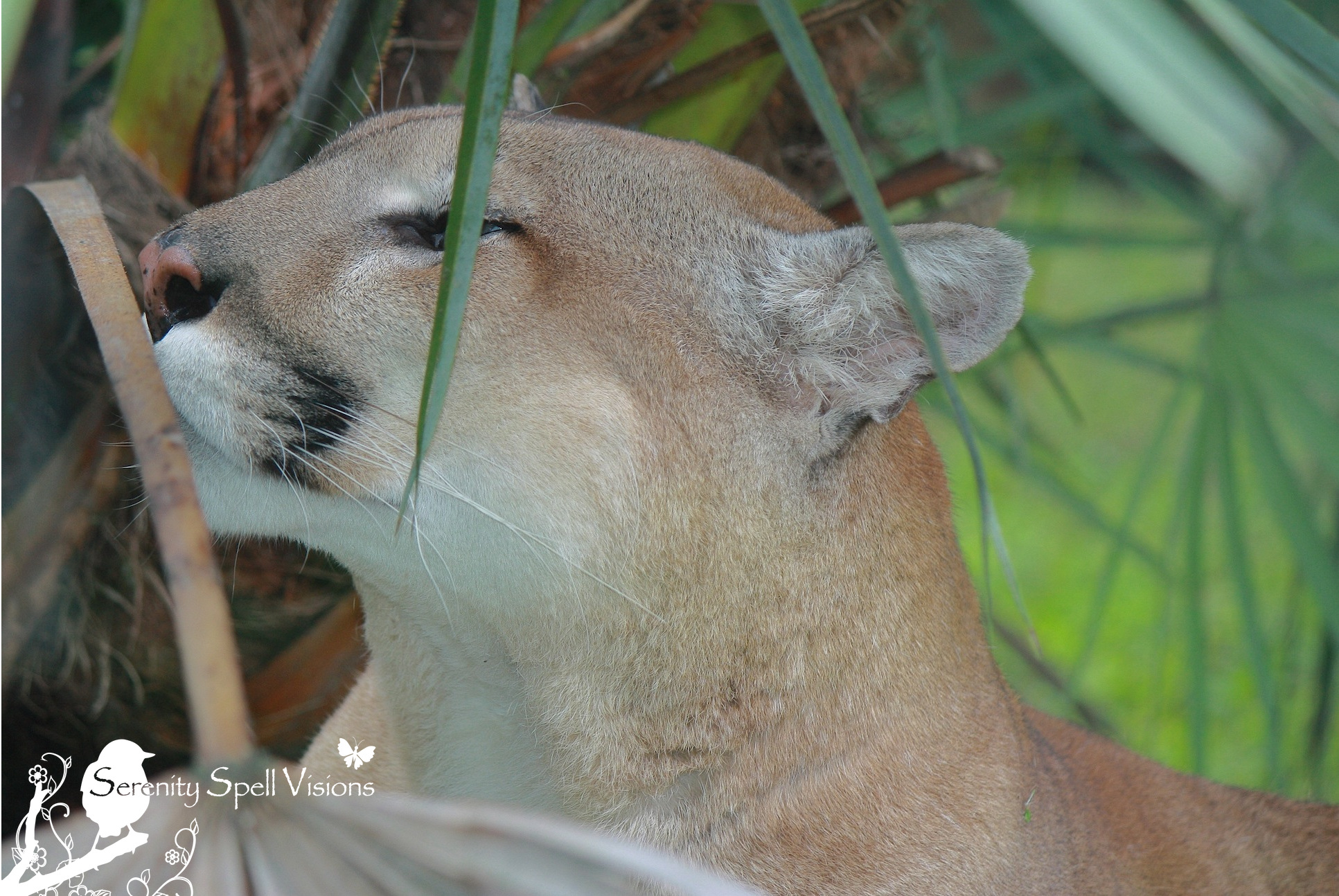
Rescued Florida Panther at Flamingo Gardens, Florida

Rescued Florida Panther at Flamingo Gardens: Sadly, this guy can’t be returned to the wild, because he underwent a painful de-clawing procedure at the hands of humans

From the article:

Florida panthers were among the first to go on the Endangered Species List back in 1973 when there were as few as 20 remaining individuals. Today they are still in great peril with as few as 100-160 in the wild, but biologists with the Florida Fish and Wildlife Conservation Commission (FWC) successfully released one female Florida panther into the Picayune Strand State Forest recently with the hope that she will become a successful mom.

Read more….

So much luck to this girl (and to her soon-to-be-released brother!) – AND so many thanks for the continued rescue and conservation efforts the world over!

Rescued Florida Panther at Flamingo Gardens, Florida

Another panther rescue: De-clawing exotic cats is still permitted, unbelievably. It causes extreme pain and lameness, and requires constant pain regulation. Horrific “legal” state minimum enclosure requirements for bears, big cats, and other wild animals (envision a tiny jail cell) are also allowed

Warbling in the Wetlands

A bird doesn’t sing because it has an answer, it sings because it has a song. —Lou Holtz

…Which is why I’m constantly running to Nature, and to these wonderful creatures. That reminder to JUST BE (or in my words, Simmer Down). And our winters provide a more varied opportunity for observing different happenstances of this simple state of being — the migrating birds make their residences in the area, even if it is temporary.

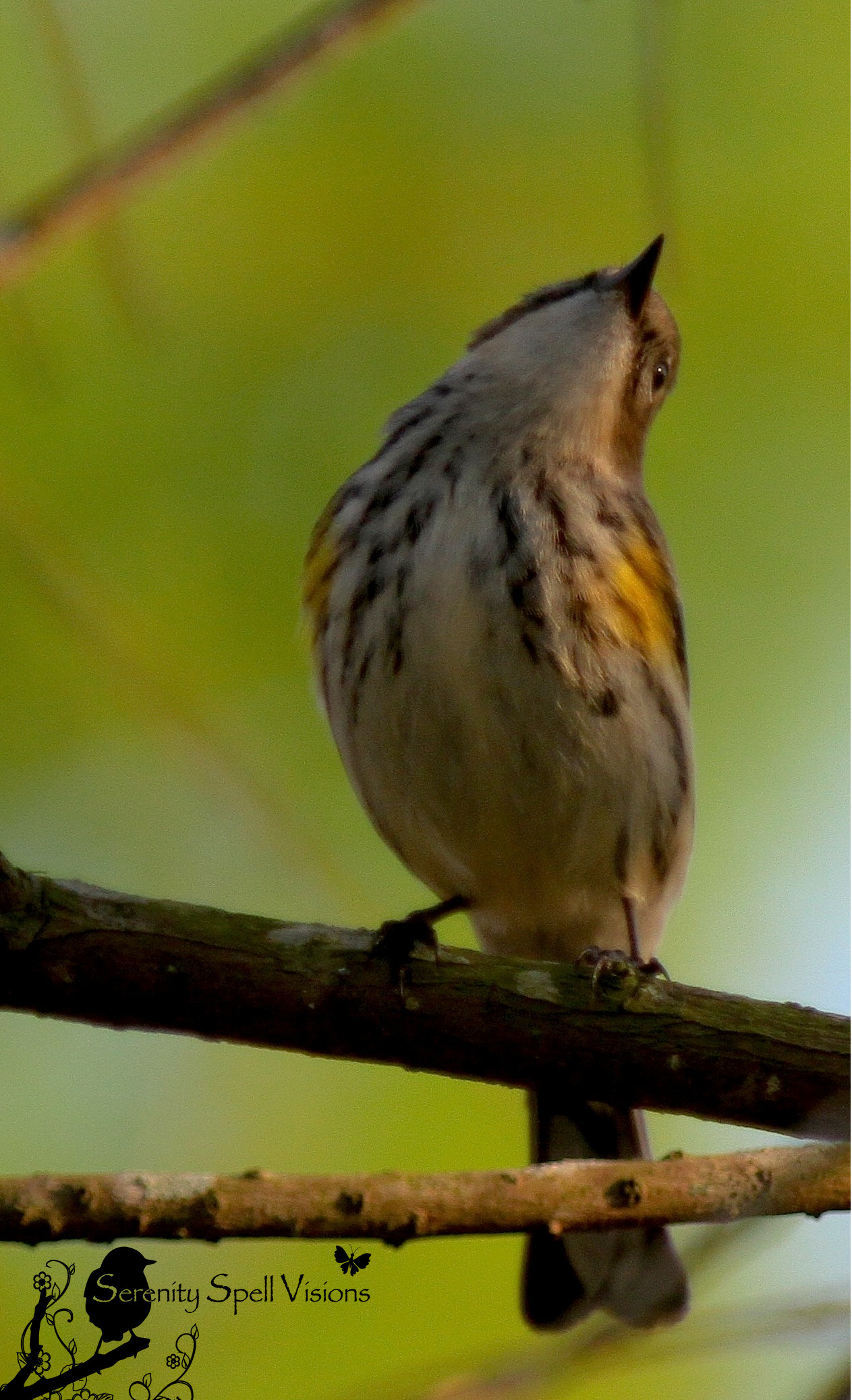
Palm Warbler, Florida Wetlands

A Wee Warbler in the Wetlands

A few Palm Warblers flit amid the trees; here, among a strand of young cypress. These tiny bright gems of songbirds — adorable little shocks of yellow in our swamp and wetlands — are easily missed if you’re in a rush, or aren’t fully aware.

Palm Warbler, Florida Wetlands

Sing it!

Palm Warblers are common winter residents in our marshy natural areas, migrating in the late fall to the southeastern U.S. and the Caribbean. The species is comprised of two distinct sub-species, the Yellow Palm Warbler and the Western Palm Warbler. Those breeding in the eastern range are yellow underneath, while those inhabiting the western part of the range are duller in color, with whitish bellies. Palm Warblers primarily breed in wetland habitats — east of the Continental Divide, across Canada and the northeastern United States. A distinctive feature of Palm Warblers is tail wagging, or “pumping.” More than other warblers, this bird forages on the ground for insects and berries.

Palm Warbler, Florida Everglades

Warbling in the Everglades

Click here to listen to the delicate song of these sweet little songbirds!

Palm Warbler, Florida Everglades

Holler.

The Hummingbirds Are Coming… Early!

Last night at our local wetlands, I ran into a friend who mentioned seeing a ruby-throated hummingbird in his yard — a bit early! And this morning, Michelle from Rambling Woods posted on the topic. Since they’ve hit the Gulf Coast states a wee bit ahead of their migratory schedule, let’s help them REFUEL on their non-stop 500-mile journey!

I’ll be getting the feeder ready for these lovely guys ASAP — habitat loss and destruction are the hummingbird’s main threats today, but changing temperatures are also affecting their migratory patterns, making it harder for them to find food.

Learn more at Annenberg’s “Journey North” website — track the hummingbirds, learn how to help, and take a peek at the updated migration maps!

Sparkling violet ear hummingbird, Butterfly World, FL

Sparkling violet ear hummingbird: Not in my yard, but at Butterfly World, the largest free-flight hummingbird aviary in the US. A most amazing, beautiful, and fairy-like place!

Fun and Fascinating Facts About Hummingbirds:

  • Hummingbirds are the second largest family of birds, with more than 325 species
  • Early Spanish explorers called hummingbirds “Flying Jewels”
  • Hummingbirds are found only in North and South America
  • It’s the smallest bird — and the smallest of all animals — with a backbone
  • Despite their diminutive size, hummingbirds are aggressive and territorial, regularly attacking jays, crows and hawks
  • Hummingbirds have the largest brain of all birds — 4.2% of its total body weight
  • Many hummingbirds die during the first year, but those that do survive have an average lifespan of 3-4 years. The longest-living hummingbird was a female Broad-tailed Hummingbird that was estimated at 12 years
  • Hummingbirds have very weak feet — they cannot walk or hop, using them mainly for perching
  • Hummingbirds have great eyesight — able to see ultraviolet light, even — but have no sense of smell
  • The structure of hummingbirds’ lovely iridescent feathers amplifies certain wavelengths of light, reflecting them directly in front of the bird
  • Most of a hummingbird’s weight is in its pectoral muscles — 25-30% reside in their muscles responsible for flight
  • The average flight speed of a hummingbird is 20-30 miles per hour, though the birds can reach up to 60 mph in a courtship dive
  • They can beat their wings between 50-200 flaps per second, depending on flight patterns and wind conditions
  • The hummingbird can rotate its wings in a circle, making it the only bird that can fly forwards, backwards, up, down, sideways, and hover mid-air
  • Their heart beats at up to 1,260 beats per minute
  • A resting hummingbird takes an average of 250 breaths per minute
  • Hummingbirds must consume approximately half of their weight in sugar daily, feeding 5-8 times per hour. Much of the sugar they consume comes from flower nectar and tree sap, but they also eat insects and pollen to get their protein
  • A hummingbird uses its long, grooved tongue to lap up nectar from flowers and feeders
  •  To conserve energy — while sleeping or during food scarcity — hummingbirds can go into a hibernation-like state (torpor), where their metabolic rate is slowed to 1/15th of normal sleep. If they’re already weakened, they may not wake from this torpor
  • During their spring and fall migrations, the ruby-throated hummingbird makes a non-stop 500-mile-flight across the Gulf of Mexico
  • The longest migration of any hummingbird species is that of the rufous hummingbird — they travel more than 3,000 miles from their nesting grounds in Alaska and Canada to winter habitats in Mexico
  • Historically hummingbirds were killed for their feathers…. But today, habitat loss and destruction are the hummingbird’s main threats; changing temperatures are also affecting hummingbird migratory patterns, making it harder for them to find food
  • An increase in backyard gardens hummingbird feeders allows these birds to refuel during their long migratory journeys — YAY!


Purple Gems

[Many thanks to fellow bloggers for alerting me to a glitch here, which broke readers’ feeds; If you’re interested in viewing a few posts that didn’t make it to your Reader, visit Recent Posts below, from “The Show” forward, or simply click Unfollow & Follow, and they’ll appear. Or scroll! Thanks to WP for the fix.]

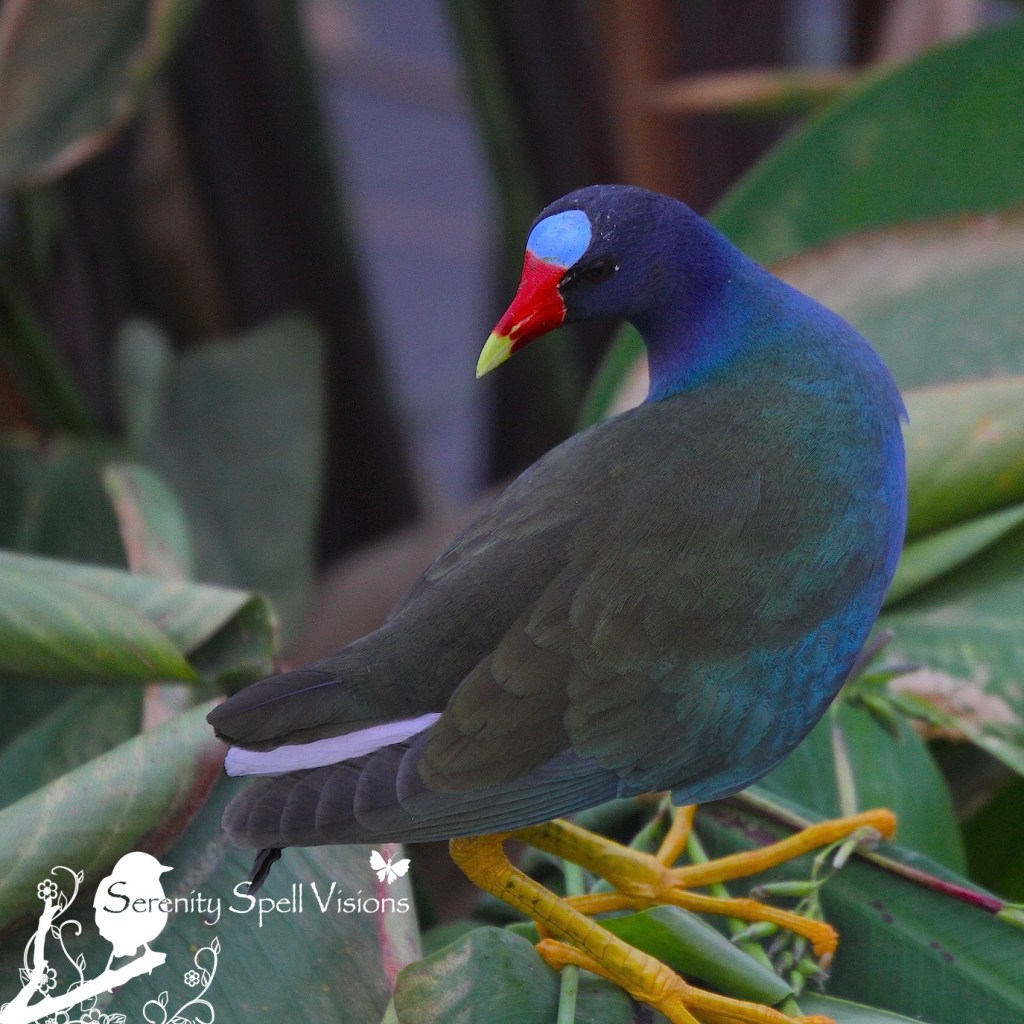
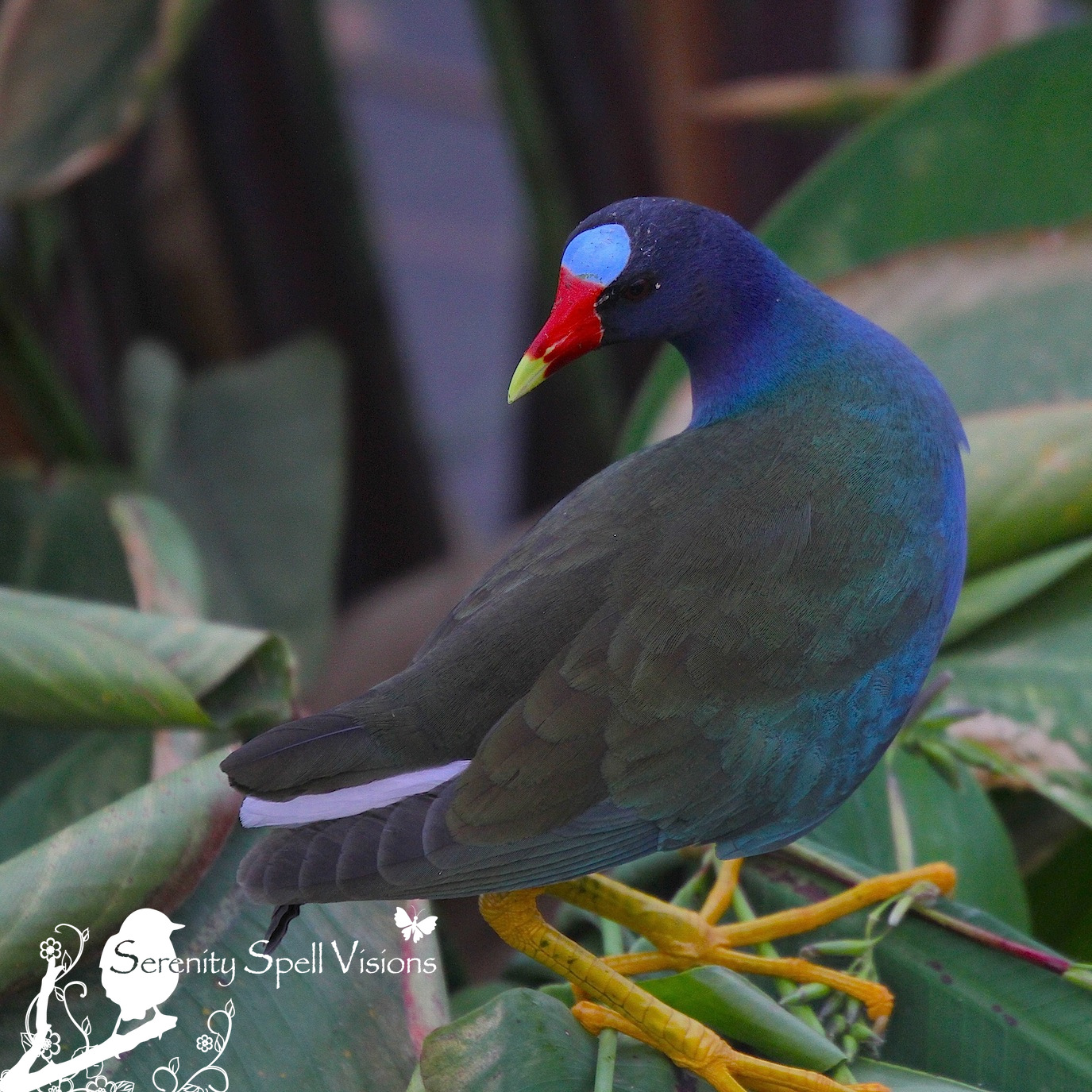
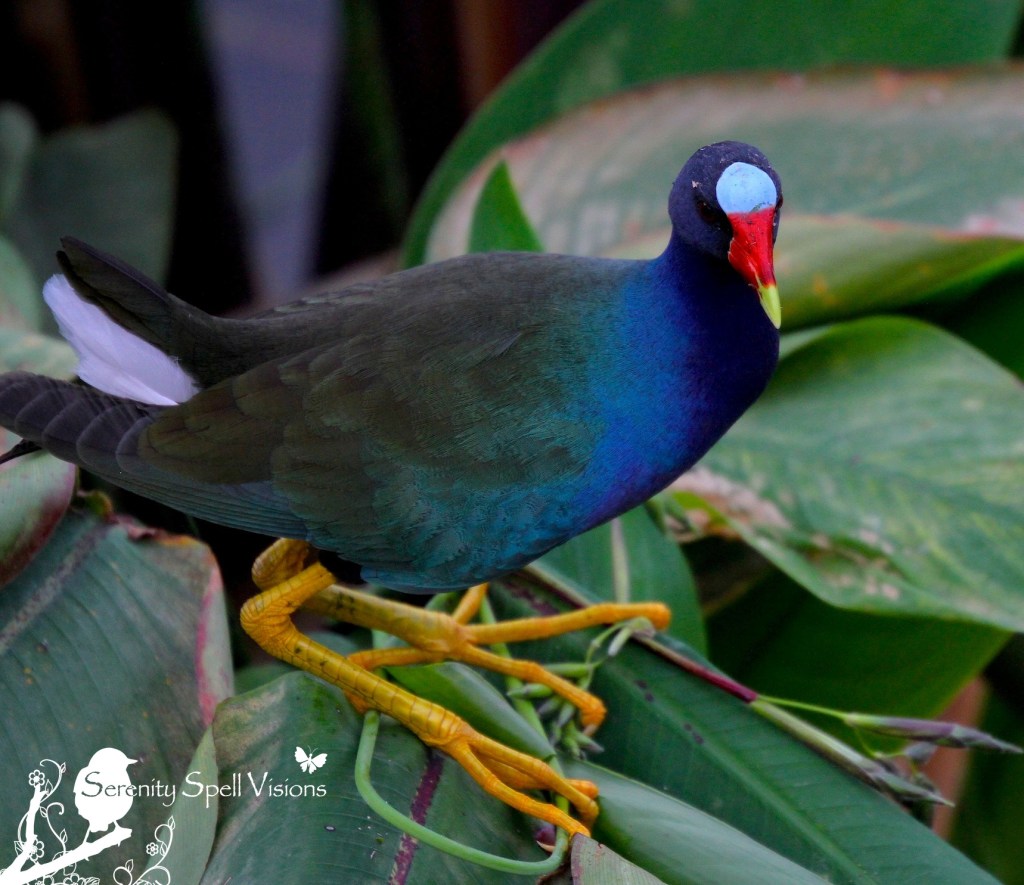
Purple Gallinules are one of the shyer creatures of our wetlands, and to spy one is always fun. It’s ironic that they’re so timid, given their bold coloring. But it’s always a joy to watch these purple, blue, and green gems — especially since they’re my favorite colors, wrapped up into one bright little bird.
Purple Gallinule, Green Cay Wetlands, FL

I am spectacular, yes

Purple Gallinule, Green Cay Wetlands, FL

Perhaps you need to see me at a different angle, to fully comprehend my beauty

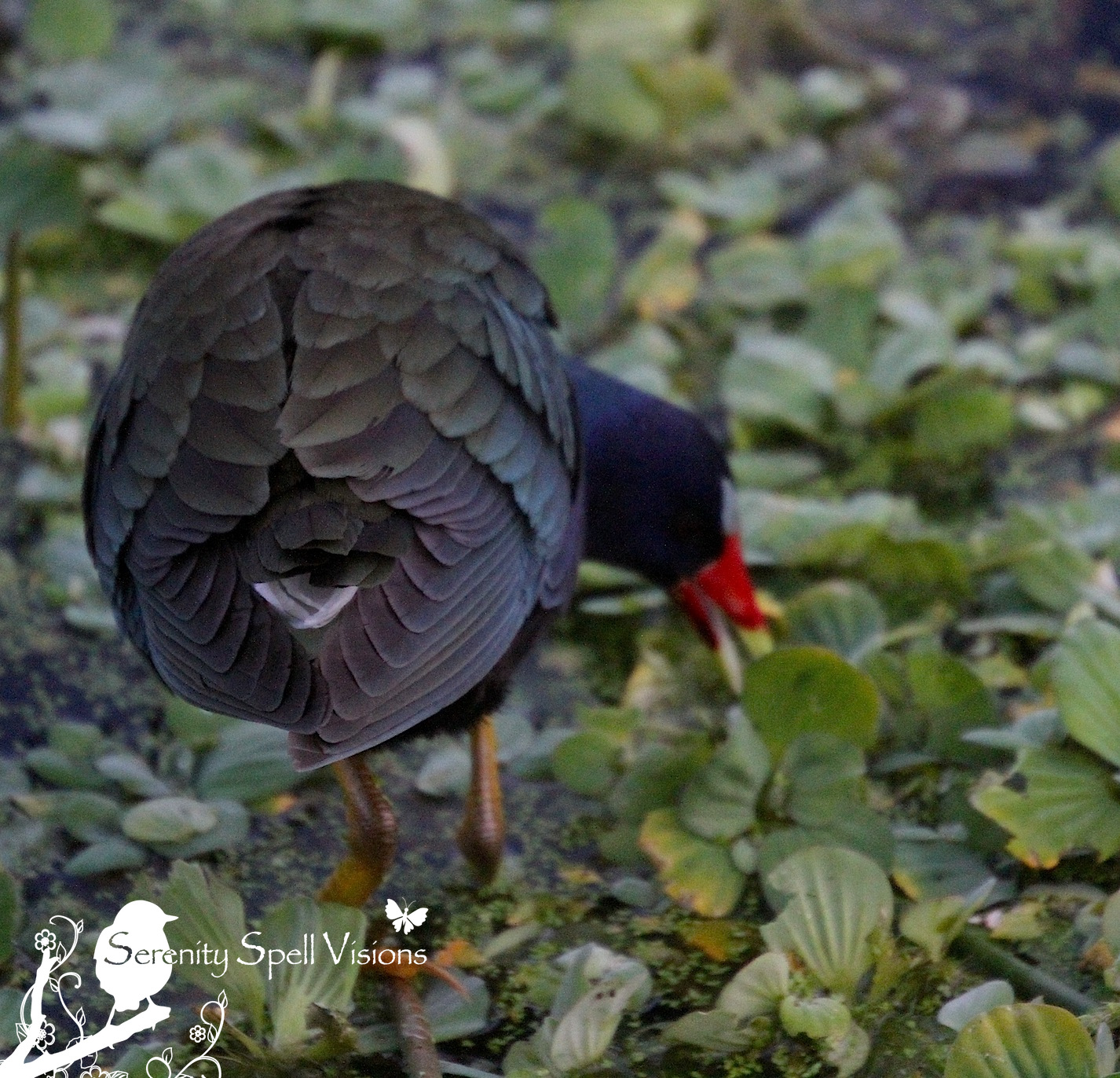
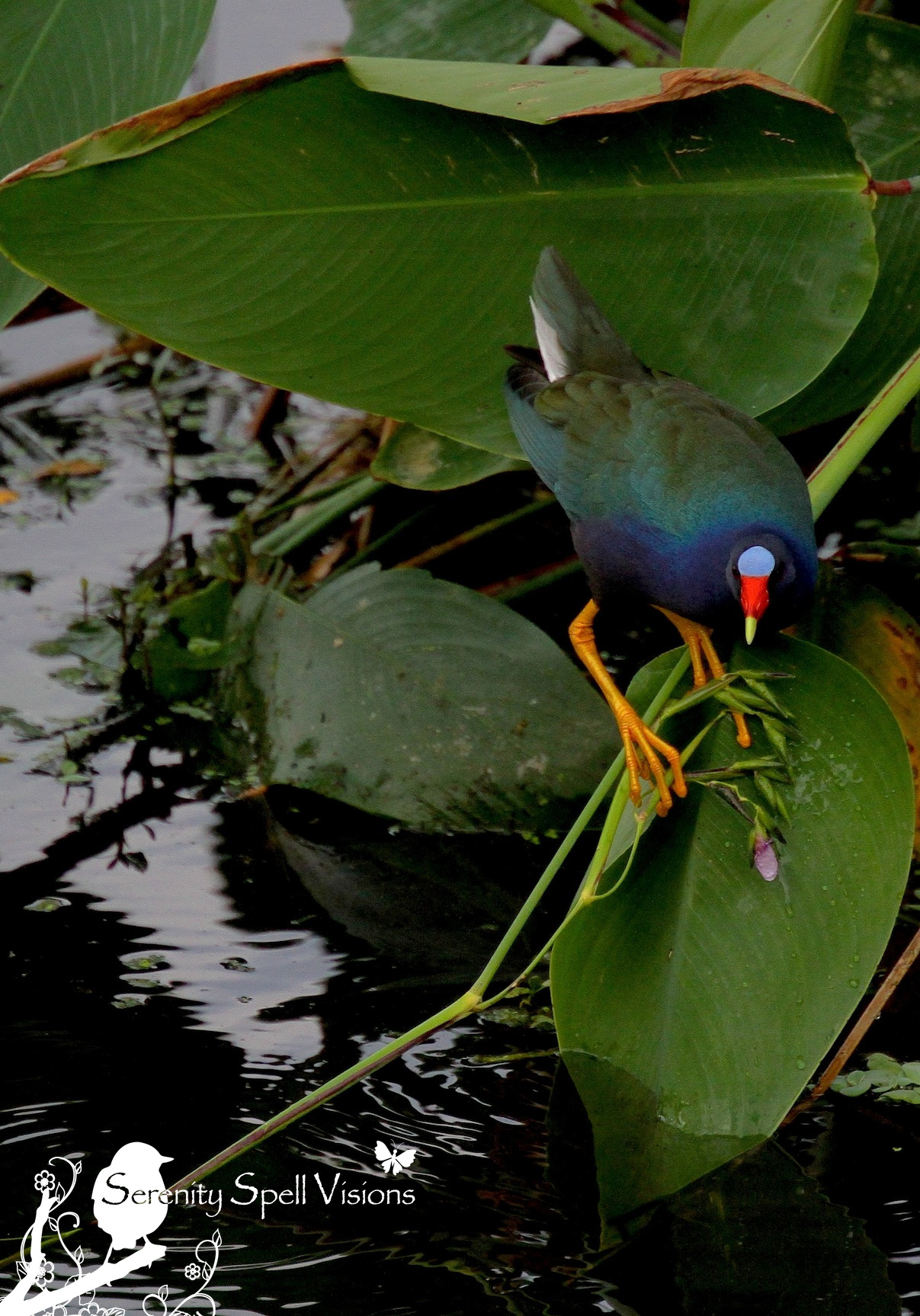
These lovely creatures live in the freshwater marshes of the southeastern United States, as well as in Central America and the Caribbean. There’s no mistaking this medium-sized rail, with its purple-blue plumage, green back, pale blue forehead, white undertail (of which I’ve caught more than one glimpse), bright red and yellow bill, and long yellow legs. The juveniles sport blander, brown colorations. The  gallinules’ long legs make them *seemingly* awkward fliers, so short bursts of activity are their mode of transportation — or swimming like a duck if they’re not navigating the marsh with those dangling legs. They nest in well-hidden floating constructs in the wetlands, laying 5-10 eggs.

Purple Gallinule, Green Cay Wetlands, FL

Dinner-time in the duckweed at dusk

Purple Gallinule, Green Cay Wetlands, FL

Heinie-feather shot in the duckweed

The Purple Gallinule is omnivorous, eating the seeds, leaves, fruits, and grains of both aquatic and terrestrial plants; they also enjoy insects, frogs, snails, spiders, earthworms, fish, and even the eggs and young of other birds. When I see them in our wetlands, they’re often alone, nestled in the vegetation and cackling away — or being chased by other birds, most often by their sister species the Common Moorhen.

Purple Gallinule, Green Cay Wetlands, FL

Munching on blossoms in the wetlands

Fun Fact:

Despite the appearance of an awkward flier, Purple Gallinules have flown far from their home tropical marshes. They’ve turned up in the northern U.S., Canada, and even Europe and South Africa!

Part of: