Skip to content

Posts from the ‘Florida Animals’ Category

Tuxedoed Stilts

Black-necked Stilts (Himantopus mexicanus) are abundant residents of coastline, estuarine, and wetland habitats. They’re found across the country, from California to Florida, and through to Peru, northern Brazil, and the Galapagos islands. The Northern populations migrate south in the winter months.

Adult Black-necked Stilts have long pink legs, a thin black bill, and are white with a black cap, neck, and back. They forage in the shallow waters of our wetlands, wading and probing for aquatic invertebrates and small fish. It’s a common sight to see them resting on the small “islands” of our wetlands, surrounded by water. The nests are constructed by both the male and the female, at ground-level and often close to the water’s edge, in semi-colonial formations (loose clusters), with peak nesting activity in June.

Here, I came upon a young stilt carefully guarded by its parent. I didn’t stay long, because my presence — despite my great distance on *dry land* — was disturbing the adult. I love seeing these guys in our wetlands: always in pairs, tuxedoed, debonair and elegant, but oh-so-shy.

Fun fact: Proportionate to their bodies, silts have the second-longest legs of any bird — exceeded only by flamingos.
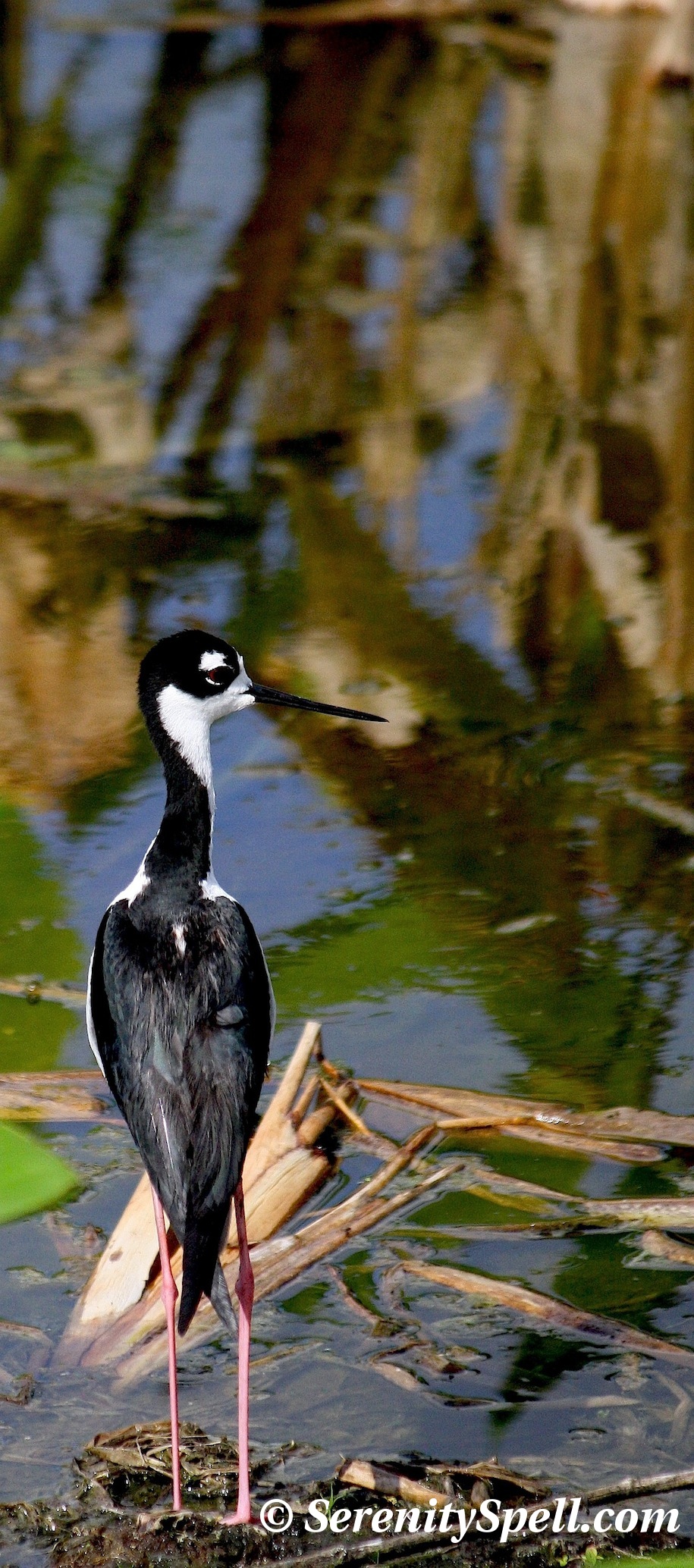
Black-necked Stilt (Adult) guarding its young
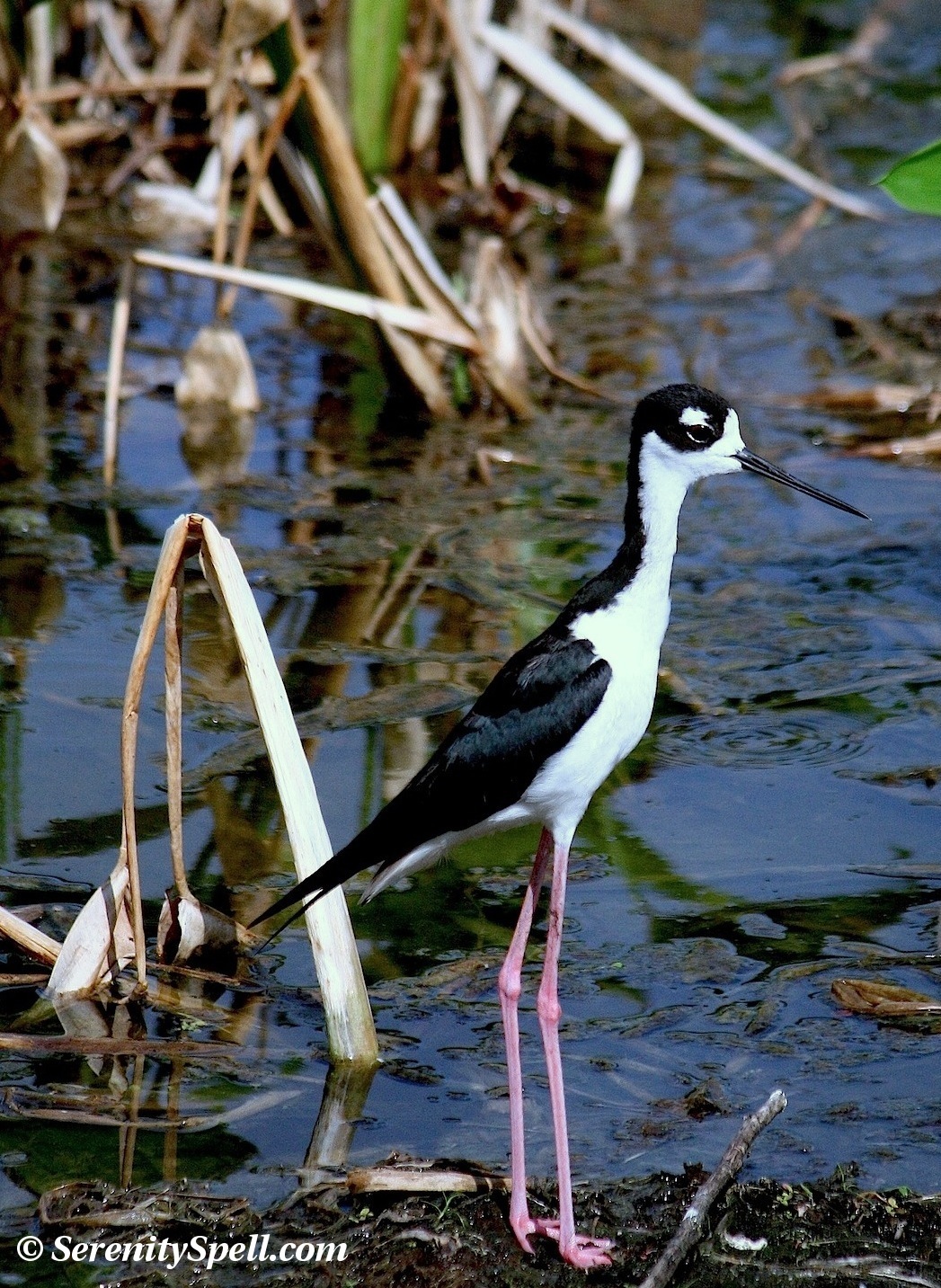
Black-necked Stilt (Adult) guarding its young
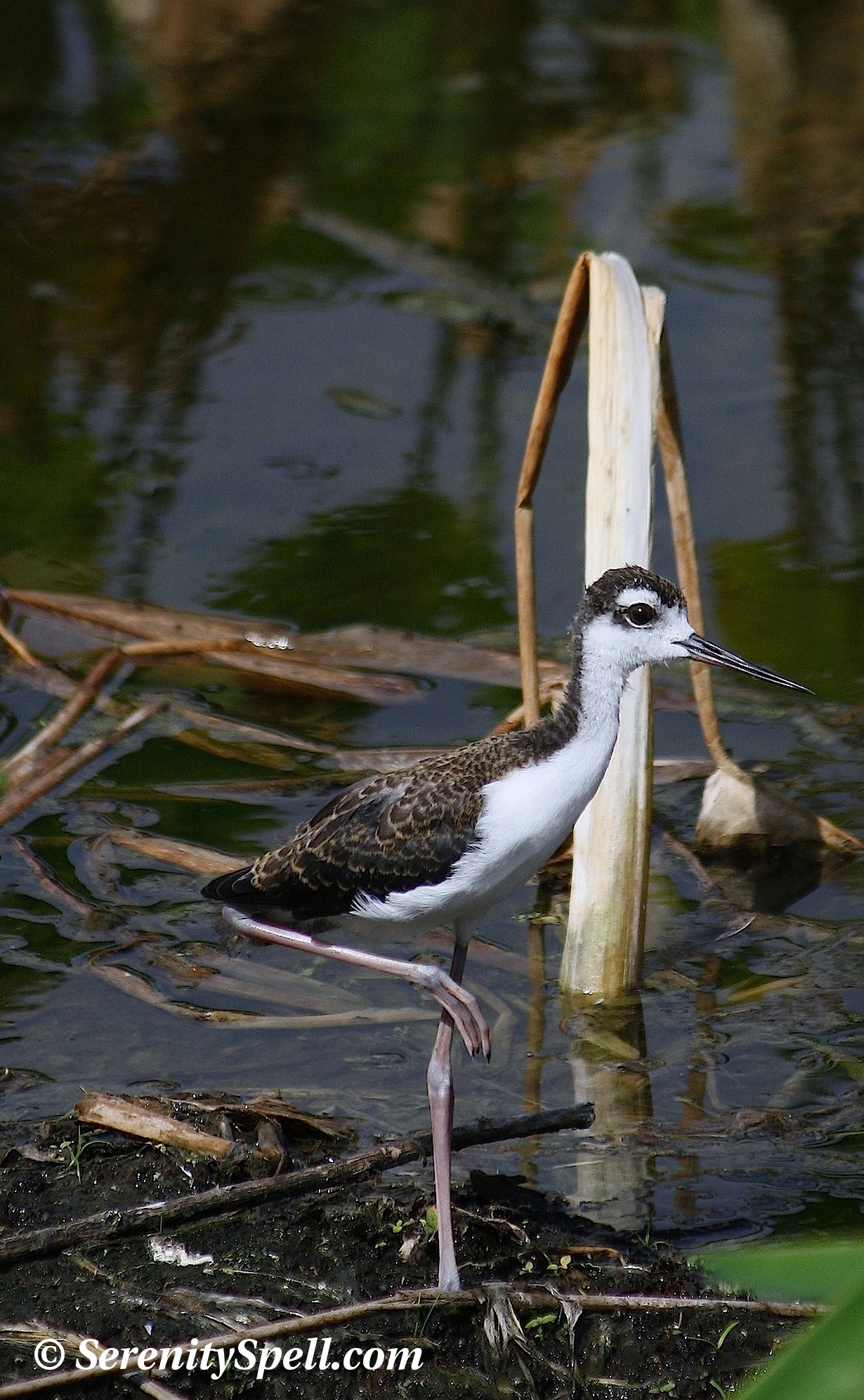
Black-necked Stilt (Juvenile)
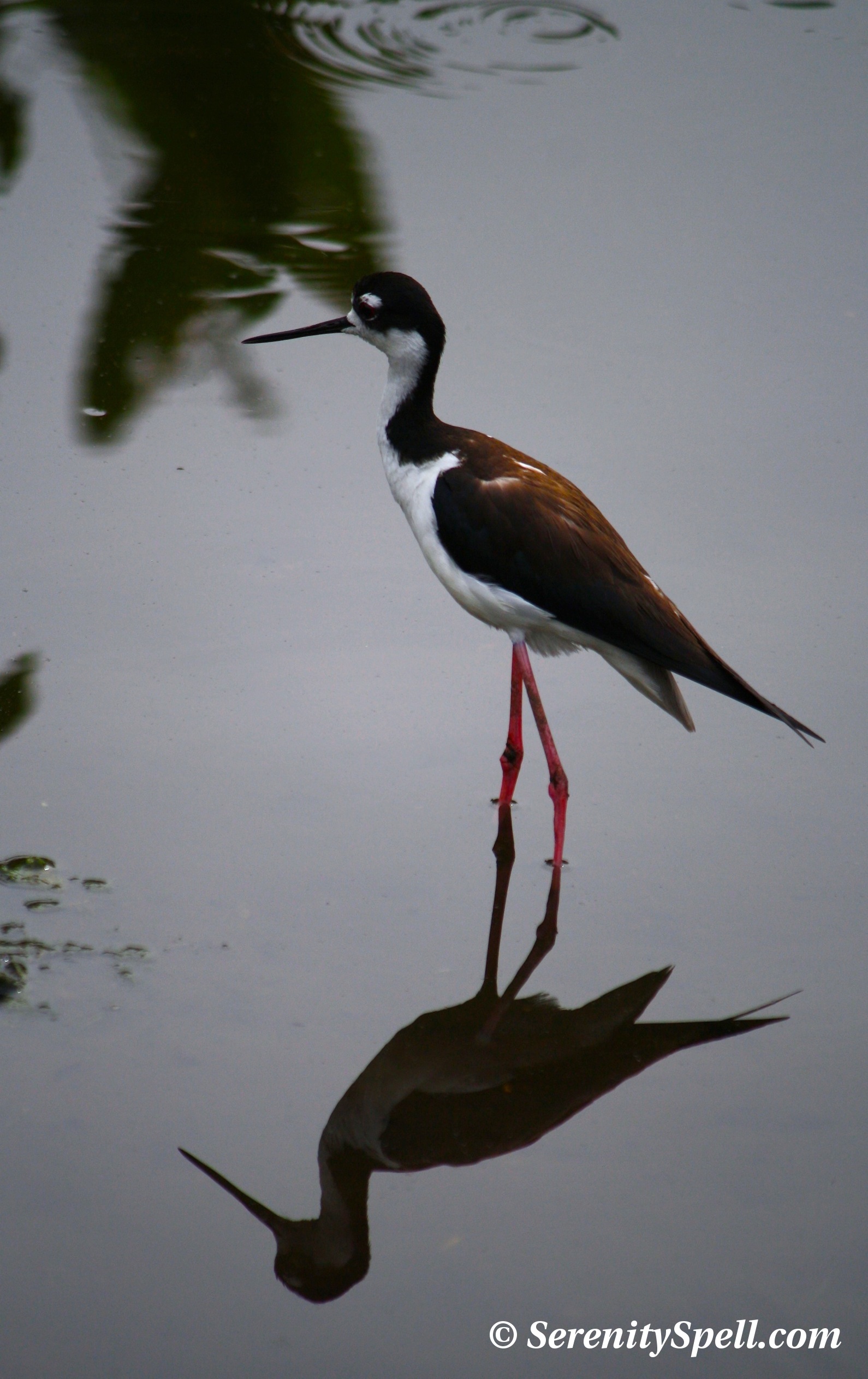
Black-necked Stilt at dusk in the wetlands

Black-necked Stilt foraging for grub in the wetlands

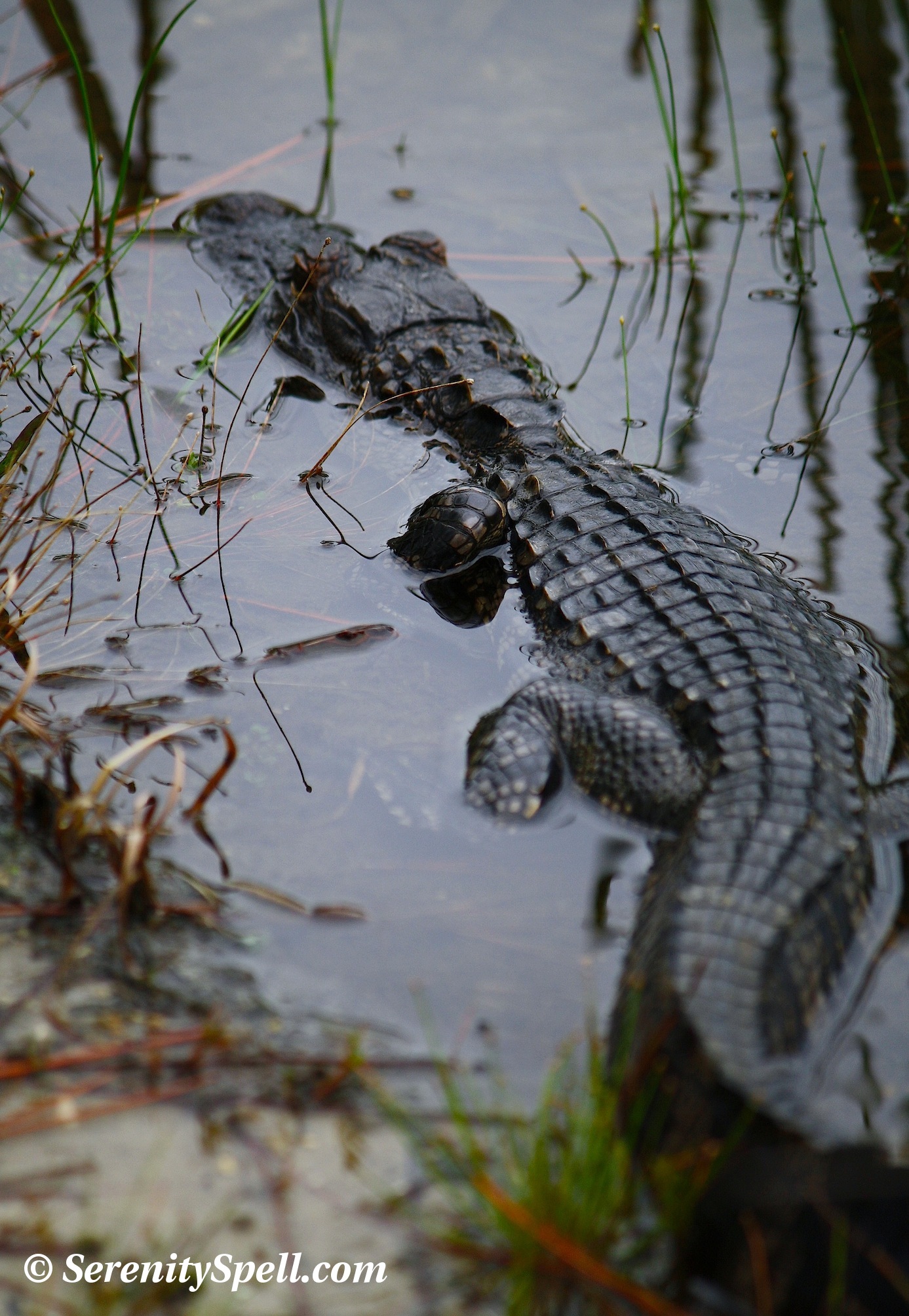
Greeted by a Gator

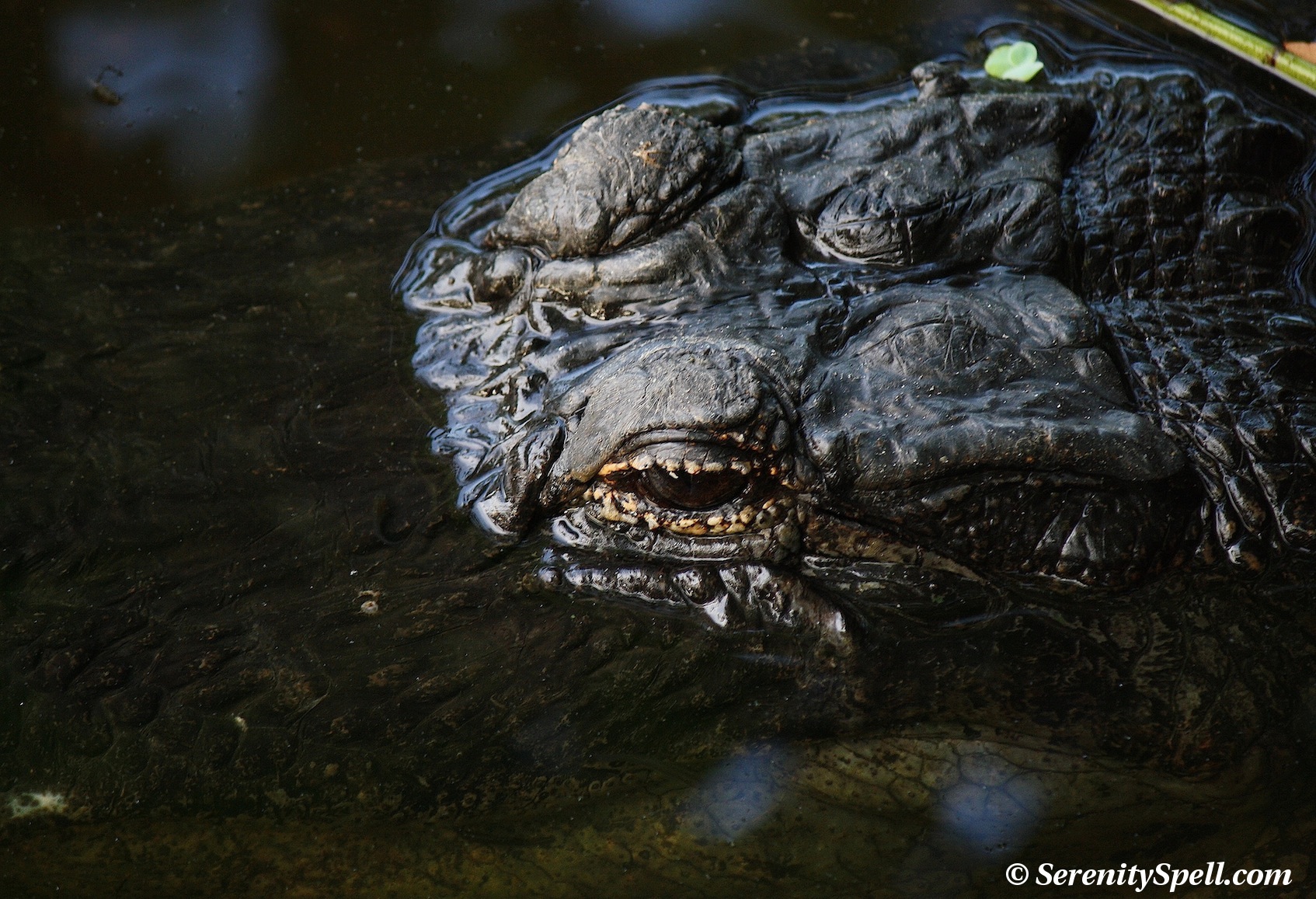
A juvenile alligator greeted us as we entered the trails of Grassy Waters Preserve. He was no more than three feet — still very small, but no longer a baby. Being very cautious and in extreme-defense mode due to his size, he was quite flighty. But I did manage a shot or two of this adorable guy….

Juvenile Alligator: Eye on You

Juvenile Alligator: Slow Movements, Sloooowww….

A Luminescent Florida Leopard Frog (And a Few Fairy Frogs)

Hand in hand, with fairy grace, Will we sing, and bless this place. —William Shakespeare, A Midsummer Night’s Dream

As we hiked the Apoxee Trail in the Grassy Waters Preserve, it was often flooded — pictures forthcoming, because wading through 4-6 inches of swamp / marsh waters in the Florida Everglades is always an adventure! My most worried comment, 2 hours into the trail: “Errr, it appears as though these waters are now even with the swamp.”

But everywhere I looked, itsy-bitsy cricket frogs were jumping about the trail, and these lovelies were hiding in the vegetation and waters. He’s a Southern Leopard Frog (Rana sphenocephala), common to the marshes, swamps, and cypress swamps of our area. The frogs range from dark brown to bright green. Apparently, the existence of a subspecies — the Florida Leopard Frog (Rana utricularia sphenocephala) — is debated among the experts.

Their colors are pure brilliance, with luminescent greens flashing here and there. There were so many frogs I wanted to photograph, but it was tricky nabbing them as they leapt into the waters or darted into the undergrowth. Just magical. So naturally I had to include one of my favorite children’s illustrators — Ida Rentoul Outhwaite — and her more famous images of frogs and fairies.

Nature’s colors, intensity, and variations continue to amaze — may your weekend be equally as spectacular and magical as this brilliant but diminutive frog!

Florida Leopard Frog: Hello, lovely… Please don’t jump

Florida Leopard Frog: Ready to dart. Those colors, pure amazement…

Ida Rentoul Outhwaite, “Frog and Fairy Talking”

Ida Rentoul Outhwaite, “They stood full in front of her….”

Hang On

“All you need to do is hold on tight…and believe.” —Stephen King

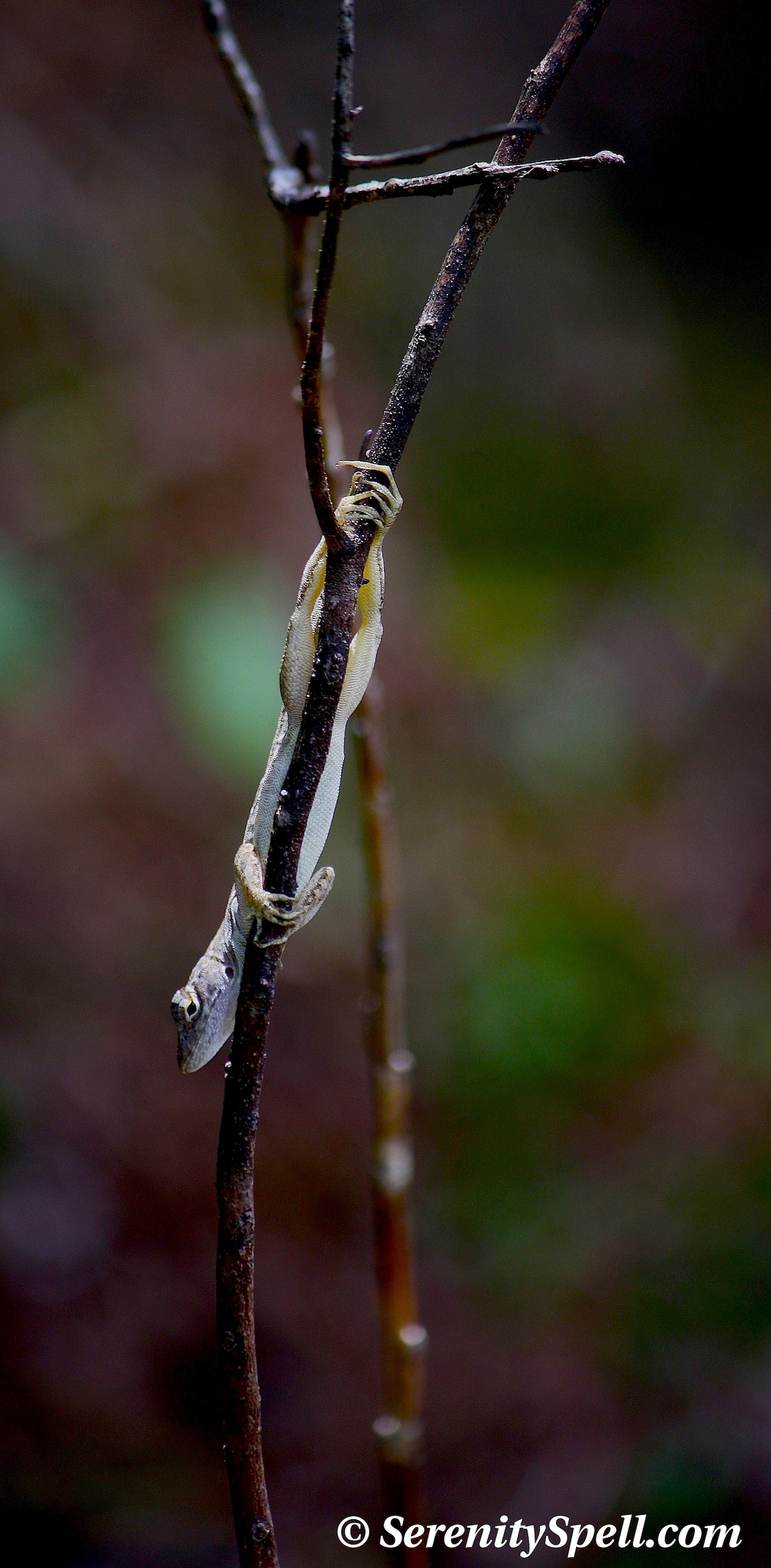
We made our second visit to a wonderful 24-mile-large Everglades preserve this weekend (more images forthcoming, it’s beautiful land) — an area new to us, so each trail is an adventure. What’s so wonderful is that we’ve been completely alone each visit, save the rustling of the critters, a magnificent great-horned owl (sadly, no picture, as we startled each other within a matter of feet), and the awe-inspiring trees, wetlands, and swamps. Entering one trail, there was a ruckus among a saw palmetto plant, and a tiny lizard popped out of its depths — it doesn’t take much to create a cacophony in their noisy fronds. He simply sat on a nearby twig, seemingly perturbed at the brief interruption. Cutie.

Brave Lizard Along the Trail at Grassy Waters Preserve

Trailhead at Grassy Waters Preserve

Everglades Vista of the Grassy Waters Preserve

1…2…3 Gator Mounds & Their Protectors

Twenty million years as a resident of planet Earth, and counting…. Scientists believe that the American alligator (Alligator mississippiensis) resembles animals that inhabited our planet as long as 100-150 million years ago — and that they may be linked to creatures dating 50-65 million years ago, managing to avoid the extinction that killed off the dinosaurs, their prehistoric contemporaries.

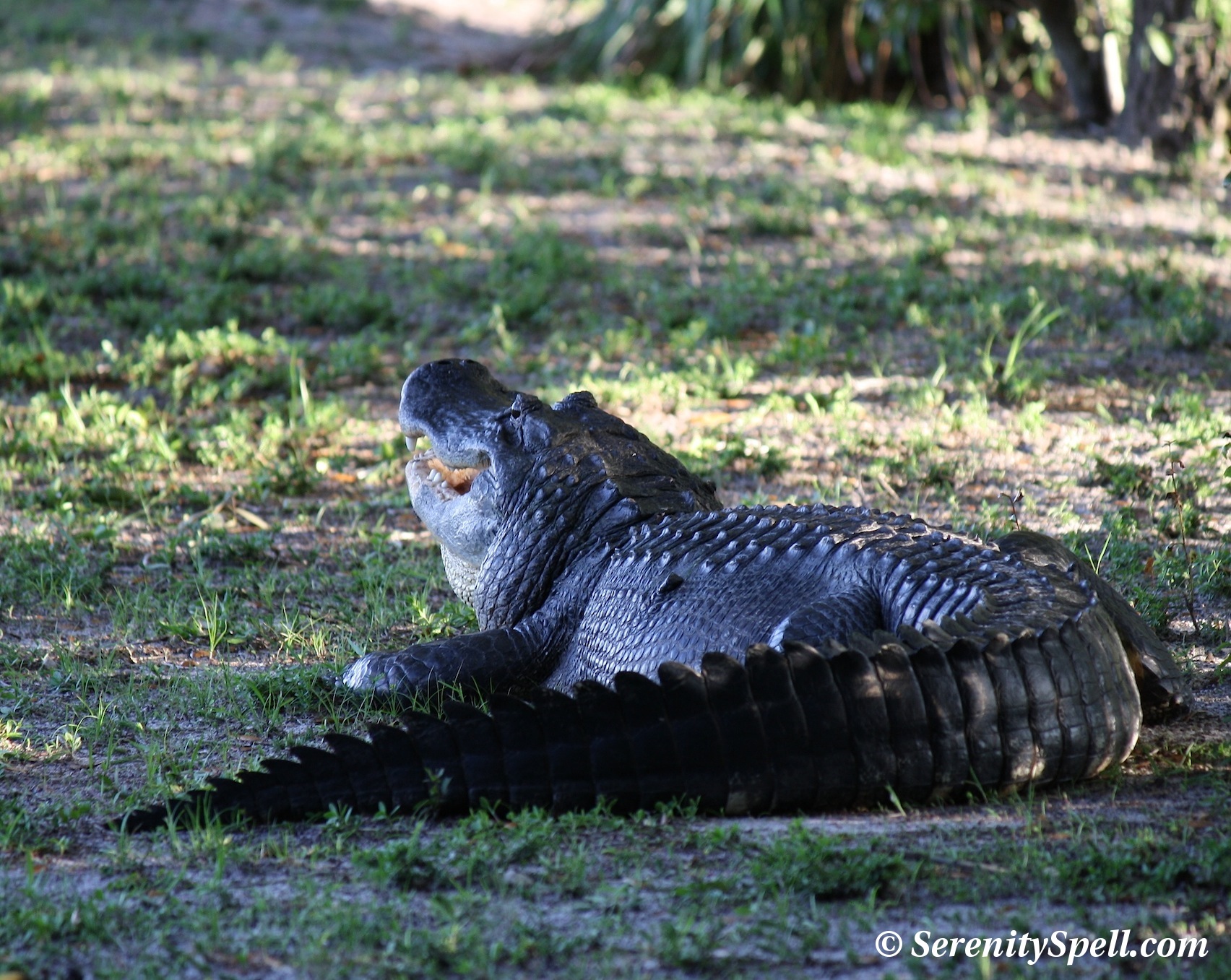
I’ve posted images of alligator courtship, several on the gator babies (with more on the way — updates to our wetland babies!) — but we now have alligator nests to watch. At least 3 nests in one wetland preserve alone — with the momma gators keeping diligent guard. Alligator nests (or mounds) are built by the female, and comprised of vegetation, sticks, and mud. They’re usually located in a sheltered spot in or near the water. She lays 20-50 eggs, and covers them under more vegetation which heats as it decays, serving to incubate the eggs. The female will remain near the nest throughout the 65-day incubation period, protecting it. If a mother alligator is killed or removed, she can’t protect her nest or young — dooming the hatchlings. *Leave wildlife alone!*

It’s always wise, and healthy (wink) to know what a gator nest looks like (see below!), if you’re a hiker in our area — momma will most definitely be nearby!

Female Alligator Guarding Her Nest

Female Alligator… Keeping a Watchful Eye on Her Nest

Small Female Alligator Guarding Nest, Surrounded by Pond Apples

An Alligator Mound at the Water’s Edge

Alligator Mound from August ’11 — Newly Hatched