Skip to content

Posts from the ‘Florida Ecosystems / Trees’ Category

Tree Tuesday: Slash Pines of the Pine Flatwoods

Many of my hikes and images are shot in this ecosystem, and I adore these trees — but in all honesty, show me a tree I don’t love!

Pine flatwoods represent the most extensive ecosystem in Florida, and are distributed over 50% of the state’s land area. As their name implies, flatwoods have a low and flat topography, punctuated by differing kinds of pine, depending where  you are in the state. I’m in the south, so it’s the slash pine that dominates this habitat!

Slash Pines of the Pine Flatwoods, Atlantic Ridge Preserve State Park, Florida

Slash Pines and Saw Palmetto of the Pine Flatwoods in Atlantic Ridge Preserve State Park

These flatwoods, or pine barrens, were created by changes in the sea level during glacial times — as the sea levels increased, expanses of land flooded, and sand was deposited. As the waters receded, early species such as pine trees were able to establish themselves in the sandy soil.

Pine flatwoods are consistent: Layered, with high canopies of pines, a lower shrubby layer, and an herbaceous layer. They’re dotted with cypress domes (a cypress swamp in the shape of a dome), cabbage palm flatwoods, marshes, and other habitats. This is truly a fascinating ecosystem, and one that weaves so many others together.

And while today’s flatwoods are less extensive, with more shrubby groundcover than in times past, they continue to be a vital ecosystem in Florida, covering vast expanses of land. Beginning in the 1950s, developers here discovered that this land was easy to cut and clear in enormous swaths — sadly, they haven’t forgotten. Doesn’t the world needs another empty strip mall and golf course?

Flatwoods rely on controlled, or prescribed burning to maintain its community of pines, grasses, and herbs — and to prevent the forest from being overgrown. Controlled burns are vital to new growth, as well. Pine flatwoods continue to be fascinating areas to hike, each one being new; you never knows when you’ll encounter a swamp, open flatwood, or more of these beautiful trees — or the wonderful wildlife this ecosystem supports….
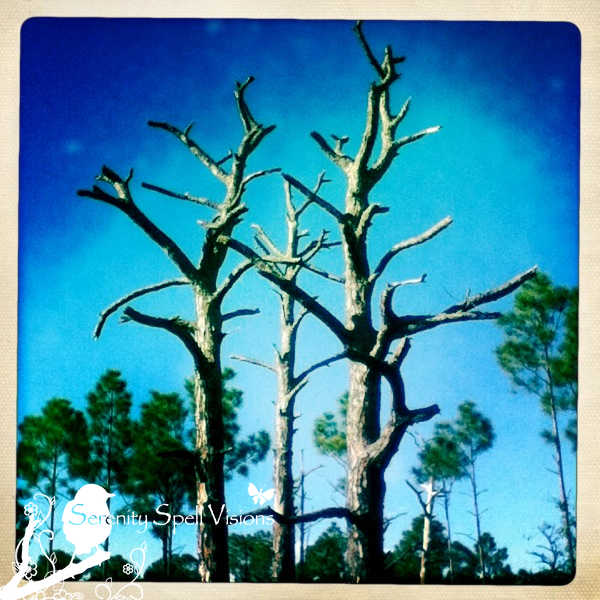
Controlled Burned and Thriving Slash Pines at Bluefield Ranch Natural Area

Controlled Burned and Thriving Slash Pines at Bluefield Ranch Natural Area

To learn more about the Pine flatwoods, visit:
Tree Tuesday: Oaks of the Hammock

There was some synchronous discussion during a *hammock* ecosystem reference in one of my recent posts … I’m so accustomed to these habitats, that I forget to detail their wonderful qualities!

From the National Park Service’s perfectly phrased definition of a hardwood hammock on their Everglades page:

A hardwood hammock is a dense stand of broad-leafed trees that grow on a natural rise of only a few inches in elevation. Hammocks can be found nestled in most all other Everglades ecosystems. In the deeper sloughs and marshes, the seasonal flow of water helps give these hammocks a distinct aerial teardrop shape.

Many tropical species such as mahogany (Swietenia mahogoni), gumbo limbo (Bursera simaruba), and cocoplum (Chrysobalanus icaco) grow alongside the more familiar temperate species of live oak (Quercus virginiana), red maple (Acer rubum), and hackberry (Celtis laevigata). This diverse assemblage of plant life supports an equally diverse array of wildlife.

Because of their slight elevation, hammocks rarely flood. Acids from decaying plants dissolve the limestone around each tree island, creating a natural moat that protects the hammock plants from fire. Shaded from the sun by the tall trees, ferns and airplants thrive in the moisture-laden air of these hammocks.

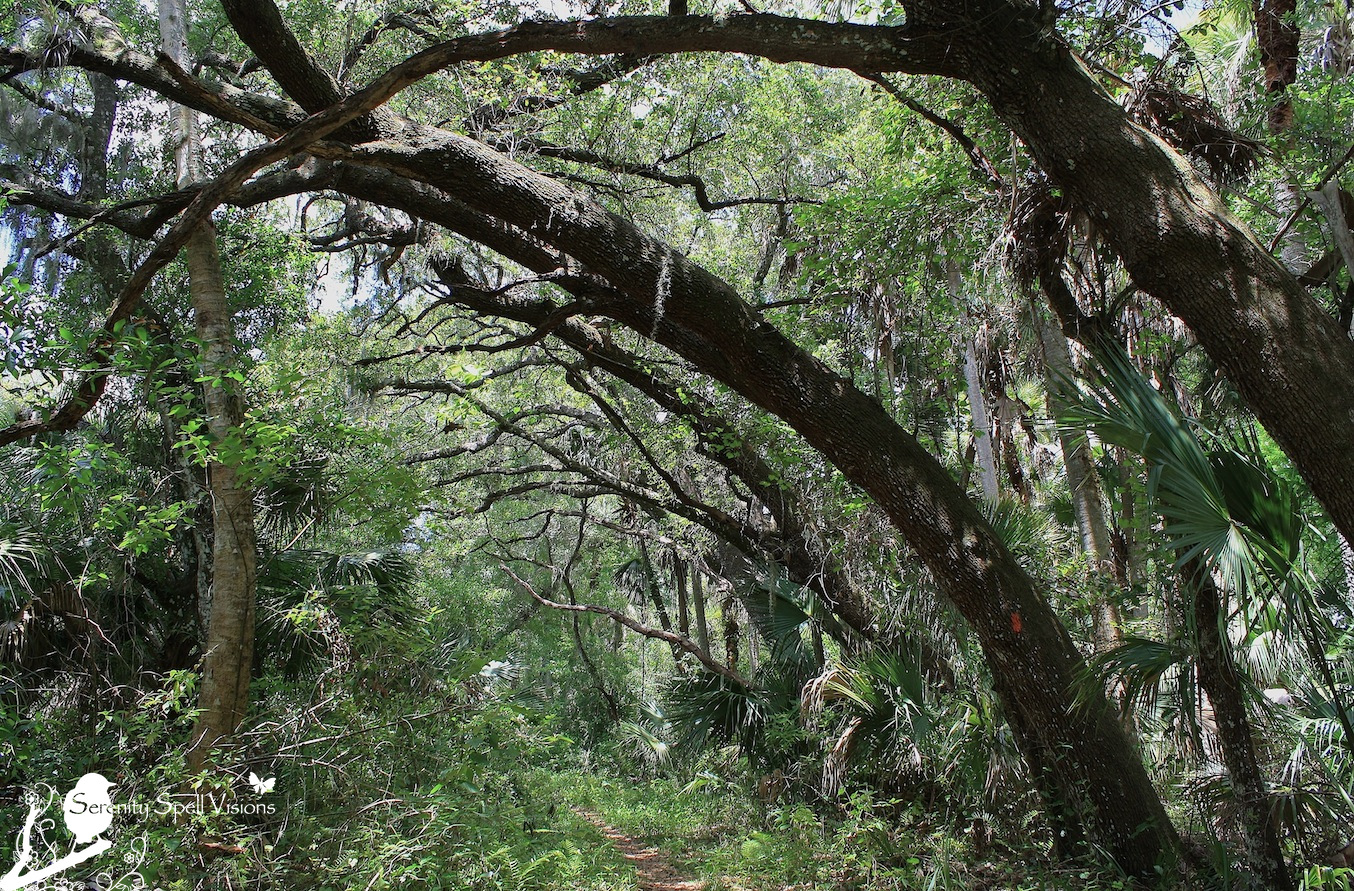
Here’s one of my favorite hammocks — an oak hammock of the Florida Trail, leading towards Jonathan Dickinson State Park from Indiantown Road in Jupiter. There are several types of hammock ecosystems in Floridahardwood, palm, tropical hardwood — but this is a live oak (hardwood) hammock, more common inland.

To say it’s incredibly lovely does not do it justice — how can you not feel protected by, and protective towards, these ancient, sheltering giants?

Oak Trees of the Florida Trail, Jonathan Dickinson

Oak Trees / Hammock of the Florida Trail


Tree Tuesday: Cypress in the Winter

Over the last few weeks, I’ve noticed a few naturalist / photographer bloggers in this amazing community posting on Tree Tuesday. How could I, tree-hugger fanatic that I am, have missed this? I’m running incredibly behind on all of the wonderful places I’ve hiked and visited over the last few months, so while I play catch-up, at least I can post some of the magnificent TREES that I’ve spied.

Florida has an incredible assortment of flora — not just the palm trees that many developers like to plop down, after ripping up our beautiful natives. And they’re enormous. If you’re lucky enough to stumble upon sections of pristine land, areas that weren’t cruelly and completely logged out in the 1930s and ’40s, you’re in for a real treat…. But sadly, few massive trees survived the logging operations of this time. While these trees are old, they’re probably 7th- or 8th-generation cypress. The loggers really did a number on Florida’s cypress populations. But if untouched, they could live to 500 years. The good news is, they’re now protected by various federal and state agencies!

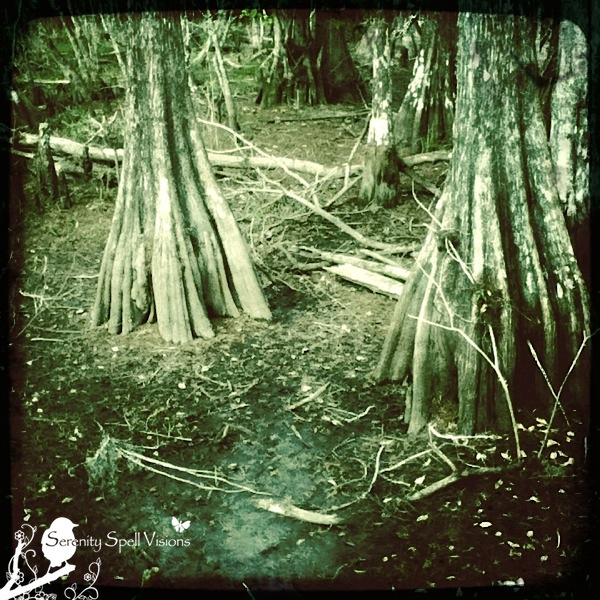
In honor of our wonderful cypress swamps, some of the loveliest and most unique vistas to behold, here’s a shot of some cypress trees in a swamp, in the Big Cypress National Preserve (bordering the Everglades National Park) during the dry winter months.

Cypress Trees in the Big Cypress National Preserve, Florida

Cypress Trees in the Big Cypress National Preserve

A Lady Grackle in a Pond-Apple Tree

Despite the commonality of these birds, I love to watch them. Well, I love to watch anything and everything when I’m out & about in nature, honestly — they’re all bright gems to me. I recently watched and photographed a Harvest Mouse for a good 15 minutes….

The Common Grackle (Quiscalus quiscula) is a large blackbird that’s often confused with the American Crow. Adult males are iridescent black, with long dark bills, long tails, and pale yellowish eyes. Females are slightly smaller and less glossy — brownish, in fact. Their song is a bit harsh, especially when it’s calm in our protected wetlands and several birds suddenly appear. They’re found across North America east of the Rocky Mountains, being permanent residents in much of this area. As forests were cleared for farmland, their range expanded west. Grackles nest in colonies, hiding their nests in dense trees and shrubs, often near water. These birds forage on the ground, in shallow water, or in shrubs — I’ve seen some interesting scenes of them skimming our wetlands’ duckweed in rapid flight for long periods of time…and I recently caught some photos of such an event. They’re omnivorous, and will steal food from other birds.

Pond-apple Tree Blossoms in the Florida Everglades

Young Pond Apple in the Florida Everglades

I caught this girl resting in a pond-apple tree, a common fixture in our wetlands, marshes, and the Everglades; they’re also known as Alligator-apple (for the fact that alligators will eat the fruit), Swamp-apple, Corkwood, Bobwood, and Monkey-apple. Unable to grow in dry soil and tolerant of saltwater, pond-apples are native to Florida, as well as the Caribbean, Central and South America, and West Africa. The tree averages 30-35 feet in height, and its blossoms are lovely creamy white and pale yellow, almost tulip-shaped. The fruit is apple-sized and mango-shaped, and falls when it’s green or ripening yellow. Edible to humans (it can be made into jam), the fruit serves as food for many species. It can be a bit bitter or tasteless for us, however (although its flesh is quite fragrant) — as my guy can attest to when I demanded he try it (“let’s make jam out of it!”). Pond-apple trees have become a scourge overseas, but in the Everglades they’re a valuable source of sustenance for our wildlife — I’ve seen alligator, raccoon, and all species of turtles munching on fallen pond apples. The trees provide shelter for myriad creatures, and their canopies are used as nesting grounds for all species of birds. Even more interesting, recent studies have shown that its alcoholic seed extract may provide anticancer compounds that could be used pharmaceutically.

Common Grackle in a Pond-apple Tree, Florida Wetlands

Common Grackle in a Pond-apple Tree, Florida Wetlands

Common Grackle in a Pond-apple Tree, Florida Wetlands

Pond-apple Tree: Note the thin trunks growing in clumps

Reaching for the Azure

A stricken tree, a living thing, so beautiful, so dignified, so admirable in its potential longevity, is, next to man, perhaps the most touching of wounded objects. —Edna Ferber

Scorched — but not necessarily dead — slash pines are profiled against their more lively brethren at the Bluefield Ranch Natural Area. Their tenacity is inspiring and a not-so-gentle reminder as I observe them throughout our hikes, standing tall with new growth peeping through burned limbs. Controlled, or prescribed burns are an integral part to sustaining Florida’s natural habitats.  Such burns mimic natural fire cycles to restore healthy natural communities, thus reducing the undergrowth that accumulates over time — a contributing factor in severe wildfires. An increase in native plants, birds, and wildlife is witnessed at these burned lands.