Skip to content

Posts tagged ‘animals’

Sing a Song of Sixpence

Sing a song of sixpence,
pocket full of rye,
four and twenty blackbirds
baked in a pie.

 When the pie was opened,
the
birds began to sing:
isn’t that a dainty dish
to set before the King?

The King is in his counting-house
counting out his money;
the Queen is in the parlor
eating bread and honey;
the Maid is in the garden
hanging up the clothes,

 when down swoops a Blackbird
and snaps off her nose!
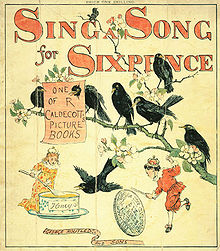
Cover illustration for Randolph Caldecott’s Sing a Song for Sixpence (1880)

There are many interpretations to this curious nursery rhyme, dating to the 18th century. It’s been traced to the 16th-century practice of placing live songbirds in a pie (who wouldn’t want live animals flying out of their prepared food?), to various historical events and folklorish symbols, and even to a coded message used to recruit crew members for pirate ships. Lord Byron, James Joyce, Virgina Woolf, Agatha Christie, George Orwell, and Roald Dahl all referenced the ditty, and it’s appeared in songs by The Beatles, The Monkees, Radiohead, Tom Waits, and others. Obviously this mysterious little rhyme continues to captivate our popular consciousness.

As we approach the equinox, I’m anxious to spy our returning colonies of Red-winged blackbirds — the males, glossy black with their brilliant scarlet-and-yellow shoulder patches, puffing up or hiding (depending on their level of confidence), and belting out their conk-la-ree songs. And the more subdued females, with their brown colorations and clever camouflaging — so much shyer than their male counterparts.

Ever regal: Male Red-winged blackbird in the Florida wetlands

Watching over his brood… But I see YOU!

Puffin’ and hollerin’ away

And the GIRLS…
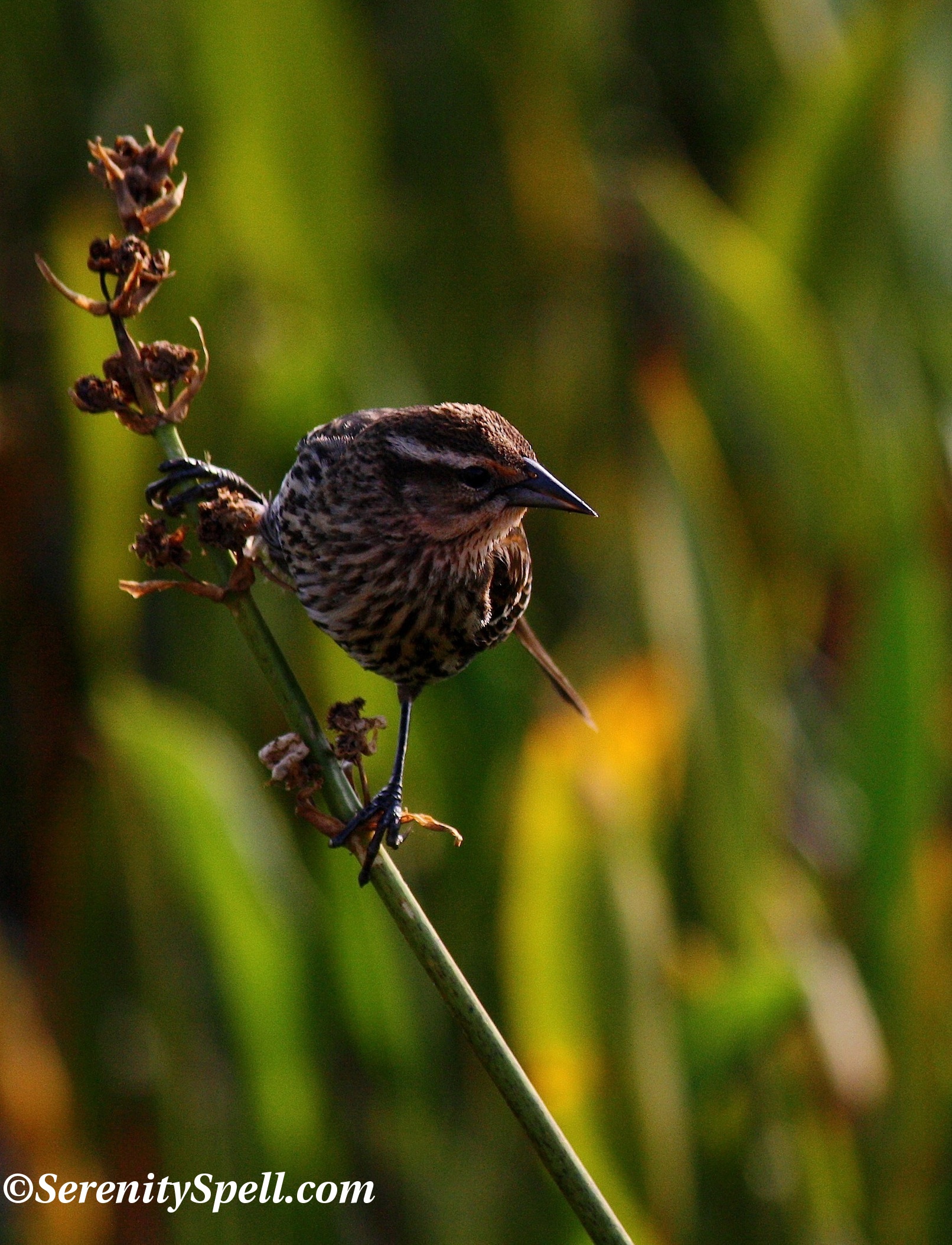
Always the shy ones: Female Red-winged blackbird in the Florida wetlands
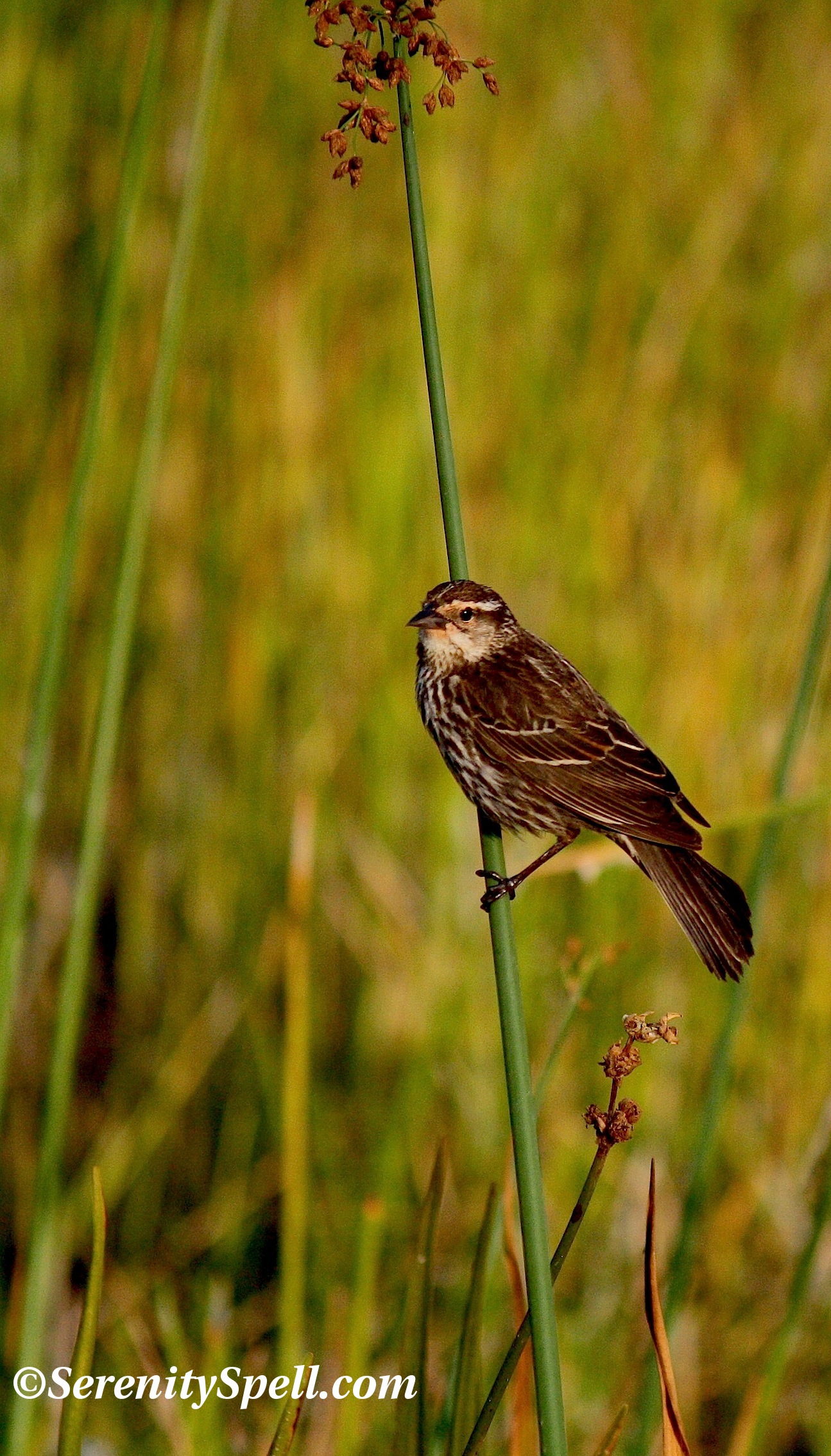
Flittering among the reeds
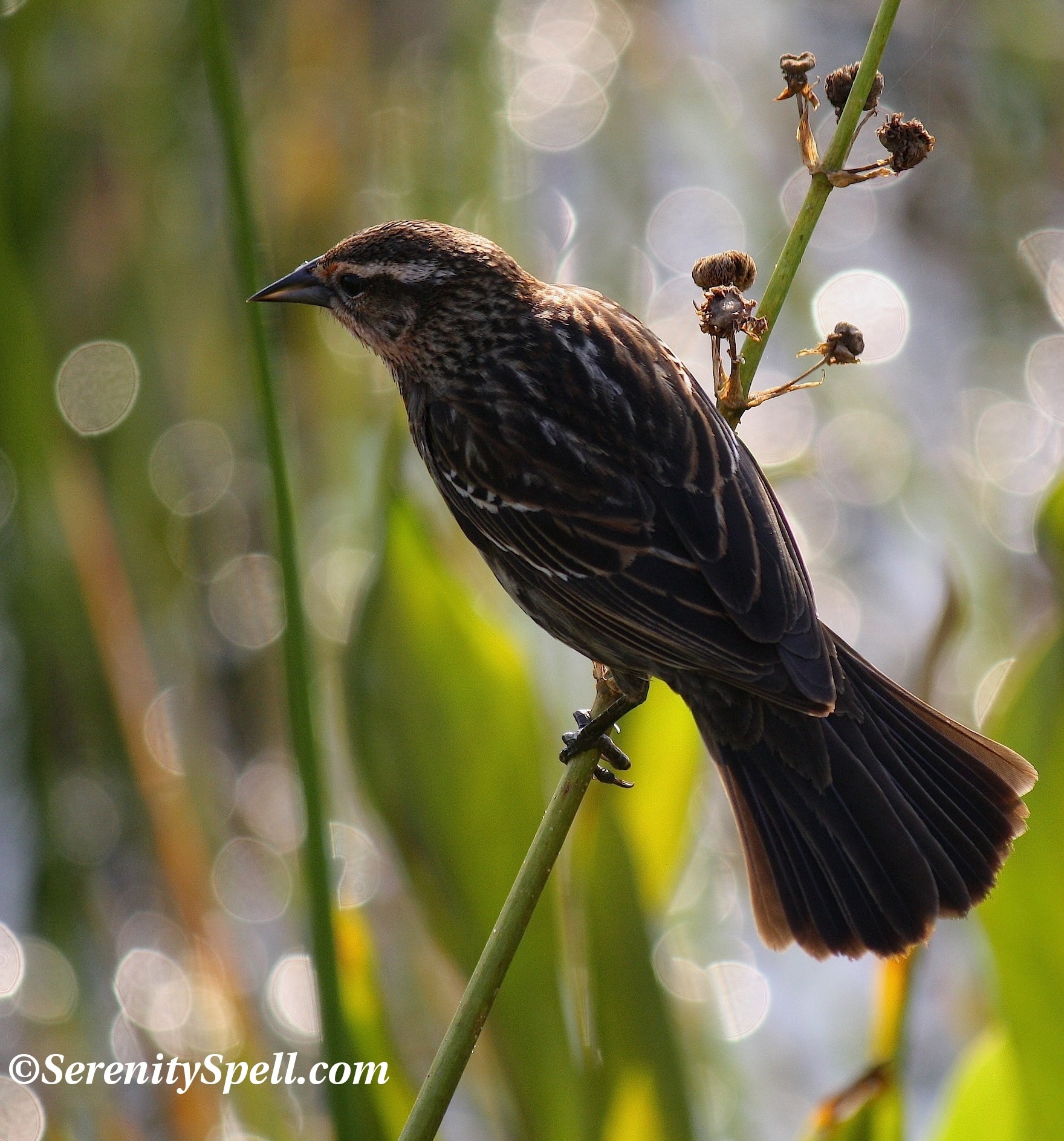
Lovely girl against the shallow waters

Peek-a-Boo

During a recent dusk trip to the wetlands, a Great egret preened…extensively…in a rookery, in preparation of the night. And human males complain of women’s bedtime preparations.

Preening Great egret in the Florida wetlands: Where are you…

Peek-a-boo!


Hello, You Gorgeous Gator

Lots of people talk to animals…. Not very many listen, though…. That’s the problem. —Benjamin Hoff, The Tao of Pooh

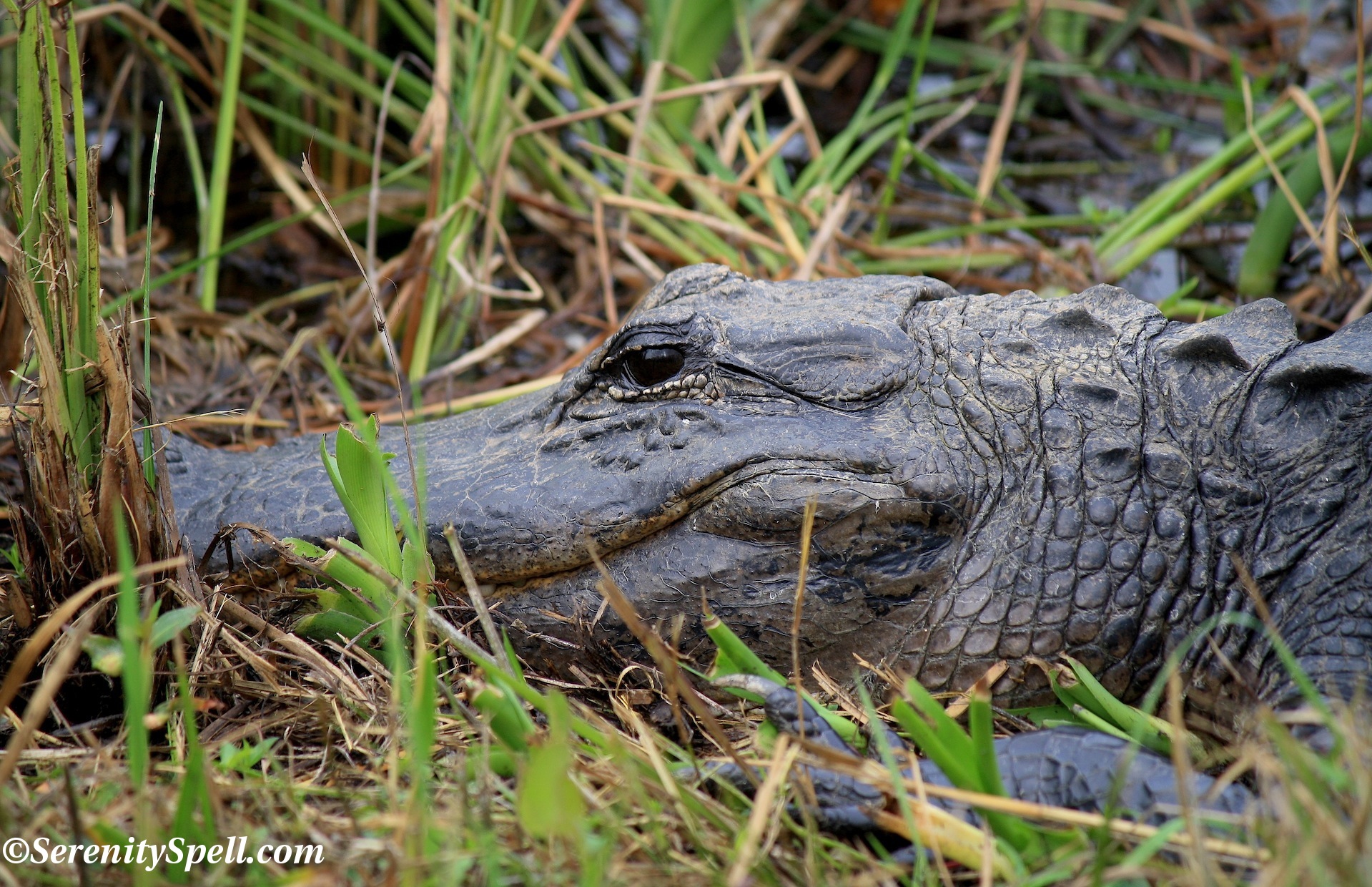
It’s been awhile since I’ve posted anything about alligators,  and I feel withdrawal coming on. So for my sake, here’s a gorgeous gator we encountered on a recent hike in the northern section of the Everglades.

{As always, please click on the image for expansion!}

Florida Everglades Alligator: Helllllo, gorgeous!

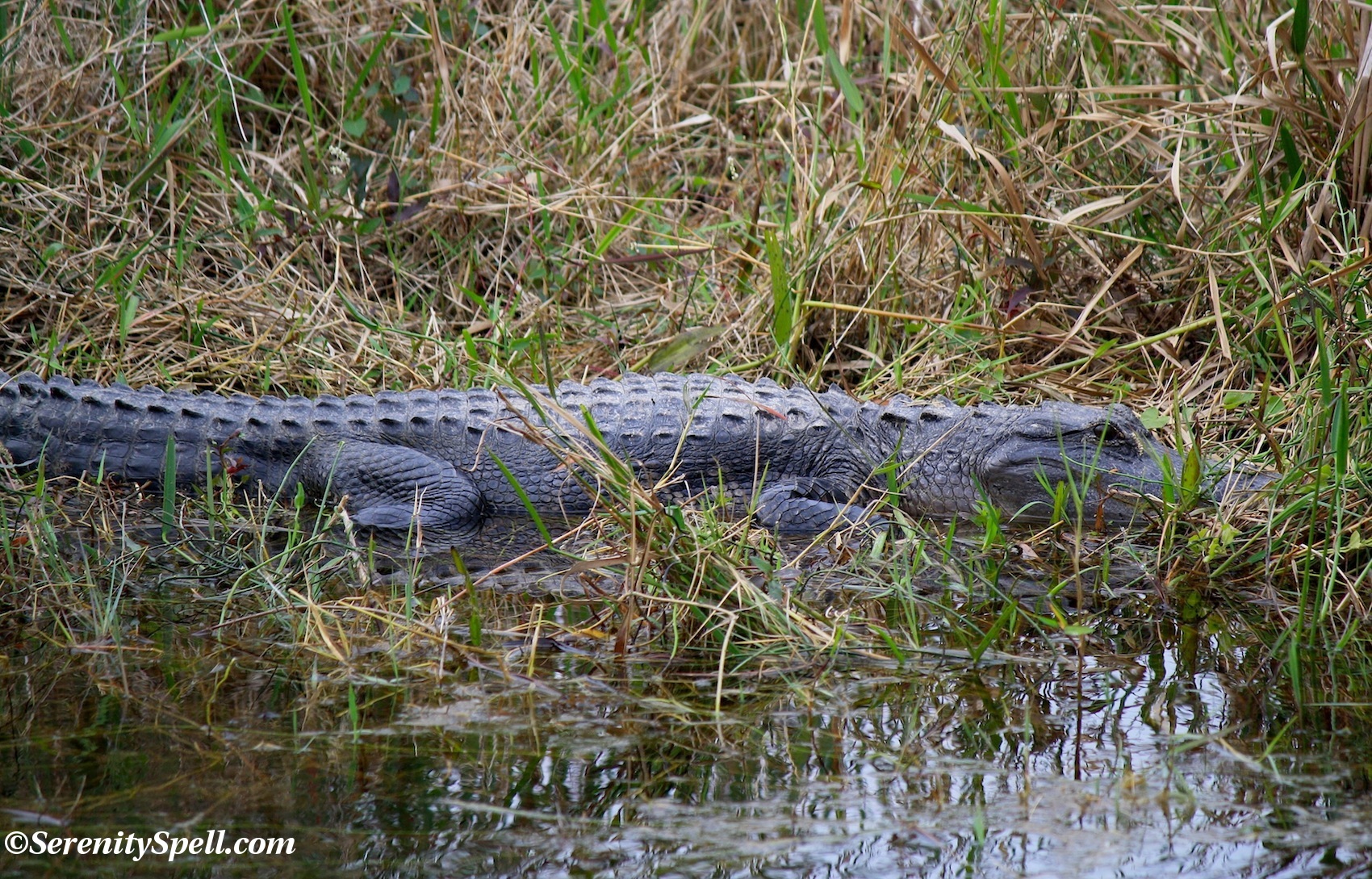
Here’s how one of these lovelies appears in the wild — in this case, full and slow after a meal, catching some sun. Which is why we ALWAYS have an eye on the water’s edge throughout our hikes — especially when water and bits of swamp suddenly pop up out of nowhere, *wink*!

While they are certainly admirable and fierce predators, there is absolutely no need to assume that they will eat your face if you encounter one in the wild. We’ve never been bothered by gators — even during mating and nesting seasons. If we see an active alligator mound (nest), we steer clear, knowing a momma gator is diligently protecting her eggs or young. The most disconcerting experiences I’ve ever had with these amazing creatures have occurred when I wasn’t watching the water’s edge as closely as I should have been, to put it mildly — or when we’ve startled or frightened them, causing uproarious splashes into the water amid the silence of the ‘glades.

Leave wildlife alone, because they want nothing more than to leave we humans alone….

Resting at the water’s edge — or, in my words during our hike: “Oops! Lookie there!”

Another view of the big lizard

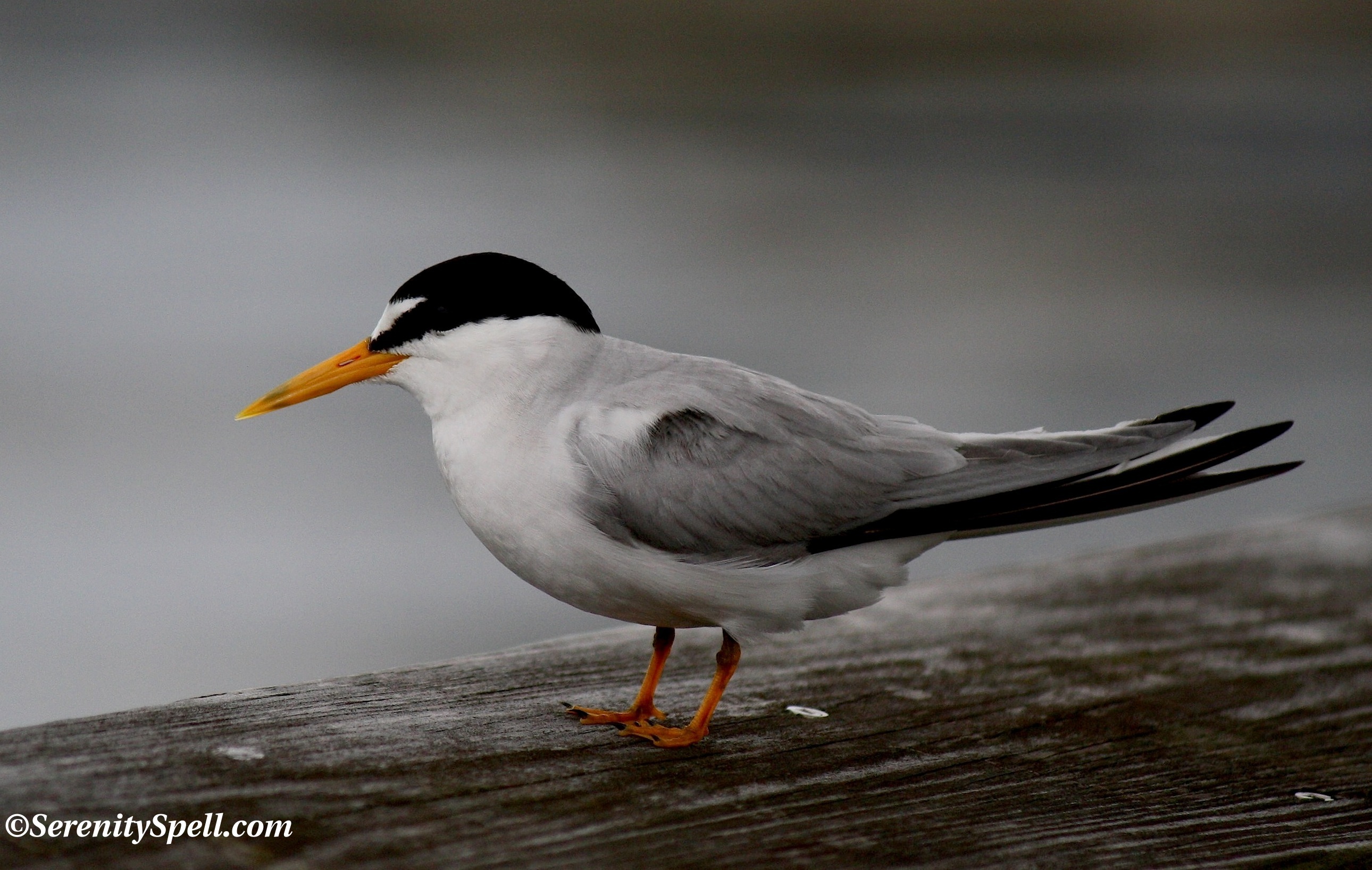
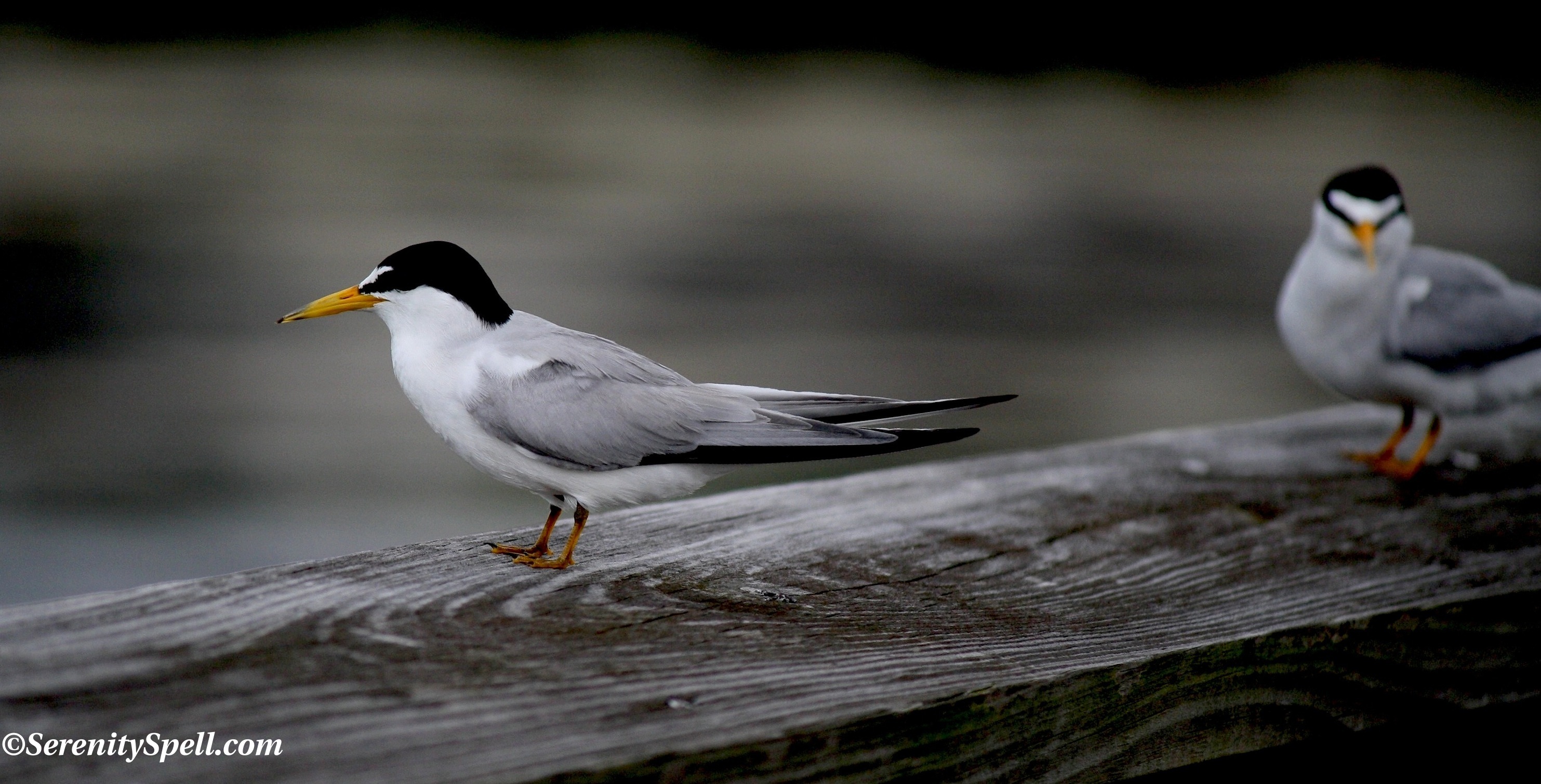
The Little Least Terns

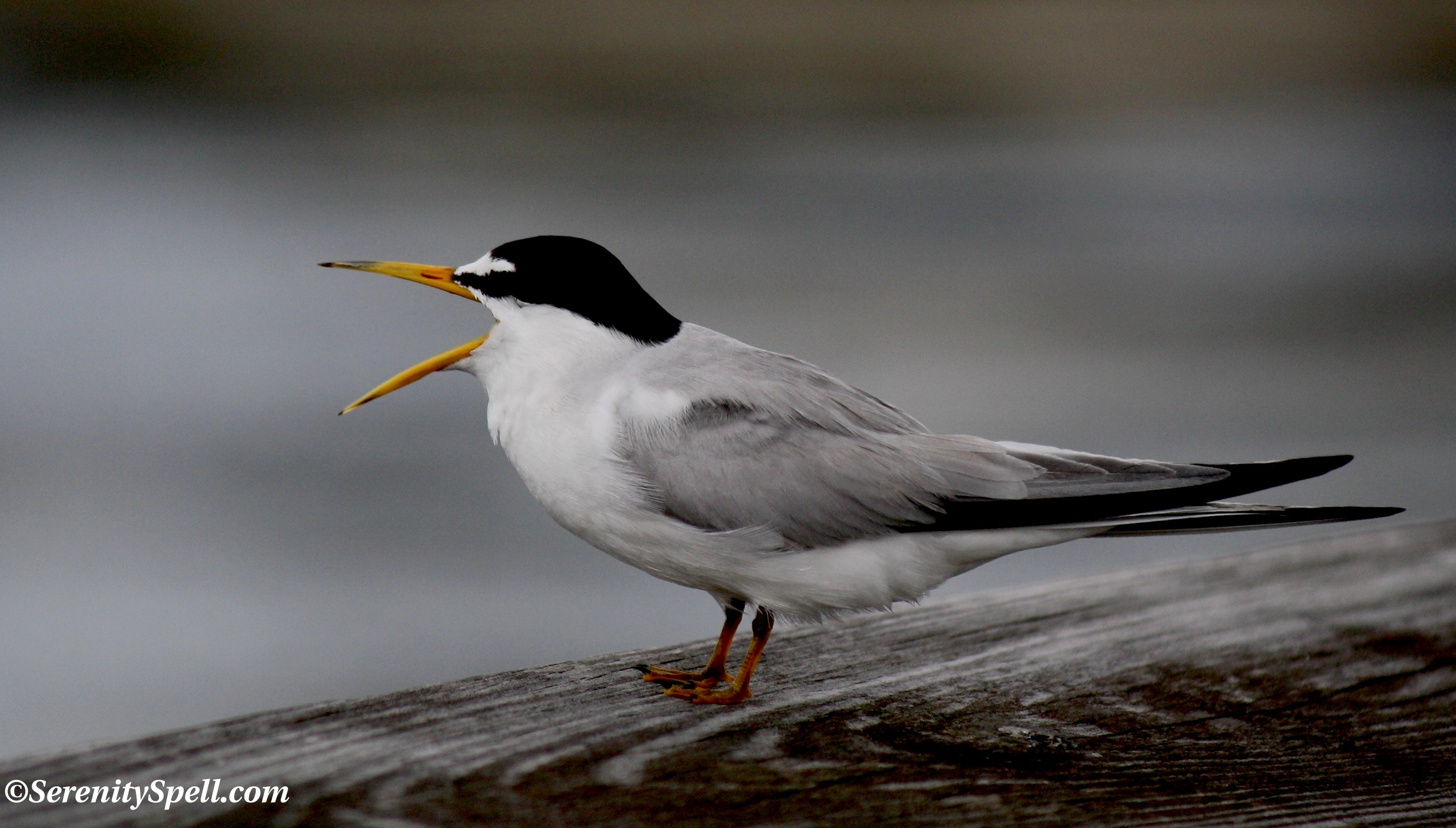
There are birds a-plenty in the South Florida swamps and wetlands, and they’re not always the towering waders. Least Terns are the smallest of the American terns, native to North America and northern South America. They’re migratory birds, and live in such habitats as sea coasts, bays, lagoons, lakes, ponds, wetlands, and rivers.

{As always, please click on any image for expansion!}

Least Tern in the Florida Wetlands: I may be small, but I can holler with the rest of ’em

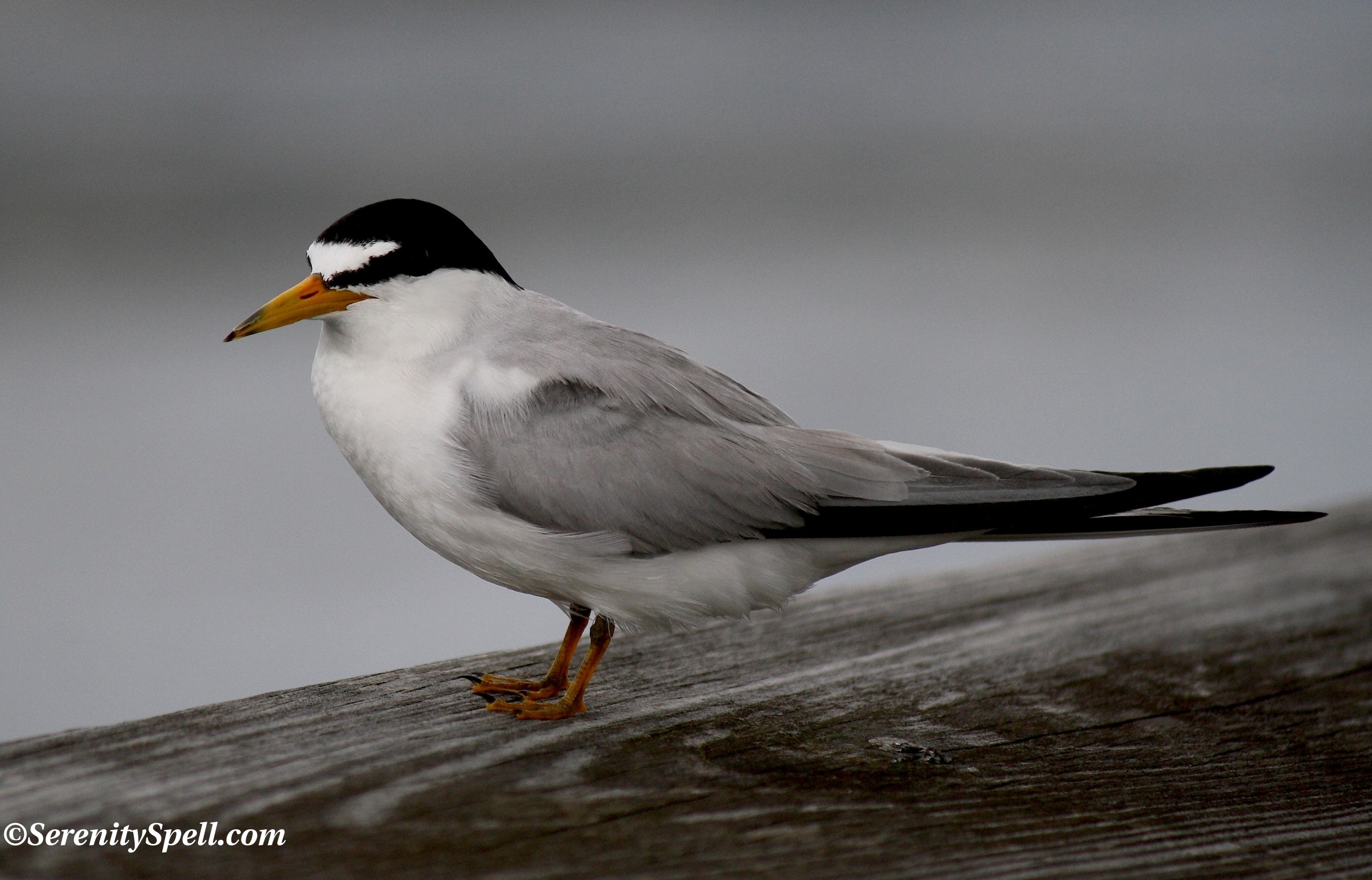
These birds are colony nesters, breeding between April and August. Like many other birds, they usually return to the same breeding site year after year. Least Terns are ground nesters, and situate their nests on the open ground, usually at higher elevations and away from the water’s edge. In flight, they hover and dive into the water for small fish and aquatic crustaceans, occasionally skimming the water’s surface for insects. They fly with fast, herky-jerky wingbeats in their signature hunchback display. Males and females of the species look alike: They have a forked tail, with pointed and narrow wings. Their bills are yellow in the summer, which turn black in the winter.

Yes, I see you

Special spiky tail

When I see them in our wetlands, it’s nesting time — so they’re often together, as nesting pairs.

I don’t like that tall thing near us; You can stay there on the edge of non-safety while I sit and glare

Mr. Personality

Any glimpse into the life of an animal quickens our own and makes it so much the larger and better in every way. —John Muir

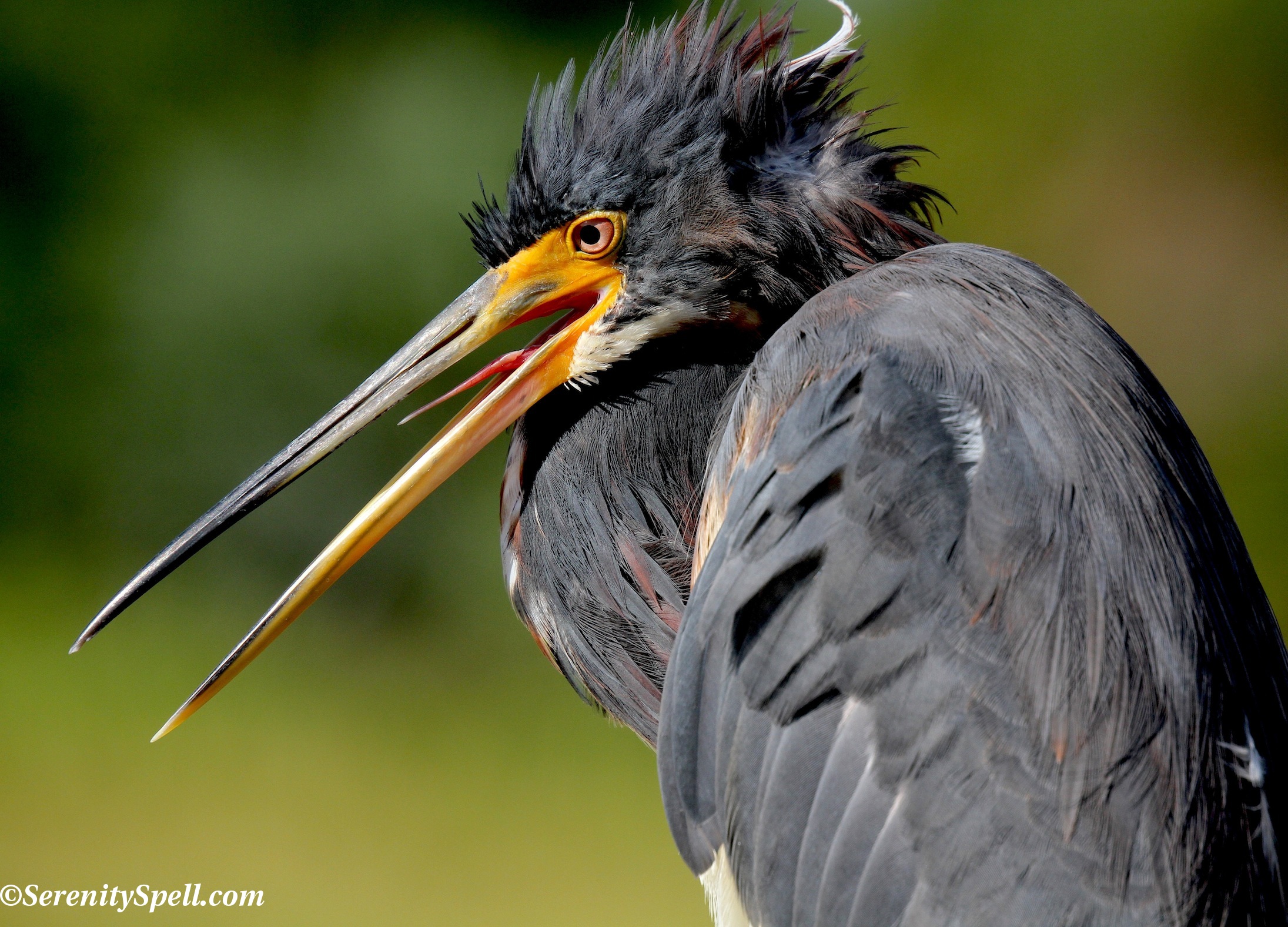
I adore the Tricolored (or Louisiana) Herons: They’re colorful and spirited characters of our wetlands and swamps. This fellow landed beside me on a recent walk, and proceeded to hack up a recent meal — something had obviously gotten stuck in that long, elegant throat of his. All was well eventually, but not after a 20-minute show.

{As always, please click on the image for expansion!}

Tricolored (Louisiana) Heron, Florida Wetlands: I am so lovely and elegant, yes?

Excusey, I seem to have something in my throat….

Haaaaaaaaaaack!

Shake it off! Shake it off!