Skip to content

Posts tagged ‘birds’

Happy Mommy’s Day

 Happy Mother’s Day! MUCH love to all the dedicated, devoted, and hard-working women — and female critters — of the world.

Me + Mom (w/ brother in belly) in Central FL, 1972, PRE-Disney — while swamps were being filled

Momma Grackle feeds her young

I’ll save *exactly* what the momma’s feeding the juvenile (below) for an upcoming post…. It’s just. That. Yummy!

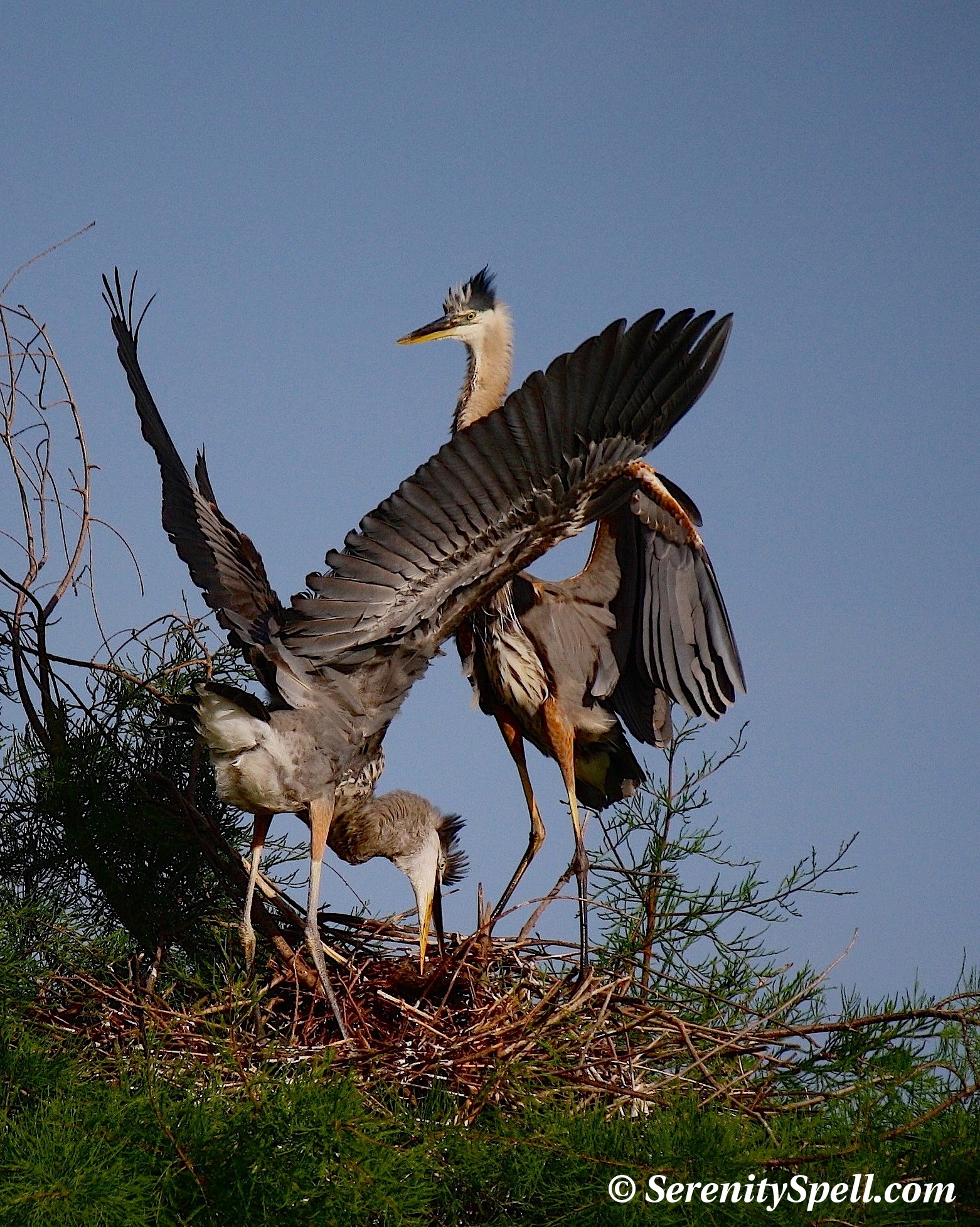
Great Blue Heron feeding her young on a tree-top nest

Big Like You: Momma Alligator with one of her babies

Anhinga Mealtime: Busy mother Anhinga with her brood

Red-winged Blackbird nest with a new momma

Red-winged Blackbird mother feeds her hatchlings

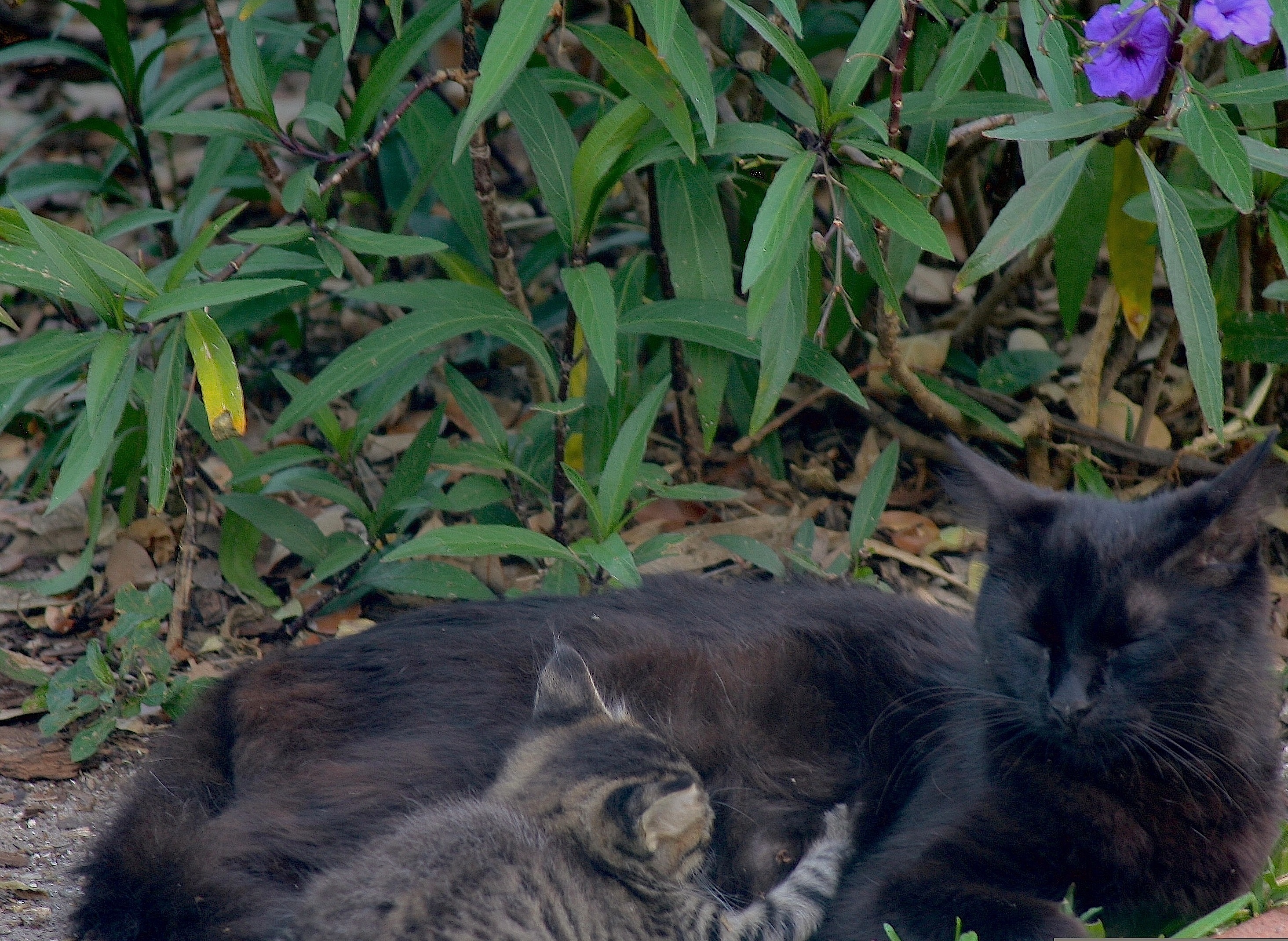
Our neighborhood stray cat and her kitten in our yard; such a good momma (now: TNR time!)

Great [Blue] Daddy!

From the Cornell Lab of Ornithology, check out this amazing time-lapse video of a male Great Blue Heron, as he diligently protects 5 eggs during an April 27 snowstorm. All 5 hatched — despite the snow, and despite constant owl attacks. What a good daddy!!


The Cornell Lab features some fascinating live feeds of various birds, and now the Great Blues are nesting…. But numerous species are featured on their live cams.

Visit the Cornell Lab of Ornithology for more information.

Pretty in Purple

Purple Gallinules are one of the shyer creatures of our wetlands, and to spy one is a fun and colorful event. Even if you’re a sly watcher and/or photographer, they’ll quickly flit into the dense marsh vegetation when they sense your presence…. It’s ironic, being as shy as they are, with such bold coloring. But it’s always a joy to spy these purple, blue, and green gems — especially so for me, as they’re all my favorite colors, wrapped up into one bright little bird.

These lovely creatures live in the freshwater marshes of the southeastern United States, as well as in Central America and the Caribbean — although they have turned up in the northern states and southern Canada, and even in parts of Europe and South Africa. There’s no mistaking this medium-sized rail, with its purple-blue plumage, green back, pale blue forehead, white undertail (of which I’ve caught more than one glimpse), bright red and yellow bill, and long yellow feet. The juveniles sport blander, brown colorations. The  gallinules’ huge legs make them awkward fliers, so short bursts of activity are their mode of transportation — or swimming like a duck if they’re not navigating the marsh with those dangling legs. They nest in floating constructs in the mashes (although I haven’t spotted many — they’re quite well hidden), laying 5-10 eggs.

The Purple Gallinule is omnivorous, eating the seeds, leaves, fruits, and grains of both aquatic and terrestrial plants; they also enjoy insects, frogs, snails, spiders, earthworms, fish, and even the eggs and young of other birds. When I see them in our wetlands, they’re often alone, nestled in the vegetation and cackling away — or being chased by other birds, most often by their sister species the Common Moorhen.

Purple Gallinule

Purple Gallinule — Nice Legs

Purple Gallinule

Purple Gallinule — White Undertail on Display

Purple Gallinule about to be chased into dense marsh vegetation by a defensive moorhen parent

Purple Gallinule successfully chased into dense marsh vegetation by a defensive moorhen parent

Time for Empty Nest Syndrome… Or Not?

I’ve written a post or two on the Red-winged Blackbirds — common songbirds found in most of North and much of Central America, and familiar sights in our protected wetlands and Everglades. The males, glossy black with scarlet-and-yellow shoulder patches, puff up or hide depending on their level of confidence. In our marshes, they’re quite brave (or protective, in defense-mode), doing their hardest to get noticed, and belting out their conk-la-ree songs. The female, subdued brown with streaks of lighter colorations, is much shyer than her male counterpart. Her brownish coloring serves to camouflage her and the nest, while she’s incubating. Staying low in the vegetation, she searches for food (eating primarily seeds and insects) and weaves her amazing nest. Constructed entirely over the course of 3-6 days — with no help from the males — the nests are woven in cattails, rushes, grasses, or in alder or willow bushes. Located near the water’s surface, the nest is a basket constructed of grasses, sedge, and mosses, lined with mud and bound to surrounding grasses or branches. I’ve watched for nearly an hour in awe, as a female patiently gathered her grasses from the surrounding wetlands — and even longer as another intricately wove her basket-nest. It’s beautifully mesmerizing (and believe me, I’m no birdwatching crackerjack). Red-winged Blackbirds nest in loose colonies, and the males serve as sentinels to guard the nests, using various calls to denote the type and severity of danger against such predators as snakes, raccoons, iguanas, and other birds.

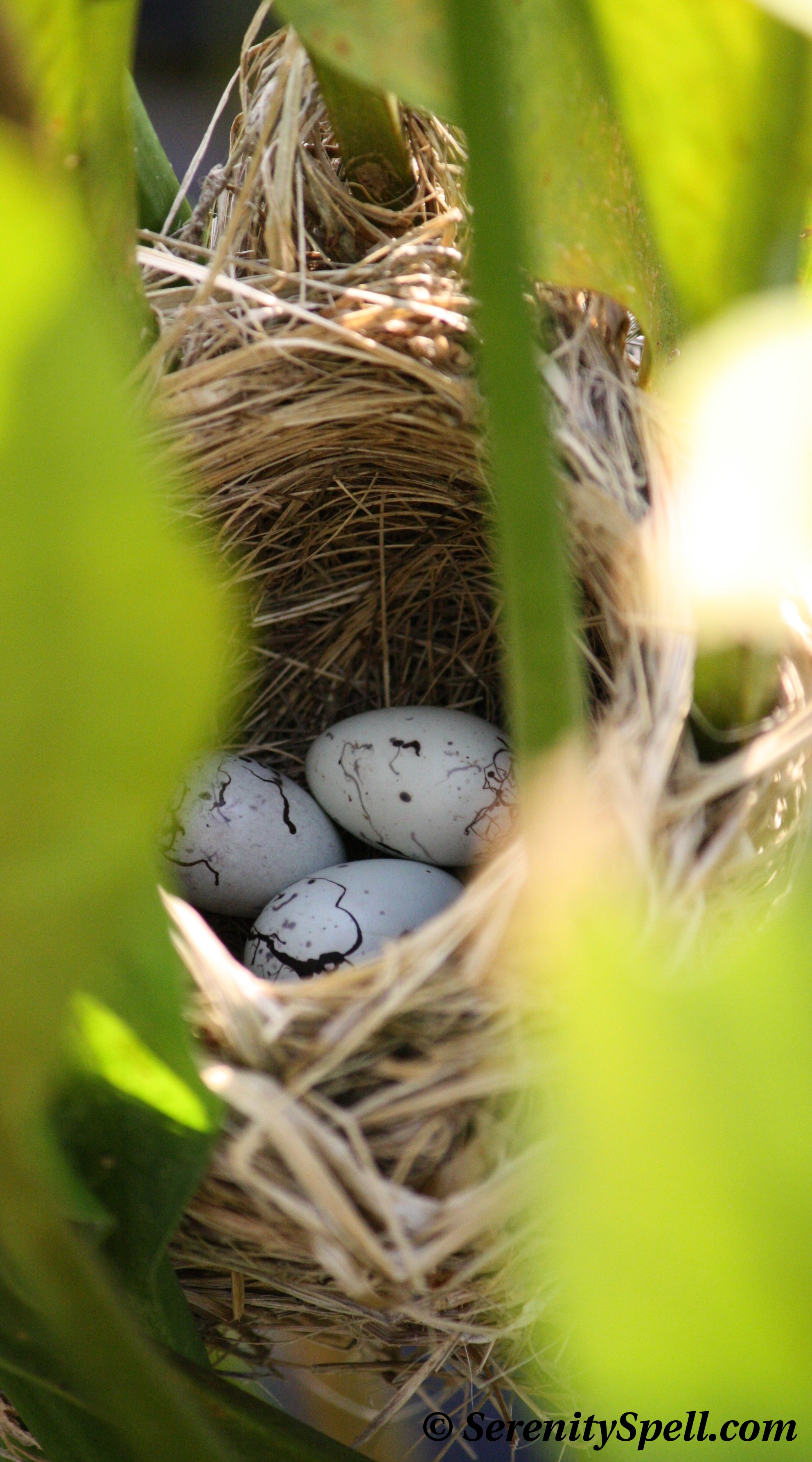
In my recent wanderings, I first became captivated by the spectacular artwork of the Blackbirds’ bluish eggs, marked with brown and/or black Pollock splatters. Incubated by the female alone, they hatched within 11-12 days. Being a large colony, there was no dearth of nests, but it wasn’t always easy to spy the eggs in the marsh vegetation:

Red-winged Blackbird Nest with Eggs

Then I fell in love with the hatchlings: born blind and naked, they were ready to leave the nest 11-14 days after hatching. Chirping away, they were ever-protected by their parents. But time flies quickly….

Red-winged Blackbird Nest with Hatchlings

Red-winged Blackbird Nest with Hatchlings

During recent walks, I began noticing more empty nests, over which I couldn’t help feeling irrationally sad…. Other than empty nests, I spied a momma Blackbird teaching her young ones early flight — or early adventures out of their nest. Was nesting season finished? Were there to be no more Red-winged Blackbird babies?

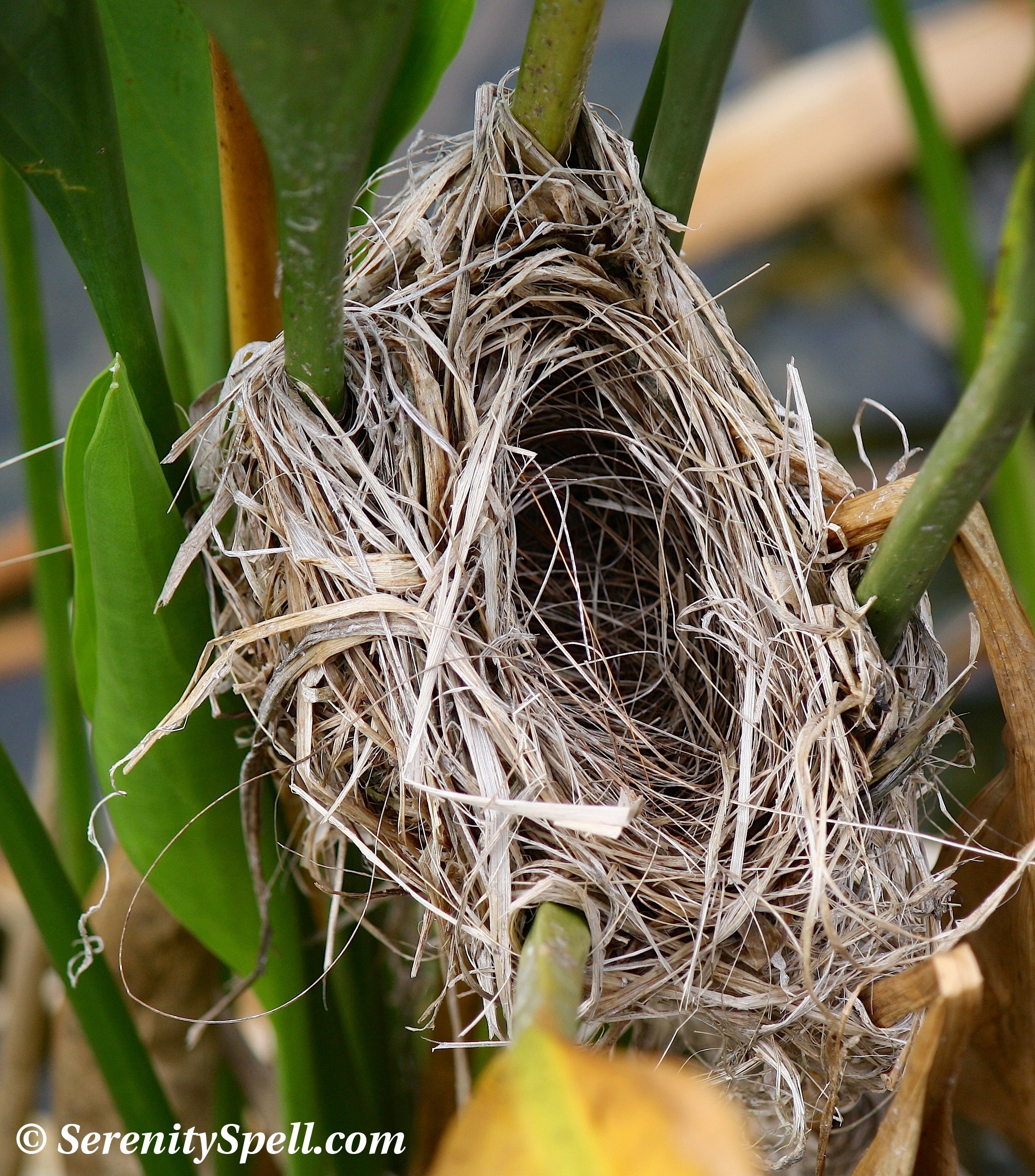
Empty Red-winged Blackbird Nest

Empty Red-winged Blackbird Nest

Empty Red-winged Blackbird Nest

Empty Red-winged Blackbird Nest

But over yonder! What was that commotion…. Lo and behold, a new nest! The male perched sentinel nearby, always the protector, while the female made her way to the nest, to incubate her new eggs. And the cycle continues, hoorah!

Female Red-winged Blackbird on Her Way to the Nest
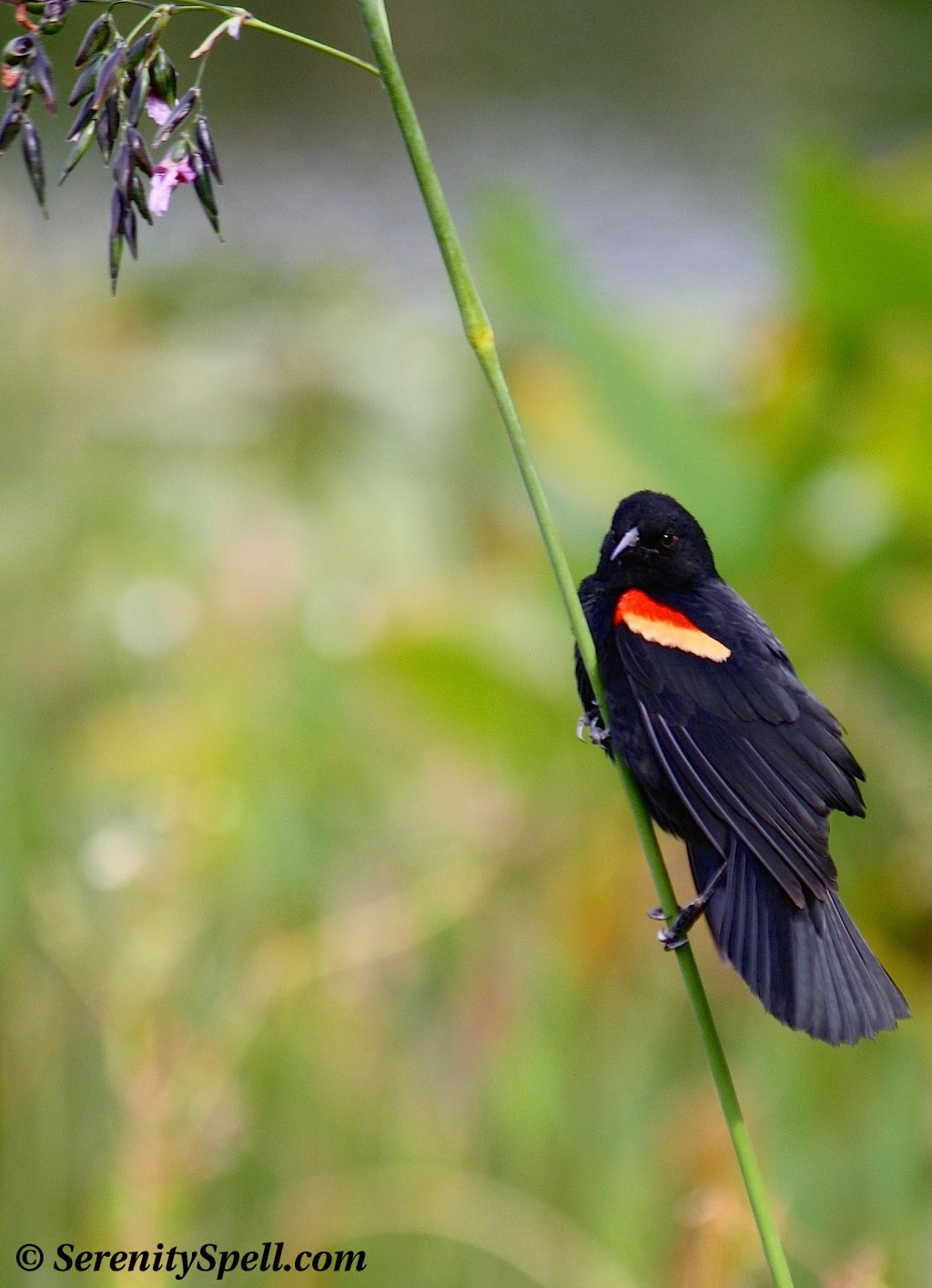
Red-winged Blackbird Sentinel

A new nest, with eggs!!

Red-winged Blackbird Nest with a New Momma

A Lady Grackle in a Pond-Apple Tree

Despite the commonality of these birds, I love to watch them. Well, I love to watch anything and everything when I’m out & about in nature, honestly — they’re all bright gems to me. I recently watched and photographed a Harvest Mouse for a good 15 minutes….

The Common Grackle (Quiscalus quiscula) is a large blackbird that’s often confused with the American Crow. Adult males are iridescent black, with long dark bills, long tails, and pale yellowish eyes. Females are slightly smaller and less glossy — brownish, in fact. Their song is a bit harsh, especially when it’s calm in our protected wetlands and several birds suddenly appear. They’re found across North America east of the Rocky Mountains, being permanent residents in much of this area. As forests were cleared for farmland, their range expanded west. Grackles nest in colonies, hiding their nests in dense trees and shrubs, often near water. These birds forage on the ground, in shallow water, or in shrubs — I’ve seen some interesting scenes of them skimming our wetlands’ duckweed in rapid flight for long periods of time…and I recently caught some photos of such an event. They’re omnivorous, and will steal food from other birds.

Pond-apple Tree Blossoms in the Florida Everglades

Young Pond Apple in the Florida Everglades

I caught this girl resting in a pond-apple tree, a common fixture in our wetlands, marshes, and the Everglades; they’re also known as Alligator-apple (for the fact that alligators will eat the fruit), Swamp-apple, Corkwood, Bobwood, and Monkey-apple. Unable to grow in dry soil and tolerant of saltwater, pond-apples are native to Florida, as well as the Caribbean, Central and South America, and West Africa. The tree averages 30-35 feet in height, and its blossoms are lovely creamy white and pale yellow, almost tulip-shaped. The fruit is apple-sized and mango-shaped, and falls when it’s green or ripening yellow. Edible to humans (it can be made into jam), the fruit serves as food for many species. It can be a bit bitter or tasteless for us, however (although its flesh is quite fragrant) — as my guy can attest to when I demanded he try it (“let’s make jam out of it!”). Pond-apple trees have become a scourge overseas, but in the Everglades they’re a valuable source of sustenance for our wildlife — I’ve seen alligator, raccoon, and all species of turtles munching on fallen pond apples. The trees provide shelter for myriad creatures, and their canopies are used as nesting grounds for all species of birds. Even more interesting, recent studies have shown that its alcoholic seed extract may provide anticancer compounds that could be used pharmaceutically.

Common Grackle in a Pond-apple Tree, Florida Wetlands

Common Grackle in a Pond-apple Tree, Florida Wetlands

Common Grackle in a Pond-apple Tree, Florida Wetlands

Pond-apple Tree: Note the thin trunks growing in clumps