Skip to content

Posts tagged ‘birds’

Don’t Mess with the GBH

It’s nesting time now in our protected wetlands, and a really fun time — the biggest and smallest waders are settled into their annual nests (some of them, including the Great Blue Herons, return to the same nests each year). I’m running a bit behind on the nest-building activities, always a fascinating process to watch. But in the meantime, I couldn’t resist this episode that caught me unawares the other evening. I heard a GBH’s croaking cacophony (select the last option in this list — croaking calls, wing noise — for the best example) in one of the usually quiet rookeries. He or she was obviously not very happy.
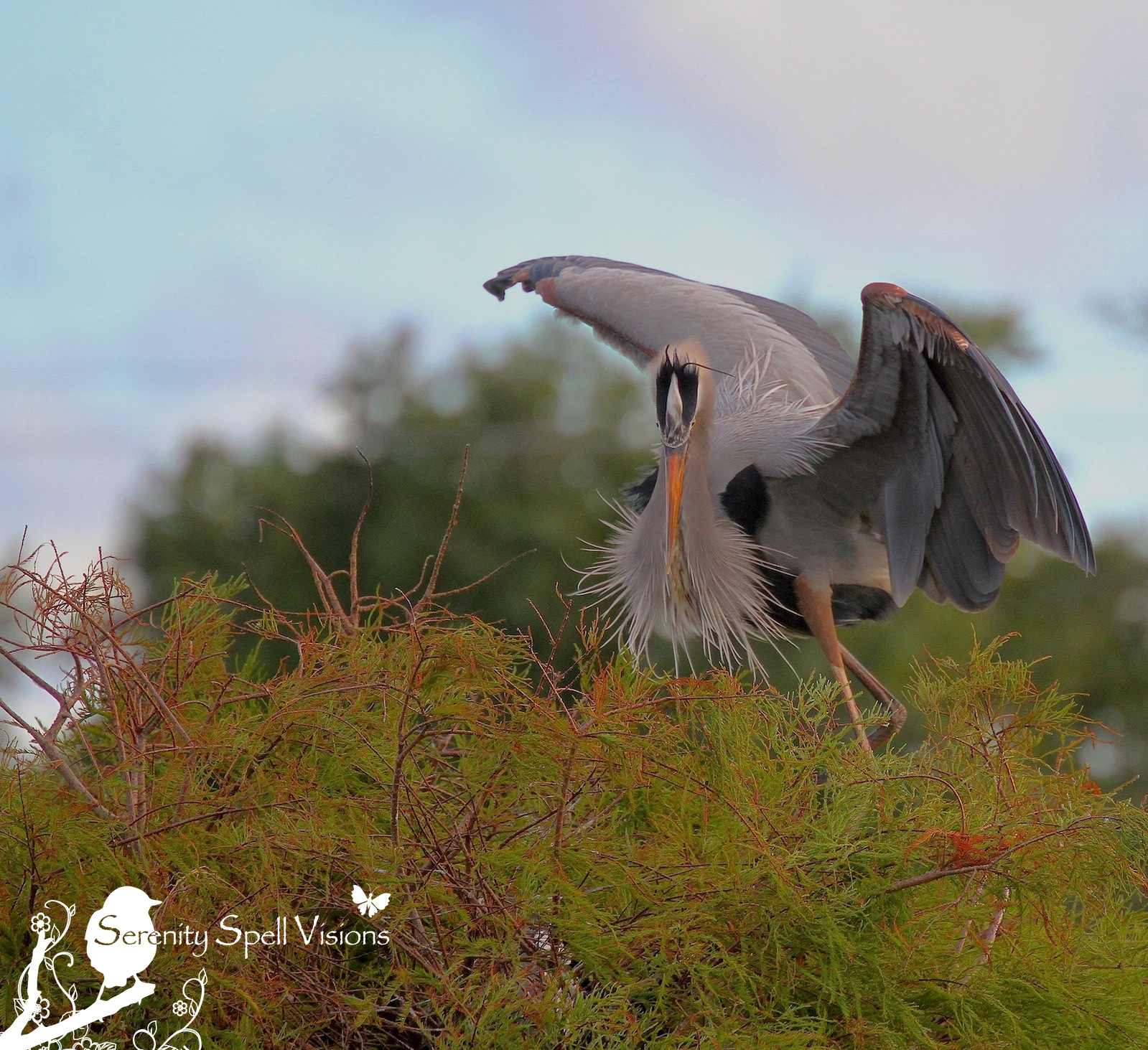
Great Blue Heron, Florida Wetlands

And the tantrum begins… Echoing through the wetlands

At the time, I couldn’t see the source of torment for the heron, who was probably chasing something away from a newly-created nest. The previous night, a group of GBHs was screaming in another rookery, because an alligator swam too close for comfort to their nests. I didn’t see the gator actually nab anything, but the collective croaking, screaming noise could be heard throughout the wetlands.

As it turns out, an anhinga had the gumption to impede on this heron’s space.
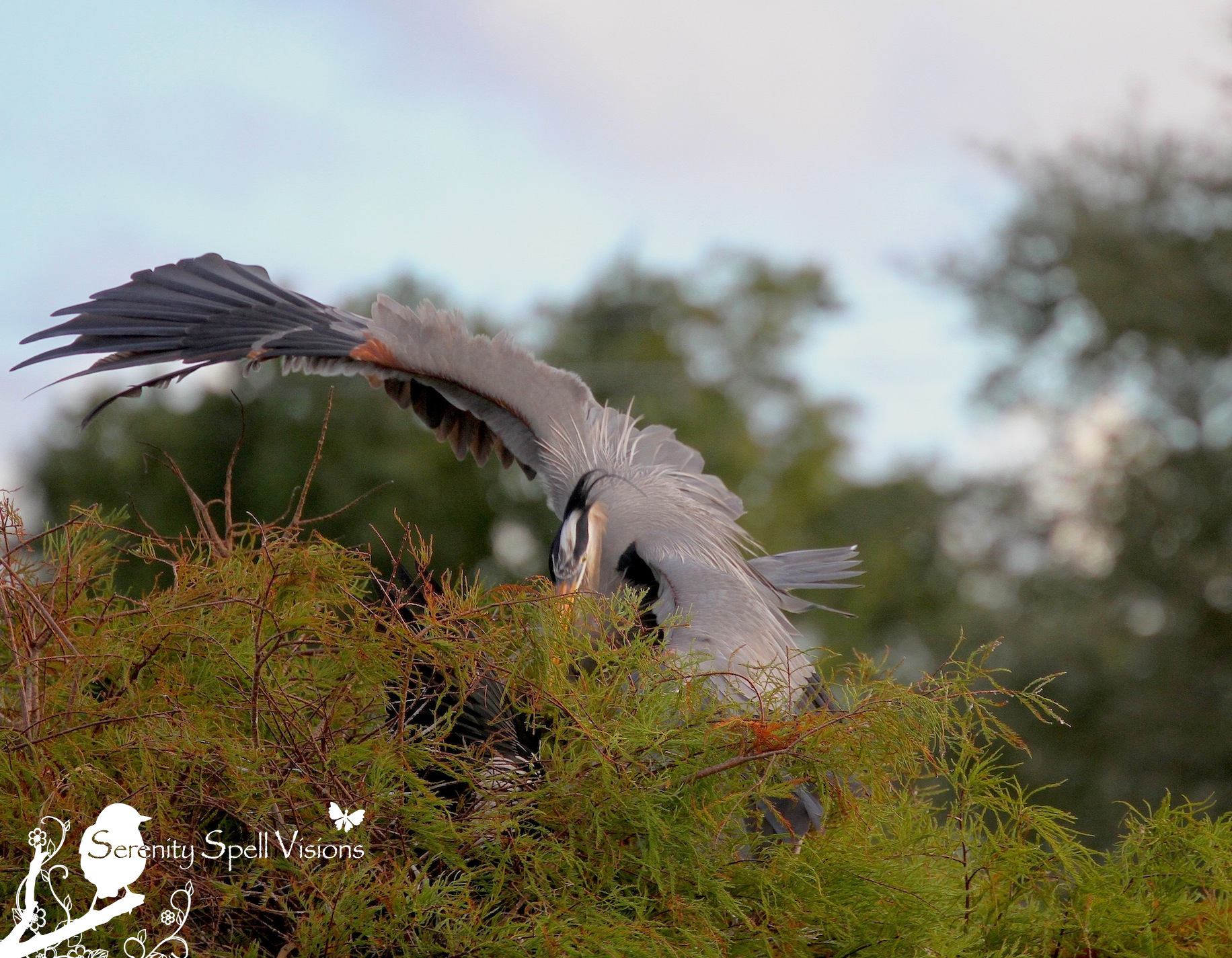
Great Blue Heron, Florida Wetlands

Flushing out the enemy anhinga

The look on the poor anhinga’s face as it’s being flushed out of the rookery is priceless…. Of course I was worried for the poor anhinga: Did he have a nest too, or was he just looking for a comfy spot for the night? Either way, I wish I wasn’t walking onto the scene so suddenly, and had some time to properly prepare for the shot, to include his appalled mug.

Great Blue Heron, Florida Wetlands

Respect the wingspan

And for the Great Blue Heron? Unabashed triumph.
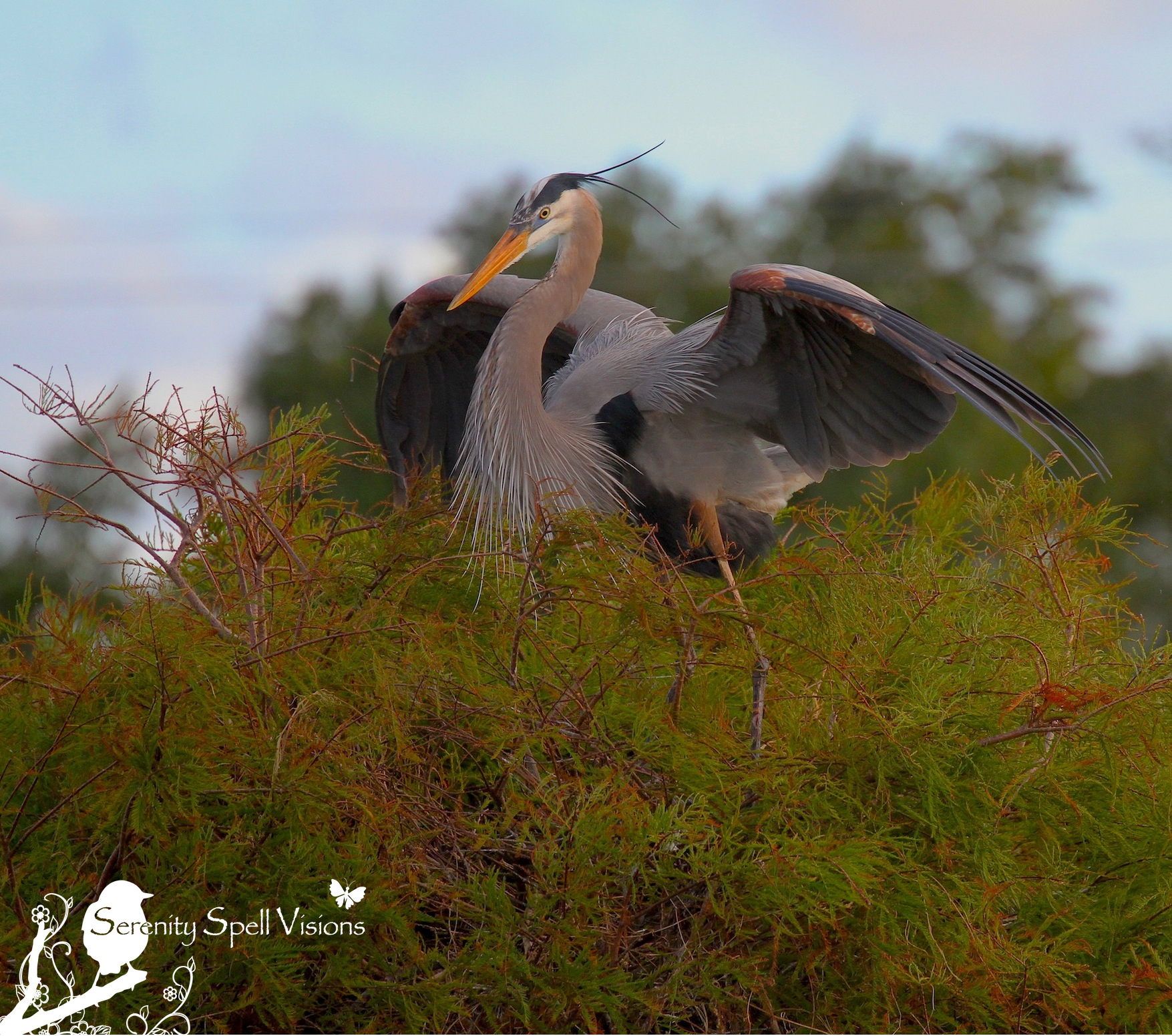
Great Blue Heron, Florida Wetlands

I am queen

A Moment of Zen with a Cattle Egret

Some weeks are easier than others, and this wasn’t one of the easiest — but as the magnet on my fridge dictates, sometimes ya just have to pull on your big-girl panties and move on with it. During such times, I make it a point to run to Nature — it doesn’t matter if I’m visiting the wetlands, hiking up a frenzy, or simply planting in my little yard — anything to re-focus my attentions to something I thoroughly enjoy.

As the mind races, there’s no better place than a natural environment, one in which you can really ground yourself, breathe more freely, and just observe…. These walks have allowed my best walking meditations. And of course there are always the critters to remind you that life isn’t so serious, after all.

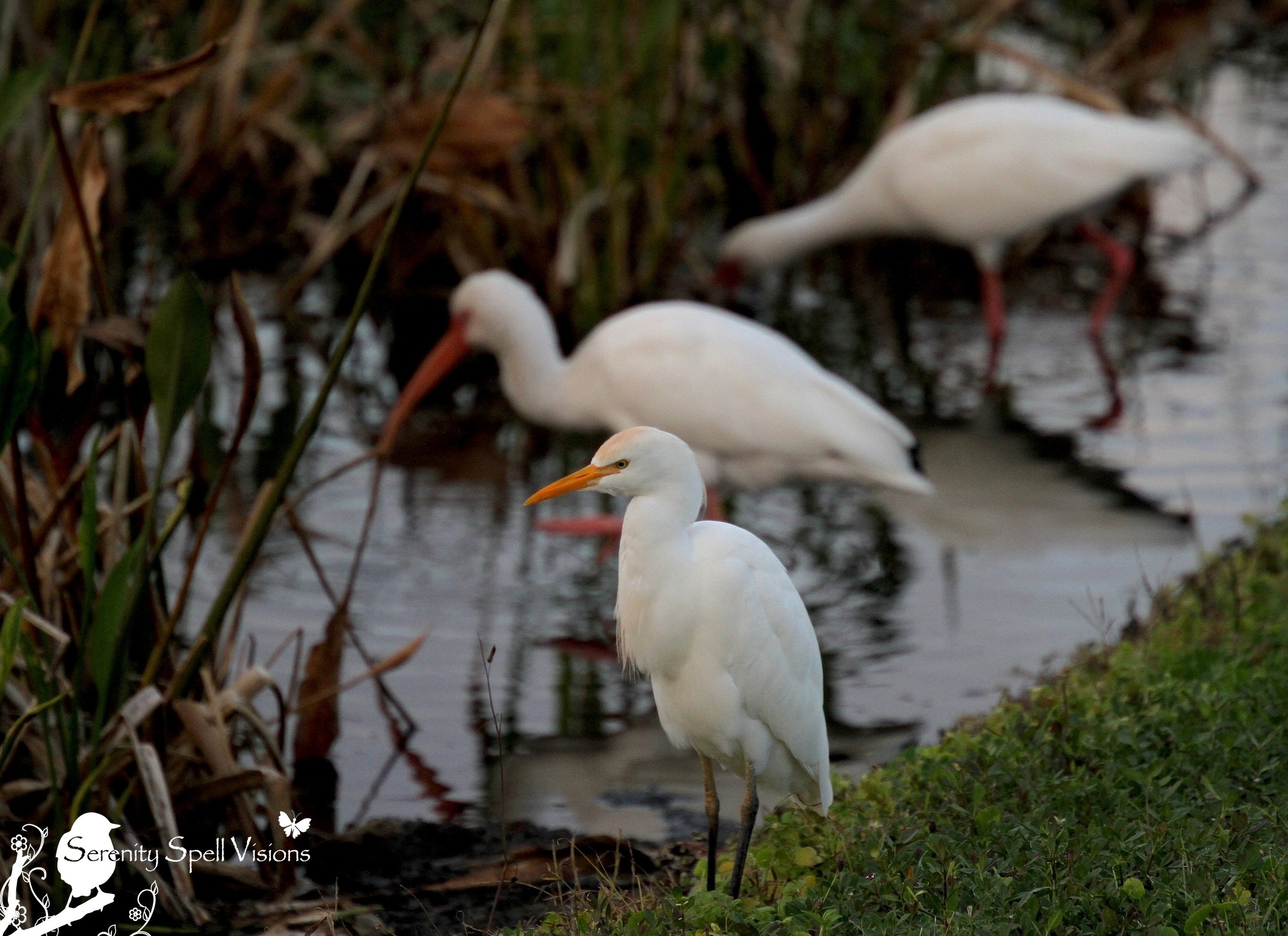
I don’t need the most elegant display to snap out of it, even if it’s temporary. This lone cattle egret was in the company of a group of ibis in our protected wetlands, who were busy grooming for the night ahead. Amid the flurry of their activity, there he sat, content in the setting sun. Thanks, little egret, for my much-needed moment of Zen….

Cattle Egret and Ibis in the Florida Wetlands

Calm amid the hubbub, with the grooming and foraging Ibis

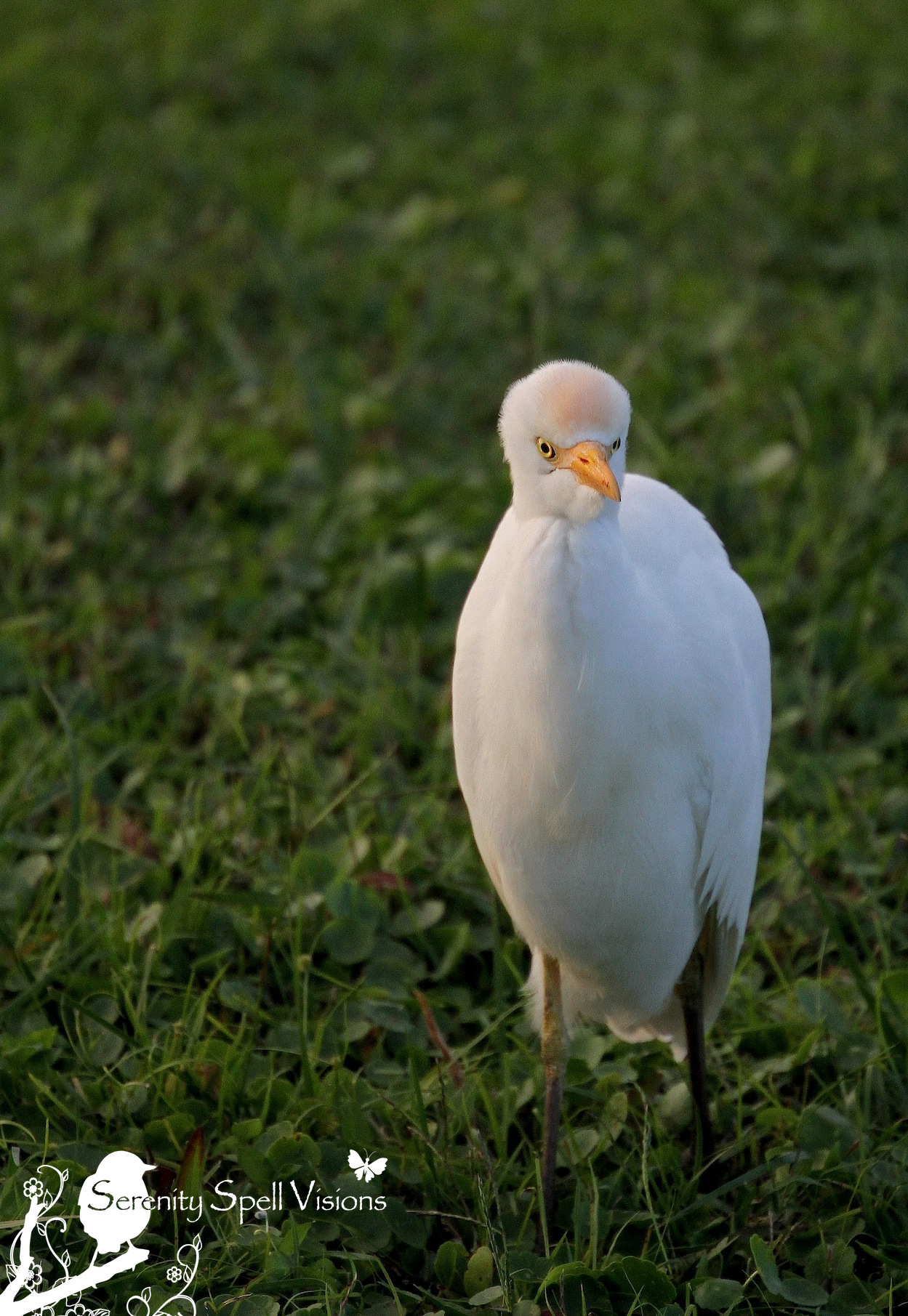
Cattle Egret in the Florida Wetlands

Look how lovely I am, humble and peaceful little Cattle Egret…

Cattle Egret in the Florida Wetlands

….So snap out of it, girlie!

Sweet One

The invariable mark of wisdom is to see the miraculous in the common. —Ralph Waldo Emerson

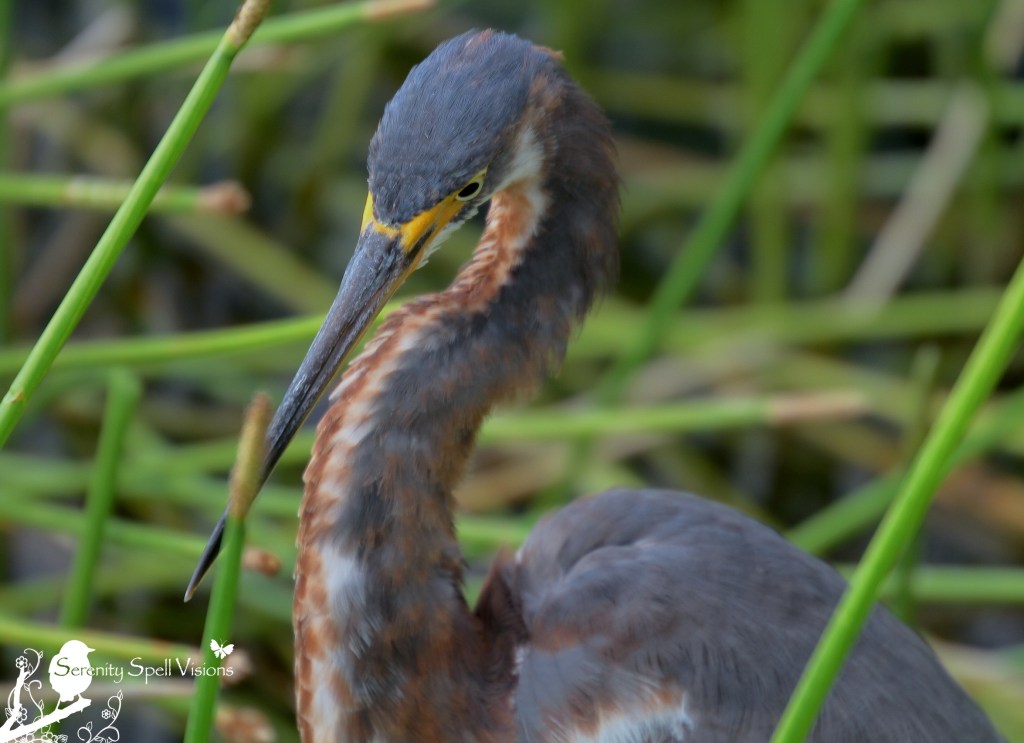
An always lovely and vibrant Tricolored Heron (Louisiana Heron) peeks out from amid the vegetation of our protected wetlands. Here’s to a new year of saving and protecting more space for these sweet and beautiful creatures!

Tricolored Heron, Florida Wetlands

Tricolored Heron

Wail of the Limpkin

Floridians know their cries well. And if you live near water, it’s always a lovely wake-up call, this startling wail. Their wail is the sound of the Everglades and of Florida.

The Limpkin (also called carrao, courlan, and crying bird) is found primarily in wetland habitats, from Florida to northern Argentina. While doing well in areas south of here, this bird is considered SCC — a species of conservation concern — in Florida. This, due to the severe decrease of its primary diet — more on that later — but there is hope for these sweet birds. As with other natural wanderers, I’m seeing them feeding in more creative areas, including canal banks. They’re adapting to their habitat loss, hopefully. Here’s to restoring more of their land, and continuing to protect it for future generations.

Limpkin, South Florida

A Limpkin rests precariously close in the alligator-infested waters of Grassy Waters Preserve

Limpkins inhabit freshwater marshes and swamps, as well as mangroves. The bird averages 25–29 inches in length, and boasts a wingspan of 40–42 inches. Primarily nocturnal, Limpkins are strong flyers and swimmers, and with their long toes, they are able to stand on floating vegetation — which also makes them easy prey for alligators. They wade and forage in the shallow waters, seldom submerging themselves more than halfway. Look for them probing for food in the clear waters, amid the vegetation.

These birds feed primarily on molluscs, and insects, frogs, lizards, and worms when needed. But their diet is dominated by apple snails, which the bird’s bill is perfectly adapted to, since it acts like tweezers. The best way to find Limpkins is to find apple snails — rarely broken in the quick feeding process, these giant snails are a sight unto themselves. Apple snails include species that are the largest living freshwater snails on planet Earth. They’re big.

The survival of the Limpkin depends on these snails — everything is intertwined in Nature. Disturb one facet, a chain reaction quickly begins, and all is upset.

Apple Snails, Riverbend Park

Limpkin Leftovers: Apple Snails in Riverbend Park. Or, as I call them: Giant Alice-in-Wonderland Snails

Fun Facts:

    • The Limpkin’s name is derived from a perceived limp when it walks.
    • These birds — Aramus guarauna — are the only surviving species in the genus Aramus and the family Aramidae.
    • Recent DNA studies have validated a close relationship with cranes, although the Limpkin is often confused with the immature American White Ibis.
    • The Limpkin’s cry is infamous: It has been used for jungle sound effects in the Tarzan films, and for the hippogriff  in the film Harry Potter and the Prisoner of Azkaban.
    • Want to hear the echoing cry of a Limpkin, so very common to our area? Click here!
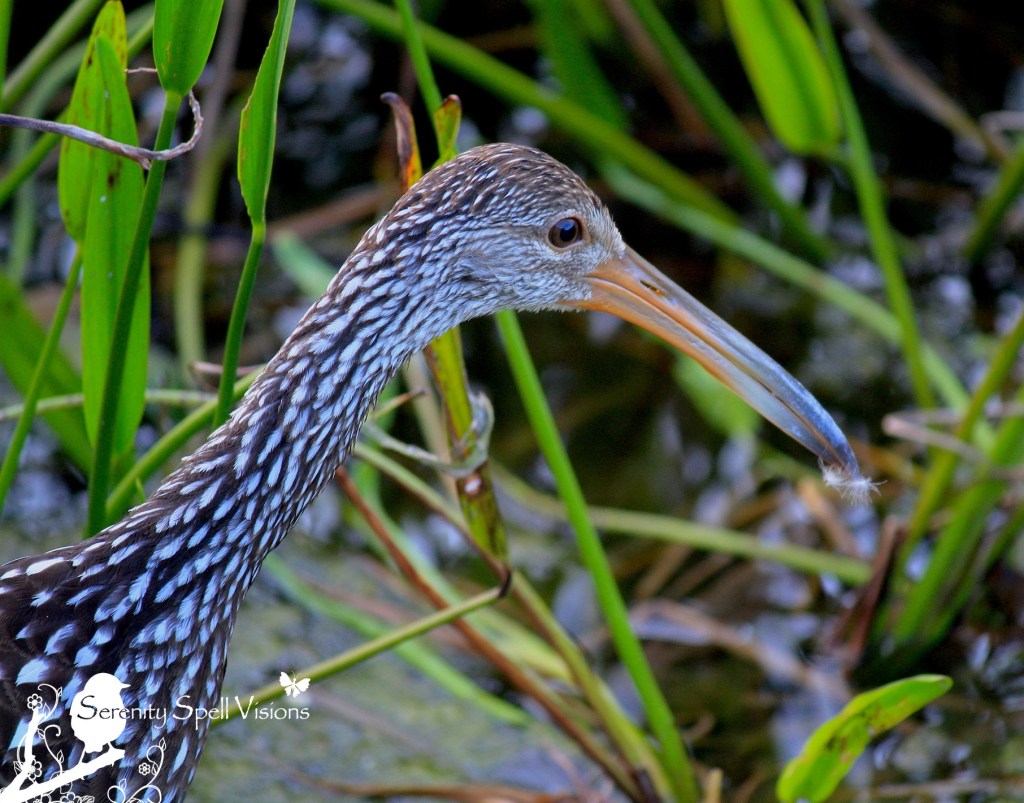
Limpkin, South Florida

Limpkin ready for his close-up in the protected wetlands

Part of:

Eyes of the Everglades

“Never lose an opportunity of seeing anything beautiful, for beauty is God’s handwriting.” —Ralph Waldo Emerson

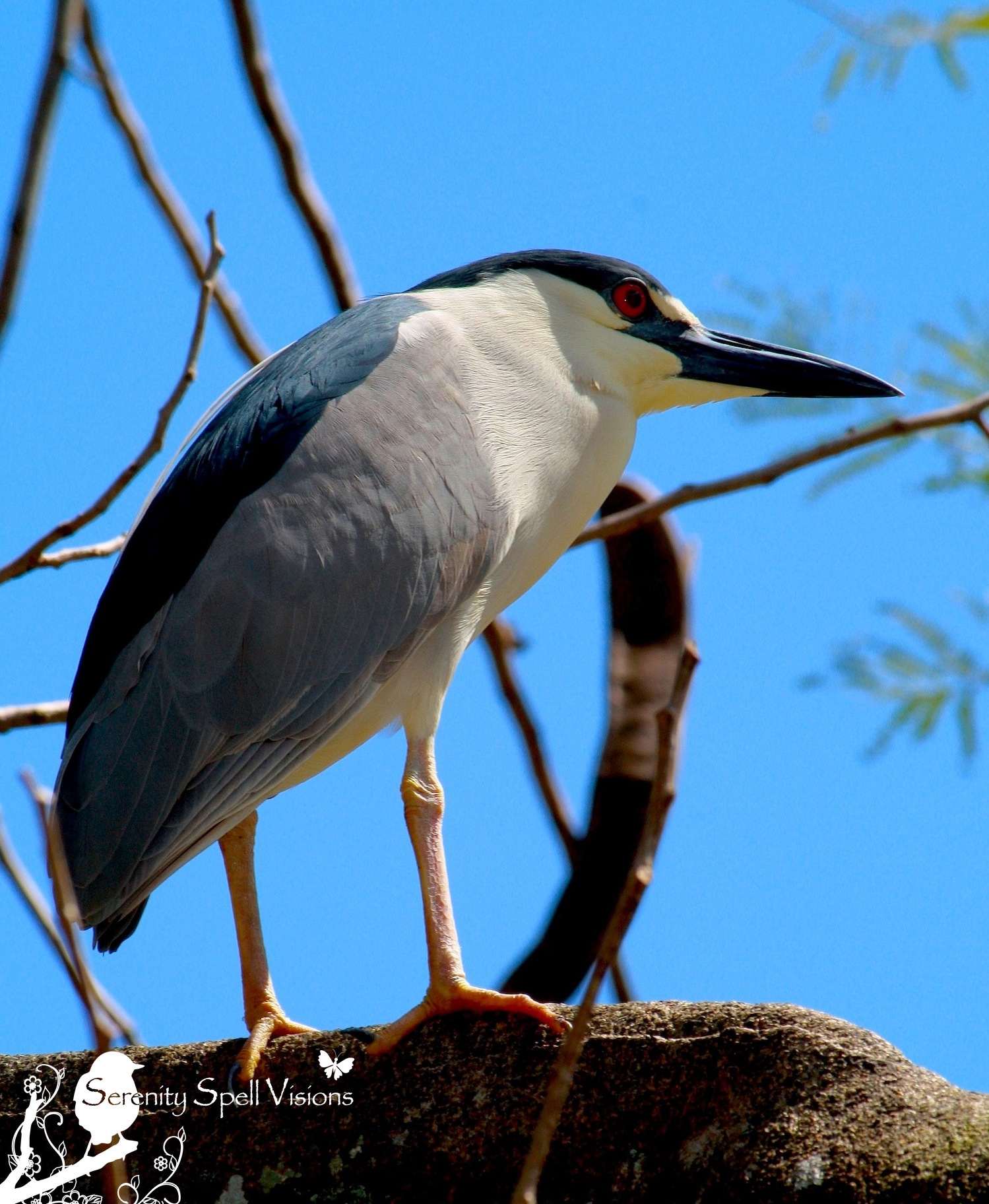
A Black-crowned Night Heron surveys his magnificent Everglades empire against an azure sky, from high in the cypress…. May your weekends be as simultaneously brilliant and serene!

Adult Black-crowned Night Heron