Skip to content

Posts tagged ‘environment’

Gentlemen of the Wetlands

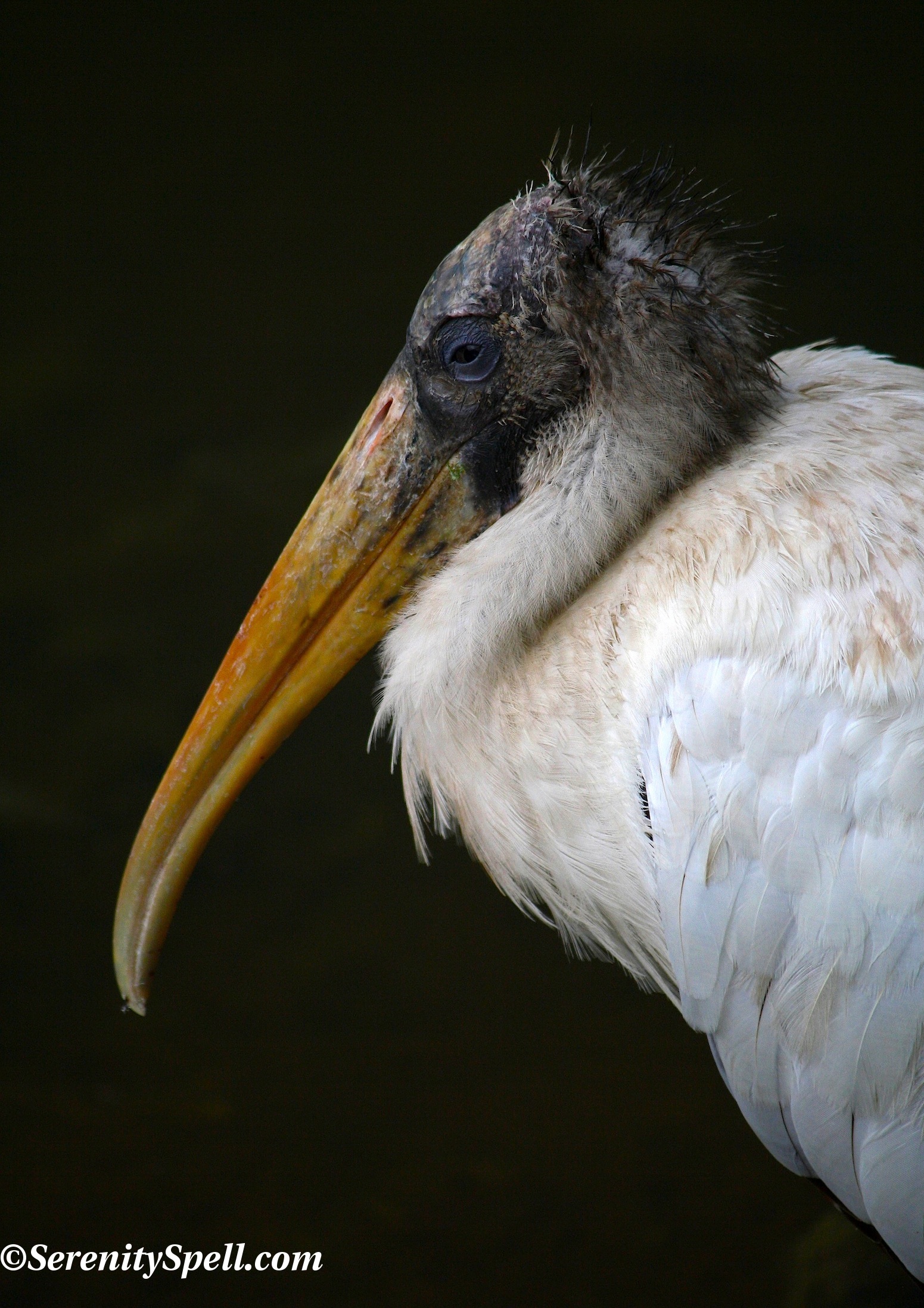
Wood storks (Mycteria americana) — or American Wood ibis — are large wading birds native to North America, found from the coast of South Carolina, throughout Florida, and west to Texas. These guys are unmistakable — standing at three-and-a-half feet tall, with a wing span of at least five feet, they’re a stately presence in our wetlands. They have heavy, long curved beaks and a nearly featherless head, and are covered in white feathers, with black feathers on the wings and tail. They can be awkward in flight, but graceful on land, daintily and slowly placing one leg in front of the next as they make their way through the shallow wetlands.

Wood stork of the Florida wetlands: A gentleman

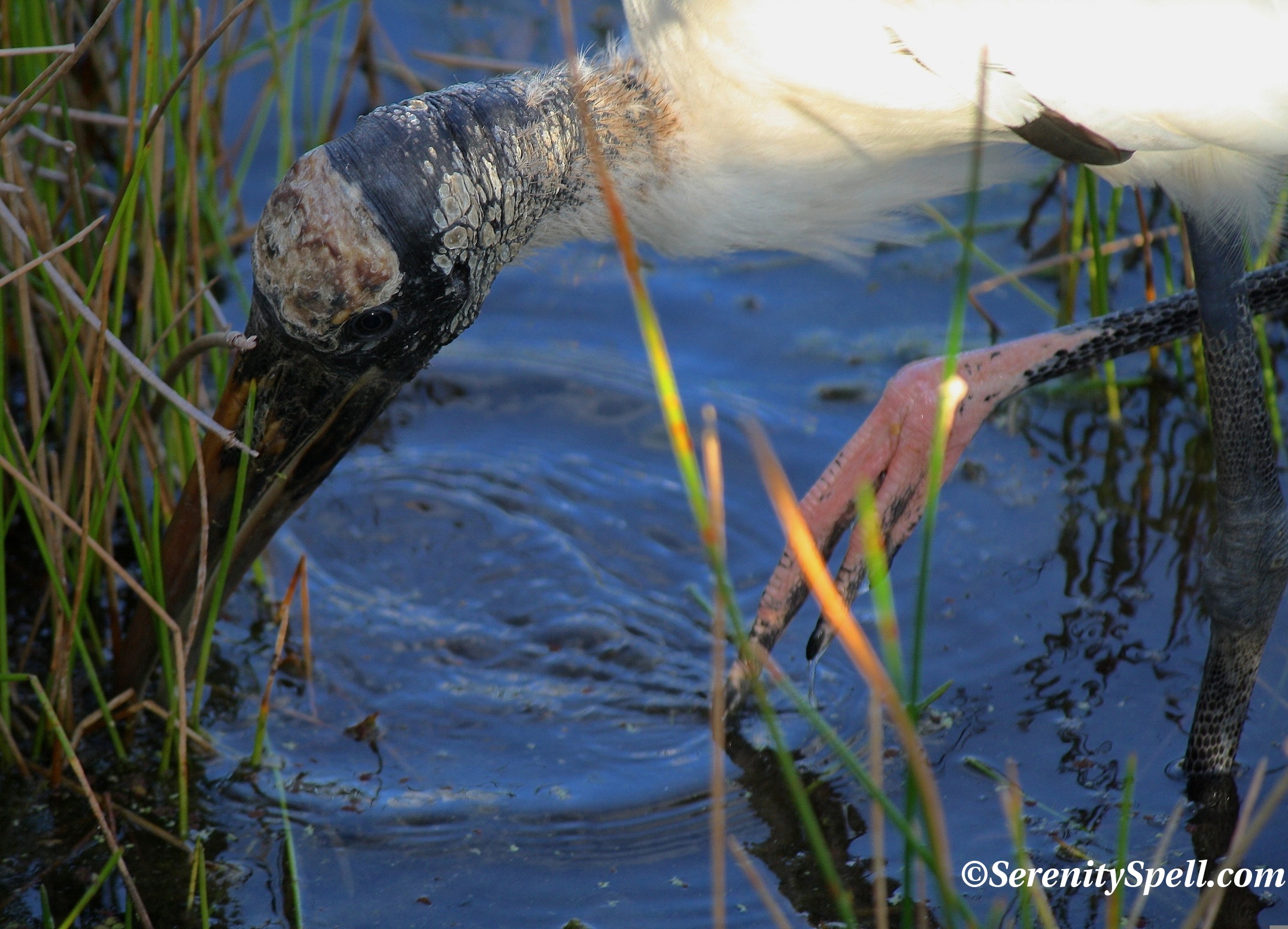
As one might imagine given their size, Wood storks are plentiful eaters, especially during the breeding season. They use their feet to stir the bottom of the shallow waters to collect their food, including fish, crayfish, lizards, tadpoles, shrimp, frogs, insects, and baby alligator. Feeding in waters no deeper than their beak, they use a technique known as “grope feeding” — because Wood storks don’t use their vision, but rather touch, to collect food.

Wood stork “grope feeding” in the shallow waters

Sadly, this gentleman wader is endangered: In the 1930s there were an estimated 60,000 Wood storks in the United States, but only 10,000 live today, mostly due to habitat loss and/or disruption of their environments. Like so many other species, the disappearance of the Wood stork would signal the loss of a crucial component of our wetlands.

Save the wetlands!

Fun Facts:

  • The reflex of a Wood stork’s bill after it touches food is considered the fastest of any reflex in the vertebrate world!
  • A typical Wood stork greeting involves both birds raising and lowering their heads, with bills agape.
  • Wood stork courtship involves bill clapping. Sometimes bill clapping is on the part of a male challenging other storks who may come too close to his chosen nesting site; other times, the loud and distinctive bill clapping can be heard throughout rookeries when the male uses his bill to strike the bill of the female.

A Return to Cypress Creek

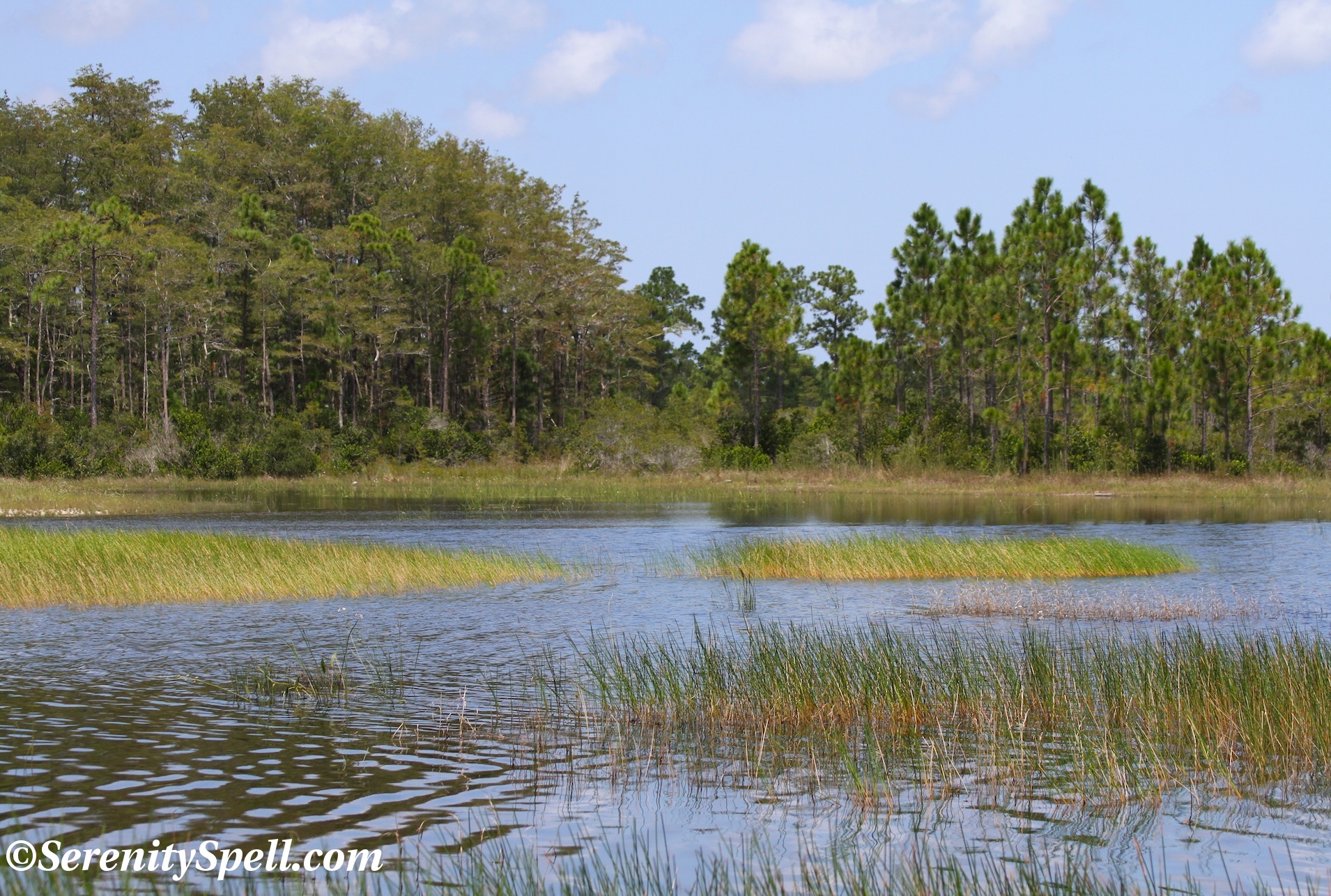
The last time we visited Cypress Creek Natural Area, we were thrilled to explore part of its 2000 acres of newly restored sensitive pine forest and wetland habitats. We were even more ecstatic to learn of the county’s continued aggressive preservation and restoration efforts of the area.

Restored Everglades Vista of Cypress Creek Natural Area in Jupiter, Florida

Part of the Northeast Everglades Natural Area (or NENA, which holds approximately 165,000 acres of conservation land in northern Palm Beach Country and southern Martin County), and serving as a buffer for the Loxahatchee Wild and Scenic River, Cypress Creek is a valuable part of the Everglades ecosystem. Managed by Palm Beach County, current restoration activities in Cypress Creek include the removal of invasive non-native vegetation, filling miles of ditches (we continue to witness these efforts), changing the elevations of shell mining pits to encourage re-vegetation of native plants, and improving the Old Indiantown Road grade — now known as the Historic Jupiter-Indiantown Trail — for use as a multi-use trail.

Cypress Creek’s restored Everglades habitat

A Great egret in the restored Everglades habitat of Cypress Creek: I see your brightness, fella

Cypress Creek’s restored Everglades habitat

We recently hiked a different section of Cypress Creek, and saw loads of animal tracks due to the fact that not many humans probably make it out to where we ventured — deer, coyote, bobcat, wild boar. It was a wonderful sight to see, and I hope that the county continues it preservation efforts to protect this critical and threatened habitat, returning it to its full splendor…and providing a home for the wildlife once again. It’s wonderful to witness!

The remnants (slash pines) of a controlled (?) burn

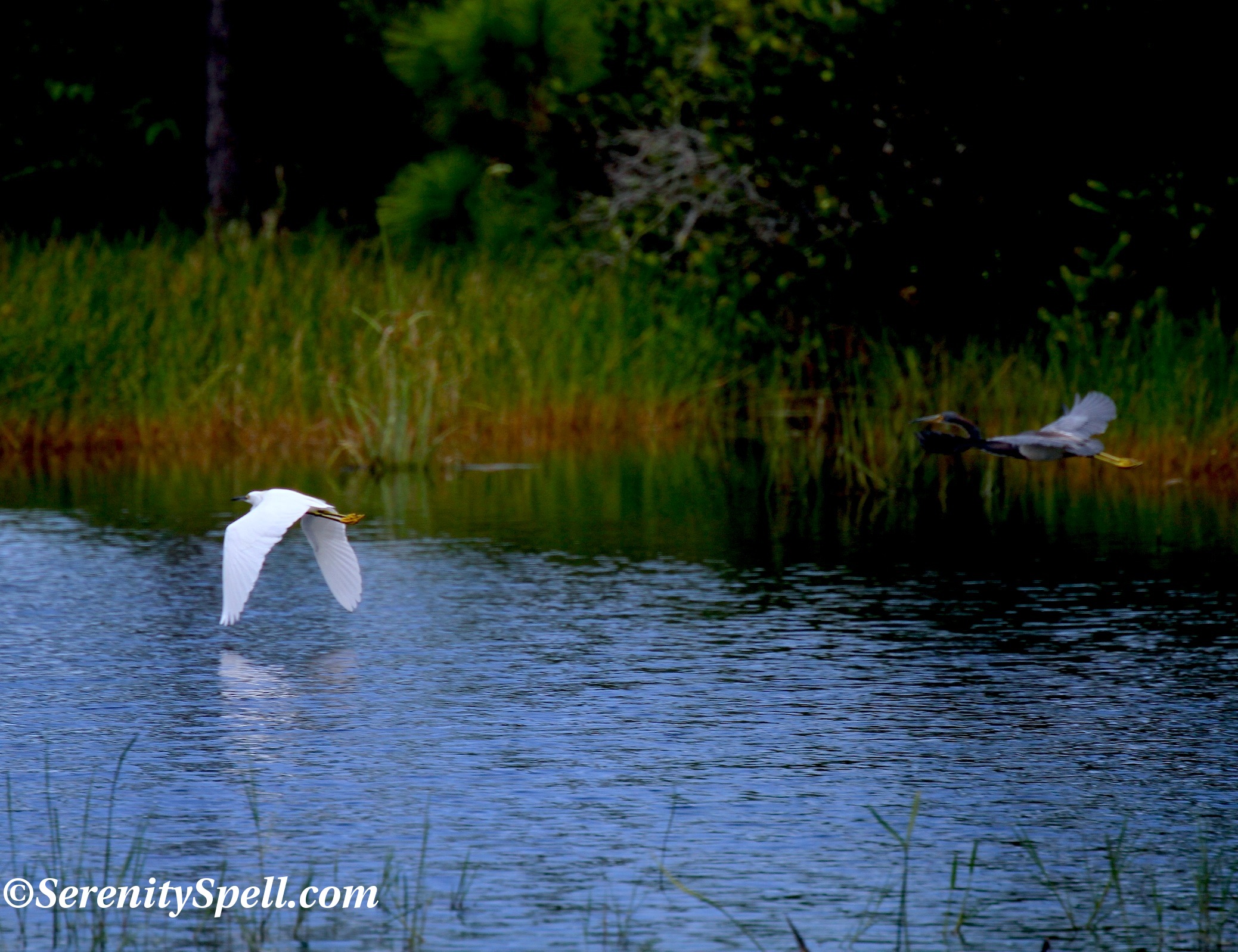
Wading friends: A cattle egret and tricolored heron were inseparable

Overlooking the restored Everglades habitat: We need to get over THERE. Trail was flooded, however… We made it, but it was dicey and involved lots of high-steppin’ through the swamp

Gator check… Good to go. OK for foto session.

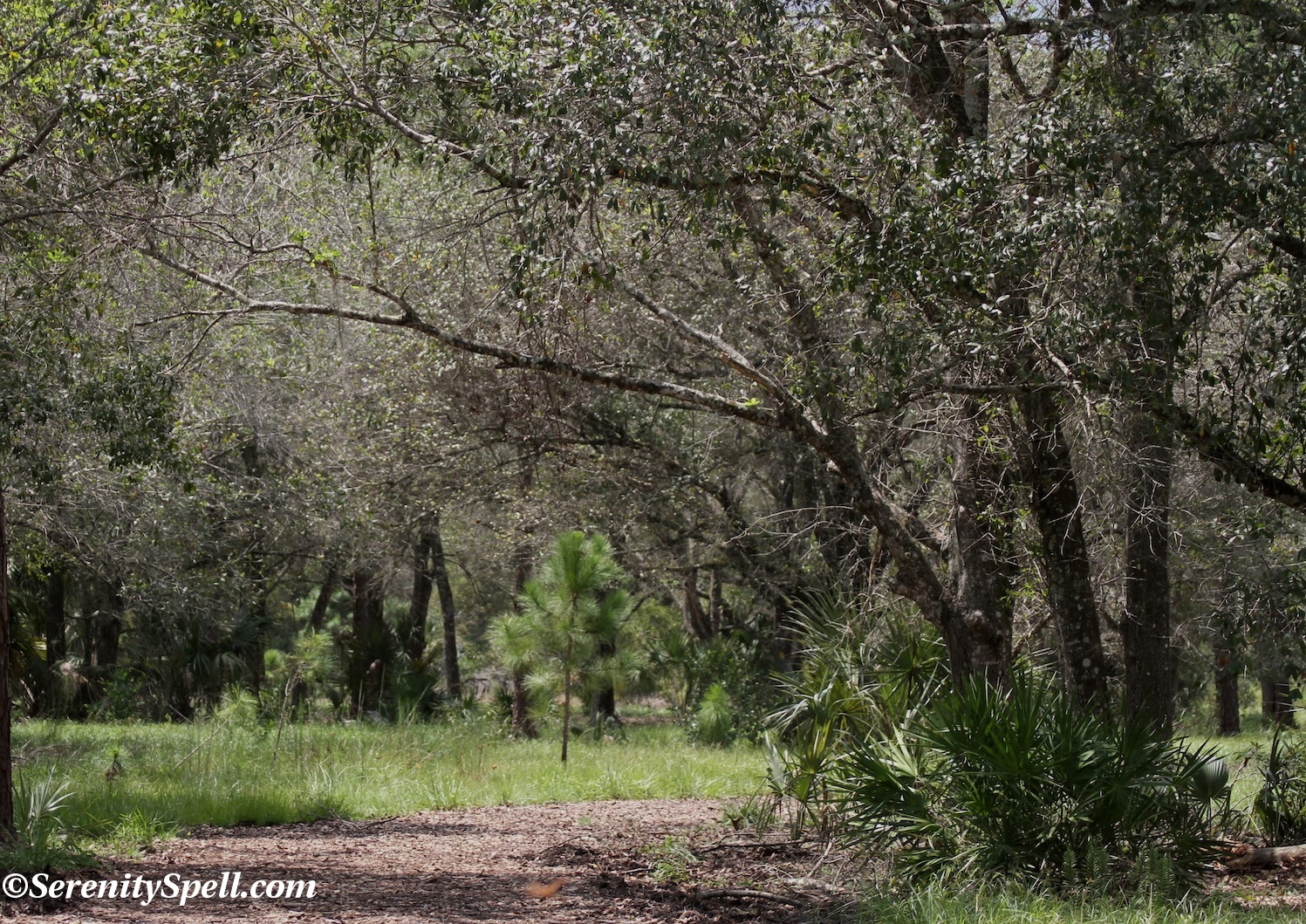
Wonderful old live oak canopies of Cypress Creek Natural Area

Storms over the Wetlands

I love to take advantage of cloudy weather — one quickly learns to appreciate the clouds of South Florida, especially on longer hikes. But a sublime dark afternoon can quickly turn, forcing one to skedaddle for safety. But NOT before visiting with some perfectly wonderful critters. Here, in the protected wetlands I spied a momma gator and her 2-week old babies, and some lovely preening waders, preparing for their evenings. Images forthcoming; I was happy to contend with the rain for them!

Approaching storm over the Wakodahatchee Wetlands

Cloud cover isn’t dissipating. Hm. But I’m still with momma gator…

Florida’s clouds are fantastical and fabulous

Sigh. Guess it’s time to leave… Lightning over the Everglades, approaching the wetlands

Always a show

Our Snakes Swim! And: Learn How to Spot a Non-Venomous Water Snake


The love for all living creatures is the most noble attribute of man. ―Charles Darwin

We have lots of snakes in South Florida, in the Everglades region — and like other parts of the country, most are non-venomous, with a few poisonous critters thrown in for good measure. The Cottonmouth, Rattlesnake, and Coral Snake are Florida’s more notable poisonous snakes — but there are only 6 species that are venomous and a known danger to humans. SIX! The remaining are non-venomous, and vital members of our ecosystem.

Banded Water Snake, Florida Wetlands

But if you’ve seen the Discovery Channel of late — or the History Channel’s “Life After People” series — you’ll know of the Everglades’ relatively new and constant battle with pythons. In fact, just recently on August 15, the biggest python was captured in the Everglades National Park — a female measuring 17 feet, 7 inches, and carrying 87 eggs. WHOA. Wrap your head around that size (and egg quantity) for a moment. While she broke records, these invasive pythons continue to wreak havoc on native Everglades wildlife; these snakes that were brought to Florida as a result of the relaxed regulations in the trade of exotic reptiles are decimating the local populations of a sensitive and threatened ecosystem onto which they were set free.

But fortunately, I didn’t see her; I saw water snakes during our last venture! This guy is a common water snake in our area — the Florida Banded Water Snake. They prefer freshwater habitats, and can be found in the shallow waters of wetlands, swamps, marshes, ponds, lakes, streams, and rivers. They’re native to the peninsula, and to the extremities of southeastern Georgia, and feed on live and dead fish and amphibians. Like other snakes, the Banded Water Snake plays a vital and significant role in our ecosystem. As predators, they feed on a variety of creatures, and can control the rodent populations. Snakes are also important prey for other species of predators. The presence or removal of snakes from any area affects the overall health of many ecosystems — and continued development threatens snakes’ survival.

I see a swimming ssssnake!

Lovely stripes of the Banded Water Snake

Many people automatically assume water snakes are venomous — this is actually far from the truth. Most, nearly all in fact, are harmless and non-venomous to humans — although like any wildlife, they have a mouth full of teeth, and will bite to defend themselves. Sadly, many of these perfectly harmless snakes are killed by ignorant humans — so to avoid any confusion, here’s an easy way to distinguish non-venomous water snakes from the Cottonmouths:

  • Water snakes’ eyes can be seen from the top of the head — as in the picture below — while you can’t see the eyes of Cottonmouths from above
  • Water snakes’ pupils are round, while those of the Cottonmouth are vertical and cat-like
  • There is no facial pit on the side of the head between the eye and the nostril with water snakes — but there is with Cottonmouths
  • The tops of water snakes’ are more rounded, while those of Cottonmouths are flat and triangular

Feeling my way around; Look at my eyes…

We often encounter snakes on our hikes — water and land snakes. Sometimes, we’re not sure if they’re venomous, and we ALWAYS leave them alone. Well… Except for the hurt Cottonmouth in the road we saved. And those snakes we knew to be non-venomous, like the very large Brown Water Snake that somehow ended up in my interior closet (how he got there, I’ll never know…?). Even the kitties were frightened of that poor scared — and massive guy.

Most snakes aren’t aggressive and will flee when humans approach, so they’ll only defend themselves — striking out or biting — if they’re feeling cornered, threatened, or are handled. An inordinate amount of snakebites are on the hands and arms, due to handling snakes. Be smart, and above all else — be respectful of wildlife and their land.

Banded Water Snake, Florida Wetlands

Visit the blog Hinterland Village Resort, for a post on A Snake Rescued in India!

Fun Fact:

Unlike land snakes, which lay eggs, the Florida Banded Water Snake bears live young! Mating occurs during the mid-winter and spring, and litters of 20 – 30 young are born in the late spring through summer. Baby Banded Snakes are 7 – 10 inches at birth.

Goodbye to You, Isaac!

Since Friday evening, we felt Isaac’s feeder bands with increasing force — Sunday and Monday were particularly…”active.” If you haven’t witnessed a tropical storm, hurricane, or their feeder bands, it’s a most amazing and beautiful sight — to stand in the open and watch a storm’s dark feeder clouds rapidly circling around you. The sheer force and expanse of these storms is awesome, and can put things in perspective.

However, I’m particularly grateful today, given our flooded neighborhood and city, that I freelance / work from home — GRATITUDE!

Flooded cul-de-sac

A new lake in the cul-de-sac! The other streets were equally…damp

And on another bright spot, the fish and ducks are VERY happy with the extra real estate.

Thanks St. Francis, for keeping those waters just a few feet from our little home….

A Motled Duck surveys her newly expanded lake

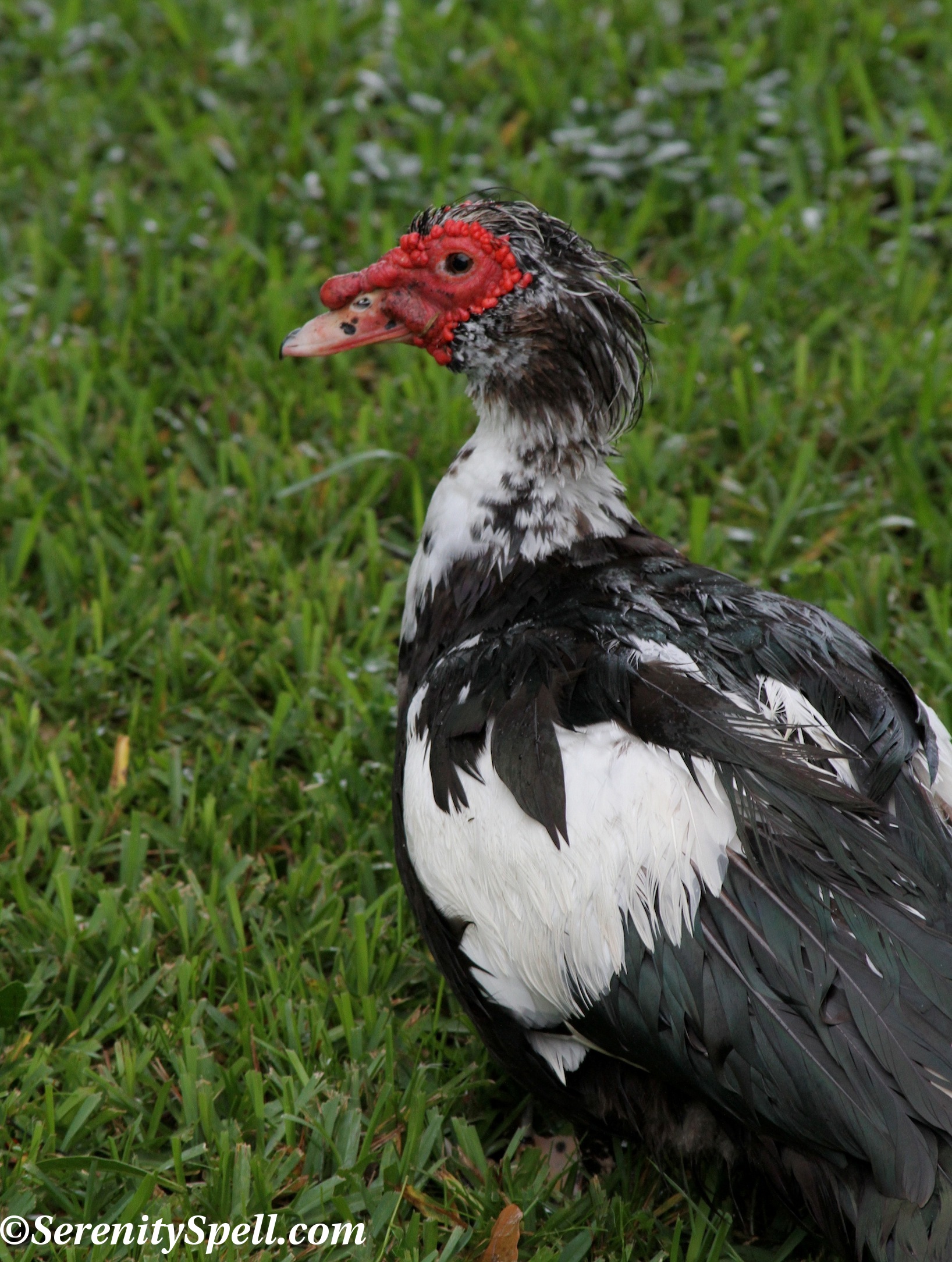
A happy Muscovy Duck eating at the water’s edge — near the house

An anxious Mouse surveys the lake, staying far above the flooded porch floor

Now, sending good wishes and love to the northern Gulf Coast, as a strengthening Isaac approaches on Katrina’s anniversary.