Skip to content

Posts tagged ‘photography’

Alligator Babies

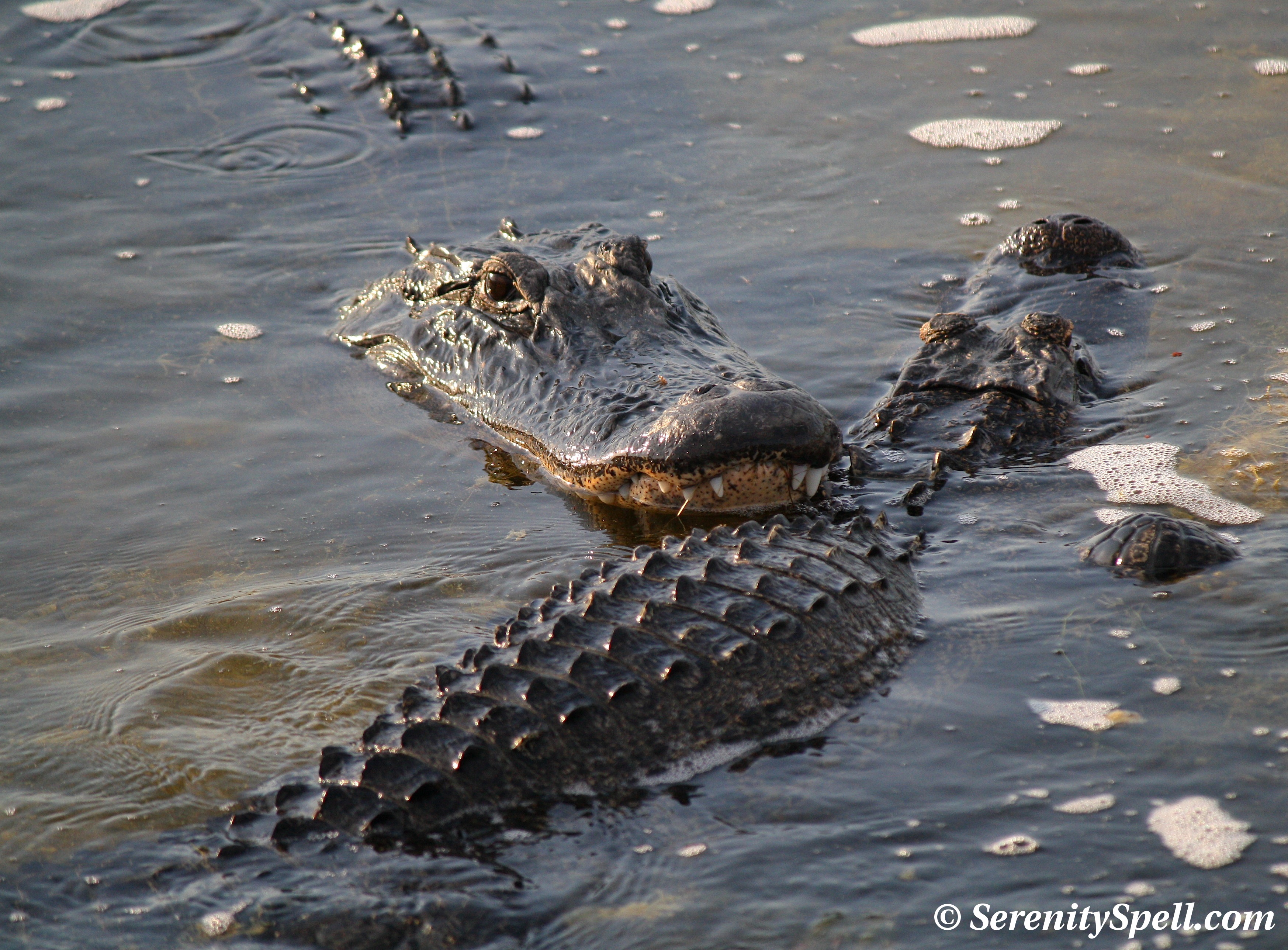
Alligator and Duckweed in the Green Cay Wetlands

Twenty million years as a resident of planet Earth, and counting…. Scientists believe that the American alligator resembles animals that inhabited our planet as long as 100-150 million years ago — and that they may be linked to creatures dating 50-65 million years ago, managing to avoid the extinction that killed off their prehistoric contemporaries, the dinosaurs. A member of the crocodilian family, there are two alligator species living in the world today: the American alligator (Alligator mississippiensis) and the Chinese alligator (Alligator sinensis).

Once Nearly Extinct

Sadly, American alligator populations suffered tremendously throughout the 20th century, when they were hunted to near-extinction for their hides. Since the Endangered Species Act of 1973 however, these amazing creatures’ populations continue to grow, and illegal poaching is not the issue that it once was. Before this hunting was controlled, an estimated 10 million alligators were killed for their skins. Twenty million years on planet Earth, and we nearly managed to wipe them out for handbags.

Nesting and the Young
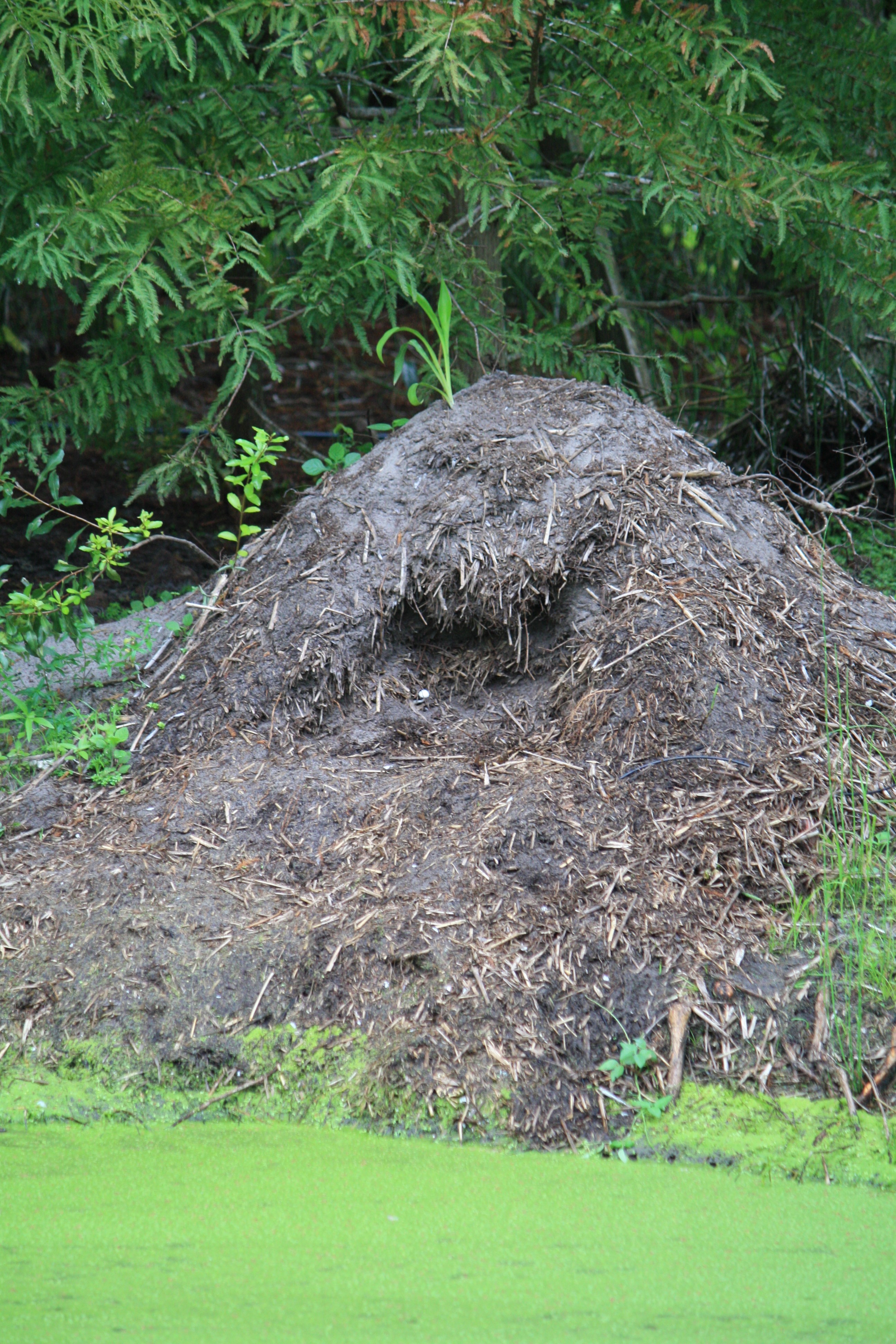
Alligator Mound / Nest

After an elaborate courtship female alligators construct their nests, which are comprised of vegetation, sticks, leaves, and mud and located in a sheltered spot in or near the water. She lays 20-50 eggs, and covers them under more vegetation, which heats as it decays, serving to incubate the eggs. The female will remain near the nest throughout the 65-day incubation period, protecting it. If a mother alligator is killed or removed, she can’t protect her nest or young — and the hatchlings are doomed. *Leave wildlife alone.*

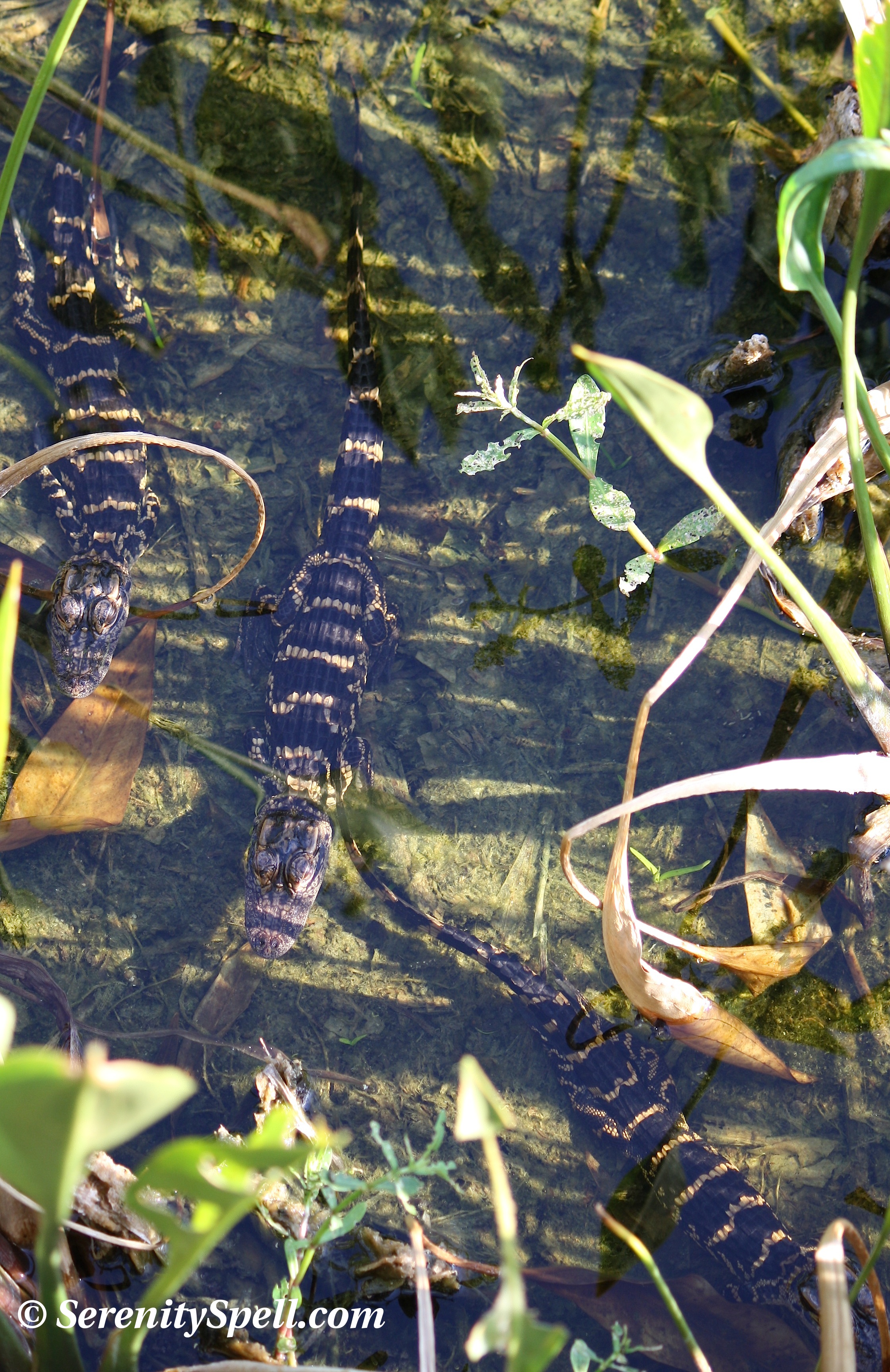
Hatchlings are 6-8 inches long, and are near-replicas of their parents, save for a series of yellow and black stripes which camouflage beautifully with the surrounding marsh roots. For five months, they’ll remain with the mother before finding their own ways. We typically see 5-10 baby alligators survive in our local protected wetlands. Perhaps less. Common predators that prey upon the juvenile alligators include snapping turtles, snakes, raccoons, bobcats, raptors, and even larger alligators. But when we find them? Oh my; the adorableness level is ridiculously high.

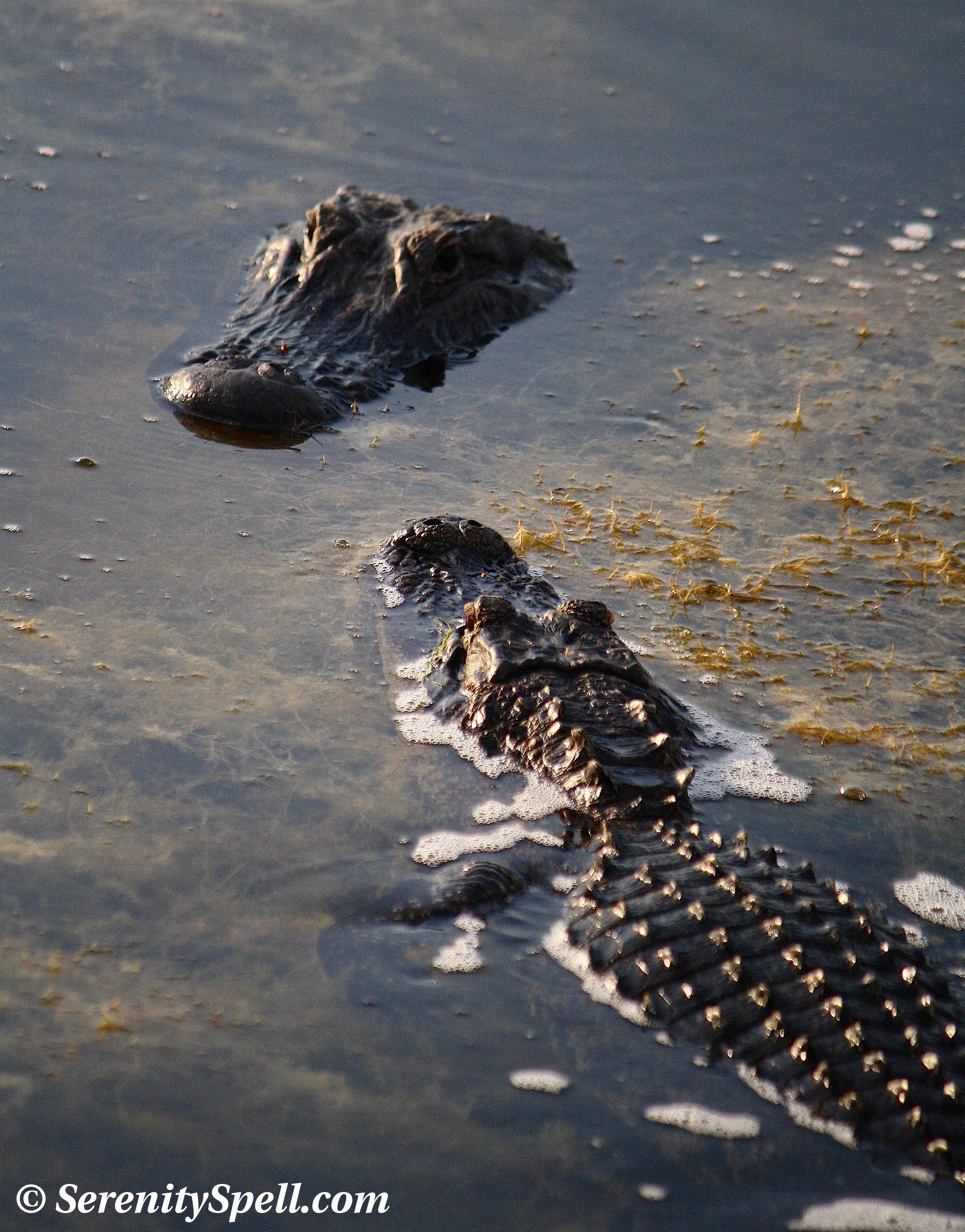
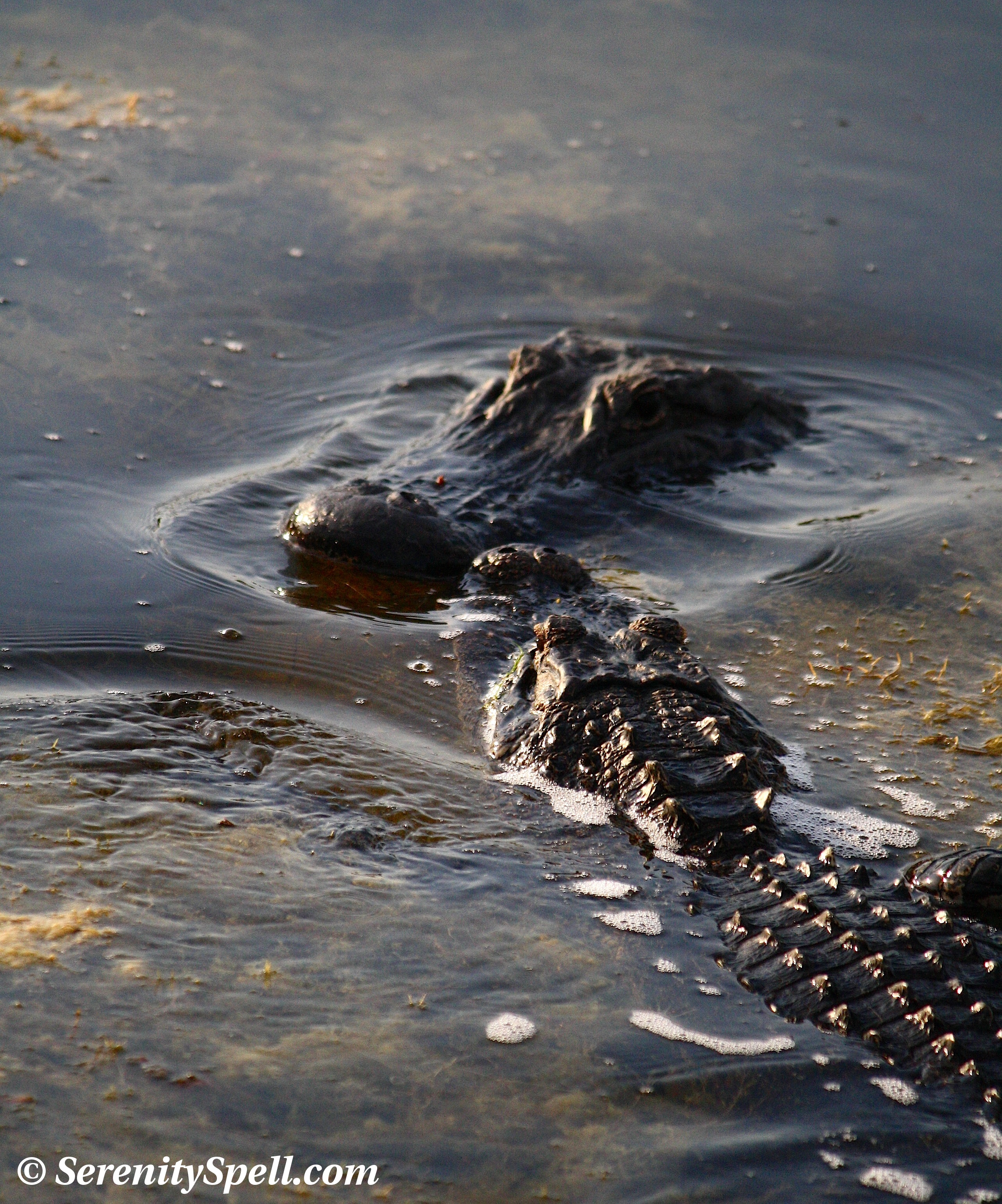
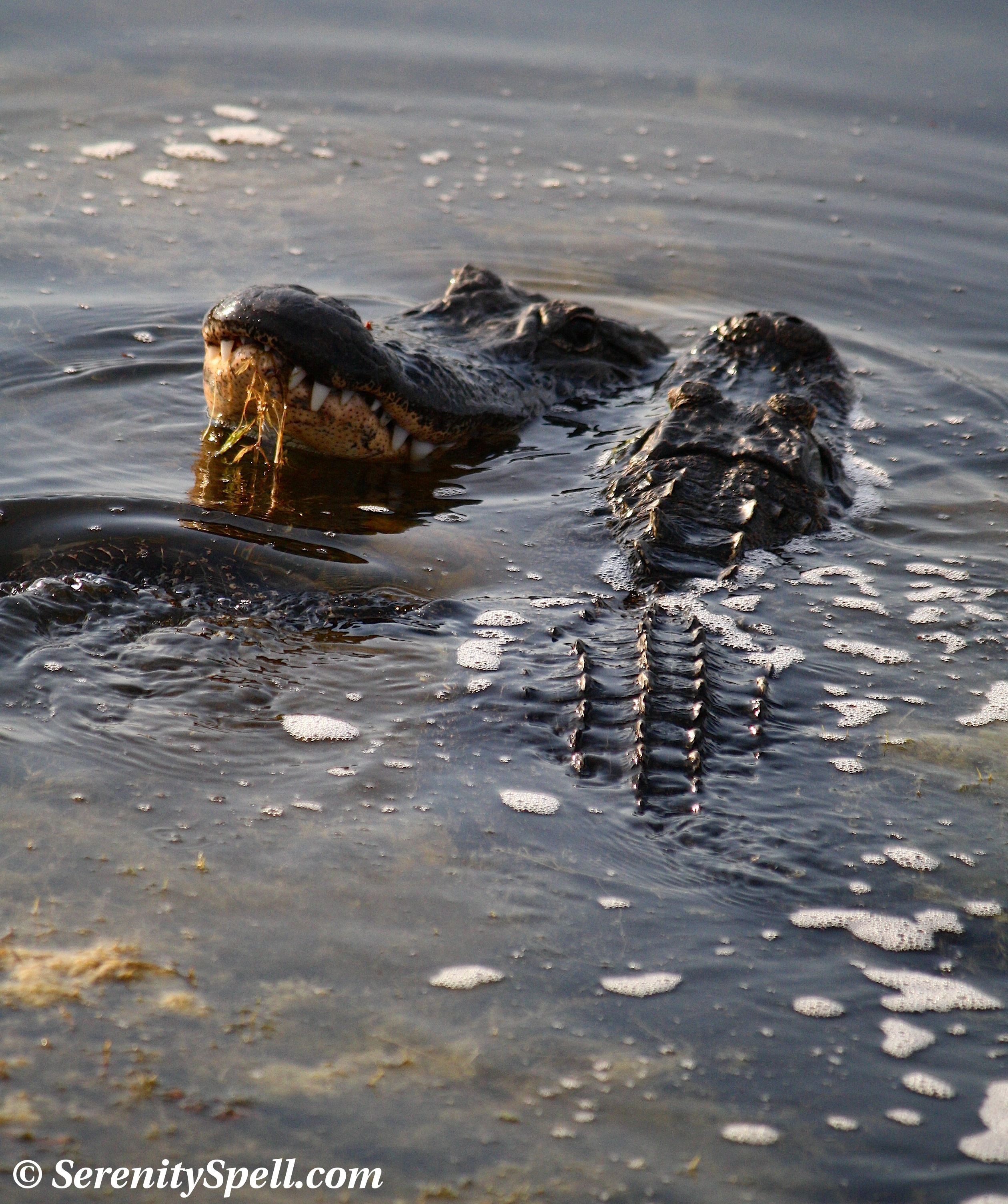
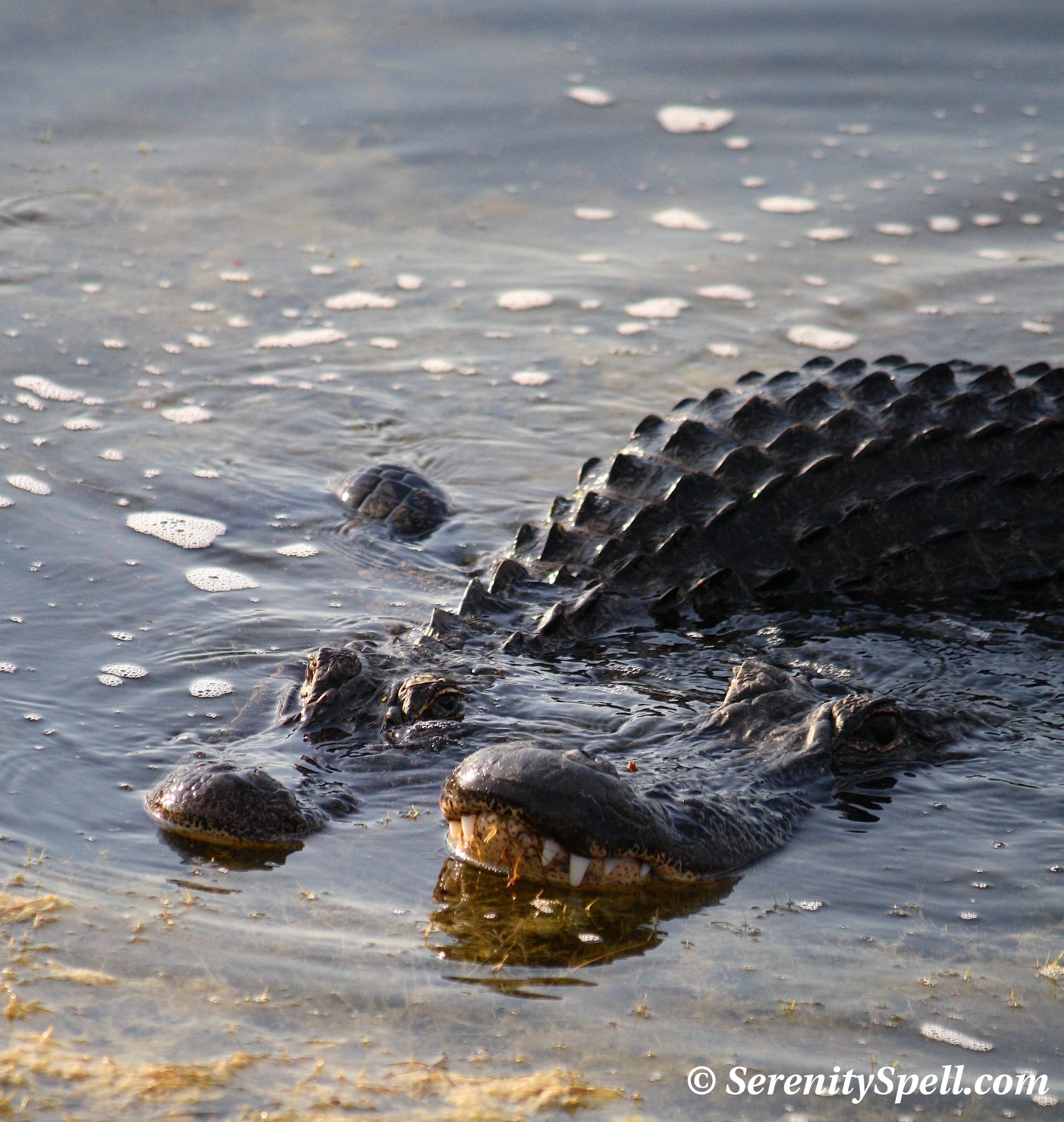
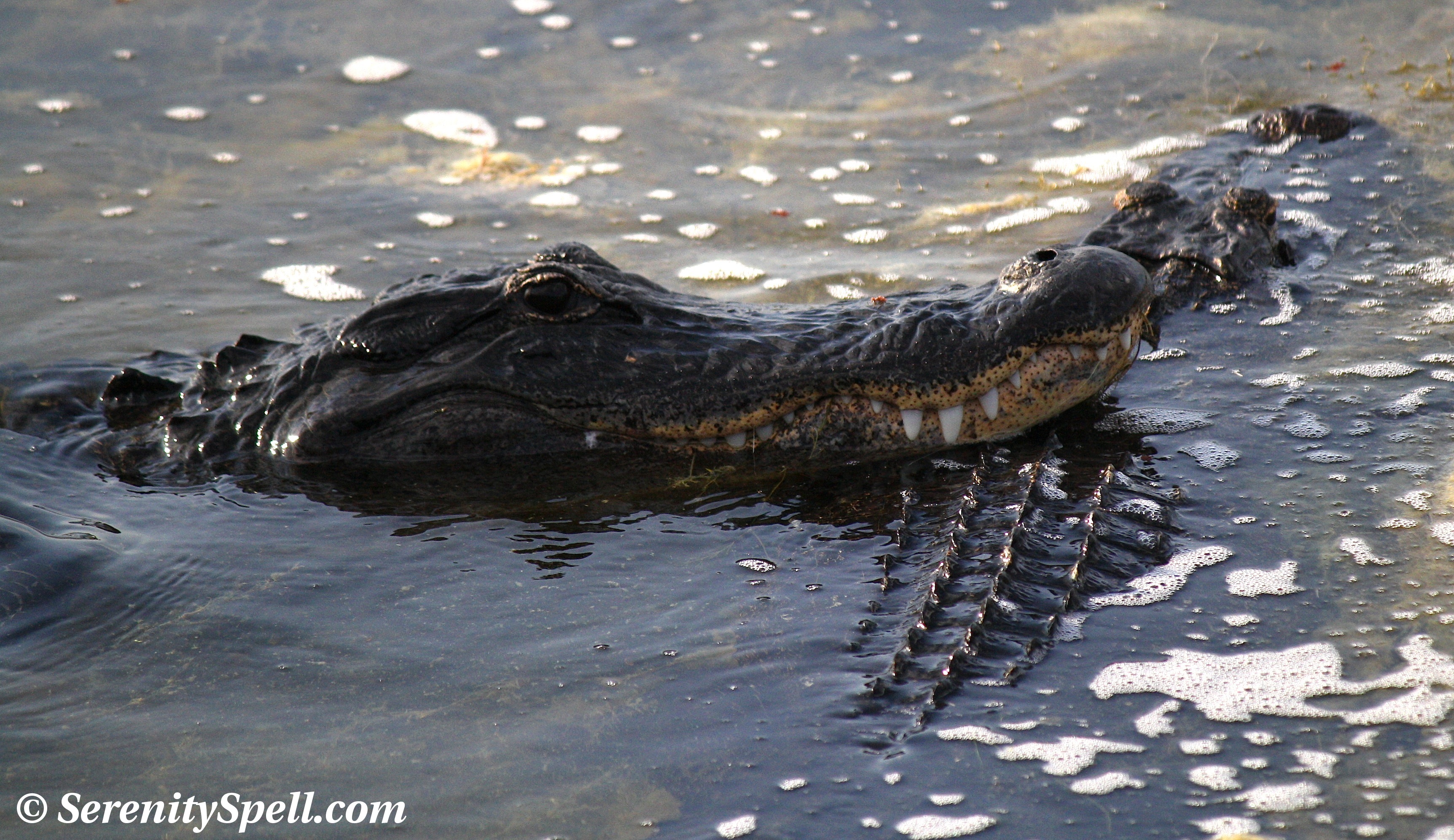
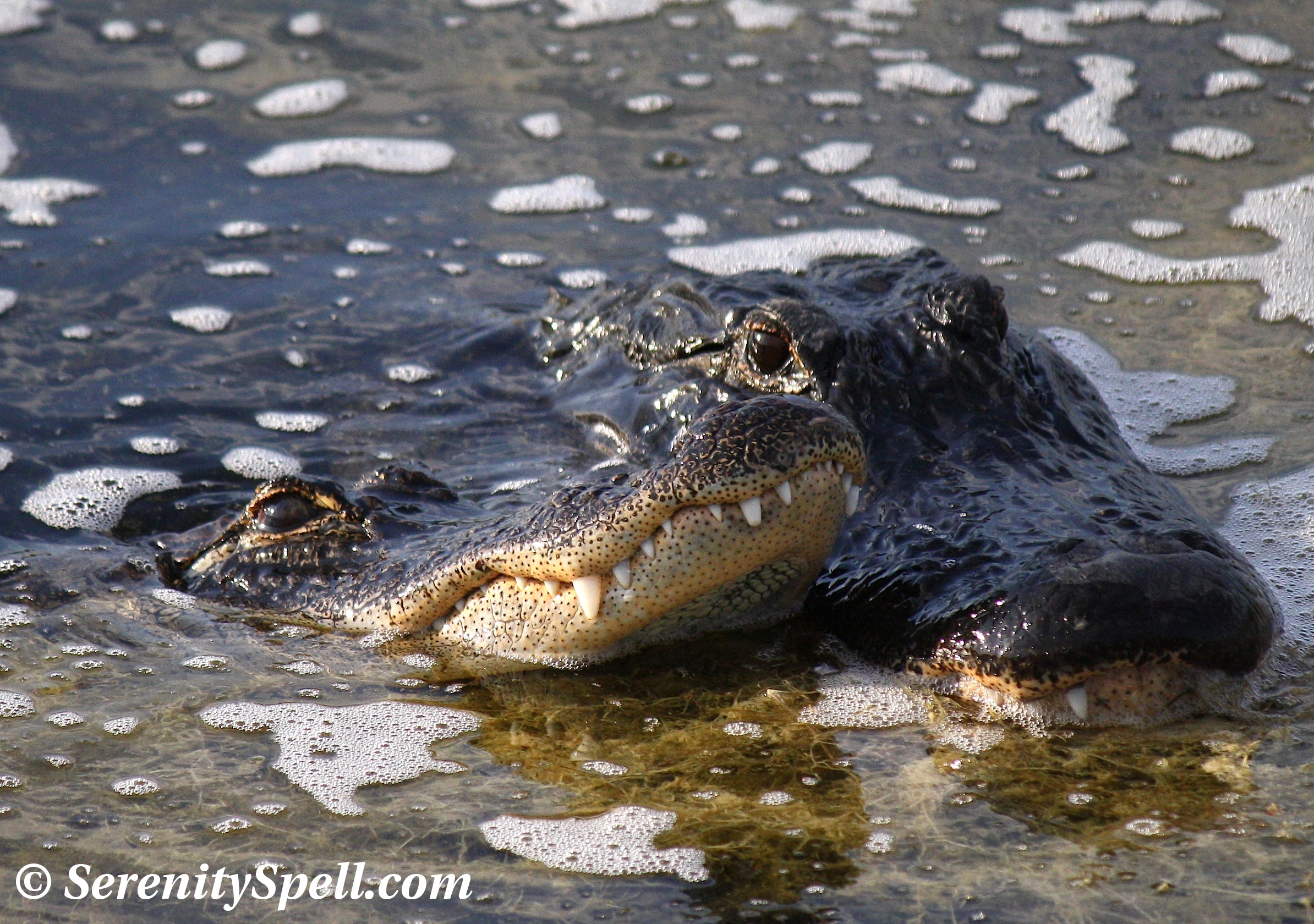
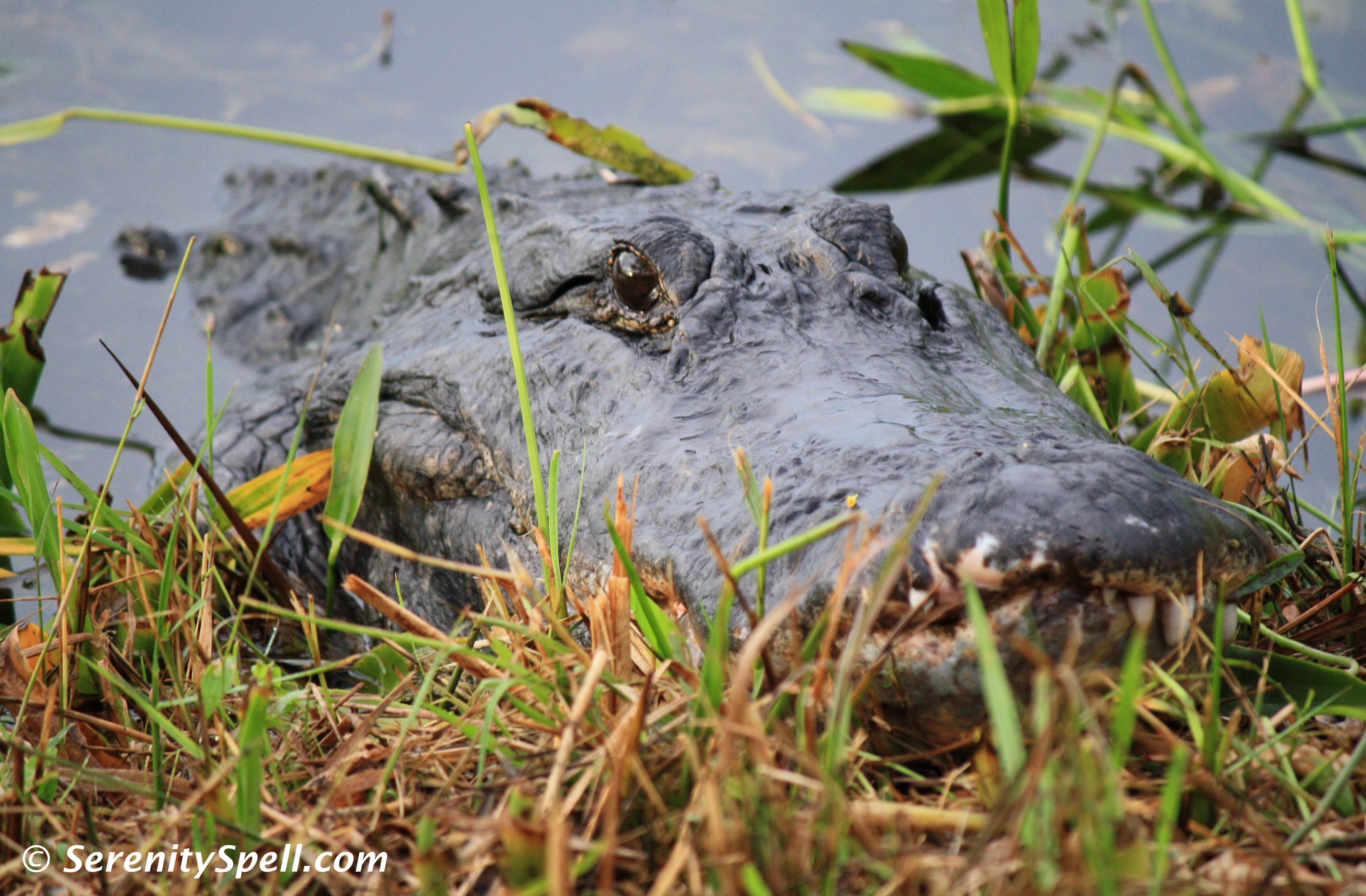
During a recent trip, I was lucky to have witnessed a mating pair of alligators — while I believe the actual mating had already occurred (as evidenced by the babies on the nearby bank), their  affinity for each other was obvious…. Alligator Love: A Courtship offers opportune images of the event.

Flower

Big Like You

I Blend
A few more over there...

Peek-a-Boo

Nom Nom Nom
Alligator Love: A Courtship

Twenty million years as a resident of planet Earth, and counting…. Scientists believe that the American alligator resembles animals that inhabited our planet as long as 100-150 million years ago — and that they may be linked to creatures dating 50-65 million years ago, managing to avoid the extinction that killed off the dinosaurs, their prehistoric contemporaries.

I was *exceptionally* fortunate to have recently witnessed a mating pair of alligators in our protected wetlands — while I believe the actual mating had already occurred (as evidenced by their babies on the nearby bank), their affinity for each other was obvious. I was thrilled to have captured the courtship images… Below!

Alligator mississippiensis

Alligator and Duckweed in the Green Cay Wetlands

A member of the crocodilian family, there are two alligator species living in the world today: the American alligator (Alligator mississippiensis) and the Chinese alligator (Alligator sinensis). American alligators are found in the southeastern United States; the majority inhabit Florida and Louisiana, with over a million alligators in each state. Interestingly, southern Florida is the only place where both alligators and crocodiles exist side-by-side. We’ve actually seen a growing number of crocodiles in our trips to the Everglades.

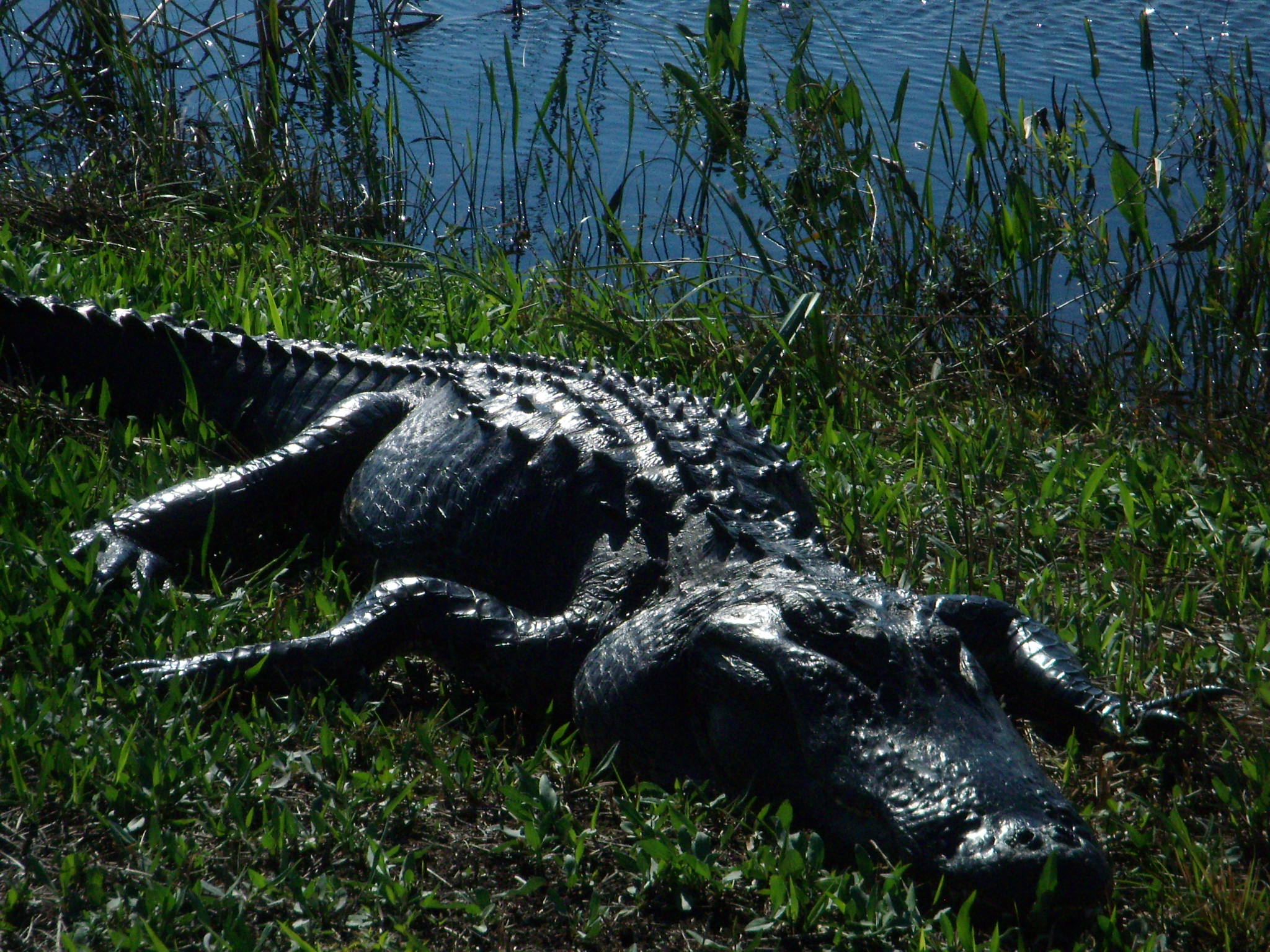
Alligators live in freshwater environments, including ponds, marshes, wetlands, rivers, and swamps, as well as brackish environments. They’re long-lived animals, living more than 50 years in the wild. As with other cold-blooded reptiles, it’s common to see them basking in the sun, thus regulating their body temperatures. Occasionally they keep their mouths open, akin to a dog panting — it’s a cooling mechanism.

Nearly Extinct

Big Baby Basking the Sun's Last Rays, Arthur R. Marshall Loxahatchee National Wildlife Refuge

Sadly, American alligator populations suffered tremendously throughout the 20th century, when they were hunted to near-extinction for their hides — an estimated 10 million alligators were slaughtered. Since the Endangered Species Act of 1973 however, these amazing creatures’ populations continue to grow, and illegal poaching is better controlled. Twenty million years on planet Earth, and we nearly managed to wipe them out for handbags.

Courtship and Breeding

Alligator on the Path (Just Fed), Arthur R. Marshall Loxahatchee National Wildlife Refuge

Alligators reach breeding maturity at 6-10 years of age, when they’re approximately 6-7 feet long. Growth slows after this point, but some of the oldest males may grow upwards of 16 feet, reaching 1,200 pounds. We’ve seen some LARGE GATORS out in the ‘Glades…. And it’s pitiful to see the yahoos on reality TV wrestling (rastling?) the smaller juveniles. In the first place, WHY? Secondly, bullies much, picking on the babies?

Interestingly, recent studies have shown that up to 70 percent of alligator females remained with their partner — often for many years.

Breeding begins in the spring (mid-April through May, specifically), and you can hear their loud bellows throughout the swamps — calls used to attract mates and warn off other males. While (like all wildlife) gators don’t want to bother humans, the mating season isn’t the time to push your luck — aggression is at a higher level, and they may become more territorial (the older ones, at least). On our hikes, we’re always aware of the season. Alligator courtship is complex — vocalizations, head-slapping on the water’s surface, body posturing, snout and back rubbing, bubble blowing, and pheromone (scent) signals all play into the process.

Nesting and the Young

Alligator Mound / Nest in the Wetlands

Alligator nests (or mounds) are built by the female, and comprised of vegetation, sticks, and mud located in a sheltered spot in or near the water. She lays 20-50 eggs, and covers them under more vegetation which heats as it decays, serving to incubate the eggs. The female will remain near the nest throughout the 65-day incubation period, protecting it. If a mother alligator is killed or removed, she can’t protect her nest or young — and the hatchlings are doomed. *Leave wildlife alone.*

Hatchlings are 6-8 inches long, and are near-replicas of their parents, save for a series of yellow and black stripes which camouflage beautifully with the surrounding marsh roots. For five months, they’ll remain with the mother before finding their own ways. In our area, we typically see 5-10 baby alligators survive in the protected wetlands. Perhaps less. Common predators that prey upon the juvenile alligators include snapping turtles, snakes, raccoons, bobcats, raptors, and even larger alligators. But when we find them? Oh my…. I must break up these posts, though — there are too many images, and the adorableness level is simply too high. Next: Alligator Babies!

Alligator Courtship, Florida Wetlands

Alligator Courtship, Florida Wetlands

Alligator Courtship, Florida Wetlands

Alligator Courtship, Florida Wetlands

Alligator Courtship, Florida Wetlands

Alligator Courtship, Florida Wetlands

Alligator Courtship, Florida Wetlands

Alligator Courtship, Florida Wetlands

Alligator Courtship, Florida Wetlands

Happy Earth Day — Love Your Mother

This April 22nd, help celebrate and remember that Earth has always been, and will always be our Mother — and we’re all here together, sharing her valuable and limited resources. Visit the Earth Day Network to learn more of their goal “to broaden, diversify, and activate the environmental community and make Earth Day a powerful moment for all citizens of the world to drive the movement.” Love and protect your Mother, every day.

Photo by Cherrylynx, courtesy of the “Digital Earth” series via Art-Profiles.com

Earth Photo Manipulation by Cherrylynx

Nabokov’s “Butterfly of Doom”: The Red Admiral

Or so it was named by the late 19th-century Russians — leave it to them to label a butterfly as such. It’s definitely the first time I’ve ever heard Butterfly and Doom used in the same phrase….

Zebra Longwing Butterfly (Heliconius charitonius)

On our hikes, we often stumble upon areas of flurried butterfly activity, due to Florida’s abundant all-year blooms. The most common encounter is the Zebra Longwing (Heliconius charitonius), found throughout the hardwood hammocks, swamps, and Everglades — and designated the official state butterfly of Florida in 1996. I rely on our natural environs for butterfly shots, and we’ve spied some lovelies — swallowtails, sulphurs, whites, milkweeds, and longwings — but more often than not, they don’t want to pose for the camera. I find myself plowing through beastly (but harmless) banana spider webs, or carefully winding through swamp, to chase butterflies.

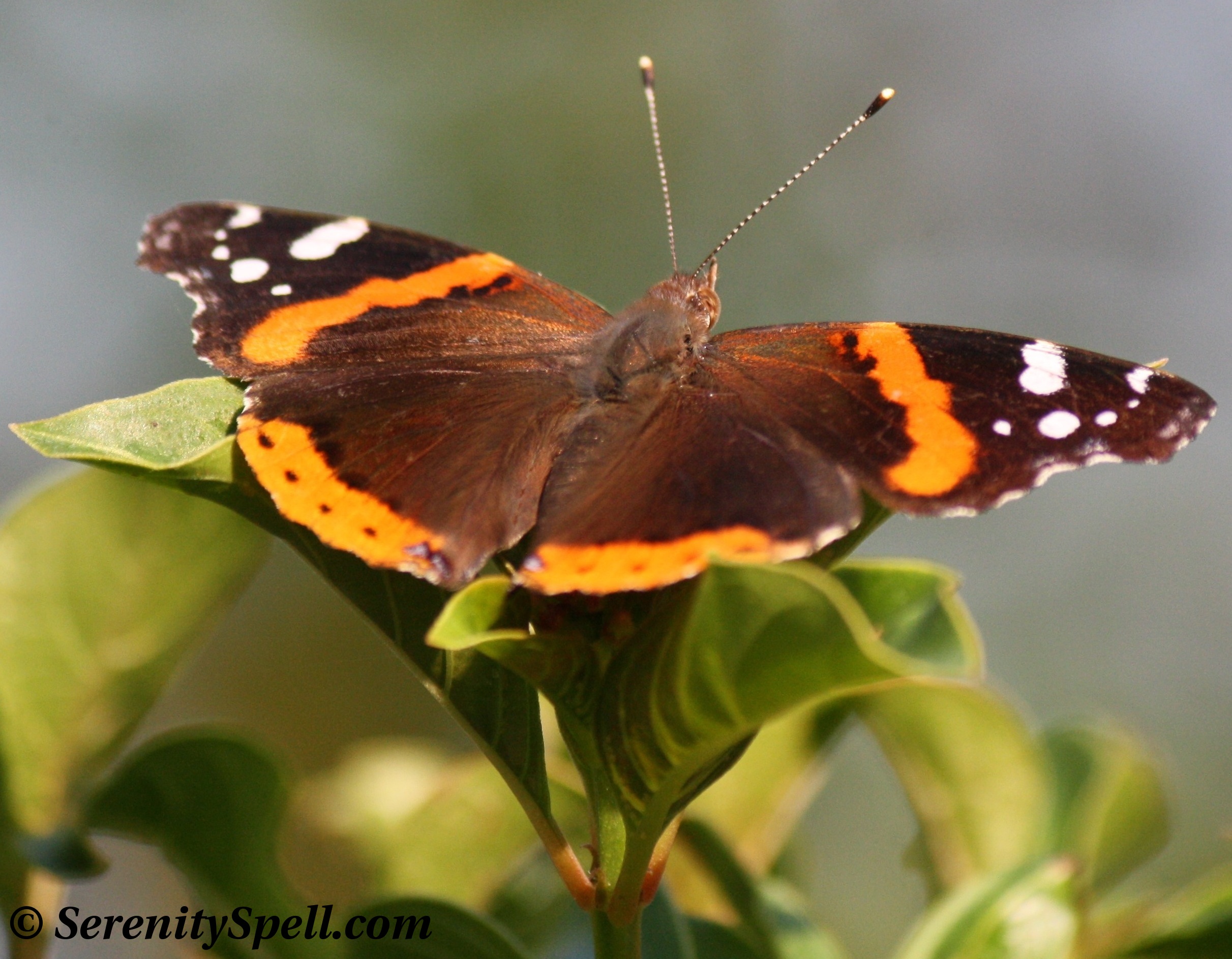
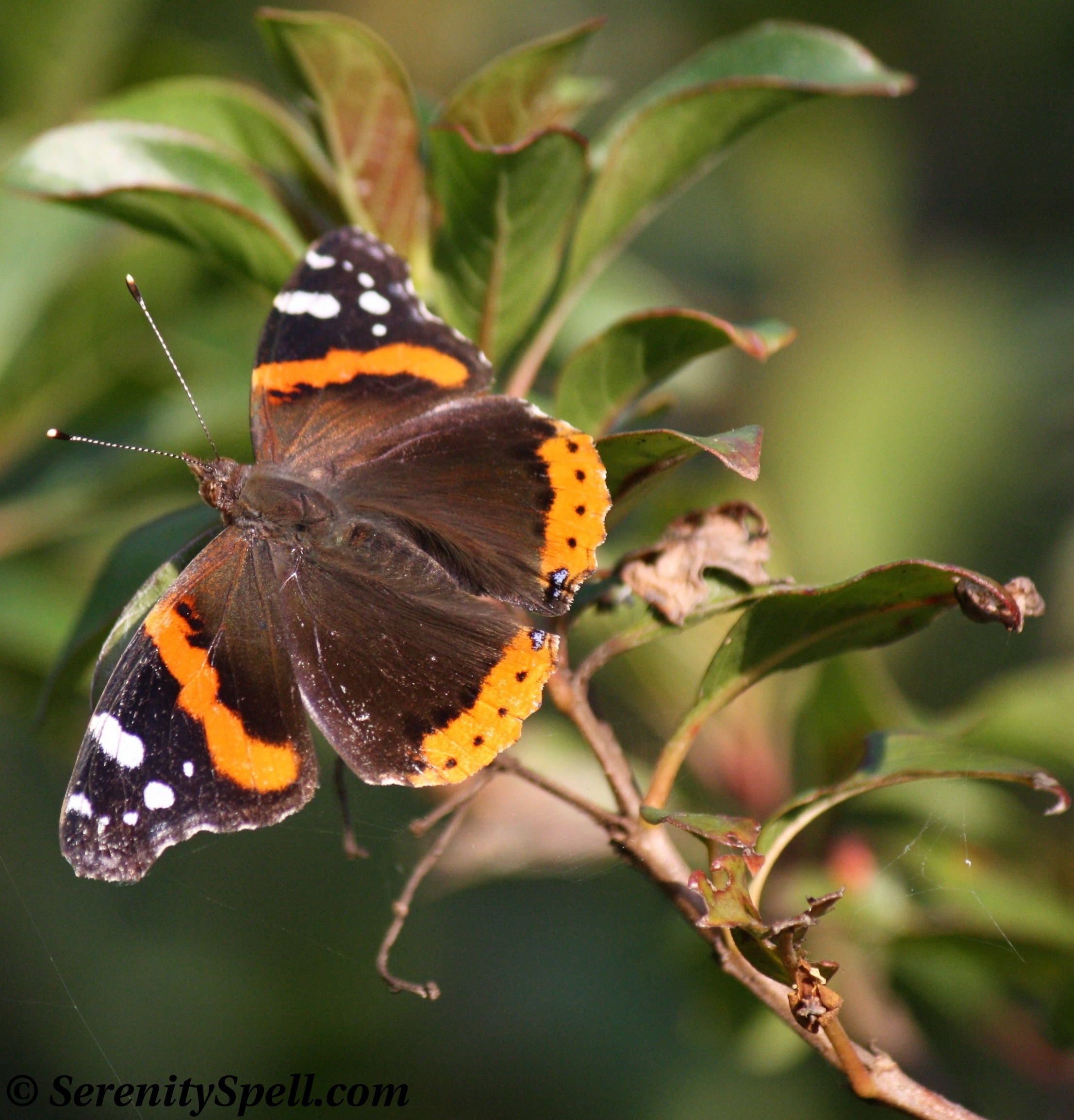
But I was lucky with this guy, so much so that I thought he was a moth — especially when I observed his antennae from afar. Obviously they’re long enough to be classified as a butterfly, because that’s what he is — specifically, a Red Admiral (Vanessa atalanta). Found in North America, Asia, and Europe, territorial males can be found in the same location day-to-day — and as a testament, the images below were shot on separate days, in the same clump of foliage. Red Admirals are dark brown, with brick-red bars and white markings on the tips of the forewings. Although known to be quick fliers, they’re also considered a docile butterfly — a perfect companion for gardens, being very people-friendly, and known to perch on humans. It would explain my ideal photographing opportunity (read: no spiderweb activity)….

The Red Admiral is considered the favorite butterfly of author and amateur lepidopterist Vladimir Nabokov (1899 – 1977); it’s mentioned throughout his writings, taking a prominent role in the 1962 novel Pale Fire. When scholar Alfred Appel, Jr., asked why he was so fond of Vanessa atalanta, Nabokov replied: “Its coloring is quite splendid and I liked it very much in my youth. Great numbers of them migrated from Africa to Northern Russia, where it was called ‘The Butterfly of Doom’ because it first appeared in 1881, the year Tsar Alexander II was assassinated, and the markings on the underside of its two hind wings seem to read ‘1881’. There is something interesting in the Red Admirable’s ability to travel so far” (Strong Opinions, p. 170).

According to Pale Fire‘s character — poet John Shade — the original Old English name for the butterfly was actually The Red Admirable, which was later degraded to The Red Admiral. In the novel, Vanessa atalanta appears as Shade’s heraldic butterfly, as seen in the verses:

Come and be worshiped, come and be caressed,
My dark Vanessa, crimson-barred, my blest
My Admirable butterfly… (lines 269–271, p. 42–43)

Red Admiral Butterfly (Vanessa atalanta), Posing in the Florida Wetlands — (DAY 1)

Red Admiral Butterfly (Vanessa atalanta), Posing in the Florida Wetlands — (DAY 2)

Red Admiral Butterfly (Vanessa atalanta), Posing in the Florida Wetlands — (DAY 3)

For More Information:

Red-winged Blackbirds… And Their Babies!

Another nearby nest, with hatchlings! Since Red-winged Blackbirds nest in loose colonies, there’s no dearth of nesting activity, if one’s looking closely enough in our dense marshes. This clutch consisted of three eggs — typical for the species. The eggs were incubated by the female alone, and hatched within 11 to 12 days. Red-winged Blackbirds are born blind and naked, but will be ready to leave the nest 11 to 14 days after hatching. Every time the wind rustled the leaves of this nest, the hatchlings were up and chirping for food….

Female Red-winged Blackbird Feeds the Hatchlings at Her Nest

Red-winged Blackbird Hatchlings Wait for Their Meal

Red-winged Blackbird Hatchlings Wait for Their Meal

For More Information: