Skip to content

Posts tagged ‘photography’

The Show

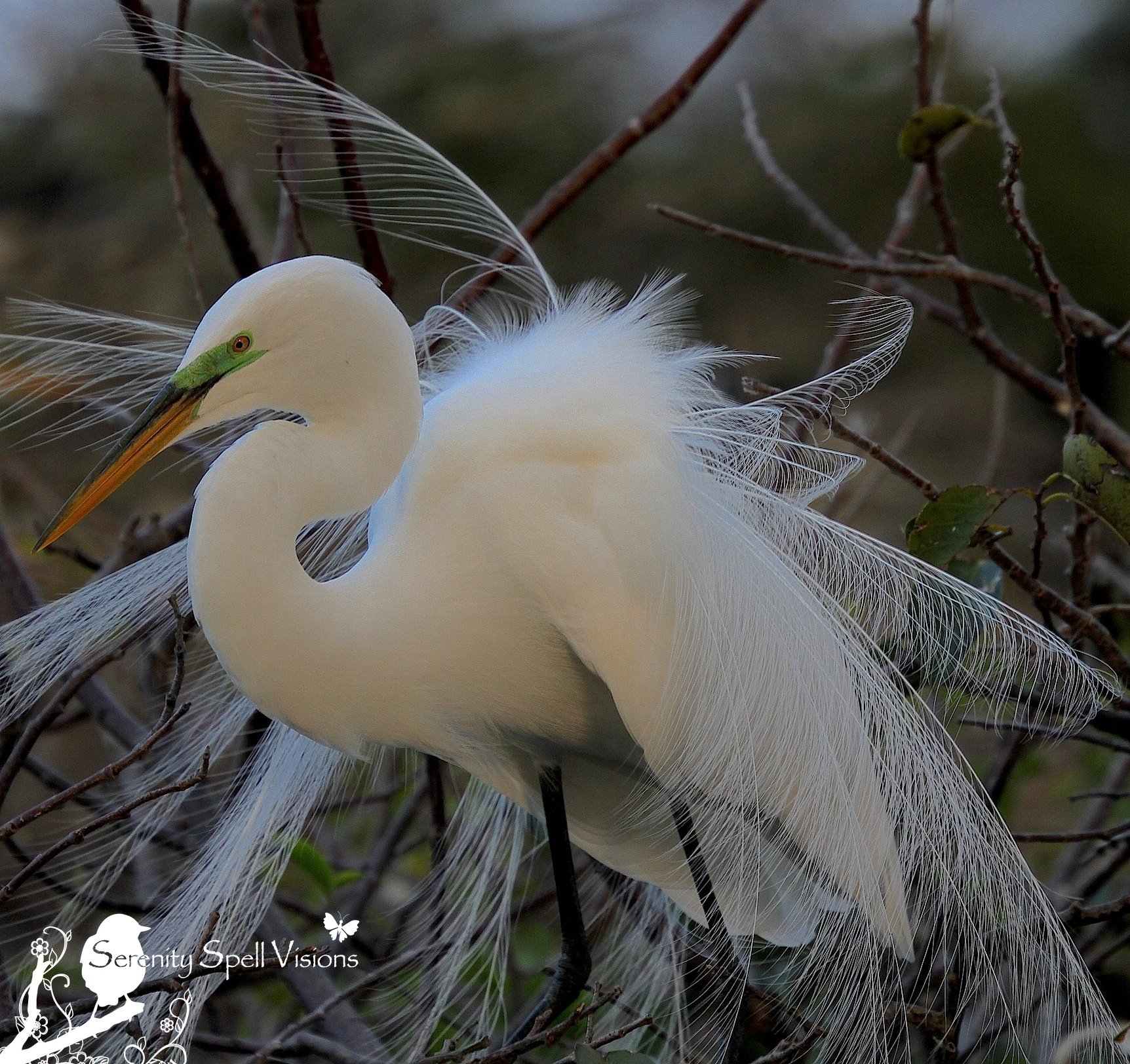
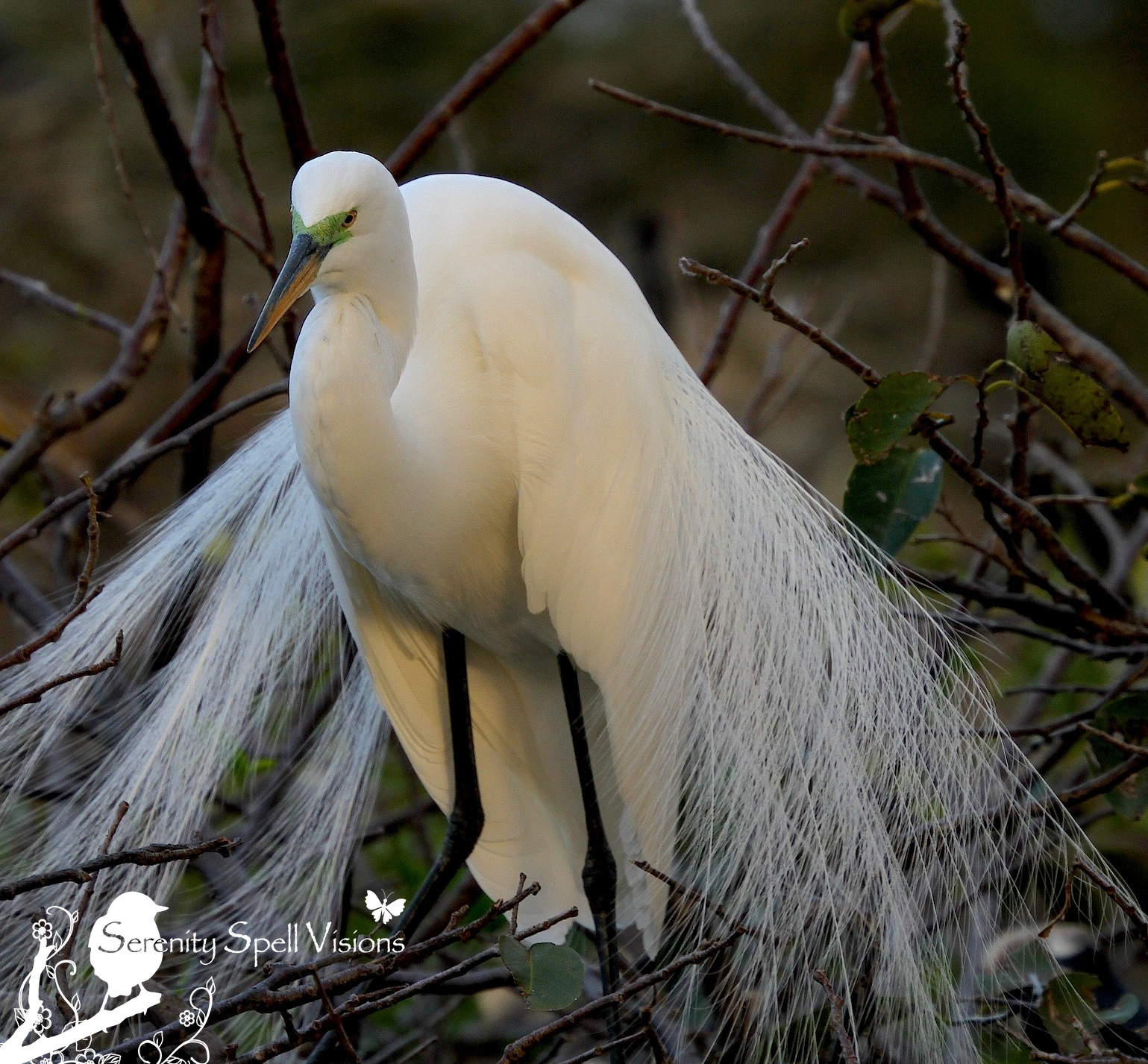
The Great egrets of South Florida’s wetlands have been putting on the most wondrous displays in the rookeries. Appropriate timing for Valentine’s Day…. It’s hard not to think that I should be trying a wee bit more, after observing such grand shows of attracting mates.

Breeding Great Egret, Florida Wetlands

Breeding Great Egret, Florida Wetlands: Check me out.

The feathers of the Great egret are stunning, almost unreal; sadly, these beautiful birds were hunted mercilessly — nearly to the point of extinction, their numbers decimated by 95 percent — towards the end of the 19th century. Their breeding plumage was especially prized, and their treasured feathers were used in hats across the globe.
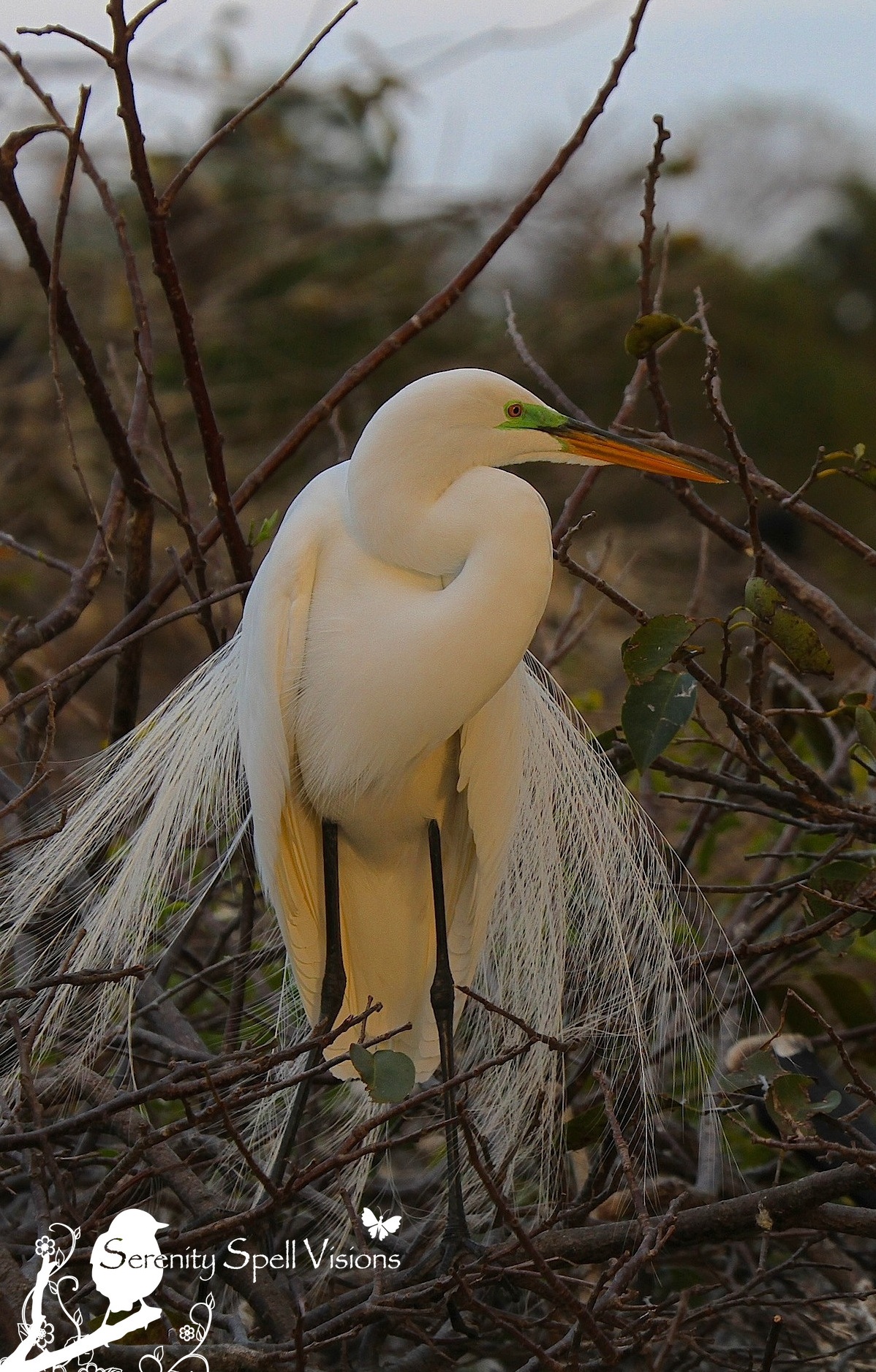
Breeding Great Egret, Florida Wetlands

Taking a breather in the rookery

With conservation measures enacted, their numbers grew throughout the 20th century. While wetland habitat loss is once again threatening their existence, these birds have a high adaptability to human habitation. Of course, the loss of wetland ecosystems remains another issue altogether.
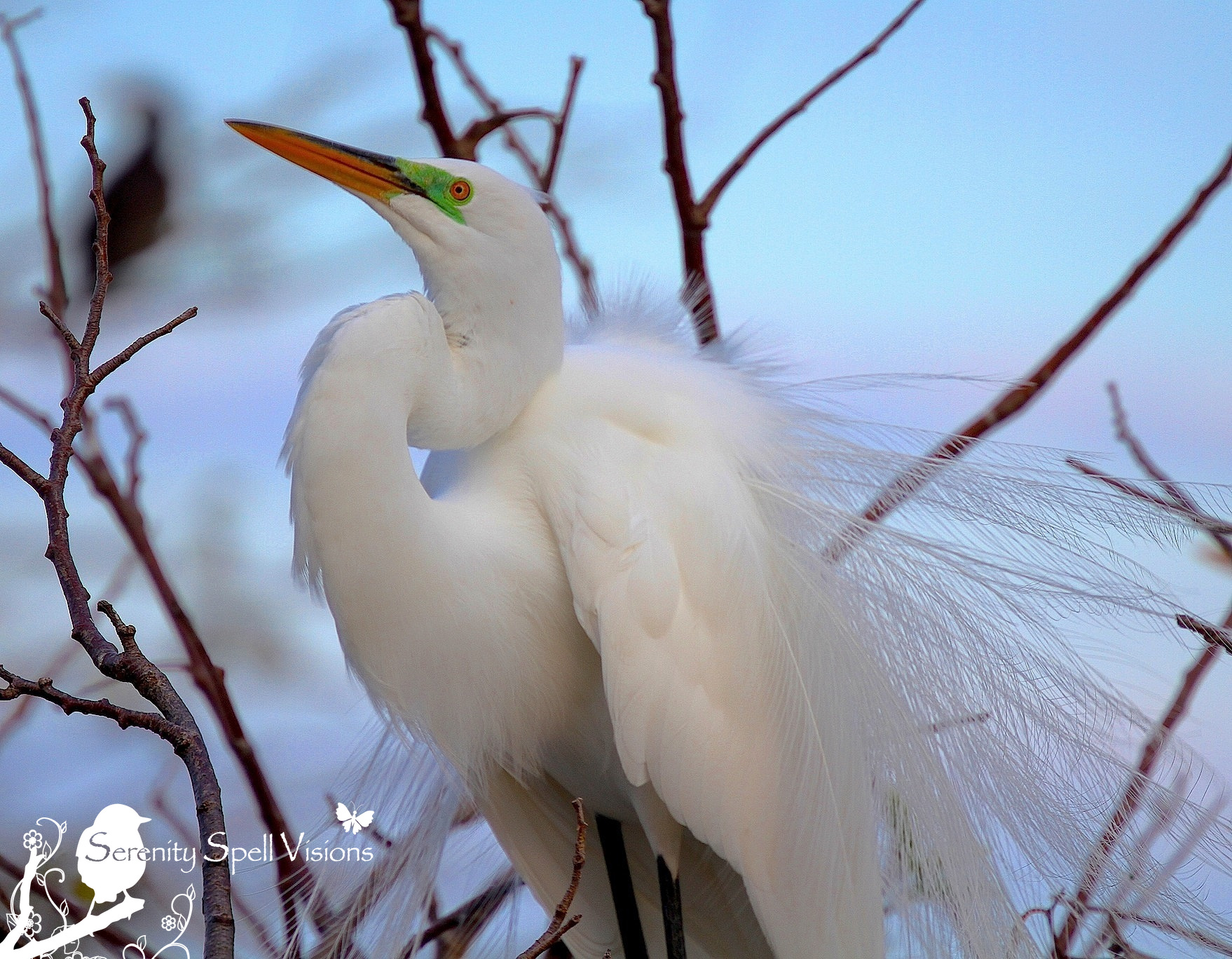
Breeding Great Egret, Florida Wetlands

The setting sun has nothing on me….

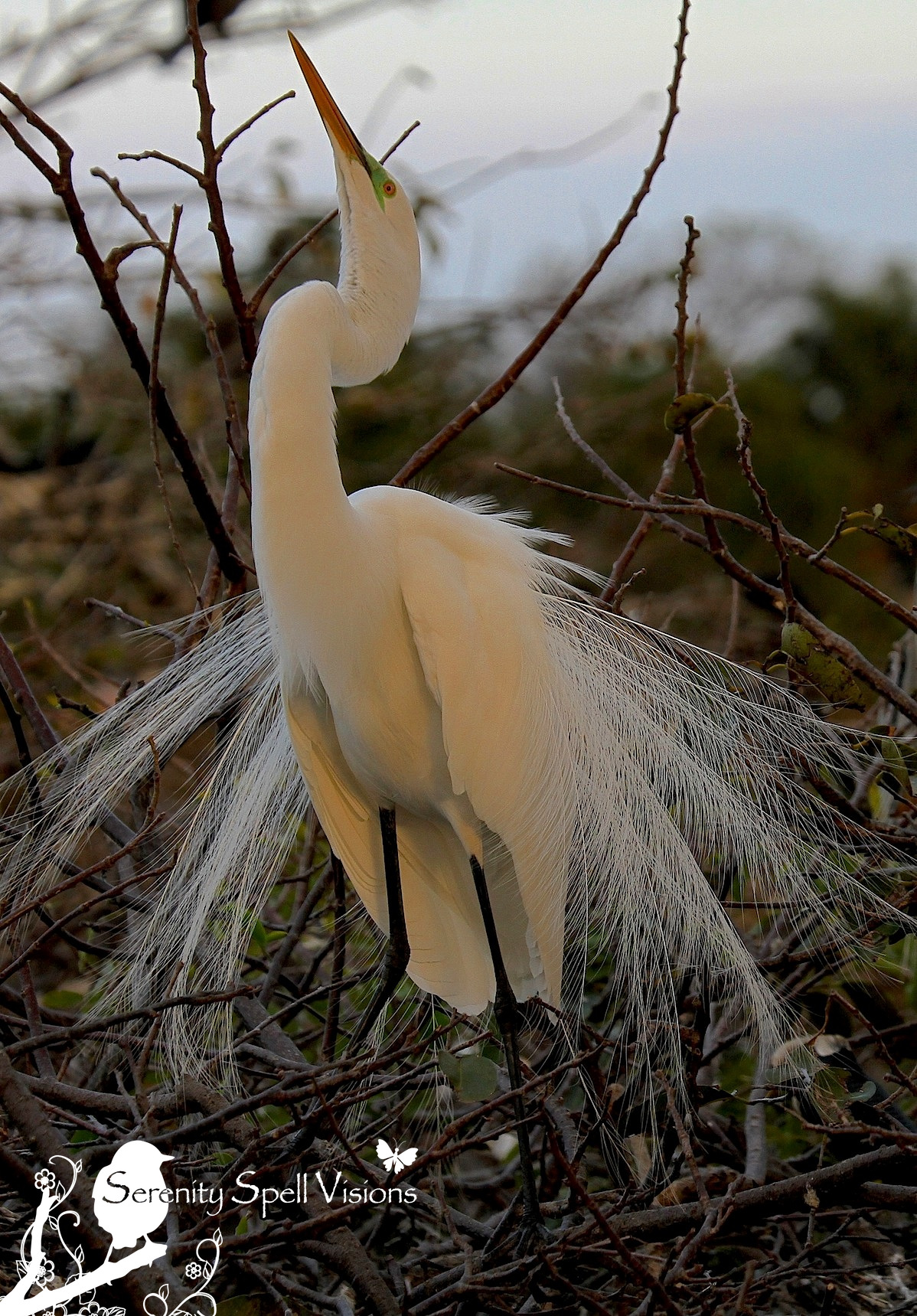
During the breeding season, the Great egret displays long, elegant plumes on its back, which are used in courtship displays. Like a peacock, these feathery plumes spread out like a fan. (Outside the breeding season, these long feathers disappear.) During this time, the lore (the area between the bill and the eyes) may turn vibrant green. Nature’s colors are brilliant….

Breeding Great Egret, Florida Wetlands

Breeding plumage

The male Great egrets will choose a specific display area, which will later become the nesting site. Nests are usually over water, far off the ground — high in the rookeries, as in our area. He (HE!) builds the nest with long sticks and twigs before pairing up with a female, at which point they both work to complete the nest — although it’s usually the male who finishes it.
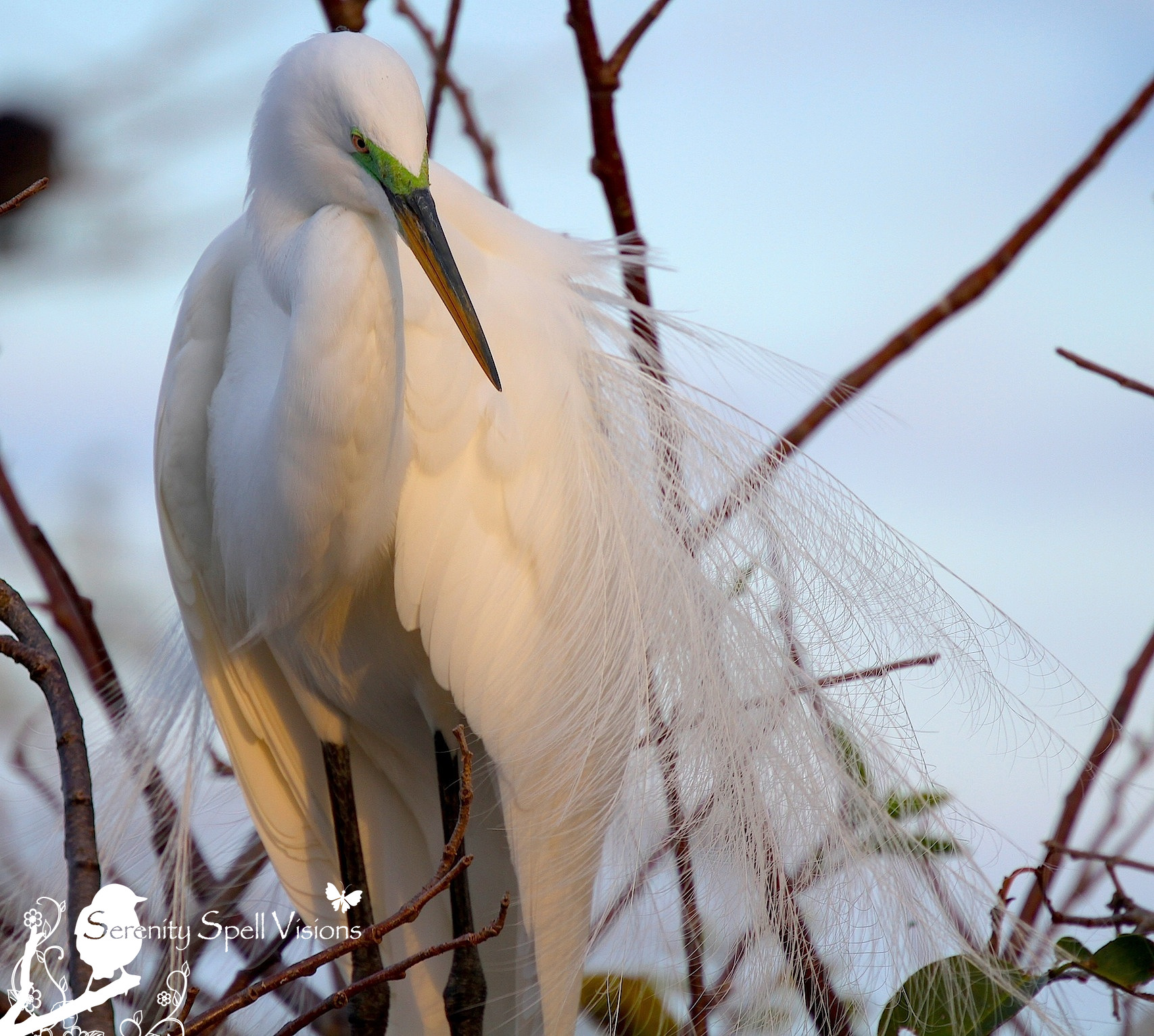
Breeding Great Egret, Florida Wetlands

Focus. Focus. Focus.

Breeding Great Egret, Florida Wetlands

Green lore appears during breeding season

Breeding Great Egret, Florida Wetlands

Shake it. Shake it like a Polaroid picture.

Breeding Great Egret, Florida Wetlands

Breeding Great Egret, Florida Wetlands

Glow

Breeding Great Egret, Florida Wetlands

The Fan

Breeding Great Egret, Florida Wetlands

And the final stage of the display, the reach….

Tree Tuesday: Fairy’s Staircase

Walking the Malachite Trail in the SWA portion of the most wonderfully pristine Everglades watershed of the Grassy Waters Preserve, an old tree displayed new life with a whimsical fungi arrangement — a fairy staircase!

fairy tree

2013-01-13 14.51.23 copy


Wetland Smarties

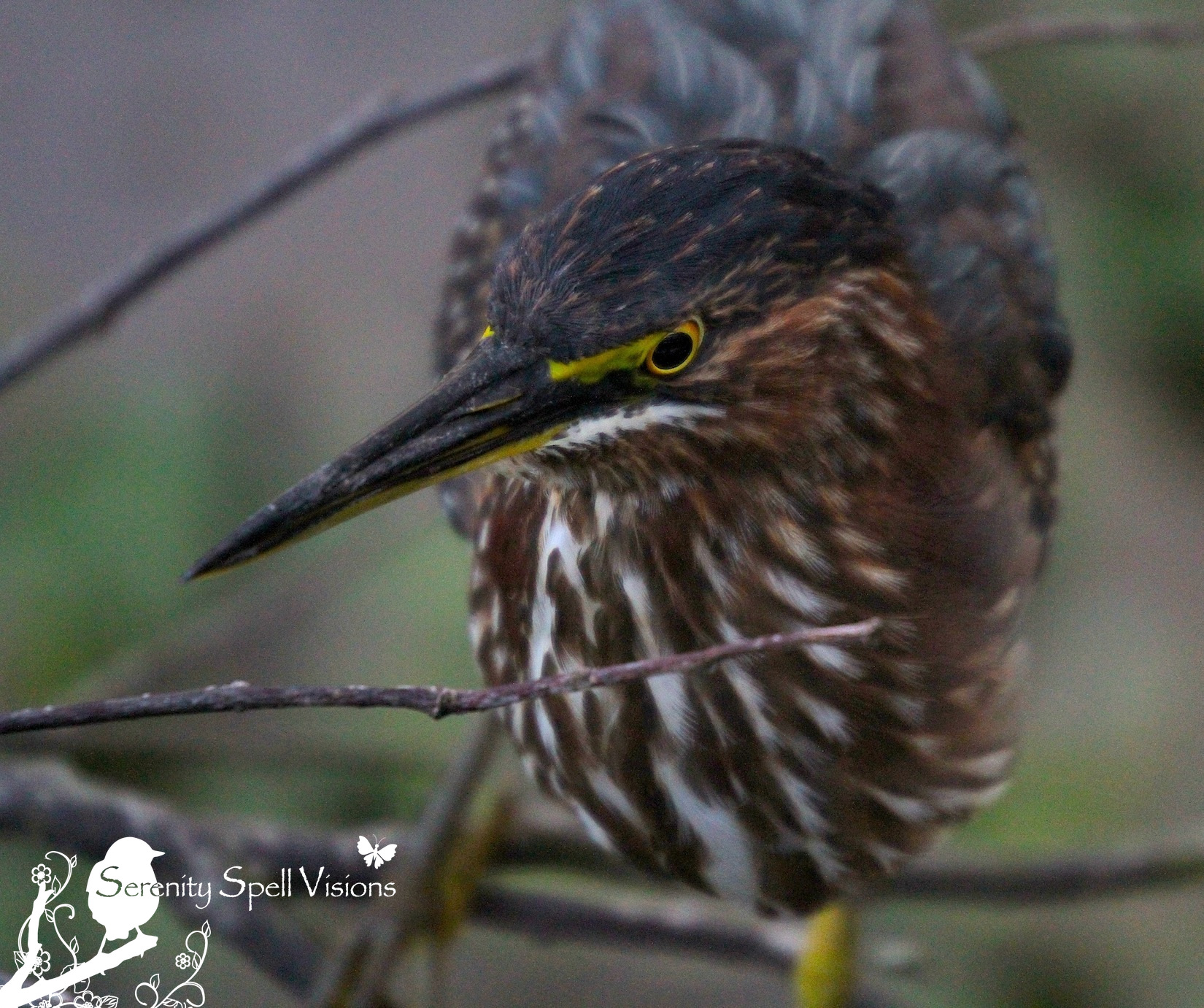
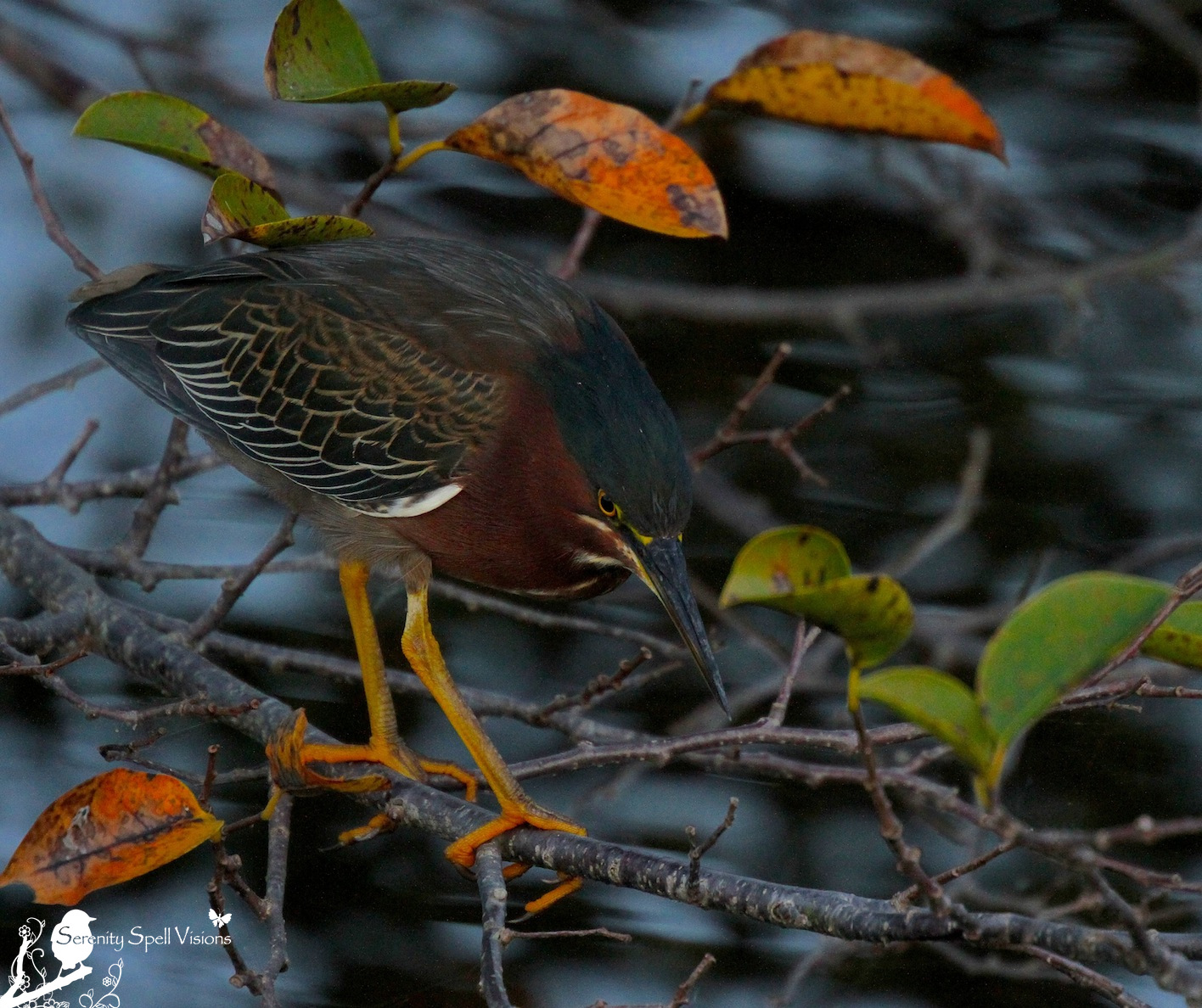
Usually our Green herons are very shy and difficult to spot, patient and motionless as they are in our wetlands — their  signature kuk or kyow calls are heard more often. [Click here to listen to their calls!] But when I do hear them, I search in the pond apple trees and cypress for their moppy crowns, in the hopes of catching their fascinating hunting process.

Green Heron, Florida Wetlands

Green heron close-up, pre-hunt

These guys have always been one of my favorites in our wetlands — perched high in the beautiful cypress trees during the approaching dusk. And the smarts on these little herons! Green herons will often drop bait onto the water’s surface — including live insects, berries, twigs, or feathers — to attract fish. The more curious the fish…the more likely they’ll end up as dinner at the quick thrust of the heron’s sharp bill. I’ve often seen them snap off twigs and leaves for bait, carrying it to secretive hunting areas.

Green Heron, Florida Wetlands

Focus! Focus!

Green Heron, Florida Wetlands

I will find you….

This hunting technique, and their use of tools, has earned the Green heron the well-deserved distinction as one of the world’s smartest birds.

Green Heron, Florida Wetlands

A moment of rest

Green Heron, Florida Wetlands

I am so lovely, yes?

Green Heron, Florida Wetlands

Preparing for the hunt

Part of:

Weekly Photo Challenge: Love

It doesn’t take much to find love on an excursion into the natural world — which is why I escape to its beauty as much as humanly possible.

Heart Tree at Fern Forest Nature Center

Heart Tree at Fern Forest Nature Center

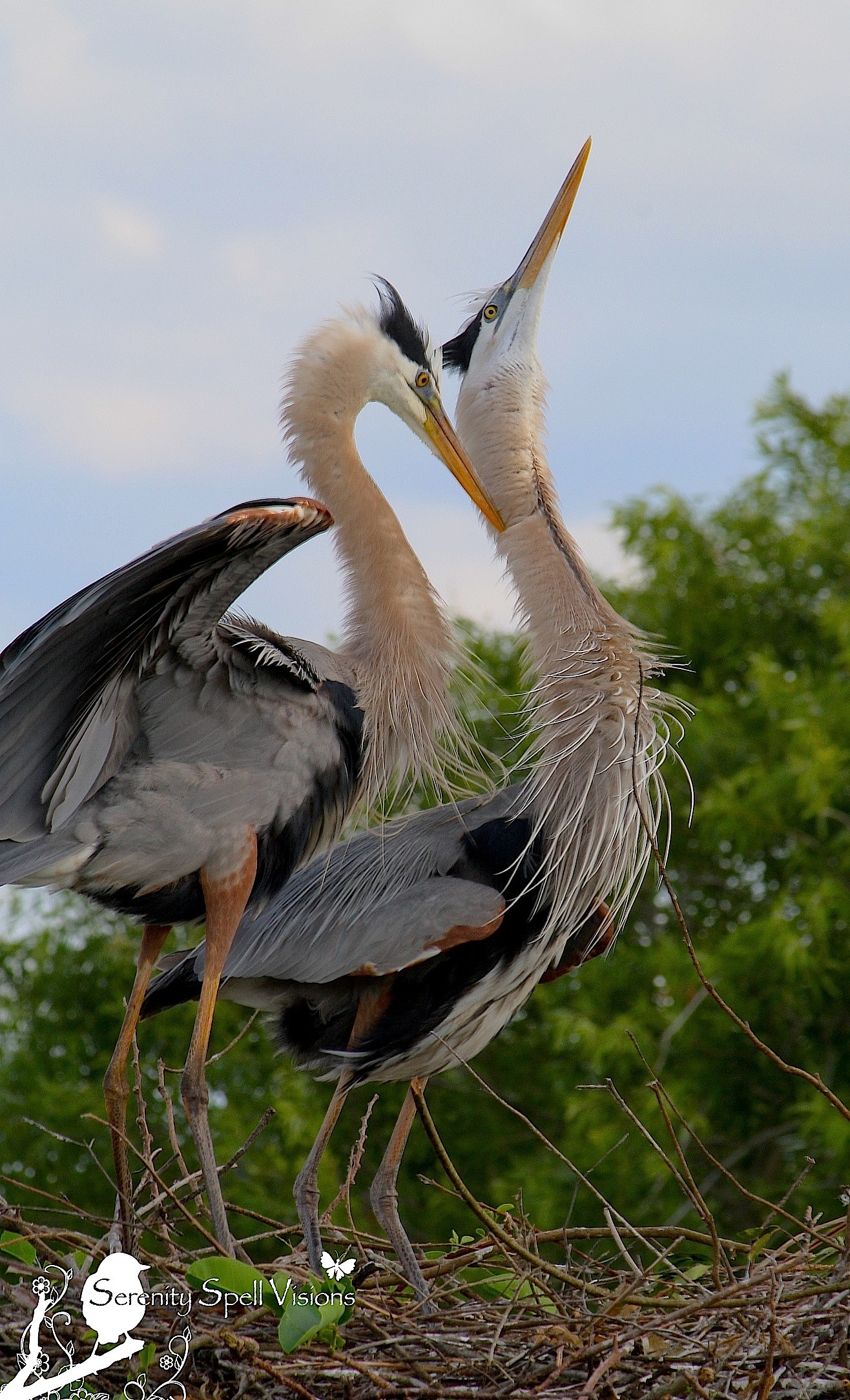
Great Blue Heron Mating Pair at their Nest in the Florida Wetlands

Great Blue Heron Mating Pair at their Nest in the Florida Wetlands

Mating Viceroy Butterflies (Limenitis archippus), Fern Forest Nature Center

Mating Viceroy Butterflies (Limenitis archippus), Fern Forest Nature Center

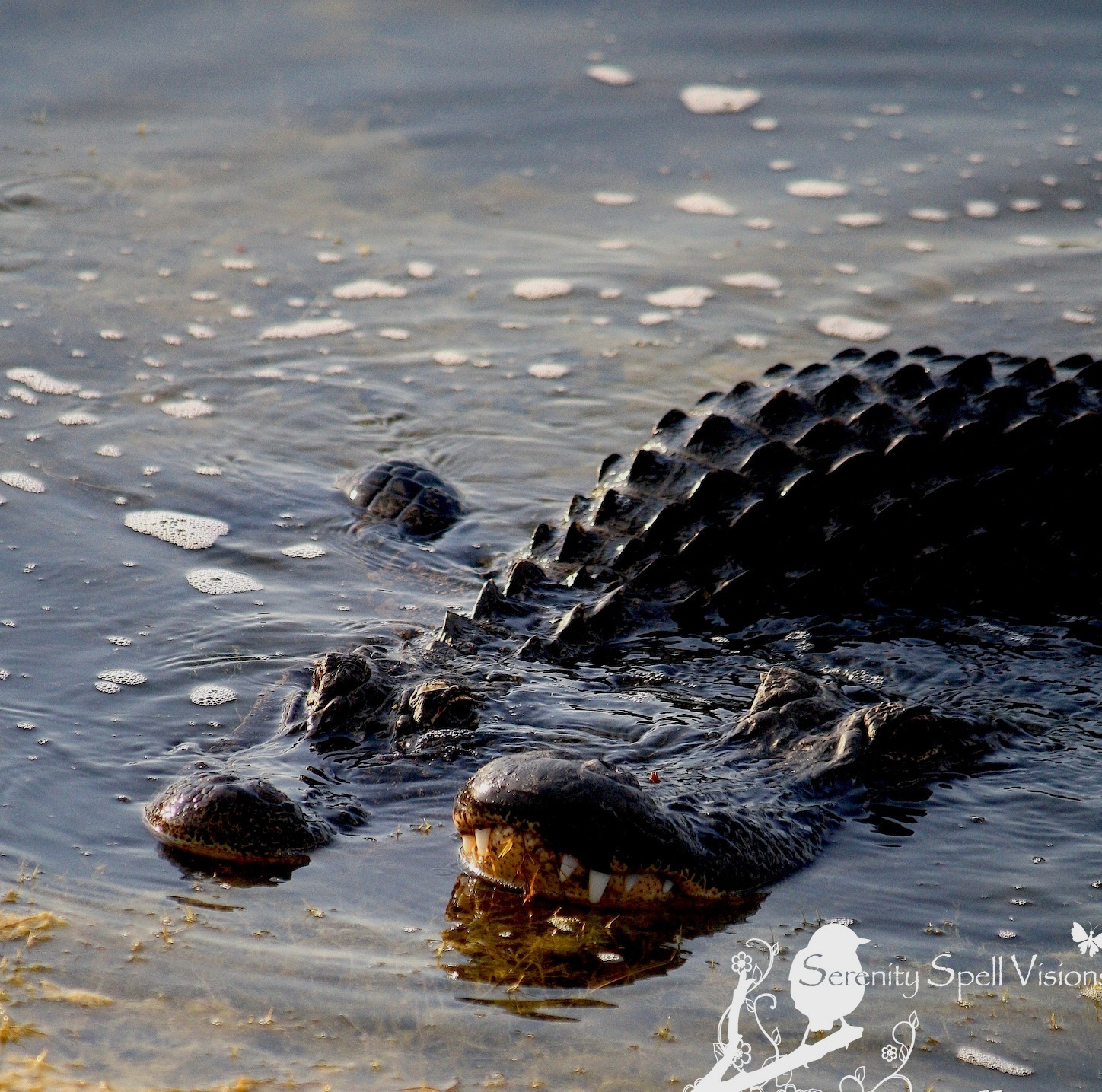
We’re approaching breeding season for our gators (these were scenes of last year’s cuddles — a very recent mom and dad). Interestingly, recent studies have shown that up to 70 percent of alligator females remained with their partner — often for many years.

Breeding begins in the spring (mid-April through May), and you can hear their loud bellows throughout the swamps — calls used to attract mates and to warn off other males. While (like all wildlife) gators don’t want to bother humans, the mating season isn’t the time to push your luck — aggression is at a higher level, and they may become more territorial. It’s always wise to be aware of the season. Alligator courtship is complex — vocalizations, head-slapping on the water’s surface, body posturing, snout and back rubbing, bubble blowing, and pheromone (scent) signals all play into the process.

Alligator Pair in the Florida Wetlands

Alligator Love in the Florida Wetlands

Alligator Pair in the Florida Wetlands

Alligator Pair

Alligator Pair in the Florida Wetlands

Cuddles

It’s World Wetlands Day!

Hikers Across the World Celebrate World Wetlands Day

Hikers honor World Wetlands Day in Israel in 2012; their poster announces “Ramsar day — Israel 2012,” and features a recently-discovered endemic species, the Hula Painted Frog. Courtesy Wikipedia.

It’s hard not to be passionate about the celebration of  World Wetlands Day, since all of what you see on this blog, the unique landscapes and its wonderful critters — are dependent on wetland ecosystems! Officially February 2, World Wetlands Day is an international celebration of the planet’s marshes, swamps, and bogs. It marks the anniversary of the signing of the Convention on Wetlands, called the Ramsar Convention, on February 2, 1971 in the Iranian city of Ramsar. World Wetlands Day was first celebrated in 1997, and since then government agencies, non-governmental organizations, and citizens all over the world have aimed to raise public awareness of the critical value and intrinsic benefits of wetland ecosystems.

World Wetlands Day Poster, 2013

World Wetlands Day Poster, 2013

World Wetlands Day 2013, from the Ramsar / World Wetlands Day Website (Click to download poster)

Despite the growing awareness of this unique ecosystem, there are sobering threats facing the survival of our wetlands:

    • A 2011 federal study estimated the U.S. lost 62,300 acres of wetlands between 2004-2009 — a loss rate 140% higher than from 1998-2004
    • Wetland habitat has now been cut within the contiguous U.S. to 110 million acres…. And those surviving wetlands face dangers like hypoxia due to water pollution and invasive species. Pythons and melaleuca in the Everglades (among a host of other destructive non-native species), and nutria in New Orleans continue to ravage the structure of this ecosystem
    • Wetlands are extremely sensitive, and are counted as one of the most vulnerable ecosystems subject to climate change
    • Wetlands residents have suffered terribly due to increased habitat loss. Throughout Florida for example — just to pick one critter — we witnessed a dramatic decrease in the populations of the already-endangered Wood storks, due to the decline and destruction of their homes, as well as what many believe to be extreme weather patterns (dry winter / wet winter) in the last few years. Like so many other wetlands-dependent species, the disappearance of the Wood stork would signal the loss of a crucial component of our wetlands. But it’s not all doom-and-gloom for this gentleman stork, as he appears to have returned this year — hoorah! Fingers crossed that our healthy wetlands will maintain their nests — and that awareness and education will help other species (though perhaps not quite as handsome as my gentleman, below).
Wood Stork in the Florida Wetlands

Wood stork at home in the wetlands

Wood Stork in Flight, Rookery Trail, West Palm Beach, Florida

Wood stork returning to its nest

There’s much that can be done to restore and protect this vital habitat — check out your local resources, visit your neighboring natural areas, and above else, LOVE YOUR WETLANDS and their amazing inhabitants!

The theme for the 2013 World Wetlands Day is Wetlands Take Care of Water. Wetlands provide critical functions, including groundwater replenishment, water purification, flood control, and nutrient storage. They also offer biodiversity, if allowed to flourish. But their health depends on the quality and quantity of the water that reaches them.

For more information, visit World Wetlands Day 2013

Facebook: https://www.facebook.com/RamsarConventionOnWetlands

Visit Mother Nature Network’s article Happy World Wetlands Day, in which our very own Green Cay Wetlands is highlighted!

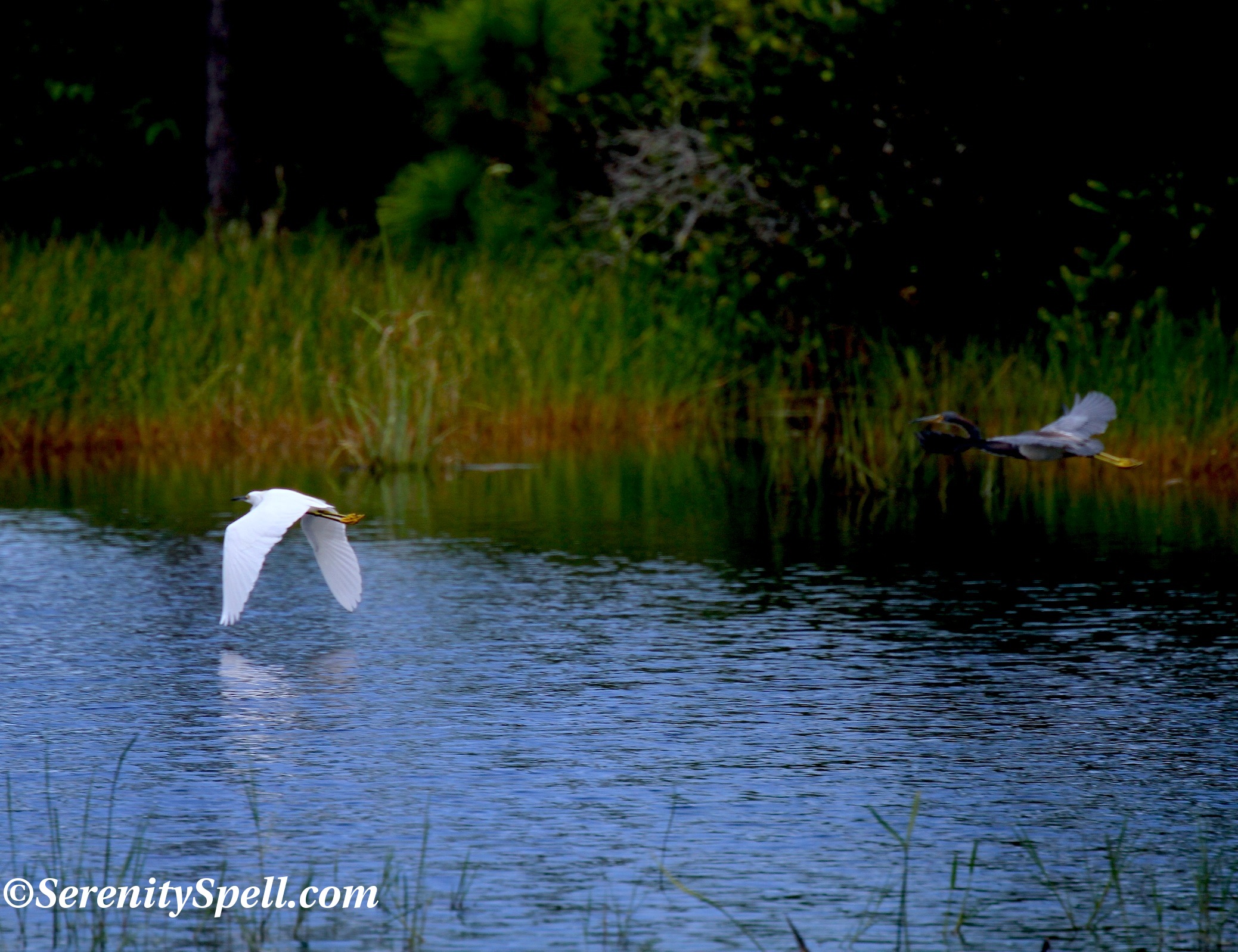
Wading Friends at the Cypress Creek Natural Area, Jupiter, Florida

Friends of flight at the Cypress Creek Natural Area in Jupiter