Skip to content

Posts tagged ‘wildlife’

A Portrait in Patience

A Great Egret patiently stalks its meal among South Florida’s protected wetlands, with the purple stalks of the aquatic plant, pickerelweed, reflecting on the water’s surface. Both egret parents feed the chicks during the nesting period, which remains in high swing. Fortunately, they don’t have to travel far to forage for food, as there’s an abundant supply in this wonderful preserve; and within a few miles of these wetlands lies the Everglades. Observing the egret’s focus, intent, and diligence is a true lesson in patience — but a few humans have had poetic insights into this state of steadfastness:

Adopt the pace of nature: her secret is patience. -(Ralph Waldo Emerson)
Have patience. All things are difficult before they become easy. -(Saadi)
Patience is the greatest of all virtues. -(Cato the Elder)
Patience is the companion of wisdom.
-(Saint Augustine)

Endurance is patience concentrated. -(Thomas Carlyle)
He that can have patience can have what he will.
-(Benjamin Franklin)
Our patience will achieve more than our force.
-(Edmund Burke)
Patience and Diligence, like faith, remove mountains.
-(William Penn)
Patience and tenacity are worth more than twice their weight of cleverness.
-(Thomas Huxley
)
Why is patience so important? Because it makes us pay attention. (Paulo Coelho)


A Great Egret Patiently Stalks Its Meal in the Florida Wetland

A Marsh Rabbit Baby, and a Few Fae

As promised in a recent post, I was lucky to sneak up on a baby marsh rabbit during a recent walk in our wetlands — not always the easiest thing to do with wild adult rabbits, let alone the babies. (Learn more about Marsh Rabbits here.) And as promised…. Cuteness factor through the roof! In honor of their adorableness, I included vintage illustrations of rabbit romps with fairies, and fairytale rabbits — because when I see these delicate marsh rabbits (or as I call them, swamp bunnies, much to the chagrin of the more uptight naturalists), especially the babies — it’s hard not to picture them in such a setting. I like to envision fae around all critters, helping us occasionally close-minded humans love and appreciate their, and Nature’s beauty all that more.

Marsh Rabbit Baby in the South Florida Wetlands

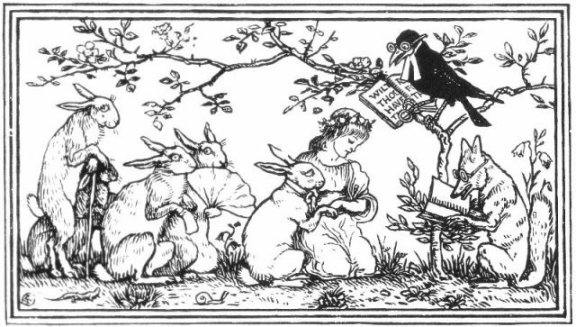
“Fairy and Rabbits,” by Ida Rentoul Outhwaite

“A Rabbit Among the Fairies,” by John Anster Fitzgerald

The Brothers Grimm, “The Rabbit’s Bride,” by Walter Crane (court. Project Gutenberg)

“The White Rabbit,” by John Tenniel

“The Tale of Benjamin Bunny,” by Beatrix Potter

“Once you are Real you can’t become unreal again. It lasts for always.” So, with the help of the fairy who cares for all playthings, and makes them Real…

“The Velveteen Rabbit,” by Margery Williams (Ill. by William Nicholson)

Marsh Rabbits

True to its name, the marsh rabbit is found in the marshes and swamps of the Eastern and Southern United States. Our marsh rabbits — not to be confused with the larger swamp rabbits of Alabama through Texas — are delicate little things. Those on the Florida peninsula, and in South Florida in particular, weigh only 2-3 pounds, reaching a total length of 17 inches. “Mainland” (non-Florida) marsh rabbits run noticeably larger. Florida’s marsh rabbits have shorter ears, and smaller legs than the swamp rabbits and cottontails — and instead of a bushy, cottonball-tail, the tail forms a tuft. They’re also darker in coloration than eastern cottontails.

What’s so interesting about our marsh rabbits, as their name signifies, is their proclivity to water — swimming often and well, sometimes for long distances. It’s common to see them in the shallow waters of our wetlands scrounging for food. Another interesting feature of marsh rabbits is that they walk on all fours, like a cat — ensuring easy and swift negotiation of the dense marshes and the surrounding vegetation. Their preferred habitats are the brackish and freshwater marshes, mangrove swamps, and sandy islands. These rabbits must have access to water, remaining on high ground and in the thick vegetation for protection from predators including alligators, snakes, bobcats, foxes, coyotes, and birds of prey. They’re most active at dusk and at night, eating the abundant wetland and aquatic plants.

They’re truly adorable little things; even the strong-like-bull human male can’t resist yelping “bunnies!” when we’re walking the wetlands, or hiking the swamps, and one creeps into view. And the baby marsh rabbits? Cuteness factor through the roof. I like to call them swamp bunnies, much to the chagrin of uptight naturalists who may be listening in on my insanity. I just snapped a few babies, as it’s of course baby season…. So the adorableness will soon be shared.

Marsh Rabbit in South Florida’s Wetlands

The Great Blues, and Another Baby

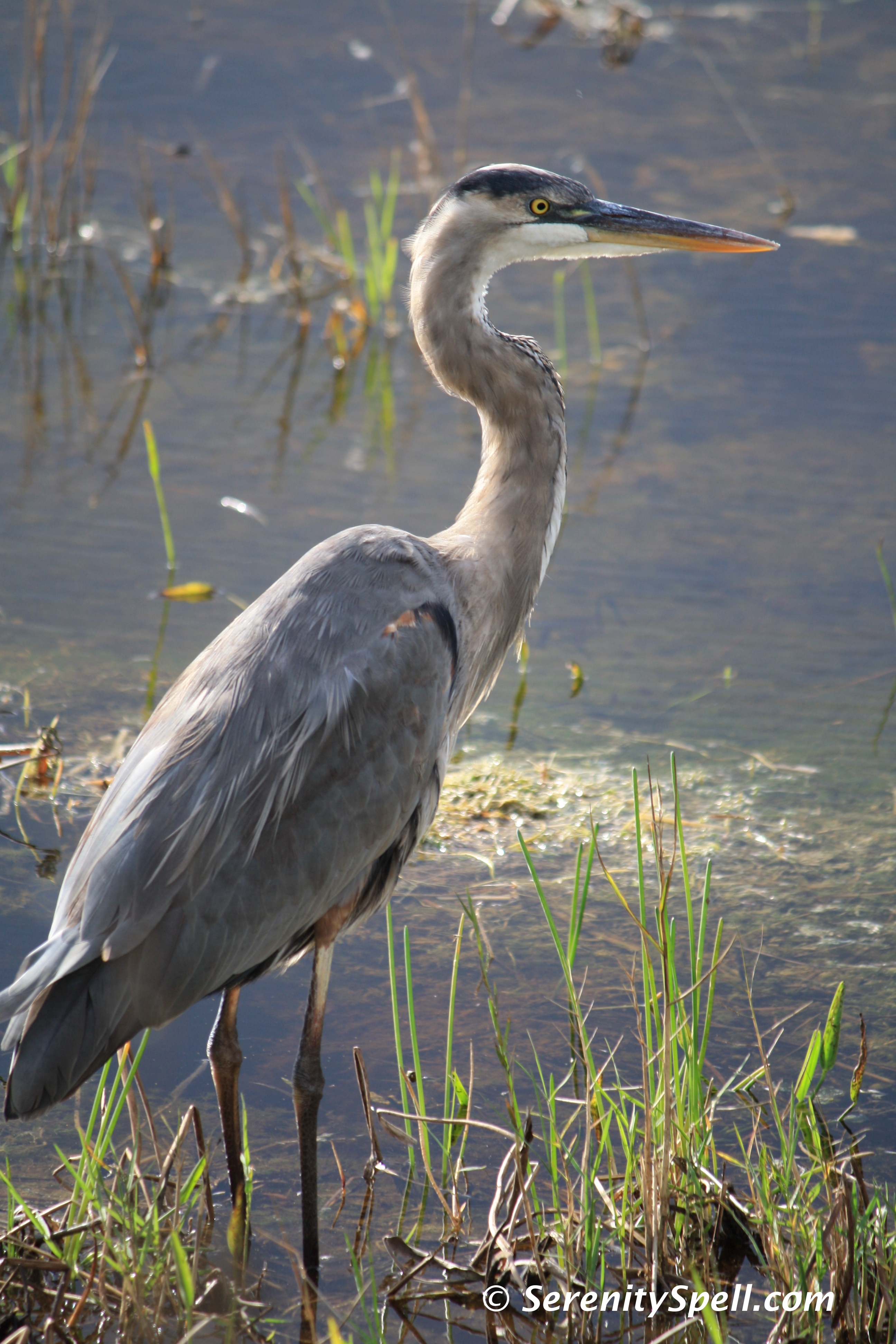
Great Blue Heron at Dusk, Arthur R. Marshall Loxahatchee Wildlife Refuge

Nesting season continues at our protected wetlands, and the ever-graceful and regal Great Blue Herons consistently fuel the attentions of nature lovers and photographers. Now that Florida’s “Season” has ended however, the more timid (*me*) can enjoy these creatures. I haven’t written much on them, so here’s a bit of general info on the species.

Description & Habitat

Great Blues — also known Blue Cranes, California or Florida Herons, Espiritu Santo Herons, San Lucas Herons, and Treganza’s Herons — can be found in North and Central America, as well as in the West Indies and the Galápagos. They’re the largest of the herons in North America, and globally their size is surpassed only by the Goliath Heron and the White-bellied Heron. At 4 feet tall, and with a wingspan of 7 feet, they’re a stunning sight in our swamps and wetlands, as they stalk the shallow waters with long and deliberate steps, and fly overhead with slow and strong wing beats. In flight, they tuck in their necks, and their long legs trail behind. Save for migratory and nesting periods, Great Blues hunt and travel alone. They’re typically found near the shores of open water and in wetland environments, in both saltwater and freshwater habitats — including marshes, rivers, lakes, bays, lagoons, coasts, shores, and ponds. Like many other wading birds, Great Blues are primarily active at dawn or dusk, when fishing’s at its best. To observe them standing stock still, scanning and stalking the waters and surrounding vegetation for prey, is mesmerizing. Once they spot a fish, they strike with lightning-fast precision to grab or stab it — but they’ll also eat frogs, shrimp, crabs, insects, reptiles, rodents, and small birds.

Nesting & Breeding
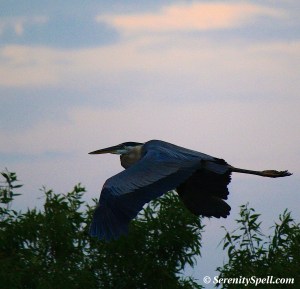
Great Blue Heron in Flight

Great Blues are monogamous, and will remain with their mate for the breeding season. Usually only one brood a year is produced; however, a Great Blue may raise another, if the original clutch is destroyed or abandoned. They breed in groups, or colonies, alongside other herons (and egrets). These breeding colonies, or rookeries, are located in all types of trees that can support their nests — in our area, tree islands are the preferred structure for the Great Blues’ rookeries. Tall tree branches or shrubs may also suffice — as long as the nest sits near water or wetlands. They build their nests out of sticks and twigs, and line them with a softer material, such as plants, feathers, or down.

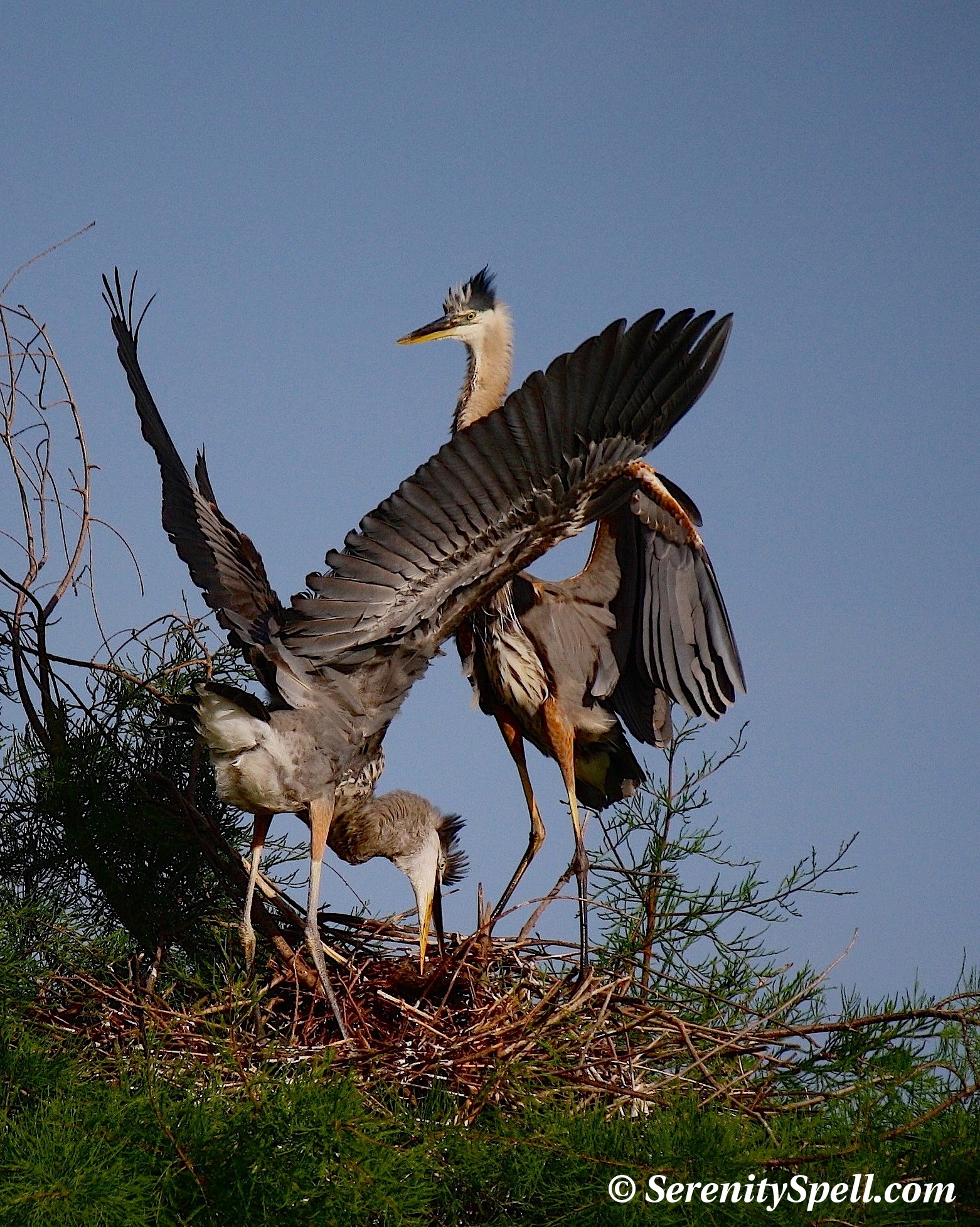
Great Blue Heron Pair at Their Nest

Great Blues will try to nest in the same spot each year, using the old nest. Ours definitely do, and defend their nests aggressively against each other as well as against predators. Females lay 2-7 pale blue eggs, which are incubated for about 25-30 days. The young hatch over several days, and the Great Blue parents share the responsibility of feeding the young at the nest, by hunting on a full-time schedule and regurgitating the food. The battle for food is brutal among the chicks; the first to hatch is more experienced in food handling, and consequently grows more quickly than the younger hatchlings. Such aggression in the interaction with the sibling chicks (as well as the discrepancy in size) can be seen at the wetland rookeries, where it’s hard not to root for the younger, weaker chicks that are consistently beaten after fierce battles for food. The young Great Blues leave the nest at 2-3 months (60-90 days).

Great Blue Heron Pair at Their Nest

See The Nesting Great Blues for images of earlier nests and the growing young….

Threats

The average lifespan for a Great Blue in the wild is 15 years — although a maximum lifespan of 24.5 years has been recorded. Sadly, nearly 70% of Great Blues die before reaching the age of one year; contributing factors include repeated human disturbance to their nesting sites, resulting in abandonment of eggs or chicks. Other factors of premature death include accidents, harsh weather conditions, illegal hunting, and predation of eggs, nestlings and adults.

But as mentioned, we’re fortunate that Palm Beach County has created and preserved a marsh and wetland ecosystem for these and so many more animals in Wakodahatchee(Seminole for “created waters”) and Green Cay — so on to the new baby!

Oddly, there was only one hatchling at this Great Blue’s nest. I missed this event, but there were several hours of the mother Great Blue fiercely defending her newborn from a Turkey Vulture.

Great Blue Heron Mother and Her Baby at the Nest

…And the same growing baby, one week later!
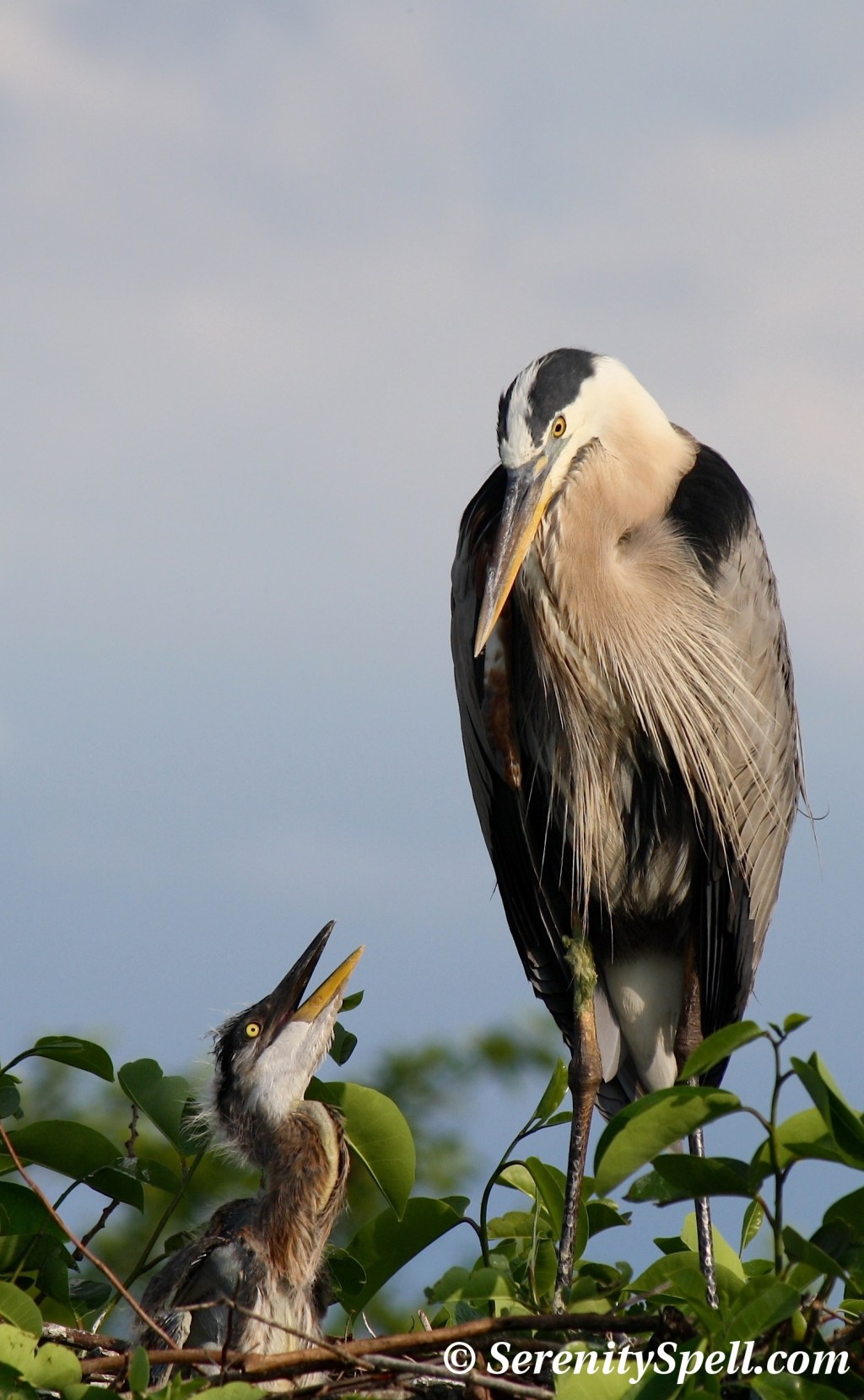
Great Blue Heron Mother and Her Growing Baby at the Nest

They grow quickly — but fortunately, the above little one won’t have to fight for food like these nearby juveniles, waiting patiently at their nest for the next meal…

Great Blue Heron Juveniles Waiting Patiently at the Nest

Happy Mommy’s Day

 Happy Mother’s Day! MUCH love to all the dedicated, devoted, and hard-working women — and female critters — of the world.

Me + Mom (w/ brother in belly) in Central FL, 1972, PRE-Disney — while swamps were being filled

Momma Grackle feeds her young

I’ll save *exactly* what the momma’s feeding the juvenile (below) for an upcoming post…. It’s just. That. Yummy!

Great Blue Heron feeding her young on a tree-top nest

Big Like You: Momma Alligator with one of her babies

Anhinga Mealtime: Busy mother Anhinga with her brood

Red-winged Blackbird nest with a new momma

Red-winged Blackbird mother feeds her hatchlings

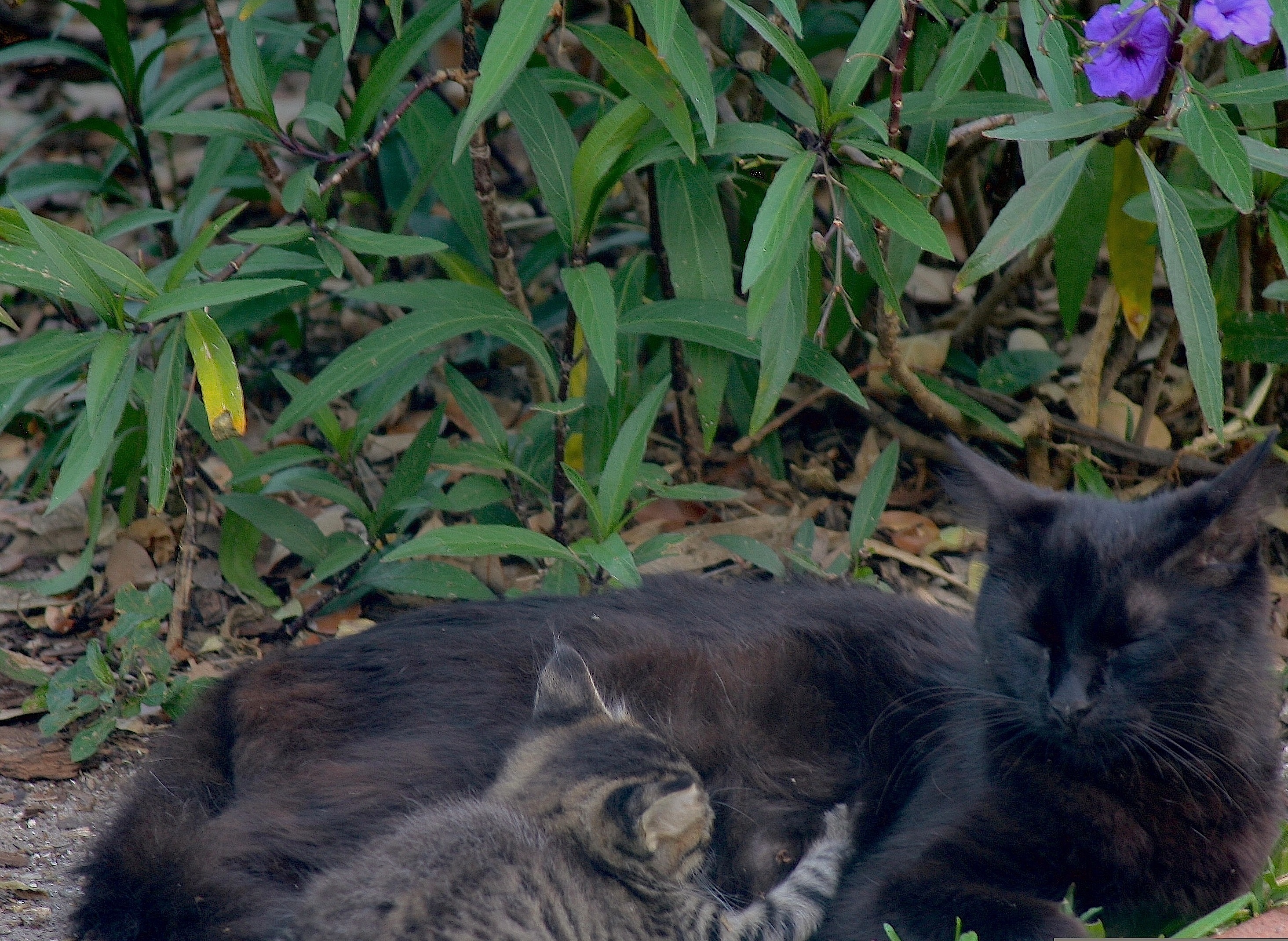
Our neighborhood stray cat and her kitten in our yard; such a good momma (now: TNR time!)