Skip to content

Posts tagged ‘wildlife’

Alligator Babies

Alligator and Duckweed in the Green Cay Wetlands

Twenty million years as a resident of planet Earth, and counting…. Scientists believe that the American alligator resembles animals that inhabited our planet as long as 100-150 million years ago — and that they may be linked to creatures dating 50-65 million years ago, managing to avoid the extinction that killed off their prehistoric contemporaries, the dinosaurs. A member of the crocodilian family, there are two alligator species living in the world today: the American alligator (Alligator mississippiensis) and the Chinese alligator (Alligator sinensis).

Once Nearly Extinct

Sadly, American alligator populations suffered tremendously throughout the 20th century, when they were hunted to near-extinction for their hides. Since the Endangered Species Act of 1973 however, these amazing creatures’ populations continue to grow, and illegal poaching is not the issue that it once was. Before this hunting was controlled, an estimated 10 million alligators were killed for their skins. Twenty million years on planet Earth, and we nearly managed to wipe them out for handbags.

Nesting and the Young
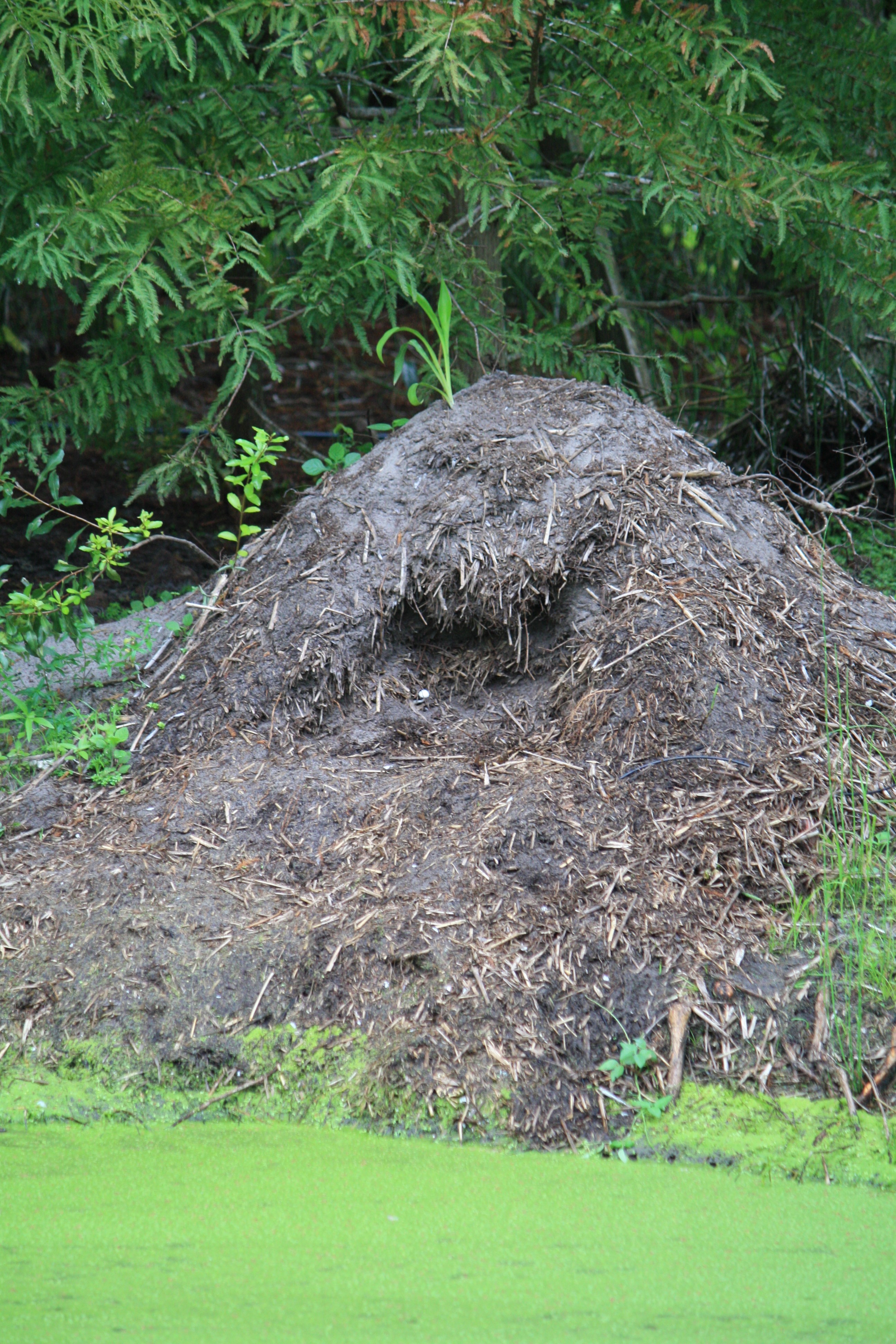
Alligator Mound / Nest

After an elaborate courtship female alligators construct their nests, which are comprised of vegetation, sticks, leaves, and mud and located in a sheltered spot in or near the water. She lays 20-50 eggs, and covers them under more vegetation, which heats as it decays, serving to incubate the eggs. The female will remain near the nest throughout the 65-day incubation period, protecting it. If a mother alligator is killed or removed, she can’t protect her nest or young — and the hatchlings are doomed. *Leave wildlife alone.*

Hatchlings are 6-8 inches long, and are near-replicas of their parents, save for a series of yellow and black stripes which camouflage beautifully with the surrounding marsh roots. For five months, they’ll remain with the mother before finding their own ways. We typically see 5-10 baby alligators survive in our local protected wetlands. Perhaps less. Common predators that prey upon the juvenile alligators include snapping turtles, snakes, raccoons, bobcats, raptors, and even larger alligators. But when we find them? Oh my; the adorableness level is ridiculously high.

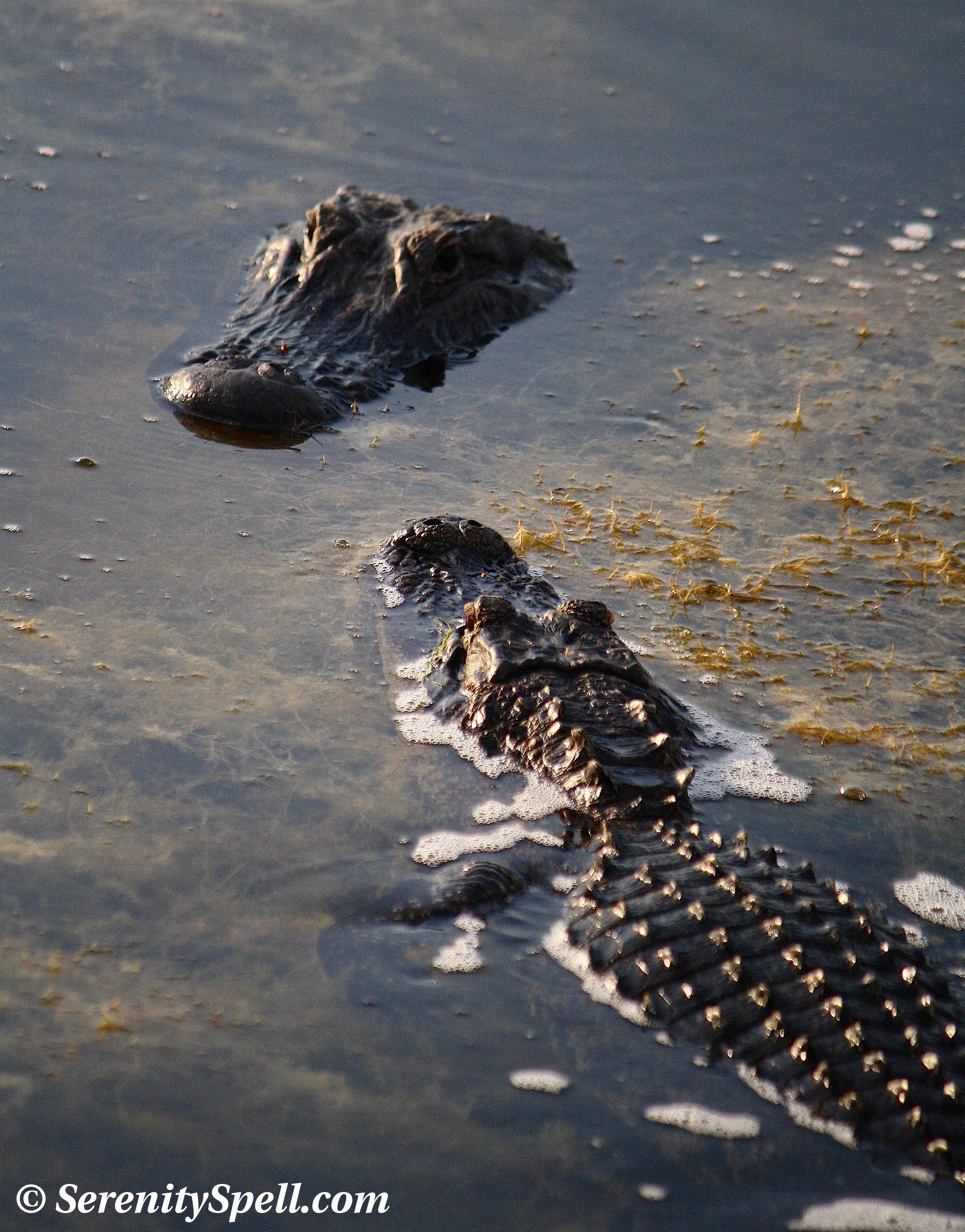
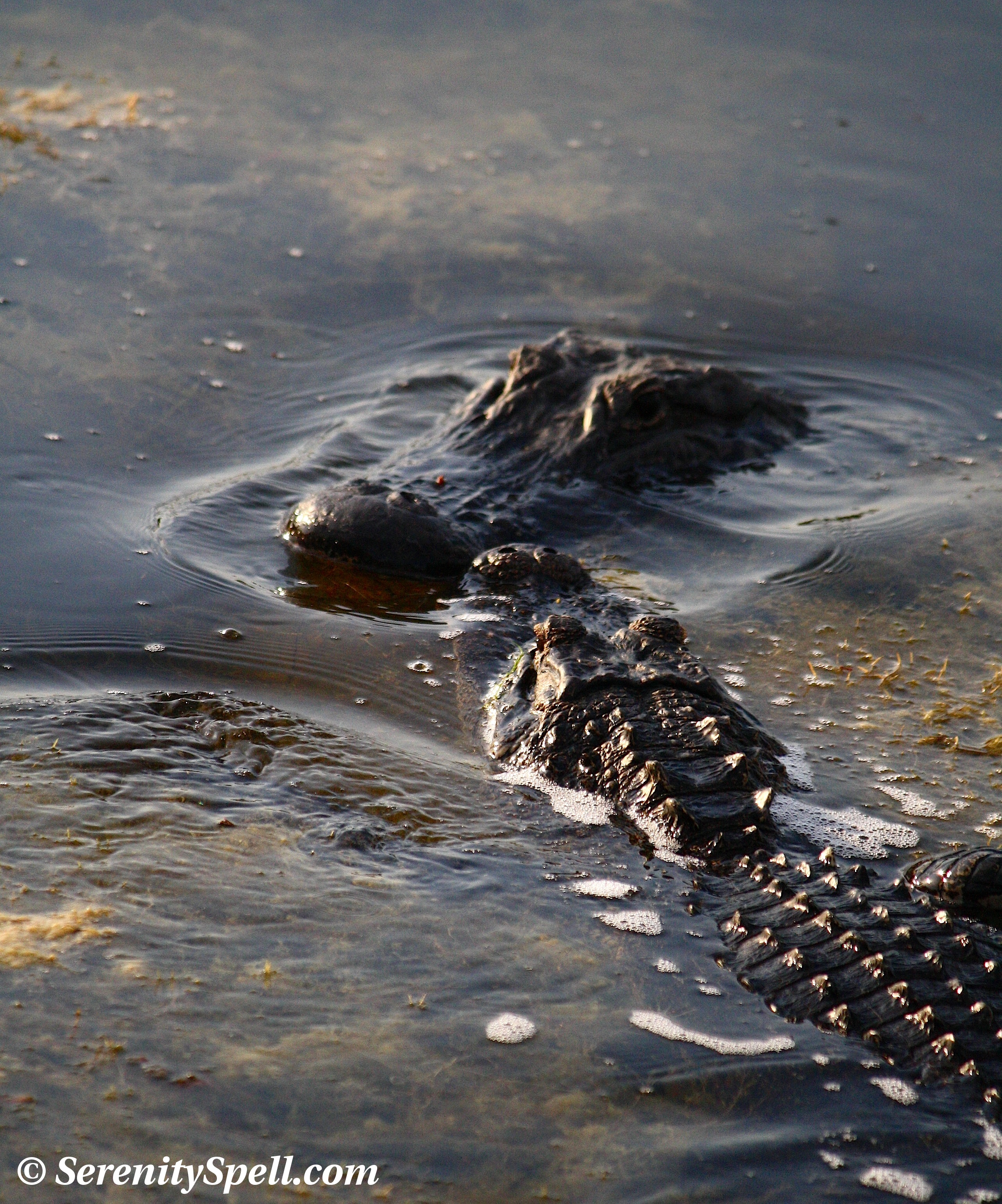
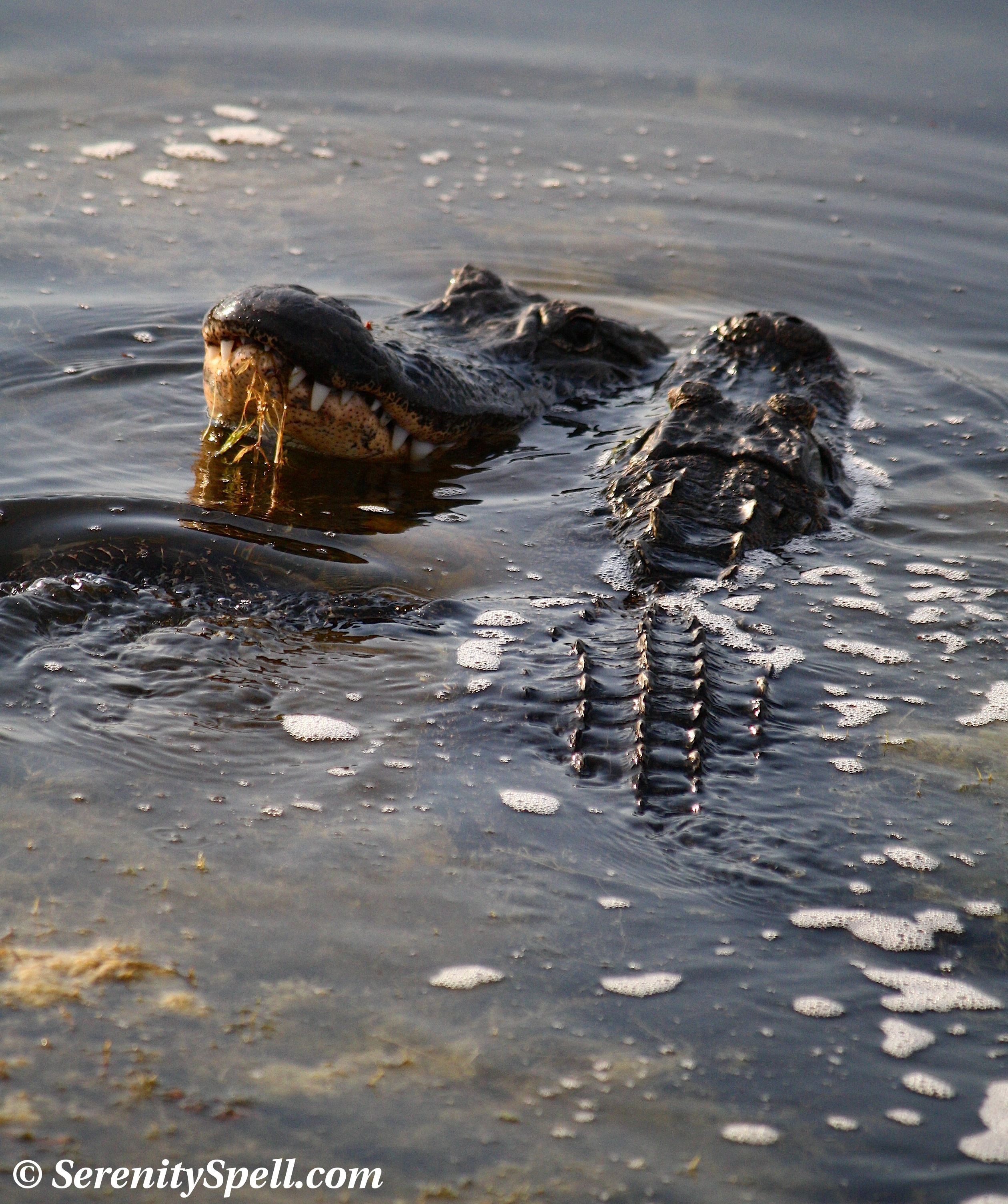
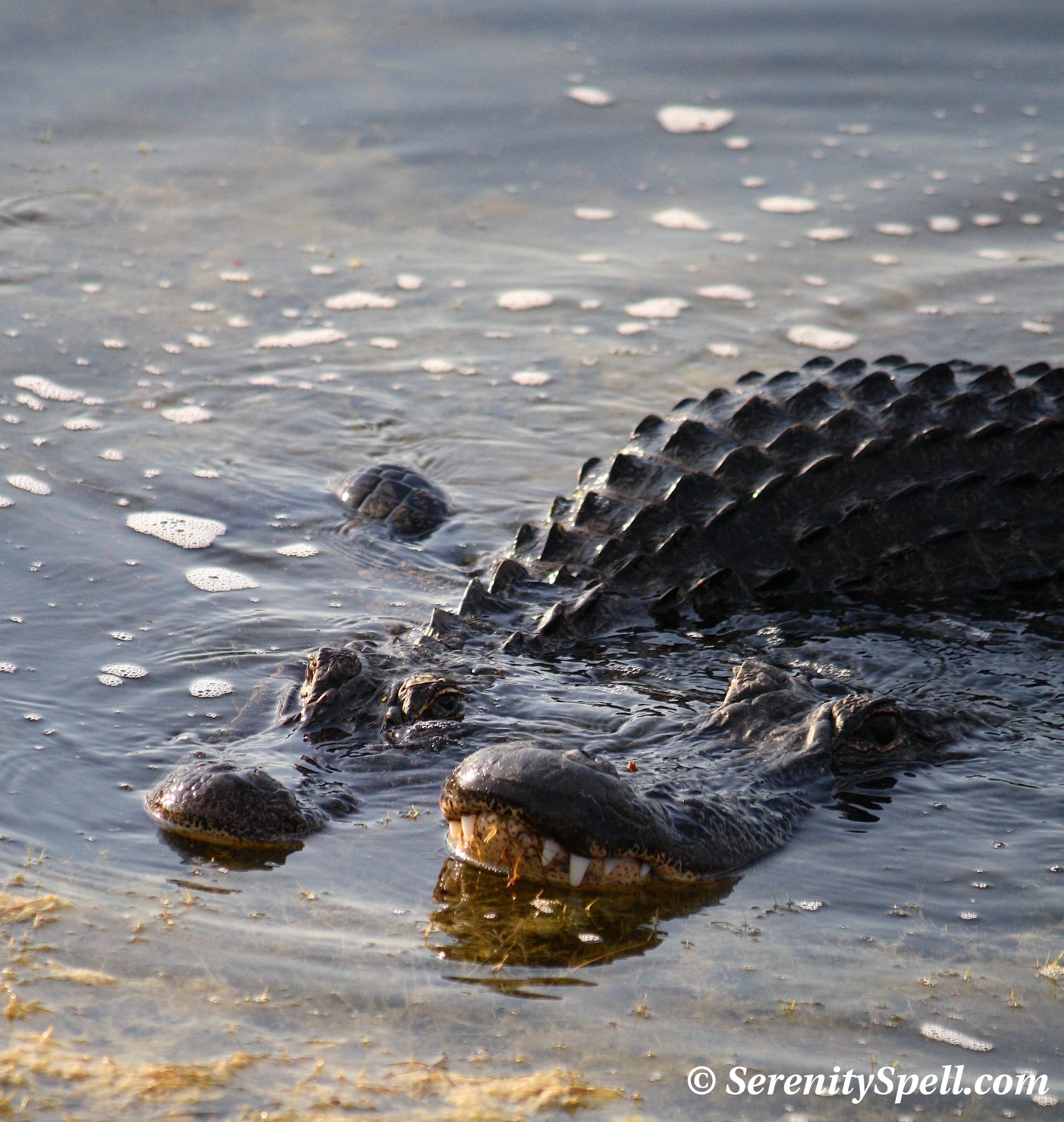
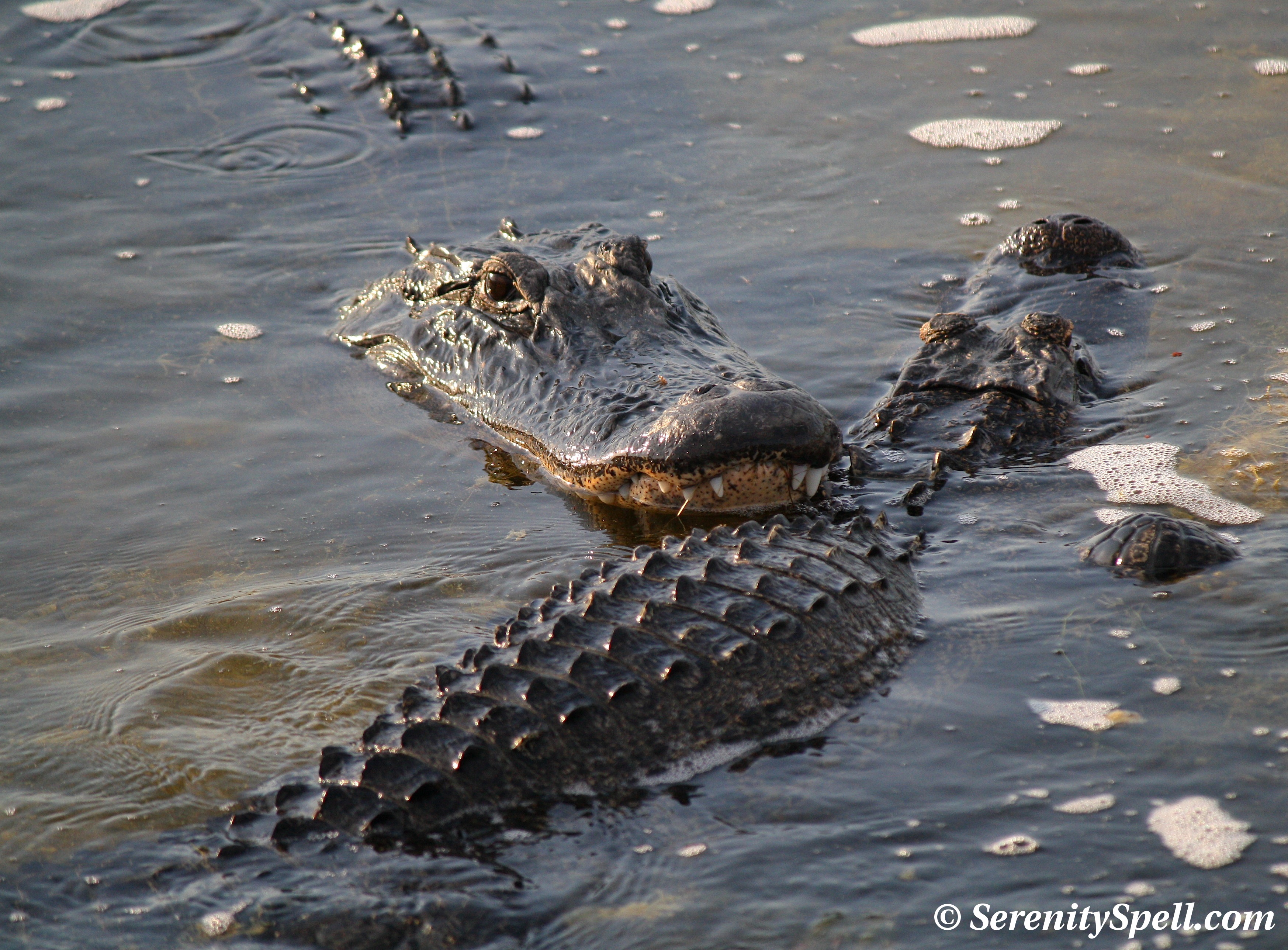
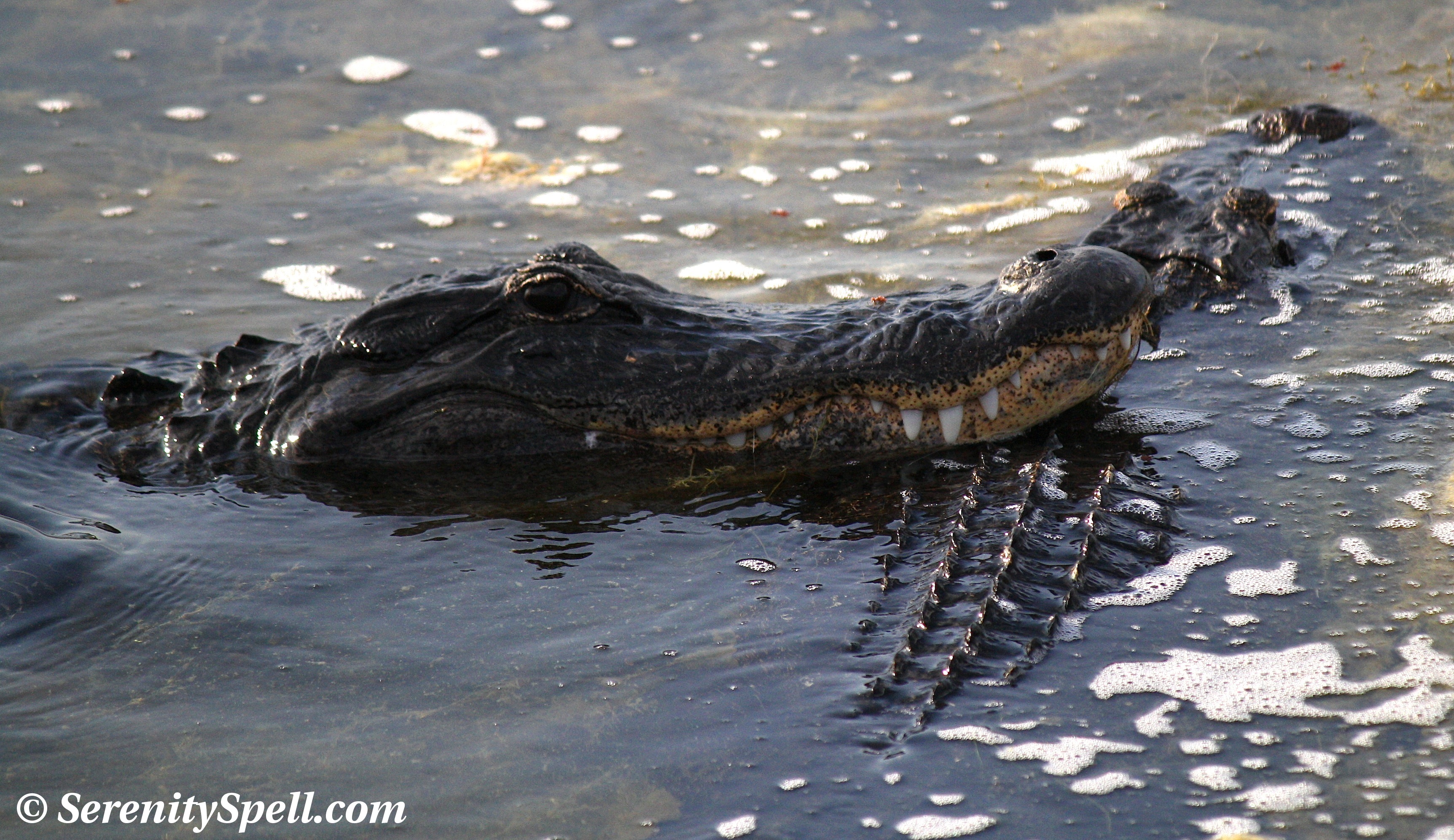
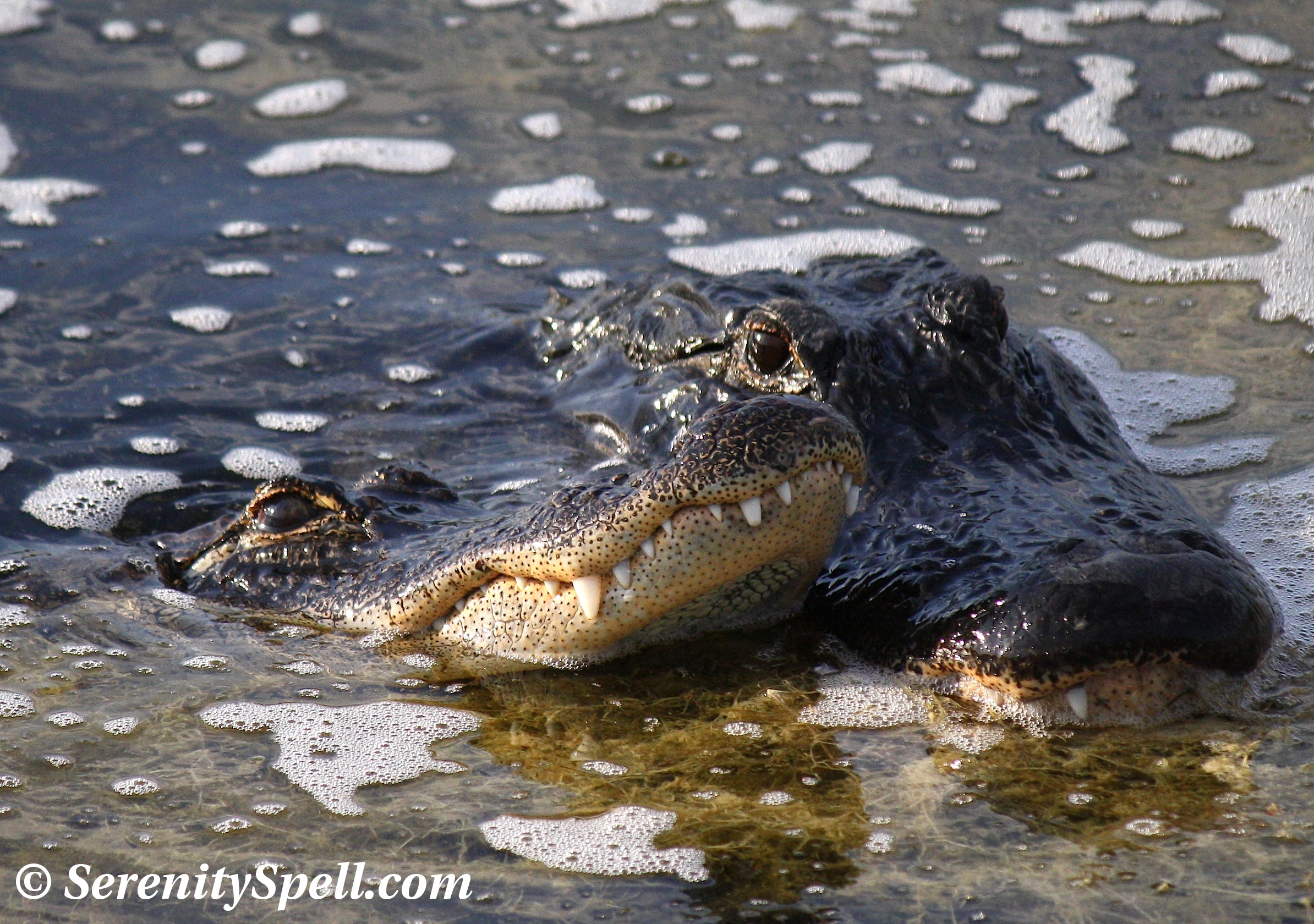
During a recent trip, I was lucky to have witnessed a mating pair of alligators — while I believe the actual mating had already occurred (as evidenced by the babies on the nearby bank), their  affinity for each other was obvious…. Alligator Love: A Courtship offers opportune images of the event.

Flower

Big Like You

I Blend
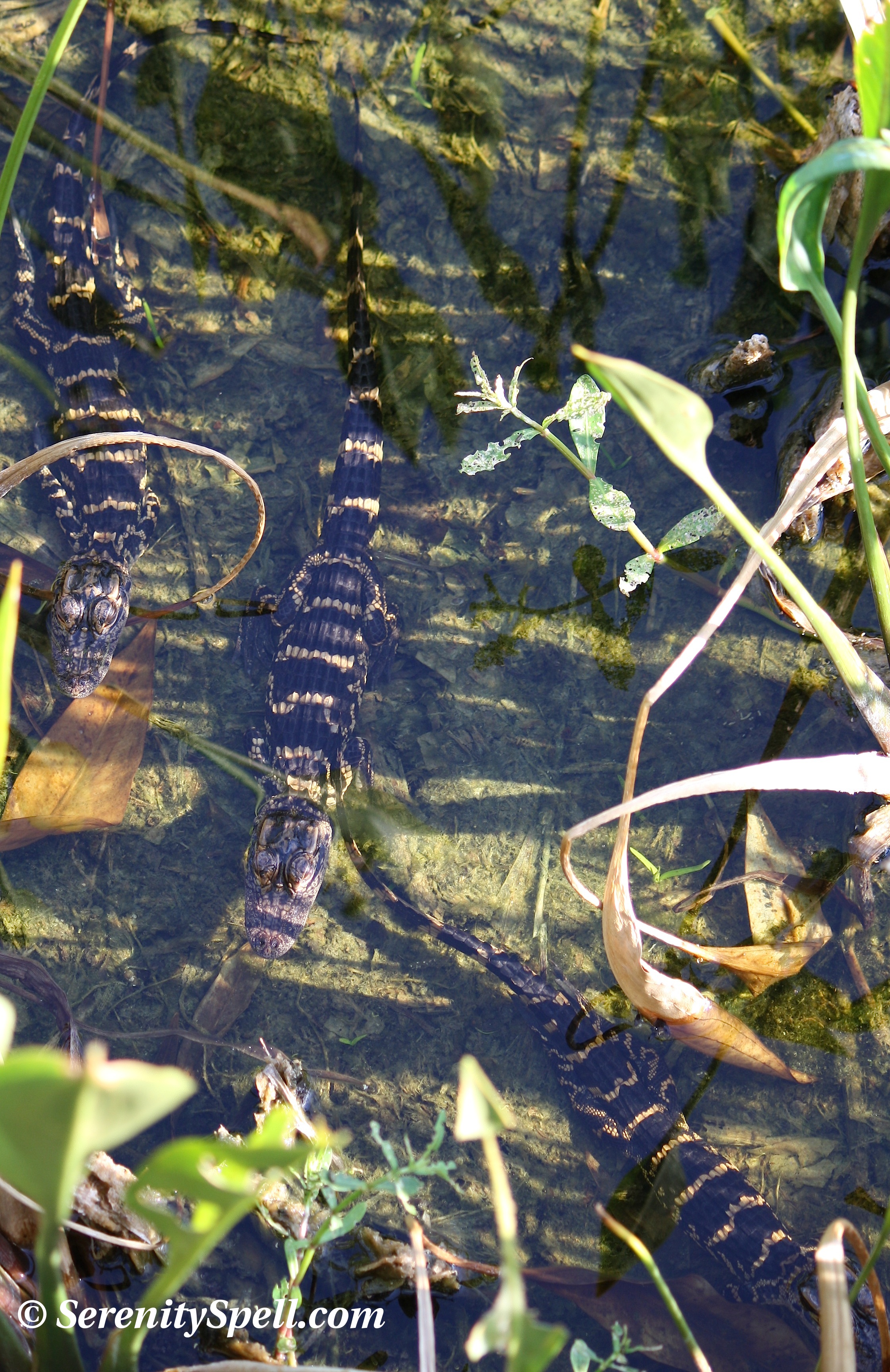
A few more over there...

Peek-a-Boo

Nom Nom Nom
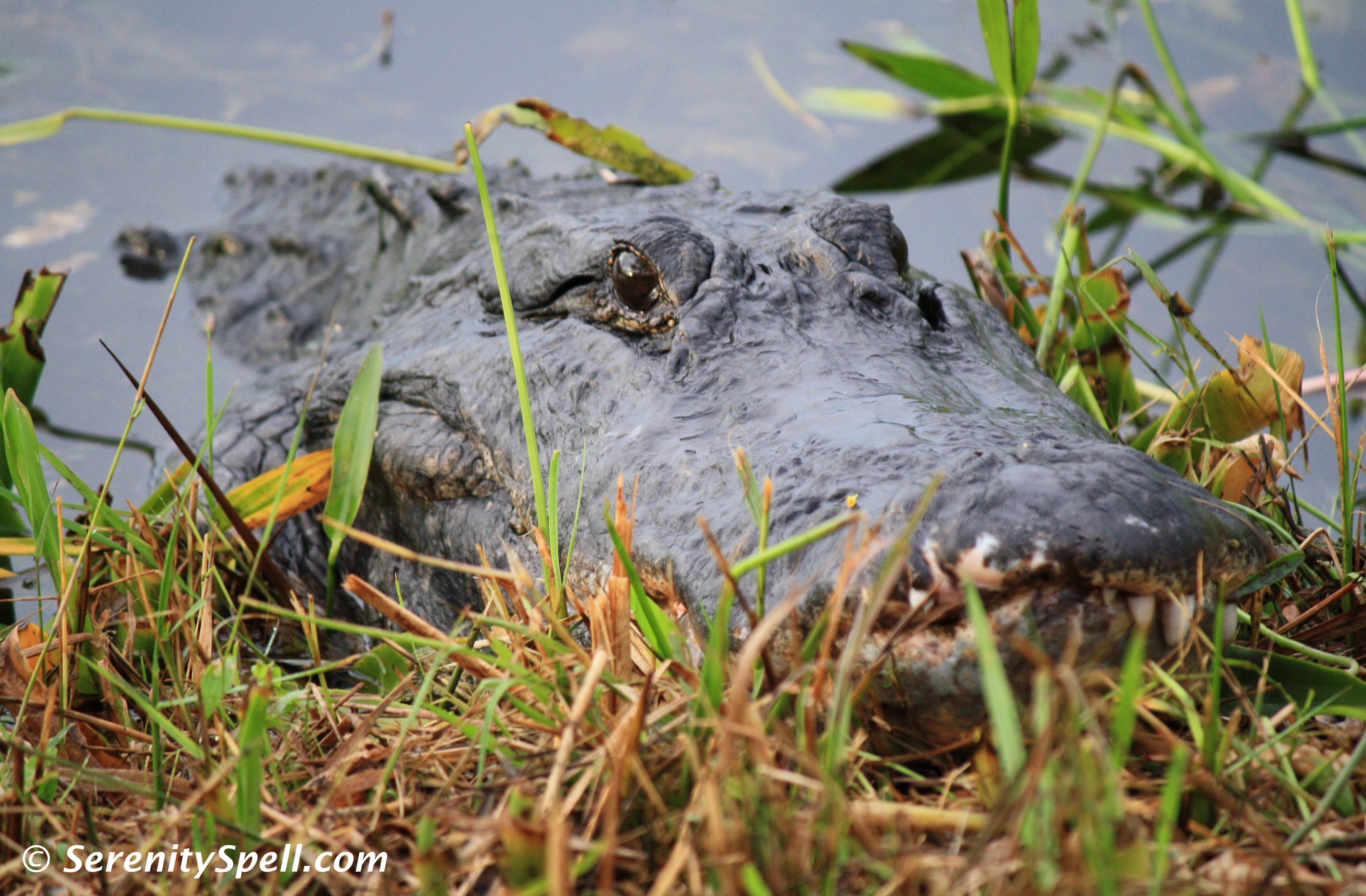
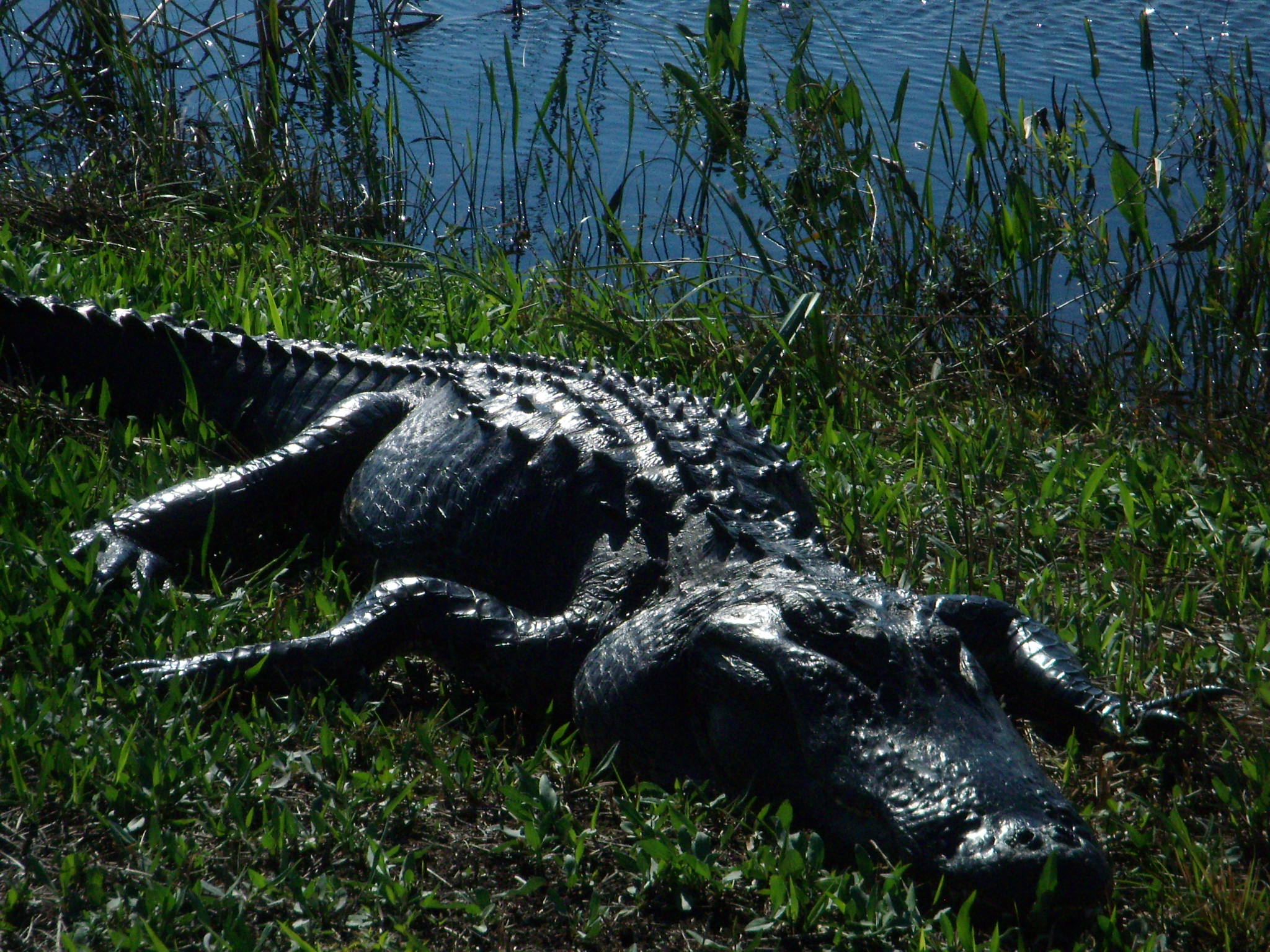
Alligator Love: A Courtship

Twenty million years as a resident of planet Earth, and counting…. Scientists believe that the American alligator resembles animals that inhabited our planet as long as 100-150 million years ago — and that they may be linked to creatures dating 50-65 million years ago, managing to avoid the extinction that killed off the dinosaurs, their prehistoric contemporaries.

I was *exceptionally* fortunate to have recently witnessed a mating pair of alligators in our protected wetlands — while I believe the actual mating had already occurred (as evidenced by their babies on the nearby bank), their affinity for each other was obvious. I was thrilled to have captured the courtship images… Below!

Alligator mississippiensis

Alligator and Duckweed in the Green Cay Wetlands

A member of the crocodilian family, there are two alligator species living in the world today: the American alligator (Alligator mississippiensis) and the Chinese alligator (Alligator sinensis). American alligators are found in the southeastern United States; the majority inhabit Florida and Louisiana, with over a million alligators in each state. Interestingly, southern Florida is the only place where both alligators and crocodiles exist side-by-side. We’ve actually seen a growing number of crocodiles in our trips to the Everglades.

Alligators live in freshwater environments, including ponds, marshes, wetlands, rivers, and swamps, as well as brackish environments. They’re long-lived animals, living more than 50 years in the wild. As with other cold-blooded reptiles, it’s common to see them basking in the sun, thus regulating their body temperatures. Occasionally they keep their mouths open, akin to a dog panting — it’s a cooling mechanism.

Nearly Extinct

Big Baby Basking the Sun's Last Rays, Arthur R. Marshall Loxahatchee National Wildlife Refuge

Sadly, American alligator populations suffered tremendously throughout the 20th century, when they were hunted to near-extinction for their hides — an estimated 10 million alligators were slaughtered. Since the Endangered Species Act of 1973 however, these amazing creatures’ populations continue to grow, and illegal poaching is better controlled. Twenty million years on planet Earth, and we nearly managed to wipe them out for handbags.

Courtship and Breeding

Alligator on the Path (Just Fed), Arthur R. Marshall Loxahatchee National Wildlife Refuge

Alligators reach breeding maturity at 6-10 years of age, when they’re approximately 6-7 feet long. Growth slows after this point, but some of the oldest males may grow upwards of 16 feet, reaching 1,200 pounds. We’ve seen some LARGE GATORS out in the ‘Glades…. And it’s pitiful to see the yahoos on reality TV wrestling (rastling?) the smaller juveniles. In the first place, WHY? Secondly, bullies much, picking on the babies?

Interestingly, recent studies have shown that up to 70 percent of alligator females remained with their partner — often for many years.

Breeding begins in the spring (mid-April through May, specifically), and you can hear their loud bellows throughout the swamps — calls used to attract mates and warn off other males. While (like all wildlife) gators don’t want to bother humans, the mating season isn’t the time to push your luck — aggression is at a higher level, and they may become more territorial (the older ones, at least). On our hikes, we’re always aware of the season. Alligator courtship is complex — vocalizations, head-slapping on the water’s surface, body posturing, snout and back rubbing, bubble blowing, and pheromone (scent) signals all play into the process.

Nesting and the Young

Alligator Mound / Nest in the Wetlands

Alligator nests (or mounds) are built by the female, and comprised of vegetation, sticks, and mud located in a sheltered spot in or near the water. She lays 20-50 eggs, and covers them under more vegetation which heats as it decays, serving to incubate the eggs. The female will remain near the nest throughout the 65-day incubation period, protecting it. If a mother alligator is killed or removed, she can’t protect her nest or young — and the hatchlings are doomed. *Leave wildlife alone.*

Hatchlings are 6-8 inches long, and are near-replicas of their parents, save for a series of yellow and black stripes which camouflage beautifully with the surrounding marsh roots. For five months, they’ll remain with the mother before finding their own ways. In our area, we typically see 5-10 baby alligators survive in the protected wetlands. Perhaps less. Common predators that prey upon the juvenile alligators include snapping turtles, snakes, raccoons, bobcats, raptors, and even larger alligators. But when we find them? Oh my…. I must break up these posts, though — there are too many images, and the adorableness level is simply too high. Next: Alligator Babies!

Alligator Courtship, Florida Wetlands

Alligator Courtship, Florida Wetlands

Alligator Courtship, Florida Wetlands

Alligator Courtship, Florida Wetlands

Alligator Courtship, Florida Wetlands

Alligator Courtship, Florida Wetlands

Alligator Courtship, Florida Wetlands

Alligator Courtship, Florida Wetlands

Alligator Courtship, Florida Wetlands

Green Heron Fabulousness

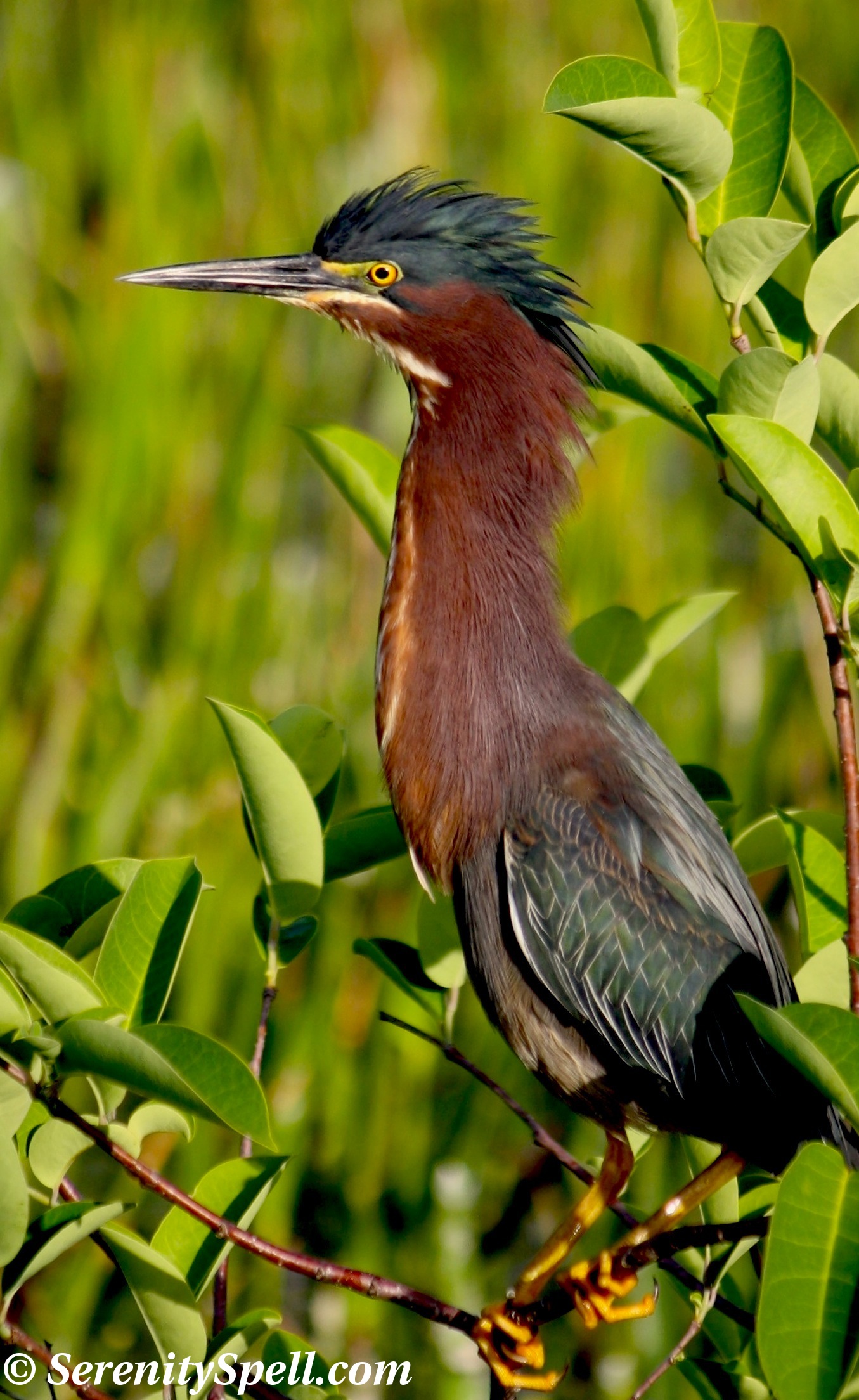
It’s always great to see some of the shyer residents of our wetlands, and the Green Heron is one such critter. Small and stocky, they’re similar to other herons in that they remain motionless as they hunt for their meals in swampy and coastal areas. Interestingly, the Green Heron is one of the few tool-using birds: it will drop various baits and lures — in the form of bread crusts, insects, twigs, or feathers — onto the water’s surface to attract small fish.

This male adult green heron was most likely guarding his chosen nesting site (nesting and baby season is in full swing), in the hopes of attracting a mate with his brilliant displays. Although they’re not the best shots — he was really hiding in the dense marsh, and not overly fond of the little attention he was receiving — I couldn’t resist including them; his magnificent ‘do makes me smile.

For More Information:

Riots of Yellow & Gold in a Florida Forest

Hiking in Florida affords an onslaught of lush landscape, but in the dry winter months, all shades of  brown rule. As spring dawns, the greens return and the colors alight. During our recent venture to Broward County’s Fern Forest, a magnificent 247-acre conservation site and wildlife refuge characterized as “the last remaining stronghold of ferns in southeastern Florida,” we witnessed a barrage of yellows and oranges (the colors of the day, as my mind flashed to an episode of Sesame Street). This beautiful and diverse natural area represents the last remnant of the historical Cypress Creek floodway — which today, remains a significant refuge for wildlife in a highly urbanized region, encompassing ten plant communities, including tropical hardwood hammock, open prairie, and cypress-maple swamp.

After leaving the shaded canopy of the Prairie Overlook Trail — the shade of which was already much appreciated with our rapidly rising temperatures — a riot of bright yellow Prickly-pear cactus blooms greeted us in the open prairie. And upon our departure from the Cypress Creek Trail (a wonderful boardwalk), we spied a rare yellow anole (aka yellow-phased green anole); unfortunately, anoles with this unique color mutation don’t usually live long in the wild, as the green coloring offers them valuable camouflage for hunting prey and hiding from predators.

A Ruddy Daggerwing butterfly (Marpesia petreus), a common sight in Florida, alights near the hardwood hammock…

For More Information:

Protecting Florida’s Gentle Gopher Tortoises & Restoring Their Habitat

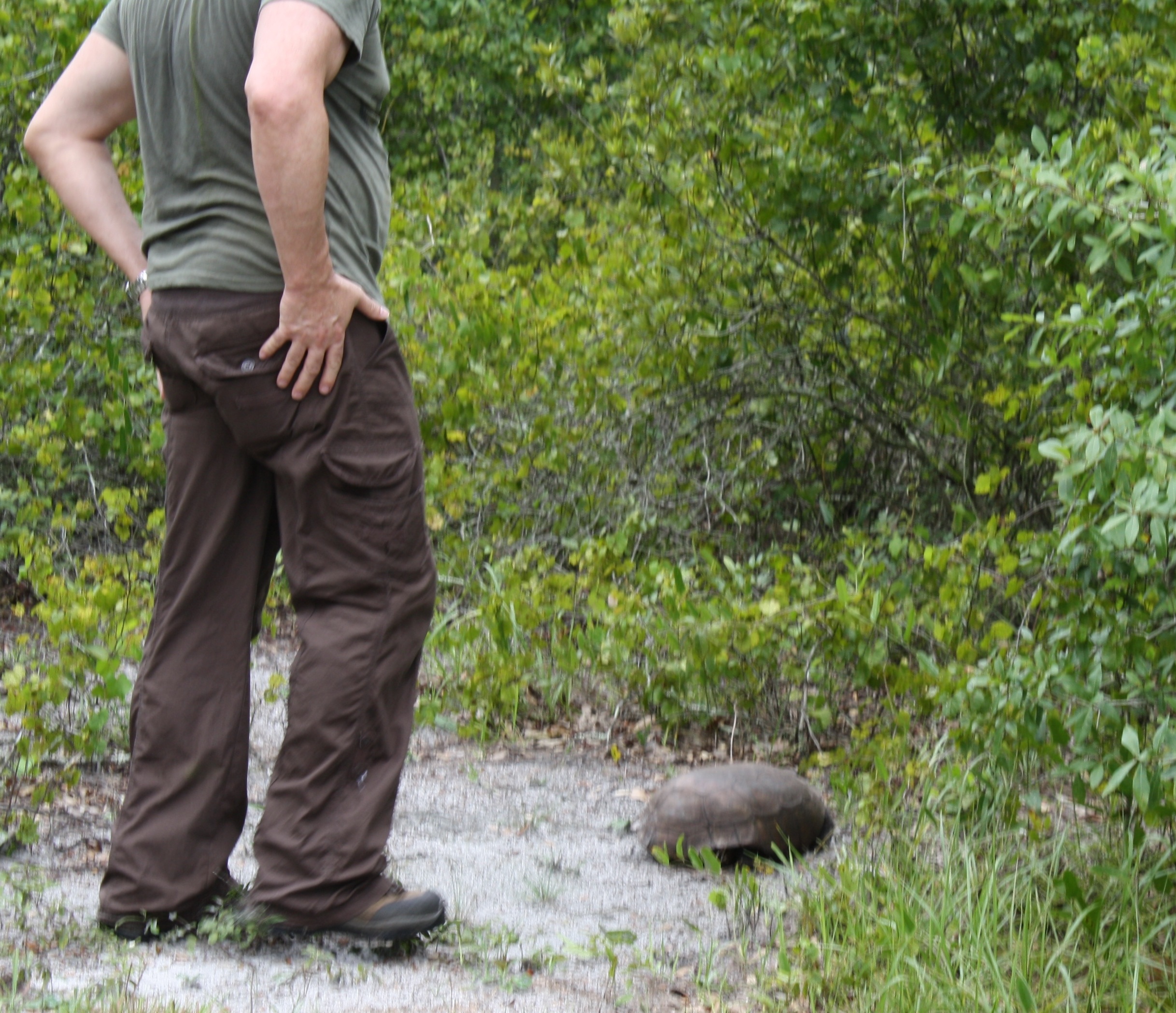
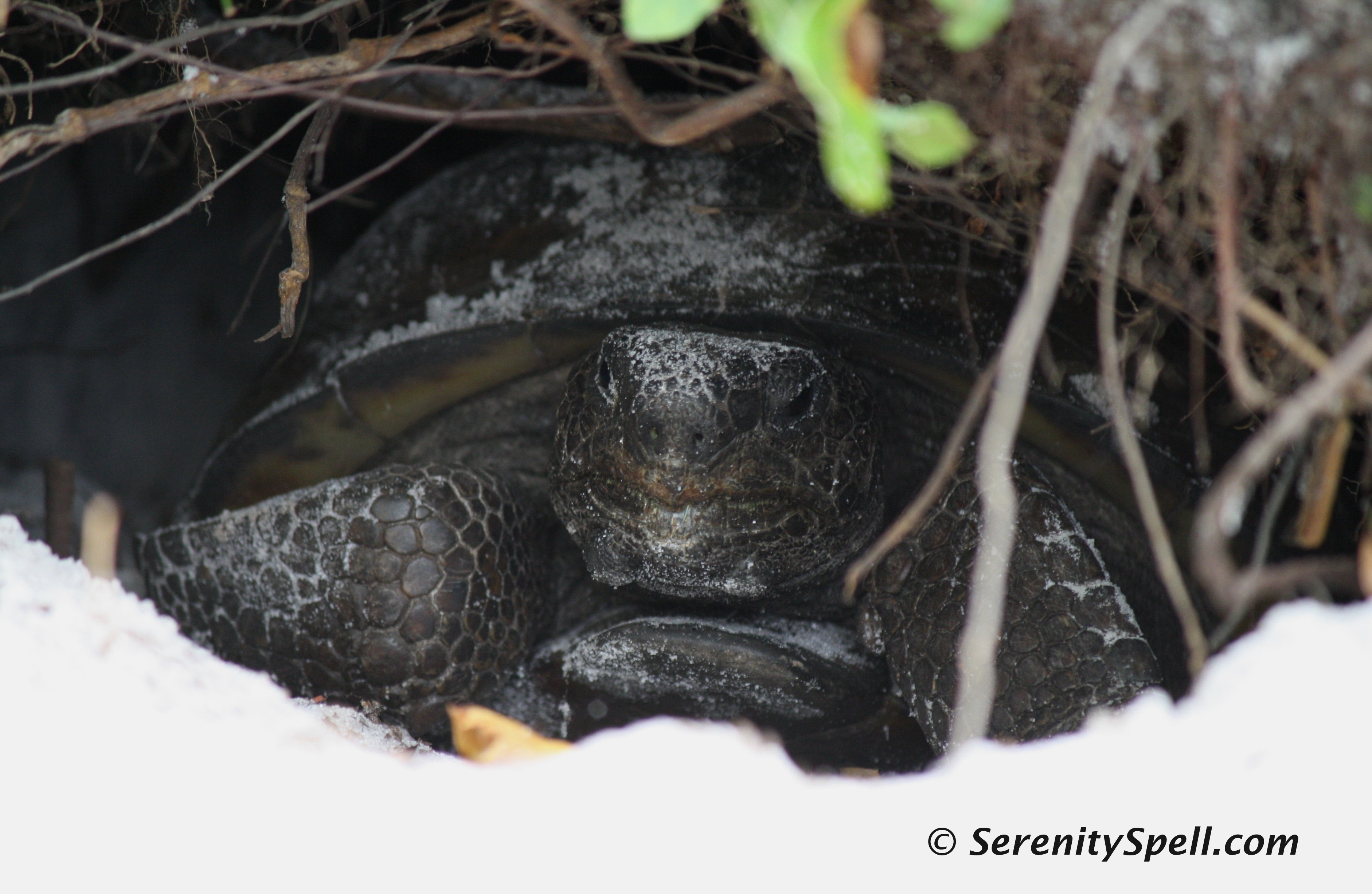
We often encounter gopher tortoises on our hikes in Florida’s natural spaces; not just in the far reaches — and there have been times when they’ve needed some help with humans’ encroachment into their land. This poor guy was trapped behind acres of personal enclosure, and had been trying to burrow in the mulch; there were dozens of failed holes to attest to his failed attempts. We stayed awhile, to see if he could manage an escape on his own (or if he was simply choosing that location), but then saw how the fence was buried, impeding his escape. Between the buried fencing, his constant dodging at the barrier, and the myriad failed burrows, it was easy to understand his dilemma. We quickly relocated him to a perfect burrow-able location nearby — literally five feet from his manic failed and impossible attempts behind the fencing, where his natural habitat awaited him. NOTE: With turtles and tortoises (of the water and land varieties), help them safely in the direction they’re heading. It would have been nice for the actual property owners to have accomplished this tiny feat, of course — it wasn’t difficult to witness the poor guy’s quandary (or his efforts); these aren’t small tortoises.

One of the oldest living species, the burrowing tortoise is found throughout Florida and southern Georgia, South Carolina, Mississippi, Alabama, and eastern Louisiana. They dig and live in long burrows in pine savannas, thus protected from summer heat, winter cold, fire, and predators. Gopher tortoises are essential to the local ecology — their burrows also provide homes for other animals, including indigo snakes, gopher frogs, mice, foxes, skunks, opossums, rabbits, quail, armadillos, burrowing owls, snakes, lizards, frogs, toads, and other invertebrates. Their burrows — abandoned or shared — may be the homes to more than 300 species of animals at one time or another. Pretty amazing; and it’s easy to see how destroying the habitat of the gopher tortoise greatly alters the already fragile ecosystem.

Federally protected as a threatened species (FINALLY in Florida, where the status was “under review” for years), the tortoise’s main threat remains: Habitat loss and destruction. For instance, it wasn’t until 2007 in Florida, that developers were forced *by law* to relocate burrowing tortoises — until then, development could shockingly occur with no thought to the safety of the animals and the destruction of their habitat. It was only then that the Gopher Tortoise Management Plan was implemented.

But the wonderful news is that with the 2007 Gopher Tortoise Management Plan, 36,000 acres of gopher tortoise habitat have been restored and managed, and the protected tortoise habitat continues to expand. More than 4,000 gopher tortoises have been humanely relocated from development sites, as well. A recent post on Southwest Florida Online elaborates on the plan:

Like a baseball player stretching muscles and practicing skills during spring training, the gopher tortoise is emerging from winter dormancy and moving slowly and steadily through the landscape in search of greenery to eat and a new place to dig its burrow.

Look for gopher tortoises’ distinctive domed brown shells and stumpy legs, as these land-dwellers make their way through Florida’s open canopy forests and sandy areas. The Florida Fish and Wildlife Conservation Commission asks people to remember that gopher tortoises are good neighbors, and can live from 40 to 60 years, so leave them and their burrows alone.

“The Florida Fish and Wildlife Conservation Commission works with, and is grateful to, the homeowners, landowners, businesses and public agencies willing to share their lands with gopher tortoises and their burrows,” said Deborah Burr, the FWC’s gopher tortoise plan coordinator…

For the rest of this blog post and more on the Gopher Tortoise Management Plan, visit Florida Restores 36,000 Acres For Tortoise Habitat.

For More Information: