Skip to content

Posts tagged ‘wildlife’

Endangered Native Florida Ecosystems at the Hypoluxo Scrub Natural Area

Aerial View

Palm Beach County has managed to preserve several swaths of pristine Florida land, and the Hypoluxo Scrub Natural Area is one such example. This land was never developed, and saw minimal agricultural use throughout the years. Purchased in 1999 in a growing effort to protect and maintain threatened and endangered biological communities in the county, we’re thankful for their efforts, and to be afforded this glimpse of native Florida. Located on a sand ridge that was once an ancient shoreline, 97 acres of Florida scrub and scrubby flatwoods communities have been incorporated and are now protected at the Hypoluxo Scrub Natural Area, as are the threatened Florida scrub-jay and gopher tortoise, both victims of over-development and lack of protection. Scrub and scrubby flatwoods habitats are two of the rarest natural communities in Florida, with less than 2 percent remaining in Palm Beach County.

History

Entering the trail area from the parking lot are two observation towers; the vantage point overlooking the natural area from the towers allows visitors to view the land as it would have appeared pre-development. Educational plaques around the towers explain the region’s history (as well as that of the Town of Hypoluxo), beginning with the early settlers in 1873 to the 1960s. Standing guard in front of the observation tower is the looming Barefoot Mailman statue, in honor of the 19th-century men who delivered mail on treacherous routes — 3-days each way, and involving nearly 100 miles of unpaved roads and alligator- and shark-infested waters. As the plaques state, the land that is now the Hypoluxo Scrub Natural Area was once owned by Andrew Garnett, James Edward Hamilton, and James Porter; Garnett and Hamilton eventually won contracts to deliver mail from Jupiter to Miami. (Remnants of Porter’s homesite are still visible at the location.) The northernmost portion of the “Sand Road,” built in 1892, signaled the end of the barefoot mailmen and is located within the park (and is the only section of the road that’s actually still sand). An additional sweet smaller sculpture greets visitors to the natural area, one by Chrisanthy Vargo depicting a scrub jay, a fox, bromeliad, and a tortoise — life of the scrub.

Trails, Flora & Fauna
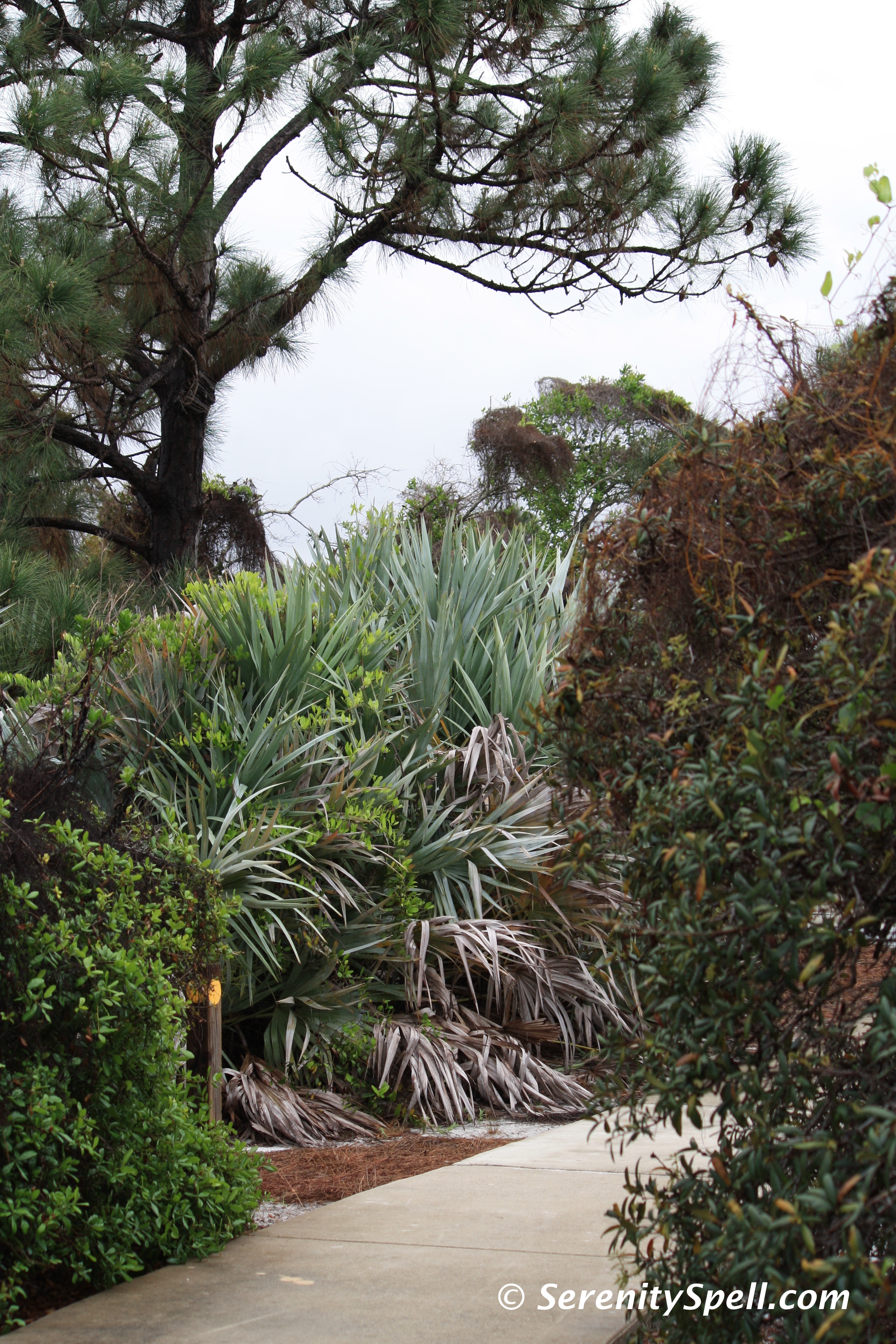
Paved Cottonweed Nature Trail

The .2-mile paved Cottonweed Nature Trail trail leads from the observation towers, and is lined with gopher tortoise burrows. While there are definitely areas within Hypoluxo Scrub that are shaded, much is exposed to the open sun — so an early morning or late afternoon/early evening hike are usually ideal, at least from our experiences. It’s a beautiful casual venture, and a great opportunity to explore this endangered ecosystem. Our preferred hike is the 1.5-mile natural Eastern Pondhawk Trail loop, which provides a lovely view of pine and scrubby flatwoods. Several other paths loop off the main trail as well, but be aware of crushing any fragile tortoise burrows and delicate and vital scrub plants.

Even on the sandy scrub trail, bright flowers spot the landscape: Cottonweed, Prickly pear, Netted pawpaw, Gopher apple, and Honeycombhead flash all shades of yellows, whites, and reds across the sand. The area is great for birdwatching, although during our last visit the impending rain seemed to quiet the wildlife. However, on a previous walk towards the back of the park, we saw a large flash of tan… Of deer? Or of leaping fox?

Hours & Location:

150 Hypoluxo Road, Lantana, FL (just west of Federal Highway)
Open sunrise to sunset, seven days a week
Admission: Free

For More Information:

Observation Tower from the scrub

Netted Pawpaw

On the trail
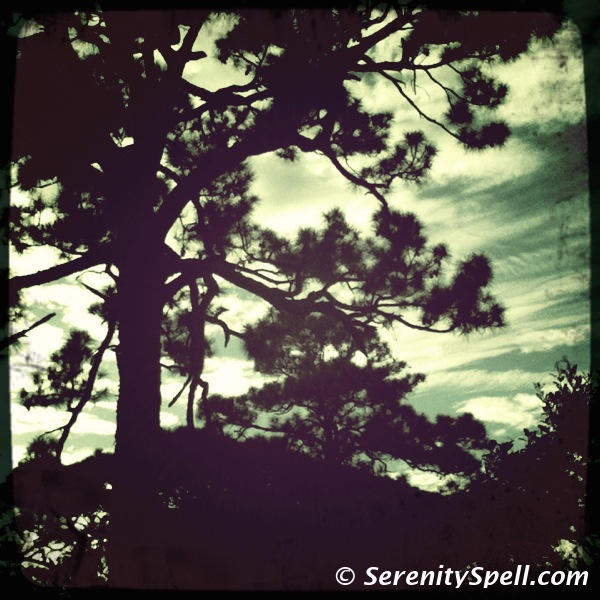
Slash pines against the sky

Scrub environment leading to flatwoods

Slash pines

Scrub environment
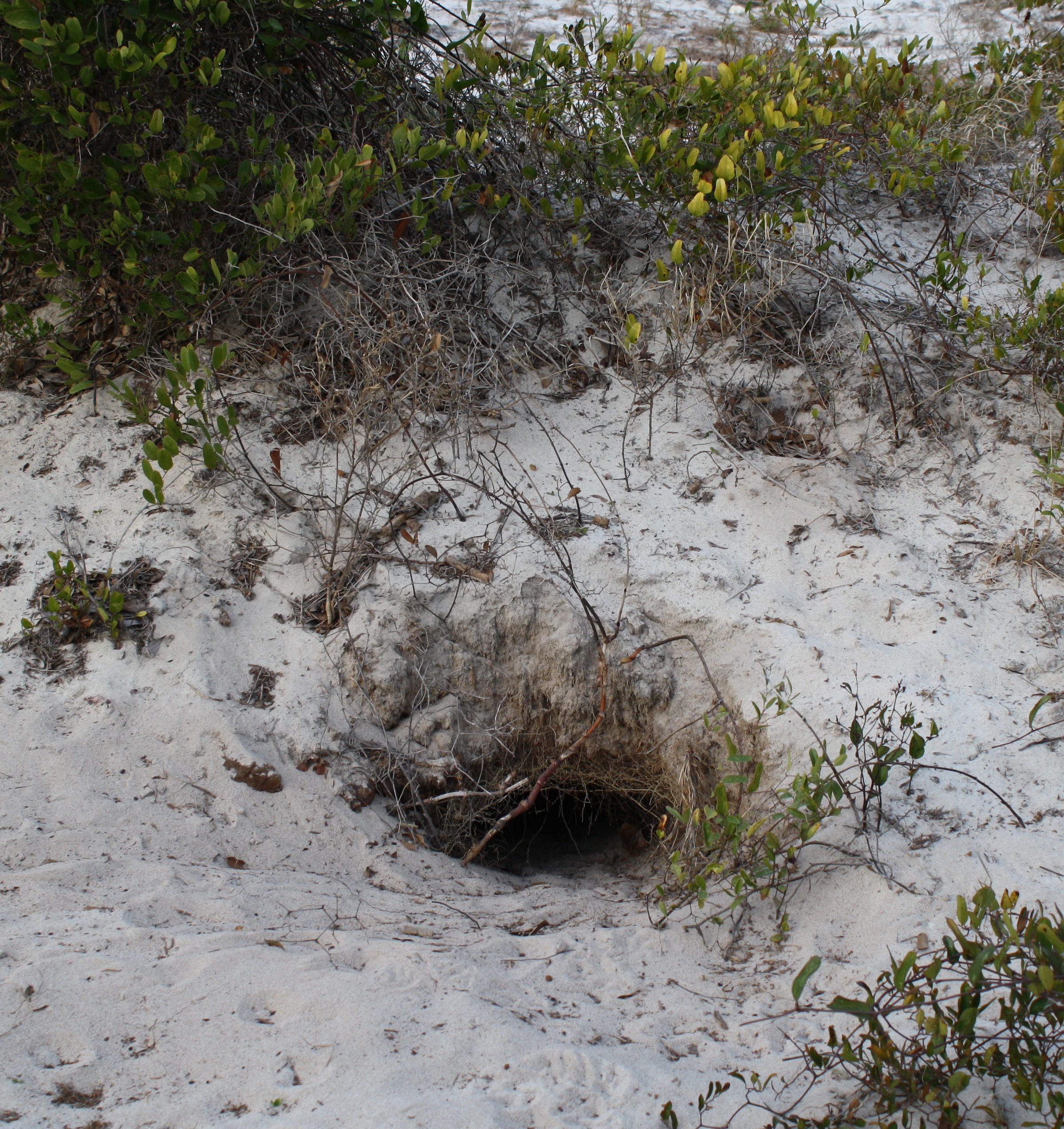
Gopher tortoise burrow

Cypress Creek Natural Area

We’re always looking for new areas to hike in South Florida, so we were VERY excited to stumble across this newly-created natural area as we were heading towards the Florida Trail in Jupiter (across from Riverbend Park). Besides which, we’re always thrilled when South Florida actively preserves its pristine lands! The Cypress Creek Natural Area protects sensitive pine forest and wetland habitats. Hoorah!

It’s located on the north and south sides of Indiantown Road, near Jupiter Farms Road, approximately one mile west of the turnpike. The main portion is situated on the north side of Indiantown Road, east and west of Gulfstream Citrus Road. A parking area is provided, as are shade pavilions, observation platforms, horse hitches, bicycle racks, and educational exhibits. (Bicycling, hiking, and horseback riding are permitted, but only on the multi-use Historic Jupiter-Indiantown Trail.)

These lands in the Cypress Creek Natural Area — more than 2,000 acres in total — were acquired by Palm Beach County from 1995 to 2010, and are part of the Northeast Everglades Natural Area (NENA), serving as a buffer for the Loxahatchee Wild and Scenic River. NENA holds approximately 165,000 acres of conservation land in northern Palm Beach Country and southern Martin County. Managed by Palm Beach County, current restoration activities in Cypress Creek include the removal of invasive non-native vegetation, filling miles of ditches (we saw the dump/sand trucks to attest to that feat), changing the elevations of shell mining pits to encourage re-vegetation of native plants, and improving the Old Indiantown Road grade — now known as the Historic Jupiter-Indiantown Trail — for use as a multi-use trail.
Work also continues on the 6-mile multi-use Jesup Trail, which will eventually lead into Jonathan Dickinson State Park — VERY exciting.

We investigated the Historic Jupiter-Indiantown Trail, a 16.5-multi-use trail. The trail is being built in phases, along a road that was used from 1900 into the late 1950s for travel between Jupiter and Indiantown. We pursued the hiking-only portion, a very nice, natural backcountry Florida hike, once you really got out there. It offers access into three conservation lands and facilities, each of which is subjected to its own rules: Riverbend Park, Cypress Creek Natural Area, and Jones Hungryland Wildlife and Environmental Area. On this trail, it was important to have snacks and water (we were out there for several hours, but you can easily make it as short a trip as you wish). Portions of the trail were flooded, due to earlier rains, but they weren’t impassable. We wandered through native Florida ecosystems including wetlands, flatwoods, marsh, swamp, and prairie.

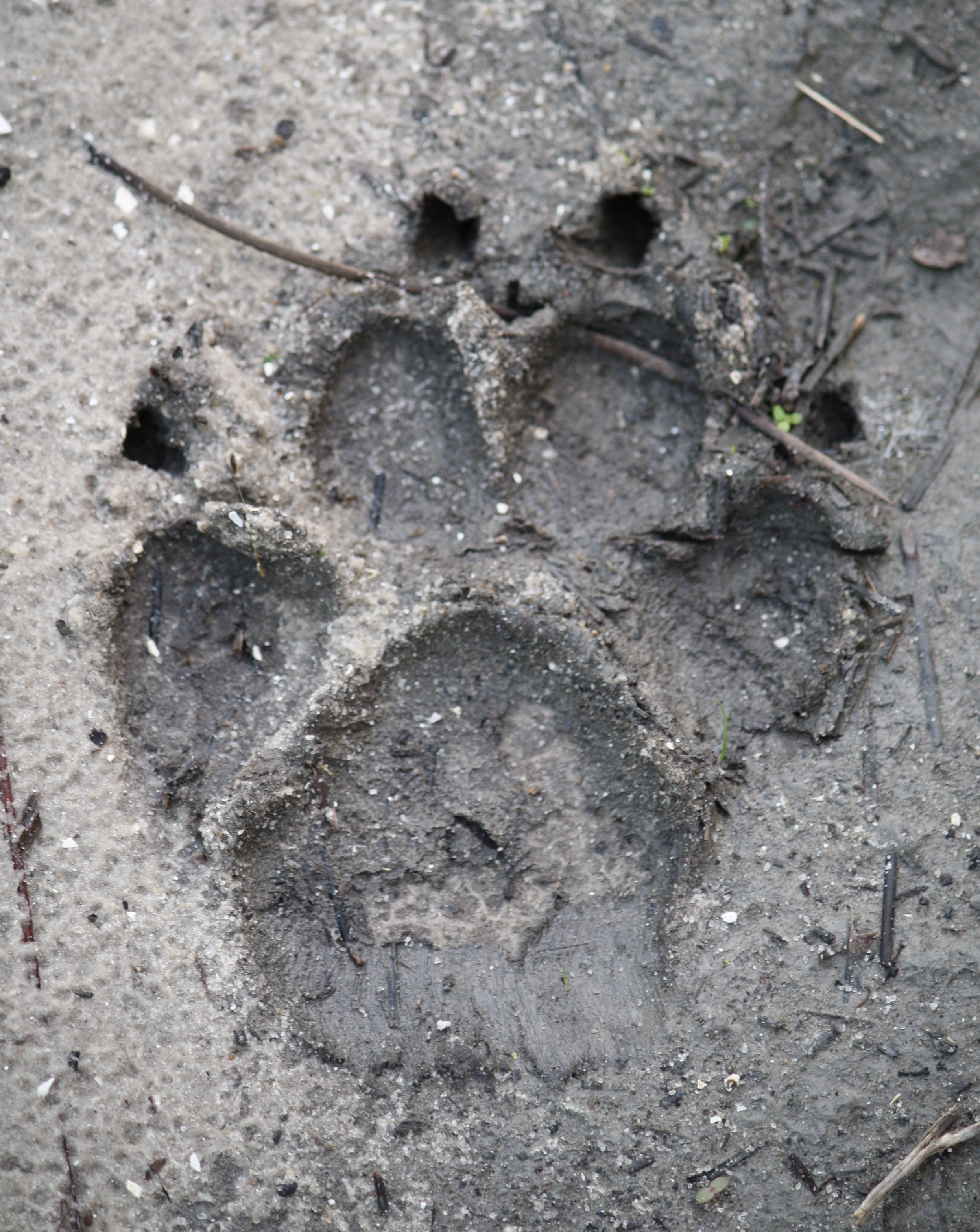
Panther Print?!?

Early in the hike, a lonely chimney stands sentinel — most likely a remnant from one of Jupiter’s founding families (documentation doesn’t explain). There weren’t many critters making themselves seen on our initial hiking expedition, despite us being the only 2-legged ones out there — but we did see many butterflies (Fritillary, Swallowtail), birds, a very startled and quick gopher tortoise, and abundant TRACKS! Very fresh tracks at that, all around us. One large grouping we spotted as bobcat … but the other? At first we thought it was coyote, but it was far too large — easily 4″. Also very fresh! PANTHER?!? Oh, how I hope they continue to watch and protect this area exceptionally *CAREFULLY* if this is indeed the case.

For More Information:

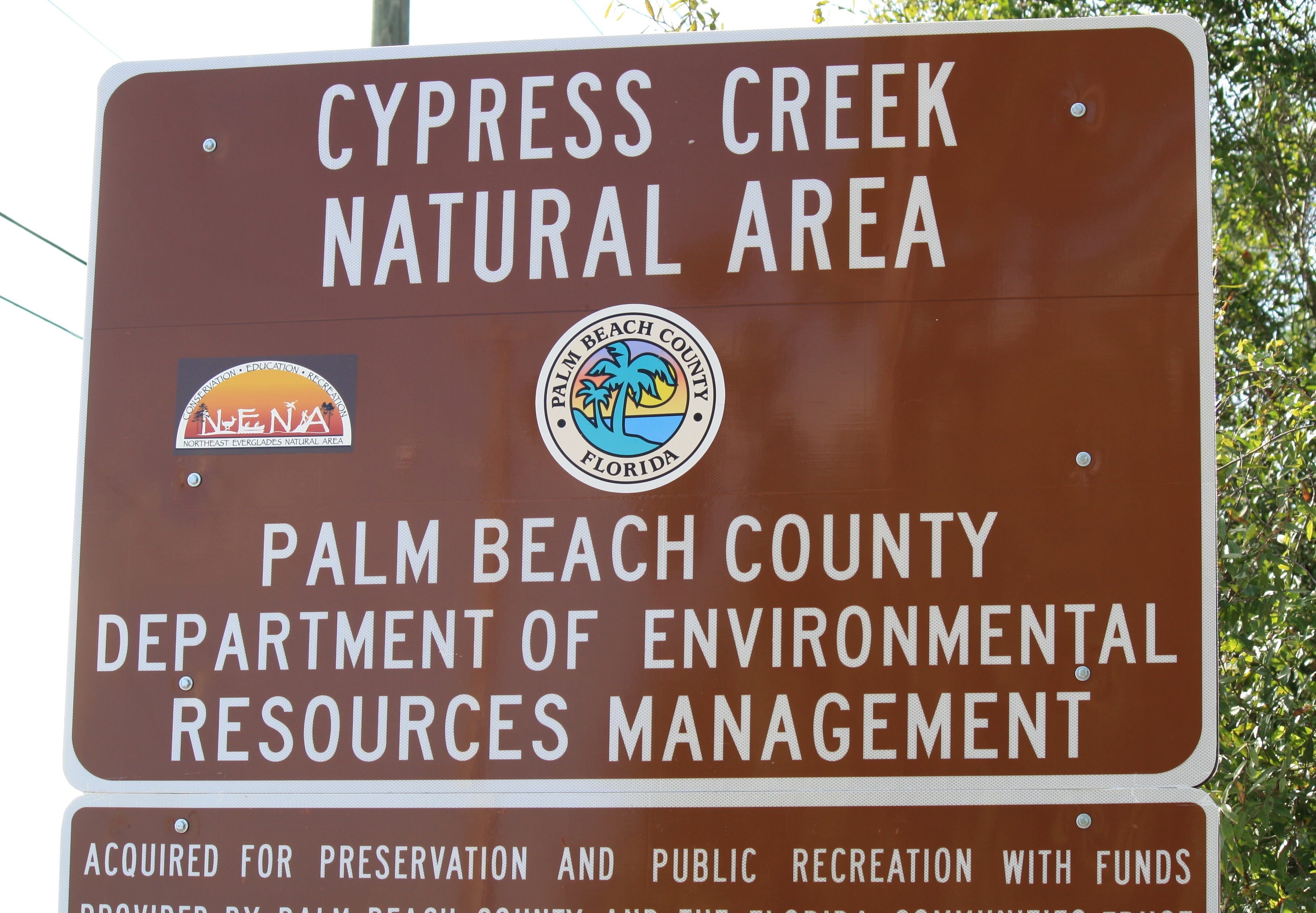
Welcome Sign to the Cypress Creek Natural Area

Flooded Historic Jupiter-Indiantown Trail, Cypress Creek Natural Area

Another Flooded Area of the Historic Jupiter-Indiantown Trail, Cypress Creek Natural Area

Wetlands, Historic Jupiter-Indiantown Trail, Cypress Creek Natural Area

Wildflowers, Historic Jupiter-Indiantown Trail, Cypress Creek Natural Area

Wildflowers, Historic Jupiter-Indiantown Trail, Cypress Creek Natural Area

Historic Jupiter-Indiantown Trail, Cypress Creek Natural Area

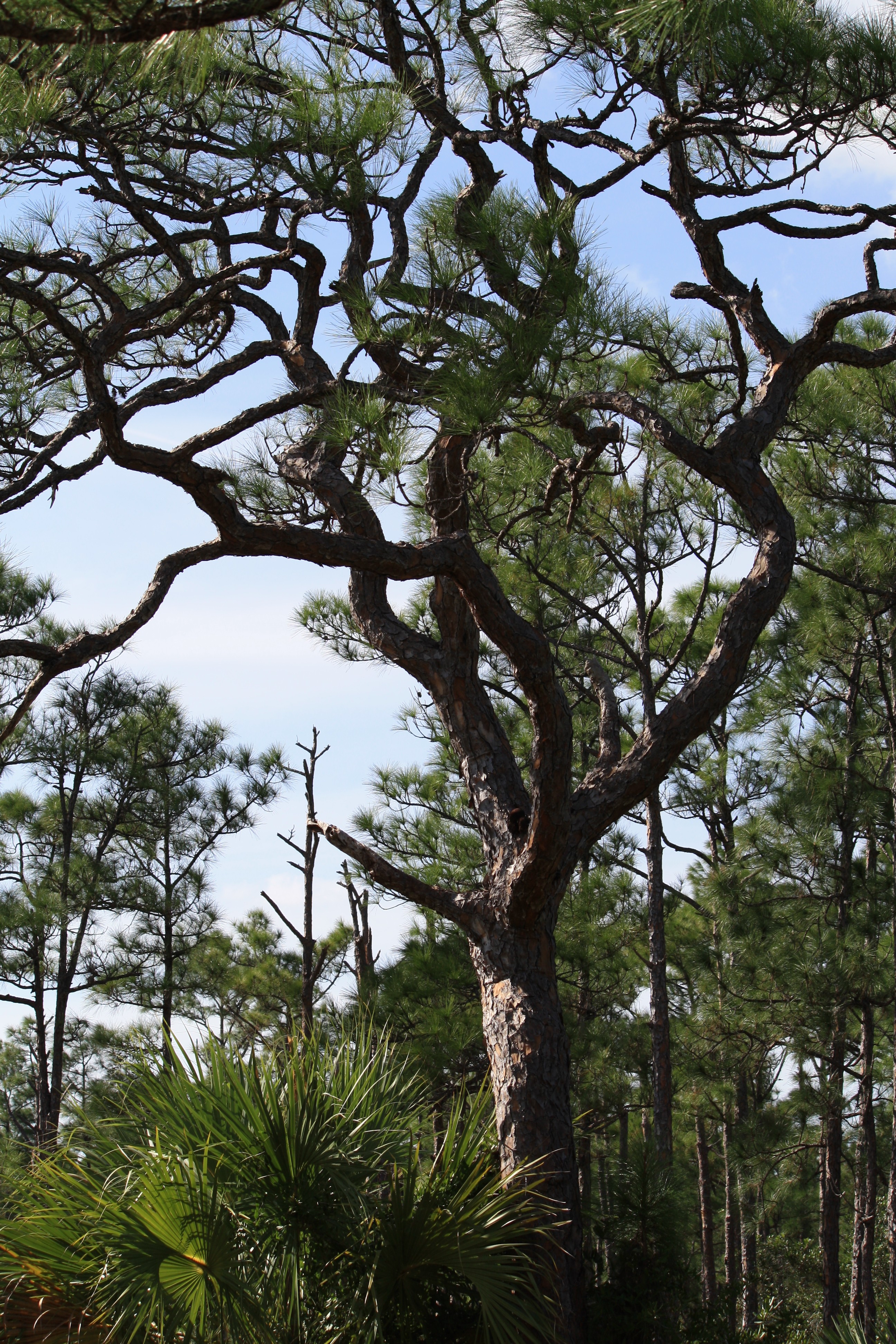
Slash Pines Along the Historic Jupiter-Indiantown Trail, Cypress Creek Natural Area

Bobcat print

Bedtime at Green Cay

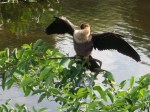
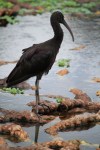
The ibis roost in the island trees, the anhingas dry their wings in the remaining sun, the herons take baths for what seem like hours, and — if you’re lucky — you can catch a glimpse of an owl or two….

For More Information:

This slideshow requires JavaScript.

Wakodahatchee Wetlands

Without the sanctuary of Green Cay and Wakodahatchee, I may nearly have lost my mind this past year. Both boardwalks/wetlands are an oasis of green, here in suburban Delray Beach (land of wayward development and concrete). Located on Jog Road between Woolbright Road and Atlantic Avenue, it’s open seven days a week, making it readily available to the public. In the Seminole Indian language, Wakodahatchee translates as “created waters” — and that’s exactly what’s been done at these wetlands. Wakodahatchee’s present-day 50 acres of wetlands were, in their previous incarnation, unused utility land. But the space has been transformed into an Everglades wildlife ecosystem, with marsh habitat, intermittent tree islands, and cypress hammocks. Along the .75-mile elevated boardwalk are helpful signage about the habitat, as well as covered gazebos. Each day, the Palm Beach County’s Southern Region Water Reclamation Facility pumps nearly two million gallons of highly treated water daily into Wakodahatchee; the wetlands themselves further naturally cleanse, recharge, and filter the remaining nutrients and maintain earth’s water cycle. Wakodahatchee incorporates dozens of different species of trees, shrubs, and aquatic vegetation to manage this feat. A pioneer in the fields of wastewater treatment and reclaimed water distribution, the Palm Beach County Water Utilities Department has proven its effective and innovative management philosophies in the Wakodahatchee Wetlands.

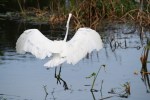
Besides affording a sublime stroll, Wakodahatchee is a birdwatcher’s paradise — a camera and/or binoculars are always handy. This site is part of the South section of the Great Florida Birding Trail, and common bird sightings include egrets, herons, ducks, grebes, bitterns, ibis, moorhens, warblers, blackbirds, cardinals, owls, hawks…and the list goes on, with more than 140 species counted at the site. Many turtles make their home at the wetlands, including the Florida Red-bellied Turtle and the Peninsular Cooter. Marsh rabbit can also be seen in the grassy and low-lying marsh areas. As always, alligator sightings are common at Wakodahatchee, and non-poisonous snakes and frogs live on the fringes of the boardwalk. But I’ve even had the most fortunate sightings of a shy otter and bobcat.

For More Information:

This slideshow requires JavaScript.

Everglades Wildlife at Green Cay + A New LENS!

As always, for my birthday, I was a very lucky girl. Lots of new — well, ca. 1920s/30s — art and other goodies! I also received a 55-250mm telephoto ZOOM lens for my Canon SLR as a gift from my guy… YAY-OH-YAY-OH-YAY-OH-YAAAAAYYYY! My friend Lisa and I have been lusting for this lens for our respective cameras for months, now.

This week my camera and I (I really should name her) braved the spotty rain at Green Cay. I couldn’t wait any longer to test her new lens with the area’s critters. I was completely giddy. Besides, I hadn’t yet caught a glimpse of Momma Gator and her brood — 28 born in her mound on 8.23. Leo/Virgo-cusp babies! Although there are far fewer surviving offspring, as to be expected, I was able to spy them swimming near an ever-vigilant momma.

This slideshow requires JavaScript.