
A Calm Cormorant
At our protected Green Cay and Wakodahatchee Wetlands, where nesting and baby season remains in full swing (granted, the babies are growing, but there are some late-arrival nesters), some of the year-round residents don’t seem overly concerned with the consequent increase in human traffic. With more than 140 species of birds identified at Wakodahatchee, and the fact that it’s part of the Great Florida Birding Trail, the site is a birdwatcher’s and photographer’s paradise — especially now. I like to stroll towards the back of the boardwalk to admire some of the shyer inhabitants — and consequently avoid the chaos of the human visitors during this time of the year, when the wetlands’ newest residents are on display.
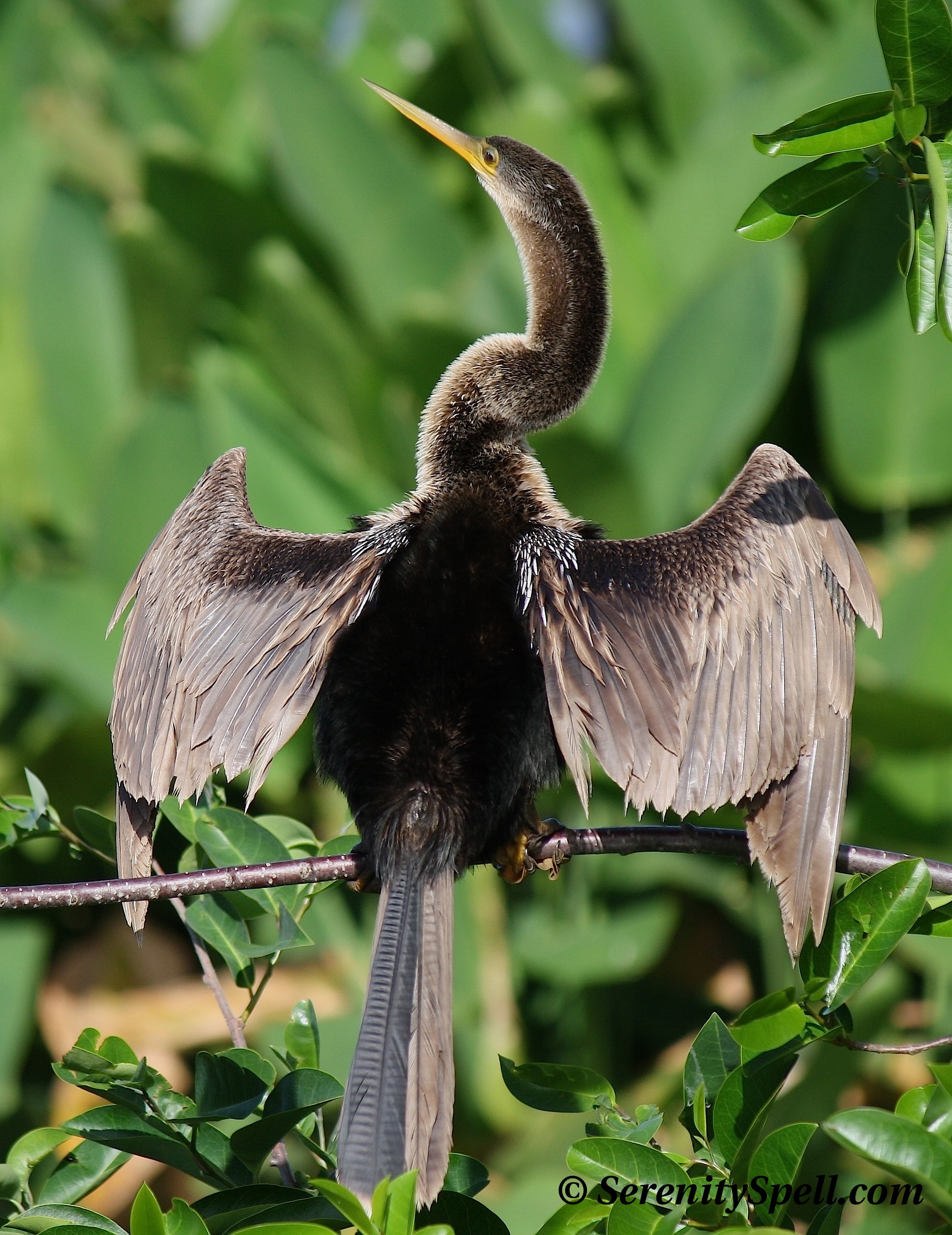
Anhinga Dries Its Wings
A noticeably calm cormorant — or “shag” (referring to the bird’s crest, which is lacking in the British forms of the Great Cormorant) — was preparing for a nap at the end of the boardwalk. These medium-to-large coastal (rather than oceanic) seabirds are plentiful in southeastern Florida, and can often be seen diving for fish or water snakes. After fishing, the cormorants dry their wings ashore in the sun or in the trees (similar to the cormorant-like anhingas), as their feathers don’t possess the waterproofing oil of other seabirds.
Humans have long used trained cormorants to fish the waters of China, Japan, and Macedonia. Trained by fishermen, a snare is tied near the base of the bird’s throat, allowing the bird to swallow only small fish. When the bird captures and tries to swallow larger fish, the snare doesn’t allow the fish to be swallowed, and it becomes stuck in the bird’s throat. The cormorant is forced to return to the fisherman’s boat, where he helps the bird regurgitate the fish, removing it from its throat. Traditional cormorant fishing isn’t as common a method today — with the development of more efficient fishing methods — but it remains a tourist draw. However, the method is still practiced in some Japanese regions, and has continued uninterrupted for 1300 years in Gifu City, in Gifu Prefecture.
Although both cormorants and anhingas are quite common in our area, I was struck by the serenity of this guy, and his beautiful teal eyes…. Their distinctive turquoise eyes fade quickly after the breeding / nesting season.
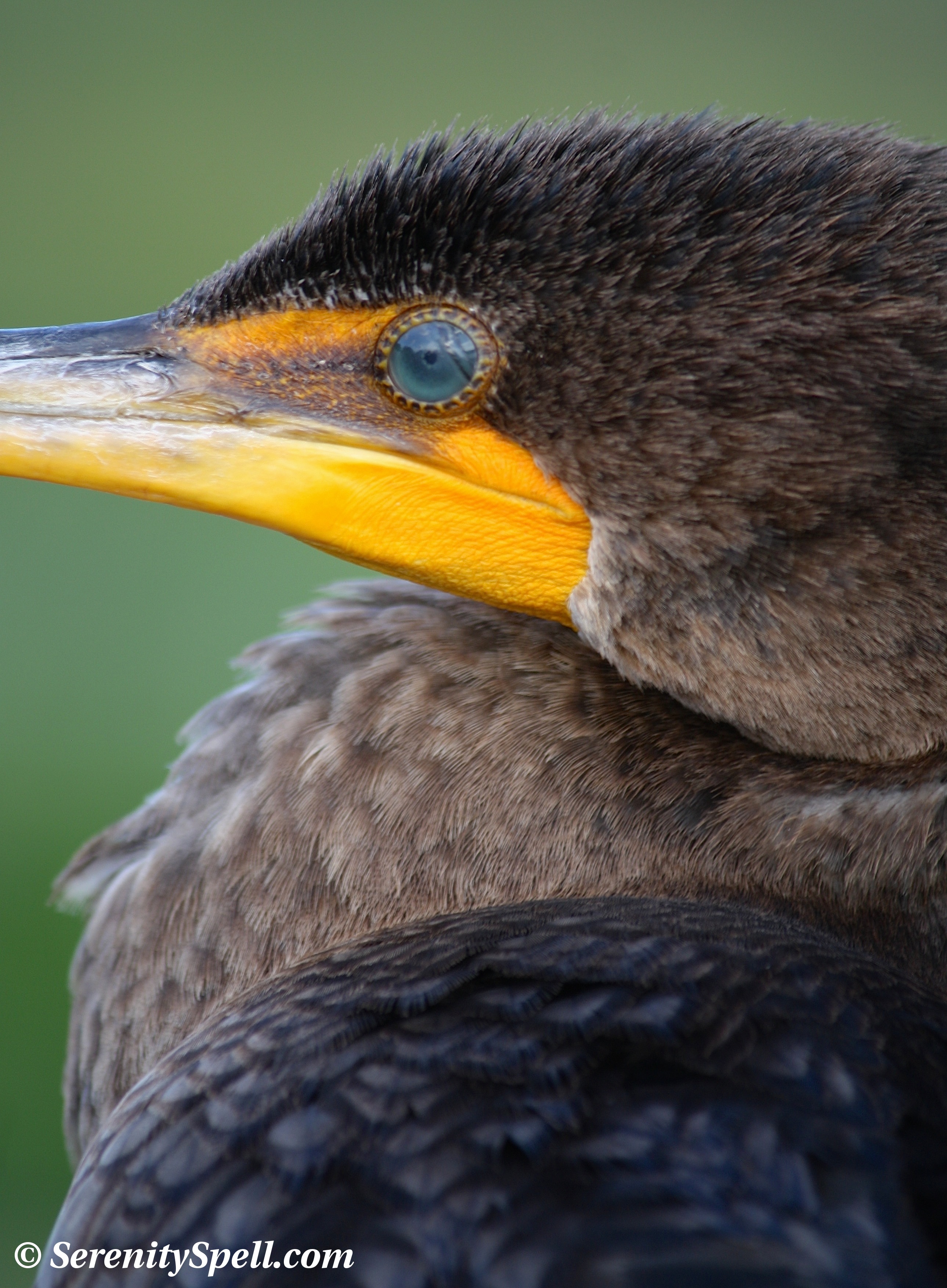
Lovely Teal Eyes of the Cormorant (Florida Wetlands)

Sharp Beak of the Cormorant (Florida Wetlands)

Dozing Cormorant in the Florida Wetlands











 FeyGirl
 Serenity Spell