Skip to content

Posts tagged ‘nature’

A Calm Cormorant

At our protected Green Cay and Wakodahatchee Wetlands, where nesting and baby season remains in full swing (granted, the babies are growing, but there are some late-arrival nesters), some of the year-round residents don’t seem overly concerned with the consequent increase in human traffic. With more than 140 species of birds identified at Wakodahatchee, and the fact that it’s part of the Great Florida Birding Trail, the site is a birdwatcher’s and photographer’s paradise — especially now. I like to stroll towards the back of the boardwalk to admire some of the shyer inhabitants — and consequently avoid the chaos of the human visitors during this time of the year, when the wetlands’ newest residents are on display.

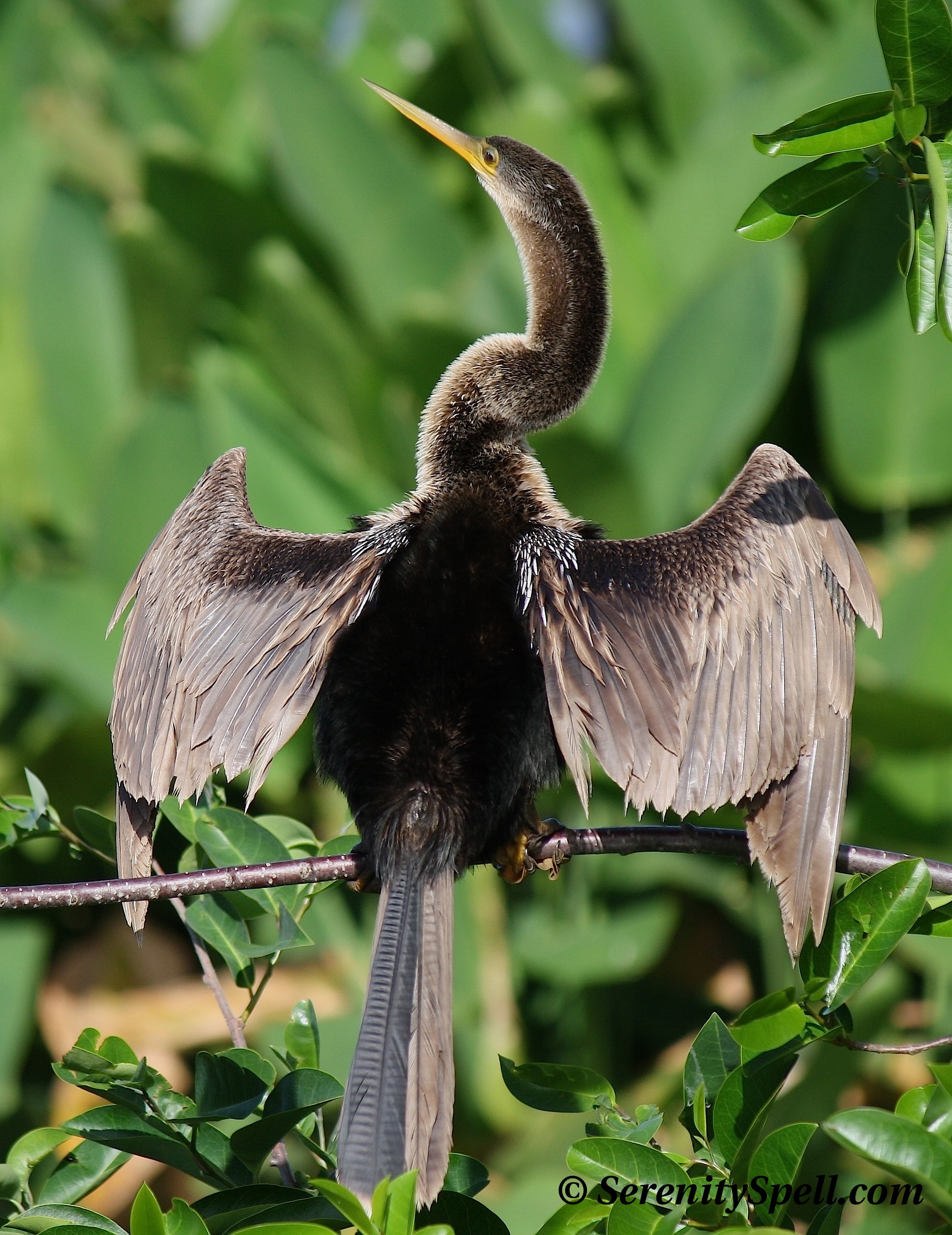
Anhinga Dries Its Wings

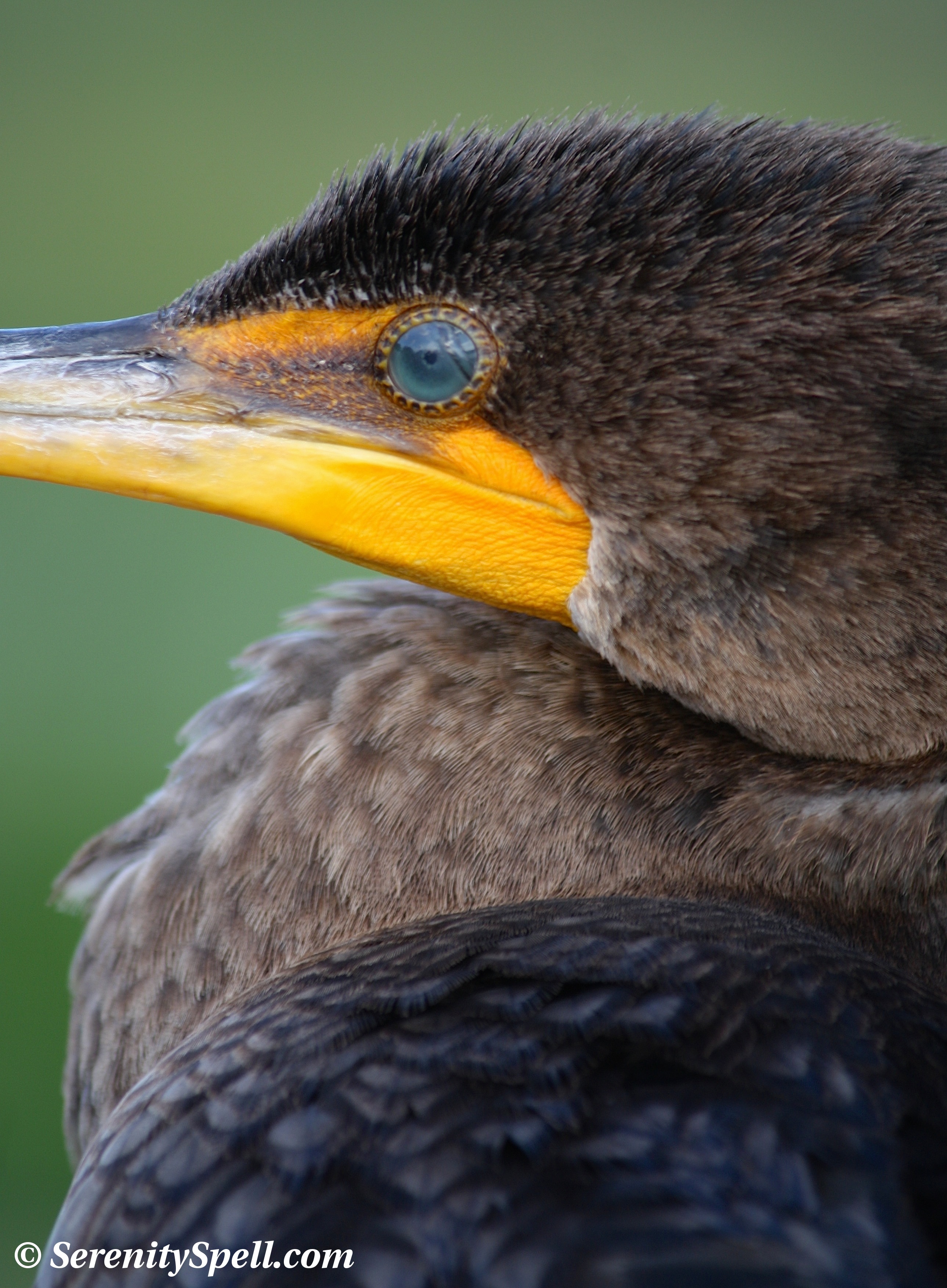
A noticeably calm cormorant — or “shag” (referring to the bird’s crest, which is lacking in the British forms of the Great Cormorant) — was preparing for a nap at the end of the boardwalk. These medium-to-large coastal (rather than oceanic) seabirds are plentiful in southeastern Florida, and can often be seen diving for fish or water snakes. After fishing, the cormorants dry their wings ashore in the sun or in the trees (similar to the cormorant-like anhingas), as their feathers don’t possess the waterproofing oil of other seabirds.

Humans have long used trained cormorants to fish the waters of China, Japan, and Macedonia. Trained by fishermen, a snare is tied near the base of the bird’s throat, allowing the bird to swallow only small fish. When the bird captures and tries to swallow larger fish, the snare doesn’t allow the fish to be swallowed, and it becomes stuck in the bird’s throat. The cormorant is forced to return to the fisherman’s boat, where he helps the bird regurgitate the fish, removing it from its throat. Traditional cormorant fishing isn’t as common a method today — with the development of more efficient fishing methods — but it remains a tourist draw. However, the method is still practiced in some Japanese regions, and has continued uninterrupted for 1300 years in Gifu City, in Gifu Prefecture.

Although both cormorants and anhingas are quite common in our area, I was struck by the serenity of this guy, and his beautiful teal eyes…. Their distinctive turquoise eyes fade quickly after the breeding / nesting season.

Lovely Teal Eyes of the Cormorant (Florida Wetlands)

Sharp Beak of the Cormorant (Florida Wetlands)

Dozing Cormorant in the Florida Wetlands

The Greening of the Great Egret

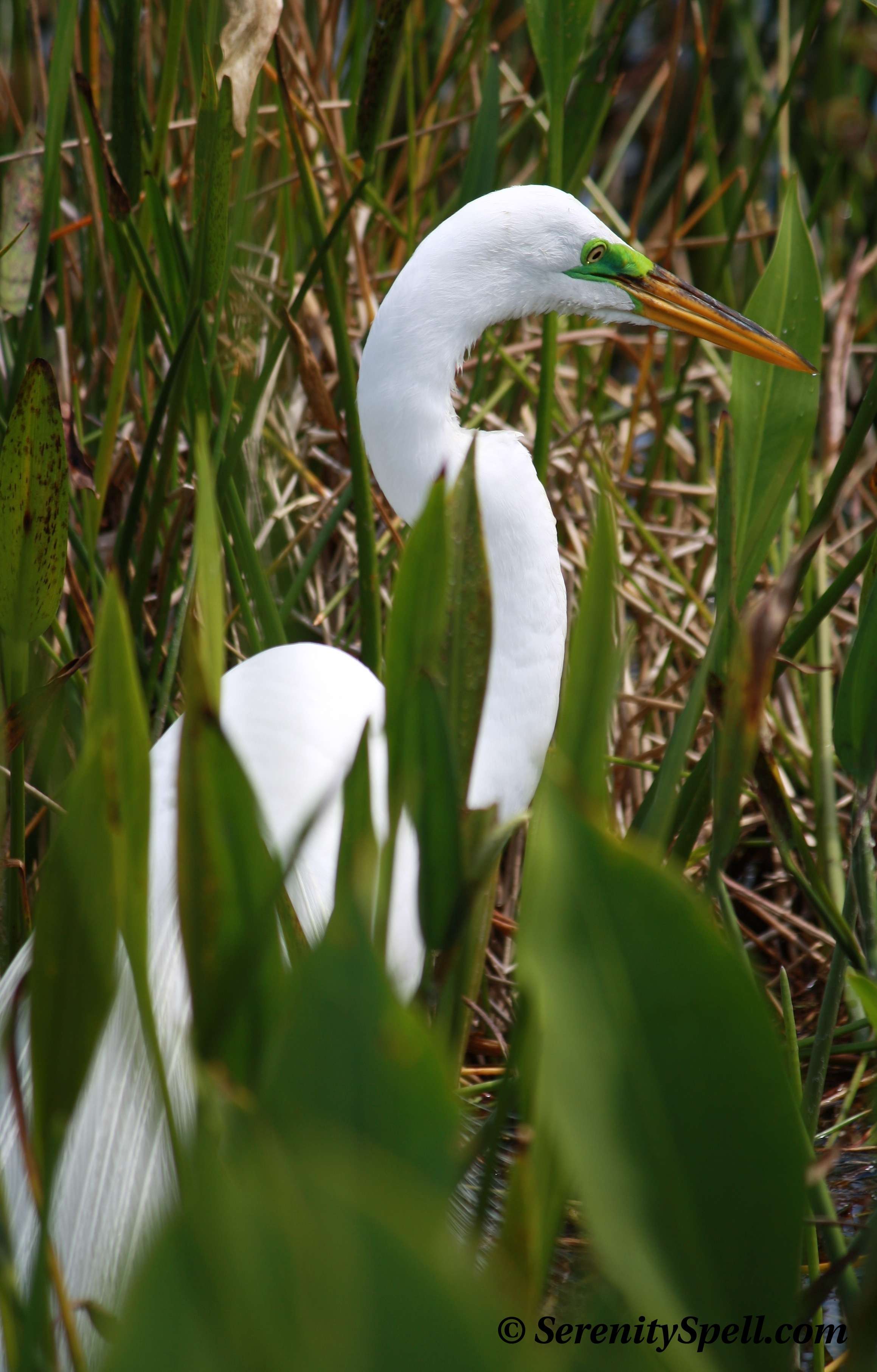
As mentioned in my previous post, I had to save an image of one Great Egret for its own space. At the beginning of this year’s breeding season I was able to catch a lovely model, sporting a shocking green lore — the area between the bill and the eyes. During the breeding season, the lore may turn a vibrant green; the Great Egret will also display long, elegant plumes on its back (evident in the second picture, slightly blocked by the swamp vegetation), which are used in courtship displays. Like a peacock, the feathery plumes will spread out like a fan. Outside the breeding season, these long feathers disappear.

Great Egrets are striking to spy in the swamp — their ethereal beauty, graceful stalking, and quiet strength is captivating. But the brilliant green lore and feathery plumes add yet more stunning display to an already magical scene.

Great Egret with Green Lore in the Florida Wetlands (Close-Up)

Great Egret with Green Lore in the Florida Wetlands


The Great Egret

It’s hard not to be captivated by this bird; they’re the epitome of ethereal beauty, grace and strength, stalking and flying through our swamps and wetlands.

Great Egrets, also known as the Great White Egret, the American Egret, the Large Egret or Common Egret, are a common sight in our wild spaces — even our neighborhoods. They’re the largest egret in the Old World — thus the GREAT of their title. In the New World however, Great Blue Herons win the size competition. Great Egrets are large egrets boasting brilliant all-white plumage, and are found across much of the world, from southern Canada to Argentina, and in Europe, Africa, Asia, and Australia. Standing approximately 3 feet tall, great egrets have graceful necks, long black legs, and black feet. Their bills are straight, pointed, and yellow.

These egrets feed by stalking, wading in the shallow water, patiently waiting for fish — then grabbing or stabbing their hapless meal with sharp bills. I’ve also seen them dine on amphibians, reptiles, and small mammals.

Great Egret Stalking and Catching Fish… Got It!

They fly with their necks pulled back in an S-curve, like so:

Great Egret in Flight

Great Egret in Flight at the Protected Wetlands, Dusk

The Great Egrets in our wetlands nest in colonies with other egrets and herons. The nest is constructed of sticks and covered with vegetation, and located in trees or shrubs — or on tree-island rookeries. Not all egret hatchlings survive the nestling period — aggression is common, with the larger chicks often killing the smaller or weaker siblings. The oldest known wild Great Egret lived nearly 23 years.

The feathers of the Great Egret are stunning, almost unreal; sadly, these beautiful birds were hunted mercilessly — nearly to the point of extinction, their numbers decimated by 95 percent — towards the end of the 19th century. Their breeding plumage was especially prized, and their treasured feathers were used in hats across the globe. With conservation measures enacted, their numbers grew throughout the 20th century. While wetland habitat loss is once again threatening their existence, these birds have a high adaptability to human habitation. Of course, the loss of wetland ecosystems remains another issue altogether….

Great Egret Coming in for a Landing

In 1953 the Great Egret was chosen as the symbol of the National Audubon Society, the environmental organization formed to protect birds.

Logo — The Great Egret in Flight (Courtesy of The National Audubon Society)

During the breeding season, the Great Egret displays long, elegant plumes on its back, which are used in courtship displays. Like a peacock, the feathery plumes spread out like a fan. (Outside the breeding season, these long feathers disappear.) During this time, the lore (the area between the bill and the eyes) may turn vibrant green. Nature’s colors are brilliant, and this picture deserves its own (upcoming) post….

Great Egret Takes a Break While Stalking His Meal

Alligator Babies

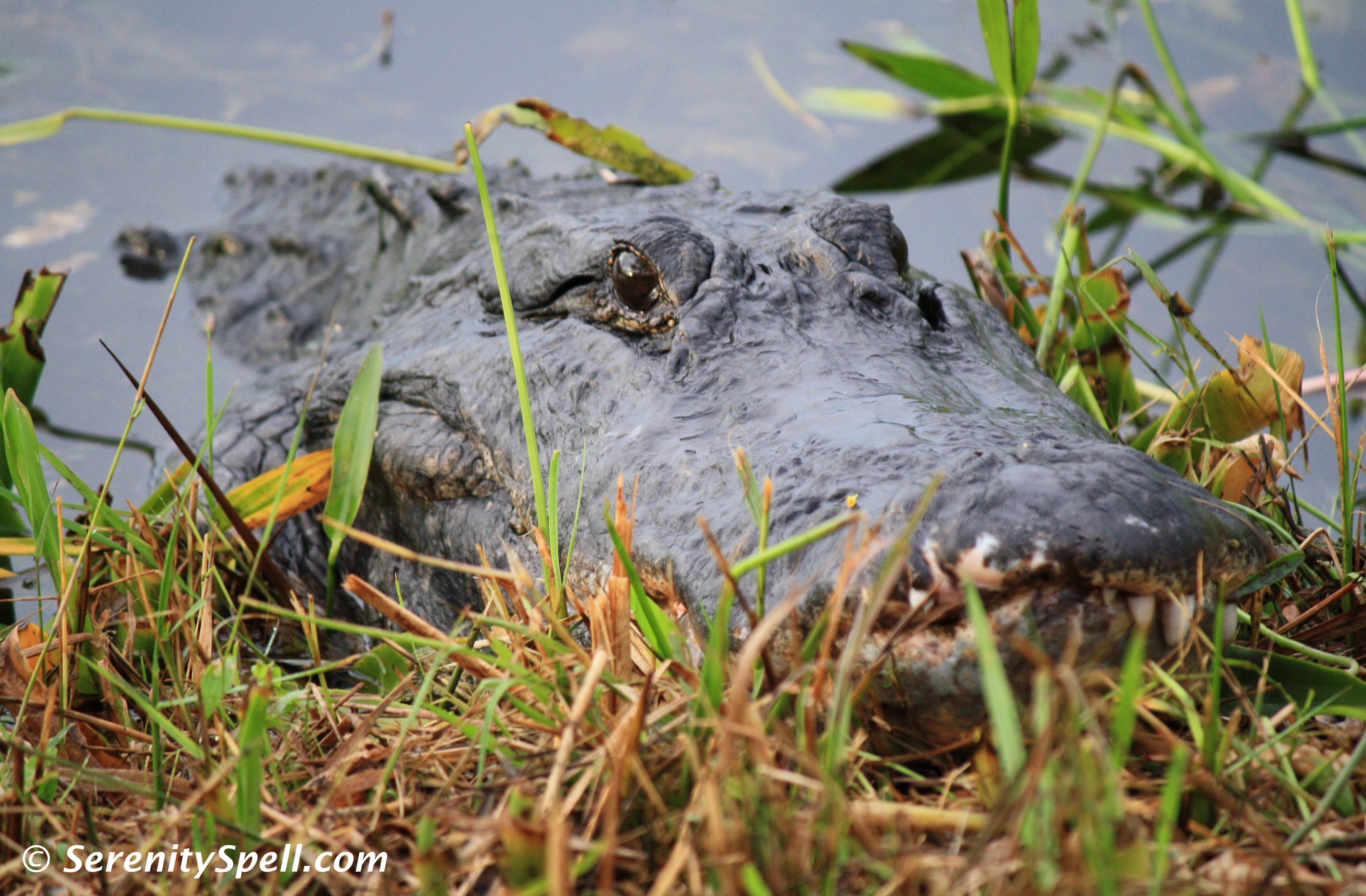
Alligator and Duckweed in the Green Cay Wetlands

Twenty million years as a resident of planet Earth, and counting…. Scientists believe that the American alligator resembles animals that inhabited our planet as long as 100-150 million years ago — and that they may be linked to creatures dating 50-65 million years ago, managing to avoid the extinction that killed off their prehistoric contemporaries, the dinosaurs. A member of the crocodilian family, there are two alligator species living in the world today: the American alligator (Alligator mississippiensis) and the Chinese alligator (Alligator sinensis).

Once Nearly Extinct

Sadly, American alligator populations suffered tremendously throughout the 20th century, when they were hunted to near-extinction for their hides. Since the Endangered Species Act of 1973 however, these amazing creatures’ populations continue to grow, and illegal poaching is not the issue that it once was. Before this hunting was controlled, an estimated 10 million alligators were killed for their skins. Twenty million years on planet Earth, and we nearly managed to wipe them out for handbags.

Nesting and the Young

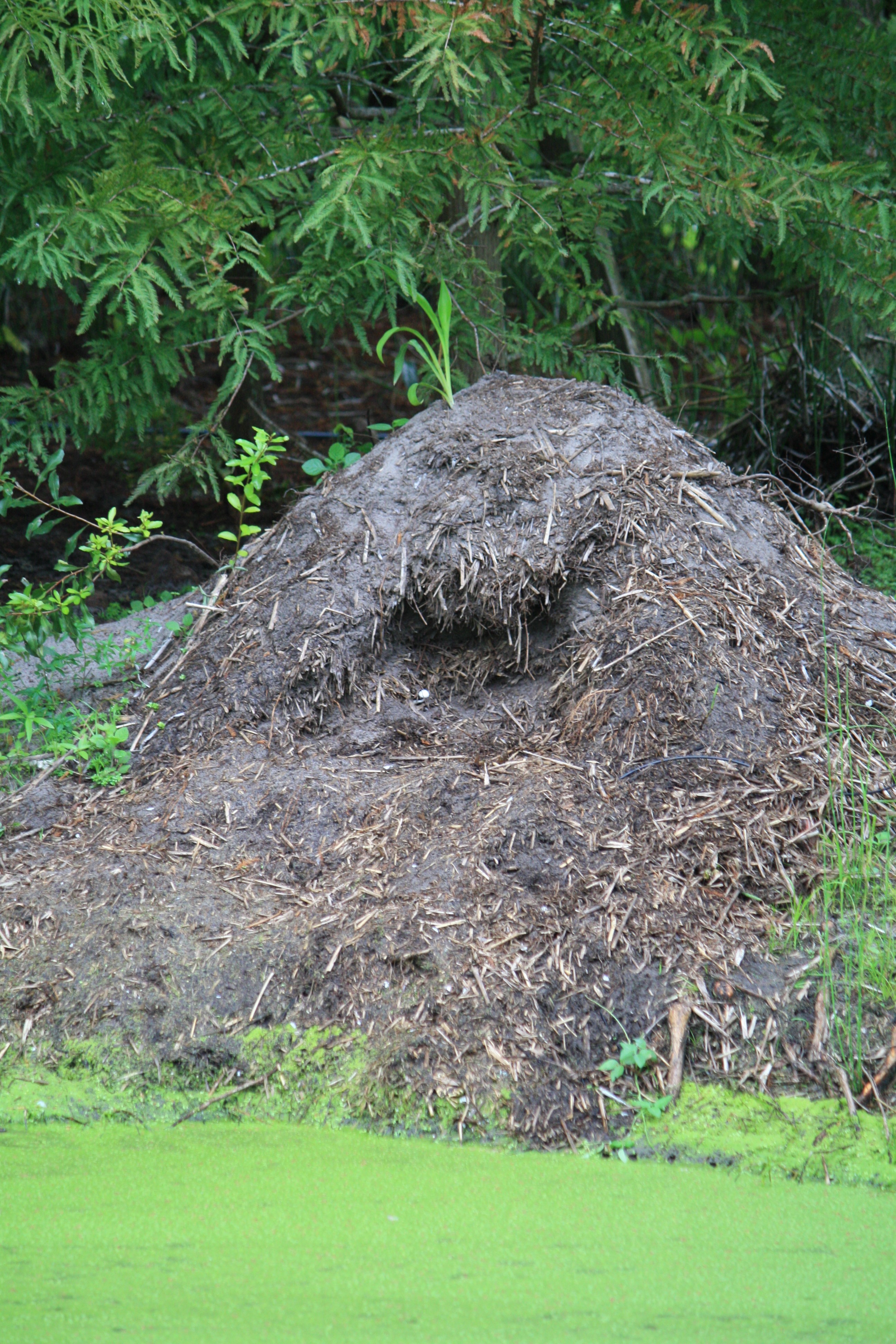
Alligator Mound / Nest

After an elaborate courtship female alligators construct their nests, which are comprised of vegetation, sticks, leaves, and mud and located in a sheltered spot in or near the water. She lays 20-50 eggs, and covers them under more vegetation, which heats as it decays, serving to incubate the eggs. The female will remain near the nest throughout the 65-day incubation period, protecting it. If a mother alligator is killed or removed, she can’t protect her nest or young — and the hatchlings are doomed. *Leave wildlife alone.*

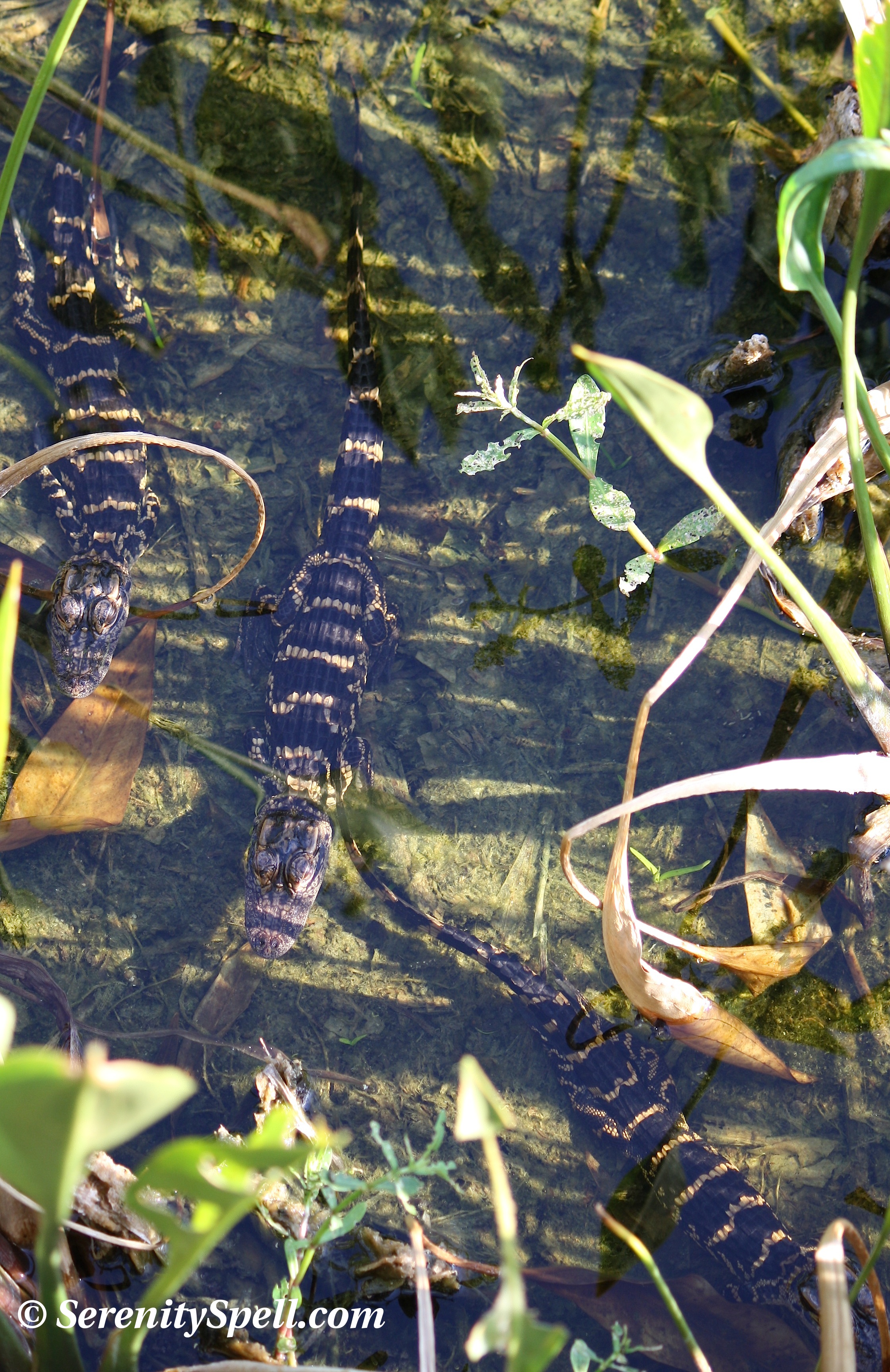
Hatchlings are 6-8 inches long, and are near-replicas of their parents, save for a series of yellow and black stripes which camouflage beautifully with the surrounding marsh roots. For five months, they’ll remain with the mother before finding their own ways. We typically see 5-10 baby alligators survive in our local protected wetlands. Perhaps less. Common predators that prey upon the juvenile alligators include snapping turtles, snakes, raccoons, bobcats, raptors, and even larger alligators. But when we find them? Oh my; the adorableness level is ridiculously high.

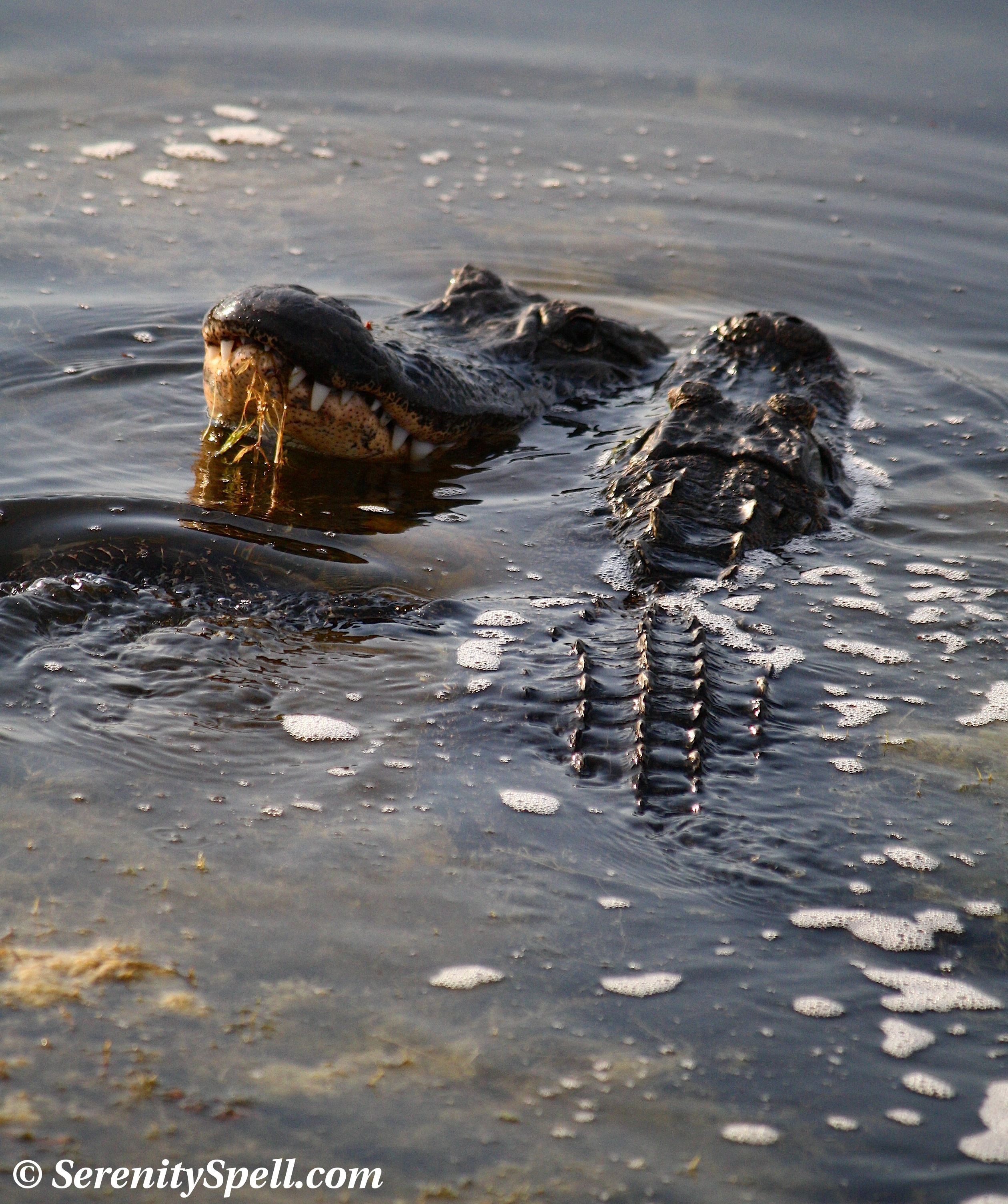
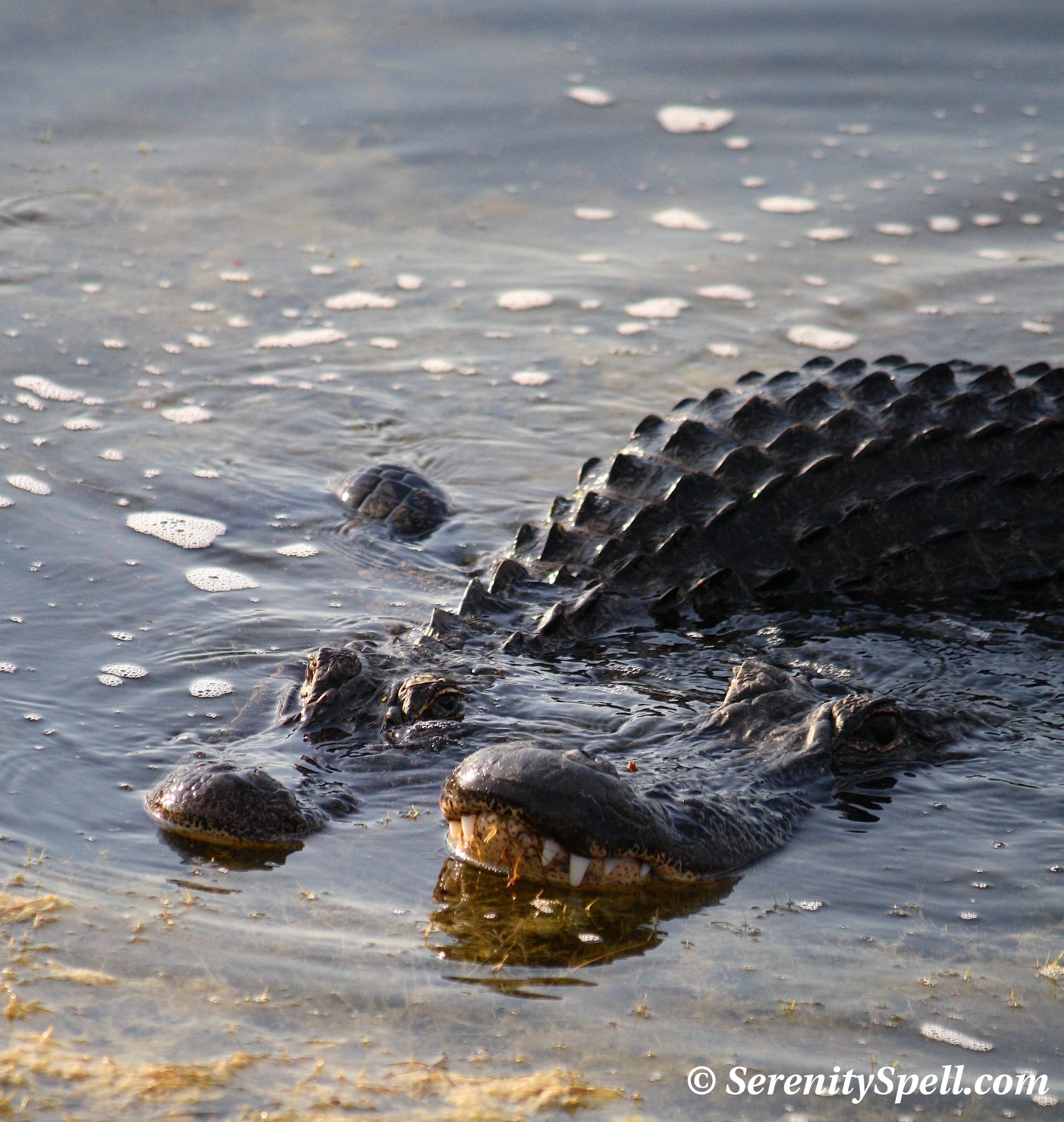
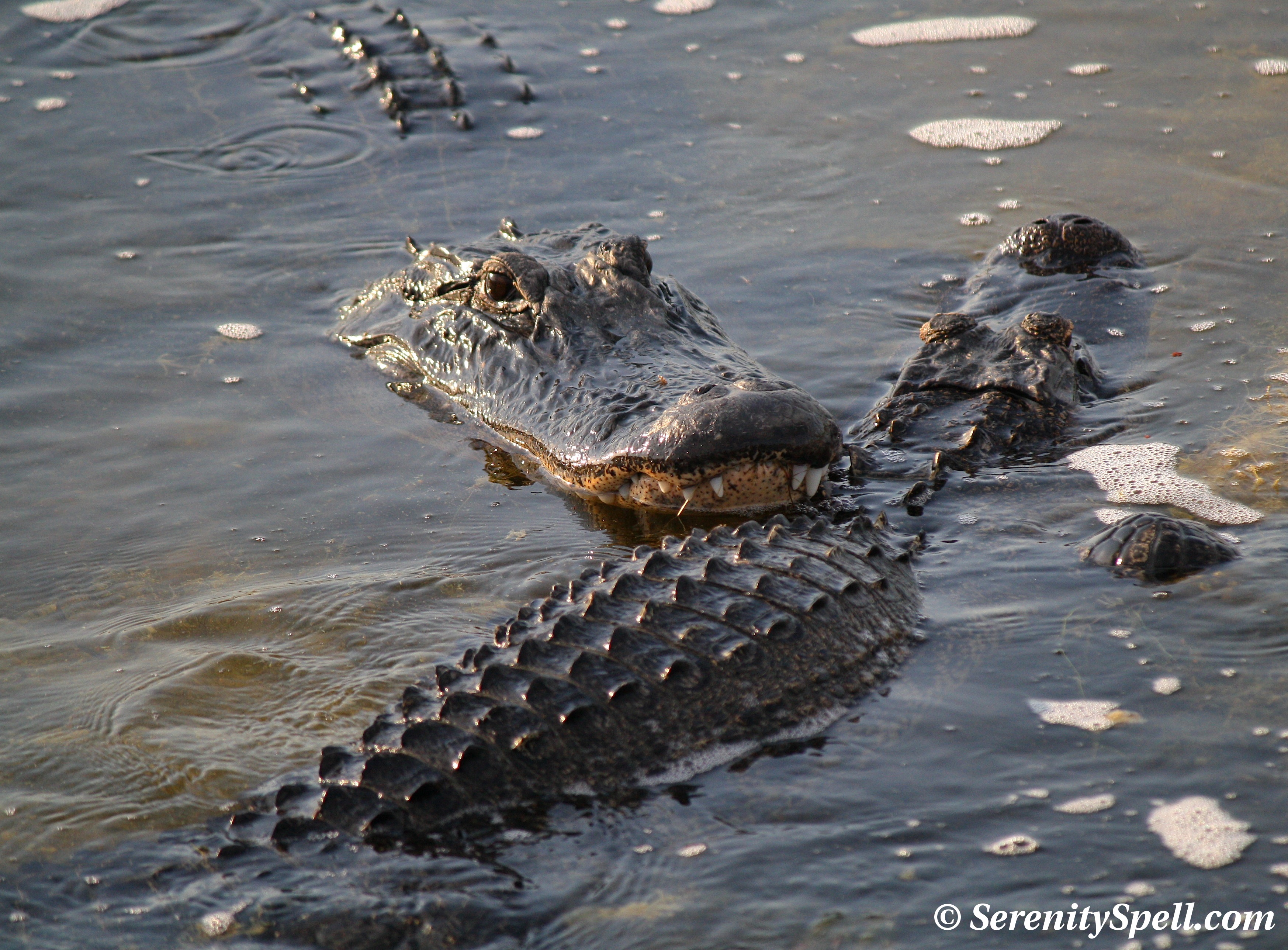
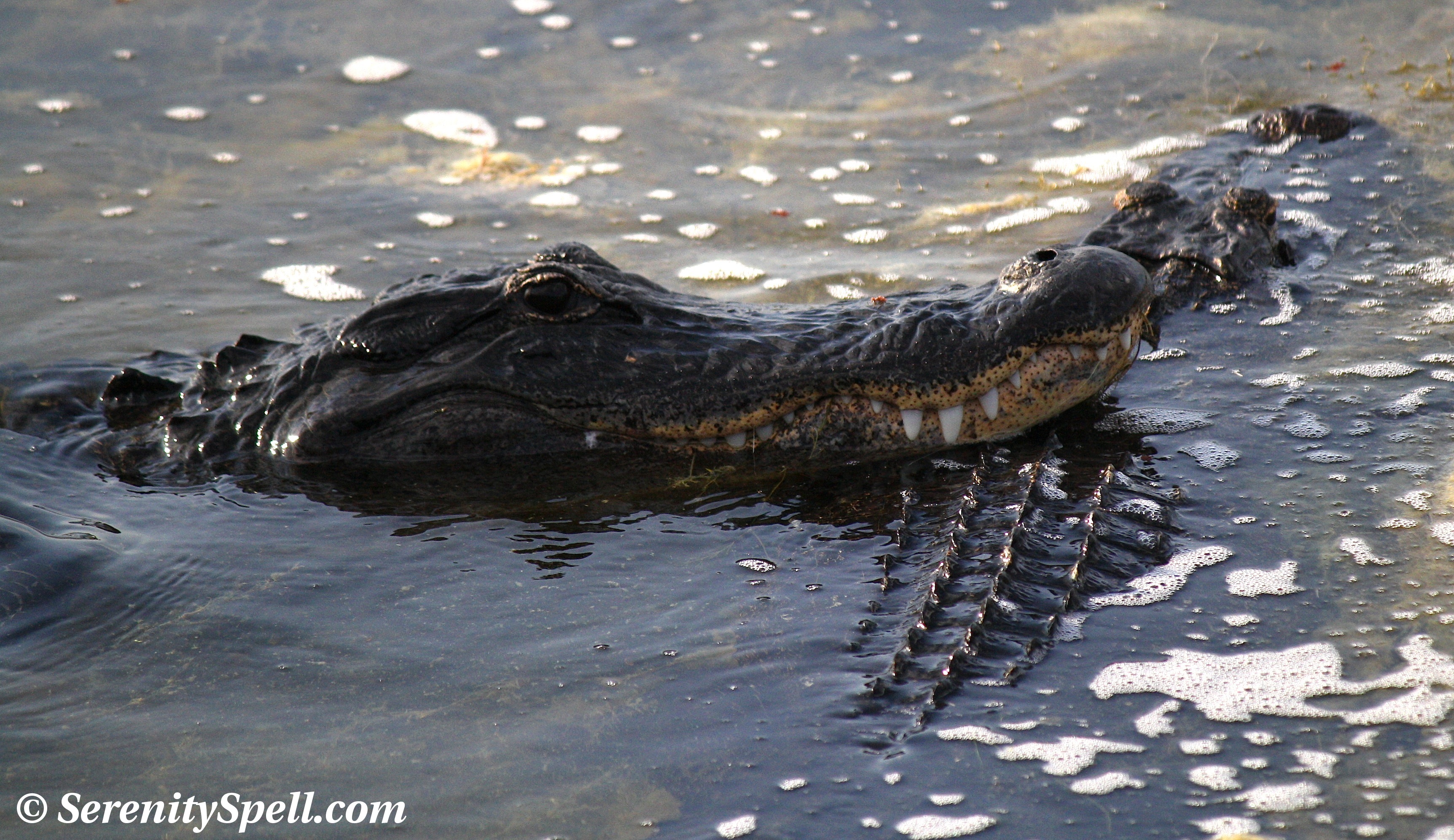
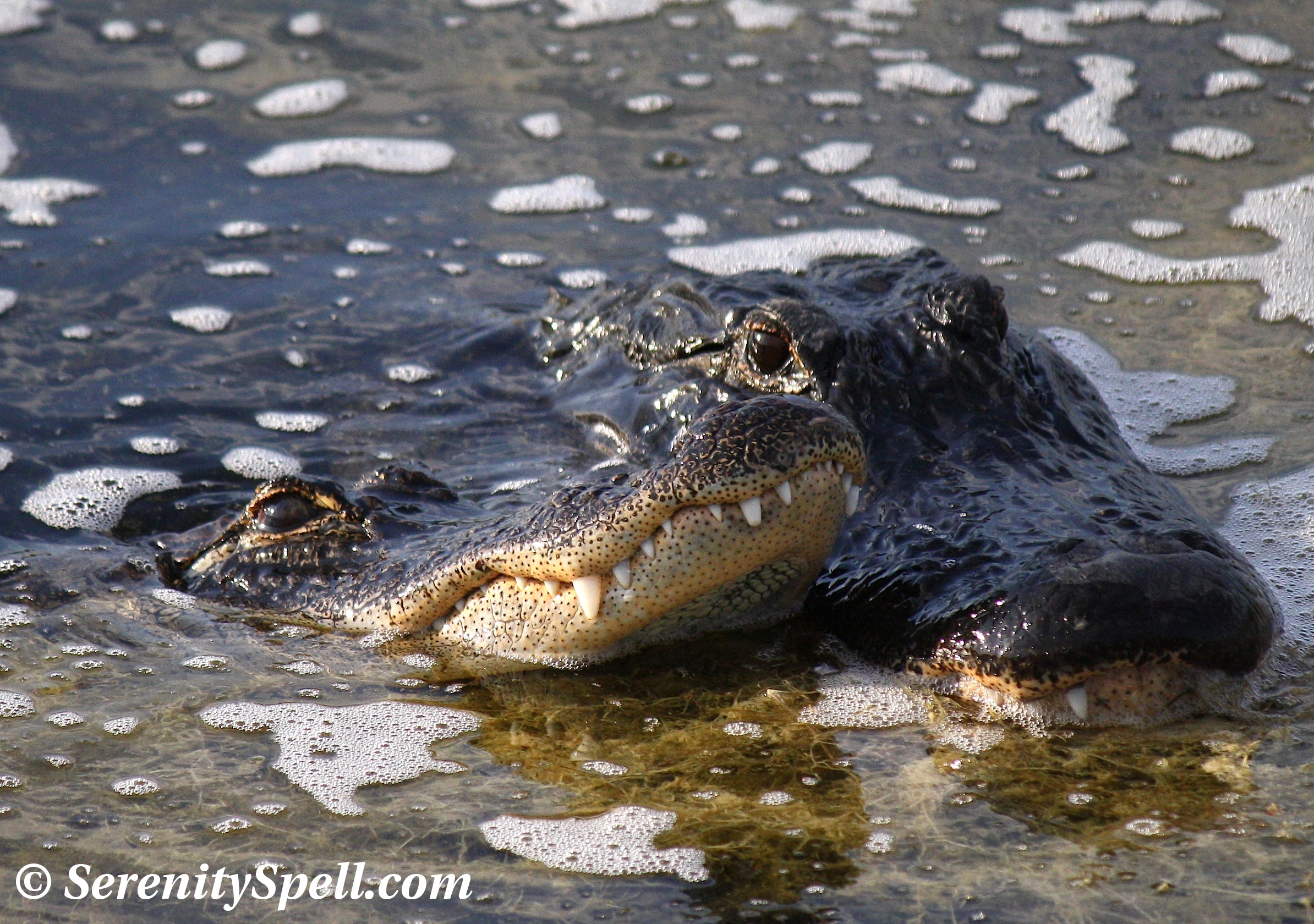
During a recent trip, I was lucky to have witnessed a mating pair of alligators — while I believe the actual mating had already occurred (as evidenced by the babies on the nearby bank), their  affinity for each other was obvious…. Alligator Love: A Courtship offers opportune images of the event.

Flower

Big Like You

I Blend

A few more over there...

Peek-a-Boo

Nom Nom Nom

Alligator Love: A Courtship

Twenty million years as a resident of planet Earth, and counting…. Scientists believe that the American alligator resembles animals that inhabited our planet as long as 100-150 million years ago — and that they may be linked to creatures dating 50-65 million years ago, managing to avoid the extinction that killed off the dinosaurs, their prehistoric contemporaries.

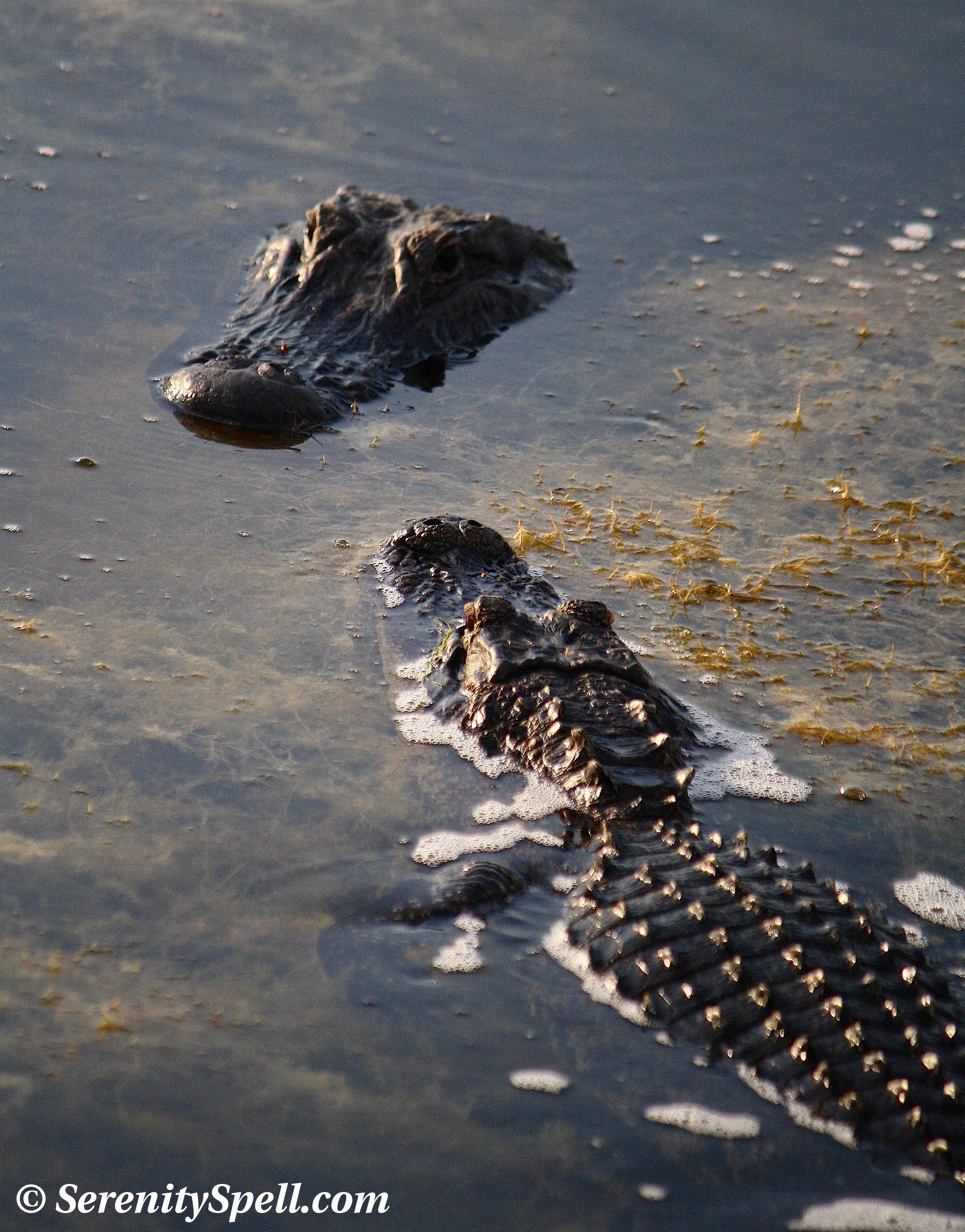
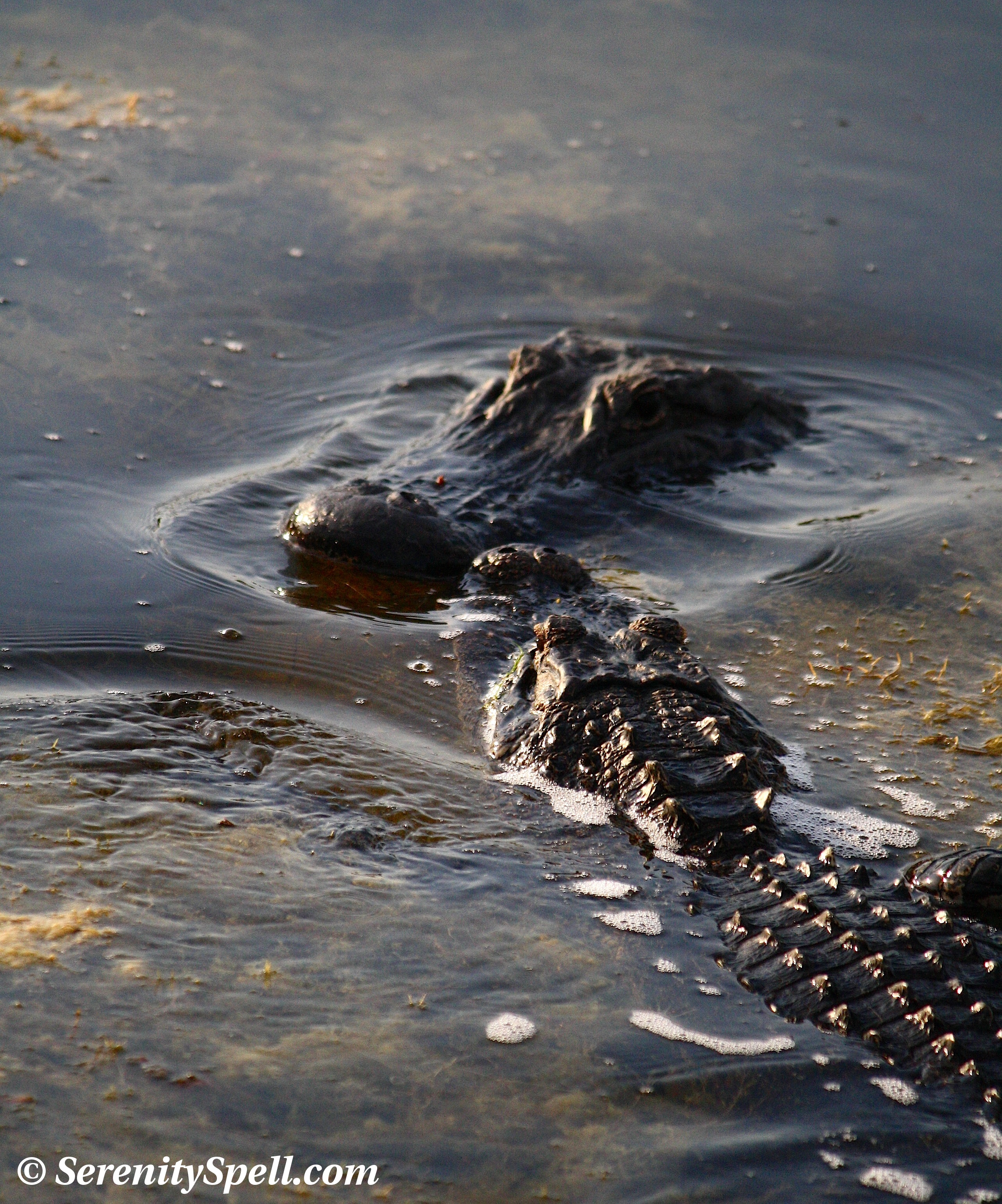
I was *exceptionally* fortunate to have recently witnessed a mating pair of alligators in our protected wetlands — while I believe the actual mating had already occurred (as evidenced by their babies on the nearby bank), their affinity for each other was obvious. I was thrilled to have captured the courtship images… Below!

Alligator mississippiensis
Alligator and Duckweed in the Green Cay Wetlands

A member of the crocodilian family, there are two alligator species living in the world today: the American alligator (Alligator mississippiensis) and the Chinese alligator (Alligator sinensis). American alligators are found in the southeastern United States; the majority inhabit Florida and Louisiana, with over a million alligators in each state. Interestingly, southern Florida is the only place where both alligators and crocodiles exist side-by-side. We’ve actually seen a growing number of crocodiles in our trips to the Everglades.

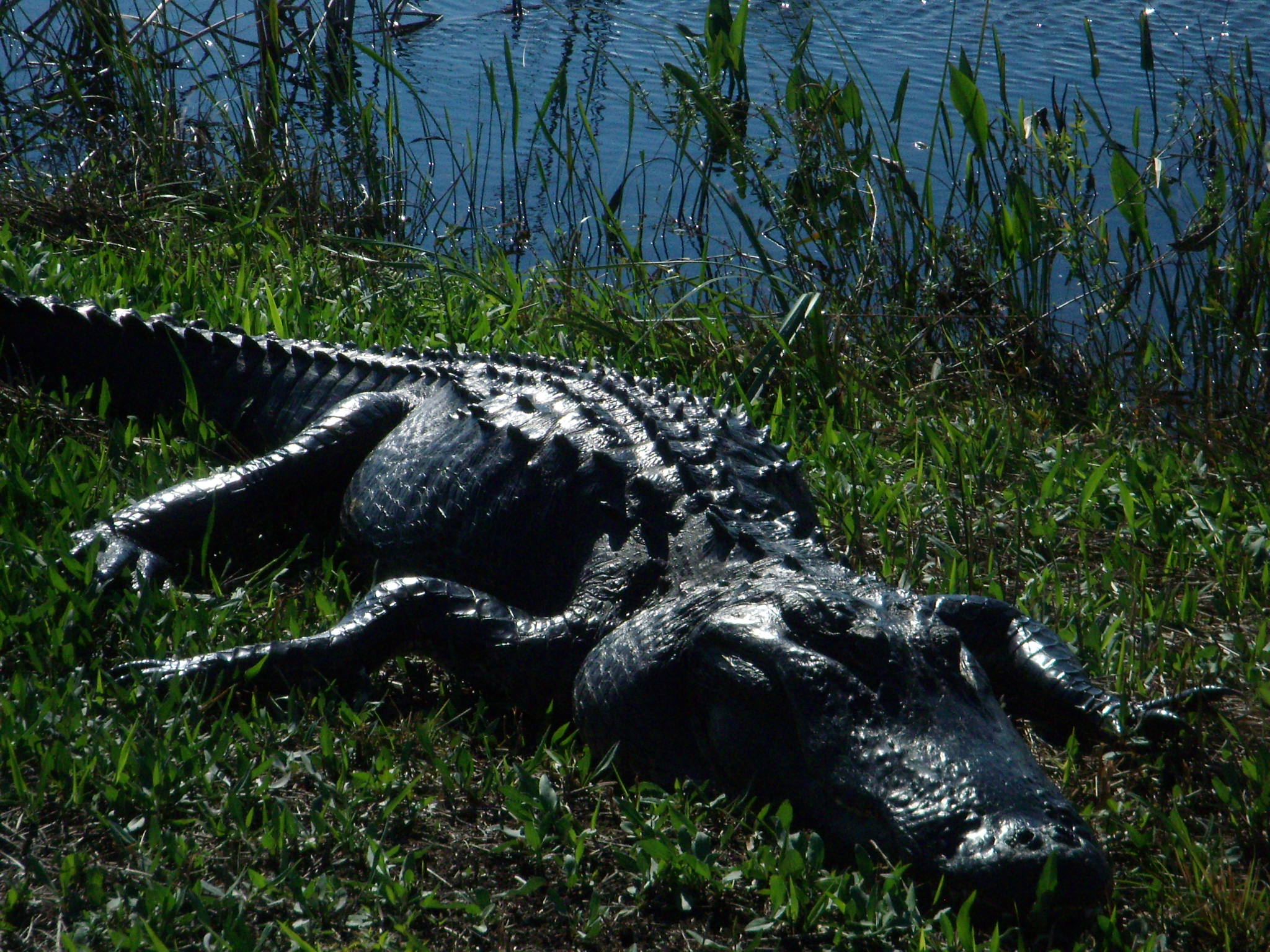
Alligators live in freshwater environments, including ponds, marshes, wetlands, rivers, and swamps, as well as brackish environments. They’re long-lived animals, living more than 50 years in the wild. As with other cold-blooded reptiles, it’s common to see them basking in the sun, thus regulating their body temperatures. Occasionally they keep their mouths open, akin to a dog panting — it’s a cooling mechanism.

Nearly Extinct
Big Baby Basking the Sun's Last Rays, Arthur R. Marshall Loxahatchee National Wildlife Refuge

Sadly, American alligator populations suffered tremendously throughout the 20th century, when they were hunted to near-extinction for their hides — an estimated 10 million alligators were slaughtered. Since the Endangered Species Act of 1973 however, these amazing creatures’ populations continue to grow, and illegal poaching is better controlled. Twenty million years on planet Earth, and we nearly managed to wipe them out for handbags.

Courtship and Breeding

Alligator on the Path (Just Fed), Arthur R. Marshall Loxahatchee National Wildlife Refuge

Alligators reach breeding maturity at 6-10 years of age, when they’re approximately 6-7 feet long. Growth slows after this point, but some of the oldest males may grow upwards of 16 feet, reaching 1,200 pounds. We’ve seen some LARGE GATORS out in the ‘Glades…. And it’s pitiful to see the yahoos on reality TV wrestling (rastling?) the smaller juveniles. In the first place, WHY? Secondly, bullies much, picking on the babies?

Interestingly, recent studies have shown that up to 70 percent of alligator females remained with their partner — often for many years.

Breeding begins in the spring (mid-April through May, specifically), and you can hear their loud bellows throughout the swamps — calls used to attract mates and warn off other males. While (like all wildlife) gators don’t want to bother humans, the mating season isn’t the time to push your luck — aggression is at a higher level, and they may become more territorial (the older ones, at least). On our hikes, we’re always aware of the season. Alligator courtship is complex — vocalizations, head-slapping on the water’s surface, body posturing, snout and back rubbing, bubble blowing, and pheromone (scent) signals all play into the process.

Nesting and the Young

Alligator Mound / Nest in the Wetlands

Alligator nests (or mounds) are built by the female, and comprised of vegetation, sticks, and mud located in a sheltered spot in or near the water. She lays 20-50 eggs, and covers them under more vegetation which heats as it decays, serving to incubate the eggs. The female will remain near the nest throughout the 65-day incubation period, protecting it. If a mother alligator is killed or removed, she can’t protect her nest or young — and the hatchlings are doomed. *Leave wildlife alone.*

Hatchlings are 6-8 inches long, and are near-replicas of their parents, save for a series of yellow and black stripes which camouflage beautifully with the surrounding marsh roots. For five months, they’ll remain with the mother before finding their own ways. In our area, we typically see 5-10 baby alligators survive in the protected wetlands. Perhaps less. Common predators that prey upon the juvenile alligators include snapping turtles, snakes, raccoons, bobcats, raptors, and even larger alligators. But when we find them? Oh my…. I must break up these posts, though — there are too many images, and the adorableness level is simply too high. Next: Alligator Babies!

Alligator Courtship, Florida Wetlands

Alligator Courtship, Florida Wetlands

Alligator Courtship, Florida Wetlands
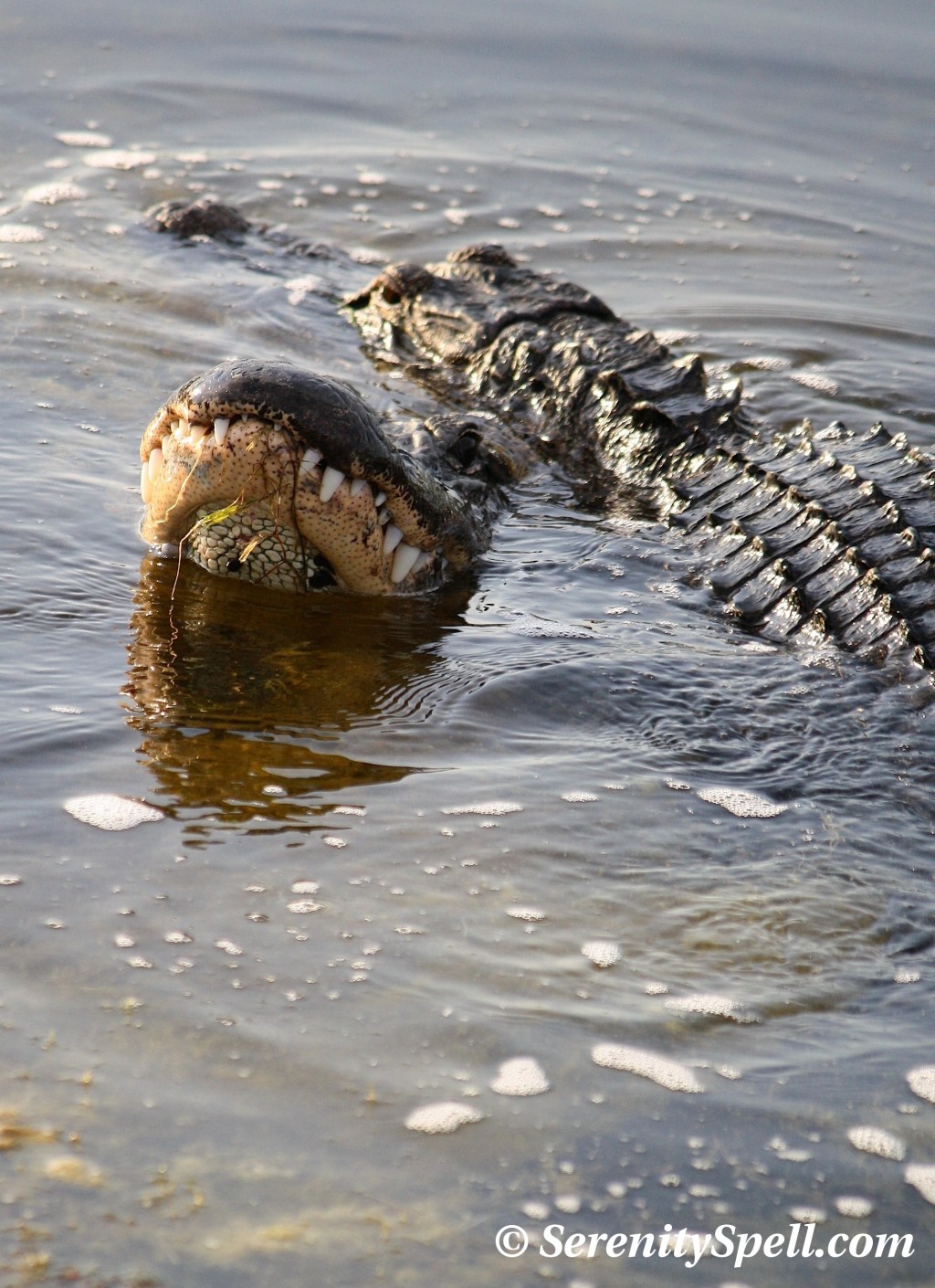
Alligator Courtship, Florida Wetlands
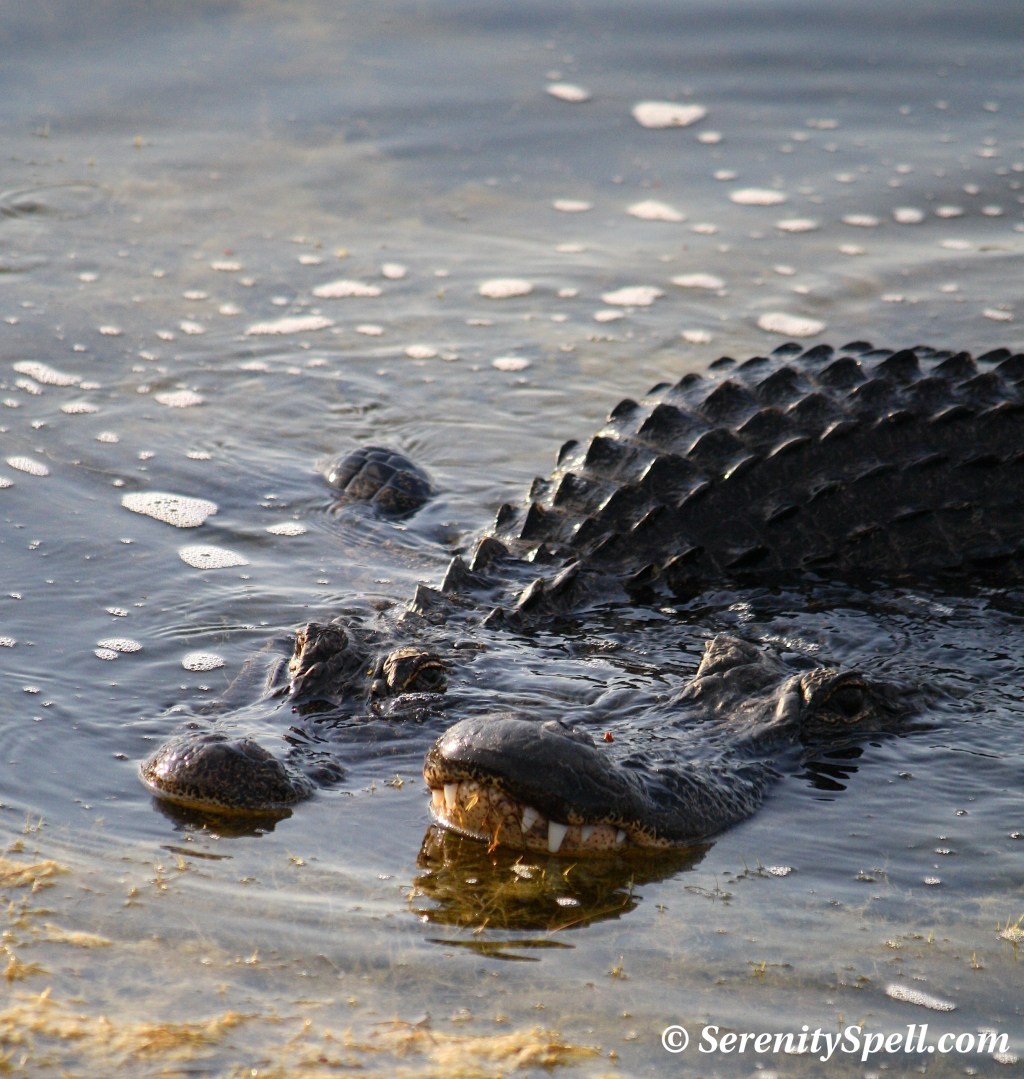
Alligator Courtship, Florida Wetlands
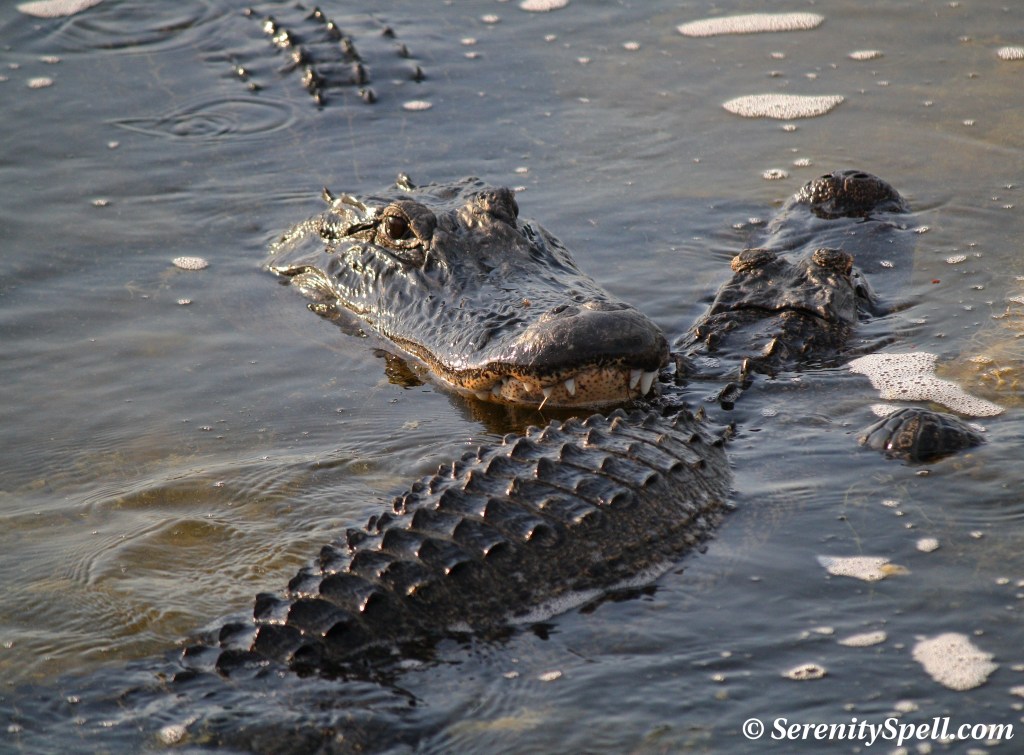
Alligator Courtship, Florida Wetlands

Alligator Courtship, Florida Wetlands
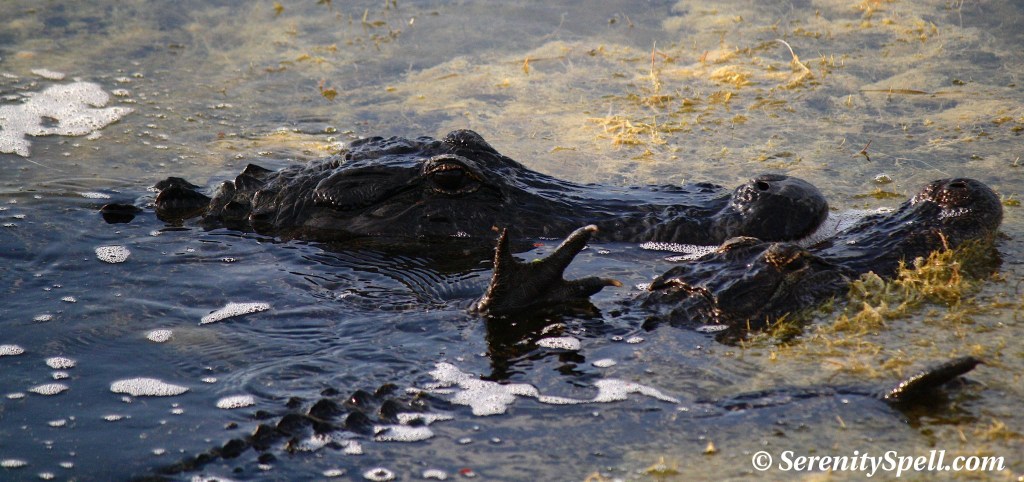
Alligator Courtship, Florida Wetlands
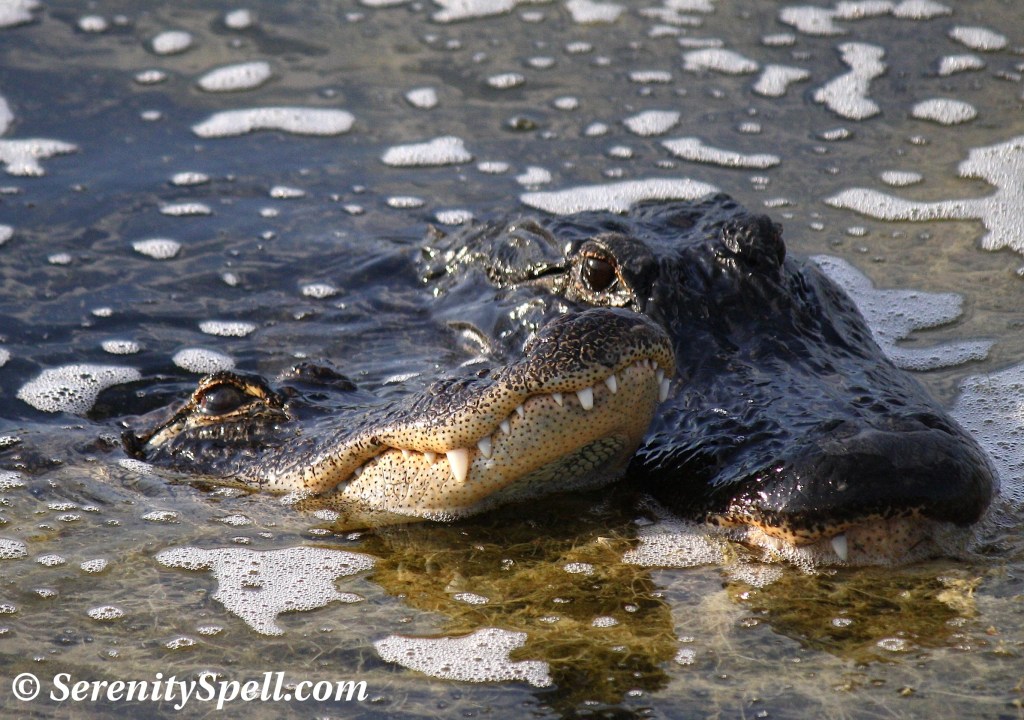
Alligator Courtship, Florida Wetlands